News
Tesla Model X doors receive safety feature with new firmware update

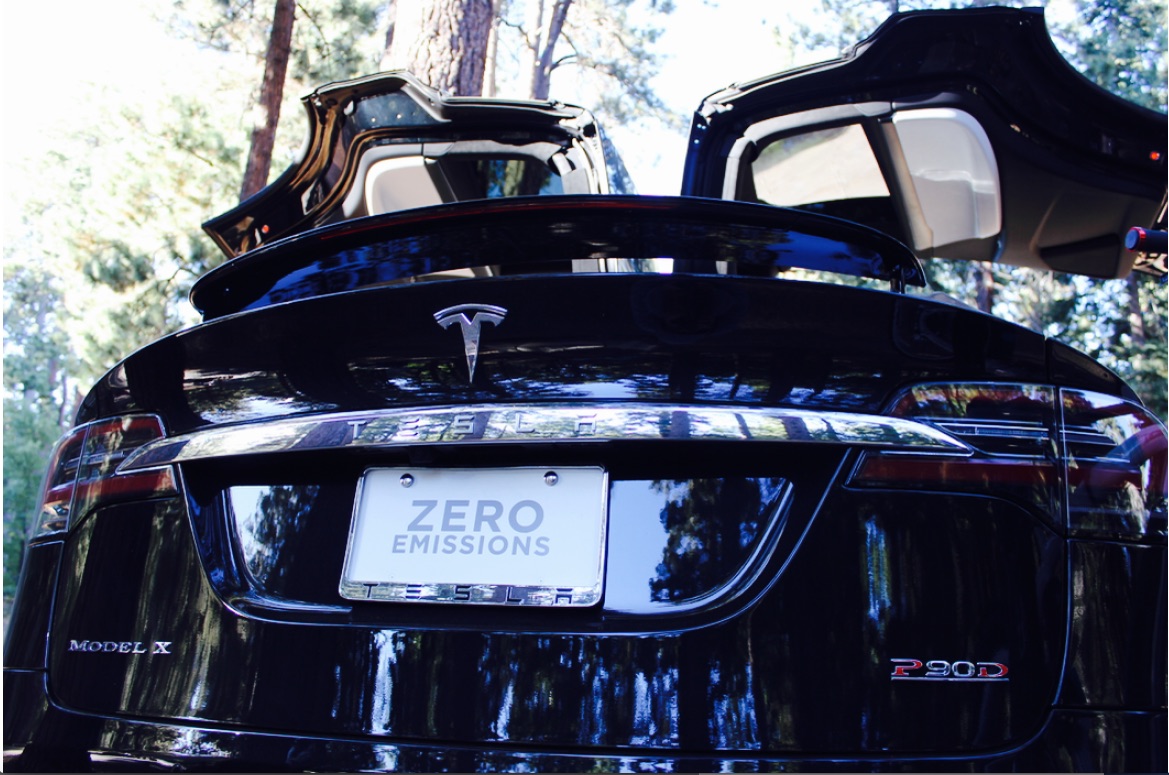
Tesla has released a new over-the-air software update for the Model X that addresses concerns over unintended closure of the vehicle’s electronically actuated doors. A previous software update released by Tesla provided owners with the ability to close the falcon wing and self-presenting front doors along with the trunk through a single press of the key fob. While convenient and show-worthy to be able to remotely retract both falcon wing doors simultaneously, owners complained that the single press action of the key fob was too accident prone thereby causing unintended and often stressful situations when doors unexpectedly close onto passengers.
Accidental depression of the key fob often occurs when it’s stowed within an individuals pant pocket. Leaning into the vehicle, whether to load luggage or remove a child from a car seat can often lead to inadvertent compression of the key fob and activation of door closures.
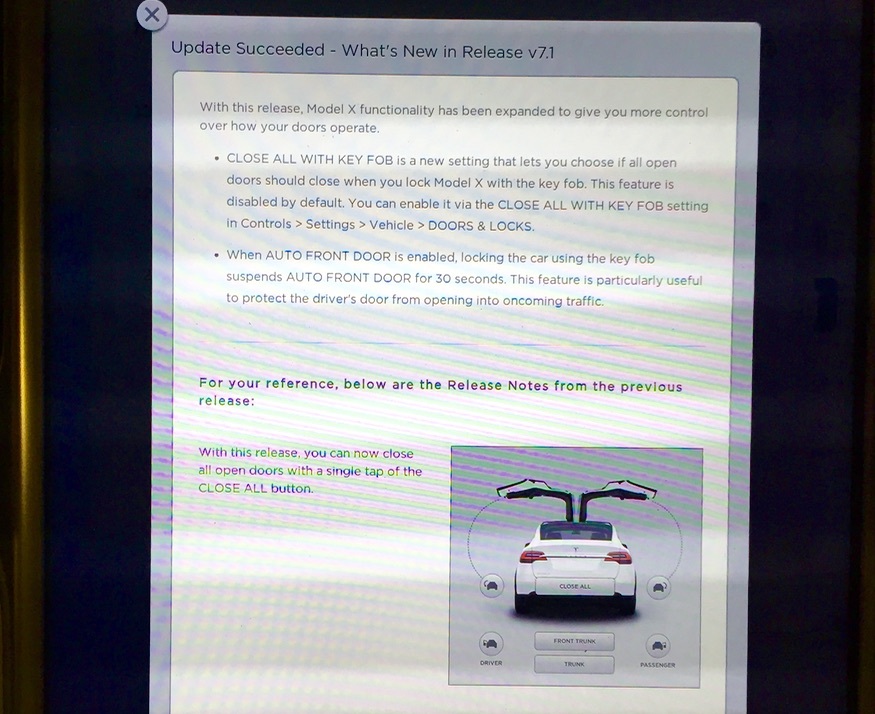
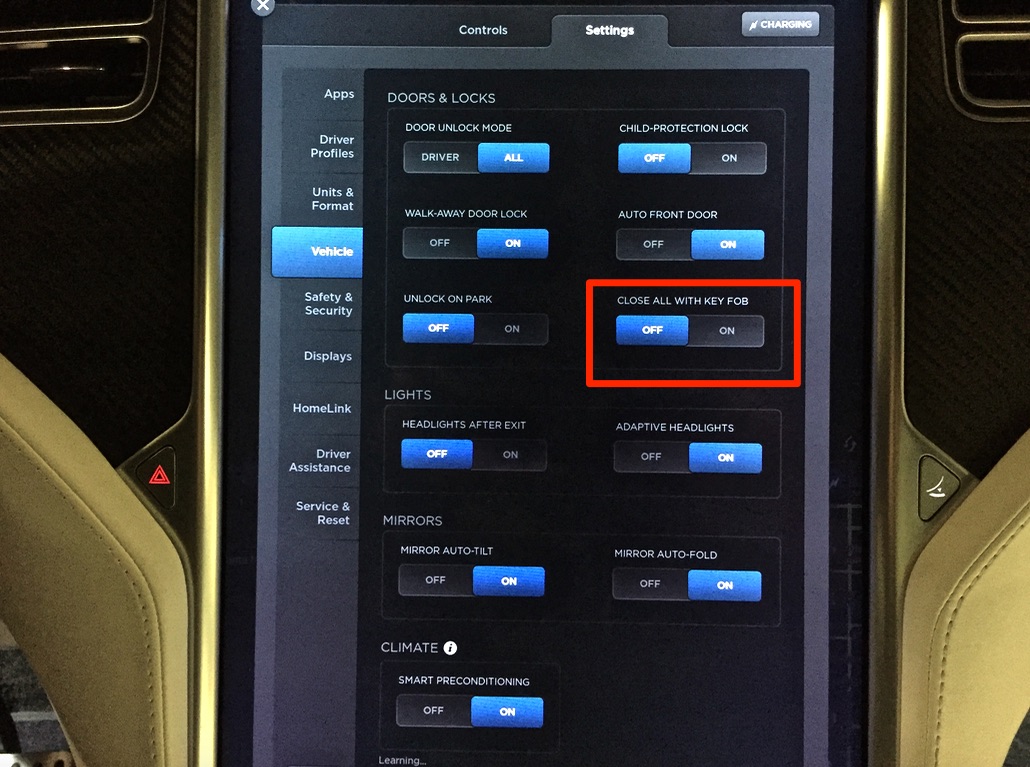
The latest v7.1 (2.30.61) software update addresses the issue with a new setting that allows owners to either enable or disable the key fob control. With the CLOSE ALL WITH KEY FOB setting in the OFF position, pressing the key fob will no longer initiate simultaneous door closures.
The new feature is seemingly important as Tesla has decided to default the key fob to have no control over closing of the doors. Owners must explicitly toggle the setting to the ON position if they choose to have that accessibility.
Another feature that was introduced in the latest software update aims to address a safety issue whereby Model X self-presenting front doors inadvertently open onto oncoming traffic. Currently, if the AUTO FRONT DOOR setting is set to the ON position, the front doors will automatically swing open when it detects close proximity to a key fob. The feature is designed to welcome owners into the vehicle, all hands-free, however it lacked the ability to detect an owner’s intention.
If one were to exit the vehicle and initiate a press of the key fob to close all doors yet maintained close proximity to the front door – perhaps while parked curbside and waiting to cross a street – the doors could automatically swing open onto oncoming traffic.
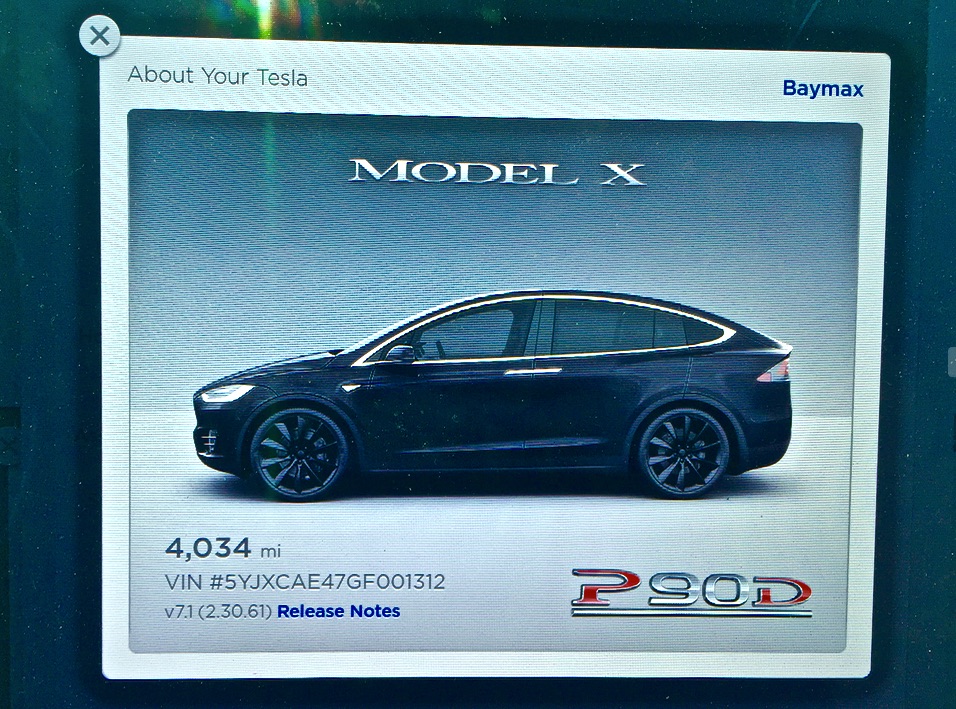
The new v7.1 (2.30.61) update adds a 30 second delay to the activation of the self-presenting front doors after it has been closed through the key fob. According to the release notes, “When AUTO FRONT DOOR is enabled, locking the car using the key fob suspends AUTO FRONT DOOR for 30 seconds. This feature is particularly useful to protect the driver’s door from opening into oncoming traffic.”
 -
-
The latest features come from Tesla’s third over-the-air update aimed to provide better user control of the vehicle’s unique falcon wing doors. CEO Elon Musk’s rare off-the-cuff remarks from Tesla’s annual shareholder meeting instilled confidence that the company had its sights set on addressing early issues related to Model X doors. “If you order a Model X now, or soon, trust me, you will love the doors, because the software will actually be right.”, said Musk.
Past Model X Firmware Updates
- Refined falcon wing door obstacle detection
- Key fob control of falcon wing doors (VIDEO)
- Improved self-presenting front doors (VIDEO)



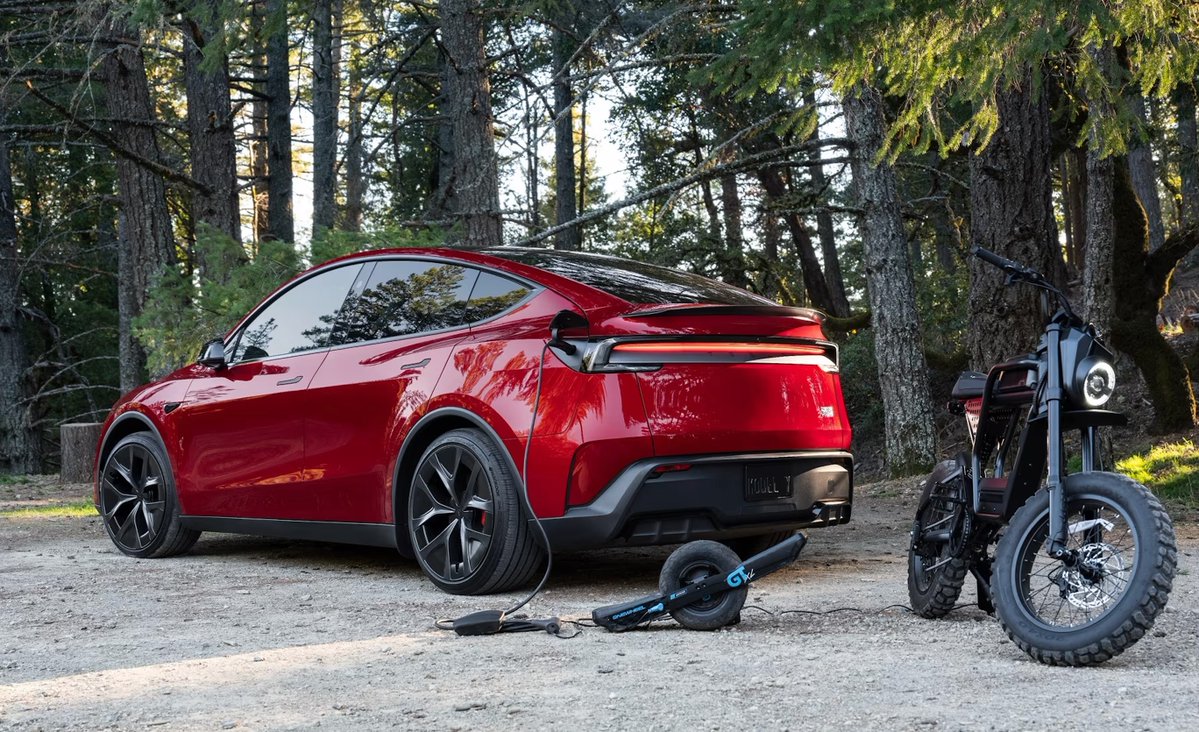
Tesla has launched a new Vehicle-to-Load (V2L) Outlet Adapter for Premium Model Y vehicles in the United States, meaning you can now power devices like laptops or light strings with your vehicle’s battery.
It appears the capability will be available for any Model Y Premium trim, including those that were purchased prior to the Adapter being launched. It will also only impact Juniper Model Y vehicles, so the first-gen owners will unfortunately not have access to this capability.
If your Model Y was purchased before Tesla renamed the trim levels to “Premium” and “Standard,” it does not seem to be compatible. My Model Y is technically a Premium build, as it is the Long Range All-Wheel-Drive. However, Tesla says it is not compatible with my vehicle.
🚨 Tesla has launched the Outlet Adapter for Model Y Premium in the U.S., enabling V2L capability for all Premium trims (that’s what it appears to be as it is available for purchase with all Premium trims)
It’s available for $80. 2.4kW max power and rated for 120v, 20A pic.twitter.com/lDxlVIk5s8
— TESLARATI (@Teslarati) August 14, 2026
For $80, you can now utilize your car as a portable charger for small appliances or devices. This is perfect for things like tailgates, concerts, or camping, as you can now plug in devices that you might use. Those string lights for camping? That laptop for the other games that are on at the tailgate?
-
They’ll both utilize energy from your Tesla’s battery to be powered. This is the first time Tesla has expanded the capability to vehicles outside of the Model Y Performance and Cybertruck. However, this feature has been highly requested by owners for an extended period of time.
Tesla launched the Outlet Adapter in China last year:
Tesla China rolls out Model Y L V2L adapter, and it’s free for early owners
You will need the Mobile Connector to operate the Outlet Adapter: the Outlet Adapter will plug into the main housing of the Mobile Connector, where the appropriate adapter to charge your vehicle will plug in.
It is rated for 120 volts and 20 amps, and has a max power rating of 2.4kW.
You can buy it here from Tesla for $80.
-
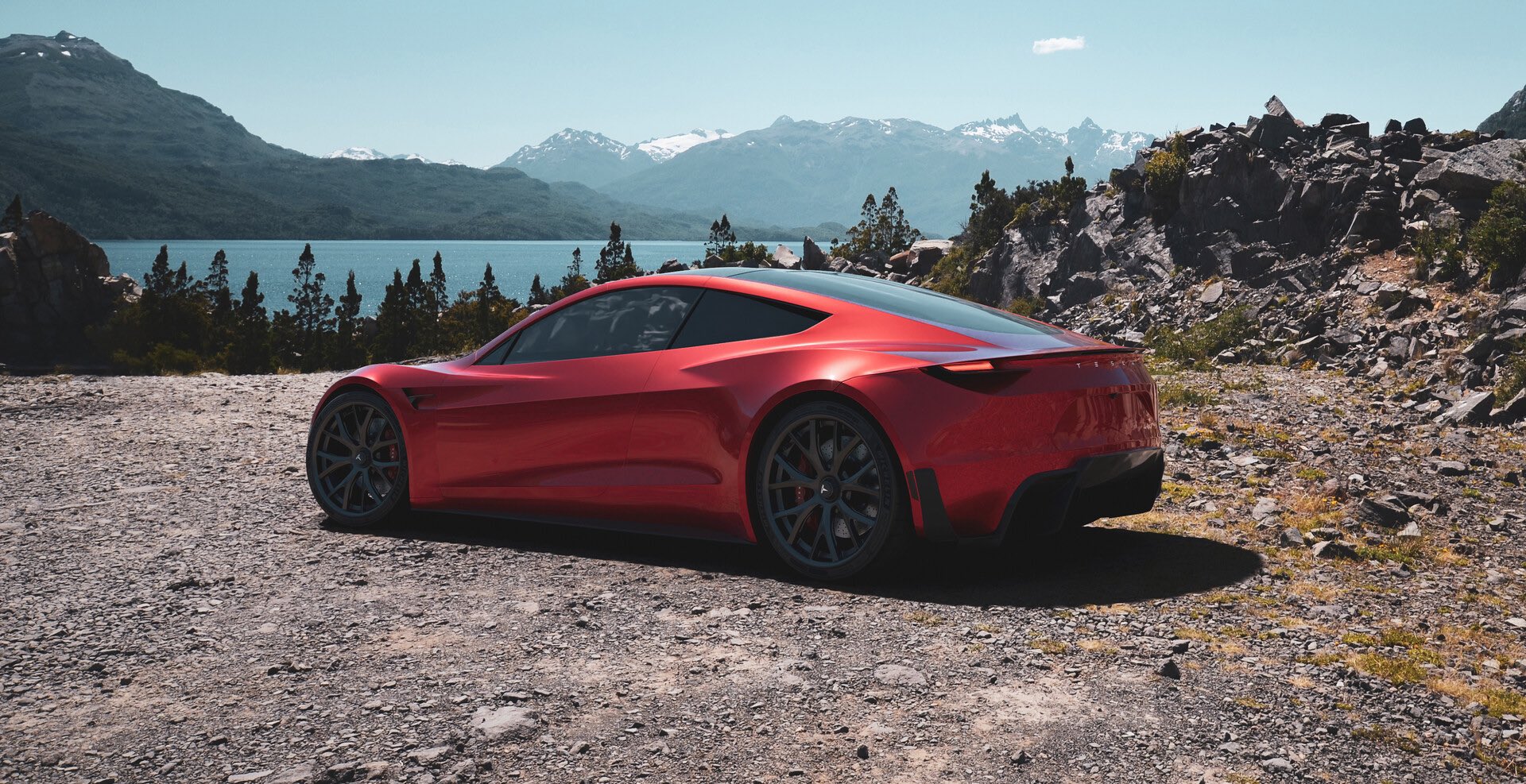
Tesla is nearing its long-awaited unveiling of the all-electric Tesla Roadster, a new report from The Information claims, as the company has said several times this year that the event would take place “soon.”
Now, it appears there is movement on Tesla’s end regarding when it will happen.
The report says that Tesla will unveil the Roadster as soon as this month with a SpaceX version that will utilize cold-gas thrusters to help the vehicle float for a short period of time. This is something CEO Elon Musk has talked about with the Roadster for years.
🚨 The Information is reporting this morning that Tesla is ready to unveil the “flying” Roadster as soon as this month
It’s almost here, folks. pic.twitter.com/IdL4atsucQ
— TESLARATI (@Teslarati) August 14, 2026
Additionally, due to the delays, Tesla explored “a variety of designs” for the Roadster, potentially planning to abandon the design it showed off for the first time in 2017 and adopting an entirely new aesthetic.
-
According to The Information, Tesla considered utilizing a repurposed Model S Plaid and even wanted to upgrade the look to something like a Lamborghini Countach.
We’ve heard all of these things before, including teases about the date and how “soon” the Roadster will finally be ready to be shown off to the world (for the second time). Musk said that the event would occur in April, then May, then Chief Designer Franz von Holzhausen continued to say it would be coming “soon.”
We do expect to see the Roadster by the end of the year, and now with this new report swirling, it appears it could be sooner rather than later.
The wait has been incredibly long, but there is likely a good reason for it. Tesla’s desire to make the Roadster the craziest vehicle on the road was non-negotiable, and it likely took a lot of time and resources to develop and perfect into something that was safe and suitable for a vehicle like this.
Featured
Tesla finally got its Nevada Robotaxi Permit but with a few catches hard to miss
Nevada granted Tesla’s robotaxi permit, but capped the fleet at just ten vehicles for now.
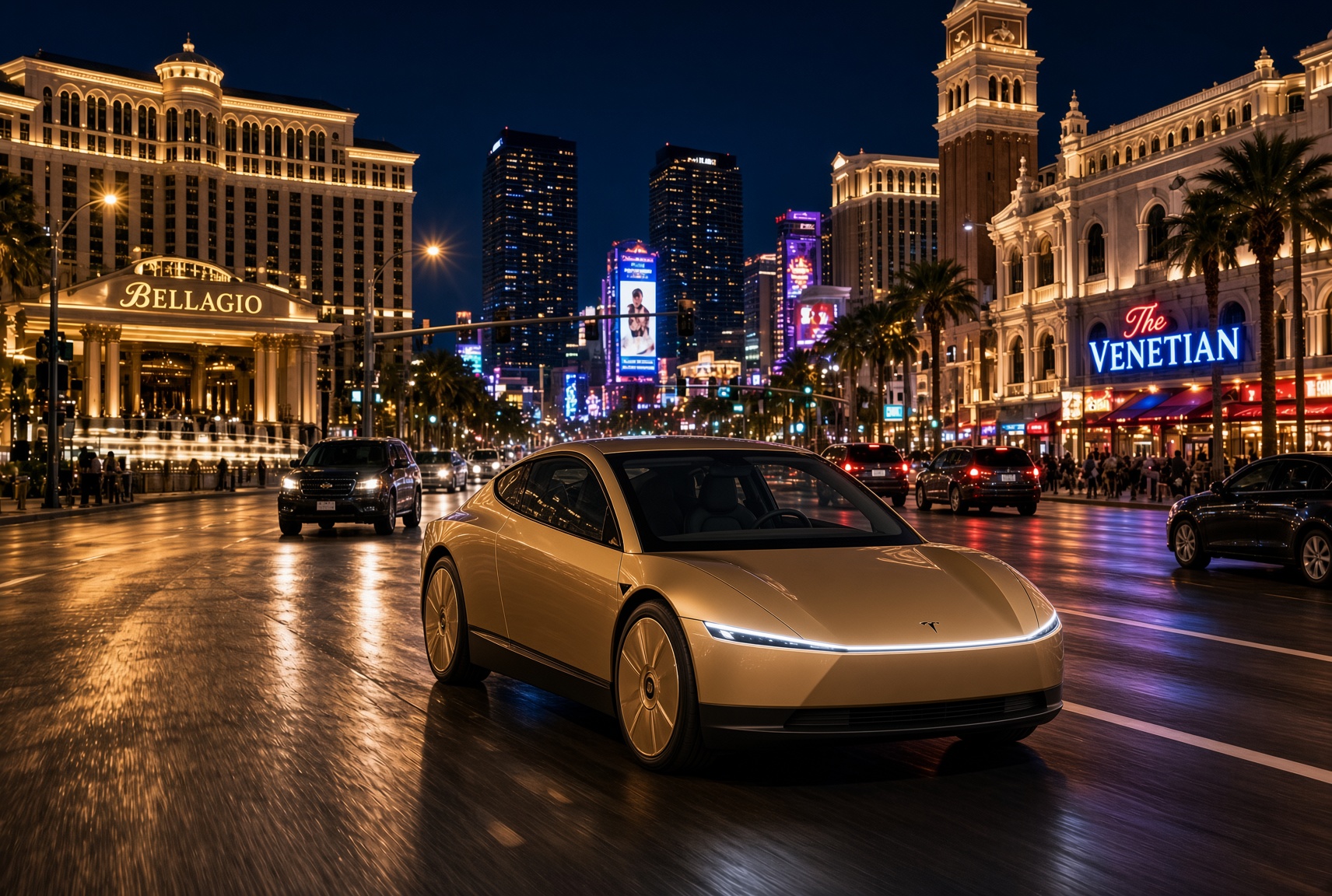
Tesla has received its robotaxi permit in Nevada, more than two months after regulators closed the public comment period on the company’s application. News of the approval surfaced Wednesday night when Tesla investor and longtime company watcher Sawyer Merritt posted a copy of the interim order, and the Nevada Transportation Authority’s own carrier registry now lists the permit, AVNC Permit 002 under Docket 26-05015, as active for Tesla Robotaxi, LLC.
Tesla asked Nevada in June for authority to run up to 5,000 vehicles in Clark County within a year, however the permit the NTA issued is initially capping Tesla at ten fully autonomous vehicles and confines them to a defined geofence along the Las Vegas Strip corridor. Any expansion of that operating area, or any increase to the fleet size, requires the NTA’s approval first.
Tesla has received its Autonomous Vehicle Network Company permit in Nevada.
The Nevada Transportation Authority says that operations are limited to a maximum fleet of 10 fully autonomous vehicles and shall be conducted only within the Authority-approved Operational Design… https://t.co/Cxfd6GIfDk pic.twitter.com/iOO6wSZkHF
— Sawyer Merritt (@SawyerMerritt) August 13, 2026
The order also sets rules that look more restrictive than what Tesla runs in Austin. Rides are barred on roads with posted speed limits above 45 miles per hour, pickups are off limits within a quarter mile of Harry Reid International Airport without separate authorization, and every vehicle has to carry visible “Robotaxi” markings while notifying riders before each trip that no one is driving. The order also requires “appropriate human supervision”, language that suggests Nevada isn’t ready to let Tesla offer the rides without a safety monitor that it has run in parts of Austin since January. As with standard protocol with robotaxi services, Tesla must report any accident, system failure, or vehicle that becomes stranded on a Nevada road within five business days.
Tesla is entering a market Nevada already knows well. Zoox, the Amazon owned robotaxi company, has run its own autonomous vehicle permit in the state since last year, building up to roughly 100 vehicles and 350,000 rides along the Strip. That history likely explains why the NTA started Tesla at ten cars rather than the fleet size the company asked for. The agency has a template for scaling a permit up once a company proves out its safety record.
-
Tesla’s Nevada application first surfaced in June, when the company filed for the permit alongside plans for a maintenance hub in southwest Las Vegas. The company has said it won’t meaningfully scale its robotaxi fleet anywhere until FSD v15 ships, expected in late 2026 or early 2027, which makes the ten vehicle cap less of a constraint today than it might look on paper. For now, Tesla has the legal right to start Nevada rides. Whether it starts before FSD v15 arrives is a separate question the permit doesn’t answer.

Tesla launches V2L Outlet Adapter for Premium Model Y in the U.S.

Tesla Roadster unveiling nears, and it will fly: The Information


