
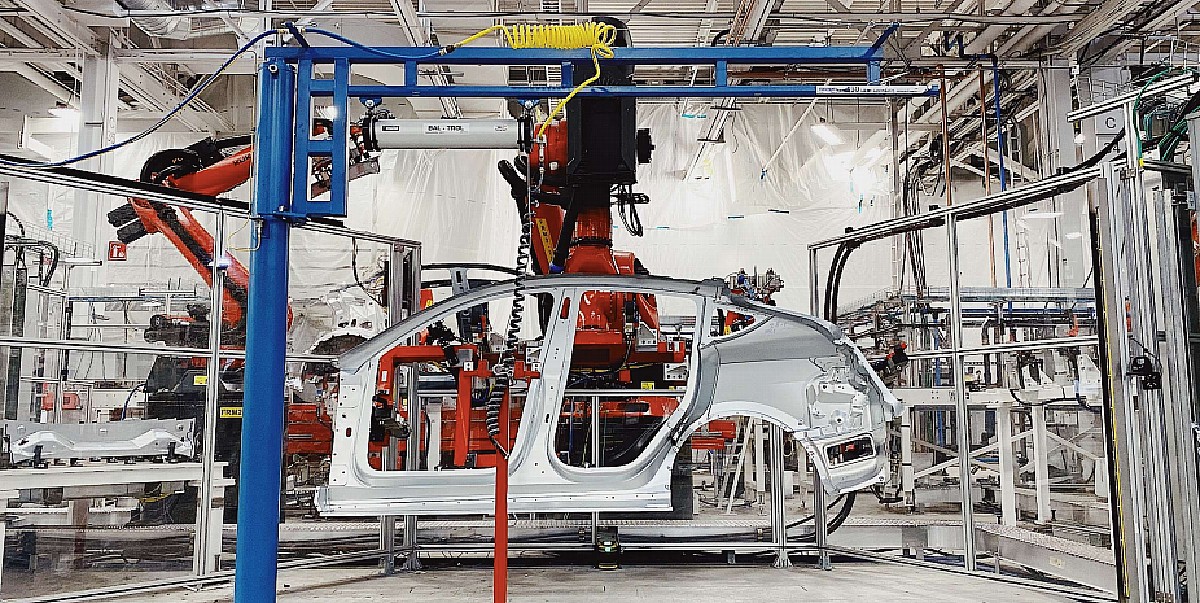

Tesla’s Model Y casting machine, commonly referred to as the “Giga Press,” has been installed at the company’s Fremont production facility, and it will bring a new age of efficiency and quality to the electric automaker’s first crossover SUV.
The casting machine has been talked about since early 2020 when CEO Elon Musk stated on an episode of the Third Row Podcast that Tesla would be purchasing the assembly to assist with the production efficiency of the Model Y.
It appears that the Giga Press has been successfully installed in Fremont based on a pair of tweets from both Musk and, who indicated that the casting apparatus was available for use at the Northern California plant.
Will be amazing to see it in operation! Biggest casting machine ever made. Will make rear body in a single piece, including crash rails.
— Elon Musk (@elonmusk) August 13, 2020
Musk seems enthusiastic about the Model Y casting machine, hinting toward the purpose of the device, which will revolutionize the way the electric car is built, paving the way for production efficiency across the world. Tesla is planning to use the casting device in Fremont, but also in Shanghai, where it was first spotted in April.
The sizeable Giga Press has been compared to a small house, measuring 64 ft (19.5 m) long and 17 ft (5.3 m) tall, and weighing in at 410 tons.
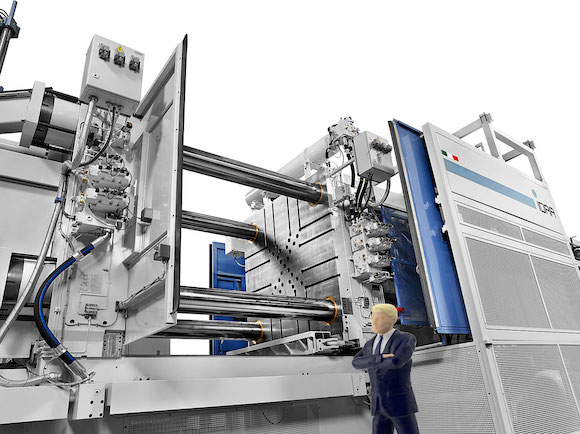
The rear portion of the vehicle will be cast in a single piece, which has a noticeable distinction compared to the Model 3, which contained over 70 individual parts on the rear portion of the vehicle.
Early production versions of the Model Y had evidently shown significant improvements in the number of auto parts that made up the rear section of the vehicle. Automotive teardown expert Sandy Munro noticed the improvement during his breakdown of the Model Y.
Although the Model Y was a highly optimized automobile during its early production, Tesla has still focused on improving the efficiency of the manufacturing process overall. There is evidence that the casting machine could save Tesla 20% on labor costs, which is an estimate from Laurie Harbour, president of Harbour Results Inc., a manufacturing consultancy firm.
While cost-effectiveness is undoubtedly critical for any company, the casting machine will accelerate and optimize Tesla’s ability to produce the Model Y across the world, which could help the company reach lofty production goals for years to come.
In Tesla’s Q2 2020 Earnings Letter, the electric automaker indicated that despite multiple production facility closures throughout 2020, it would not revise its production goal for the fiscal year.
In the letter, Tesla said:
“We have the capacity installed to exceed 500,000 vehicle deliveries this year, despite recent production interruptions. While achieving this goal has become more difficult, delivering half a million vehicles in 2020 remains our target.”
Tesla delivered 179,387 vehicles through the first two quarters of the year, so the company is technically behind schedule to reach its 2020 targets. However, demand for the company’s cars is healthy, and with expanding production lines and production efficiencies like the Model Y casting machine, there is a case that Tesla could still reach its goal before the year comes to an end.
Tesla’s use of the Giga Press could help the company manufacture about 1 million vehicles a year, opening the door for faster delivery times for customers, and increased production rates at all of the company’s production plants.




Elon Musk
Why Tesla’s Q3 could be one of its biggest quarters in history
Tesla could stand to benefit from the removal of the $7,500 EV tax credit at the end of Q3.
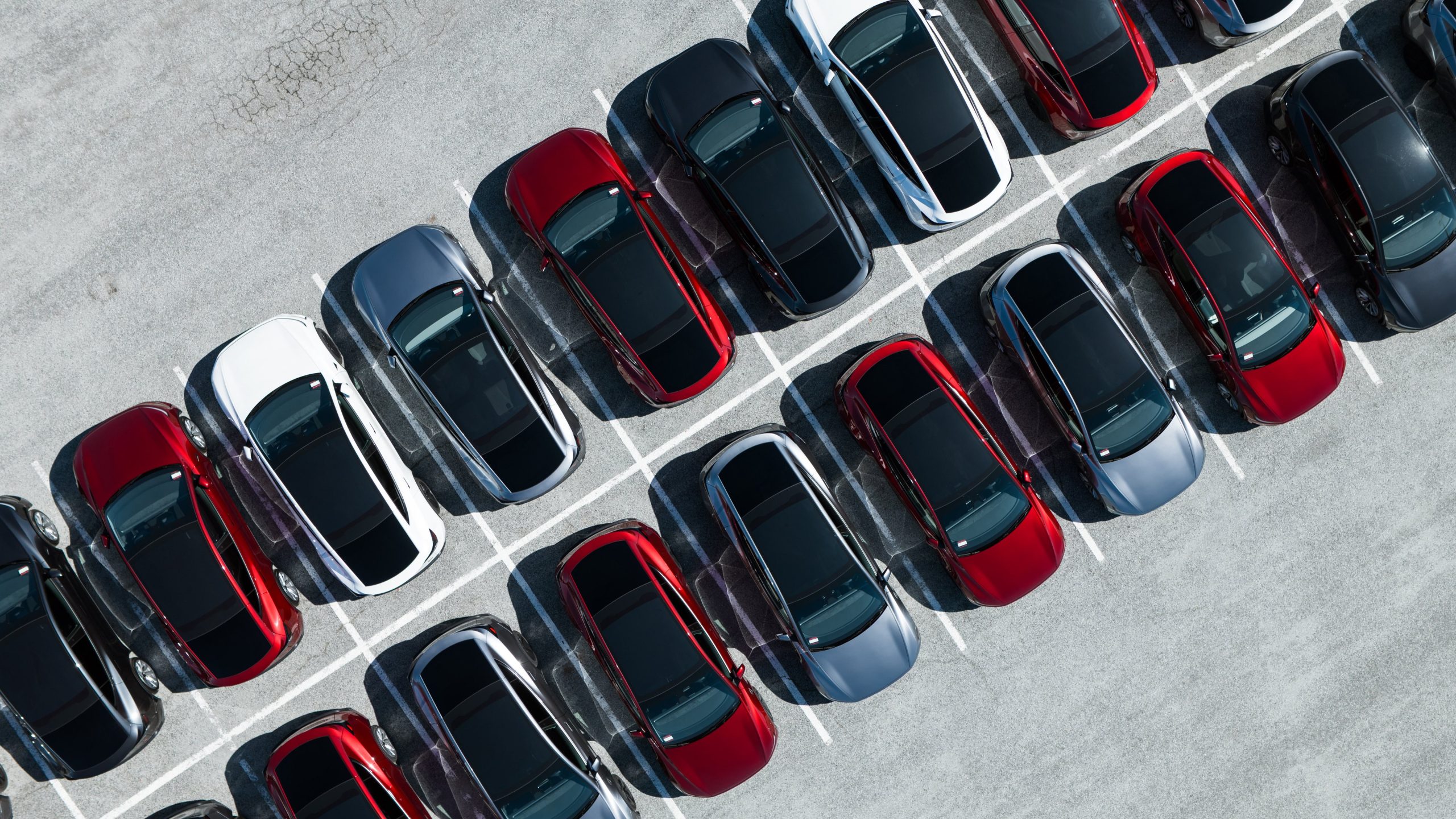
Tesla has gotten off to a slow start in 2025, as the first half of the year has not been one to remember from a delivery perspective.
However, Q3 could end up being one of the best the company has had in history, with the United States potentially being a major contributor to what might reverse a slow start to the year.
Earlier today, the United States’ House of Representatives officially passed President Trump’s “Big Beautiful Bill,” after it made its way through the Senate earlier this week. The bill will head to President Trump, as he looks to sign it before his July 4 deadline.
The Bill will effectively bring closure to the $7,500 EV tax credit, which will end on September 30, 2025. This means, over the next three months in the United States, those who are looking to buy an EV will have their last chance to take advantage of the credit. EVs will then be, for most people, $7,500 more expensive, in essence.
The tax credit is available to any single filer who makes under $150,000 per year, $225,000 a year to a head of household, and $300,000 to couples filing jointly.
Ending the tax credit was expected with the Trump administration, as his policies have leaned significantly toward reliance on fossil fuels, ending what he calls an “EV mandate.” He has used this phrase several times in disagreements with Tesla CEO Elon Musk.
Nevertheless, those who have been on the fence about buying a Tesla, or any EV, for that matter, will have some decisions to make in the next three months. While all companies will stand to benefit from this time crunch, Tesla could be the true winner because of its sheer volume.
If things are done correctly, meaning if Tesla can also offer incentives like 0% APR, special pricing on leasing or financing, or other advantages (like free Red, White, and Blue for a short period of time in celebration of Independence Day), it could see some real volume in sales this quarter.
You can now buy a Tesla in Red, White, and Blue for free until July 14 https://t.co/iAwhaRFOH0
— TESLARATI (@Teslarati) July 3, 2025
Tesla is just a shade under 721,000 deliveries for the year, so it’s on pace for roughly 1.4 million for 2025. This would be a decrease from the 1.8 million cars it delivered in each of the last two years. Traditionally, the second half of the year has produced Tesla’s strongest quarters. Its top three quarters in terms of deliveries are Q4 2024 with 495,570 vehicles, Q4 2023 with 484,507 vehicles, and Q3 2024 with 462,890 vehicles.
Elon Musk
Tesla Full Self-Driving testing continues European expansion: here’s where
Tesla has launched Full Self-Driving testing in a fifth European country ahead of its launch.
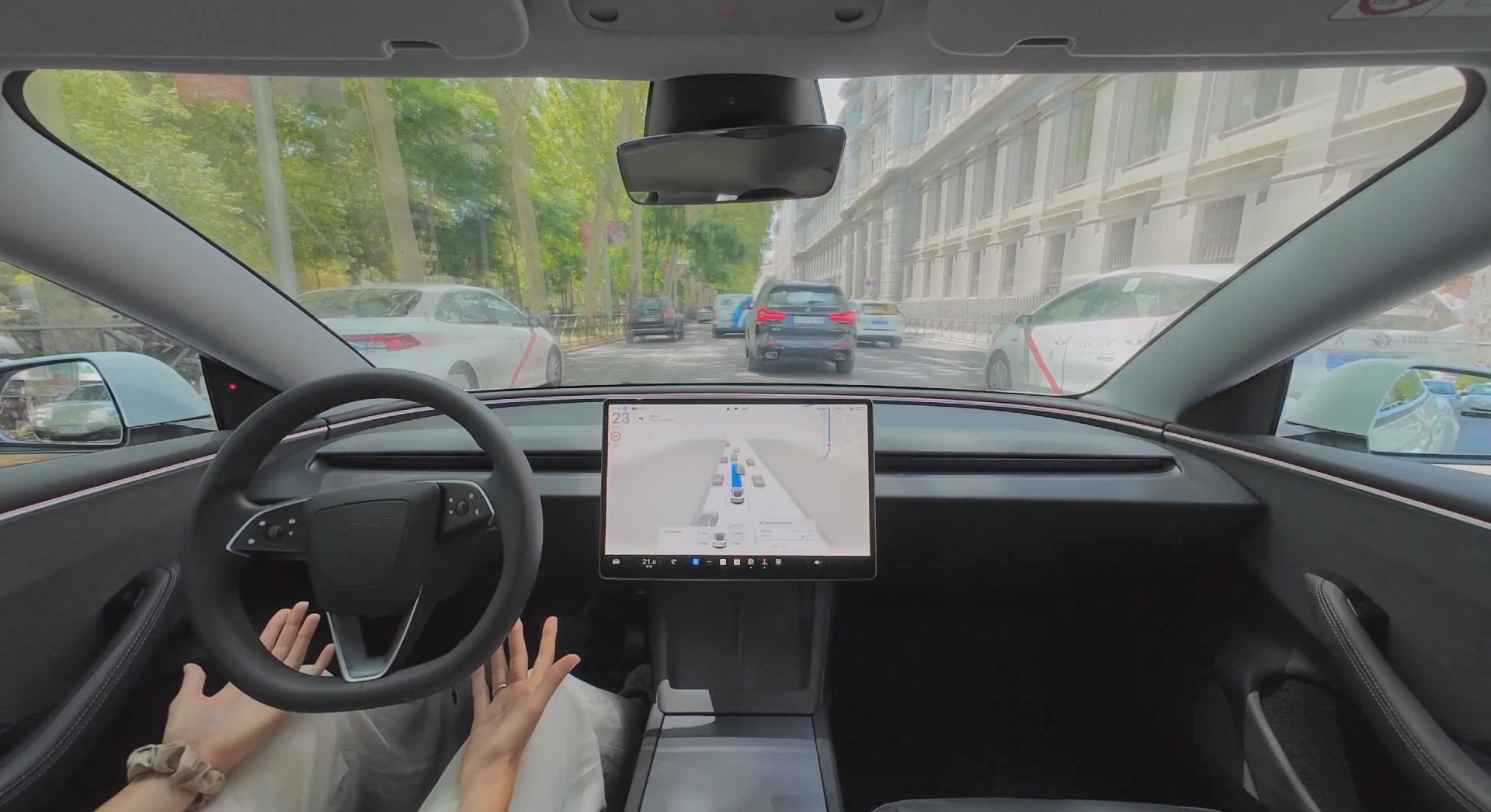
Tesla Full Self-Driving is being tested in several countries across Europe as the company prepares to launch its driver assistance suite on the continent.
The company is still working through the regulatory hurdles with the European Union. They are plentiful and difficult to navigate, but Tesla is still making progress as its testing of FSD continues to expand.
Today, it officially began testing in a new country, as more regions open their doors to Tesla. Many owners and potential customers in Europe are awaiting its launch.
On Thursday, Tesla officially confirmed that Full Self-Driving testing is underway in Spain, as the company shared an extensive video of a trip through the streets of Madrid:
Como pez en el agua …
FSD Supervised testing in Madrid, Spain
Pending regulatory approval pic.twitter.com/txTgoWseuA
— Tesla Europe & Middle East (@teslaeurope) July 3, 2025
The launch of Full Self-Driving testing in Spain marks the fifth country in which Tesla has started assessing the suite’s performance in the European market.
Across the past several months, Tesla has been expanding the scope of countries where Full Self-Driving is being tested. It has already made it to Italy, France, the Netherlands, and Germany previously.
Tesla has already filed applications to have Full Self-Driving (Supervised) launched across the European Union, but CEO Elon Musk has indicated that this particular step has been the delay in the official launch of the suite thus far.
In mid-June, Musk revealed the frustrations Tesla has felt during its efforts to launch its Full Self-Driving (Supervised) suite in Europe, stating that the holdup can be attributed to authorities in various countries, as well as the EU as a whole:
Tesla Full Self-Driving’s European launch frustrations revealed by Elon Musk
“Waiting for Dutch authorities and then the EU to approve. Very frustrating and hurts the safety of people in Europe, as driving with advanced Autopilot on results in four times fewer injuries! Please ask your governing authorities to accelerate making Tesla safer in Europe.”
Waiting for Dutch authorities and then the EU to approve.
Very frustrating and hurts the safety of people in Europe, as driving with advanced Autopilot on results in four times fewer injuries!
Please ask your governing authorities to accelerate making Tesla safer in Europe. https://t.co/QIYCXhhaQp
— Elon Musk (@elonmusk) June 11, 2025
Tesla said last year that it planned to launch Full Self-Driving in Europe in 2025.
Elon Musk
xAI’s Memphis data center receives air permit despite community criticism
xAI welcomed the development in a post on its official xAI Memphis account on X.

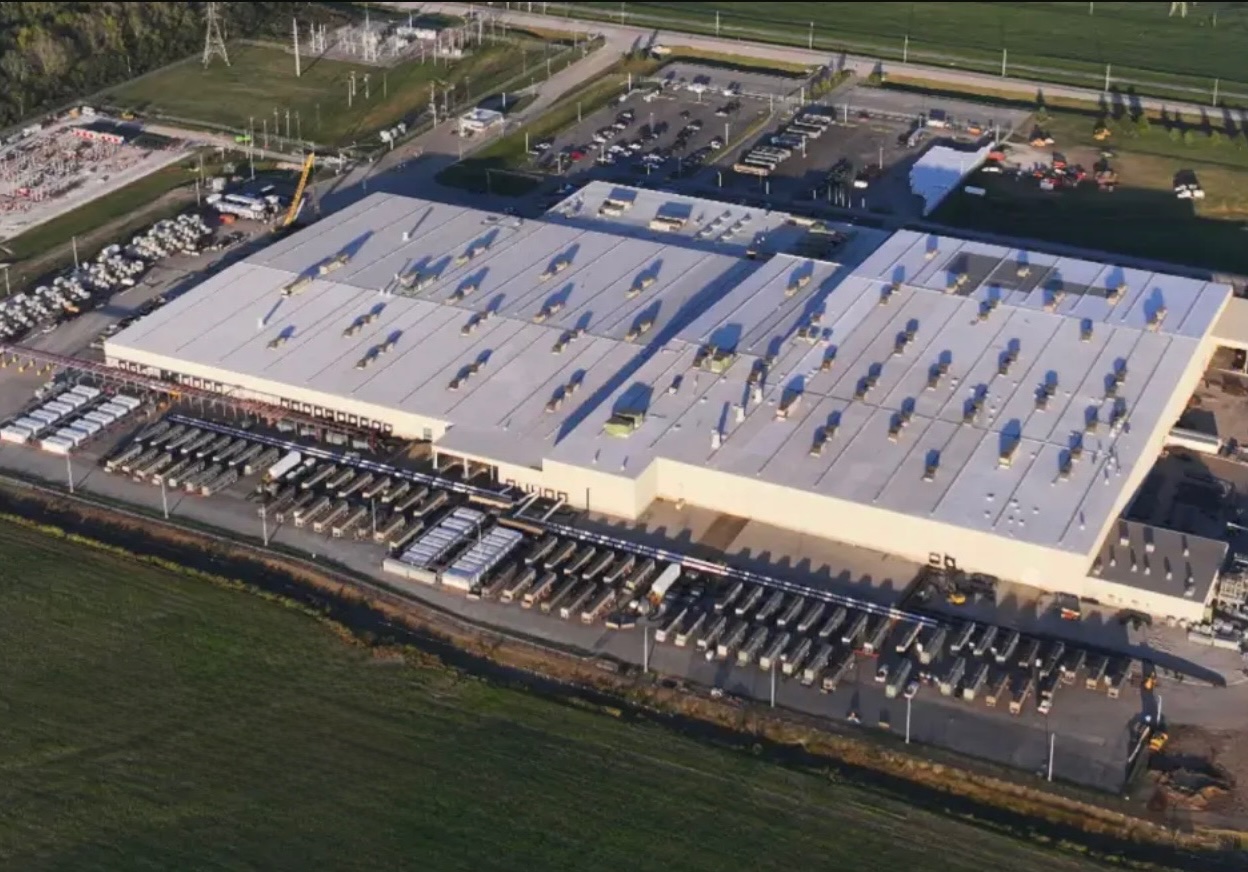
Elon Musk’s artificial intelligence startup xAI has secured an air permit from Memphis health officials for its data center project, despite critics’ opposition and pending legal action. The Shelby County Health Department approved the permit this week, allowing xAI to operate 15 mobile gas turbines at its facility.
Air permit granted
The air permit comes after months of protests from Memphis residents and environmental justice advocates, who alleged that xAI violated the Clean Air Act by operating gas turbines without prior approval, as per a report from WIRED.
The Southern Environmental Law Center (SELC) and the NAACP has claimed that xAI installed dozens of gas turbines at its new data campus without acquiring the mandatory Prevention of Significant Deterioration (PSD) permit required for large-scale emission sources.
Local officials previously stated the turbines were considered “temporary” and thus not subject to stricter permitting. xAI applied for an air permit in January 2025, and in June, Memphis Mayor Paul Young acknowledged that the company was operating 21 turbines. SELC, however, has claimed that aerial footage shows the number may be as high as 35.
Critics are not giving up
Civil rights groups have stated that they intend to move forward with legal action. “xAI’s decision to install and operate dozens of polluting gas turbines without any permits or public oversight is a clear violation of the Clean Air Act,” said Patrick Anderson, senior attorney at SELC.
“Over the last year, these turbines have pumped out pollution that threatens the health of Memphis families. This notice paves the way for a lawsuit that can hold xAI accountable for its unlawful refusal to get permits for its gas turbines,” he added.
Sharon Wilson, a certified optical gas imaging thermographer, also described the emissions cloud in Memphis as notable. “I expected to see the typical power plant type of pollution that I see. What I saw was way worse than what I expected,” she said.

Why Tesla’s Q3 could be one of its biggest quarters in history

Tesla Full Self-Driving testing continues European expansion: here’s where

xAI’s Memphis data center receives air permit despite community criticism


-
 Elon Musk3 days ago
Tesla investors will be shocked by Jim Cramer’s latest assessment
-
 News1 week ago
Tesla Robotaxi’s biggest challenge seems to be this one thing
-
 News2 weeks ago
Texas lawmakers urge Tesla to delay Austin robotaxi launch to September
-
 Elon Musk2 weeks ago
First Look at Tesla’s Robotaxi App: features, design, and more
-

 Elon Musk2 weeks ago
xAI’s Grok 3 partners with Oracle Cloud for corporate AI innovation
-
 News2 weeks ago
SpaceX and Elon Musk share insights on Starship Ship 36’s RUD
-
 News2 weeks ago
Watch Tesla’s first driverless public Robotaxi rides in Texas
-
 News2 weeks ago
Tesla has started rolling out initial round of Robotaxi invites