Energy
Tesla reduces Solar + Powerwall pricing amid CA wildfire power outages

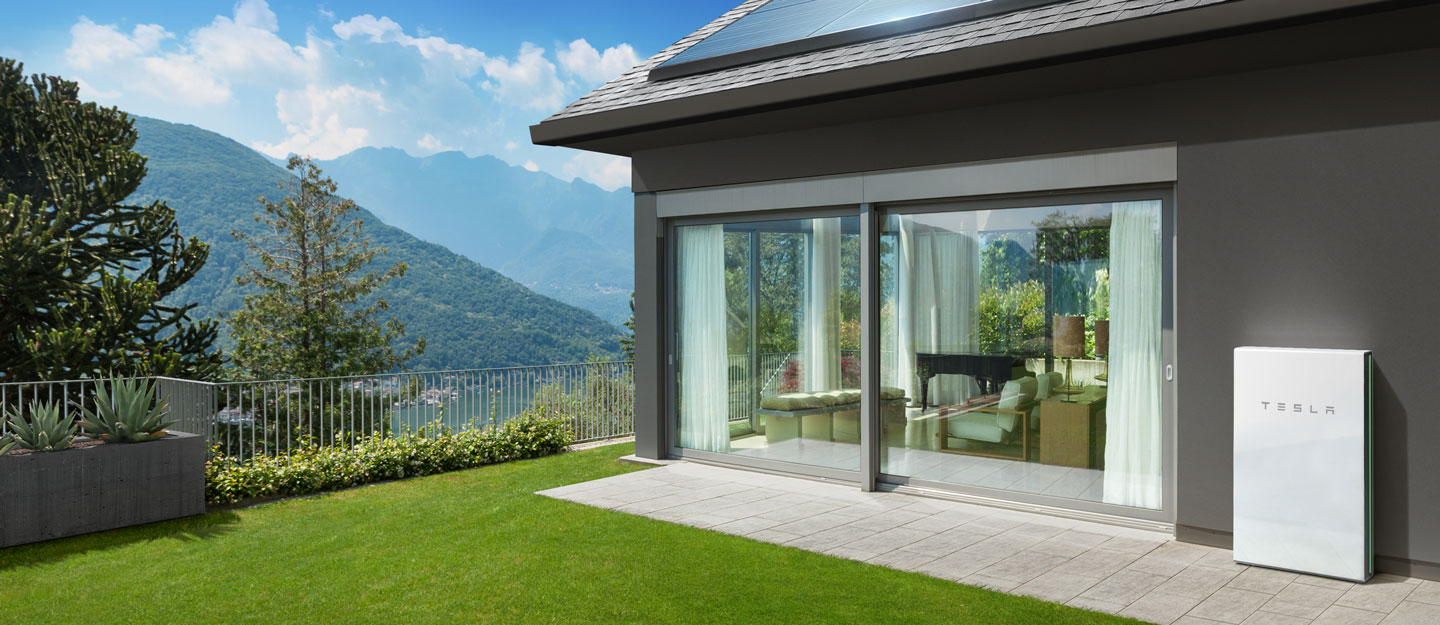
With wildfires blazing through portions of California, Tesla CEO Elon Musk has knocked $1,000 off the price of Solar+Powerwall prices as of today in an effort to provide some assistance to homeowners affected by the power outages resulting from the ongoing fires.
Musk took to Twitter just hours after many residents of Los Angeles were required to evacuate their homes because of wildfires threatening the region. The Tesla CEO tweeted out numerous updates on the advantages of Tesla solar, like its ability to prevent power blackouts in the event of natural disasters. Musk also offered a $1,000 discount to customers in California who are directly affected by the ongoing wildfires.
If you’re directly affected by wildfire power outages, Tesla is reducing Solar+Powerwall prices by $1000 as of today
— Elon Musk (@elonmusk) October 28, 2019
The price reduction for its Solar+Powerwall package stands as another gesture from the electric car maker and its CEO. Musk has always maintained that Tesla’s purpose is not simply to make money. Rather, it is determined to accelerate the world’s adoption of sustainable solutions. Electric cars are one thing, but having homes switch to solar power with a battery-based backup is also a key pillar for this vision.
The value of a solar system and home battery unit is emphasized during times of power outages, such as those affecting parts of CA today. Due to the ongoing fires, particularly the Getty and Kincade Fires, portions of the state have been cut off from power. As noted by a recent CNN report, over a million residents across California currently face multiple days without power. It is these homeowners that stand as potential customers for Tesla’s Solar+Powerwall solutions.
Tesla started pushing its Energy business more this third quarter as the company hit its stride in its Model 3 production, and it showed in the company’s Q3 2019 results. Kunal Girotra, Tesla’s Senior Director, Energy Operations, described this rise in the third-quarter earnings call. “Our solar deployments rose by almost 50% over last quarter, and our energy storage deployments, which include Powerwalls and Powerpacks, grew by 15% to an all-time high of 477 megawatt hours,” he said.
We don’t make much money on this product, so $1000 actually means a lot
— Elon Musk (@elonmusk) October 28, 2019
These improvements came partly as a result of Tesla revamping his residential solar business, launching an affordable rental system that could cost homeowners as low as $50 a month. The company also took the wraps off its new solar solutions for businesses. These updates were accompanied by transparent pricing that gave customers clear expectations about their solar systems.
That being said, Elon Musk has admitted that Tesla does not really turn much of a profit on Solar+Powerwall installations or orders, adding that the $1,000 price reduction is significant. Musk has offered discounts in the past on Tesla’s solar products, including a nationwide price reduction after Pacific Gas and Electric (PG&E) announced mandatory power shutoffs in order to prevent wildfires in Northern California.
The fires in Los Angeles are very reminiscent of last year’s wildfires in the same region. The blazes in 2018 were the worst fires ever recorded in California’s history, destroying over 1.89 million acres of land, according to the California Department of Forestry and Fire Protection.


Energy
Tesla’s newest “Folding V4 Superchargers” are key to its most aggressive expansion yet
Tesla’s folding V4 Supercharger ships 33% more per truck, cuts deployment time and cost significantly.

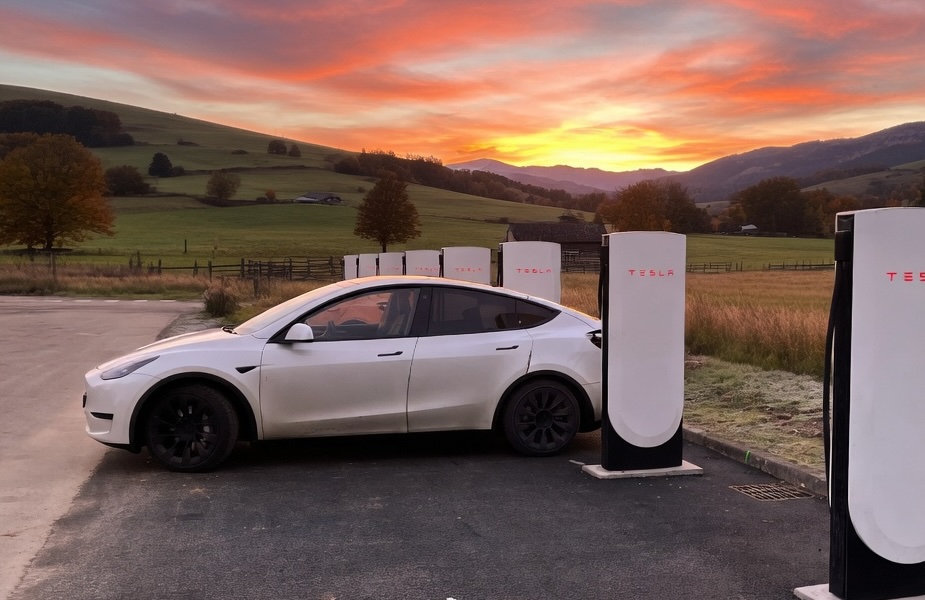
Tesla is rolling out a folding V4 Supercharger design, an engineering change that allows 33% more units to fit on a single delivery truck, cuts deployment time in half, and reduces overall installation cost by roughly 20%.
The folding mechanism addresses one of the least glamorous but most consequential bottlenecks in charging infrastructure: getting hardware from factory floor to job site efficiently. By collapsing the form factor for transit and unfolding into an operational configuration on arrival, the new design dramatically reduces the logistics overhead that has historically slowed Supercharger rollouts, particularly at large or remote sites where multiple units are needed simultaneously.
The timing aligns with a broader acceleration in Tesla’s network strategy. In March 2026, Tesla’s Gigafactory New York produced its final V3 Supercharger cabinet after more than seven years and 15,000 units, pivoting entirely to V4 cabinet production. The V4 cabinet itself is already a generational leap, delivering up to 500 kW per stall for passenger vehicles and up to 1.2 MW for the Tesla Semi, while supporting twice the stalls per cabinet at three times the power density of its predecessor. The folding transport innovation layers logistical efficiency on top of that technical foundation.
Tesla launches first ‘true’ East Coast V4 Supercharger: here’s what that means
Tesla Charging’s Director Max de Zegher, commenting on the V4 cabinet when it launched, captured the operational philosophy behind these changes: “Posts can peak up to 500kW for cars, but we need less than 1MW across 8 posts to deliver maximum power to cars 99% of the time.” The design philosophy has always been about maximizing real-world throughput, not just peak specs, and the folding transport upgrade extends that thinking into the supply chain itself.
Posts can peak up to 500kW for cars, but we need less than 1MW across 8 posts to deliver maximum power to cars 99% of the time.
No more DC busbar between cabinets. Power comes from a single V4 cabinet to 8 stalls. Easier to install, cheaper, more reliable.
Introducing Folding Unit Superchargers
– V4 cabinet with 500kW charging
– 8 posts per unit
– 2 units per truck
– 2 configurations: folded, unfoldedFaster. Cheaper. Better. pic.twitter.com/YyALz0U5cA
— Tesla Charging (@TeslaCharging) March 25, 2026
The network is expanding rapidly on multiple fronts. The first true 500 kW V4 Supercharger on the East Coast opened in Kissimmee, Florida in March 2026, followed closely by a new site in Nashville, Tennessee. A public Megacharger for the Tesla Semi launched in Ontario, California in early March, with 37 additional Megacharger sites targeted for completion by end of year. Meanwhile, more than 27,500 Supercharger stalls are now accessible to non-Tesla EVs from brands including Ford, GM, Rivian, Hyundai, and most recently Stellantis, whose Dodge, Jeep, Ram, Fiat, and Maserati BEV customers gained access in March 2026.
As Tesla pushes toward a denser, faster, and more open charging network, innovations like the folding V4 Supercharger reflect the company’s growing focus on deployment velocity, not just hardware performance. Getting chargers to the ground faster, cheaper, and in greater volume per shipment may ultimately matter as much as the kilowatts they deliver.
Elon Musk
Tesla’s $2.9 billion bet: Why Elon Musk is turning to China to build America’s solar future
Tesla looks to bring solar manufacturing to the US, with latest $2.9 billion bet to acquire Chinese solar equipment.
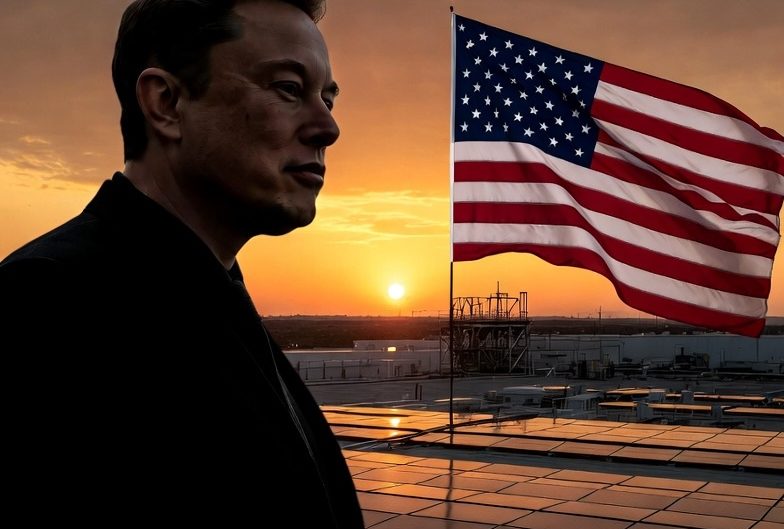
Tesla is reportedly in talks to purchase $2.9 billion worth of solar manufacturing equipment from a group of Chinese suppliers, including Suzhou Maxwell Technologies, which is the world’s largest producer of screen-printing equipment used in solar cell production. According to Reuters sources, the equipment is expected to be delivered before autumn and shipped to Texas, where Tesla plans to anchor its next phase of domestic solar production.
The move is a direct extension of a vision Elon Musk has been building for months. At the World Economic Forum in Davos this past January, Musk announced that both Tesla and SpaceX were independently working to establish 100 gigawatts of annual solar manufacturing capacity inside the United States. Days later, on Tesla’s Q4 2025 earnings call, he made the ambition concrete: “We’re going to work toward getting 100 GW a year of solar cell production, integrating across the entire supply chain from raw materials all the way to finished solar panels.”
Job postings on Tesla’s website reflect that same target, with language explicitly calling for 100 GW of “solar manufacturing from raw materials on American soil before the end of 2028.”
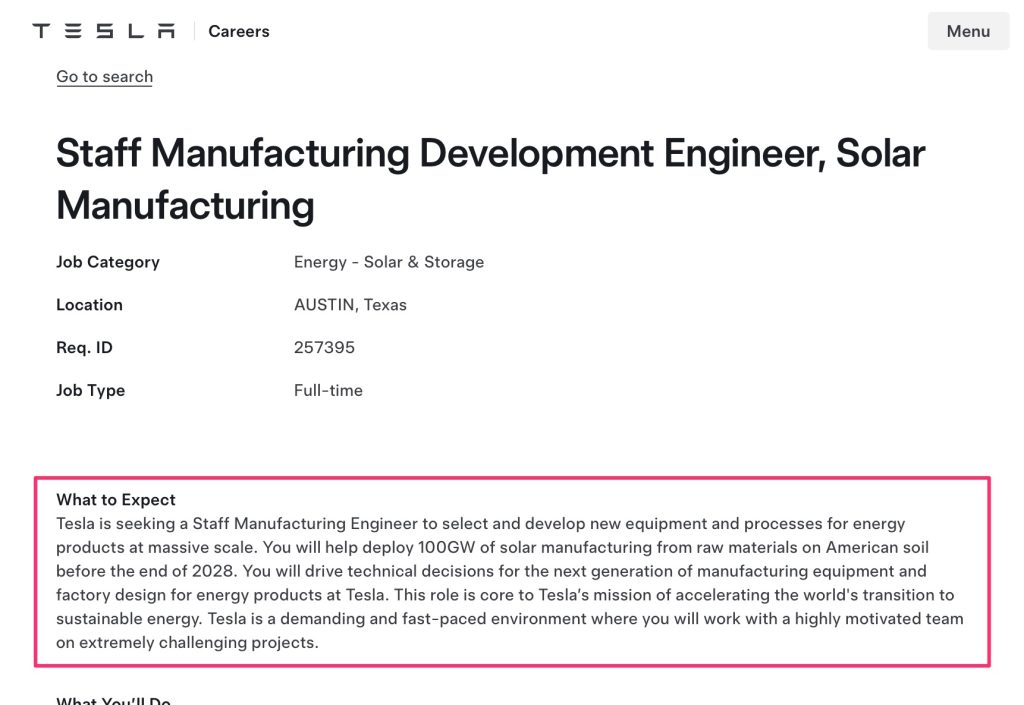
Tesla job listing for Staff Manufacturing Development Engineer, Solar Manufacturing
The urgency behind the latest solar manufacturing target is rooted in a set of rapidly emerging pressures related to AI and Tesla’s own energy business. U.S. power consumption hit its second consecutive record high in 2025 and is projected to climb further through 2026 and 2027, driven largely by the explosion in AI data centers and the broader electrification of transportation. Tesla’s own energy division, which produces the Megapack utility-scale battery storage system, has been growing rapidly, and solar supply is a critical companion component for the business to scale. Musk has argued that solar is not just a clean energy option but the only one that makes economic sense at the scale AI infrastructure demands.
Tesla lands in Texas for latest Megapack production facility
Ironically, the path to domestic solar independence currently runs through China. Sort of.
Despite Tesla’s stated push to localize its supply chain, mirrored recently by the company’s plan for a $4.3 billion LFP battery manufacturing partnership with LG Energy Solution in Michigan, Tesla still relies on China-based suppliers to keep its cost structure intact.
The $2.9 billion equipment deal underscores a tension Musk himself acknowledged at Davos: “Unfortunately, in the U.S. the tariff barriers for solar are extremely high and that makes the economics of deploying solar artificially high, because China makes almost all the solar.” Building the factory in America requires buying the machinery from the country Tesla is trying to reduce its dependence on.
Tesla named by U.S. Gov. in $4.3B battery deal for American-made cells
The regulatory pathway adds another layer of complexity. Suzhou Maxwell has been seeking export approval from China’s commerce ministry, and it remains unclear how quickly that clearance will come. Still, the market has already reacted, with shares in the Chinese firms reportedly involved in the talks surged more than 7% following the Reuters report that broke the story.
Whether Tesla can hit its 2028 target of 100GW of solar manufacturing remains an open question. Though that scale may seem staggering, especially in such a short timeframe, we know that Musk has a documented history of “always pulling it off” in the face of ambitious deadlines that may slip. But, rest assured – it’ll get done.
Elon Musk
Tesla named by U.S. Gov. in $4.3B battery deal for American-made cells
What began as an open secret in the energy industry was confirmed by the U.S. Department of the Interior on Monday: Tesla is the buyer behind LG Energy Solution’s blockbuster $4.3 billion battery supply agreement.
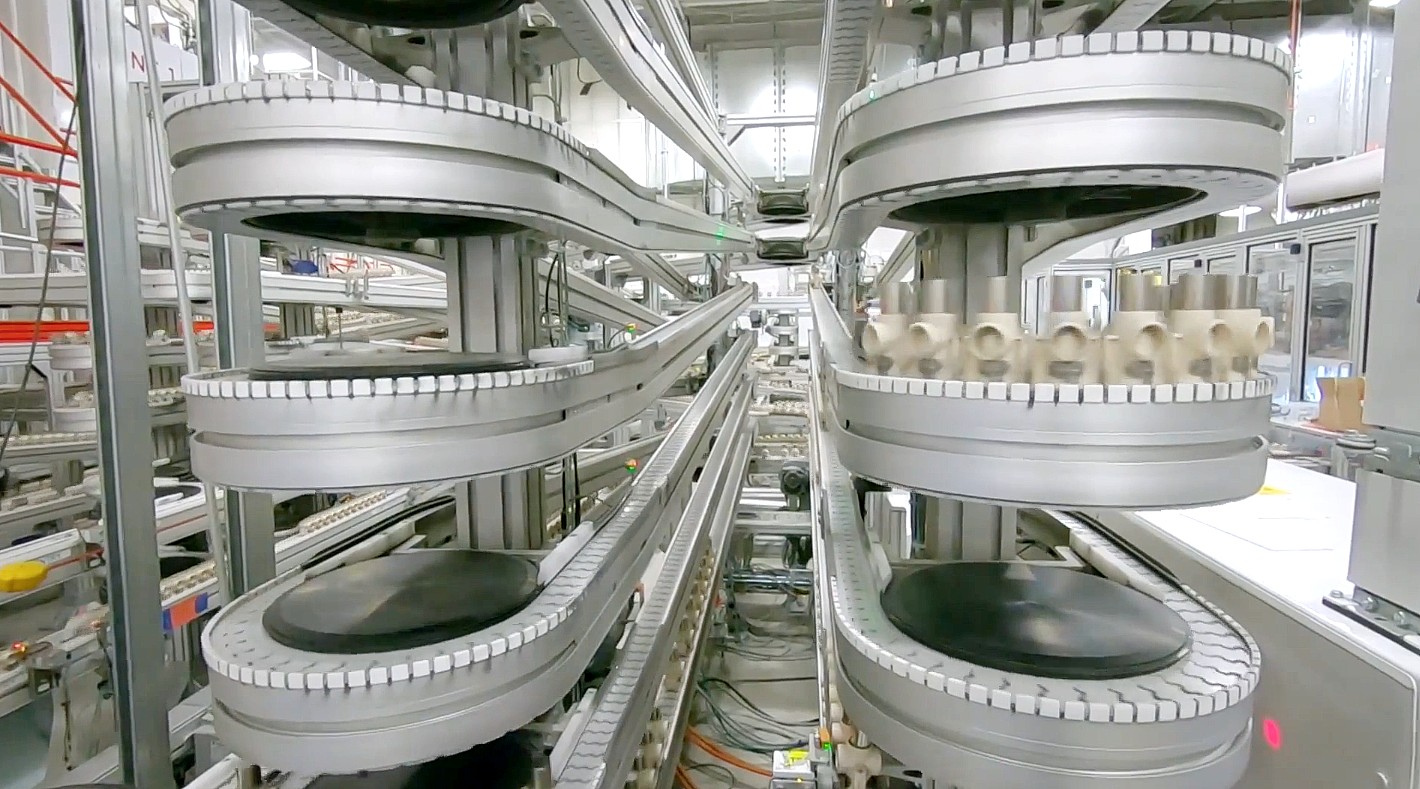
What began as an open secret in the energy industry is becoming more real after the U.S. Department of the Interior named Tesla as the stakeholder in the LG Energy Solution’s blockbuster $4.3 billion battery supply agreement.
Tesla and LG Energy Solution are expanding their partnership to build a LFP prismatic battery cell manufacturing facility in Lansing, Michigan, launching production in 2027. The announcement, made as part of the Indo-Pacific Energy Security Summit results, ends months of speculation.
“American-made cells will power Tesla’s Megapack 3 energy storage systems produced in Houston, creating a robust domestic battery supply chain.”, notes a press release on the U.S. Department of the Interior website.
Tesla has long utilized China’s Contemporary Amperex Technology Co. (CATL), the world’s largest LFP battery maker, as one of its primary suppliers. That relationship made financial sense for years, considering that Chinese LFP cells were cheap, abundant, and reliable. But with escalated tariffs on Chinese imports and an increasingly growing Tesla Energy business that’s particularly reliant on LFP cells for products including its Megapack battery storage units designed for utilities and large-scale commercial projects.
The announcement of a deepened partnership between LG Energy Solution and Tesla has strategic logic for both parties. For Tesla, it secures a tariff-compliant, domestically produced battery supply for its fast-growing energy division. LGES, now producing LFP batteries in Michigan, becomes the only major supplier currently scaling U.S. production, outpacing rivals like Samsung SDI and SK On. LG Energy Solution’s Lansing plant, formerly known as Ultium Cells 3, was previously operated as a joint venture with General Motors. LGES acquired GM’s stake in May 2025 and now fully owns the site, with a production capacity of 50 GWh per year. LG Energy said the contract includes options to extend the supply period by up to seven years and boost volumes based on further consultations.
For the broader industry, the ripple effects are significant. This deal signals that domestic battery manufacturing can be financially viable and not just aspirational. Utilities, energy developers, and rival automakers will take note as American-made LFP supply becomes a competitive reality rather than a distant promise.
For consumers, the benefits will take time but are real. A more resilient, U.S.-based supply chain means fewer price shocks from trade disputes, more stable Megapack availability for the grid storage projects that reduce electricity costs, and long-term downward pressure on energy storage prices as domestic production scales.
Deliveries are set to begin in 2027 and run through mid-2030, and as grid storage demand accelerates, reliable, US-made battery supply is no longer a future ambition. It is becoming a core requirement of the country’s energy strategy.

Tesla removes Model S and X custom orders as sunset officially begins

SpaceX files confidentially for IPO that will rewrite the record books

Elon Musk hints at “official ceremony” with throwback photo to close Tesla Model S, Model X chapter

Elon Musk says Tesla is developing a new vehicle: ‘Way cooler than a minivan’

Elon Musk launches TERAFAB: The $25B Tesla-SpaceXAI chip factory that will rewire the AI industry


