
News
Tesla ride-sharing program: exploring its practicality and real world benefits

Many of the Tesla faithful sat with bated breaths waiting for the Master Plan Part 2 to be published. Once it did, we devoured every word, with some words more surprising than others. Making a pickup truck, while not surprising is thought-provoking. Ride-sharing as a concept, also not very surprising. Ride-sharing using the autonomously driven car that you personally own? Now there’s something to think about.
“In cities where demand exceeds the supply of customer-owned cars, Tesla will operate its own fleet, ensuring you can always hail a ride from us no matter where you are.” – Elon Musk
Let’s consider for a moment what this might look like.
Practicality
My initial thought of an autonomous Tesla was ride-sharing within the same household. My spouse and I have jobs that are in opposite directions, but we also work different hours with him having the far shorter commute. That being said, it would technically be feasible for a car to drop me off at work and make it back home just in time to take him. Then, it would have plenty of time to come back to me before my work day is done. Driving me home would also be tight – but I think the car would make it just in time to drop me off and go grab him. (Anyone else getting wide-eyed at the thought of a car driving you around? I sure am!) The only downside that I can think of is that both of us, at times, like to run errands on a lunch break. Surely with a little planning we could just schedule who will have the car available mid day. For example, on his day the car wouldn’t come back to get me until later in the day. Should I need to use it, it could come back to me earlier. All of this sounds technically feasible but the miles would add up quickly. Over 90 miles a day, to be exact; double what we currently drive combined. This may be obvious, since the car is making each round trip twice, but on paper that distance really hits home. As for cost, our electricity use at home would clearly go up. What would go down, however, is the cost associated with having a second car. I only estimate that the Tesla costs us $50/month to power now but even if it went up to $150, that delta is far less than the savings associated with not having a second car to insure and maintain. (Let alone pay to own/lease, depending on how expensive a car you’d be giving up.)
In this regard, I see practicality as a wash. If technically feasible with your schedule as it would be with ours, it may work. Getting past the mental barrier of having only one car between two adults who drive and work full time however, may be a challenge. Tesla has shifted thinking in many ways already, so it’s possible this will as well. I keep trying to think of reasons why we need two cars but aside from our daily jobs, which a car that can drive us to negates, all I’m coming up with is the rare occasion where we both need to go somewhere different at the same time. Truth be told, I’m sure even that could be worked out in most cases. In those where it can’t? Summon up another autonomous Tesla to drive you where you need to be. Again, this comes with a cost but again, it pales in comparison to the cost to own a second car that spends over 90% of its life parked anyway.
Public Domain
Most Tesla owners I know treat their cars with extreme care. I am no exception. The thought of a stranger taking up residence in my car without me sends shivers down my spine. I guess there is only so much damage a person could do sitting in the back seat being chauffeured, presumably while staring down at their smart phone to pass the time. The after 2am crowd, on the other hand, poses additional risks but I for one wouldn’t send my car out that late. A sick passenger is one danger, sharing the road with impaired drivers in (gasp!) manual driving mode is another. How do you specify who is eligible for pick up anyway? Imagine the headline “Tesla picks up prison escapee and drives it across the state line.” Add in your fear here (underage runaway, woman in labor, very sweaty marathon runner.)
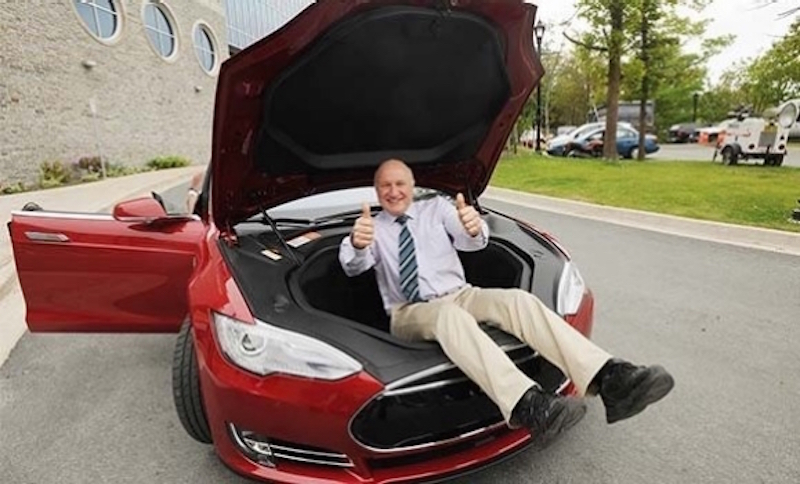
Battery expert Jeff Dahn inside the frunk of a red Model S [Source: dal.ca]
Availability
This is the main point I’ve heard brought up in my quick chats about this topic. How do you schedule your car to go off and pick people up within a strict window until you need it again? How does traffic play a part? Do you wait until you’re home for the evening and send it out, knowing full well it’ll definitely make it home by the next morning? Or do you risk letting it take a 4pm pickup when doing so could leave you stranded at the office? How far would you let your car go anyway? What about charge? You might need a certain range to get home so can you restrict your car’s pickup jobs to a certain distance? What if it’s cold outside?
In this regard, I have a lot more questions than answers. I have no interest in my car being late to bring me to or from work. It’s my car after all. I have even less interest in being picked up without enough range to get me where I’m going. I live in a major city and I don’t expect to see a Supercharger within our limits any time soon. There are now chargers within 100 miles of me in all major directions, which very easily enables long distance travel as intended. I’m happy with this, as I certainly don’t find myself needing a fast charge close to home. If I plan on letting my car work all day however, that may change. Letting it go home and plug in is impractical at the current rate of my charging setup. 29 miles per hour doesn’t speak well to quick turnaround.

Cost
All of the questions above can be overlooked for a price. The big question is what that price might be. In my own life, I wouldn’t entertain the idea if it made me $100 per month. If it made me $1,000, I’d be the first in line to sign up. Everyone has a different sensitivity to price but I’d be willing to bet that even the least price sensitive people would at least consider using their Tesla in this way if the resulting income matched or exceeded their car payment. Getting to own and drive what I consider the world’s best car for no monthly payment is an offer that’d be too hard to refuse.
Those were just arbitrary numbers though. What might be realistic? I’d like to think that tomorrow’s Tesla is comparable to today’s Uber Black. My Uber app only gives prices for Uber X but I know that Black costs more. At this very moment, a quick ride from my work place to the very center of our downtown is $12 on Uber X. Let’s estimate that it would be $20 for Black. In fact, let’s assume the average ride would net $20. The car would certainly be smart enough to try to do another pickup on the way back to me so I can probably count on $40 as a “round trip” made during my work day. If I let the car drive two round trips on Friday and Saturday nights as well as one each work day, that bring us up to 9 round trips per week, or $360. Already, this isn’t sounding so bad. Let’s scale that down due to some Tesla profit and market saturation. It still seems very reasonable that with little time commitment, $200 per week is reasonable. We’re at $860 per month. If you, like me, go out into a city once or twice a month yourself and spend anywhere from $10-30 in parking or cab rides, you could be earning/saving a combined $900 each month. I suppose I just learned that yes, I’d probably consider letting my car go out and work for me. Even at half the dollars I’m picturing, a Model 3 payment would be covered.
Convenience
Airports. Nights out drinking. Events out of town that force a one night hotel stay. Finding parking in crowded places. Paying for parking at concert or sports venues. These are some of the most popular reasons people today might use ride sharing services even if they have a car. It would sure be convenient if your own car could handle these occasions for you. This, I know, has more to do with autonomy than making the decision to allow your car to work for you. But it’s only a small leap from one to the other. I say this because if my car dropped me off at an Eagles game, I wouldn’t want it paying for parking while it waits. I’d want it headed back home, because that’s a safe place for it to wait. But if it’s going to driving alone anyway, why not pick someone up? It’ll be an exceptionally convenient life when cars can drive for us.
Implementation
How might a program like this actually work? Given a very elementary level of consideration, I imagine the same way Uber works now. I picture a beautiful and streamlined app interface on your smart phone that allows you to log in when you want the car to be able to drive. I imagine the ability to draw a border around the distance you’re willing to let your car travel, as well as the ability to set a time that the car has to return by. Many people far smarter than I will program fantastic algorithms that only allow the car to accept rides that, given traffic and other factors, will get the car back within its allowable time window. I also picture the ability to send the car out with a child’s car seat, if summoned. That would require a bit of interaction, as the app would have to notify you to install it first unless you leave one installed. Speaking of app, I imagine it would notify you that it’s about to head out. (“Mom! I’m going out for a bit. Be back in an hour!”)
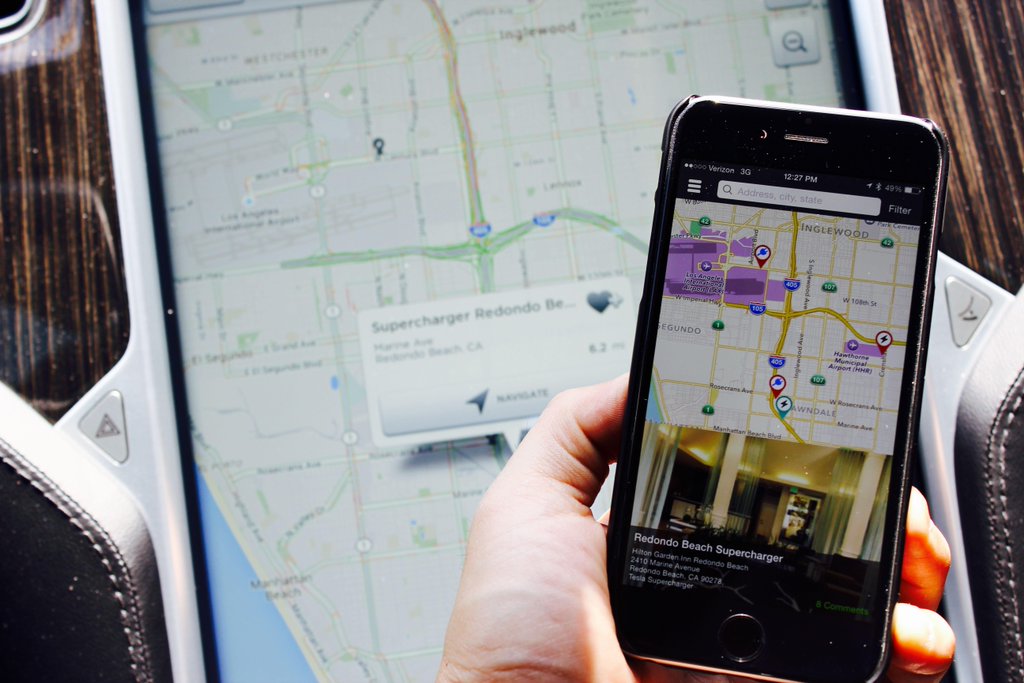
Supercharger map with crowdsourced recommendations from Tesla owners
Challenges
Much like I expect to be challenging for vehicle autonomy in general, the regulatory nightmare that is a driver-less vehicle will be the biggest hurdle to jump, in my humble opinion. Those aforementioned people way smarter than I? They’ll figure out programming the self driving technology sooner than later. They’ve already done a lot. Those perhaps-not-as-smart people we elect to office? Those folks I’m not too confidant in. Well, not them per say. The big jumbled mess of a political system that in the United States and so many other places churns out rules based on the almighty dollar rather than the good of citizens. Right here in my own home town, Uber is technically not legal. It’s legal in the state, just not the city, which has a cluster of a Parking Authority that somehow controls taxis. Except, by the way, when the Democratic National Convention came to town around the same time our local train system was having problems. Then the city made a special exception to “let” Uber operate. (Spoiler alert: it operates anyway.) My point is to illustrate that all the engineering and data in the world won’t guarantee that Tesla will even be allowed to operate driver-less ride sharing services as quickly as the technology itself will be available. That to me, is challenge numero uno.
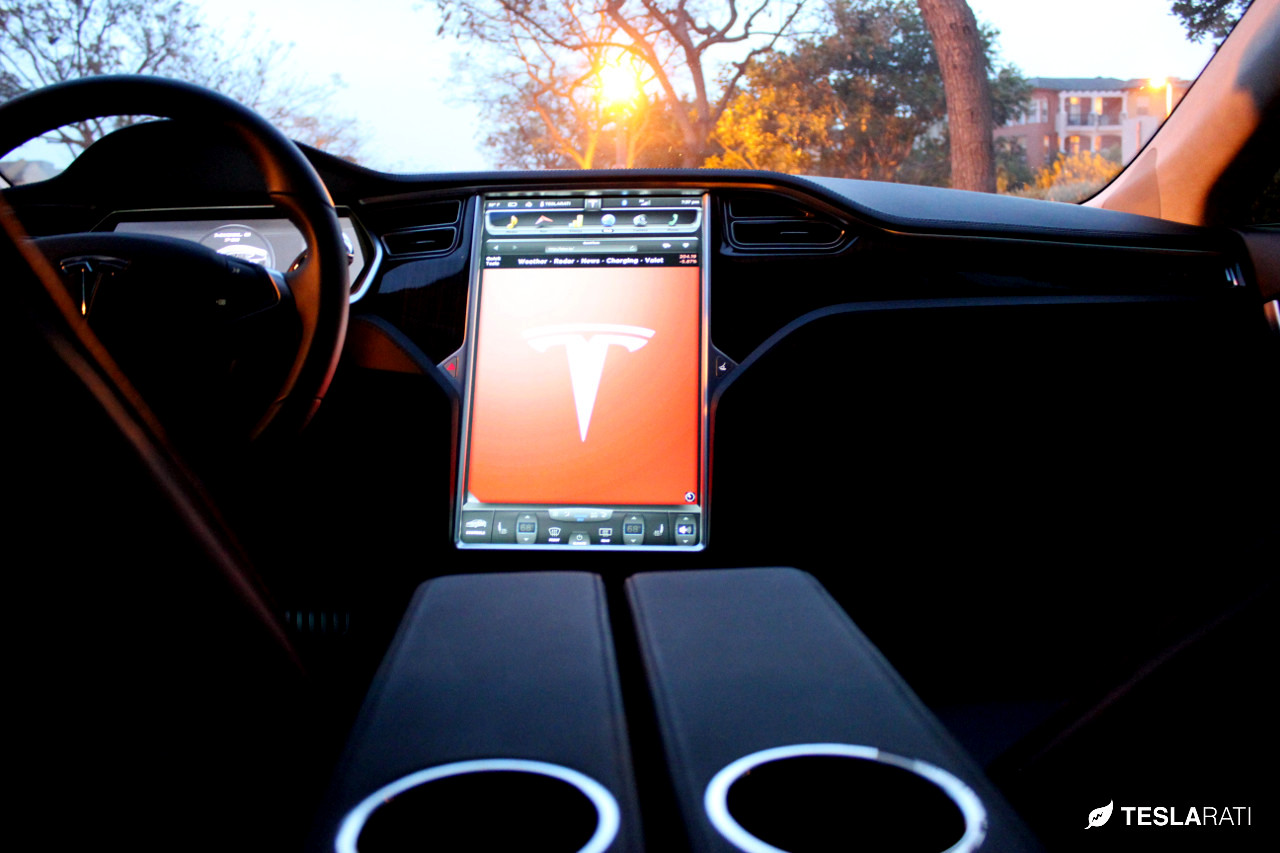
The technology itself though, still has a lot of work ahead. Just like any parent tells their teenage driver “It’s not you, it’s the other cars on the road I’m worried about.” A Tesla can be a flawless driver 100% of the time on empty roads and that still won’t even come close to accurately predicting how it will drive when sharing the roads with distracted drivers, well-meaning drivers in poor weather conditions, and anything in between. Temporary lane restrictions are hard to compute, as is seeing a car that you just know is going to make a move without a signal. Years of driving experience allows people to read another car’s “body language” so to speak. Will a car ever be able to do the same?
An extension on the both of the topics above, I can only imagine the bureaucratic and technological nightmare that will result if (when!) cars have to learn to talk to each other. Surely that’s where we are headed. It’d be safer that way. But can you see BMW, who I suspect is a little hurt right now, cooperating with Tesla? I can’t but I hope they’ll have no choice. Step up or step aside.
Production vs. demand is another potential challenge. If the ability to buy a car and have it work for you to the tune of effectively negating your payment arrives sooner than Tesla exponentially increases its output of cars, we’ll have a problem. Maybe I’m biased, but I assume a darn lot of people would jump at the chance of driving a car that pays for itself. I mean, I wasn’t wrong when I called myself crazy for assuming there would be 50-100,000 people would put in reservations for a Model 3. Well, I was wrong, but in the right direction.
What do you envision ride-sharing capability looking like? What challenges will it face? Drop me a comment.





Elon Musk
Tesla investors will be shocked by Jim Cramer’s latest assessment
Jim Cramer is now speaking positively about Tesla, especially in terms of its Robotaxi performance and its perception as a company.

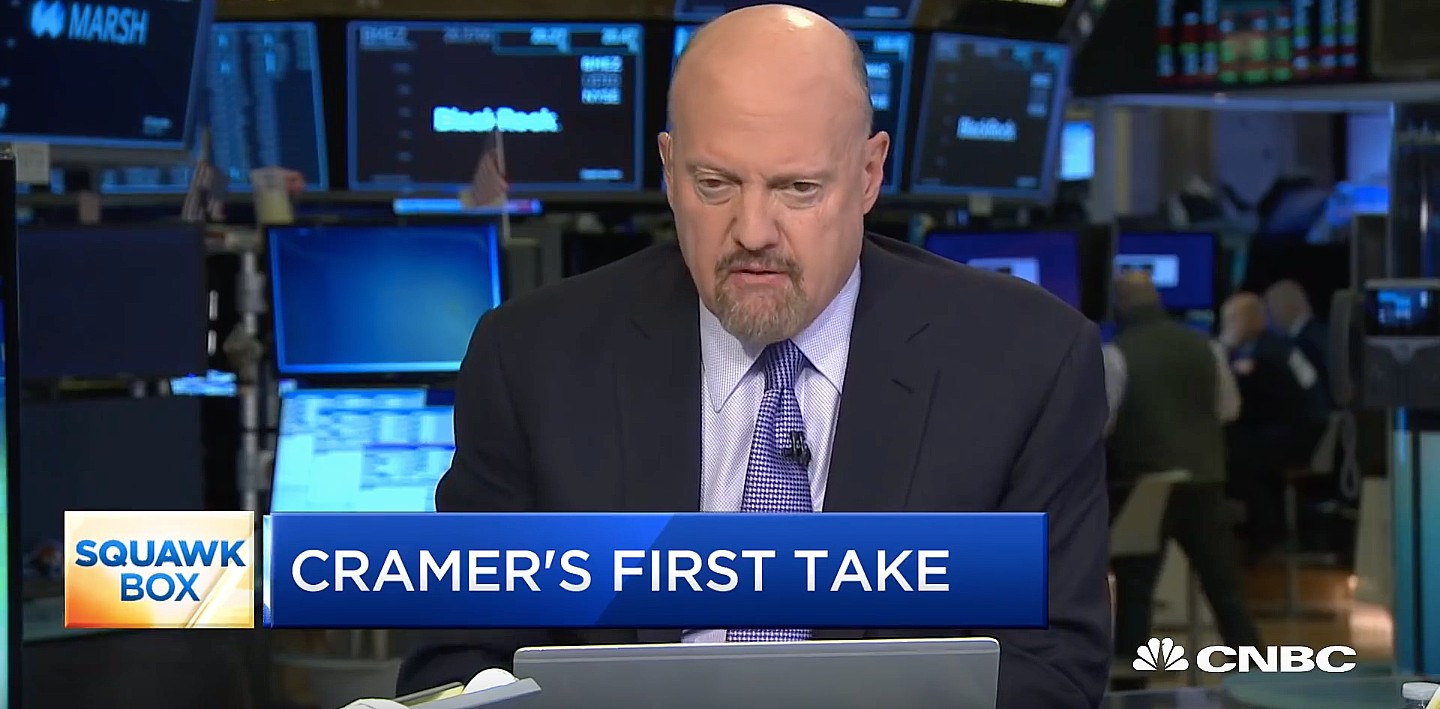
Tesla investors will be shocked by analyst Jim Cramer’s latest assessment of the company.
When it comes to Tesla analysts, many of them are consistent. The bulls usually stay the bulls, and the bears usually stay the bears. The notable analysts on each side are Dan Ives and Adam Jonas for the bulls, and Gordon Johnson for the bears.
Jim Cramer is one analyst who does not necessarily fit this mold. Cramer, who hosts CNBC’s Mad Money, has switched his opinion on Tesla stock (NASDAQ: TSLA) many times.
He has been bullish, like he was when he said the stock was a “sleeping giant” two years ago, and he has been bearish, like he was when he said there was “nothing magnificent” about the company just a few months ago.
Now, he is back to being a bull.
Cramer’s comments were related to two key points: how NVIDIA CEO Jensen Huang describes Tesla after working closely with the Company through their transactions, and how it is not a car company, as well as the recent launch of the Robotaxi fleet.
Jensen Huang’s Tesla Narrative
Cramer says that the narrative on quarterly and annual deliveries is overblown, and those who continue to worry about Tesla’s performance on that metric are misled.
“It’s not a car company,” he said.
He went on to say that people like Huang speak highly of Tesla, and that should be enough to deter any true skepticism:
“I believe what Musk says cause Musk is working with Jensen and Jensen’s telling me what’s happening on the other side is pretty amazing.”
Tesla self-driving development gets huge compliment from NVIDIA CEO
Robotaxi Launch
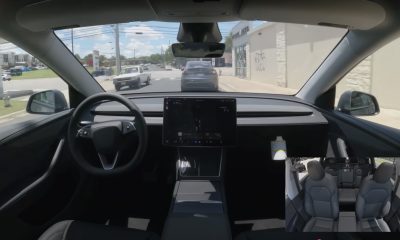
Many media outlets are being extremely negative regarding the early rollout of Tesla’s Robotaxi platform in Austin, Texas.
There have been a handful of small issues, but nothing significant. Cramer says that humans make mistakes in vehicles too, yet, when Tesla’s test phase of the Robotaxi does it, it’s front page news and needs to be magnified.
He said:
“Look, I mean, drivers make mistakes all the time. Why should we hold Tesla to a standard where there can be no mistakes?”
It’s refreshing to hear Cramer speak logically about the Robotaxi fleet, as Tesla has taken every measure to ensure there are no mishaps. There are safety monitors in the passenger seat, and the area of travel is limited, confined to a small number of people.
Tesla is still improving and hopes to remove teleoperators and safety monitors slowly, as CEO Elon Musk said more freedom could be granted within one or two months.
News
Tesla launches ultra-fast V4 Superchargers in China for the first time
Tesla has V4 Superchargers rolling out in China for the first time.
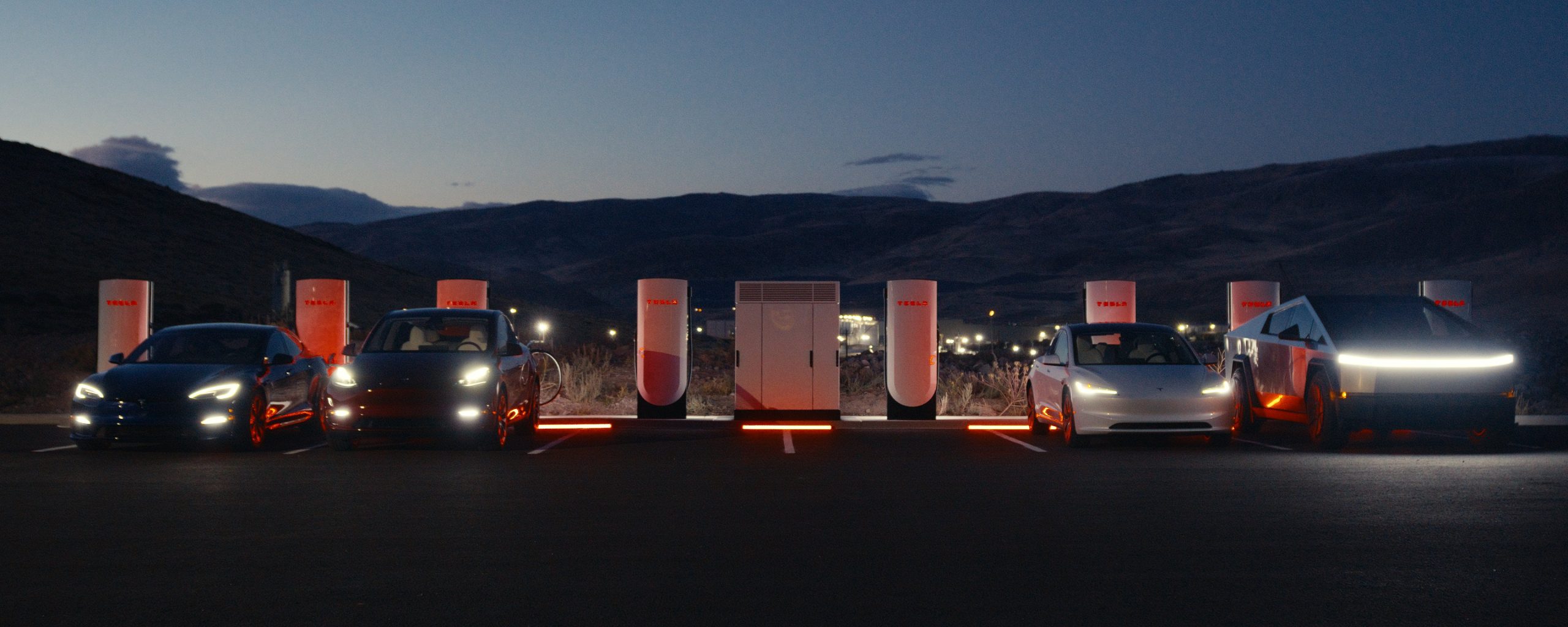
Tesla already has nearly 12,000 Supercharger piles across mainland China. However, the company just initiated the rollout of the ultra-fast V4 Superchargers in China for the first time, bringing its quick-charging piles to the country for the first time since their launch last year.
The first batch of V4 Superchargers is now officially up and running in China, the company announced in a post on Chinese social media outlet Weibo today.
The company said in the post:
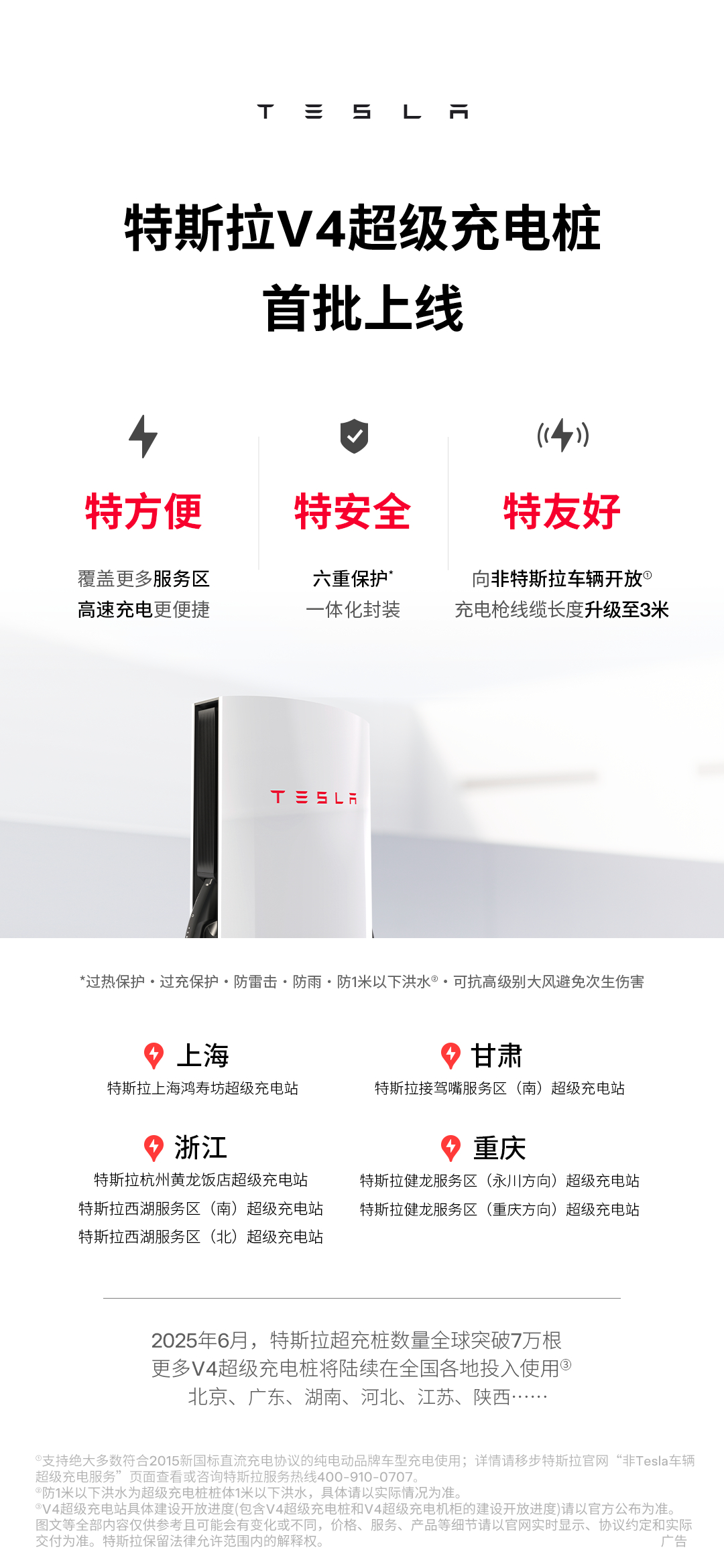
“The first batch of Tesla V4 Superchargers are online. Covering more service areas, high-speed charging is more convenient, and six-layer powerful protection such as rain and waterproof makes charging very safe. Simultaneously open to non-Tesla vehicles, and other brands of vehicles can also be charged. There are more than 70,000 Tesla Superchargers worldwide. The charging network layout covers 100% of the provincial capitals and municipalities in mainland China. More V4 Superchargers will be put into use across the country. Optimize the charging experience and improve energy replenishment efficiency. Tesla will accompany you to the mountains, rivers, lakes, and seas with pure electricity!”
The first V4 Superchargers Tesla installed in China are available in four cities across the country: Shanghai, Zhejiang, Gansu, and Chongqing.
Credit: Tesla China
Tesla has over 70,000 Superchargers worldwide. It is the most expansive and robust EV charging network in the world. It’s the main reason why so many companies have chosen to adopt Tesla’s charging connector in North America and Europe.
In China, some EVs can use Tesla Superchargers as well.
The V4 Supercharger is capable of charging vehicles at speeds of up to 325kW for vehicles in North America. This equates to over 1,000 miles per hour of charging.
Elon Musk
Elon Musk hints at when Tesla could reduce Safety Monitors from Robotaxi
Tesla could be reducing Safety Monitors from Robotaxi within ‘a month or two,’ CEO Elon Musk says.
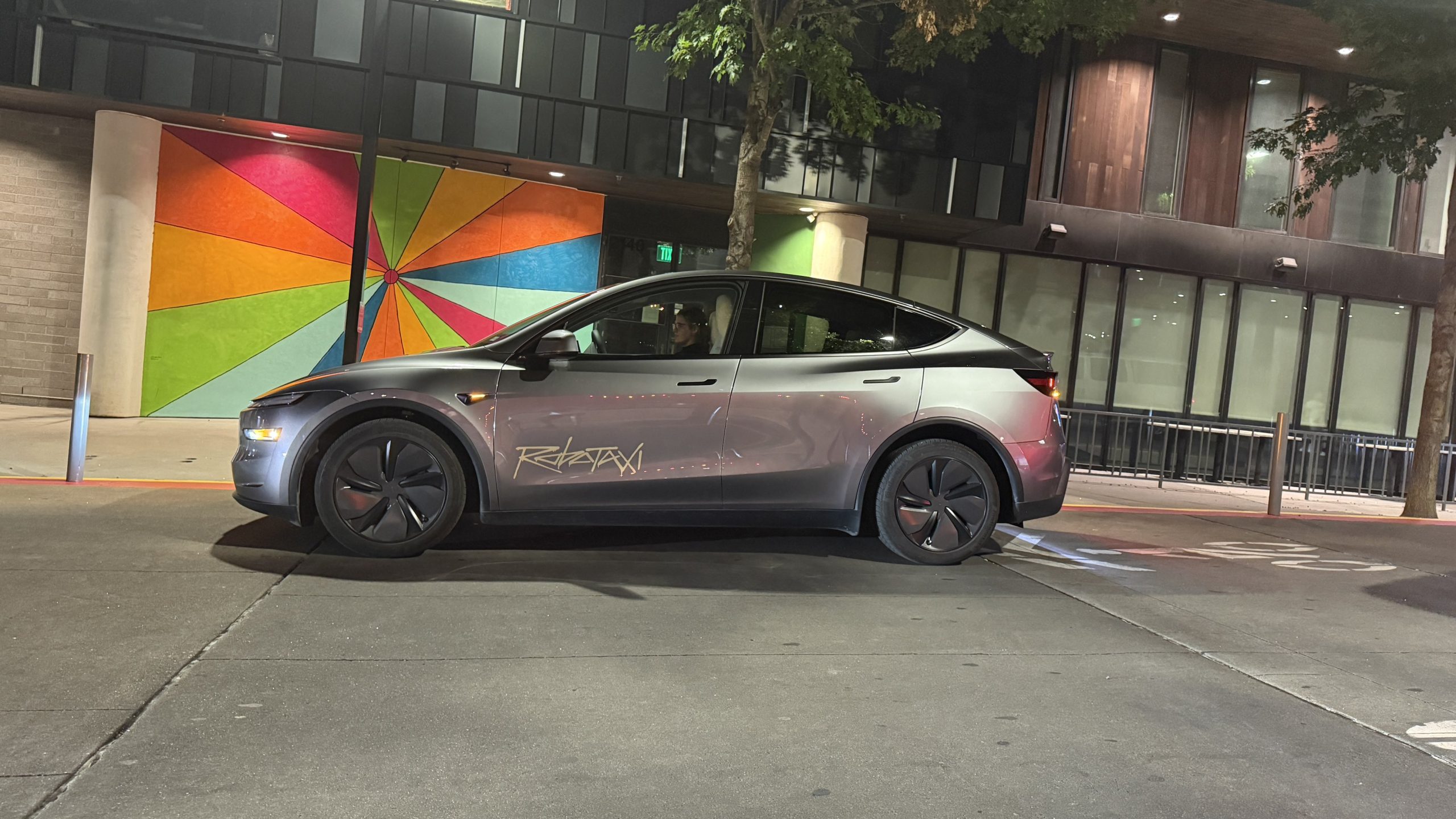
Elon Musk hinted at when Tesla could begin reducing Safety Monitors from its Robotaxis. Safety Monitors are Tesla employees who sit in the front passenger seat during the driverless rides, and are there to ensure safety for occupants during the earliest rides.
Tesla launched its Robotaxi fleet in Austin last Sunday, and after eight days, videos and reviews from those who have ridden in the driverless vehicles have shown that the suite is safe, accurate, and well coordinated. However, there have been a few hiccups, but nothing that has put anyone’s safety in danger.
A vast majority — close to all of the rides — at least according to those who have ridden in the Robotaxi, have been performed without any real need for human intervention. We reported on what was the first intervention last week, as a Safety Monitor had to step in and stop the vehicle in a strange interaction with a UPS truck.
Watch the first true Tesla Robotaxi intervention by safety monitor
The Tesla and UPS delivery truck were going for the same street parking space, and the Tesla began to turn into it. The UPS driver parallel parked into the spot, which was much smaller than his truck. It seemed to be more of an instance of human error instead of the Robotaxi making the wrong move. This is something that the driverless cars will have to deal with because humans are aggressive and sometimes make moves they should not.
The Safety Monitors have not been too active in the vehicles. After all, we’ve only seen that single instance of an intervention. There was also an issue with the sun, when the Tesla braked abnormally due to the glare, but this was an instance where the car handled the scenario and proceeded normally.
With the Robotaxi fleet operating impressively, some are wondering when Tesla will begin scaling back both the Safety Monitors and Teleoperators that it is using to ensure safety with these early rides.
CEO Elon Musk answered the inquiry by stating, “As soon as we feel it is safe to do so. Probably within a month or two.”
As soon as we feel it is safe to do so.
Probably within a month or two. We continue to improve the Tesla AI with each mile driven.
— Elon Musk (@elonmusk) June 30, 2025
Musk’s response seems to confirm that there will be fewer Teleoperators and Safety Monitors in the coming months, but there will still be some within the fleet to ensure safety. Eventually, that number will get to zero.
Reaching a point where Tesla’s Robotaxi is driverless will be another significant milestone for the company and its path to fully autonomous ride-sharing.
Eventually, Tesla will roll out these capabilities to consumer-owned vehicles, offering them a path to generate revenue as their car operates autonomously and completes rides.
For now, Tesla is focusing on perfecting the area of Austin where it is currently offering driverless rides for just $4.20 to a small group of people.

Tesla investors will be shocked by Jim Cramer’s latest assessment

Tesla launches ultra-fast V4 Superchargers in China for the first time

Elon Musk hints at when Tesla could reduce Safety Monitors from Robotaxi


-
 News5 days ago
Tesla Robotaxi’s biggest challenge seems to be this one thing
-
 News2 weeks ago
Tesla confirms massive hardware change for autonomy improvement
-
 Elon Musk2 weeks ago
Elon Musk slams Bloomberg’s shocking xAI cash burn claims
-
 News2 weeks ago
Tesla China roars back with highest vehicle registrations this Q2 so far
-
 News2 weeks ago
Tesla features used to flunk 16-year-old’s driver license test
-
 News2 weeks ago
Texas lawmakers urge Tesla to delay Austin robotaxi launch to September
-
 News2 weeks ago
Tesla dominates Cars.com’s Made in America Index with clean sweep
-

 News2 weeks ago
Tesla’s Grok integration will be more realistic with this cool feature