News
Tesla’s launch of Model Y RWD is the nail in the coffin at the worst time for legacy auto

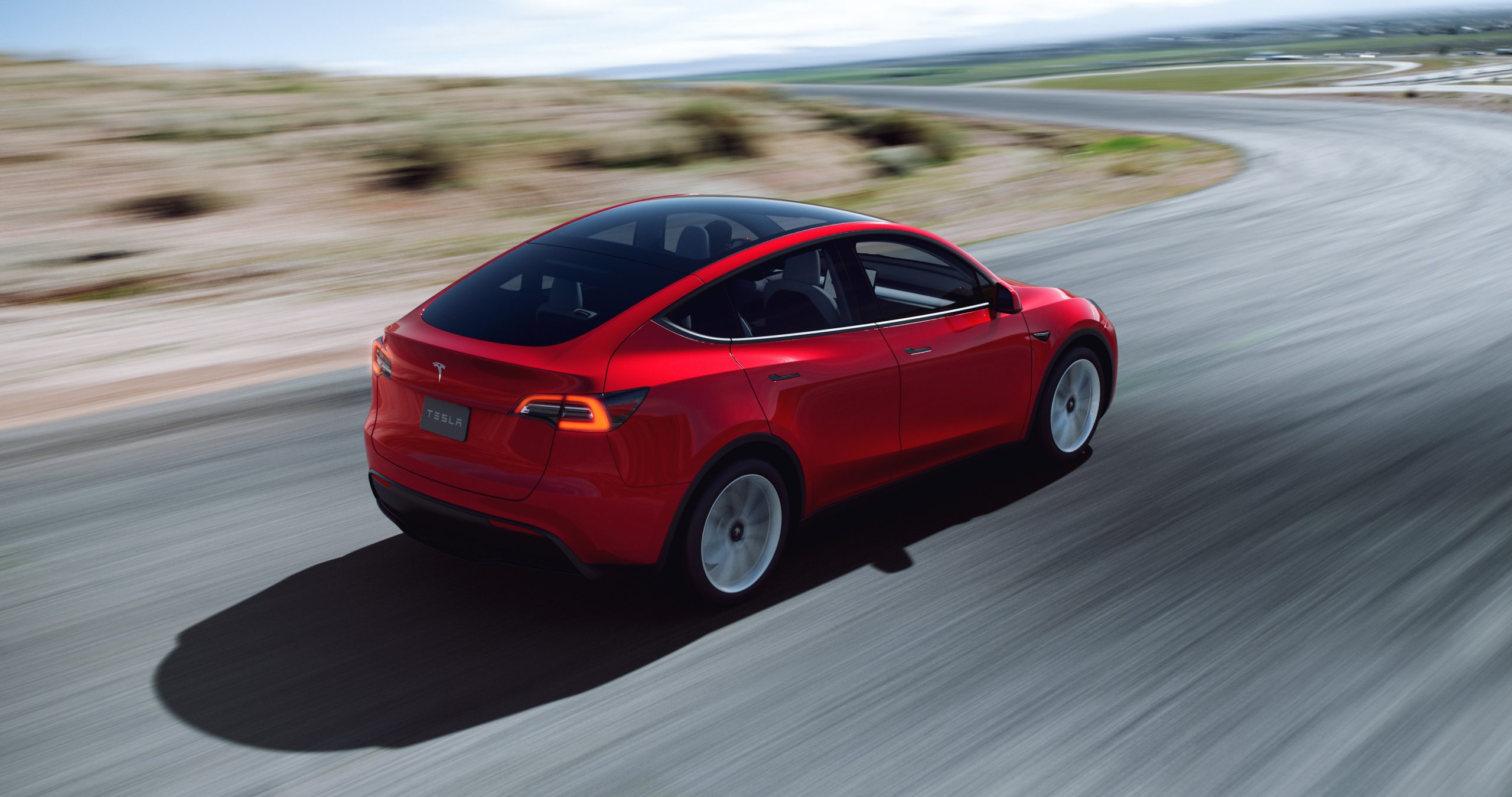
Tesla’s launch of the Model Y Rear-Wheel-Drive (RWD) comes at perhaps the worst time for legacy automotive companies. It is affordable, comparable to similar models from competitors, and is perhaps the nail in the coffin, especially for the U.S. market, as it is an affordable car that features some of the best add-ons that EV buyers could need.
Last night, Tesla launched the Model Y RWD on its website, and with federal and local incentives, it could cost buyers under $31,000 as it qualifies for the full EV tax credit from the government. Packing the LFP, or lithium iron phosphate battery pack, Tesla has brought its most popular car to an affordable level with reasonable range ratings and more than acceptable performance metrics.
While it was a timely offering in terms of Tesla’s trek for 1.8 million deliveries this year after a lackluster Q3 due to factory upgrades that required production pauses, this vehicle offers the automaker two things:
- A new mode of demand for the Model Y, especially in the U.S. market, where it has already been extremely popular
- Another edge over the already-frustrated competition, which is falling further behind due to a number of factors, and has already thrown in the towel to Tesla and will use its Superchargers next year because developing infrastructure is difficult
Of course, the Model Y RWD is not the best crossover out there. We would likely reserve this for the Long Range version of the Model Y, which offers more travel distance per charge and better performance metrics.
That’s not to say that the Model Y RWD is something worth overlooking because, for many, it is the answer to the question they’ve had: how will I put the most popular EV in the U.S. in my driveway for roughly $35,000?
This was Tesla’s answer.
Obviously, there is no shortage of people who are at least thinking about buying an EV. Recent figures have shown that Tesla commands the U.S. EV market by a considerable margin, and although it seems there is still plenty of demand for its vehicles in the North American market, Tesla still has to find ways to cater to customers who need certain vehicles at certain price points.
The Long Range Model Y is an ideal car for most people and families. Crossovers are an extremely sought-after body style in this market, but they come at a price. Give someone who needs a crossover EV at a price they cannot pass up and pack on the world’s most expansive charging network on top of it, and it is simply not a matter of whether people will buy it. It’s a matter of when, and how many will be bought.
It is no secret that people may be somewhat worried that Tesla may not reach its 1.8 million unit delivery goal for the year. Even with the Model 3+, or Highland, whatever you want to call it, starting deliveries this month in Europe, Asia, and the Middle East and the Cybertruck likely beginning deliveries soon, there still needs to be some movement in the U.S. market.
Cybertruck deliveries are likely going to be somewhat small for the last quarter of the year, and Highland will contribute plenty of units to the Q4 figures, but the U.S. is still where Tesla dominates the most, but neither of these vehicles are available here yet.
Enter the Model Y RWD as the nail in the coffin for companies that are either striking due to UAW demands for better wages and benefits, or are struggling with EV software and quality, or just an overall lack of awareness in terms of the auto market.
Yes, there are some people out there that have no interest in an EV. However, there are plenty that are. Ford, GM, and Stellantis are not building any in the U.S. currently because of the UAW strike, Volkswagen may have some things to offer, but it hasn’t chosen to adopt the NACS charging connector to gain access to the Supercharger network. Hyundai is still early in its EV venture, and the IONIQ is certainly an attractive option, but the Model Y RWD will trump it because of its price and Tesla’s overall advantages, including charging and overall EV prowess.
We have talked plenty about nails in the coffin for EV makers before, but with a new demand trigger with the Model Y RWD for Tesla and Detroit pausing EV production while the terms of a new UAW contract get worked out, this is spelling nothing but trouble for Tesla’s competitors.
The Model Y RWD has opened a new can of worms for competitors to try and combat. Right now, at least in the U.S., it’s Tesla’s world, and competitors are just living in it.
I’d love to hear from you! If you have any comments, concerns, or questions, please email me at joey@teslarati.com. You can also reach me on Twitter @KlenderJoey, or if you have news tips, you can email us at tips@teslarati.com.


Elon Musk
Elon Musk’s xAI brings 1GW Colossus 2 AI training cluster online
Elon Musk shared his update in a recent post on social media platform X.

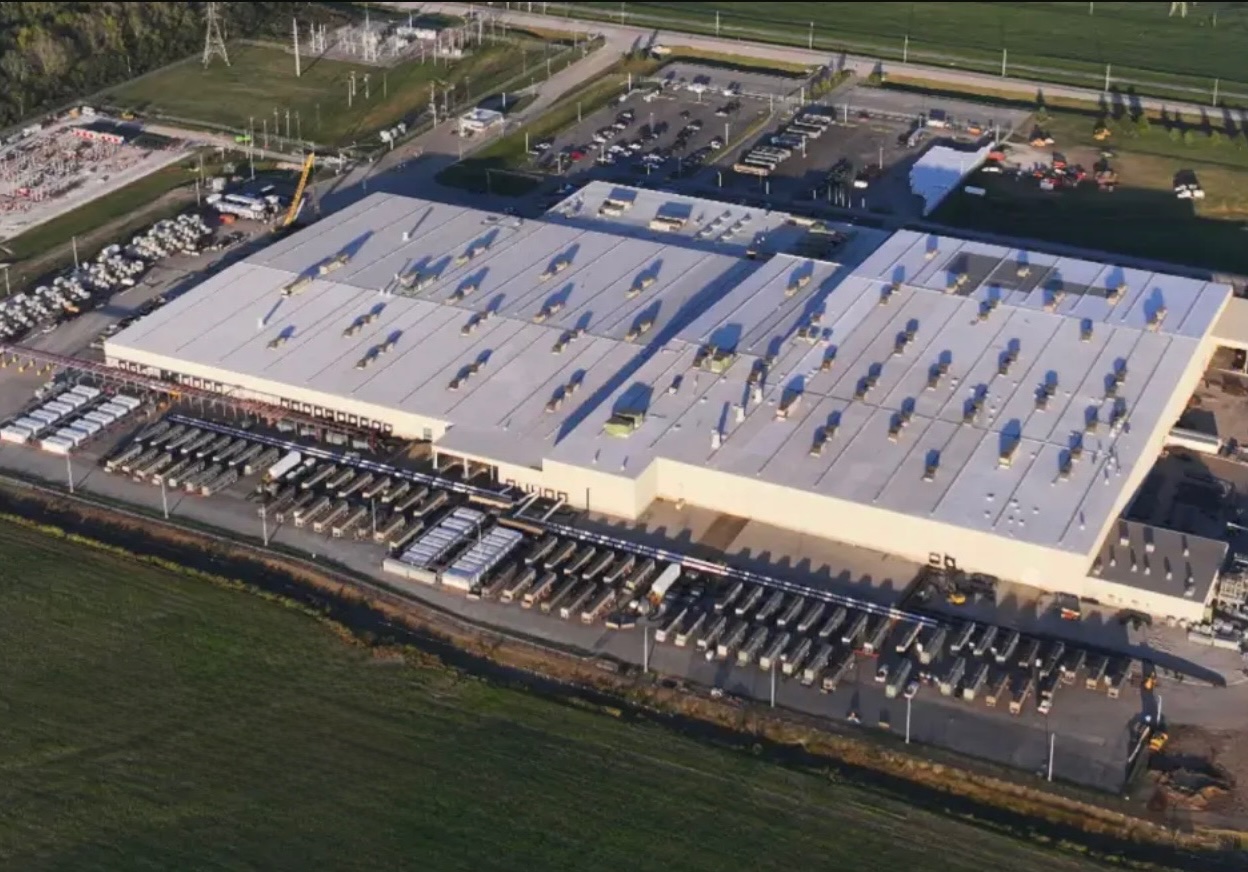
xAI has brought its Colossus 2 supercomputer online, making it the first gigawatt-scale AI training cluster in the world, and it’s about to get even bigger in a few months.
Elon Musk shared his update in a recent post on social media platform X.
Colossus 2 goes live
The Colossus 2 supercomputer, together with its predecessor, Colossus 1, are used by xAI to primarily train and refine the company’s Grok large language model. In a post on X, Musk stated that Colossus 2 is already operational, making it the first gigawatt training cluster in the world.
But what’s even more remarkable is that it would be upgraded to 1.5 GW of power in April. Even in its current iteration, however, the Colossus 2 supercomputer already exceeds the peak demand of San Francisco.
Commentary from users of the social media platform highlighted the speed of execution behind the project. Colossus 1 went from site preparation to full operation in 122 days, while Colossus 2 went live by crossing the 1-GW barrier and is targeting a total capacity of roughly 2 GW. This far exceeds the speed of xAI’s primary rivals.
Funding fuels rapid expansion
xAI’s Colossus 2 launch follows xAI’s recently closed, upsized $20 billion Series E funding round, which exceeded its initial $15 billion target. The company said the capital will be used to accelerate infrastructure scaling and AI product development.
The round attracted a broad group of investors, including Valor Equity Partners, Stepstone Group, Fidelity Management & Research Company, Qatar Investment Authority, MGX, and Baron Capital Group. Strategic partners NVIDIA and Cisco also continued their support, helping xAI build what it describes as the world’s largest GPU clusters.
xAI said the funding will accelerate its infrastructure buildout, enable rapid deployment of AI products to billions of users, and support research tied to its mission of understanding the universe. The company noted that its Colossus 1 and 2 systems now represent more than one million H100 GPU equivalents, alongside recent releases including the Grok 4 series, Grok Voice, and Grok Imagine. Training is also already underway for its next flagship model, Grok 5.
Elon Musk
Tesla AI5 chip nears completion, Elon Musk teases 9-month development cadence
The Tesla CEO shared his recent insights in a post on social media platform X.
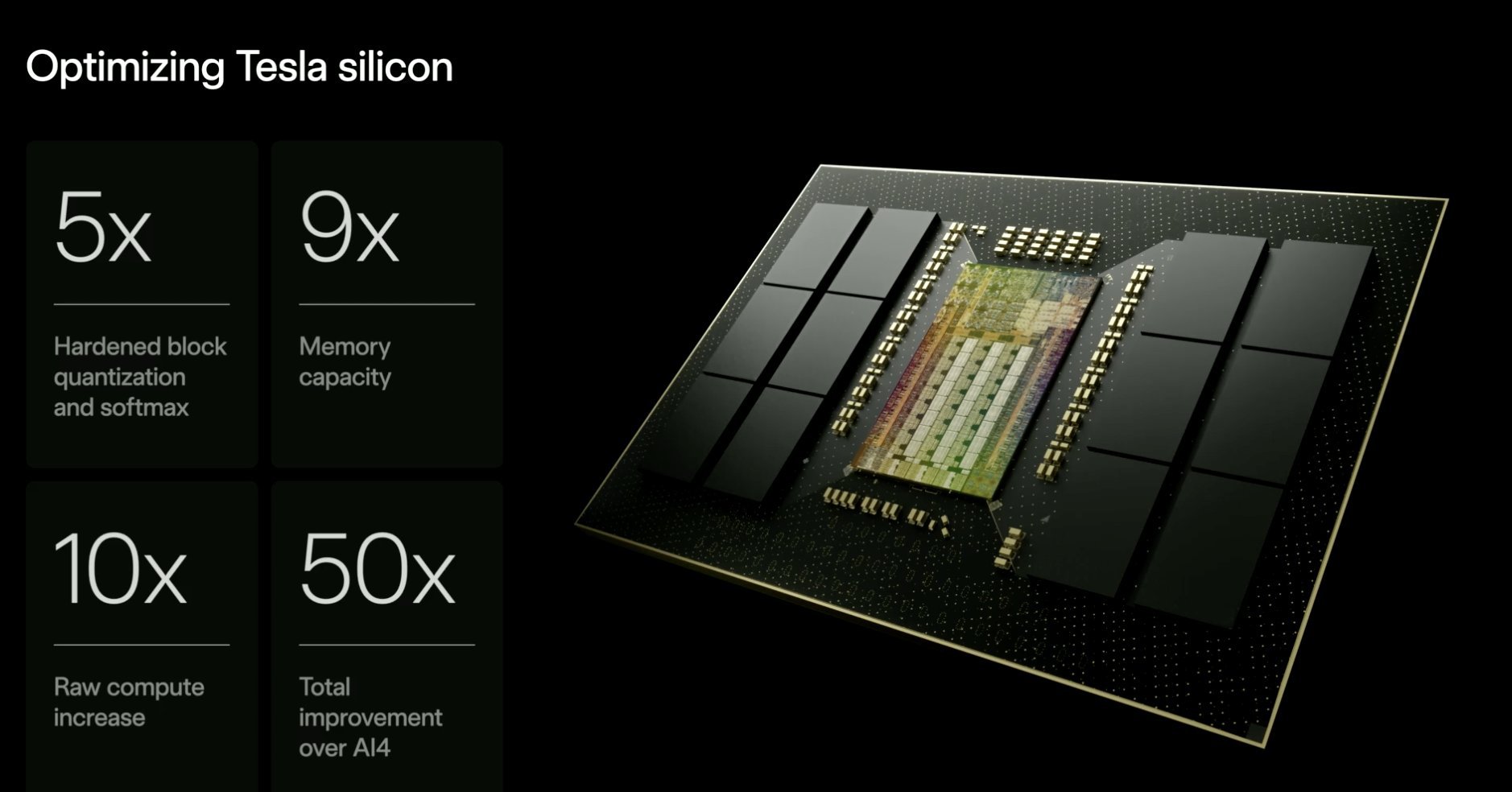
Tesla’s next-generation AI5 chip is nearly complete, and work on its successor is already underway, as per a recent update from Elon Musk.
The Tesla CEO shared his recent insights in a post on social media platform X.
Musk details AI chip roadmap
In his post, Elon Musk stated that Tesla’s AI5 chip design is “almost done,” while AI6 has already entered early development. Musk added that Tesla plans to continue iterating rapidly, with AI7, AI8, AI9, and future generations targeting a nine-month design cycle.
He also noted that Tesla’s in-house chips could become the highest-volume AI processors in the world. Musk framed his update as a recruiting message, encouraging engineers to join Tesla’s AI and chip development teams.
Tesla community member Herbert Ong highlighted the strategic importance of the timeline, noting that faster chip cycles enable quicker learning, faster iteration, and a compounding advantage in AI and autonomy that becomes increasingly difficult for competitors to close.
AI5 manufacturing takes shape
Musk’s comments align with earlier reporting on AI5’s production plans. In December, it was reported that Samsung is preparing to manufacture Tesla’s AI5 chip, accelerating hiring for experienced engineers to support U.S. production and address complex foundry challenges.
Samsung is one of two suppliers selected for AI5, alongside TSMC. The companies are expected to produce different versions of the AI5 chip, with TSMC reportedly using a 3nm process and Samsung using a 2nm process.
Musk has previously stated that while different foundries translate chip designs into physical silicon in different ways, the goal is for both versions of the Tesla AI5 chip to operate identically. AI5 will succeed Tesla’s current AI4 hardware, formerly known as Hardware 4, and is expected to support the company’s Full Self-Driving system as well as other AI-driven efforts, including Optimus.
News
Tesla Model Y and Model 3 named safest vehicles tested by ANCAP in 2025
According to ANCAP in a press release, the Tesla Model Y achieved the highest overall weighted score of any vehicle assessed in 2025.
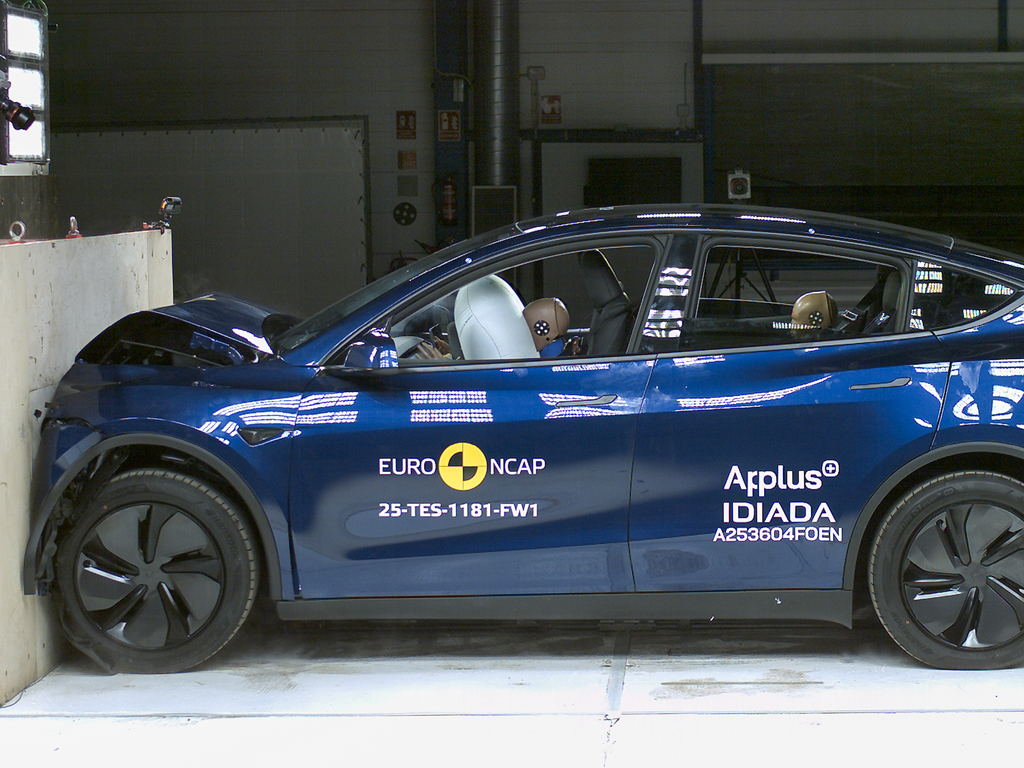
The Tesla Model Y recorded the highest overall safety score of any vehicle tested by ANCAP in 2025. The Tesla Model 3 also delivered strong results, reinforcing the automaker’s safety leadership in Australia and New Zealand.
According to ANCAP in a press release, the Tesla Model Y achieved the highest overall weighted score of any vehicle assessed in 2025. ANCAP’s 2025 tests evaluated vehicles across four key pillars: Adult Occupant Protection, Child Occupant Protection, Vulnerable Road User Protection, and Safety Assist technologies.
The Model Y posted consistently strong results in all four categories, distinguishing itself through a system-based safety approach that combines structural crash protection with advanced driver-assistance features such as autonomous emergency braking, lane support, and driver monitoring.
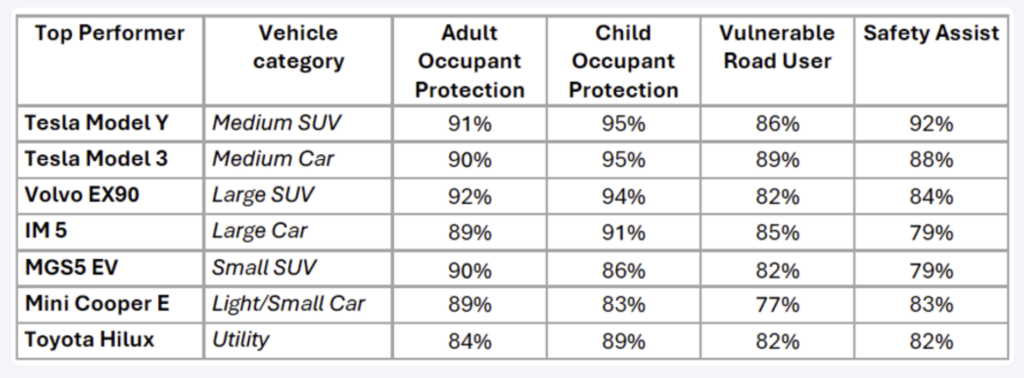
This marked the second time the Model Y has topped ANCAP’s annual safety rankings. The Model Y’s previous version was also ANCAP’s top performer in 2022.
The Tesla Model 3 also delivered a strong performance in ANCAP’s 2025 tests, contributing to Tesla’s broader safety presence across segments. Similar to the Model Y, the Model 3 also earned impressive scores across the ANCAP’s four pillars. This made the vehicle the top performer in the Medium Car category.
ANCAP Chief Executive Officer Carla Hoorweg stated that the results highlight a growing industry shift toward integrated safety design, with improvements in technologies such as autonomous emergency braking and lane support translating into meaningful real-world protection.
“ANCAP’s testing continues to reinforce a clear message: the safest vehicles are those designed with safety as a system, not a checklist. The top performers this year delivered consistent results across physical crash protection, crash avoidance and vulnerable road user safety, rather than relying on strength in a single area.
“We are also seeing increasing alignment between ANCAP’s test requirements and the safety technologies that genuinely matter on Australian and New Zealand roads. Improvements in autonomous emergency braking, lane support, and driver monitoring systems are translating into more robust protection,” Hoorweg said.

Elon Musk’s xAI brings 1GW Colossus 2 AI training cluster online

Tesla AI5 chip nears completion, Elon Musk teases 9-month development cadence


