News
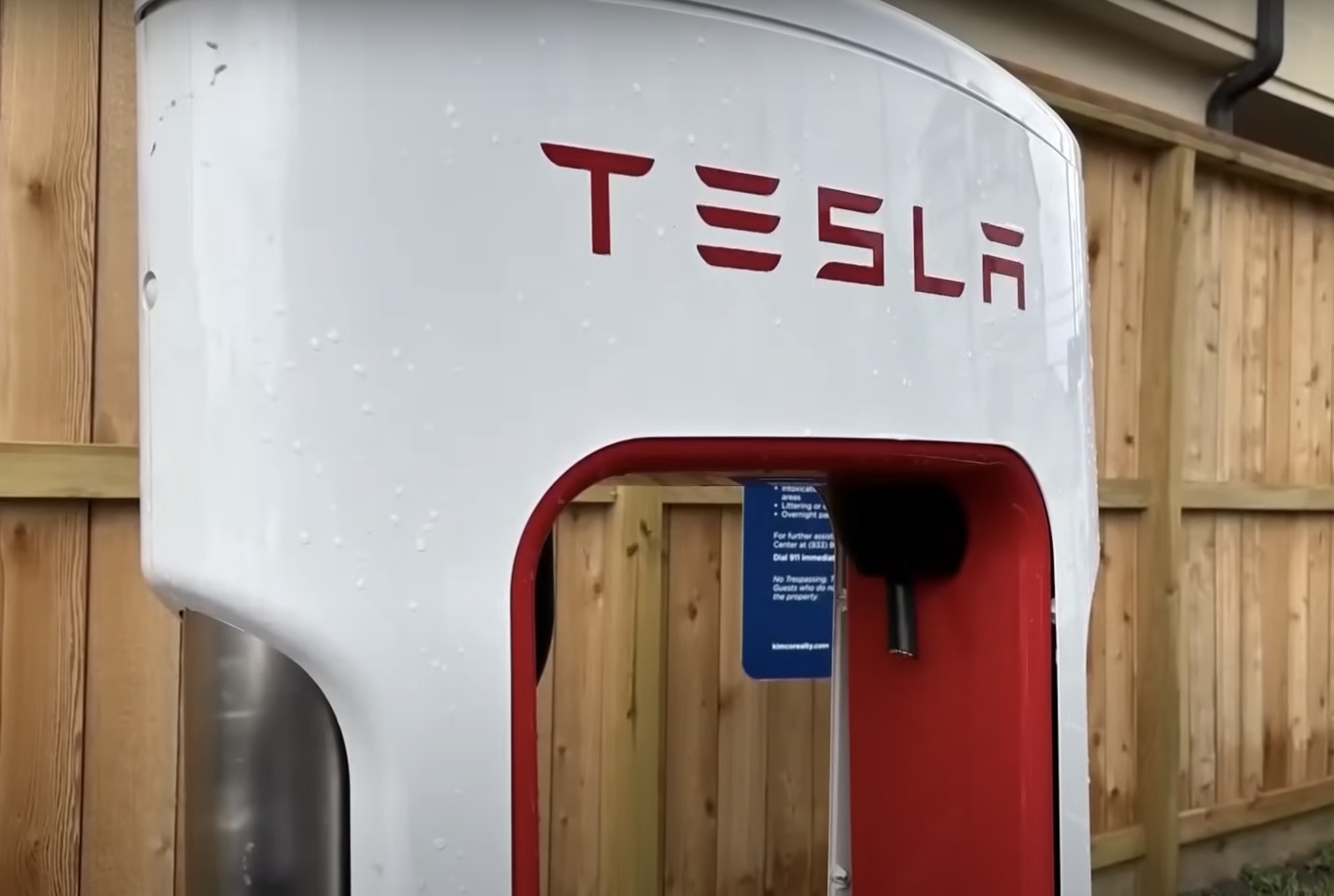
Tesla Superchargers struck as US sees surge in EV charging cable thefts

It appears that a surge in electric vehicle (EV) charging cable thefts is happening across the United States. Over the past few months, an increasing number of charging stations have become targets for thieves. The motivations behind these incidents are speculated to be either the resale of materials used in the cables or simple vandalism against EVs. And the situation seems to be escalating.
As per a recent Associated Press (AP) report, Tesla Superchargers in Seattle, Oakland, and Houston have been hit particularly hard. Seattle authorities have reported seven cable thefts from Tesla Supercharger stations so far this year, which already matches the total number of thefts for full year 2023.
Houston Police Sgt. Robert Carson informed the AP that until about a month ago, Houston police hadn’t received any reports of EV charging cable thefts. Then, there was only one reported incident. Today, nine similar thefts have been reported, with one particularly brazen theft involving 18 out of 19 charging cables at a Tesla Supercharger.
Carson noted that he visited the attacked Tesla Supercharger, and he saw around ten electric vehicles that had to leave due to the theft. “They’re not just taking one or two. When they hit, they hit hard, Carson stated.
Cable theft across the electric vehicle (EV) charging industry is on the rise, affecting drivers' daily commutes. We are committed to cooperating with law enforcement to swiftly address this issue and ensure uninterrupted access to charging for our EV customers. https://t.co/wHoObIQEpC— Electrify America (@ElectrifyAm) June 12, 2024
It’s not just Tesla’s Superchargers that are being targeted. Electrify America, a member of Tesla’s North American Charging Standard (NACS) coalition, has also seen a significant increase in EV charging cable thefts. Electrify America noted that two years ago, they would experience roughly one theft every six months. Through May 2024, the number has skyrocketed to 129, four more than FY 2023.
As per Anthony Lambkin, VP of Operations at Electrify America, attacks on even a single charging location can cause significant inconvenience for electric vehicle owners. Lambkin mentioned that one Electrify America station in Seattle has had its charging cables stolen six times in the past year.
“We’re enabling people to get to work, take their kids to school, and reach medical appointments. So, having an entire station rendered unusable is quite impactful on our customers,” Lambkin noted.
EVgo, another prominent electric vehicle rapid charging provider, confirmed that incidents of vandalism against EV charging infrastructure are indeed on the rise. EVgo, along with Flo, another player in the EV charging space, has documented charging cable thefts in Nevada, California, Arizona, Colorado, Illinois, Oregon, Tennessee, Texas, and Pennsylvania.
Charging companies suspect that thieves might be stealing the EV charging cables to sell the copper they contain. However, despite copper prices reaching a high of nearly $5.20 per pound in May, Sgt. Carson estimated that EV charging cable thieves likely only receive around $15 to $20 per cable at scrap yards. “They’re not making a substantial amount of money. They’re not going to be living a life of luxury off these thefts,” Carson stated.
Charging companies are actively taking steps to deter thefts at their locations. Electrify America has opted to install additional security cameras at its stations. The Recycled Materials Association has also issued alerts from law enforcement agencies to its 1,700 members, aiming to raise awareness about potentially stolen materials.
Don’t hesitate to contact us with news tips. Just send a message to simon@teslarati.com to give us a heads up.


Elon Musk
Tesla’s secretive “Project Crystal Sun” gets a big green light in Texas
Fort Bend County approved four incentive agreements Thursday for Tesla’s proposed $10.1 billion solar factory.

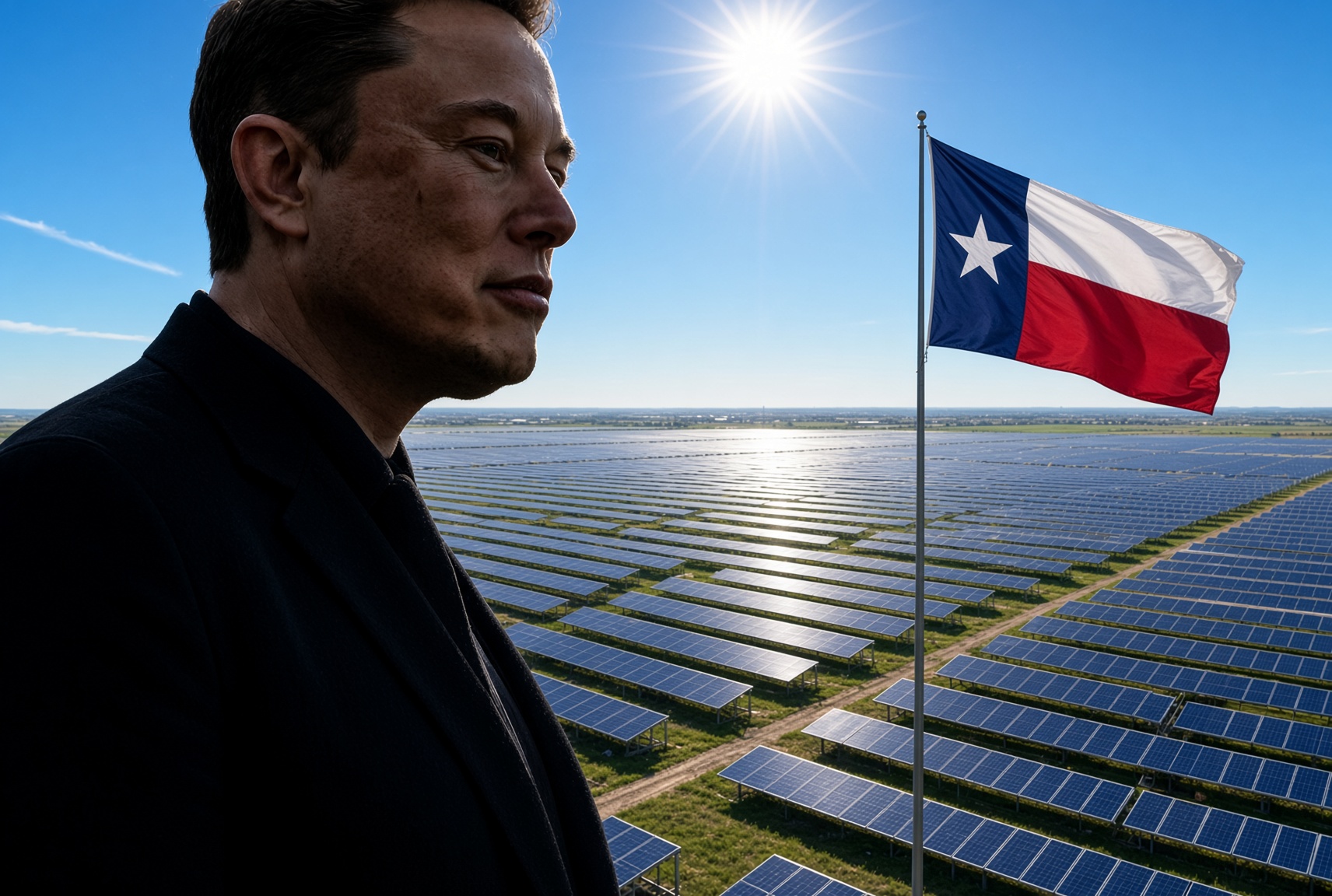
Fort Bend County commissioners on Thursday approved a package of tax incentives for Tesla’s proposed $10.1 billion solar cell factory near Needville, Texas, giving the company one of the last local approvals it needs before it decides where to build. All four Tesla agreements passed 4 to 0.
The votes covered a property tax abatement inside Reinvestment Zone No. 34, a Chapter 381 economic development agreement, a foreign trade zone non-objection paired with payments in lieu of certain taxes, and a separate payment in lieu of taxes “true up” agreement, according to agenda notes from the Fort Bend Commissioners Court meeting.
The project, known internally as “Project Crystal Sun,” would make solar cells and finished modules on roughly 3,000 acres near FM 762 and FM 1994, south of the Brazos River. As Teslarati reported when the filing first surfaced in August, Tesla’s application under the state’s JETI Act splits the investment into $1.5 billion in real property and $8.6 billion in equipment, with 9,712 permanent jobs projected by 2033 and commercial operations targeted for the first quarter of 2029. The plant would handle the full chain from ingot and wafer production through cell testing.
Inside Tesla’s secretive $10 Billion “Project Crystal Sun” filing
Thursday’s approval does not lock in the site. Tesla has told the Texas Comptroller it is still weighing other locations, and site selection adviser David Dennison told Lamar Consolidated ISD trustees in September that the race had narrowed to Fort Bend and one out of state rival with a “very compelling package,” according to the Houston Chronicle. Tesla hopes to decide before the end of 2026, and the incentives still need sign off from the Comptroller and the Governor’s office.
Local officials have now done nearly everything within their control. Commissioners created the reinvestment zone in an August 24 special meeting, with Interim County Judge Daniel Wong formally withdrawing himself over his engineering firm’s past work with Tesla. Lamar CISD trustees voted 7 to 0 on September 15 to advance a JETI agreement that would tax Tesla’s qualifying property at 50 percent of its value for maintenance and operations from 2029 through 2038.
The plant lines up with a target Elon Musk set on Tesla’s Q4 2025 earnings call in January, when he said the company would “work toward getting 100 GW a year of solar cell production, integrating across the entire supply chain from raw materials all the way to finished solar panels.” In March, Tesla was reported to be negotiating a $2.9 billion purchase of Chinese solar manufacturing equipment bound for Texas. The Houston area already hosts Tesla’s Megafactory in Brookshire, where Megapack 3 production has started. Tesla said on its Q3 call that Megapack supply for 2027 is nearly sold out, and Musk wrote on X Thursday that the company is “increasing production of Megapacks as much as possible,” as demand from data centers climbs.

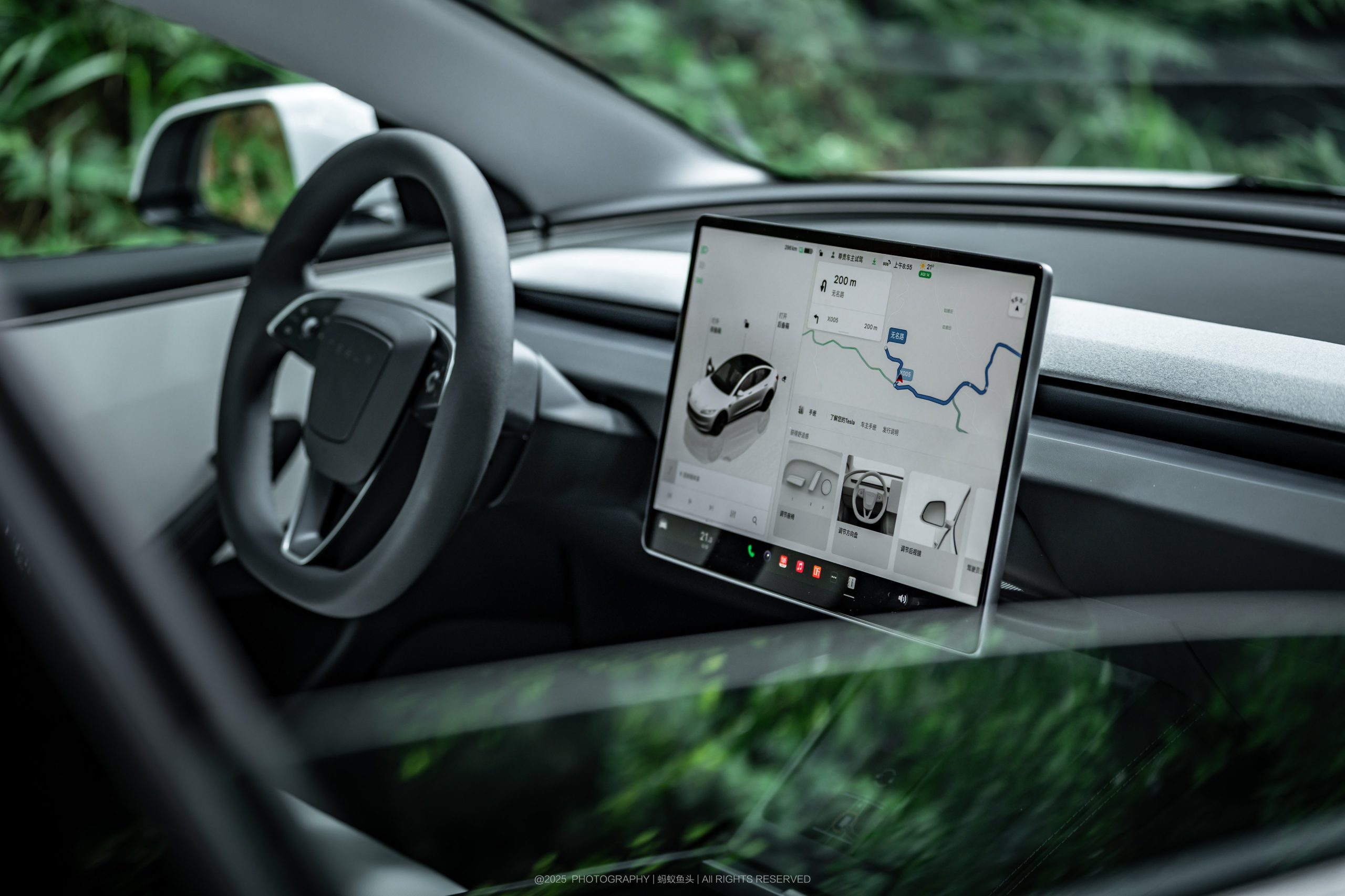
Tesla revealed plans to develop its own maps internally to fix Navigation issues and give owners more control over their routing.
On the company’s Q3 2026 Earnings Call, a question was asked about FSD Navigation issues, particularly speed limit recognition, parking, and routing. These are issues that surface from version to version and seem to be seriously challenging for Tesla’s AI team to resolve.
Tesla’s Head of AI, Ashok Elluswamy, said in response to the question:
“You’re totally right that we shouldn’t be depending on external people’s maps. So we are building our own maps, but not like the same way as OneMoreMap. We are building an entirely new architecture with essentially AI-based mapping and navigation.”
He continued:
“It’s going to be super awesome. It’s going to be integrated with voice. You can talk to it, ask for different routes. It’s going to learn your personalized preferences, plus the fleet preferences. The collective intelligence of all the cars is going to flow into making the maps and navigation super cool.”
Elluswamy said this issue should be confronted, and the mapping should be available for people by the time the v15 release starts deploying to customers.
“And over the next several months,” he added, “it’s just going to take over all of the navigation functions, parking, destination handling. And it will know you better than you know yourself in some regard for the driving task, and then handle it fully.”
Tesla Summon got insanely good in FSD v14.3.2 — Navigation? Not so much
Navigation is perhaps the most notable complaint with FSD, and although it has gotten better, it is still flawed. Much of the time, FSD will take people on routes that are not preferred by the driver, but Tesla tried to combat this with a routing feature in the Summer 2026 Update.
Tesla currently relies on Google for map data, but it is sort of counterintuitive to believe the company would rely on a third party for this. These improvements will be welcome, as routing and navigation have been such a pain point for so many owners for so long.
Quotes via Motley Fool
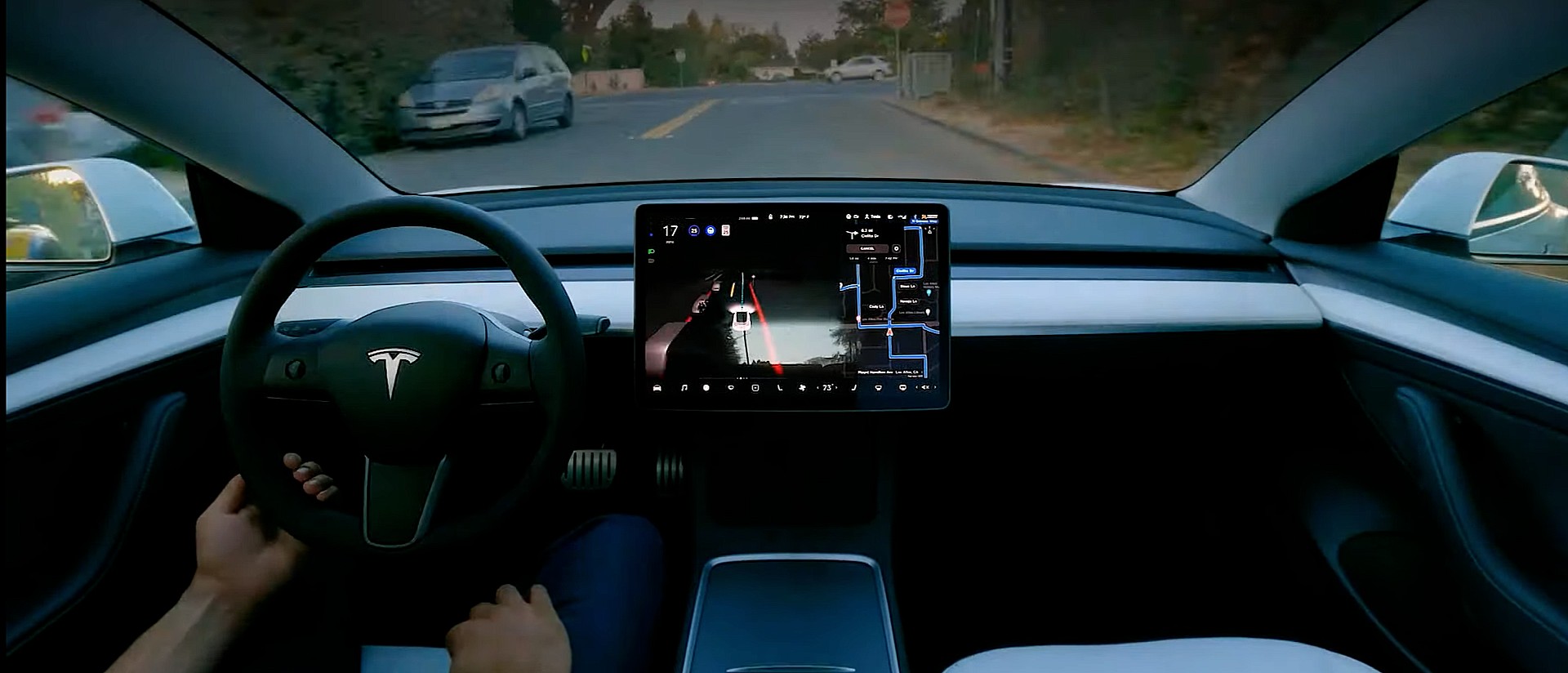
Tesla Full Self-Driving (Supervised) showed a record attach rate at delivery for new vehicles in the third quarter of 2026.
75 percent of new vehicle deliveries in North America included a subscription to FSD software, up from 55 percent in the prior quarter, a 20-percentage-point sequential gain in the company’s most mature market.
Tesla Q3 2026 Earnings results: in-line revenues, slight beat on EPS
Tesla shed light on the Q3 Shareholder Deck that 75 percent of new deliveries came with an FSD subscription:
“FSD (Supervised)⁴ attach rate continued to grow, reaching over 75% of new vehicle deliveries in North America – our most mature market – a nearly twenty percentage point sequential increase. We believe that FSD is driving demand in markets where it is available, and we continue to work with regulators to get it approved in other markets. “
The higher attach rate accompanied strong growth in the overall FSD consumer base, as active subscriptions rose to 1.75 million, a 67 percent year-over-year increase. For the first time, more than half of paid customers are on the monthly subscription, which is priced at $99 per month in the U.S.
People are buying FSD with a car attached, not the other way around
— Elon Musk (@elonmusk) October 21, 2026
The transition to subscriptions has accelerated since Tesla discontinued the one-time purchase option in most markets earlier this year. The recurring model improves revenue visibility and margins compared with large upfront payments. With three-quarters of North American deliveries now including FSD, the software is now an evidently large contributor to Tesla’s economics and ancillary revenue.
Geographic expansion remains important for further gains. FSD is now available in nine countries in the EU, and more than 100,000 customers have driven over 160 million kilometers. Tesla is pursuing broader EU-wide approval, with a related vote expected in December. Similar progress in additional markets could support higher attach rates beyond North America.
These results came as Tesla had a strong quarterly delivery performance of 486,532 vehicles in the quarter, which came with its largest passenger-vehicle backlog in four years. Battery supply continued to limit volume, but the company has pointed to FSD as a clear difference-maker that is helping sustain demand. As supervised capabilities improve, the attach rate will likely continue to improve.
At face value, it is a key measure of how Tesla is converting sales into autonomy progress.

Tesla’s secretive “Project Crystal Sun” gets a big green light in Texas

Tesla is building its own maps to fix Navigation issues


