Lifestyle
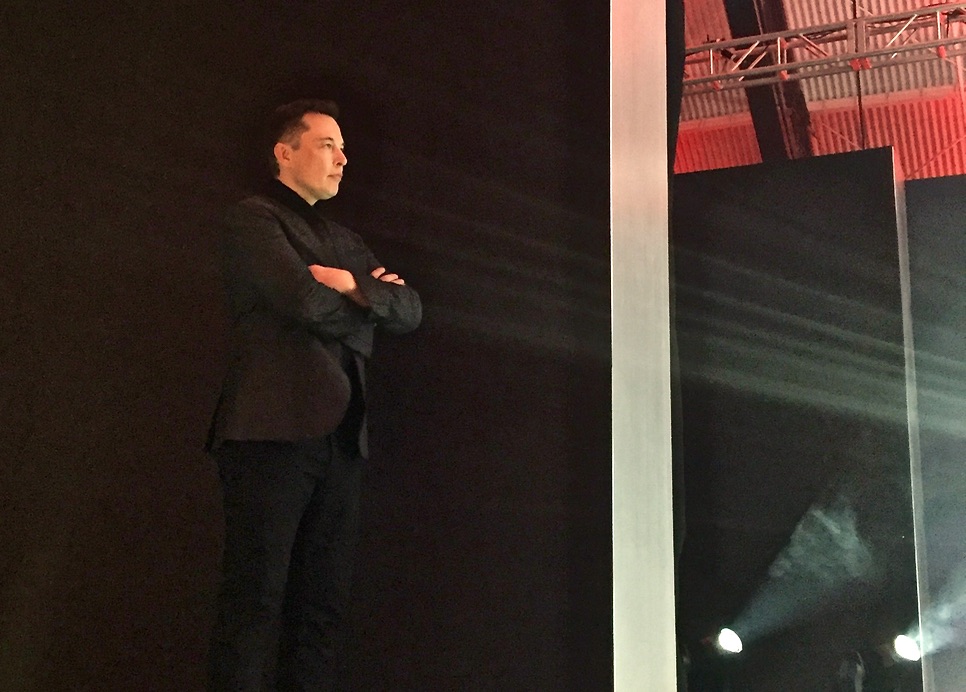
Elon Musk reveals details on Neuralink brain-computer with human housecat prevention plan

“I don’t love the idea of being [an artificial intelligence] house cat, but what’s the solution? I think one of the solutions that seems maybe the best is to add an AI layer.” – Elon Musk, Code Conference 2016
An AI layer to your brain, he means. Not happy with simply improving technology that’s only been around for the last century, innovative entrepreneur Elon Musk has his sights set on the way humans communicate, something that hasn’t been vastly improved on in over 50,000 years of evolution.
Musk has referred to something called “neural lace” several times recently, most notably at Vox Media’s Recode Code Conference in June 2016; however, not many details were known about how Musk envisioned this technology being implemented. You know, the Musk way of doing it. He suggested at the conference that he might be willing to tackle the challenge himself, and a few months later, teased a few times that he was in fact working on the idea.
Making progress. Maybe something to announce in a few months. Have played all prior Deus Ex. Not this one yet.
— Elon Musk (@elonmusk) August 28, 2016
Maybe next month
— Elon Musk (@elonmusk) January 25, 2017
The announcement came in the form of a startup called Neuralink Corp, the initial details for which were originally reported by the Wall Street Journal. He seemed to have collected some impressive scientific minds and combined them with personal funding to initiate the company’s work. Other than speculation about what types of products could be created by the company and Musk’s initial idea of a direct interface with the brain’s cortex, not much information was available. More recently, a few more pixels were filled in on Musk’s vision.
Tim Urban of WaitButWhy.com, one of Musk’s preferred correspondent contacts (i.e., Internet writers), has been selected again as the person given the most in-depth information and access to Musk in order to publish a very detailed piece on what Musk has been up to.
Urban previously discussed and published details about Musk’s work on SpaceX’s vision for Mars and Tesla (with lots of direct access to Musk himself), and now has published a very long, yet very informative, piece on Musk’s NeuraLink company. He calls the company’s overall goal a “Wizard Hat”, and after seeing how much access Urban had to Musk and his new Neuralink team to gather information, that label is probably pretty accurate.
In Urban’s piece, he focuses on understanding what the business side of Neuralink will involve, as it’s the business models of Tesla and SpaceX which enable and drive their innovations. “We are aiming to bring something to market that helps with certain severe brain injuries (stroke, cancer lesion, congenital) in about four years,” Musk is quoted as saying.
The incredibly complicated nature of the human brain, a multi-million year biology project in the making, unsurprisingly presents numerous challenges for scientists wanting to direct the flow of information into and out of it. Understanding all of the details of “how” the brain functions isn’t the challenge, though. It seems to come back down to engineering. As summarized by Urban, after some 1,000 interviews with multi-disciplinary (and amazing) science people, Musk put his team together and Neuralink Corp. was born to start working on it.
The first major challenge described in Urban’s piece is the concept of bandwidth, or rather, how many brain neurons (cells in the brain which essentially provide the 1’s and 0’s of brain signals) can be read by electrodes at a time. He quotes the Neuralink people as needing around a million neurons to be read in order to really achieve something revolutionary.
If you’re familiar with computer chips at all, the comparison to Moore’s Law is a decent metaphor here. According to this law, the number of transistors on a computer chip doubles every 18 months, and this has led to computers becoming both smaller and faster. If you liken “transistors” to “electrodes”, you can see the engineering challenge for neural lace companies.
Then there’s also the question of whether people are going to be willing to let their brains be voluntarily experimented with. Musk’s cult following might give him a trust advantage for seeking out willing participants, but skull surgery may turn out to be too much even for them. According to Tim Urban, the Neuralink team is acutely aware of this concern, and has thus made “non-invasive” implantation a huge focus for brain-interface technology to really take off. Also of issue is accessibility to the technology to make the implantation possible. In Urban’s discussions with him, Elon Musk likened the technology needed to what Lasik surgery machines do.
In summary, in order for Neuralink Corp. to achieve the innovative leap which will change the world forever with direct brain-interface technology (the “Wizard Hat”), they’ve got to make electrode manufacturing about as advanced as computer chip manufacturing, and they’ve got to be able to install whatever electrode device is developed into brains in a very non-invasive, automated way. Also, they will need to figure out brain-friendly WiFi, some serious miniaturization solutions, and develop a “neuron signal” to “human language” dictionary.
Easy peasy, lemon squeazy. [Yeah, that was sarcasm.]
Quite honestly, it’s not the medical procedure that concerns me, but rather the potential of not being able to block spam that has direct access to my brain. Between Minority Report and my daily email battles, yikes! Sure, there are already brain-implanted devices that solve problems; however, I think there’s a difference between correcting functions the brain is supposed to have and giving something unfiltered access to adding something that wasn’t already there. I can put my phone away if I don’t want to deal with a Twitter freak out deluge. I can’t exactly do that with my brain. You know, just saying. The WaitButWhy piece gave me even more reasons to worry, so I feel justified.
Tim Urban’s piece also detailed some pretty amazing things that could come out of the neural lace field that sound like science-based versions of telepathy and magic. The ultimate goal, though, was to enable human brains to be as functional as artificial intelligence in order to avoid all the pitfalls of superintelligent AI. Actually, to be a bit more clear on Elon Musk’s vision for all this brain-interface technology, he wants the interface to connect to a super-human-collective AI cloud which feels just as much a part of you as any other part of your brain does.
For instance, when you have a thought, you don’t consider which part of your brain’s anatomy created it. It just happens and you consider it a part of your being. Imagine a super computer as part of that “you” system, and congrats! You’re [kind of] getting where Musk is headed with Neuralink. Or at least that’s the long term goal of what he’s starting with the company. You know, kind of like the moving the baton forward thing he aimed for with SpaceX and getting to Mars.
I’m going to quote Urban on this, actually:
He started Neuralink to accelerate our pace into the Wizard Era—into a world where he says that “everyone who wants to have this AI extension of themselves could have one, so there would be billions of individual human-AI symbiotes who, collectively, make decisions about the future.” A world where AI really could be of the people, by the people, for the people.
Where Neuralink will come down amongst current competitors already in the field (Facebook, Braintree, etc.) is obviously yet to be seen, but it’s yet another reminder that when Elon Musk says there’s a challenge needing to be solved, there’s a good chance he’s not going to wait for someone else to do it.


Elon Musk
The Boring Company just doubled its tunneling power in Nashville
The Boring Company’s Prufrock MB2 is commissioned and ready to mine beneath Nashville’s streets.

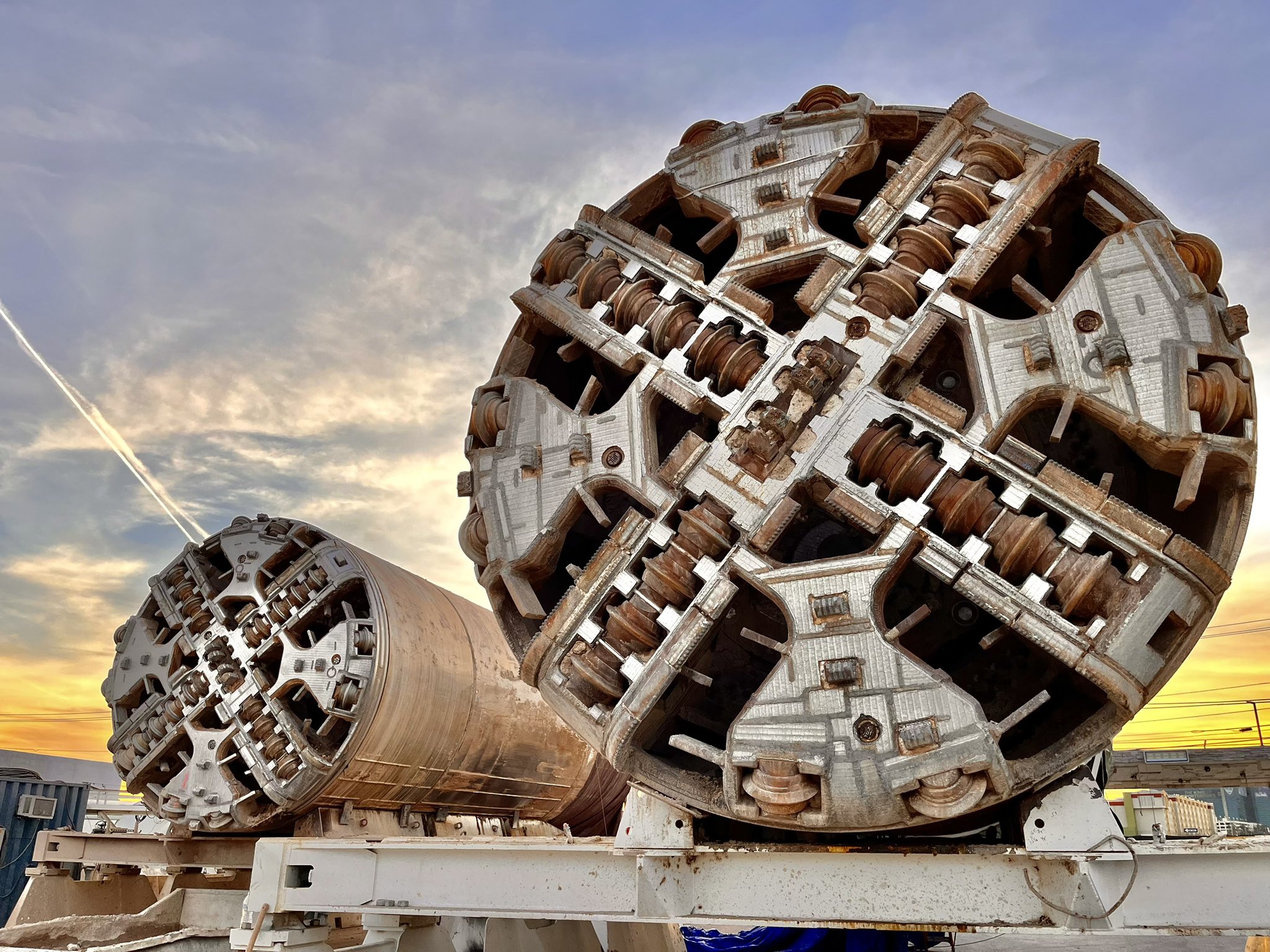
The Boring Company’s second tunnel boring machine, Prufrock MB2, is officially ready to dig in Nashville. The company confirmed the news on X, posting: “Prufrock-MB2 is ready to mine in Nashville! MB2 commissioning is complete, including the brief 11 rpm rotation shown here. Will MB2 catch up to MB1, who had quite the head start? And Prufrock-MB3 ships in August!”
MB2 arrives with meaningful improvements over its predecessor. Lessons learned from the launch and operation of MB1 have already been applied to MB2 to improve efficiency and prepare the machine for launch.
Traditional tunnel boring machines operate in a stop-and-go cycle, digging roughly five feet, halt, erect precast concrete segments to line the tunnel wall, then resume. That repeated interruption is one of the main reasons conventional tunneling is slow and expensive. Prufrock is designed to install the tunnel liner simultaneously with mining, eliminating the need to stop every five feet. The machine also skips the need for excavated launch pits. Prufrock arrives on a truck, tilts down, and launches into the ground within 24 hours. And when the tunnel is complete, it emerges from the ground and drives to its next launch site on a trailer, eliminating the need for expensive cranes or pit excavation. The machine is also fully electric and runs with zero people in the tunnel during normal operations, controlled remotely from a surface operations center.
Prufrock-MB2 is ready to mine in Nashville! MB2 commissioning is complete, including the brief 11 rpm rotation shown here.
Will MB2 catch up to MB1, who had quite the head start?
And Prufrock-MB3 ships in August! pic.twitter.com/TTrMql2aRg
— The Boring Company (@boringcompany) June 17, 2026
It won’t be long before we hear of another major update on The Boring Company’s Music City Loop project – a planned underground transit network beneath Nashville that would move passengers in electric vehicles through a series of tunnels at highway speeds, and bypassing surface traffic entirely. Nashville was selected in part because of its strong rock conditions that suits the Prufrock machines well, and relatively less regulatory hurdles.
Progress has been steady on multiple fronts. All 37 permits and approvals required ahead of tunneling have been obtained, out of 45 total. Key wins include a fully executed TDOT tunnel permit authorizing 25 miles of tunnel, unanimous airport authority approval for a Nashville International Airport station, and the city’s first residential station agreement serving downtown tower residents.
With MB1 already tunneling, MB2 now commissioned, and MB3 shipping in August, Nashville is becoming something of a live proving ground for scaled tunnel boring. The broader ambition is not limited to one city. The Boring Company’s stated goal is to make underground transportation a practical alternative to surface roads across major metro areas. Nashville is one of many cities, including a successful Las Vegas tunnel system, where that idea is being put to the test at real speed.
Investor's Corner
Tesla unfolded its first European “folding Supercharger”
Tesla’s folding Supercharger just arrived in Europe and it changes how fast charging expands.
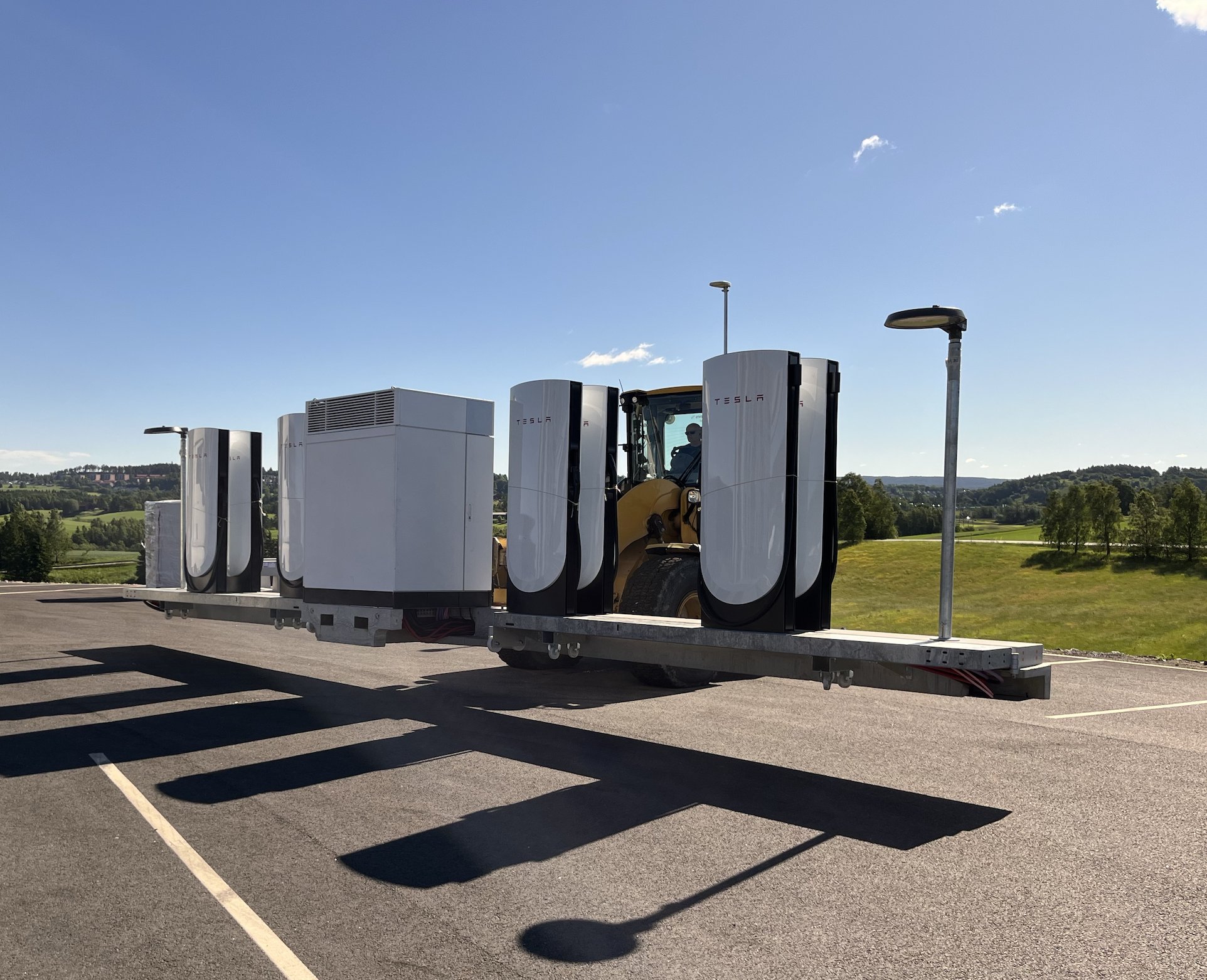
Tesla’s Folding Unit Supercharger has officially landed in Europe, with the company teasing a new installation in its effort for a broader rollout targeting major motorway rest stops across the European continent in Q3 2026. The arrival marks a notable shift in how Tesla is thinking about network expansion, moving from hardware performance alone to engineering the logistics chain itself.
While Tesla did not reveal the exact location for the new folding Supercharger in Europe, the photo shared on X heavily suggests that this maybe somewhere in Norway. Historically, whenever Tesla rolls out an entirely new infrastructure architecture in Europe, whether it was the original Supercharger stalls years ago or these brand-new modular V4 “Folding Units”, Norway is almost always the designated launch pad because of its unmatched EV adoption rate and supportive infrastructure
The Folding Unit, introduced in March 2026, is a factory pre-assembled V4 charging station built on an industrial hinge system mounted to a heavy-duty concrete base. The entire assembly arrives on site ready to unfold and connect. Tesla confirmed the units feature telescopic light poles specifically designed for easy transportation and fast on-site deployment, a detail that signals how carefully the logistics chain has been engineered alongside the hardware itself. The design allows 33% more stalls per delivery truck, cuts installation time roughly in half, and reduces overall deployment costs by more than 20% compared to traditional installations.
Tesla’s newest “Folding V4 Superchargers” are key to its most aggressive expansion yet
Tesla also noted telescopic light poles which provide benefits over traditional Supercharger installations that require fixed-height poles that are awkward to ship, slow to position on site, and often require separate crews and equipment to erect before charging hardware can even be staged. By engineering poles that compress for transit and extend on arrival, Tesla has removed one of the quieter bottlenecks in the physical deployment process. Every hour saved on a light pole installation is an hour redirected toward getting stalls energized. At scale, across dozens of new sites per quarter, those hours add up to a meaningful acceleration in how quickly a location goes from approved permit to serving its first customer.
Each Folding Unit pairs a single V4 power cabinet with eight charging posts. The V4 cabinet delivers up to 500 kW per stall for passenger vehicles and up to 1.2 MW for the Tesla Semi, supporting twice the stalls per cabinet at three times the power density of its predecessor. Longer cables make every new station immediately usable by non-Tesla vehicles, a priority as Tesla continues opening its network to Ford, GM, Rivian, Hyundai, Stellantis, and others.
As Teslarati reported when the Folding Unit was first unveiled, Tesla’s Gigafactory New York produced its final V3 Supercharger cabinet in March 2026 after more than seven years and 15,000 units, completing a full pivot to V4 production. The European arrival of the folding design is the next chapter in that transition.
Faster and cheaper deployment means Tesla can justify building in markets and corridors that were previously too expensive to serve, filling the coverage gaps that have slowed EV adoption outside major urban centers.
First Folding Unit Superchargers in Europe 🇪🇺 https://t.co/KNfYWJukkL pic.twitter.com/YR1udIpH1i
— Tesla Charging (@TeslaCharging) June 10, 2026
Elon Musk
SpaceXAI just launched into your kitchen with their new app
SpaceXAI just powered its first consumer app and it predicts what you want to buy.
SpaceXAI just made its first move into consumer AI, and it involves your grocery cart. On June 3, 2026, Gopuff and SpaceXAI announced the launch of Go, a Grok-powered shopping assistant built directly into the Gopuff app that predicts what you need before you even start searching for it.
Gopuff is an instant delivery platform that operates more than 400 micro-fulfillment centers across the U.S., delivering everyday essentials, snacks, drinks, and household items in as little as 15 minutes. It is not a restaurant delivery app or a marketplace. It owns its inventory, controls its warehouses, and handles its own logistics, which means it has built one of the most detailed consumer behavior datasets in retail over its 13-year history.
Go combines SpaceXAI’s advanced reasoning, voice, and image generation models with Gopuff’s dataset of hundreds of millions of orders and real-time cultural signals from X to prepare a suggested cart the moment a customer opens the app. It learns each shopper’s habits and automatically builds a personalized cart based on time of day, location, order history, and real-time indicators. Returning customers can check out with a single tap.
Rather than searching for specific items, users can describe a situation like a game-day party or the desire for a healthy breakfast and Go will assemble a cart automatically. It can also predict when shoppers are running low on items like coffee or paper towels and have them packed and delivered in under 15 minutes. Grok voice integration lets users talk to the app in plain conversational language and check out completely hands-free.
Gopuff co-founder and co-CEO Yakir Gola said: “Today, we believe the greatest friction left in commerce is not delivery or instantaneous access to the essentials customers need. It’s the moment before: the thinking, the deciding, the remembering. We’re combining Gopuff’s demand intelligence with xAI’s frontier reasoning to create an everyday shopping experience that feels like a true extension of you.”
Why SpaceX just made a $60 billion bet on AI coding ahead of historic IPO
The timing carries context beyond the product launch. SpaceXAI was formed after SpaceX completed an all-stock merger with Elon Musk’s xAI earlier this year, folding one of the most advanced AI labs in the world into the same corporate structure as the company preparing what could be the largest IPO in history. SpaceXAI is dipping into consumer-focused AI just as it prepares for its public debut, and while Musk has openly discussed building an everything app, this launch uses Grok to power another company’s product rather than launching a standalone consumer platform. Every consumer-facing deployment of Grok ahead of the IPO roadshow adds tangible evidence that SpaceXAI is not just an infrastructure play but a direct competitor in the AI application layer where OpenAI and Google are already fighting for dominance.

Texas man charged in fatal Tesla crash where he blamed Autopilot

Tesla’s strong Q2 deliveries: Four key drivers behind the surprise


