Tesla Model 3
Police on the hunt for GMC truck that caused Tesla Model 3, another vehicle, to roll over

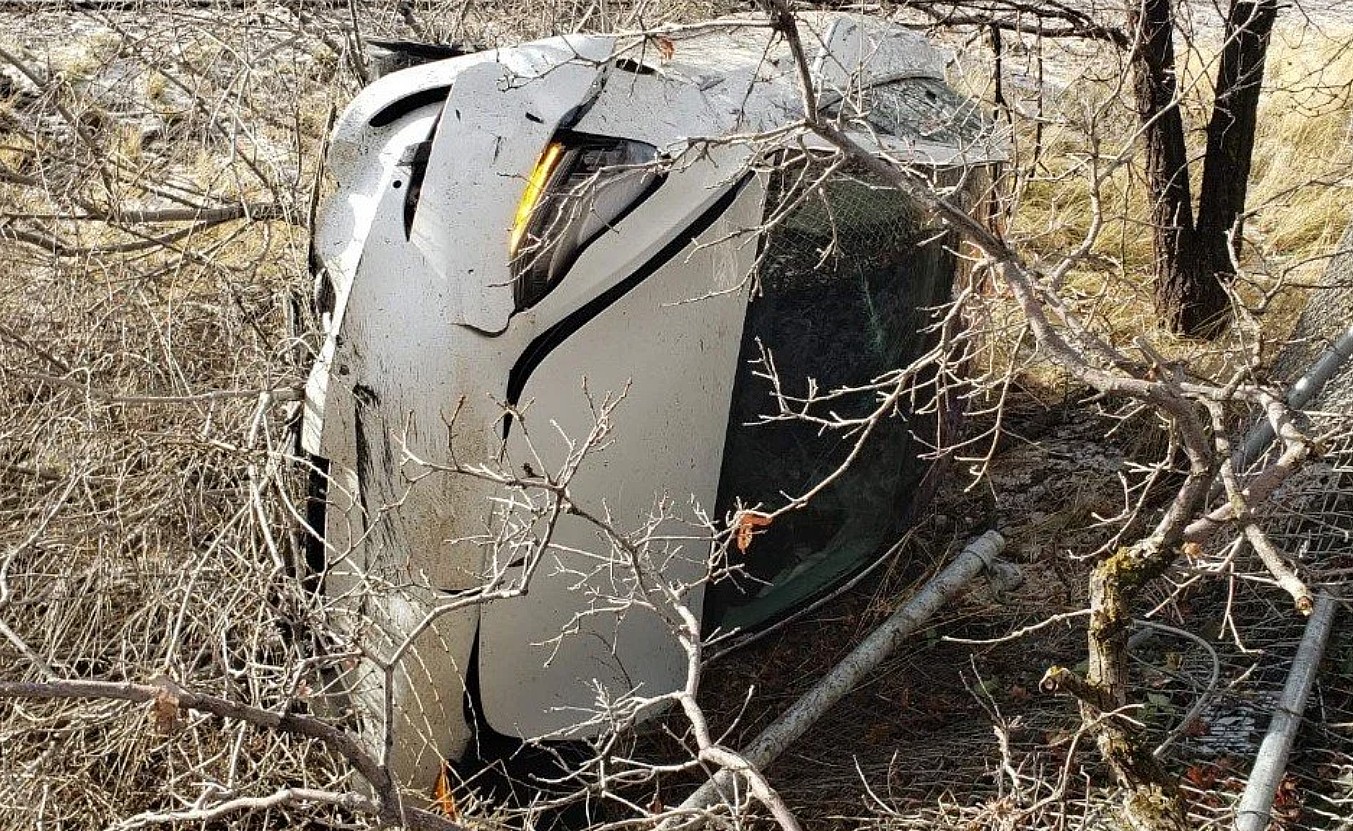
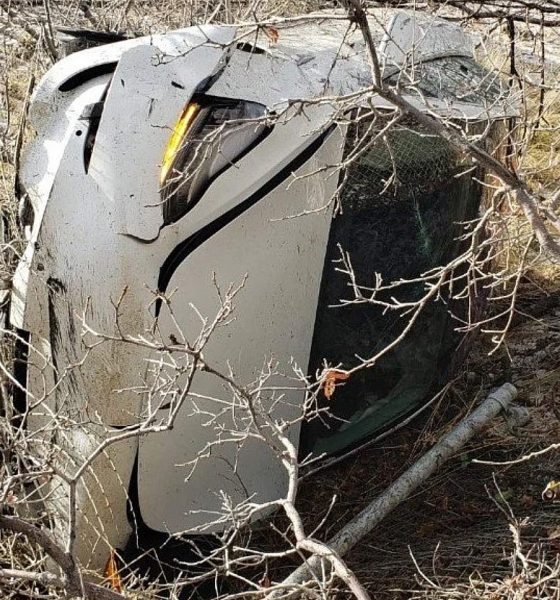
A Tesla Model 3 and another vehicle rolled over when a GMC pickup truck side-swiped the electric vehicle in Cottonwood Heights, Utah on Saturday afternoon. As of reporting, local police are still looking for the driver of the truck, who promptly fled the scene after causing the crash.
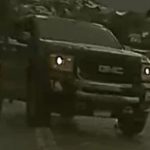
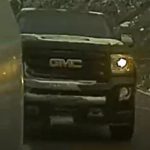
According to witnesses, the black GMC full-size pickup truck attempted to illegally pass several vehicles in the area of 7100 South Wasatch but failed to complete the maneuver. This resulted in the collision with the white Tesla Model 3, which crashed into another vehicle in the adjacent lane. The Tesla and the other vehicle were both forced off the road, rolling over in the process. Initial reports say that five individuals who were not seriously injured were treated at the scene and released.
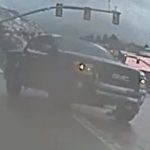
Authorities were able to retrieve a video of the incident from the Model 3, but it did not show the license plates on the truck. The Cottonwood Heights Police Department (CHPD) has not published the video but shared information that the GMC pickup truck most likely sustained damages on its passenger side. The Tesla Model 3 owner has also not shared footage from the electric sedan.
Help Identify: 2 Car Rollover Hit and Run accident. Suspect vehicle is a Black newer model full sized 4-Door GMC pick-up Truck. Truck has damage to the passenger side from side swipe. Possible white paint transfer last seen-north on Wasatch at 7121 South. Tips CHPD 801-743-7000 pic.twitter.com/nMcZIbvSIk— CH Police (@CHPolice) December 14, 2019
CHPD is asking the public to contact them at 801-944-7100 for any information that will lead to the capture of the reckless driver of the GMC pickup truck involved in the accident.
While it is unfortunate to hear a crash caused by irresponsible drivers on the road, the Tesla Model 3 being one of the safest cars on the road today might have helped prevent serious injuries in this incident. Rollover crashes are notoriously dangerous, with the the National Highway Traffic Safety Administration (NHTSA) stating that around 35% of all traffic fatalities are caused by rollovers. Despite this, the occupants of the Model 3 were able to escape the incident without serious injuries.
This crash, if any, proves that the Model 3’s stellar safety ratings are no fluke. The Insurance Institute for Highway Safety (IIHS) has awarded the Model 3 with its highest safety rating available and deemed qualified to receive its Top Safety Pick+ award. Tesla attributes the Top Safety Pick+ rating to the overall good architecture and design of the Model 3.
-
- (Credit: Cottonwood Heights Police Department/Twitter)
-
- (Credit: Cottonwood Heights Police Department/Twitter)
-
- (Credit: Cottonwood Heights Police Department/Twitter)
“Part of what makes Model 3 so safe is its all-electric powertrain design, which gives the car a low center of gravity that reduces roll-over risk, as well as its rigid aluminum and steel passenger cabin that provides exceptional strength to equally protect drivers and passengers,” Tesla wrote. Furthermore, since the vehicle doesn’t have an engine like conventional gas vehicles, the Model 3 also has a large crumple zone that helps absorb impacts more effectively compared to a gas car keeping occupants safer during accidents.
Tesla Model 3’s all-glass roof is also supported by a tough metal body structure that also helps protects occupants in roll-over crashes such as this one in Utah. Tesla claims the roof of the Model 3 can support the weight of five Model 3s on top of the vehicle’s roof. Other elements such as the car’s seats, restraint system, and airbags contribute to ensuring the safety of the driver and passengers.
With the combination of passive safety, active safety, and available technologies, Tesla produces the safest vehicles today and this also contributes to the safety of other drivers on the road. The car manufacturer shared its latest data In its Q3 2019 Vehicle Safety Report:
“In the 3rd quarter, we registered one accident for every 4.34 million miles driven in which drivers had Autopilot engaged. For those driving without Autopilot but with our active safety features, we registered one accident for every 2.70 million miles driven,” Tesla wrote. Those driving without Autopilot and active safety features, Tesla registered one accident per 1.82 million miles driven.



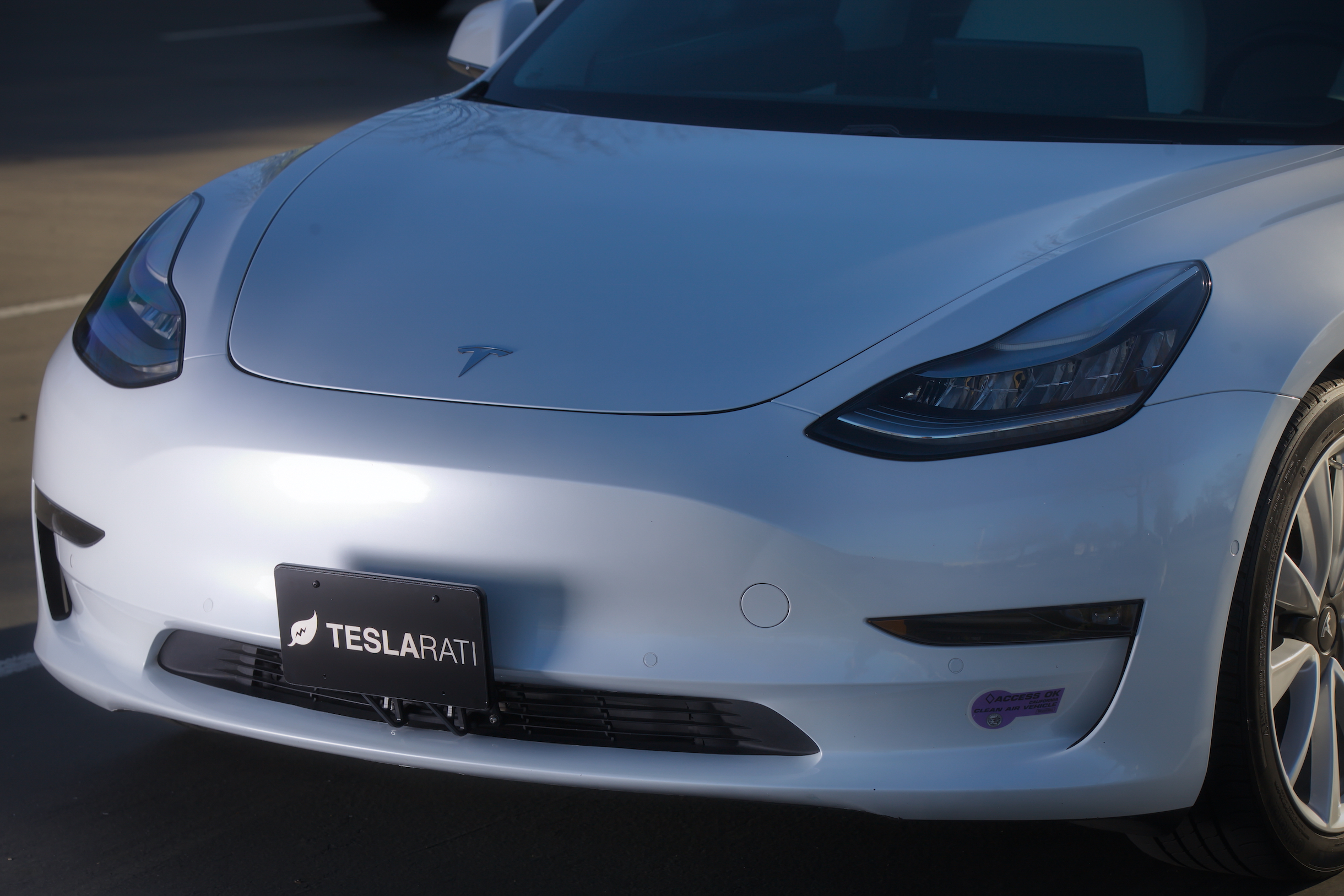
Tesla headlights have caused a recall of over 20,000 of the company’s two most popular vehicles, the Model 3 and Model Y, due to the low-beam bulb exceeding the maximum allowed intensity according to federal standards.
Tesla initiated the recall with the National Highway Traffic Safety Administration (NHTSA) this morning, stating that the low-beam output “exceeds the maximum allowed intensity in the outer upper-right and outer upper-left areas of the 10U and 90U zone, as prescribed in FMVSS No. 108.”
Tesla sourced the impacted headlights from Marelli Automotive Lighting, a Mexico-based company. The recall impacts 2020-2023 Model Y vehicles and 2017-2023 Model 3 vehicles. It is estimated that every VIN in this recall is impacted by the defect.
🚨 Tesla is recalling 20,349 2020-23 Model Y vehicles and 2017-23 Model 3 vehicles due to an excessively bright headlamp low beam.
Currently, there is no remedy plan in place, as it is still being developed. pic.twitter.com/y34cIO2U0B
— TESLARATI (@Teslarati) August 11, 2026
Typically, Tesla would remedy recalls of this nature through an Over-the-Air software update, which has been a major focus of criticism by the company and its supporters because the NHTSA still refers to it as a “recall,” even though it requires no action by the vehicle owner. The fix is shipped over the internet and downloaded to the car.
However, there appears to be a potentially different solution for this problem. Tesla has not developed a remedy for this issue, so it could potentially be on the way. The big issue appears to be the fact that these recalled lamps are out of production, and this is an old body style for both vehicles. The headlights and front-end designs are completely different.
Tesla switched to another supplier when the affected headlight design was discontinued. It plans to begin notifying owners of their remedy options by September 15.
Tesla filed a petition protesting the recall to fix the vehicles’ headlight issue, but the NHTSA denied it. Now, Tesla will come up with a solution to fix it.
Elon Musk
The Boring Company’s newest tunnel vehicle runs on Tesla parts and no one is driving it
The Boring Company’s new tunnel vehicle runs on Tesla Model 3 batteries and drive units.

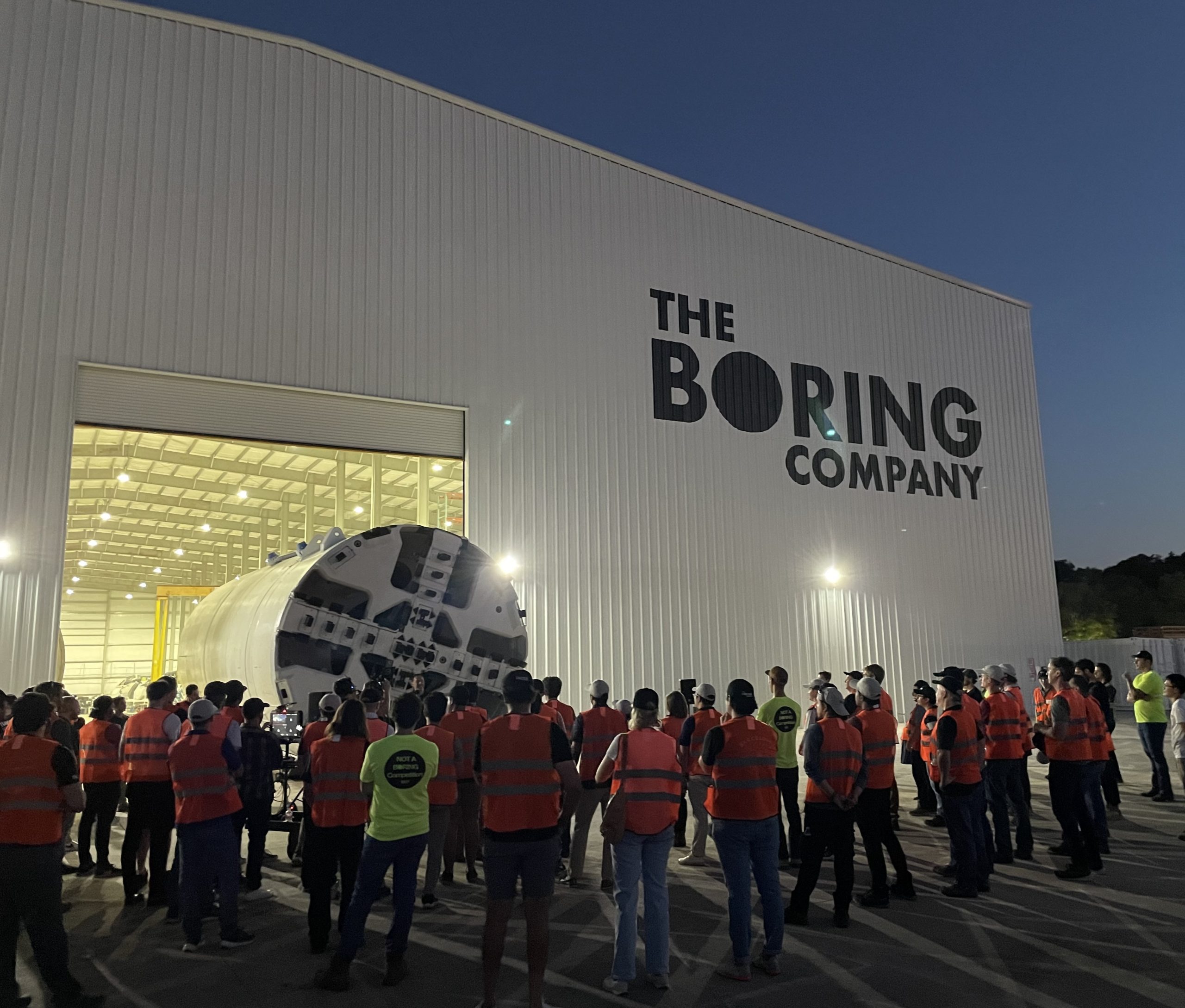
The Boring Company just introduced a new piece of hardware, and it runs on parts pulled straight from a Tesla showroom. Liner Truck 3, unveiled in a post from the tunneling company’s official X account, is an all electric vehicle built around Tesla Model 3 battery packs and drive units, purpose built to move concrete tunnel segments to the boring machine face without a single person underground.
Introducing Liner Truck 3 — our latest fully electric tunnel vehicle.
– Tesla Model 3 battery and drive units
– Transports 22,000+ lb of concrete segments to the boring machine
– 28 miles of range
– 12 mph max operating speed
– Remotely piloted from Global OCC in Texas, with… pic.twitter.com/XB7FgSXnpy— The Boring Company (@boringcompany) August 7, 2026
The job itself is unglamorous but critical. Each precast segment run weighs more than 22,000 pounds, roughly the load of a full cement mixer, and Liner Truck 3 hauls that weight repeatedly between the surface staging area and wherever the Prufrock machine happens to be cutting.
The Boring Company said Liner Truck 3 is piloted remotely out of its Global Operations Control Center in Texas, extending the Zero-People-In-Tunnel approach the company has spent years building toward. An earlier version of a ZPIT liner truck was already tested at the company’s Bastrop, Texas research tunnels, and a factory tour released last month showed an employee flying a fully loaded liner truck with a PlayStation controller. Liner Truck 3 looks like the production version of that same idea, cleaned up and pushed into daily use.
The timing lines up with a company digging in more places than it ever has before. The Boring Company now has multiple Prufrock machines active or arriving in Nashville, where Music City Loop construction has been accelerating since February, and its Vegas Loop network keeps adding tunnel mileage on a near monthly basis. Every one of those projects depends on getting concrete segments to the cutting face fast enough to keep the boring machine from idling, which is exactly the bottleneck Liner Truck 3 is designed to remove.
It also reinforces something Tesla owners have watched happen gradually across Musk’s companies: passenger car hardware finding a second life in heavy equipment. Model 3 drive units already move people through the Vegas Loop, and now the same components are hauling concrete underground in Nashville and wherever The Boring Company digs next. Whether that kind of component reuse extends further into TBC’s equipment lineup, or into other Musk owned industrial hardware, is the next thing worth watching.
Firmware
Tesla unlocks in-car web conferencing to extend Google Meet, Teams and beyond
Tesla’s Summer Update lets owners join Google Meet, Teams, and Discord calls via cabin camera.
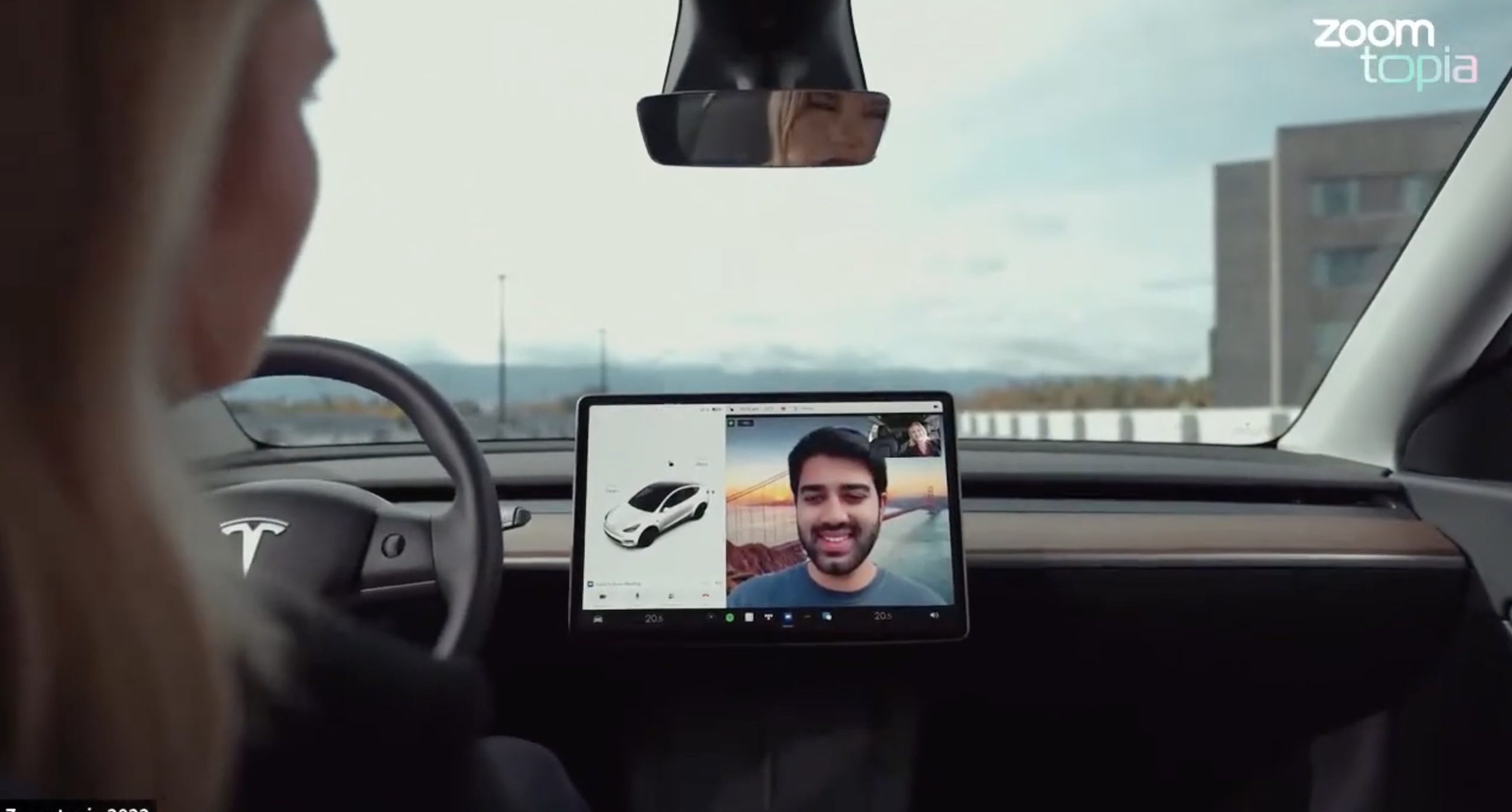
Tesla’s 2026 Summer Update, which just began rolling out to customer vehicles, now links the built-in web browser with the in-cabin camera feed and microphone input, thereby letting owners join video calls on nearly any browser-based service instead of just Zoom.
The change appears in Tesla’s own release notes for software version 2026.26 under “Web Browser,” which states that the vehicle can now use its interior camera and cabin microphone when a website requests access, with permission granted the same way a desktop browser handles it. As NotATeslaApp notes, this feature opens the door to Google Meet, Microsoft Teams, Discord, and other webcam-enabled sites to activate the in-car cabin-facing camera. The feed automatically crops and zooms to center the driver in frame.
Tesla has offered in-car video calling before, but only through a dedicated Zoom app that launched at the end of 2022, a stripped-down browser preloaded with Zoom’s own web client and gated behind Premium Connectivity. Opening the full browser to any camera-requesting site removes that walled garden. Elon Musk first called video conferencing “definitely a future feature” back in 2020, when the pandemic pushed remote meetings into daily life, so this update effectively finishes something Tesla has been promising for six years.
Tesla Summer Update begins rolling out: a look at the new features
The feature keeps the same restrictions that applied to Zoom on Tesla vehicles. It only works while the car is parked; shifting into Drive disables the camera feed, according to the release notes. It is also limited to vehicles running Tesla’s AMD Ryzen infotainment hardware, meaning older Intel-based Model S and Model X units, along with early Model 3 and Model Y builds, don’t get it.
Turning the browser into a general entry point for the in-cabin camera, rather than routing everything through one local app, widens the number of third-party sites that can ask for access, even though Tesla’s permission prompt.
With the Summer update only days into its rollout, be sure to stay with us on TikTok and X to see the latest video demonstrations.

OpenAI cites distrust of SpaceX in decision to drop Cursor partnership

Tesla Theater might be getting plenty more streaming platforms


