News
Tesla’s Navigate on Autopilot may soon auto-route to driver’s preferred destinations

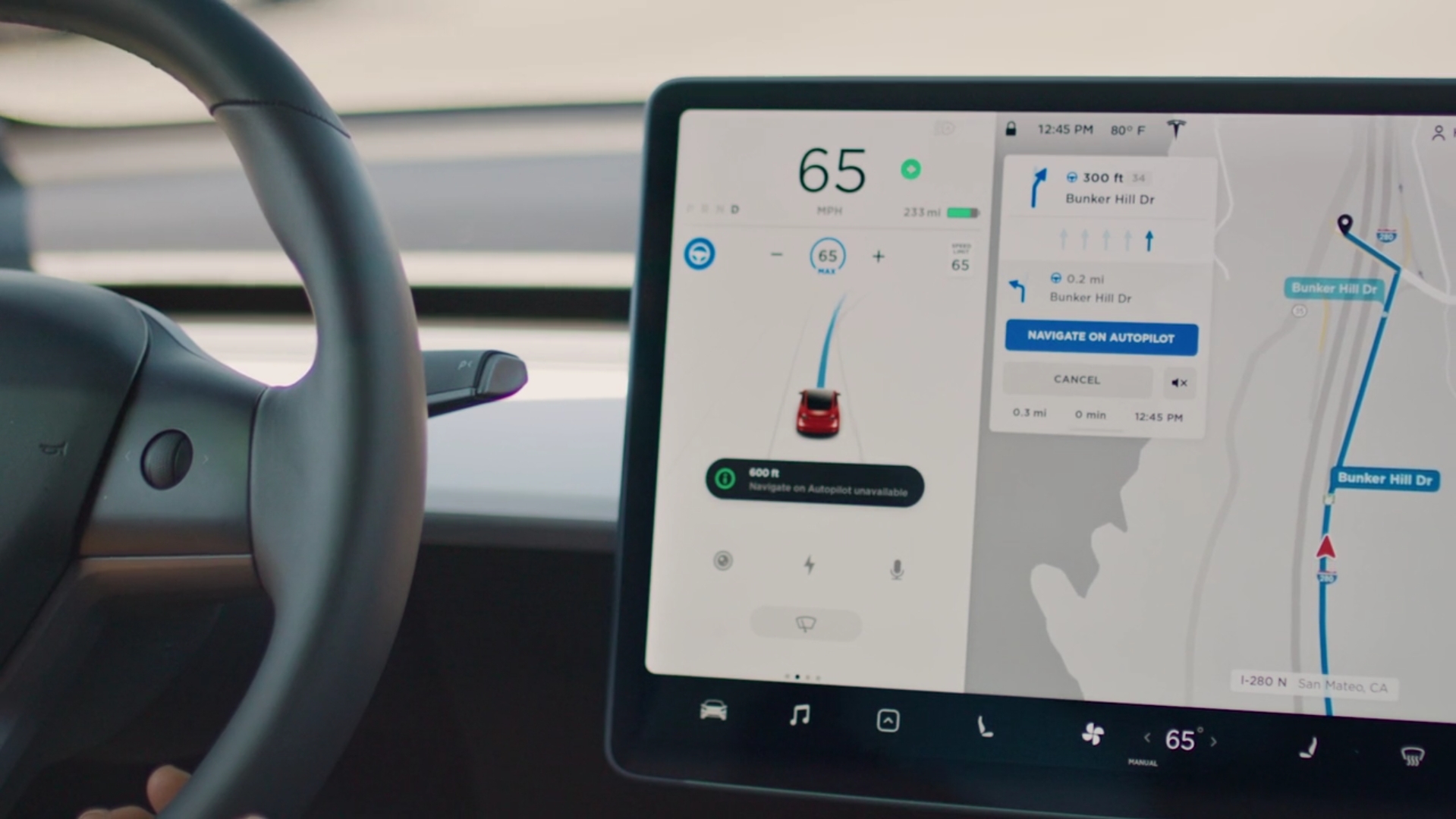
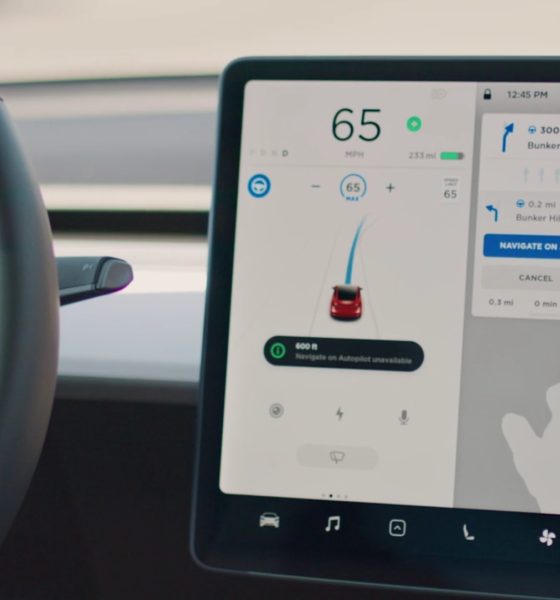
Elon Musk has dropped hints that Navigate on Autopilot may soon be able to automatically route Tesla owners to any location of their choice, through learned behavior.
In a tweet response to a Tesla owner who requested the feature, the Tesla CEO agrees that Navigate on Autopilot should be able to adapt to the driver’s preference and anticipate where they want to go during certain times of the day.
Navigate on Autopilot currently allows users to set two auto-route destinations: Work and Home. Drivers initially enter their work and home addresses and the system automatically guides them to these destinations depending on the time of the day.
However, some Tesla owners have found that they would like to have more control over which destinations they are automatically routed to. Tesla owner @Everman suggests a new feature that will allow drivers to set other Navigate on Autopilot destinations, such as schools, for instance.
Yeah, system should adapt to most likely destination & anticipate school, then work, if that’s owner preference
— Elon Musk (@elonmusk) January 23, 2020
It’s not clear when the feature will be rolled out. However, since part of Musk’s Master Plan, Part Deux is to achieve true self-driving approved by regulators, Tesla owners should be able to add more auto-route destinations to Navigate on Autopilot in the future.
This isn’t the first time Tesla has responded to feature suggestions from customers. In October last year, Musk agreed to a feature that allows users to choose their own route. Navigate on Autopilot chooses the fastest, most energy-efficient route. But some Tesla owners are enjoying their time on the road so much that they would like to be able to take longer routes.

Tesla also introduced Joe Mode with the release of V10 in September last year. Joe Mode allows parents to turn the volume down on beeping alerts so they won’t disturb their kids sleeping in the car.
Navigate on Autopilot is part of Tesla’s Full Self-Driving Suite and continues to improve in its ability to perform lane changes, handle interchanges, and make exits, by way of Tesla’s evolving Neural Network.
To date, Navigate on Autopilot has proven itself adept at navigating rush hour on a busy highway with no driver intervention and maneuvering road construction zones with no lane lines. The driver assistance feature won Germany’s coveted Connected Car Innovation Award in 2019, besting other entries including BMW’s backup assistant and Mercedes-Benz’s AR-Navigation.



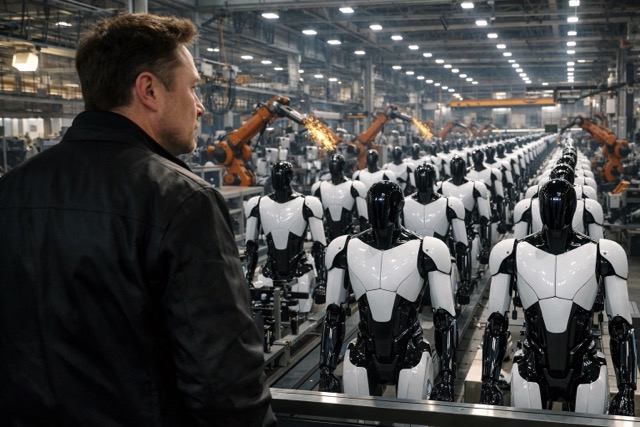
Tesla is set to make a major acquisition as it plans to buy a more than a century-old German manufacturing systems supplier. The move targets EMAG, a specialist in precision machines used to produce drive systems for humanoid robots, according to a filing with Germany’s antitrust authority that surfaced Friday.
Reuters first reported the news.
The planned transaction appeared on the Bundeskartellamt’s list of pending reviews as an asset acquisition involving Tesla and the EMAG Group, under case number B5-132/26 and dated November 23. Financial terms and the exact scope of assets remain undisclosed.
Tesla has not commented, and EMAG did not immediately respond to requests for comment.
Headquartered in Salach near Stuttgart, EMAG traces its roots to an iron foundry founded in Bautzen in 1867. It designs and builds turning, grinding, gear-cutting, and related machines long used in automotive production, but more recently those systems have been applied to the complex gears and actuators required in humanoid robots such as Tesla’s Optimus.
Why Elon Musk’s target date for buying an Optimus robot is harder than it sounds
Some local reports have suggested that the 220 EMAG employees could end up transferring to Tesla while the Salach site remains in opertaion. EMAG has faced some challenges in recent years; it has posted losses amid softer demand from traditional automotive customers. It recently cut hundreds of jobs in Germany.
Bringing specialized machining capability in-house would give Tesla tighter control over a critical production bottleneck for Optimus, whose joints require high-precision components that are difficult to scale.
The approach fits a pattern of strategic, macro-level acquisitions Tesla has used to accelerate vertical integration.
In 2019 the company completed its purchase of Maxwell Technologies for approximately $218 million in stock, primarily to obtain the firm’s dry-electrode battery manufacturing process. That technology promised to eliminate solvent-based slurry coating, reduce factory size and energy use, cut costs, and raise energy density, steps that later underpinned development of Tesla’s 4680 cells.
Although Tesla later sold Maxwell’s ultracapacitor business, it retained the dry-electrode know-how and has continued refining it for high-volume production.
Earlier, Tesla’s 2017 acquisition of German automation specialist Grohmann Engineering supplied expertise in high-speed manufacturing systems that helped ramp vehicle output. The EMAG filing signals a similar bid to internalize specialized tooling and process knowledge, this time aimed at scaling humanoid robot production rather than cars or batteries alone.
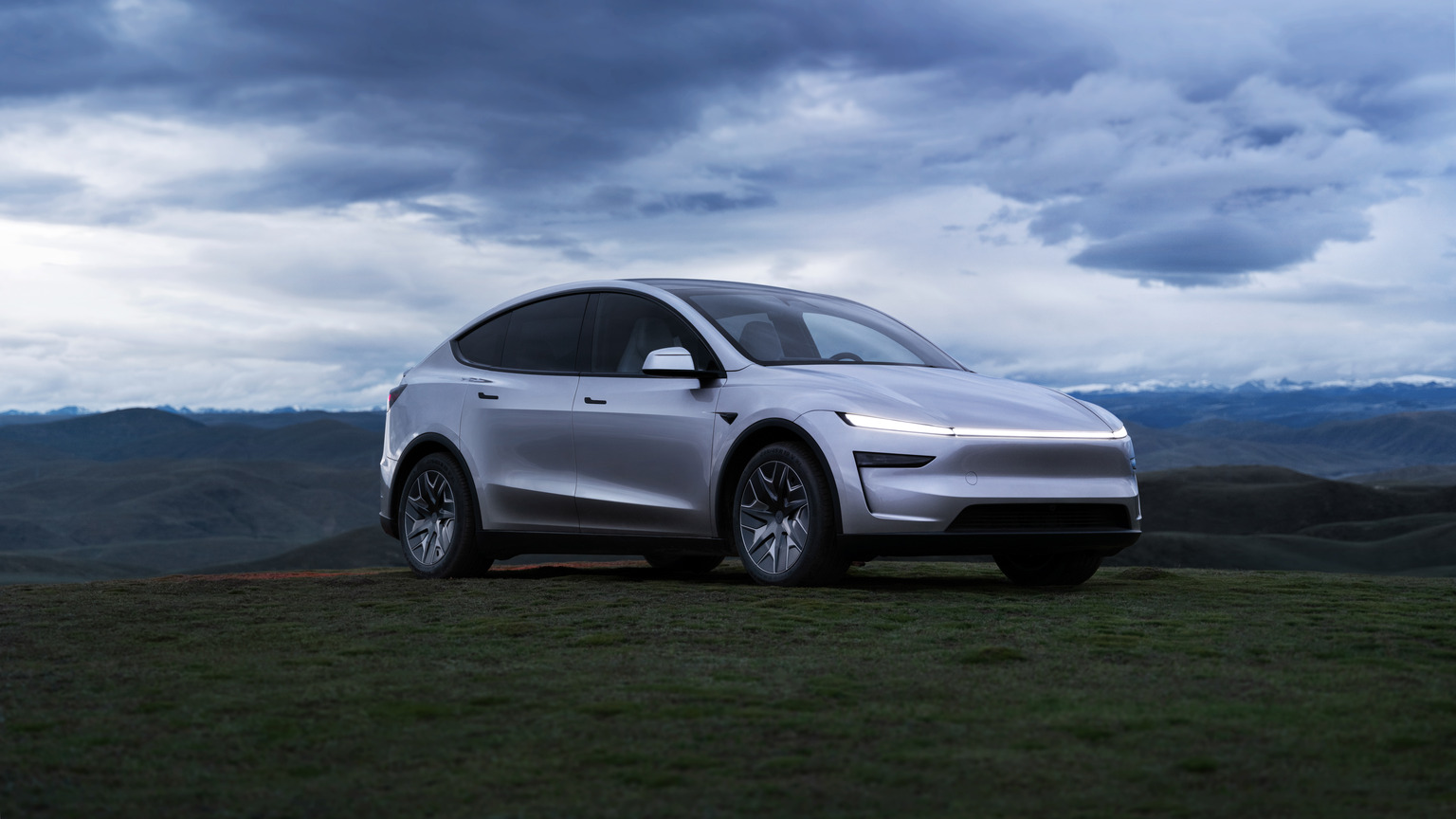
Tesla is rolling out what is likely its biggest battery feature in years through a software update, as owners are starting to reveal the new addition is hitting their cars.
Tesla is now giving owners the option to manually enable Battery Preconditioning, a feature that was previously only available at the vehicles’ discretion when heading to a Supercharger stall.
It is on its way to some owners, who are sharing the first screenshots of the feature, which lies within the Charging section of the Tesla App:
This is how 2026.44.3.1 battery preconditioning looks in the current Tesla App. 👇 https://t.co/TN9lGkc3JP
— Lothar Lindinger (@lotharlindinger) November 27, 2026
The “Preconditioning for Fast Charging” button is clearly labeled just below the charging information UI in the app. Of course, you do not need to keep it exclusively for fast charging, as preconditioning the cells can have a lot of different advantages for EV drivers.
Battery preconditioning brings your battery cells to an ideal temperature before driving or fast charging. Warming or cooling the battery cells to a proper temperature can improve charging speeds, protect the cells and their longevity, restore regenerative braking quicker in cold temperatures, and help with both performance and efficiency.
This new change comes with Tesla Software Version 2026.44.3.1, which includes several new improvements, like a new Charging Network View, Security Improvements, and Bug Fixes.
This is a welcome change and it is pretty surprising that this has not been enabled before now. There were a handful of times in the winter last year that I would set my destination as a Supercharger just to get the cells warmed up to get regenerative braking and performance to a more reasonable level.
This should be something that helps many owners in colder climates get more from their Teslas, and it also should help with long-term battery health.
Elon Musk
Elon Musk will give every American kid a SpaceX share every year
Elon Musk’s SpaceX stock giveaway to American kids just became something that repeats every year.

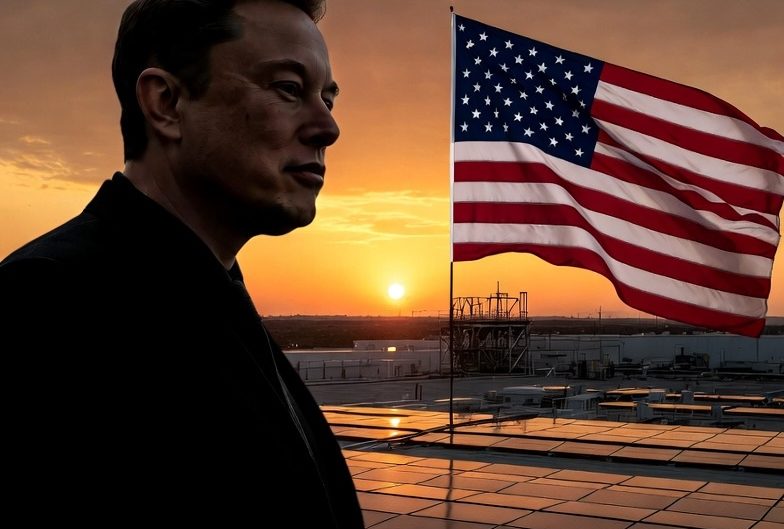
Elon Musk says the SpaceX shares headed to American children will not be a one time gift.
“I will be donating another share of SpaceX to all kids in America every year,” Musk wrote on X on Thanksgiving. He later quoted Sawyer Merritt’s estimate that the pledge covers about 70 million children, adding, “Vital that children have a stake in the future.”
At Wednesday’s closing price of $127.44, one share for 70 million children works out to roughly $9 billion a year, a figure that would rise or fall with SpaceX’s stock. Musk did not say how the annual shares would be distributed or whether they would also flow through Trump Accounts.
Vital that children have a stake in the future — Elon Musk (@elonmusk) November 27, 2026
The yearly pledge builds on an announcement made a day earlier. SpaceX said Wednesday it will donate one newly issued class A share to every currently active Trump Account, with Musk personally matching the gift. “Every child in America will receive two SpaceX shares, one from the company and one from me personally,” Musk wrote.
Combined with President and COO Gwynne Shotwell’s pledge of more than 2 million shares, that first round totals about 142 million shares worth roughly $18.1 billion. Musk said SpaceX’s share will be transferred next month, while “the share directly from me will be transferred when my lockup expires in June next year.”
Musk also offered the new shareholders some advice. “If SpaceX succeeds in making life multiplanetary and harnessing even a millionth of the Sun’s energy, it will be worth about a million times the current global economy,” he wrote, calling the goals “absurdly difficult” before adding, “I recommend holding on to your shares.”
The giveaway has grown quickly since October, when Musk first promised a SpaceX share to “every kid in America” in 2027. Shotwell had already committed her own stock to Trump Accounts, with those shares due to reach eligible children in December.
Trump Accounts, also known as 530A accounts, are tax advantaged investment accounts open to any U.S. child under 18 with a Social Security number. The White House said in October that nearly 70 million had been opened, more than 60 million of them through automatic enrollment, though it is unclear how many count as active.
The first gift was announced hours after the FCC authorized SpaceX to deploy up to 1 million Starmind data center satellites. It also arrives as Tesla and SpaceX special committees negotiate a possible all stock merger, which would make every child holding SpaceX stock an owner of the combined company if a deal closes.

Tesla aims to bolster Optimus with newest company acquisition

Tesla is rolling out its biggest battery upgrade through a software update


