News
Elon Musk explains Tesla’s FSD ‘Download Beta’ button and its expected release date

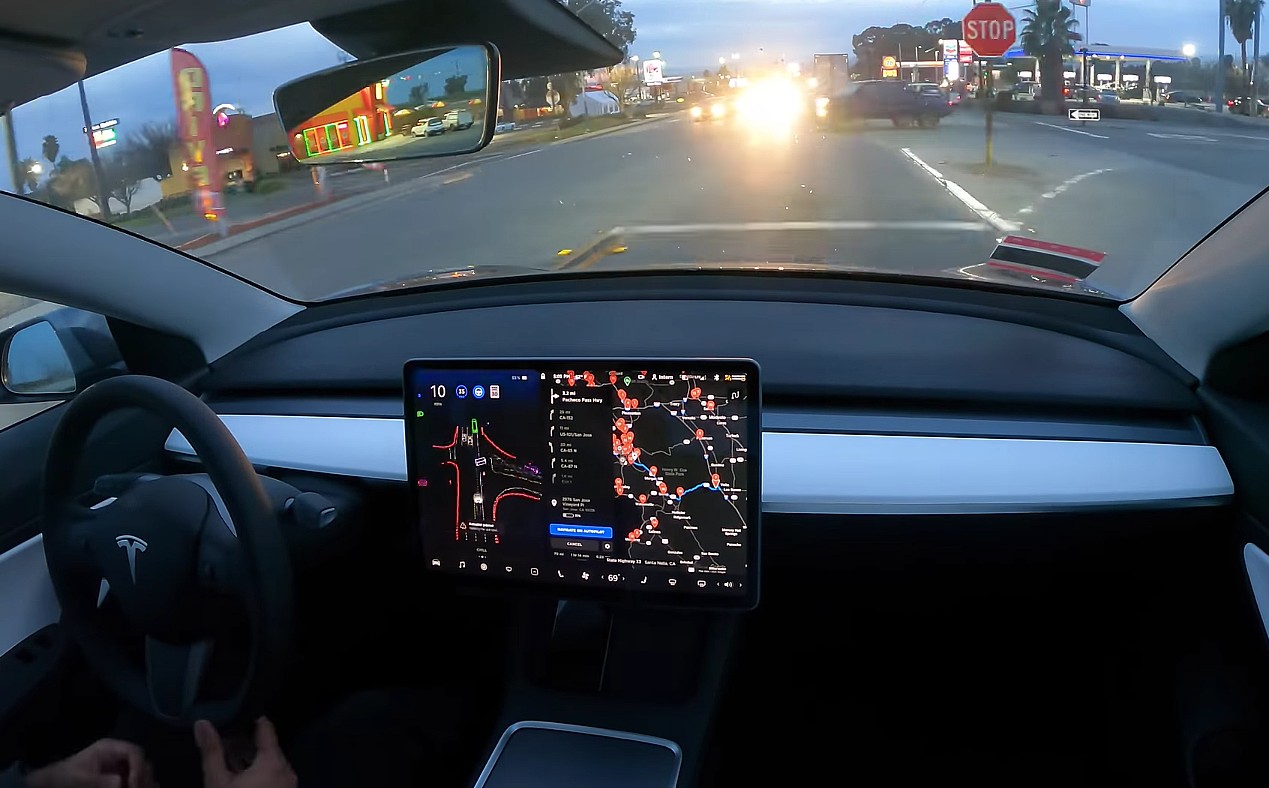
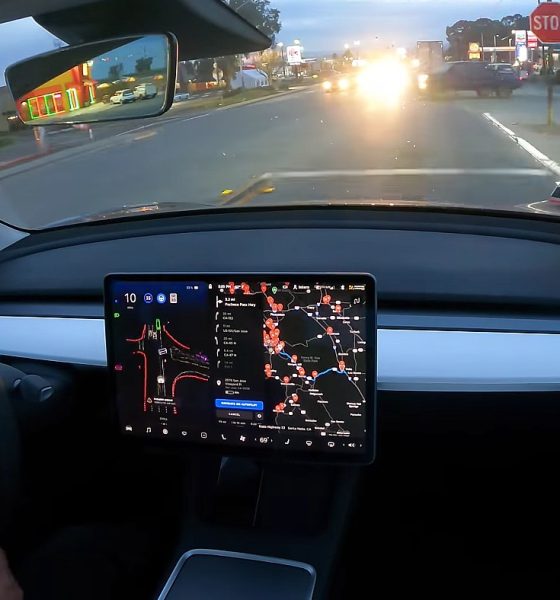
Elon Musk recently remarked that Tesla would be releasing a “Download Beta” button for FSD users. The button, which is part of the company’s efforts to expand the FSD Beta’s user base, is expected to be released with the Build 8.3 update. In a recent set of tweets, Musk shared some additional details about the upcoming FSD “Download Beta” button, as well as the feature’s estimated release date.
Musk’s update came as a response to Model 3 owner @WholeMarsBlog, who asked if the upcoming button would place Tesla owners in a queue for the FSD Beta. According to Musk, using the feature would actually allow vehicles to download the latest QA-tested FSD Beta build as soon as the car connects to a WiFi network.
Assuming user approves warning & agrees to drive carefully, it will download latest QA-tested FSD “Beta” build as soon as car connects to wifi
— Elon Musk (@elonmusk) March 9, 2021
In a later tweet, the Tesla CEO added that the FSD Beta’s Build 8.3 should be done QA testing by the end of the following week, which should be around the same time the “Download Beta” button should show up in users’ vehicles. When asked if the FSD Beta will be expanded into Europe, Musk noted that Tesla would be asking regulators for a potential release in the region as well.
The release of FSD Beta’s Build 8.3 has been teased by the Tesla CEO in recent days, with Musk stating that the update would present ~1,000 improvements to the advanced driver-assist system. Musk posted a warning that the QA process for FSD Beta Build 8.3 would take some time, though he remarked that the update’s release is definitely coming.
Build 8.3 of FSD should be done QA testing by end of next week, so that’s roughly when download button should show up
— Elon Musk (@elonmusk) March 9, 2021
The first iteration of the FSD Beta was released in late October last year, and since then, the system has received several important updates from the electric car maker. Videos shared by members of the company’s select group of FSD Beta testers show vehicles operating almost like a human driver at times. Other demos of the feature even included trips from San Francisco to Los Angeles with no human intervention.
The Full Self-Driving suite is a key pillar of Elon Musk’s vision for the future of transportation. As he noted during Autonomy Day, Tesla eventually plans to release a network of autonomous Robotaxis that utilizes FSD’s full hands-off version. Granted, Tesla’s FSD Beta still requires drivers to keep their hands at the wheel and monitor the road closely, but if Build 8.3 is indeed as impressive as Elon Musk suggests, the upcoming update could prove to be a definitive step towards achieving autonomy.
Don’t hesitate to contact us for news tips. Just send a message to tips@teslarati.com to give us a heads up.


Elon Musk
Elon Musk’s Boring Company lands a new Middle East deal, and Nashville is about to get faster
The Boring Company signs Abu Dhabi tunnel agreement while adding more Prufrock machines in Nashville.

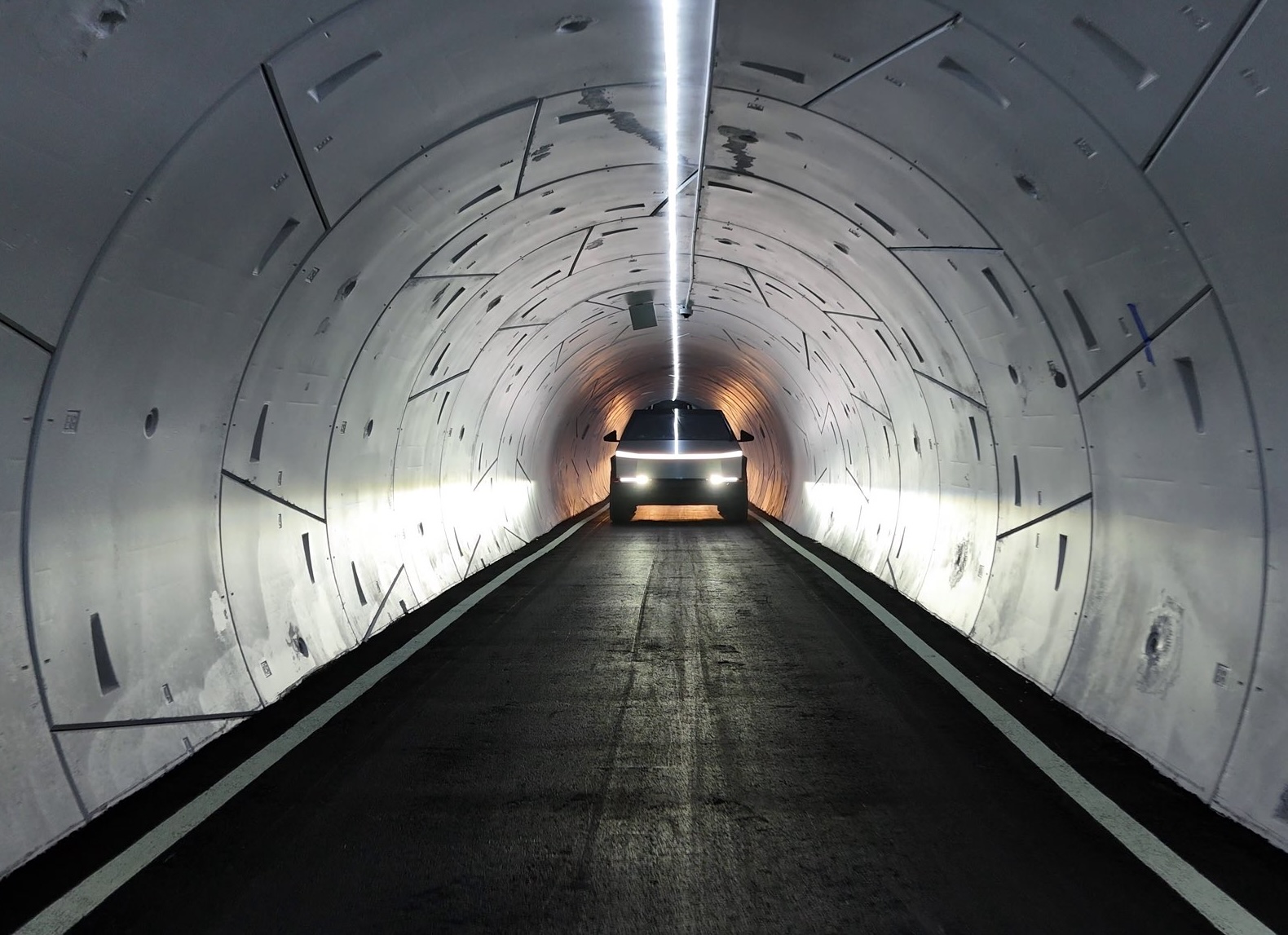
The Boring Company has signed an agreement with Abu Dhabi to study underground transport and utility tunnels across the emirate, adding a second UAE city to its pipeline as it prepares to also scale up tunneling back home in Nashville.
The deal was signed Thursday at the Liveability and Investment Exhibition (LIVEX 2026) by Boring Company President Steve Davis and Maysarah Mahmoud Salim Eid, director general of the Abu Dhabi Projects and Infrastructure Centre (ADPIC), according to the Abu Dhabi Media Office. Mohamed Ali Al Shorafa, chairman of the emirate’s Department of Municipalities and Transport, attended the signing.
Under the agreement, the two sides will assess feasibility, delivery and operating models for tunnels that could carry passengers or utilities. They will also look at Abu Dhabi’s potential as a regional hub for tunneling work. The current phase is exploratory, and no construction commitment or project budget has been announced.
“Abu Dhabi provides an ideal environment to explore the next generation of underground infrastructure solutions, supported by its ambitious growth vision and strong commitment to advanced technologies,”
Davis said. He added that the company wants to assess how tunnels can “expand urban capacity more efficiently, and enable better use of available space.”
The timing lines up with the money, considering last month, The Boring Company closed a $3 billion Series D led by the UAE and affiliated investors, valuing the company at $23 billion, as Teslarati reported. That round came with a commitment to build more than 150 kilometers of tunnel across the UAE, separate from the Dubai Loop pilot already under contract with Dubai’s Roads and Transport Authority. That pilot covers 6.4 kilometers and four stations linking DIFC and Dubai Mall at a cost of about $154 million.
Back home, The Boring Company projects in Nashville are also scaling up, with the company telling local NewsChannel 5 that a third Prufrock machine could start digging the Music City Loop in late October. A fourth is also targeted before the end of the year. Two machines are already mining Nashville limestone at the same time, and work is underway on a new launch site for the third.
The company said it has made more than 300 design and performance upgrades to its original Nashville machine. It is also working with property owners on more than 40 planned stations, with approvals in place for a future Nashville International Airport connection, a downtown station near the Music City Center, and stops at residential towers and the JW Marriott.
Construction on the Music City Loop began the same evening Tennessee and federal regulators approved the project’s lease in February, and the company targeted its first operational segment for late 2026. Back in Las Vegas, The Boring Company has said it plans to double its Vegas Loop station count by year’s end.
News
SpaceX brings four astronauts home after 8 months in space, and the return was flawless
SpaceX Crew Dragon Freedom returned four Crew-12 astronauts home after 237 days aboard the station.
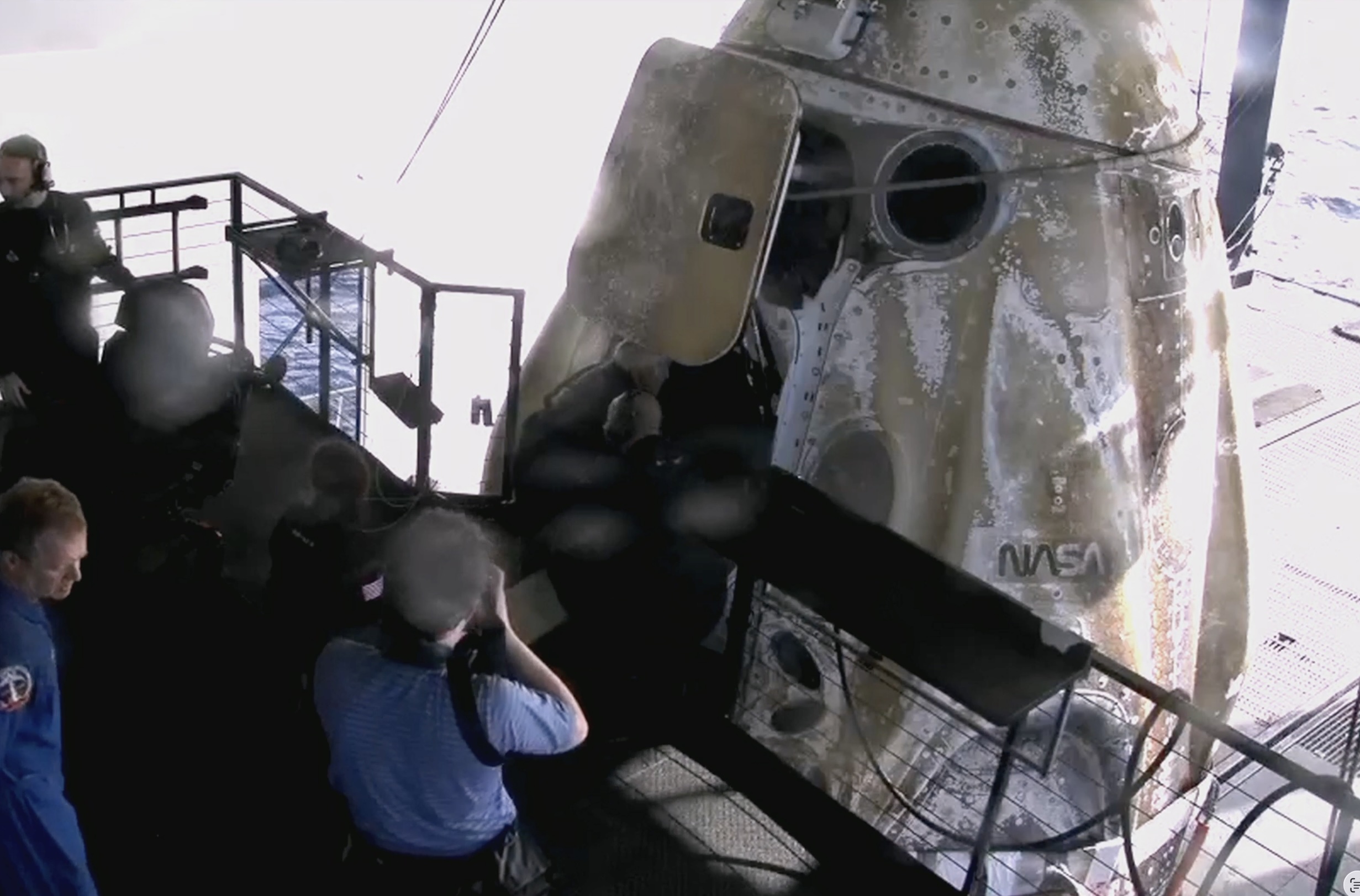
Four Crew-12 members are back on Earth after 237 days at the International Space Station. SpaceX’s Crew Dragon Freedom splashed down in the Pacific Ocean about 50 miles west of Los Angeles at 11:34 a.m. ET on Thursday.
NASA astronauts Jessica Meir and Jack Hathaway, ESA astronaut Sophie Adenot, and Roscosmos cosmonaut Andrey Fedyaev landed one day after undocking from the station’s Harmony module at 8:05 a.m. ET on Wednesday. NASA confirmed the splashdown minutes later. SpaceX had flagged the 27.5 hour trip home on X while Dragon was still firing its departure burns away from the station.
The descent ran on schedule when Freedom started a nine minute deorbit burn at 10:46 a.m. ET, then hit the thicker atmosphere about 36 minutes later at nearly five miles per second. Chutes deployed at around 18,000 feet, and four main parachutes brought the capsule down to roughly 15 mph at splashdown.
SpaceX fast boats secured Dragon before the recovery ship Shannon hoisted it onto the deck with the crew still inside. Flight surgeons on board ran initial medical checks. All four crew members will be flown ashore by helicopter and then head to NASA’s Johnson Space Center in Houston for rehabilitation.
Splashdown of Dragon confirmed! https://t.co/P2o7A3Gytf
— SpaceX (@SpaceX) October 8, 2026
Crew-12 launched on February 13 from Space Launch Complex 40 at Cape Canaveral, a flight that also marked the first Falcon 9 booster landing at SpaceX’s new LZ-40 pad. Over the mission, the crew completed 3,792 orbits, covered nearly 101 million miles, and carried out four spacewalks to maintain and upgrade the station.
Meir now has 440 cumulative days in space, which places her in NASA’s top 10. This was the first spaceflight for Hathaway and for Adenot, a French Air Force colonel and former helicopter pilot. Fedyaev, who spent 186 days in orbit on Crew-6 in 2023, has now flown two long duration Dragon missions.
The return closes out a busy stretch of Dragon traffic. Crew-13 arrived on October 1 aboard Crew Dragon Grace, which docked just 7 hours and 55 minutes after liftoff, the fastest launch to docking of any U.S. spacecraft in ISS history. Commander Jessica Watkins, pilot Luke Delaney, Canadian Space Agency astronaut Joshua Kutryk, and cosmonaut Sergey Teteryatnikov remain aboard alongside the three person Soyuz MS-29 crew.
With Crew-12 gone, the port is clear for CRS-35, a cargo Dragon carrying the final pair of ISS Roll-Out Solar Arrays. NASA is holding a post-splashdown teleconference at 1:15 p.m. ET covering both the crew’s return and the upcoming cargo launch.
Elon Musk
Elon Musk shuts down talk of TSMC taking over Terafab
Musk says Tesla and SpaceX will build and run Terafab, with TSMC limited to renting.
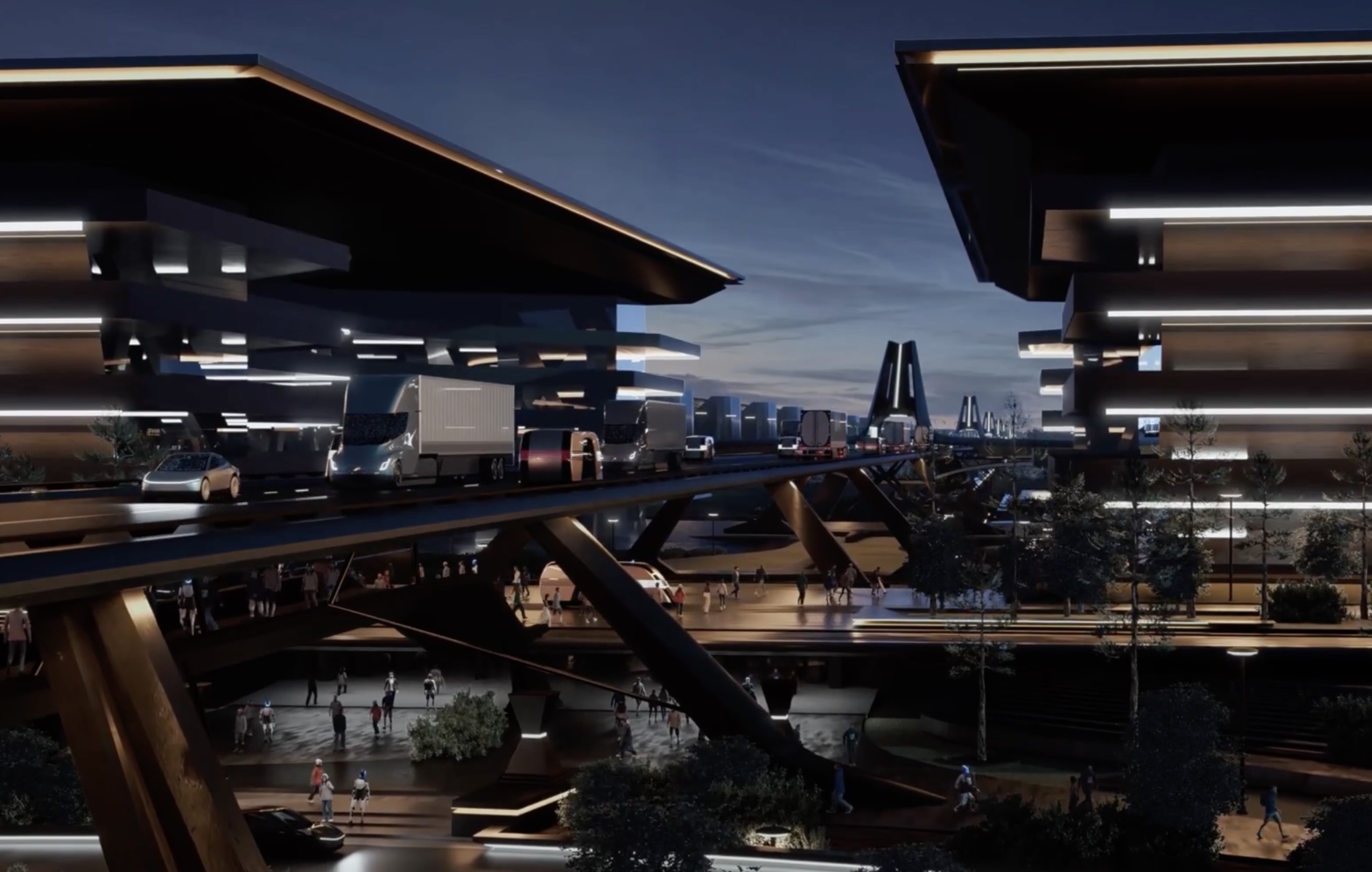
Elon Musk has drawn a firm line around who will be in charge of Terafab, the giant chip factory Tesla and SpaceX are planning in Texas.
Musk replied to a post on X arguing that Taiwan Semiconductor Manufacturing Company (TSMC) would most likely end up owning and operating the plant. “No, we will build and run the fab. Let there be ZERO doubt about that,” Musk wrote. “Maybe TSMC subleases part of the Terafab if they want, but nothing more than that.”
In plain terms, a sublease means TSMC could rent a section of the complex to make chips, similar to a tenant renting one floor of an office tower. The building, the equipment decisions and the daily operation would stay with Tesla and SpaceX.
@herbertong @thejefflutz No, we will build and run the fab. Let there be ZERO doubt about that.
Maybe TSMC subleases part of the Terafab if they want, but nothing more than that.
— Elon Musk (@elonmusk) October 7, 2026
The comment shuts down speculation that started last week. On October 2, tech journalist Tim Culpan reported that TSMC was exploring ways to help run Terafab’s factories. Musk responded the next day that it was “just discussions, but something may come of it,” as Teslarati reported at the time. That left room for a scenario where the world’s largest contract chipmaker took the wheel. Musk’s latest post closes that door.
Some background helps explain why this matters. Tesla designs its own AI chips today but pays outside companies like TSMC and Samsung to manufacture them. Musk unveiled Terafab in March as a joint project between Tesla, SpaceX and xAI, arguing that existing suppliers cannot expand fast enough to meet his companies’ future demand. The goal is to produce enough chips each year to supply one terawatt of computing power, roughly 50 times what the entire global AI chip industry produces now.
Those chips are meant for Tesla’s Optimus humanoid robots, the Cybercab and Full Self-Driving computers, along with chips for SpaceX’s planned data centers in orbit. Owning the factory means Musk’s companies would not have to compete with every other chip customer for time on someone else’s production lines.
Intel is still part of the picture. The company signed on in April to help design, build and package chips for the project, and CEO Lip-Bu Tan told Bloomberg this week that Intel will keep working on Terafab despite the TSMC chatter.
The project moved from concept to construction planning over the summer. In August, SpaceX confirmed the Grimes County site about an hour from Houston, sent the county a $10 million payment under its tax abatement deal and said civil work would begin shortly. The first phase carries a $16.8 billion price tag, and total spending across all phases could reach as much as $119 billion.
TSMC chairman C.C. Wei has said a new fab typically takes two to three years to build and another one to two years to reach full output. Tesla and SpaceX have never run one, which is why TSMC’s expertise drew so much attention. Musk’s answer suggests he would rather learn that process in house than hand control of a project this central to Tesla’s robotics and autonomy plans to an outside company.
Terafab Texas will be the largest and most valuable building on Earth by far.
And it will be stunningly beautiful. https://t.co/4NweOqTL7y
— Elon Musk (@elonmusk) August 6, 2026

Elon Musk’s Boring Company lands a new Middle East deal, and Nashville is about to get faster

SpaceX brings four astronauts home after 8 months in space, and the return was flawless

Elon Musk shuts down talk of TSMC taking over Terafab

The Pentagon taps Elon Musk to design the battlefield of the future

Tesla Roadster’s new patent preps white-knuckle speeds, keeping it grounded


