


SpaceX’s Falcon Heavy successfully launched NASA’s Psyche spacecraft on Friday morning, completing the second-ever interplanetary mission for the rocket, with the first being the Tesla Roadster.
Liftoff officially happened at 10:19 A.M. EDT, as Falcon Heavy’s 27 first-stage Merlin engines launched NASA’s Psyche probe toward an asteroid under the same name. Psyche won’t reach the asteroid until July 2029, according to Space.com.
Liftoff of Falcon Heavy!
— SpaceX (@SpaceX) October 13, 2023
“This is the beginning of a suite of amazing science missions we have coming up on Falcon Heavy,” Julianna Scheiman, Director of Civil Satellite Missions at SpaceX, said during a post-launch briefing.
The probe will travel 2.2 billion miles over its six-year journey.
The spacecraft will now travel six years and ~2.2 billion miles to the asteroid Psyche, currently orbiting the Sun between Mars and Jupiter https://t.co/29bfT6fod2
— SpaceX (@SpaceX) October 13, 2023
The Launch
About 150 seconds after launch, Falcon Heavy’s side boosters cut their engines off, detached from the central core stage, and made their way back to Florida.
Four minutes after liftoff, the core booster shut down and separated from the Falcon Heavy’s second stage. This was responsible for carrying Psyche the rest of the way to orbital escape velocity, Space.com said.
The core booster was not saved as others have been in the past. Instead, SpaceX allotted maximum fuel as Psyche’s trajectory needed to be ensured. The core was destroyed and is in the sea.
By the eighth minute post-liftoff, Falcon Heavy’s side boosters activated their landing burns and touched down a few seconds later at SpaceX’s Landing Zones 1 and 2, which are “several miles downrange from Pad 39A.”
Falcon Heavy’s side boosters have landed pic.twitter.com/2yn0lpEkHt
— SpaceX (@SpaceX) October 13, 2023
It took just over 62 minutes for Psyche to be deployed from Falcon Heavy’s upper stage.
Psyche Asteroid
The Psyche Asteroid is one of the most metal-rich in our solar system, and NASA Science Mission Directorate Nicola Fox talked about the agency’s mission recently:
“Psyche is by far the largest, and that’s why we want to go to it because the smaller ones are more likely to have been changed by things impacting them, whereas the big one, we think, is going to be completely unchanged.”
The Psyche Asteroid measures 173 miles across and 144 miles long. Its exact appearance is unknown, but scientists know it’s covered in nickel and iron.
Once NASA’s Psyche probe reaches the asteroid, it will be responsible for 21 months of mapping and analyzing the surface.
I’d love to hear from you! If you have any comments, concerns, or questions, please email me at joey@teslarati.com. You can also reach me on Twitter @KlenderJoey, or if you have news tips, you can email us at tips@teslarati.com.



Give the gift of Tesla upgrades.
Shop for someone else or treat yourself. Get more shopping power with a Teslarati gift card.
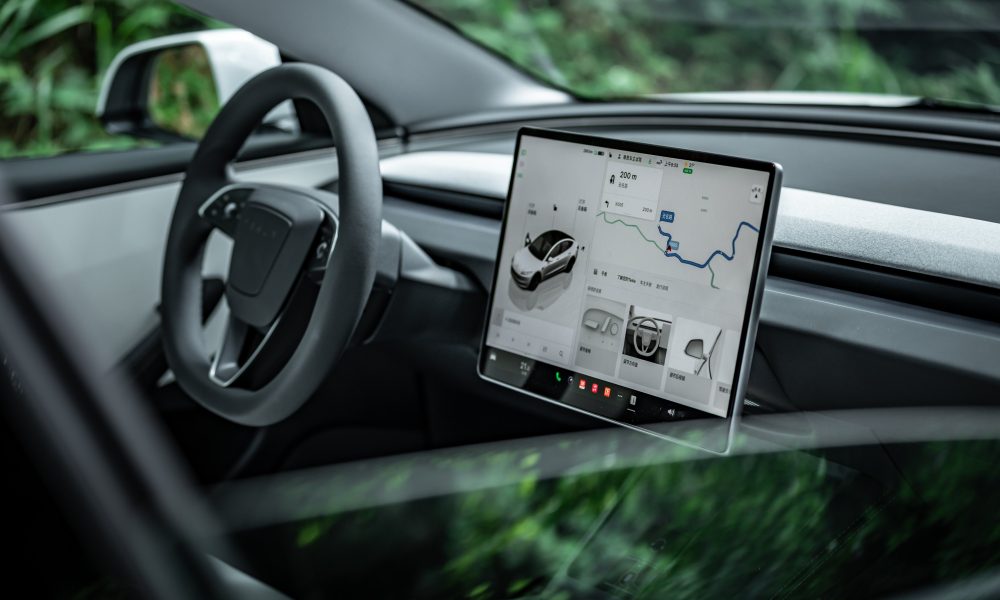
Tesla Full Self-Driving v15 has received an official release date from CEO Elon Musk, who says the newest and most capable version of the suite will go wide in December with the 2026 Holiday Update.
That means the first iterations of the suite could actually come sooner, as the Early Access Program is the initial batch of owners to receive a new FSD release. Musk’s comments released a few tidbits of information, but nothing overwhelmingly revealing about its capabilities.
Musk was talking about supervised fine-tuning, stating that it is like “getting a haircut with a chainsaw,” before stating that FSD v15 will roll out wide for owners next month:
SFT is more like getting a haircut with a chainsaw than it is “fine-tuning”! Should just be built into primary training.
And having a “system prompt” is silly! Default behavior should be sensible.
The above are already true for Tesla AI (not yet deserving of “super”). It is the most efficient AI on Earth.
FSD V15 goes to wide release next month. It will be something special.
— Elon Musk (@elonmusk) November 21, 2026
Musk’s Confirmed Changes and Fixes
Musk simply confirmed the new Full Self-Driving version would roll out with the 2026 Holiday Update, and the only two explicit changes he confirmed were updates to the User Interface (UI) and two small changes.
Musk’s comments on the UI confirm there are big changes coming to it, as he stated:
@roger_kappler Yeah.
The new user interface will re-render reality in a mind-bending way. Hard to describe, but it’s awesome.
— Elon Musk (@elonmusk) November 21, 2026
The UI changes will likely upgrade AMD Ryzen-equipped Tesla vehicles running AI4 to visualize vehicles using the Unreal Engine, something that was found in coding last year:
Tesla plans to use Unreal Engine for driver visualization with crazy upgrade
Additionally, one user stated that their biggest complaints with v14’s most recent releases is that they have to “stop refusing to use the HOV lane” and last-second lane changes to merge or turn happen too frequently. Musk said these should be fixed in v15.
@riley_stahura Should be fixed in V15
— Elon Musk (@elonmusk) November 21, 2026
In the past, we’ve also gotten small bits of detail about the v15 release, including from Tesla’s Head of AI, Ashok Elluswamy, who stated back in September that there are improved safety and collision avoidance systems coming with the v15 release.
Tesla plans big safety improvements for Full Self-Driving v15
The big prediction for v15 is whether this will enable at least some unsupervised driving in personal Teslas. There are likely to be some massive jumps in capability, although FSD has already proven itself to be a great way to travel. Nevertheless, there are a lot of things it could do better.
FSD still struggles with parking, it has routine bugs from update to update, it does not recognize potholes or large bumps on the road, speed control is a common complaint, and Navigation has been one of the biggest pain points.
However, v15 will likely bring massive improvements to capability and give people more options, like potentially parking orientation and more refined spot selection. We can only wait and see what Tesla will include.
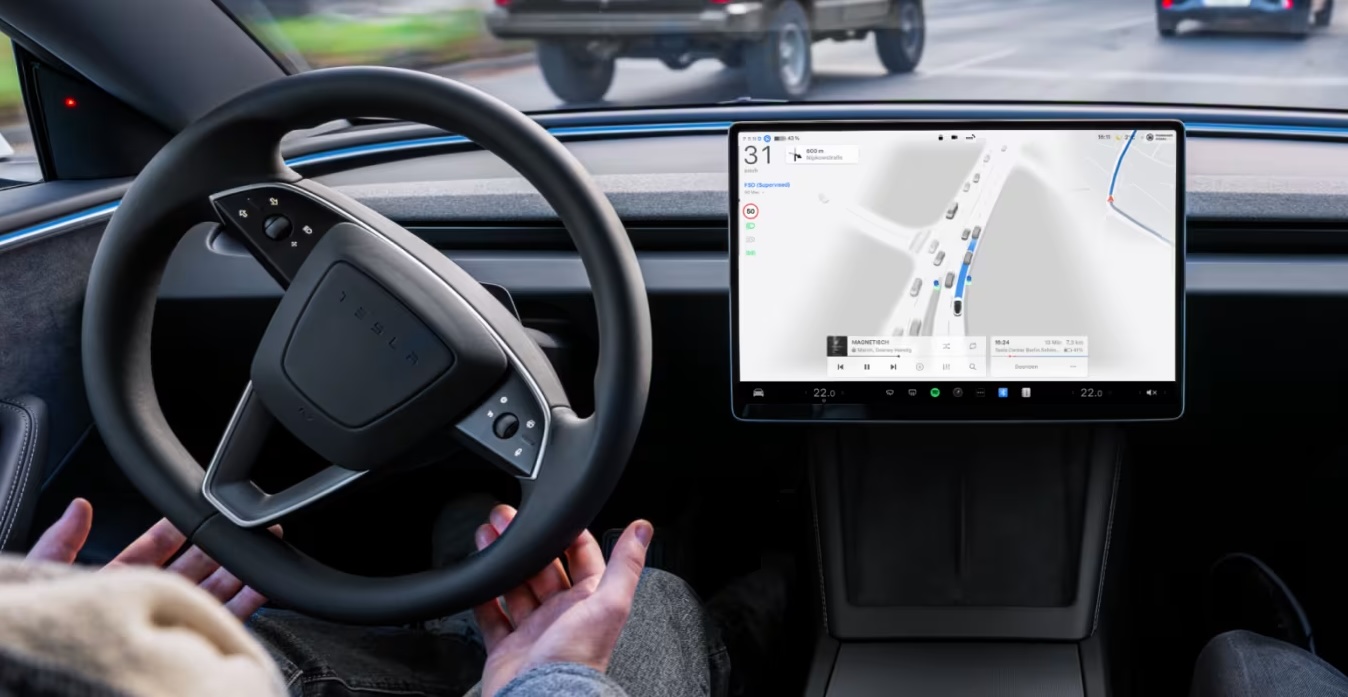
Tesla Assisted Driving (TAD), the European equivalent of the Full Self-Driving suite in the U.S., has officially landed approval to operate in Italy, the 12th European Union country to allow the suite.
Italy marks a huge accomplishment for Tesla’s approval processes in Europe, as it marks the first truly major European country to give an approval.
On November 20, Italy’s Ministry of Transport granted provisional type-approval for Tesla Assisted Driving (TAD), the company’s advanced driver-assistance system. Transport Minister Matteo Salvini announced the decision on X, describing it as “another step forward toward innovation, technology and the mobility of the future, whilst always prioritising public safety.”
Sono orgoglioso di annunciare un’altra importante novità per la mobilità in Italia.
Il @mitgov_it, dopo puntuale verifica tecnica di fattibilità, ha dato il via libera all’omologazione provvisoria del sistema di guida assistita Tesla Assisted Driving, anticipando il processo di riconoscimento comunitario, attualmente in fase di definizione.
Un altro passo avanti verso l’innovazione, la tecnologia e la mobilità del futuro, sempre mettendo al primo posto la sicurezza dei cittadini.
— Matteo Salvini (@matteosalvinimi) November 20, 2026
The approval followed a thorough technical feasibility assessment and positions Italy as the twelfth European country to authorize the technology, but the first among the European Union’s largest markets.
TAD, previously marketed as FSD (Supervised), will roll out in Italy shortly through an Over-the-Air update and will be available on a subscription basis at €99 per month.
This Italian green light carries substantially greater weight than the preceding approvals. The system first received provisional type-approval from the Netherlands’ RDW in April. Subsequent recognitions came primarily from smaller countries, like Lithuania, Denmark, Belgium, Croatia, Finland, and others.
Italy, by contrast, is the Union’s third-most populous member state and one of the traditional “big four” alongside Germany, France, and Spain. Its urban environments are particularly dense and present a more demanding real-world test for the system than many earlier markets.
The approval also follows a late-October conversation between Elon Musk and Salvini, after which the minister publicly supported a swift EU-level decision. Full bloc-wide authorization requires a qualified majority of at least 15 member states representing 65 percent of the EU population. Italy’s move adds meaningful population weight and political momentum ahead of potential discussions in the Technical Committee on Motor Vehicles.
Tesla marked the occasion with a video of a vehicle navigating Roman streets near the Colosseum, underscoring the system’s ability to handle the city’s distinctive traffic patterns.
For Tesla, the Italian authorization represents a strategic foothold in a major European car market, potentially accelerating both customer adoption and the case for broader regulatory acceptance across the continent.
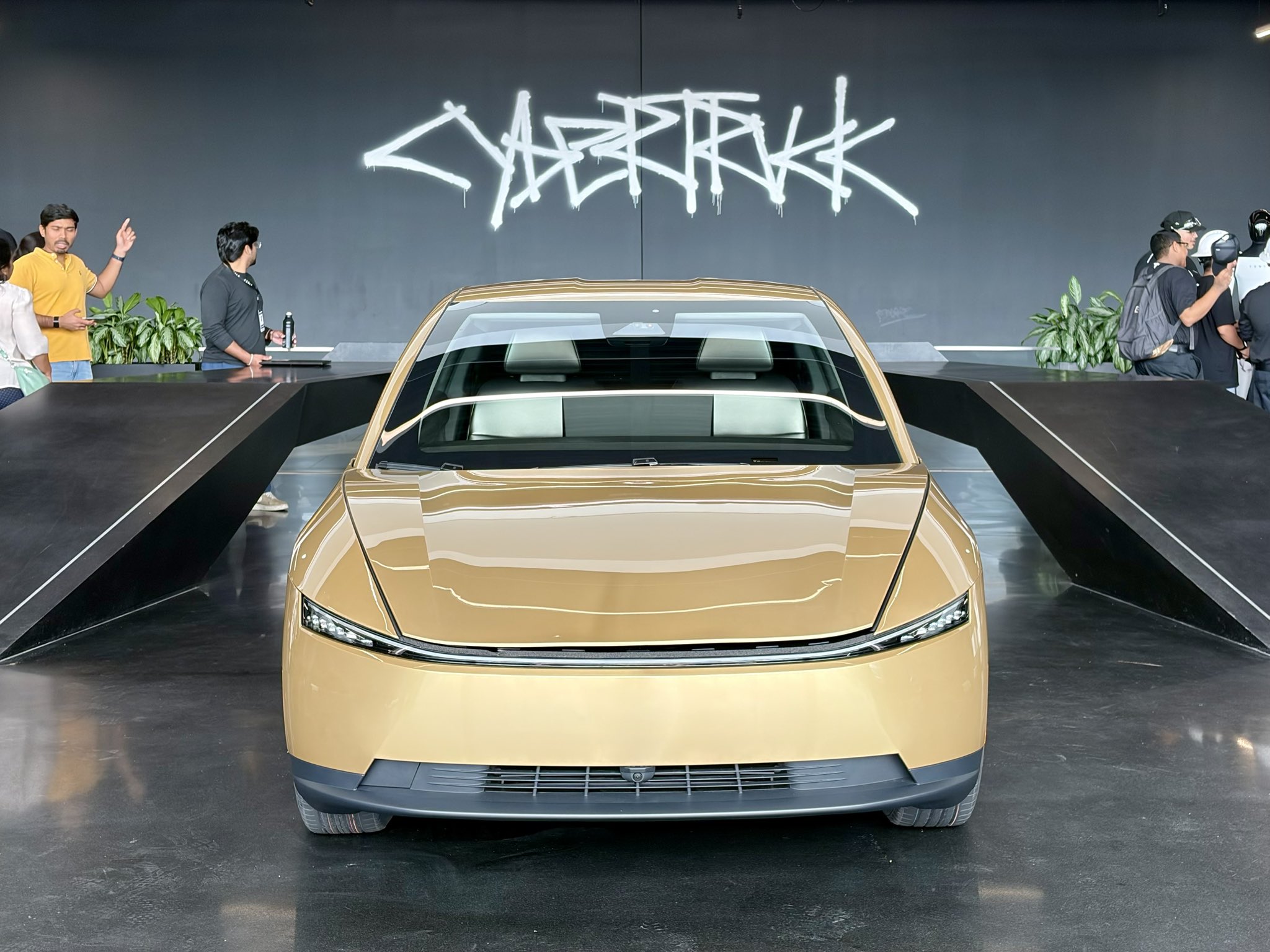
Tesla Cybercab is now officially available for personal-use orders to those the company has invited to purchase the car near Austin, Texas.
The two-seat car void of a steering wheel and pedals requires Tesla’s $299 per month “Autonomy Subscription,” as the company has made it abundantly clear that Cybercab “will not operate without an active Autonomy Subscription.”
This was the description of the Autonomy Subscription on the Cybercab. https://t.co/YJPkZkWKwc
— Sat (@sa_futurist) November 19, 2026
But what does that entail and why is it included? The Autonomy Subscription seems to cover all bases on both sides, ownership side and Tesla side, to ensure that the vehicle is functional, capable, and free of anything that could put anyone in danger.
The subscription’s core is the subscription to unsupervised autonomous driving within Tesla’s geofences. Owners control the trips through the Tesla app and the 21-inch center touchscreen.
Included features of the Autonomy Subscription:
- Fully autonomous operation with no steering wheel or pedals (required for the vehicle to function at all).
- Cellular connectivity, including Premium Connectivity features such as live traffic, media streaming, and Grok.
- 24/7 remote support available through the app and the vehicle’s touchscreen.
- Roadside assistance for issues including flat tires, lockouts, and charge depletion, with towing up to approximately 50 miles to a Tesla service center or the owner’s home.
- Tire inspections, rotations, replacements, and flat tire service.
- Windshield replacement, cleaning, and water-repellent coating.
- Wiper blade replacement and cleaning, plus washer fluid refills.
- Cabin air filter replacements.
- Exterior camera lens cleaning (including removal of film buildup on the forward-facing camera).
- Regular vehicle inspections.
- Unoccupied self-driving to and from Tesla service centers for scheduled work, along with remote diagnostics and app-based service scheduling.
Features are subject to change, and some third-party apps may require separate paid subscriptions. Insurance, registration, charging, parking, and general cleaning are not included.
Tesla also notes that its in-house Insurance is available, but not required for Cyberab.
Ordering screens that have been shared by those lucky enough to receive an invitation to order have revealed some new official specs.
The Cybercab carries an EPA-estimated range of 279 miles and can add up to 123 miles in 15 minutes of Supercharging, but that based on constant 65 mph highway efficiency. Dimensions are 69.0 inches wide, 55.4 inches tall, and 176.2 inches long, with 20.1 cubic feet of cargo space and 100 W USB power delivery. It uses eight exterior cameras plus a cabin camera (with washers on the exterior cameras) and has no side mirrors.
Warranty coverage includes a basic limited warranty of 4 years or 50,000 miles and an 8-year/100,000-mile battery and drive unit warranty guaranteeing at least 70 percent capacity retention.
Currently, it is limited to personal use inside Tesla’s geofences, but Cybercab owners can use them in any of the currently active Robotaxi areas.

Tesla Full Self-Driving v15 gets release date from Elon Musk

Tesla Assisted Driving (TAD) lands approval in Italy, its 12th EU country


