
Tesla CEO Elon Musk has responded to the comparisons being drawn by various media outlets regarding his company and high-powered Chinese rival BYD, which outpaced Musk’s company in terms of production of electric vehicles in the fourth quarter of 2023.
Tesla is widely regarded as the world’s leading electric vehicle company, and while that is true in terms of sales volumes in specific regions, like the United States and Europe, the automaker has had trouble keeping pace in China with domestic car companies.
China is the world’s largest automotive market, and Chinese companies yield the biggest threat to Tesla’s global dominance. Musk has commended companies in the country in the past, recognizing their hard work and dedication. Tesla’s Chinese factory in Shanghai has routinely been the automaker’s biggest producer of EVs and handles a lot of the European market’s sales as it produces the Model 3.
Tesla’s factory in Germany only produces the Model Y.
However, in the fourth quarter of 2023, BYD overtook Tesla as the world’s largest producer of electric vehicles by volume. Tesla was still a larger producer of EVs in terms of the entire calendar year, but it is the first time any company has outpaced Musk’s company on a quarterly basis.
A long-form communication on X from a Tesla fan shows the macro picture when comparing Tesla and BYD. Tesla operates fewer factories, had a larger net profit, and has significantly fewer employees than BYD, but the Q4 narrative is enough for many media outlets to take the story and run with it.
Musk, on the other hand, had a simple response to the comparison between Tesla and BYD:
“Tesla is an AI/robotics company that appears to many to be a car company.”
Tesla is an AI/robotics company that appears to many to be a car company
— Elon Musk (@elonmusk) January 3, 2024
Tesla routinely recognizes itself as much more than a car company. In fact, it operates energy products and builds batteries. It also has an ongoing AI and robotics division, which is what Musk is talking about here. Many people may think of cars when they hear Tesla, but the DNA of the company is much broader than just building cars and putting them on the road.
This is completely evident when discussing anything from the Full Self-Driving suite to the Optimus project that Tesla has been working on for a few years.
Cars might be the biggest and most recognizable part of the Tesla story right now, but Musk believes the company is much bigger and broader than that. He’s definitely right.
It will be something to see in the coming quarters how BYD and Tesla stack up in terms of the production of EVs. While volume is a major contributor to Tesla’s global dominance, it is just part of the picture. Tesla has vehicles that are priced at a much higher premium than competitors, yet it routinely outpaces those companies that have cheaper products. This is likely due to a number of factors, including the company’s expansive charging infrastructure.
I’d love to hear from you! If you have any comments, concerns, or questions, please email me at joey@teslarati.com. You can also reach me on Twitter @KlenderJoey, or if you have news tips, you can email us at tips@teslarati.com.


News
It’s official: SpaceX takes aim at Verizon, AT&T, and T-Mobile
SpaceX is buying 800 MHz spectrum from Grain to turn Starlink Mobile into a carrier.

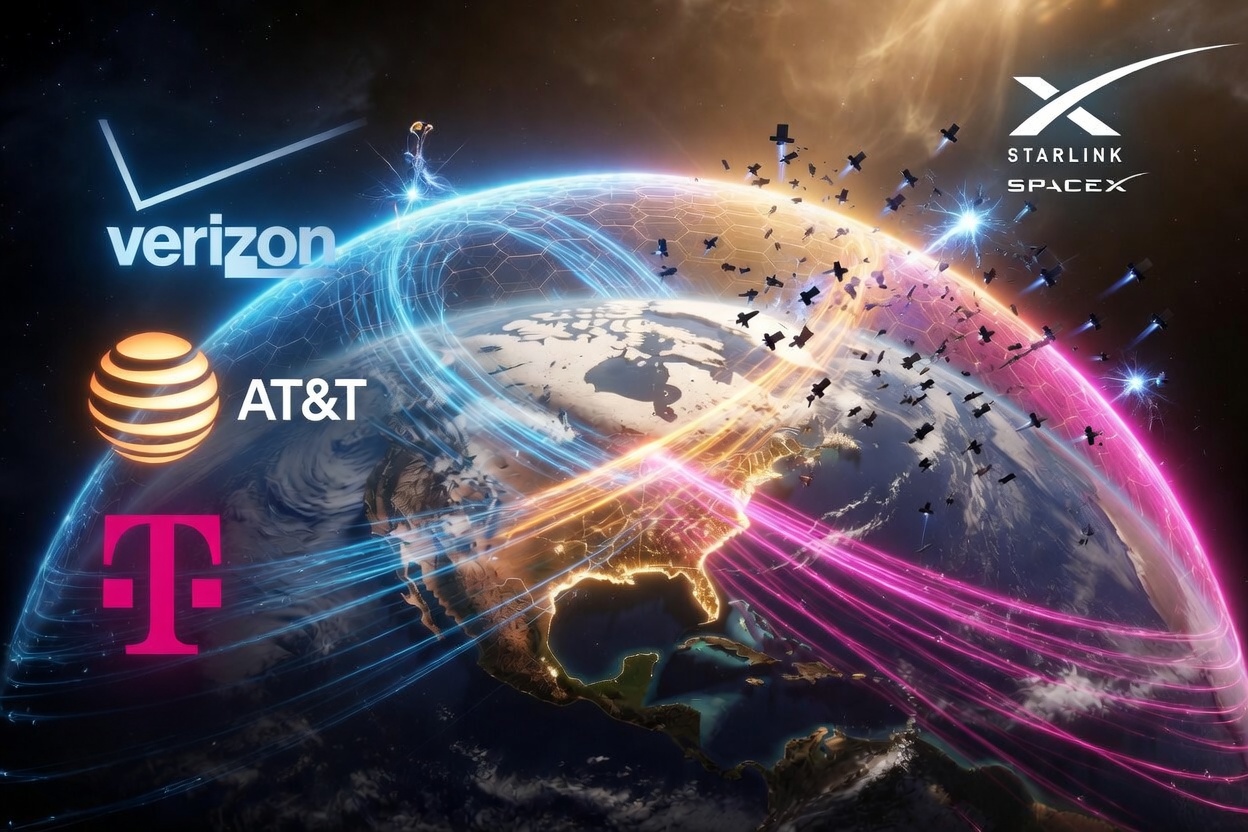
SpaceX has agreed to buy a nationwide block of low band wireless spectrum, a deal the company says will let Starlink Mobile operate as a full US carrier rather than a satellite add-on for someone else’s network.
The company announced the agreement on X on Thursday afternoon, saying it will “pave the way for @Starlink to become a major mobile carrier in the US.” The seller is Grain Management, a private investment firm that confirmed in a statement that SpaceX will acquire 100% of its nationwide 800 MHz portfolio. That covers up to 14 MHz of paired spectrum in the 817 to 824 MHz and 862 to 869 MHz bands. Neither side disclosed a price, and the deal still needs FCC approval.
We announced an agreement to acquire a nationwide low-band spectrum license portfolio that will pave the way for @Starlink to become a major mobile carrier in the US.
With this new spectrum and our Gen2 constellation, Starlink Mobile can ensure Americans have access to high-speed mobile broadband no matter where they are → https://t.co/1Uaf48v5pm
— SpaceX (@SpaceX) October 8, 2026
Grain only recently picked up the licenses itself. It bought the portfolio from T-Mobile in a transaction that closed in August, paying cash plus its own 600 MHz spectrum. Rival AST SpaceMobile had been testing satellites on the same bands before SpaceX stepped in.
SpaceX said its 2 GHz spectrum will handle high bandwidth capacity, while the new 800 MHz layer “ensures Starlink Mobile’s signal penetrates through obstacles, such as walls, and can provide service to customers’ devices even when they are in buildings.” The company added that most existing phones already support the band, so customers would not need new hardware to use it.
That 2 GHz spectrum came from SpaceX’s EchoStar acquisition last year, which gave the company exclusive S band rights in the US and global Mobile Satellite Service licenses. The Grain spectrum is different in an important way: it is tailored for service from ground towers, not satellites. SpaceX said that combination would make Starlink Mobile “the first network operator to deploy both satellite and terrestrial spectrum.”
The announcement also follows a key regulatory win. Earlier this week, the FCC approved SpaceX’s plan to deploy 15,000 second generation Starlink Mobile satellites, which the company has said will carry up to 100 times the data density of the current system, as Teslarati previously reported.
Shares of AT&T, Verizon and T-Mobile fell in extended trading after the announcement. T-Mobile is currently SpaceX’s launch partner for Starlink Mobile in the US, which makes its position the most complicated of the three.
SpaceX has not been subtle about its plans. During the company’s August earnings call, President and COO Gwynne Shotwell said she expected Starlink Mobile to win over customers from the major carriers. “I anticipate us to be able to acquire quite a few of their customers because I think our service will be better,” she said, pointing to dead zone coverage and resilience during disasters. Shotwell also described plans for low cost cellular base stations that could pair with existing Starlink dishes.
SpaceX has targeted 2027 for deployment of its next generation Starlink Mobile satellites, with upgraded service expected by the end of that year. The FCC review of the Grain deal now determines when the terrestrial half of that network can come online.
Elon Musk
Elon Musk’s Boring Company lands a new Middle East deal, and Nashville is about to get faster
The Boring Company signs Abu Dhabi tunnel agreement while adding more Prufrock machines in Nashville.
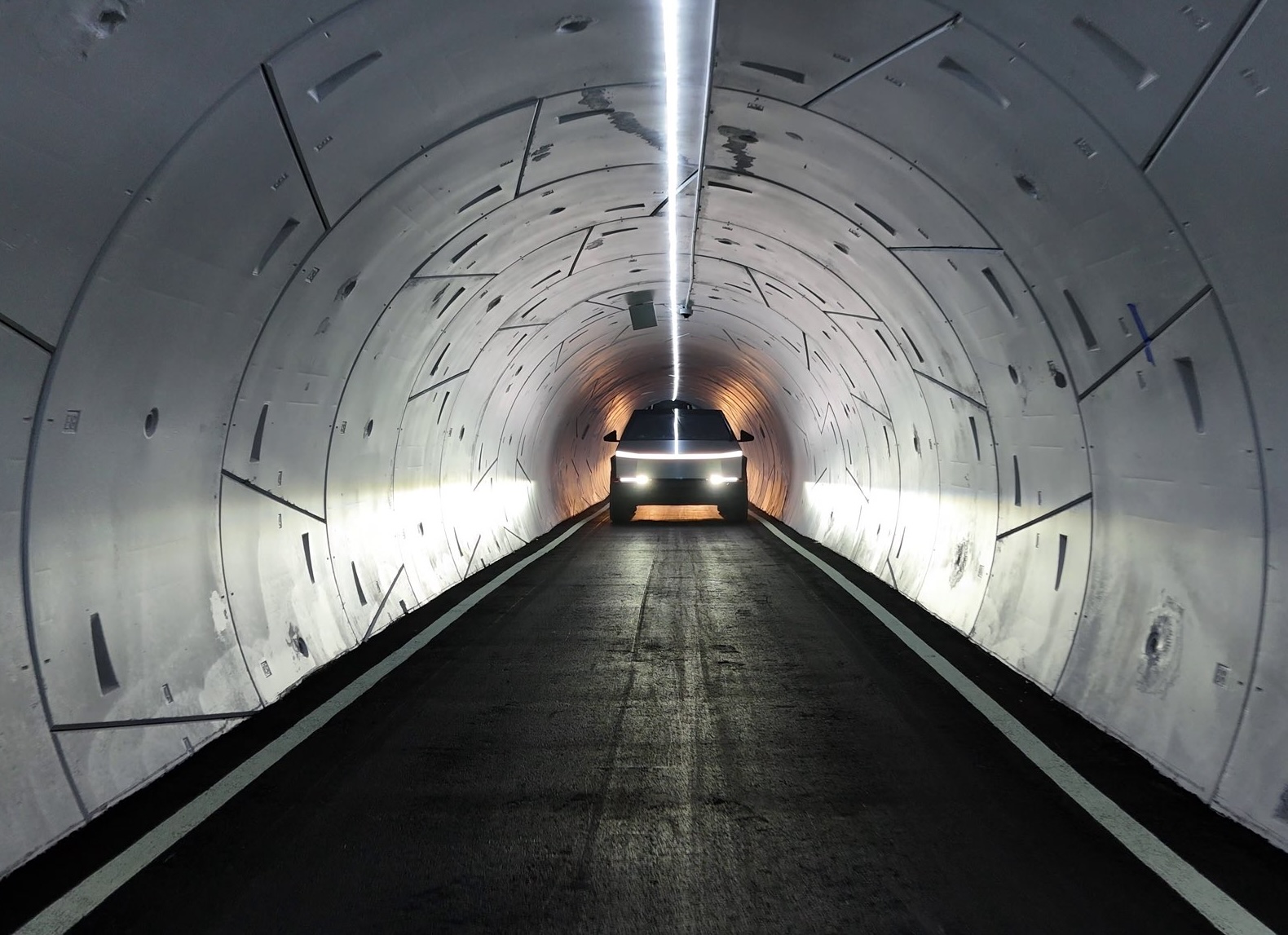
The Boring Company has signed an agreement with Abu Dhabi to study underground transport and utility tunnels across the emirate, adding a second UAE city to its pipeline as it prepares to also scale up tunneling back home in Nashville.
The deal was signed Thursday at the Liveability and Investment Exhibition (LIVEX 2026) by Boring Company President Steve Davis and Maysarah Mahmoud Salim Eid, director general of the Abu Dhabi Projects and Infrastructure Centre (ADPIC), according to the Abu Dhabi Media Office. Mohamed Ali Al Shorafa, chairman of the emirate’s Department of Municipalities and Transport, attended the signing.
Under the agreement, the two sides will assess feasibility, delivery and operating models for tunnels that could carry passengers or utilities. They will also look at Abu Dhabi’s potential as a regional hub for tunneling work. The current phase is exploratory, and no construction commitment or project budget has been announced.
“Abu Dhabi provides an ideal environment to explore the next generation of underground infrastructure solutions, supported by its ambitious growth vision and strong commitment to advanced technologies,”
Davis said. He added that the company wants to assess how tunnels can “expand urban capacity more efficiently, and enable better use of available space.”
The timing lines up with the money, considering last month, The Boring Company closed a $3 billion Series D led by the UAE and affiliated investors, valuing the company at $23 billion, as Teslarati reported. That round came with a commitment to build more than 150 kilometers of tunnel across the UAE, separate from the Dubai Loop pilot already under contract with Dubai’s Roads and Transport Authority. That pilot covers 6.4 kilometers and four stations linking DIFC and Dubai Mall at a cost of about $154 million.
Back home, The Boring Company projects in Nashville are also scaling up, with the company telling local NewsChannel 5 that a third Prufrock machine could start digging the Music City Loop in late October. A fourth is also targeted before the end of the year. Two machines are already mining Nashville limestone at the same time, and work is underway on a new launch site for the third.
The company said it has made more than 300 design and performance upgrades to its original Nashville machine. It is also working with property owners on more than 40 planned stations, with approvals in place for a future Nashville International Airport connection, a downtown station near the Music City Center, and stops at residential towers and the JW Marriott.
Construction on the Music City Loop began the same evening Tennessee and federal regulators approved the project’s lease in February, and the company targeted its first operational segment for late 2026. Back in Las Vegas, The Boring Company has said it plans to double its Vegas Loop station count by year’s end.
News
SpaceX brings four astronauts home after 8 months in space, and the return was flawless
SpaceX Crew Dragon Freedom returned four Crew-12 astronauts home after 237 days aboard the station.
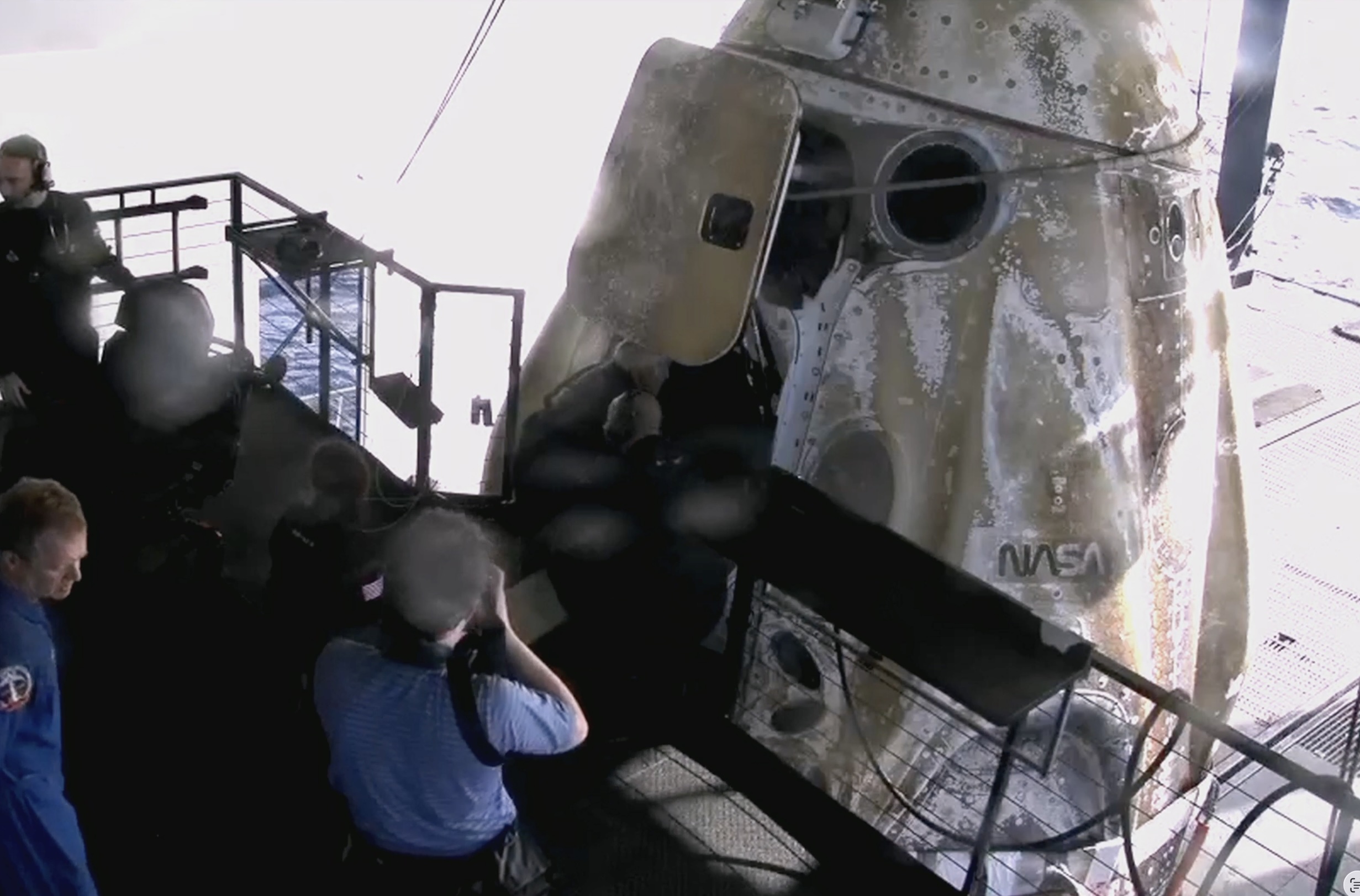
Four Crew-12 members are back on Earth after 237 days at the International Space Station. SpaceX’s Crew Dragon Freedom splashed down in the Pacific Ocean about 50 miles west of Los Angeles at 11:34 a.m. ET on Thursday.
NASA astronauts Jessica Meir and Jack Hathaway, ESA astronaut Sophie Adenot, and Roscosmos cosmonaut Andrey Fedyaev landed one day after undocking from the station’s Harmony module at 8:05 a.m. ET on Wednesday. NASA confirmed the splashdown minutes later. SpaceX had flagged the 27.5 hour trip home on X while Dragon was still firing its departure burns away from the station.
The descent ran on schedule when Freedom started a nine minute deorbit burn at 10:46 a.m. ET, then hit the thicker atmosphere about 36 minutes later at nearly five miles per second. Chutes deployed at around 18,000 feet, and four main parachutes brought the capsule down to roughly 15 mph at splashdown.
SpaceX fast boats secured Dragon before the recovery ship Shannon hoisted it onto the deck with the crew still inside. Flight surgeons on board ran initial medical checks. All four crew members will be flown ashore by helicopter and then head to NASA’s Johnson Space Center in Houston for rehabilitation.
Splashdown of Dragon confirmed! https://t.co/P2o7A3Gytf
— SpaceX (@SpaceX) October 8, 2026
Crew-12 launched on February 13 from Space Launch Complex 40 at Cape Canaveral, a flight that also marked the first Falcon 9 booster landing at SpaceX’s new LZ-40 pad. Over the mission, the crew completed 3,792 orbits, covered nearly 101 million miles, and carried out four spacewalks to maintain and upgrade the station.
Meir now has 440 cumulative days in space, which places her in NASA’s top 10. This was the first spaceflight for Hathaway and for Adenot, a French Air Force colonel and former helicopter pilot. Fedyaev, who spent 186 days in orbit on Crew-6 in 2023, has now flown two long duration Dragon missions.
The return closes out a busy stretch of Dragon traffic. Crew-13 arrived on October 1 aboard Crew Dragon Grace, which docked just 7 hours and 55 minutes after liftoff, the fastest launch to docking of any U.S. spacecraft in ISS history. Commander Jessica Watkins, pilot Luke Delaney, Canadian Space Agency astronaut Joshua Kutryk, and cosmonaut Sergey Teteryatnikov remain aboard alongside the three person Soyuz MS-29 crew.
With Crew-12 gone, the port is clear for CRS-35, a cargo Dragon carrying the final pair of ISS Roll-Out Solar Arrays. NASA is holding a post-splashdown teleconference at 1:15 p.m. ET covering both the crew’s return and the upcoming cargo launch.

It’s official: SpaceX takes aim at Verizon, AT&T, and T-Mobile

Elon Musk’s Boring Company lands a new Middle East deal, and Nashville is about to get faster

SpaceX brings four astronauts home after 8 months in space, and the return was flawless

The Pentagon taps Elon Musk to design the battlefield of the future

Tesla Roadster’s new patent preps white-knuckle speeds, keeping it grounded


