News
Grünheide Mayor shares update on Tesla Giga Berlin’s proposed expansion plan

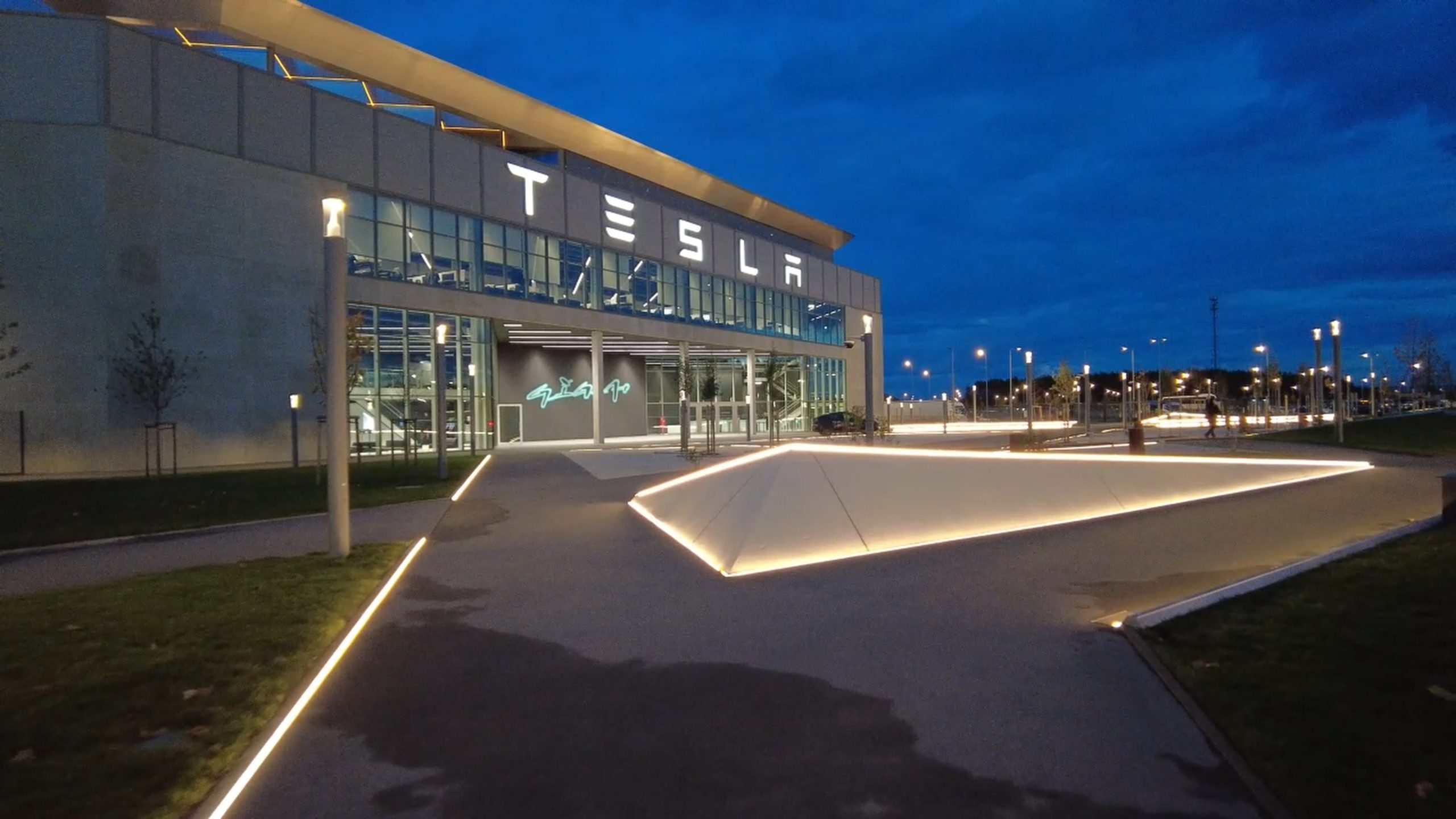
Grünheide Mayor Arne Christiani has written a letter outlining an updated proposal for Tesla Giga Berlin’s planned expansion. The new proposal would involve Tesla cutting significantly fewer trees than initially intended, among other things. The proposal comes after the residents of Grünheide voted to deny Tesla’s request to clear out another 100 hectares of monoculture forest from the area.
Giga Berlin’s forest clearing activities have attracted criticism since the facility’s earliest days. More recently, anti-Tesla protesters have even gone so far as to build treehouses to show their defiance of the EV maker’s tree-clearing plans. What has been lost over the years, however, is the fact that the trees in the Giga Berlin complex are not a natural forest. Instead, it is a tree farm that’s originally intended to be used for cardboard, as noted by Elon Musk back in 2020.
Giga Berlin / GF4 will absolutely be designed with sustainability and the environment in mind— Elon Musk (@elonmusk) January 25, 2020
Despite this, Tesla’s tree-clearing activities have remained controversial. This came to a head recently when Grünheide residents were asked to vote for or against Giga Berlin’s planned expansion, which would, unsurprisingly, involve more of the monoculture forest being cut down. Ultimately, residents decided to vote against the EV maker’s plans. But in his letter, Grünheide Mayor Christiani noted that Tesla could adjust its plans so that less of the tree farm would be cut down.
Following is a translated version of the Grünheide Mayor’s letter.
After the vote of the citizens of #Grünheide against clearing another 100 ha at #GigaBerlin, a new sketch for an adjusted development plan has been published.
This would make all planned infrastructure projects possible, while saving 70 ha of forest.https://t.co/ID3FDn5z0n pic.twitter.com/0A7g611MsI— Tobias Lindh (@tobilindh) March 14, 2024
Dear residents,
Dear municipal representatives,
First of all, I would like to thank you all for the high level of participation in the residents’ survey.
 -
-
The result of the residents’ survey on the submitted B-Plan No. 60 was clear to us, and we respect the opinions expressed.
Why is B-Plan No. 60 so important?
In my view, B-Plan No. 60 is urgently needed, as otherwise, the necessary transport infrastructure projects cannot be implemented in the foreseeable future, which would have considerable negative consequences for our community and the environment.
What has been adapted?
1. Preservation of 70.3 ha of Forest
The primary planning objective is to preserve as much of the forest as possible on the area covered by development Plan No. 60. To this end, around 47 ha, which was originally planned as industrial land, is now designated as forest land. In addition to further forest areas, which are secured by a planting commitment, a total of around 70.3 ha of forest will now be preserved. The adjusted planning is thus intended to take account of your wishes and ensure that the forest is preserved as far as possible under planning law.
2. State Roads and Goods Station
The existing traffic infrastructure cannot cope with the foreseeable volume of traffic. The other primary planning objectives are the creation of a planning law for the adapted and optimized planning of the state roads L 386 (as a relief for the existing L 38) and L 23, as well as for the possible realization of a company-owned goods station. This freight depot is the necessary prerequisite for the fact that significant volumes of traffic can be handled by rail, which will considerably reduce the volume of traffic on the roads in our districts.
Contrary to the frequent assertion that the construction of a freight station would also be possible on the existing site of the electric car manufacturer, it must be said that this is not possible due to the relocation of a Deutsche Bahn switch to the east and therefore due to technical railroad requirements. This also requires an adjustment to the planning for the L 386 already established in B-Plan No. 13, 1st amendment.
The original intention of the planning to significantly expand the operational area for the Gigafactory is now reduced to a small extent and only made possible to the extent that the connection of the factory premises to the L 386 can take place.
Another frequently voiced assertion that the establishment of development Plan no. 60 was intended to create a prerequisite for increasing production capacities must also be rejected! This was never the aim of the planning! It was merely a matter of creating additional storage and logistics space as well as the possibility of accommodating employee-related facilities. The latter facilities have now been completely omitted. Areas for storage and logistics will be significantly reduced in size.
-
The public and authorities will be consulted again on the amended draft of B-Plan No. 60 from 21.03.2024 to 04.04.2024 in accordance with Section 4a (3) BauGB.
For you and our municipality of Grünheide (Mark).
Arne Christiani
Mayor
Below are the updated plans for Tesla Giga Berlin’s proposed expansion.
Entwurf BPlan Gemeinde Gr Nheide Mark by Simon Alvarez on Scribd
Mayor Christiani’s letter can be viewed below.
-
Erkl Rung B Plan Gem.gr Nheide Mark by Simon Alvarez on Scribd
Don’t hesitate to contact us with news tips. Just send a message to simon@teslarati.com to give us a heads up.




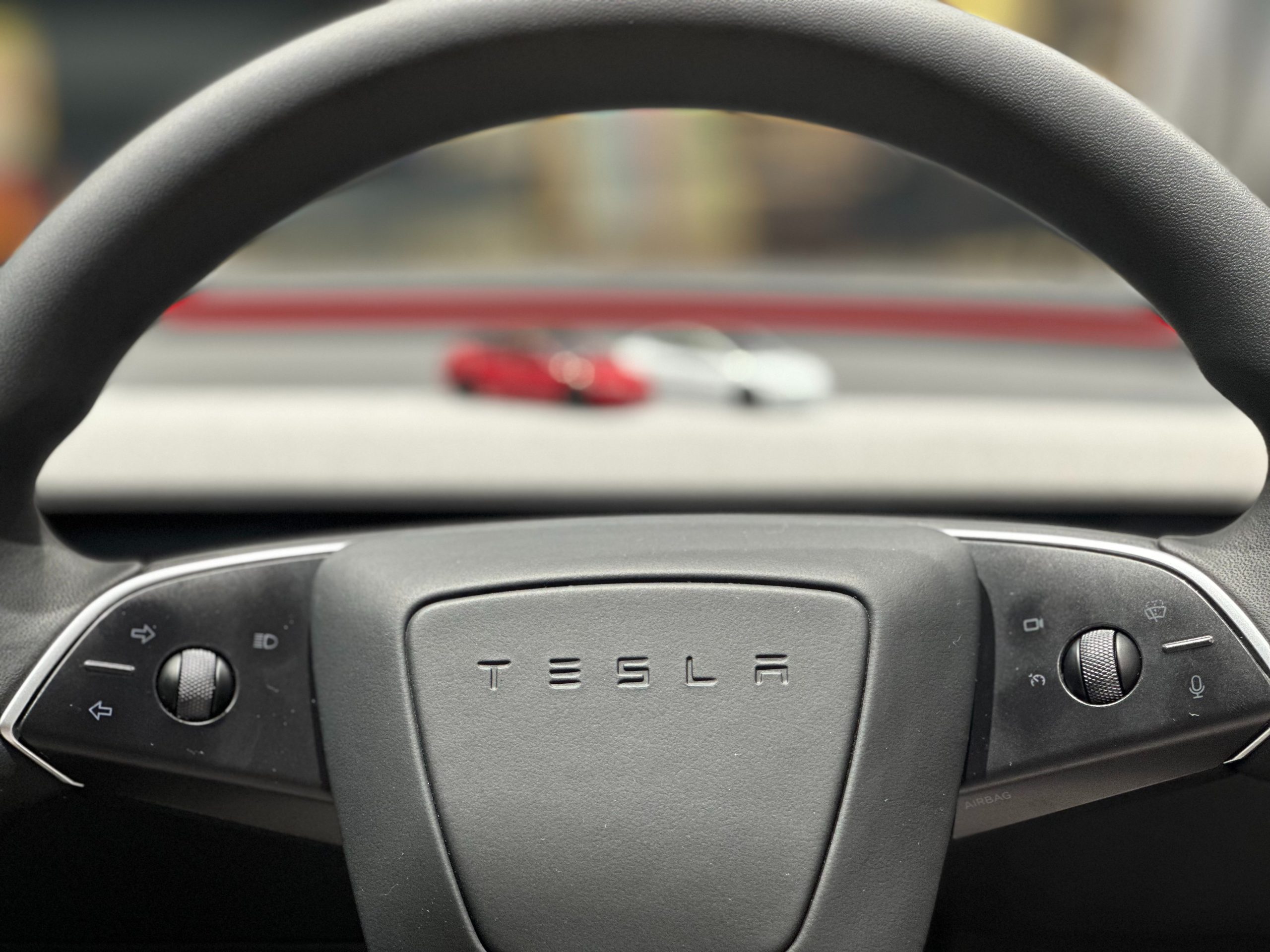
Tesla has started rolling out a broader change to the ride experience for its Robotaxi fleet by silencing turn signals, but the change is certainly polarizing.
Tesla has generally made it clear that its purpose-built ride-hailing platform, Robotaxi, will cater to the rider in nearly every way possible. This includes having climate preferences, music, and other personal settings loaded up in the car as the rider enters.
But Tesla is taking it a step further by muting turn signal chimes altogether, a change that appears to be a way to make the ride more peaceful:
Tesla has finally turned off the blinker/turn signal noises in their Model Y Robotaxis.
This is a small update, but will definitely be noticeable for riders. It didn’t really make much sense to leave the turn signal sound on when it’s Unsupervised. pic.twitter.com/ITwx60PAMO
— Sawyer Merritt (@SawyerMerritt) July 27, 2026
However, there are a handful of people who are not thrilled about this change. Turn signals are a conditioned part of the human mind for those who ride in a car regularly.
Taking a turn without one feels strange and odd, and not hearing it click while activated could set off some alarms for riders, who might use the noise as confirmation that other drivers know of their intention to turn.
I kind of like it being on, threw me off when riding with Zoox who has had it disabled
— Dan Burkland (@DBurkland) July 27, 2026
Turn signal noises are still audible in customer cars, so if you use FSD in your personal vehicle, you will still hear the turn signal.
The move is certainly one that is unique, but not one that separates it from other ride-sharing services. In a normal car, the clicking sound confirms to the driver that the blinker is active. In a fully driverless Robotaxi, that feedback serves no purpose for passengers, other than peace of mind.
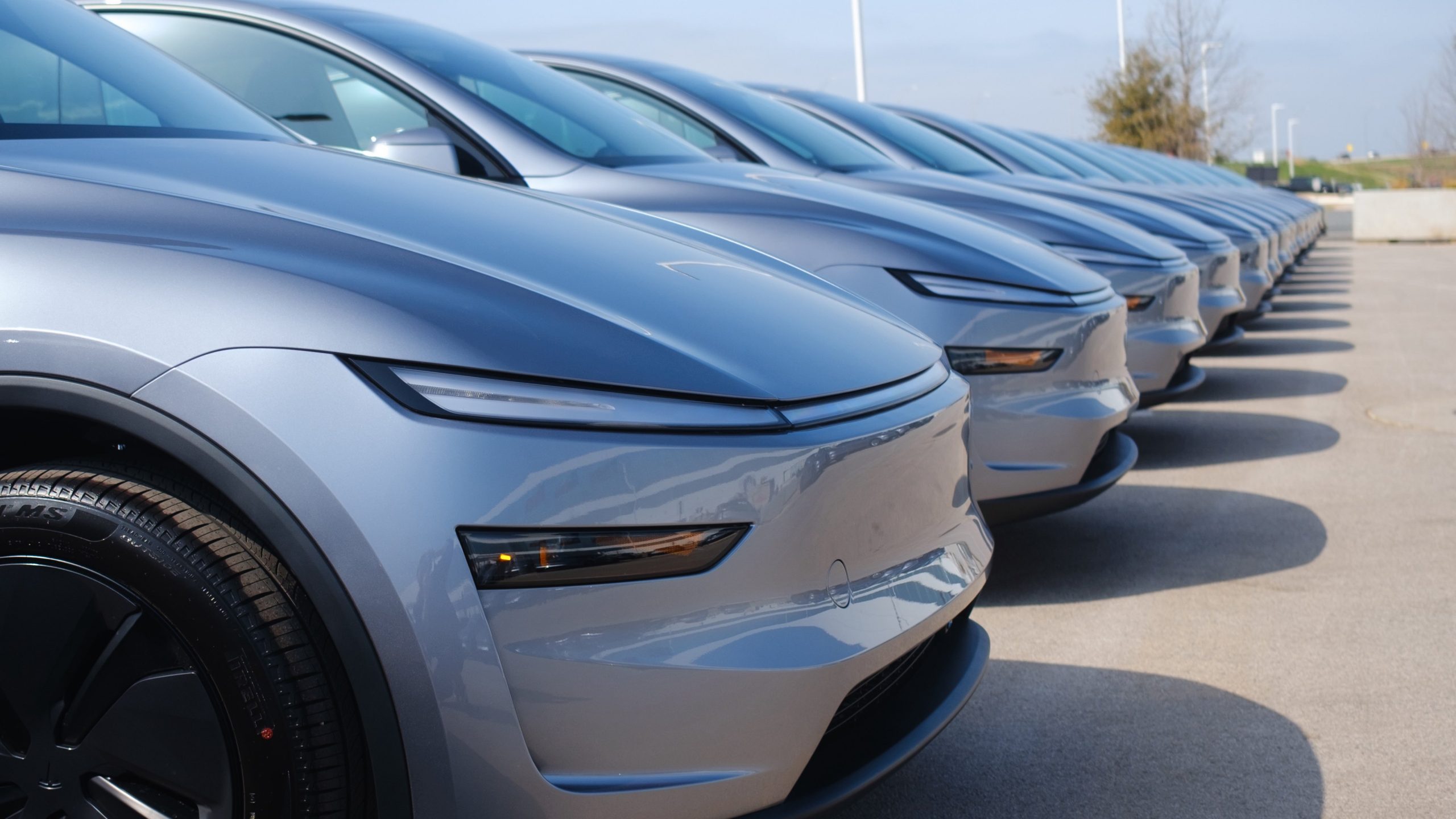
Tesla released Full Self-Driving version 14.3.6 last week, and after what was potentially one of the best FSD releases in v14.3.5, there has been a bit of a regression. While there are some bright spots, the changes made to v14.3.6 seem to have backtracked some behaviors.
Overall, it is hard to really complain about FSD in any sense; it has revolutionized how I travel literally anywhere. According to my self-driving app, the last time I went a day without using it was 59 days ago.
However, I think it’s also important to recognize when things are just plain bad with FSD. There are times it does truly mind-boggling things, and I’ll dive into those here. Additionally, I only had these issues on local roads, not on highways. Highway operation, generally, is always incredible other than the occasional complaint about speed or left lane camping.
With those things being said, my personal experience may not represent others’ experiences. A handful of people have said they have had a similar experience on v14.3.6, while others have said it is more than normal.
Turning Hesitancy, Inaccuracy
I’ve noticed more inaccuracy turning into multi-lane stretches of road than in any version I can remember. I’ve had at least three instances of FSD turning into a stretch of roadway that has two or more lanes, and not selecting a lane confidently as it has in past versions.
I think Tesla FSD v14.3.6 is a regression from previous .3 branches
This version in particular has been incredibly hesitant, jerky, and indecisive at times. There’s actually been two drives that I have decided to not used FSD for the remainder of the trip. These were local trips… pic.twitter.com/YobHDOKRS6
— TESLARATI (@Teslarati) July 26, 2026
Instead, the car will drive over one of the dashed road lines, and the steering wheel will jerk back and forth before picking the lane. It should be said that it has always picked the correct lane when choosing based on the navigation, but it is still very indecisive. The steering wheel jerking is reminiscent of some of the later versions of v13.
I admit I really hate to see the steering wheel jerking come back. However, I think when Tesla releases v14.3.7, it won’t be present. When there are occurrences of it in FSD versions, it is usually resolved by the following release.
FSD Disregards Manual Turn Signals
This is my biggest bone to pick with FSD other than Navigation issues, but this one seems like it would be such an easy fix.
If Tesla is going to put the word “Supervised” on the end of “Full Self-Driving,” then when I tell the car to do something, it should do it. If I input an increase in speed by pressing the accelerator, the car will immediately respond. It does not disregard my input because it feels it is traveling at the right speed.
FSD should never disobey and turn off turn signals that the driver inputs. Trying to direct the car into the correct lane, I had initiated the left turn signal not once, not twice, but three times, with the car turning it off all three times and continuing in a lane that would end in just one block. The only solution at this point would be to zipper merge.
This goes back to the fact that self-driving’s biggest bottleneck might be rider preference. A zipper merge might have been more than reasonable, might have saved me time that I spent sitting through an additional light cycle, and might be something many drivers would do. I was in no hurry, I traditionally do not try to zipper merge because it feels inconsiderate, and lastly, the car should have just followed my input.
This caused me to disengage and drive manually the rest of the way home. Sometimes I just do not need FSD to try to pass every car it can at intersections.
Bird Braking is a Thing of the Past
The big complaint with recent versions of Full Self-Driving has been what we’ve coined as “bird braking,” which is when the car will brake suddenly as a bird flies past.
There have been zero issues with this so far in v14.3.6, which is an excellent improvement.
FSD Might Already Be Taking Note of Driver Preferences
Another thing I have noticed over the past few days is that v14.3.6 seems to already be taking my preferences with navigation into account.
This is something that is supposed to be rolling out with the Summer Update, but I have a hunch it’s already present and might have been included in this v14.3.6 build. On Friday, FSD pulled into an entrance to a local convenience store that it had never attempted to go into before.
Typically, I manually pull into this entrance because it avoids heavy cross traffic at the main entrance. FSD has always chosen that congested main entrance.
I don’t want to get anyone excited but my Tesla running FSD v14.3.6 just:
✅ Pulled into an entrance at my local Sheetz that I routinely pull into manually but FSD never has entered
✅ Pulled into my assigned parking space at home despite many other spots being vacant https://t.co/ZUShvknTWO pic.twitter.com/83O5a2S0eh
— TESLARATI (@Teslarati) July 24, 2026
Additionally, FSD has pulled into my assigned parking spot at my townhouse community on multiple occasions with this release. This is something that used to happen ocassionally, but not consistently.
It also navigated back to the same convenience store last night, drove through crazy cars scrambling to gas pumps, navigated out of the parking lot correctly, drove me home, and, once again, parked in my assigned spot.
As previously stated, this release just seems to have a few things that need to be brought to Tesla’s attention, and also to make others who use FSD aware of some things that I’ve experienced. I look forward to the next release that will remedy these issues, just as Tesla has always done in the past.
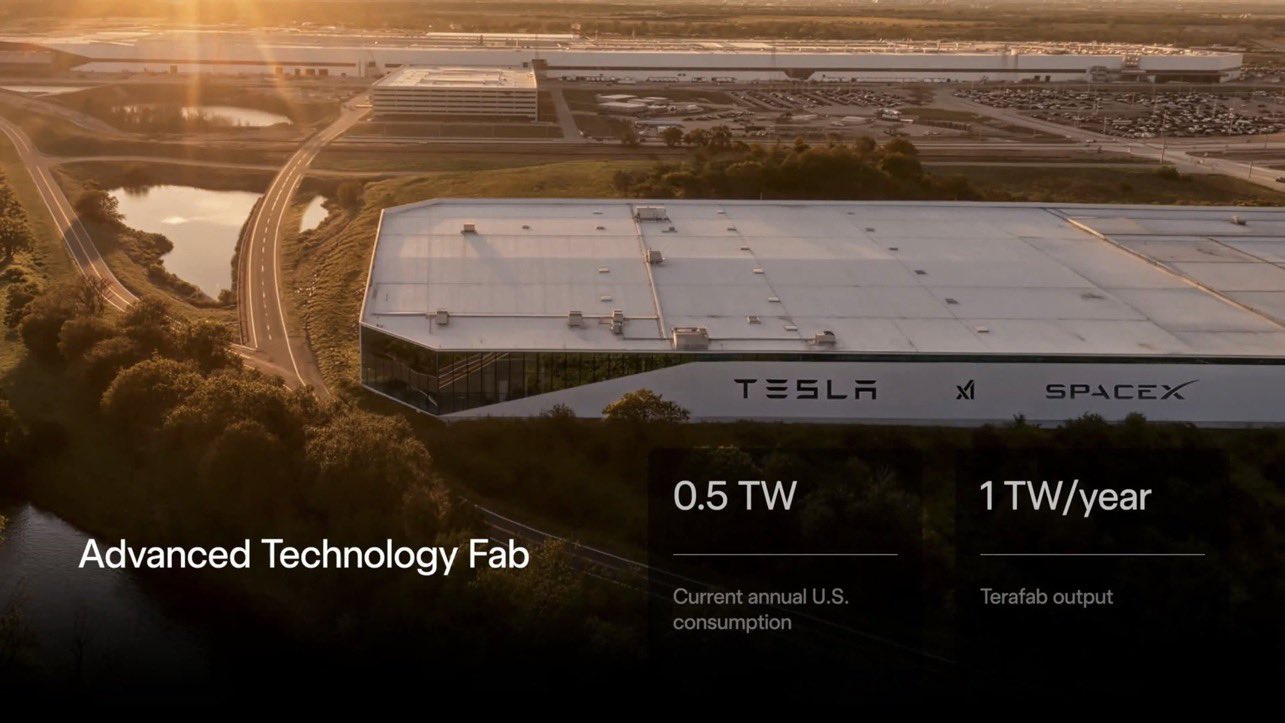
Elon Musk’s massive Terafab project, which will be the first true conglomeration between each of his major entities, is set to get its final location soon, the CEO said on Tesla’s recent earnings call.
“The Terafab, we expect to announce a location soon, and provide more details about our plans in that regard. We’ll leave that to the product, the launch announcement rather than try to squeeze it into an earnings call,” Musk said last Wednesday.
Tesla Terafab set for launch: Inside the $20B AI chip factory that will reshape the auto industry
Terafab was announced by Musk back in March and was essentially a massive, vertically integrated semiconductor manufacturing project that would provide all the chips the three companies needed for their AI initiatives without needing third-party companies.
The plant will produce over 1 terawatt of AI compute each year, and will help back up projects like Optimus, Full Self-Driving, and other AI-based projects that Musk’s companies are working on.
In April, less than a month after the project was launched, Intel announced it would join the project, contributing manufacturing expertise and consulting to Terafab as a whole. Intel is one of three chip manufacturers that produce sub-5 nanometer chips at scale. TSMC and Samsung are the other two.
However, there was no true indication of where Terafab would end up, but most believe it will likely be somewhere in Texas. Business Insider has reported that SpaceX plans to build out Terafab in Grimes County, Texas, but this is unconfirmed.
Musk confirmed recently that it would not be on Giga Texas property, as it is simply too large.
The sheer scale of TERAFAB is going to be insane.
Elon said it wouldn’t be suitable for anywhere on Giga Texas property because it’s too big:
“We couldn’t possibly fit the Terafab on the GigaTexas campus. It will be far bigger than everything else combined there.
Several… pic.twitter.com/79GbhNNuf4
— TESLARATI (@Teslarati) March 23, 2026
Terafab holds much of Musk’s grand ambitions for the future within its construct. It holds so much responsibility for the future and the biggest projects that Musk’s companies can imagine.
“I think this is a very big announcement and it deserves to have its own day in the spotlight and not be squeezed into an earnings call,” he said. “I do think Terafab is going to be an amazing initiative and a necessary one, and one without which we will be constrained in our ability to scale Optimus production, because we simply won’t have enough AI chips.”
He continued by stating that Terafab is necessary for scaling Optimus, which Musk said could be the biggest product of any kind of all time. “It’s crucial to solve that, and we’ll have to solve memory, logic, and packaging in order to scale Optimus.”

Tesla Robotaxi gets sweeping but polarizing change

Tesla claims supplier is holding Cybertruck production hostage


