News
Tesla Giga Berlin plant manager still optimistic despite Germany’s EV market

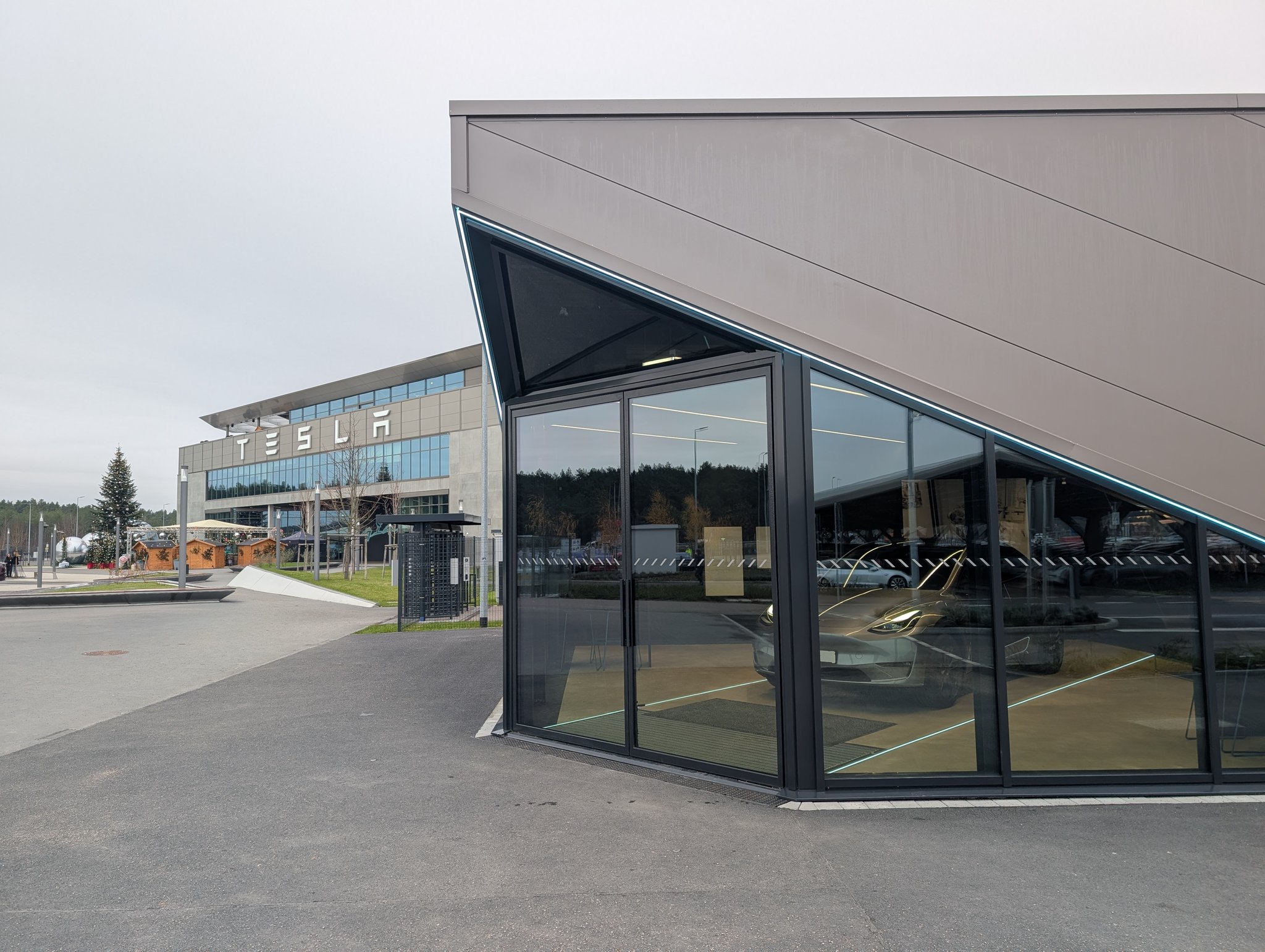
Despite a downturn in Germany’s electric vehicle market, the leadership of Tesla’s Giga Berlin is still maintaining a positive outlook.
This was highlighted by plant manager André Thierig, who stated to the German Press Agency that Giga Berlin serves 37 markets, predominantly in Europe, but also extending to the Near and Middle East, as well as Taiwan.
A Beacon of Success:
- In a comment to the German Press Agency, Thierig described Giga Berlin as a “beacon in the automotive industry.”
- The executive also noted that the facility proves that successful electric vehicle production is possible in Germany.
GigaBerlin is defying the crisis in the electric car market. Plant manager Thierig explains why he is positive.
— Gigafactory Berlin News (@Gf4Tesla) December 23, 2024
He described the only European e-car factory as a "beacon in the automotive industry" He emphasized that successful e-car production in Germany has proven itself. pic.twitter.com/4dDcmRfyLN
Navigating Turbulence:
- The year has been fraught with challenges for Giga Berlin, including production stoppages due to Red Sea disruptions, an attack on its power supply, and ongoing protests against its operations.
- Giga Berlin also saw an attempted occupation by activists in May.
- Thierig, however, still expects a positive closure to the year.
- Tesla has taken steps to stabilize its workforce by converting temporary workers to permanent staff and offering a 4% pay increase above the collective agreement in November.
- Giga Berlin still has not unionized, however, drawing criticism from IG Metall.
Expansion and Permits:
- For now, Tesla Germany is not rushing to expand Gigafactory Berlin’s physical footprint.
- The Brandenburg State Environmental Agency has granted permits for optimizing the facility’s current operations, but approval for new expansions or buildings is still pending.
- The facility’s water usage remains a hot topic as well, though Tesla has secured a new water contract with higher limits.
- Thierig urged the federal government to implement a reliable economic policy, as further growth in Giga Berlin would create more personnel requirements.

Don’t hesitate to contact us with news tips. Just send a message to simon@teslarati.com to give us a heads up.



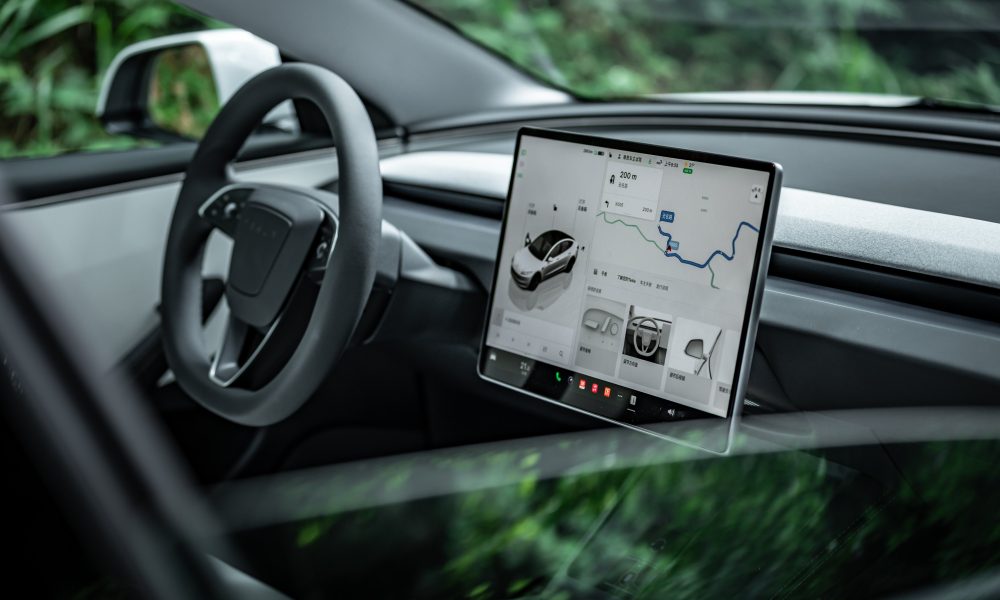
Tesla has officially changed the reference to its vehicles’ internal computers to “Super Intelligence,” or “SI,” reflecting a change that President Donald Trump made when he noted it would no longer be referred to as “Artificial Intelligence,” or “AI.”
Tesla hacker Green posted that a breakdown of Software Version 2026.44.1, noting that the in-car computer is now labeled as “SI Computer,” in system properties:
Took a peek at Tesla 2026.44.1 firmware
The huge change is that Tesla “upgraded” the “AI computer” inside to super intelligence, so it’s now referred to as “SI Computer” in car properties. 🙃
Other than this there are some minor adjustments:— green (@greentheonly) November 17, 2026
In September as he spoke at the UN’s General Assembly, President Trump said (via The Verge):
“The United States also totally rejects any attempt to construct a globalist scheme to control for the artificial intelligence being spoken of so much now. Here and after officially called “super intelligence,” changing the name, and that the use of the word artificial makes intelligence fake. It makes it sound fake, and it is not fake. It’s actually amazing. But we have to be careful. In fact, it is exactly the opposite of what it purports. From this point forward, all of the United States documents, and hopefully the world’s, will be changed to use the much more accurate term, super as opposed to artificial. So it’s super intelligence. In other words, welcome to the new world of super intelligence — SI. That’s, uh, let’s see if that does. It sounds much better. It is much better, and it’s much more accurate.”
Tesla and Musk have evidently chosen to adopt the change, as it now appears as an official reference to the company’s in-car computer.
Tesla has long used iterative software updates to refine Autopilot/FSD behavior, vehicle controls, and user interfaces. Renaming an internal identifier fits that pattern of quiet housekeeping far more closely than a sudden capability jump.
Owners on HW3 and later hardware continue to receive the same incremental FSD improvements seen in prior releases, as the property string does not alter compute allocation or model architecture.
Nevertheless, this won’t have any impact on the vehicles themselves, but it is more of an adoption of terms.
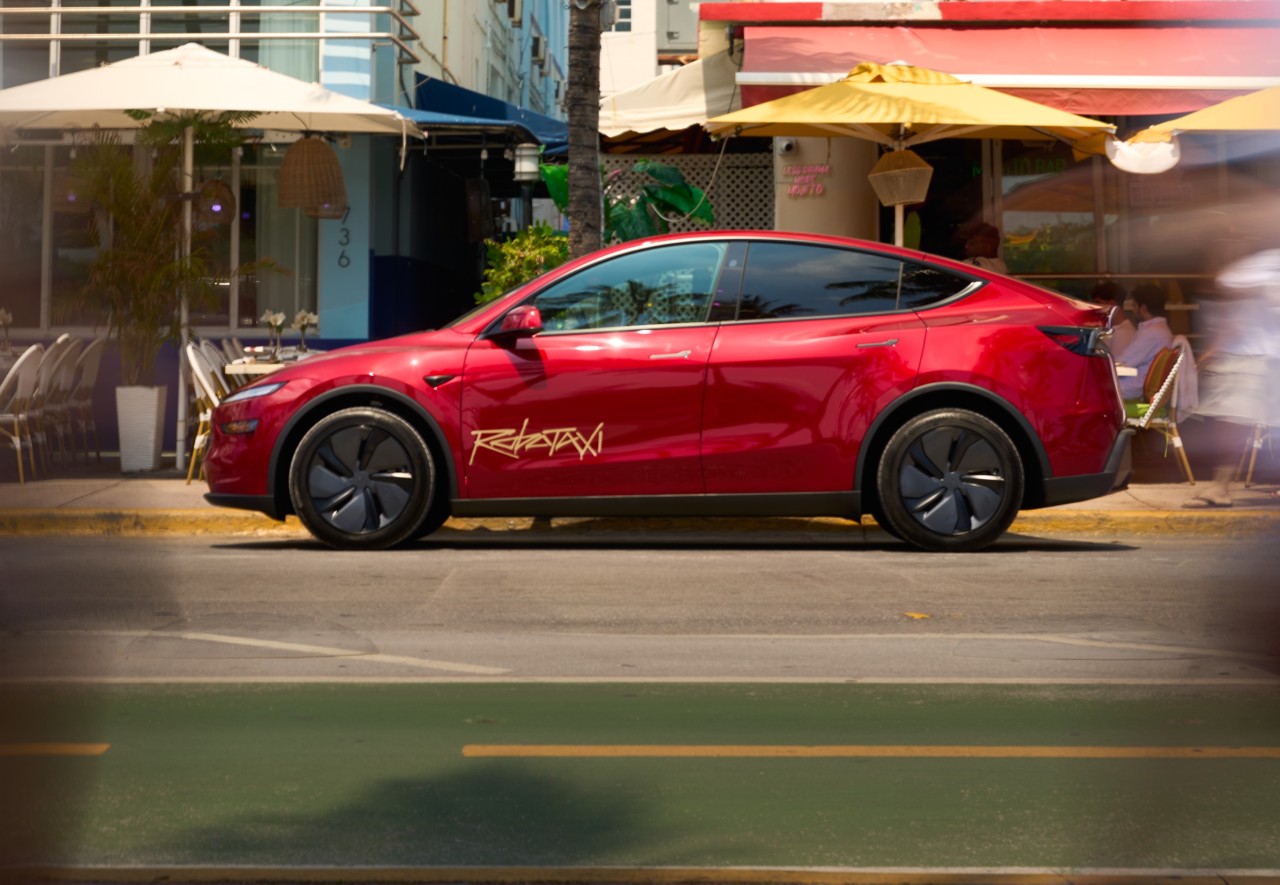
Tesla just doubled the serviceable area that its Robotaxi platform can travel in Miami, Florida.
On November 16, Tesla announced a major expansion of its Miami service area with a message stating that it would now service substantially more of the city. A new map shows the new service area, which is roughly double the initial geofence, including key urban districts into Robotaxi for the first time.
Miami’s geofence for Tesla Robotaxi has expanded considerably https://t.co/GpBqendVRN
— TESLARATI (@Teslarati) November 16, 2026
Tesla first launched unsupervised Robotaxi rides in Miami on July 3, making it the company’s initial market outside of Texas and California. The original geofence covered a very limited portion of the western Miami-Dade area, including West Miami, Doral, Sweetwater, and Miami International Airport. It was roughly 25 square miles, before a small expansion put it at about 31.
Now, Downtown Miami, the popular Brickell neighborhood, and Miami Beach, which were deliberately left outside the boundary initially, now are included in operations. Riders can now hail Model Y vehicles booked through the Tesla Robotaxi app and have run 24 hours a day since mid-November.
The map now looks to be about 59 square miles, a roughly 92 percent increase. The new eastern edge of the geofence now includes Downtown, Bickell, Wynwood, Little Havana, and the Biscayne Bay waterfront, nailing down a lot of typical tourist locations for Miami visitors. Additionally, the new geofence also extends North, reaching Hialeah, and adding coverage closer to the airport corridor.
At its widest, the zone now stretches roughly 11 miles from west to east. Miami Beach remains outside the service area, though Elon Musk previously indicated beach coverage was “coming soon” after Florida Governor Ron DeSantis publicly called for it.
Relative to Tesla’s other markets, Miami’s roughly 59-square-mile zone is now larger than Orlando (about 26 square miles) and Tampa (about 24 square miles) combined.
It remains smaller than Texas hubs such as Austin (around 443 square miles), San Antonio (about 275), Houston (about 254), and Fort Worth (about 143), but the rapid growth brings it closer to competitor Waymo’s approximately 60-square-mile Miami footprint, which already includes beach areas.
For Miami residents and visitors, the expansion makes driverless rides practical for trips into the city’s densest commercial and residential core, offering a new option amid heavy traffic and limited parking.
For Tesla, covering higher-demand downtown corridors should increase ride volume, generate more real-world autonomy data, and strengthen its competitive position as it scales the Robotaxi network toward broader profitability and eventual Cybercab deployment. The overnight growth also signals accelerating operational confidence less than five months after the city’s launch.
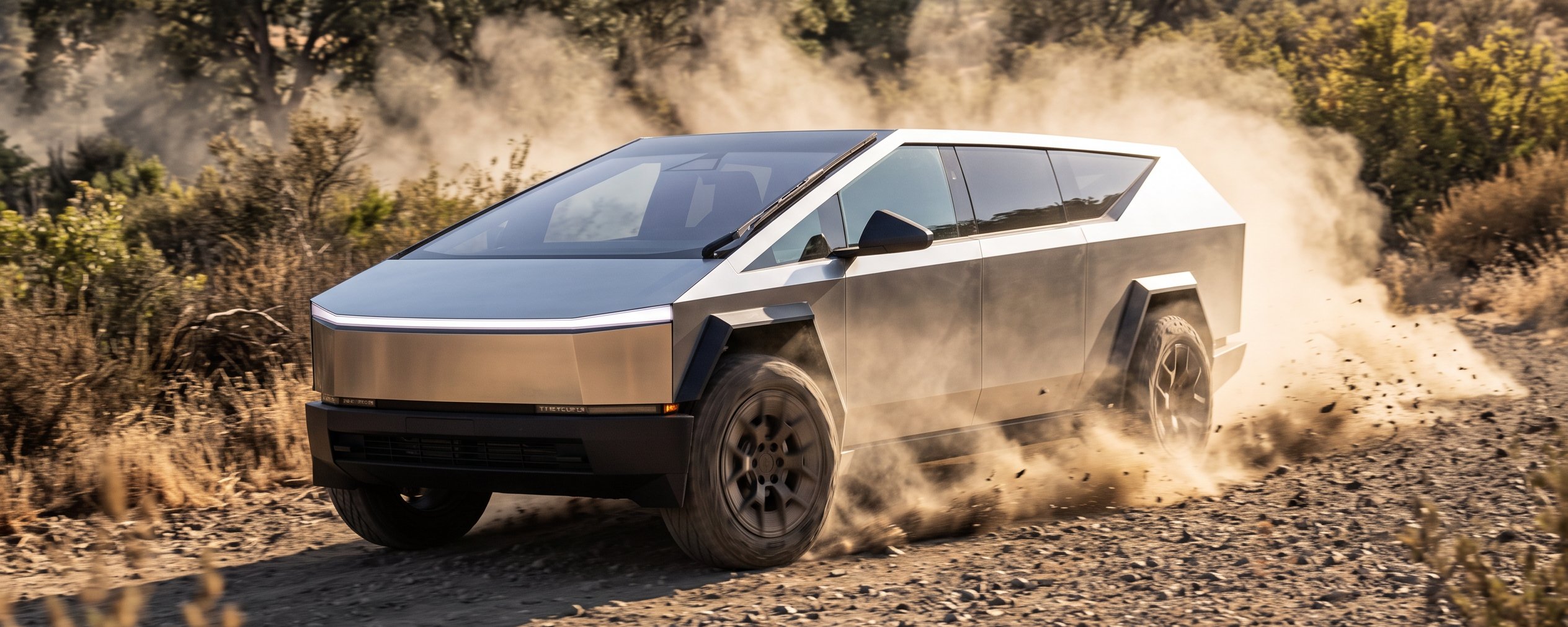
Tesla tuner Unplugged Performance, the company pleading to save the Cybertruck, detailed in a new phase of its plan to rescue manufacturing lines from Gigafactory Texas that it would also build a three-row CyberSUV.
UP has already navigated a lot of the difficult thought work, including how it will woo Tesla to turn over the all-electric pickup’s production lines at no cost or risk to them. Tesla has signaled it will wind down Cybertruck output at Gigafactory Texas sometime around the middle of next year.
Unplugged, the Hawthorne-based aftermarket specialist that has tuned Teslas since 2013, first floated an open offer on November 10 and followed with a more specific “Phase 3” outline on November 15. Under the structure, outside investors would fund the new company.
82% of respondents want a three-row CyberSUV. The line to build it is about to be dismantled. Our proposal keeps it alive at no added cost to Tesla. Tesla keeps the IP, signs its first FSD license, and earns on every vehicle.
👇 https://t.co/y9y33EuLPr— UP (@UnpluggedTesla) November 15, 2026
The line would leave Giga Texas on Tesla’s schedule, supplier contracts would transfer, and Unplugged would hire its own staff, drawing from interested Tesla alumni, without pulling current Tesla employees or engineering resources.
Tesla would retain intellectual-property ownership, final say on specifications and brand, a quality veto, and an option to reclaim the line. In return, Tesla would collect a license fee on every vehicle plus margin on parts it continues to supply, Full Self-Driving and Robotaxi revenue, and a no-cost equity stake in the new entity.
If Unplugged cannot meet demand or capital targets Tesla sets, it would withdraw.
UP looked at the overwhelming demand for a full-size SUV, something that Tesla has had a lot of demand for but has not developed internally. A poll put out by the tuner that surveyed 892 responses showed 82 percent of voters favored a CyberSUV. There is a substantially deeper market for three-row SUVs priced above $80,000 compared to pickups.
Not to mention, the new body tooling plus limiting other changes from the Cybertruck line would enable the company to use the existing platform to produce an all-terrain family vehicle while continuing to produce Cybertruck builds at a modest incremental cost.
Tesla has already shown interest in a CyberSUV, as it hid Cybertruck-inspired clay models of what appeared to be a full-size SUV in a video last year:
The proposal from UP also contemplates multiple configurations that would enable owners to utilize a full-fledged Robotaxi in the form of a CyberSUV, aiming to build one with conventional controls for private buyers while a no-wheel/pedal version would be available for the Robotaxi fleet.
Tesla has made it clear that its manufacturing space and cell capacity is set aside for Cybercab, but UP already has soft commitments from a conglomeration of investors, but it all hinges on Tesla’s willingness to engage.

Tesla changes vehicle computers from ‘AI’ to ‘SI,’ reflecting President Trump change

Tesla just doubled its Miami Robotaxi geofence


