Elon Musk
Tesla CEO Elon Musk sends rivals dire warning about Full Self-Driving

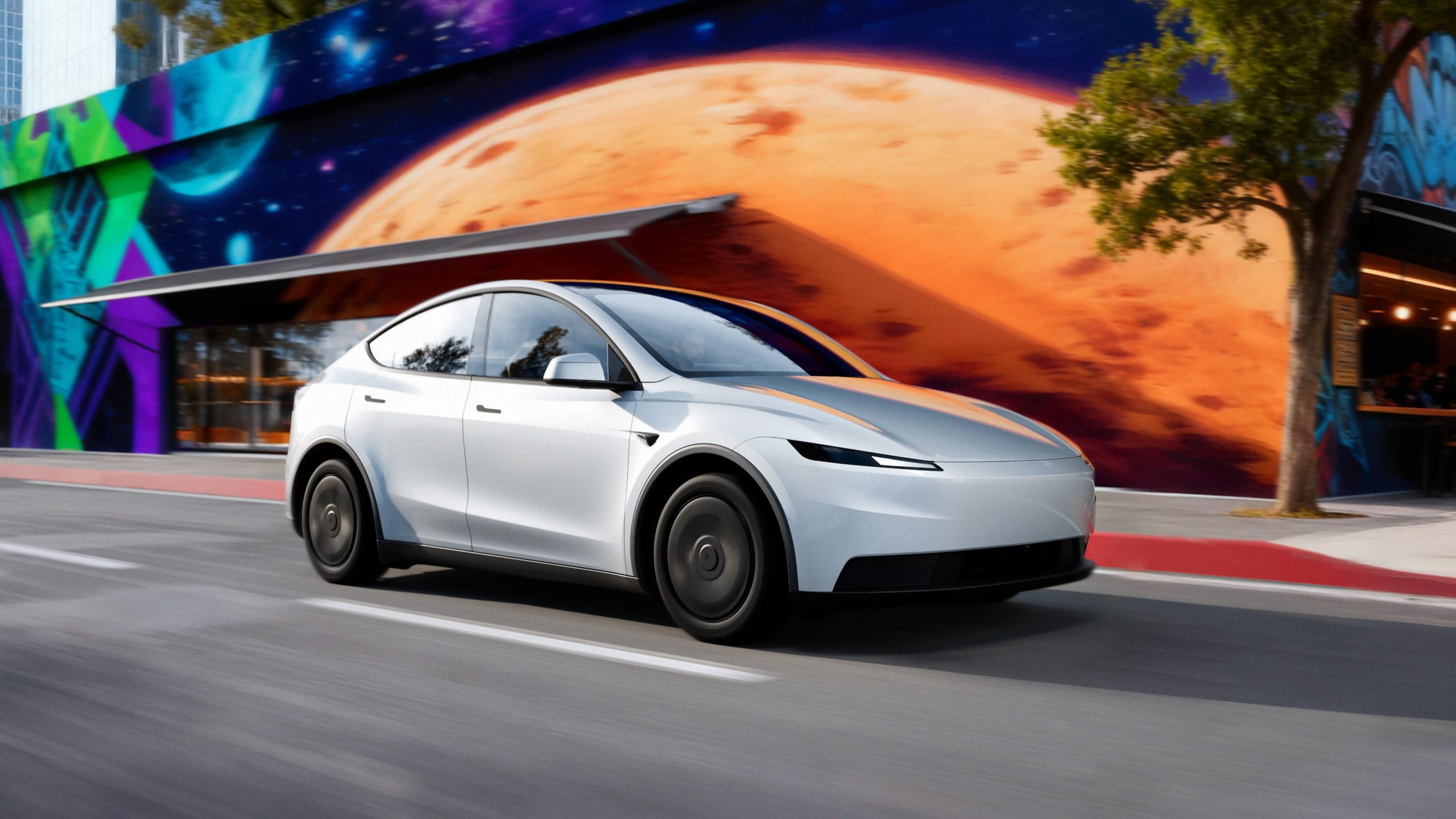
Tesla CEO Elon Musk revealed today on the social media platform X that legacy automakers, such as Ford, General Motors, and Stellantis, do not want to license the company’s Full Self-Driving suite, at least not without a long list of their own terms.
“I’ve tried to warn them and even offered to license Tesla FSD, but they don’t want it! Crazy,” Musk said on X. “When legacy auto does occasionally reach out, they tepidly discuss implementing FSD for a tiny program in 5 years with unworkable requirements for Tesla, so pointless.”
I’ve tried to warn them and even offered to license Tesla FSD, but they don’t want it! Crazy …
When legacy auto does occasionally reach out, they tepidly discuss implementing FSD for a tiny program in 5 years with unworkable requirements for Tesla, so pointless. 🤷♂️
🦕 🦕
— Elon Musk (@elonmusk) November 24, 2025
Musk made the remark in response to a note we wrote about earlier today from Melius Research, in which analyst Rob Wertheimer said, “Our point is not that Tesla is at risk, it’s that everybody else is,” in terms of autonomy and self-driving development.
Wertheimer believes there are hundreds of billions of dollars in value headed toward Tesla’s way because of its prowess with FSD.
A few years ago, Musk first remarked that Tesla was in early talks with one legacy automaker regarding licensing Full Self-Driving for its vehicles. Tesla never confirmed which company it was, but given Musk’s ongoing talks with Ford CEO Jim Farley at the time, it seemed the Detroit-based automaker was the likely suspect.
Tesla’s Elon Musk reiterates FSD licensing offer for other automakers
Ford has been perhaps the most aggressive legacy automaker in terms of its EV efforts, but it recently scaled back its electric offensive due to profitability issues and weak demand. It simply was not making enough vehicles, nor selling the volume needed to turn a profit.
Musk truly believes that many of the companies that turn their backs on FSD now will suffer in the future, especially considering the increased chance it could be a parallel to what has happened with EV efforts for many of these companies.
Unfortunately, they got started too late and are now playing catch-up with Tesla, XPeng, BYD, and the other dominating forces in EVs across the globe.


Elon Musk
Elon Musk’s AI Grok Bot can now handle banking while your Tesla FSD handles the road
Elon Musk says Grok Bot can manage your finances through linked bank and investment accounts.

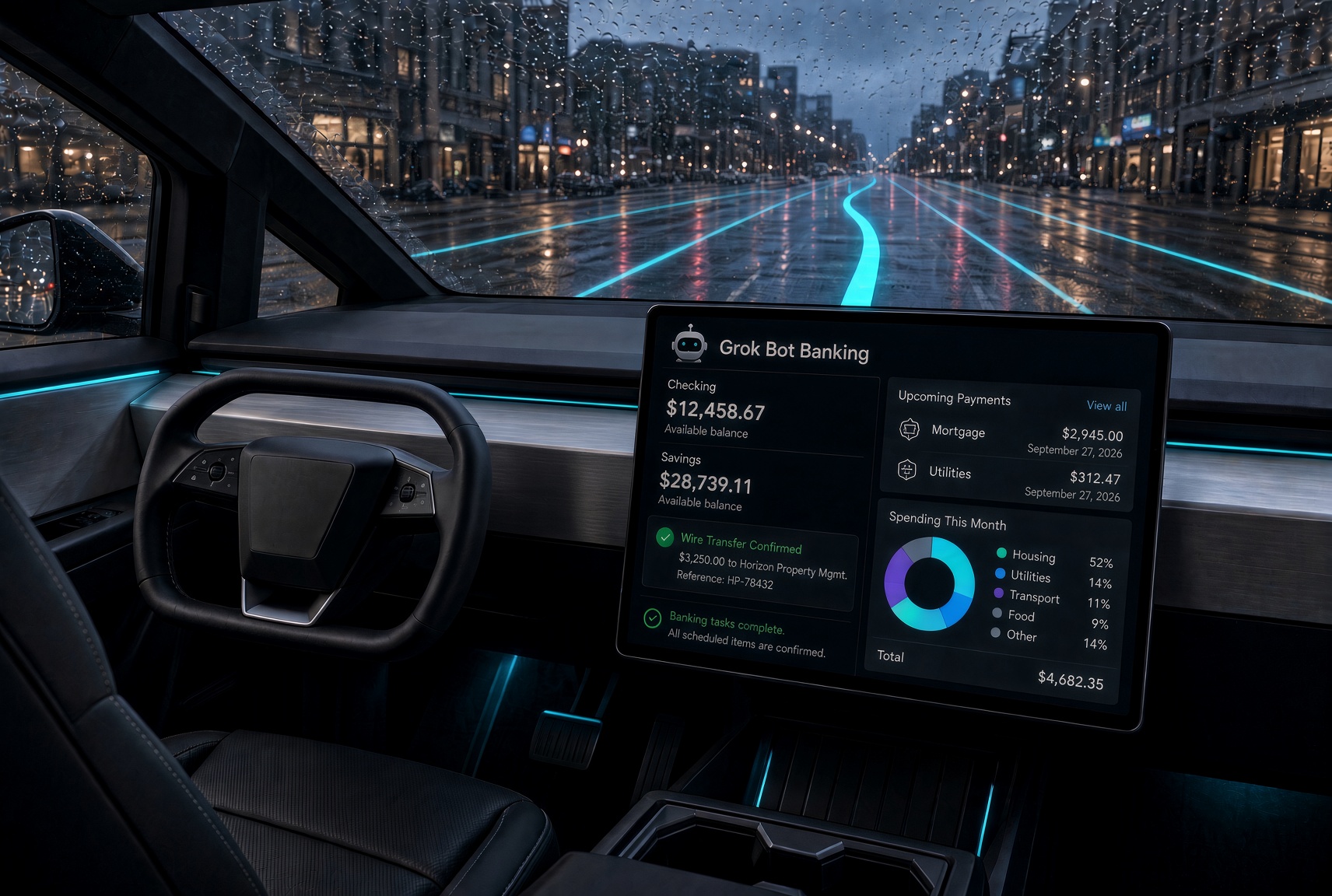
Grok Bot now wants access to your wallet, with SpaceXAI rolling out a new Finance integration for its agent platform that lets users link bank, credit card and investment accounts thereby letting their Bots help manage spending, investments and more. Elon Musk amplified the announcement on X with a short endorsement, “Grok Bot can manage your finances.”
The feature builds on two earlier steps. In early September, Grok gained the ability to answer questions about spending, savings, investments and cash flow using accounts connected through Plaid, starting with users in the U.S. Before that, on August 28, SpaceXAI let Grok Bot buy things online through Link, with users approving every spend request and the Bot receiving a single use card for each payment.
Musk has already shown how far he wants users to push it. In late August, when Tesla investor account Teslaconomics said he was weighing whether to give Grok Bot access to his bank accounts, Musk replied, “Try it out. If Grok Bot messes up, we will make you whole.” That promise goes beyond SpaceXAI’s consumer terms, which make users responsible for what their agents do and generally cap the company’s liability at the greater of fees paid or $100. SpaceXAI’s own documentation recommends requiring approval for purchases and financial transfers.
For Tesla owners, the update lands five days after Tesla brought Grok Bot into its vehicles, letting drivers hand off errands by voice while FSD (Supervised) handles the road. Bot access inside the car is currently limited to SuperGrok Heavy subscribers, though Connectors are open to anyone signed into Grok. With Finance linked, a driver could ask for a spending summary or a check on upcoming bills during the commute.
Grok’s role in the car has grown quickly since Tesla’s Summer Update let it control cabin features by voice. We have been using Grok Bot in our own Tesla for several weeks, and here’s how our latest test went.
Elon Musk
SpaceX just got the green light Starship has waited years for
The FAA has cleared Starship Flight 14, setting up SpaceX’s first orbital attempt on Monday.
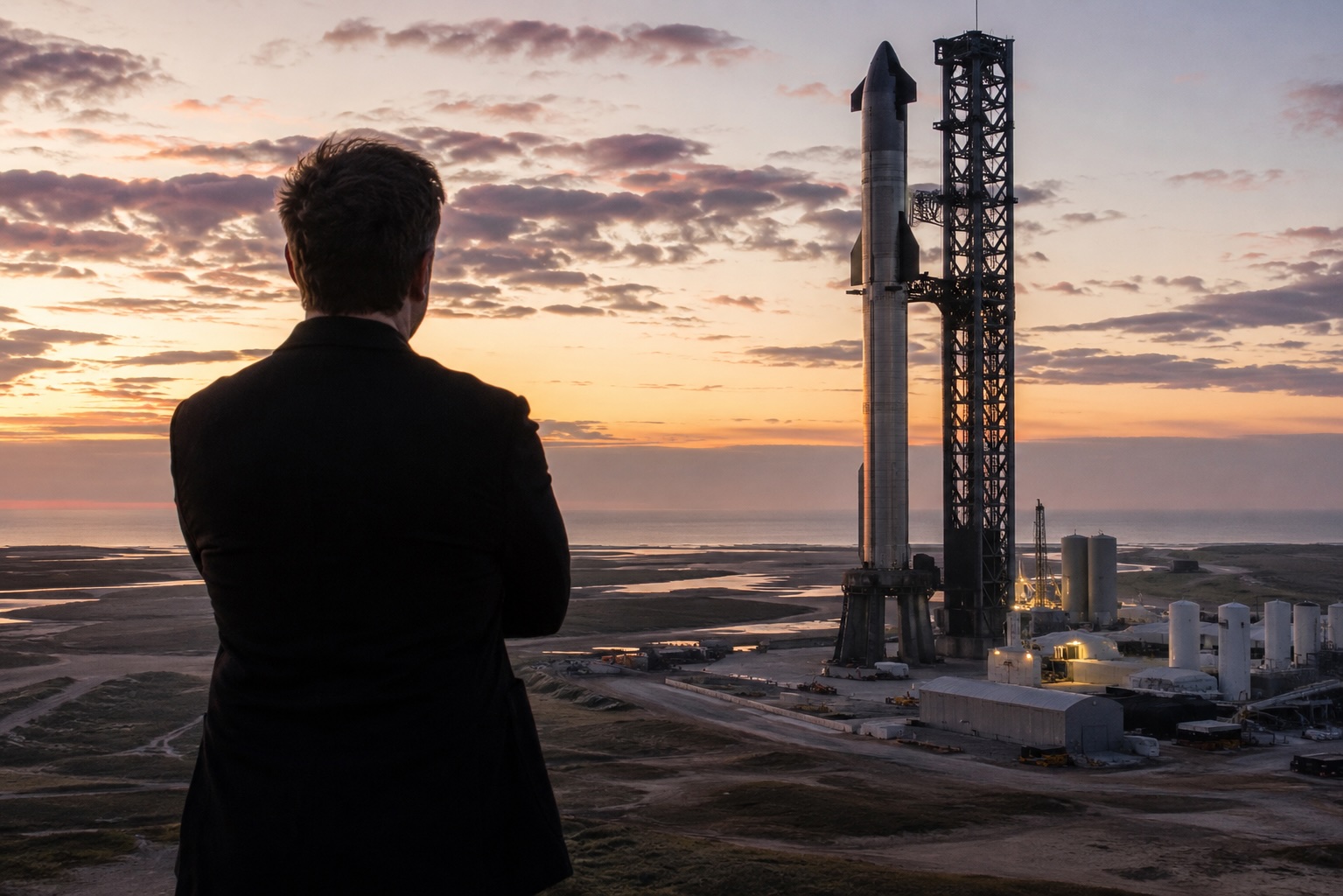
SpaceX has cleared the last regulatory hurdle standing between Starship and its first trip to orbit. The Federal Aviation Administration issued the launch license for Starship Flight 14 late Saturday, keeping the mission on track for liftoff Monday, September 28, from Pad 2 at Starbase, Texas.
The 75 minute launch window opens at 7:15 a.m. Central, and Boca Chica Beach closures are also scheduled for September 29 and 30 as backup dates. This will be Starship’s first revenue generating mission.
The license was the missing piece after SpaceX completed a full wet dress rehearsal with Booster 21 and Ship 41 on September 24. At the time, the company said the flight remained on track pending regulatory approval. Because Flight 14 flies an orbital profile, the FAA had to sign off on a modified license that met its safety, payload and financial responsibility requirements.
Observers combing through the new FAA paperwork also noticed that lightning no longer appears among Starship’s listed launch hazards. If that holds, it matters more for where Starship is headed than for Monday’s attempt. Florida and Louisiana, home to LC-39A and the planned Starbase Louisiana site, see some of the most frequent lightning in the United States.
SpaceX tells the FCC that Starship Flight 14 is going to orbit
Flight 14 is the mission SpaceX has been building toward for months. Ship 41 will carry 26 Starlink V3 satellites, the first operational V3 units to be deployed, and attempt roughly six orbits at about 275 kilometers over a flight lasting just under 10 hours. SpaceX says the ship will only perform its orbital insertion burn after flight controllers confirm enough hardware redundancy remains for the deorbit burn at the end of the mission. Ship 41 is targeting a splashdown in the Pacific west of Chile, while Super Heavy will return to the Gulf of Mexico.
The date carries some symbolism as well. A Monday launch would come 10 years and one day after Elon Musk first presented the Interplanetary Transport System, the design that became Starship, at the International Astronautical Congress in Guadalajara, Mexico.
SpaceX has not announced what comes next, but air traffic planning slides reported this week, list Flight 15 no earlier than October 19 and a first Starship launch from LC-39A in Florida no earlier than October 30. Both dates depend on how Monday goes.
Elon Musk
Google just picked SpaceX for its first step into orbital AI
Google will launch its first Project Suncatcher AI satellite on SpaceX’s Transporter-18 rideshare next week.
Google is about to put its own AI chips into orbit for the first time, and it is paying SpaceX to get them there.
The company said Thursday that the first in-orbit test of Project Suncatcher, its research effort to find out whether space can host large-scale AI computing, will fly next week on SpaceX’s Transporter-18 rideshare mission.
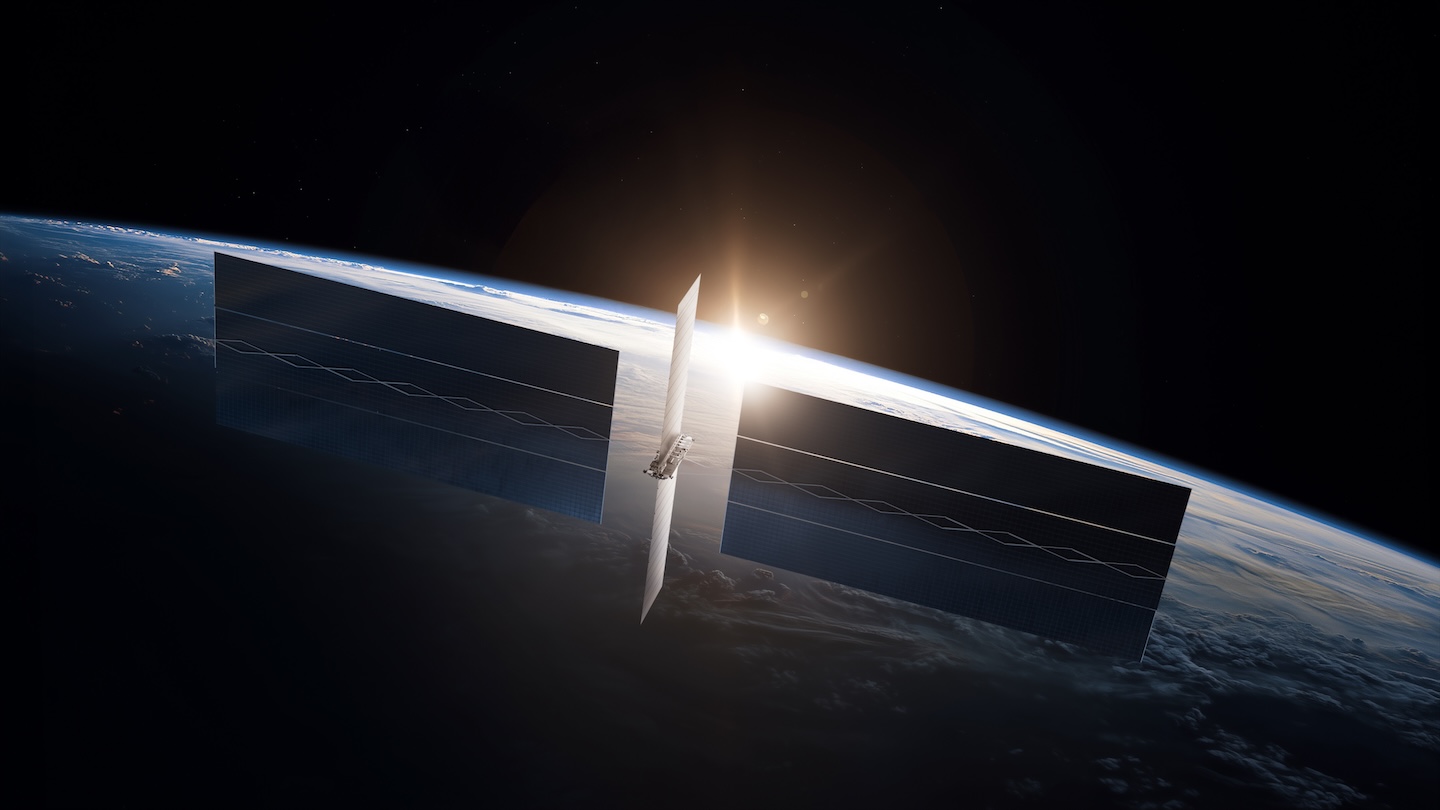
The satellite, called MVP, is about the size of a refrigerator and carries four of Google’s Tensor Processing Units, the same chips Google runs in its ground data centers. Google originally planned to launch two custom satellites in 2027, but chose to move faster by integrating its chips into a satellite.
MVP’s solar panels supply about one kilowatt of power, and Google will run Gemini models on the TPUs only in bursts of roughly 15 minutes before the chips shut down so the radiators can shed heat. In a blog post, Google said its Trillium TPUs survived vibration testing that mimicked sustained launch loads of up to 10g, with individual components seeing 50 to 100g, and handled a radiation dose greater than a five year mission would deliver.
SpaceX and Google mull massive partnership on Musk’s orbital data dream: report
Next week’s flight, slated for October 1, follows a relationship that became public in May, when Teslarati reported that Google was in talks with SpaceX for a launch deal tied to orbital data centers. Google also holds a stake of roughly 6% in SpaceX.
The two companies are chasing the same idea from very different starting points. SpaceX’s own orbital compute program is built around the AI1 satellite, a roughly 70 meter structure derived from Starlink V3 hardware that is designed for 150 kW of peak compute, about 150 times the power MVP will draw. Elon Musk has brushed off concerns about crowding orbit with those satellites, and SpaceX is building its Gigasat factory in Bastrop, Texas, to produce them, targeting an annualized rate of about 1 GW of space compute by the end of 2027.
Musk also posted on X on Thursday that “the amount of compute in space will obviously round up to 100% of all compute.”
Google has been more cautious in public. Its research estimates that launch prices need to fall below about $200 per kilogram before an orbital data center can compete with a ground facility on energy cost, a threshold the company believes could be reached around the mid 2030s. The Suncatcher team has said it expects the effort to remain a project rather than a product for years, which leaves the first real test of its hardware riding on a rocket from the company with the most aggressive timeline in the field.

Elon Musk’s AI Grok Bot can now handle banking while your Tesla FSD handles the road

SpaceX just got the green light Starship has waited years for


