Elon Musk
Tesla Optimus Gen 3 is coming to the Tesla Diner with new ambitions
Tesla’s Optimus robot left the Hollywood Diner within months of opening. Now Musk is planning its return with a bigger role and a major Gen 3 upgrade underway.

![Tesla Optimus Gen 3 [Credit: Tesla]](https://www.teslarati.com/wp-content/uploads/2026/03/tesla-optimus-gen3-diner.jpg)
Tesla’s Optimus robot was one of the most talked-about features when the Tesla Diner opened on Santa Monica Boulevard in Hollywood on July 21, 2025. Dubbed “Poptimus” by Tesla fans, the Gen 2 robot stood upstairs at the retro-futuristic, drive-in theater and Tesla Supercharging station, scooping popcorn into bags and handing them to guests with a wave.
The diner itself had been years in the making. Elon Musk first floated the idea in 2018 with a tweet about building an “old-school drive-in, roller skates & rock restaurant” at a Hollywood Supercharger. What eventually opened was a unique two-story neon-lit space, with 80 EV charging stalls, and Optimus serving as a live demonstration of where Tesla’s ambitions were headed.
If our retro-futuristic diner turns out well, which I think it will, @Tesla will establish these in major cities around the world, as well as at Supercharger sites on long distance routes.
An island of good food, good vibes & entertainment, all while Supercharging! https://t.co/zmbv6GfqKf
— Elon Musk (@elonmusk) July 21, 2025
But Optimus did not stay long, and was gone by December 2025.
Now, the robot is set to return with a more demanding job. Musk has ambitions for Optimus to take on a food runner role in 2026, delivering meals directly to cars at the Supercharger stalls. While the latest Gen 3 Optimus is likely to initially take on its previous popcorn-serving role, it wouldn’t be out of the question for Optimus to see a quick promotion. With improved hand dexterity that features 50 total actuators and 22 degrees of freedom per hand, and significantly more powerful processing through Tesla’s latest AI5 chip that includes Grok-powered voice interaction, Musk described Optimus at the Abundance Summit on March 12, 2026, as “by far the most advanced robot in the world, Nothing’s even close.”
Back to work
See you at Tesla Diner tomorrow pic.twitter.com/H3tTajrUbu
— Tesla Optimus (@Tesla_Optimus) March 30, 2026
That confidence is backed by a major manufacturing shift. At the Q4 2025 earnings call in January, Musk announced Tesla would discontinue the Model S and Model X and convert those Fremont production lines to build Optimus. “It’s time to basically bring the Model S and X programs to an end,” he said, calling for a pivot that reflects where the Tesla’s future lies.


Elon Musk
The Pentagon taps Elon Musk to design the battlefield of the future
Hegseth named Elon Musk to help lead Project Meridian, a Pentagon study of future warfare.
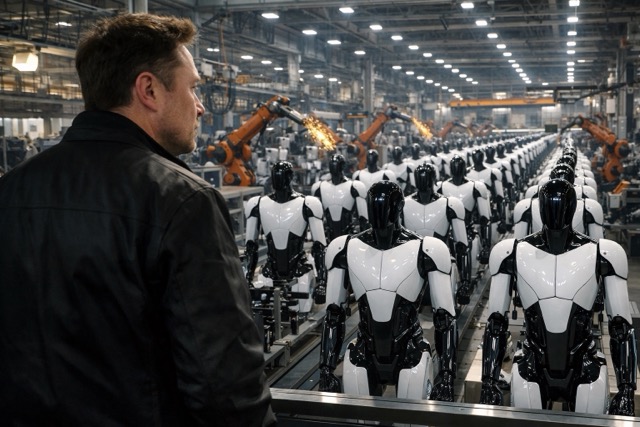
Elon Musk has a new role in the Trump administration. Defense Secretary Pete Hegseth announced on war.gov Wednesday that Musk will help lead Project Meridian, a new Pentagon study meant to identify the weapons and technologies the U.S. military will need to fight wars decades from now.
Hegseth unveiled the project during his State of the Force address at Marine Corps Base Quantico in Virginia. Musk will direct the effort alongside Anduril founder Palmer Luckey and former House Speaker Newt Gingrich, working under Pentagon Chief Technology Officer Emil Michael. All three men were in attendance, and Hegseth said their first meeting would take place directly after the speech inside a secure compartmented facility, according to The Hill.
Hegseth said the group “will be focused on discovering, developing, and fielding the weapons and systems that our children and our grandchildren will need in their lifetimes, without any creative limitations or restrictions, on any future battlefield, from under the Earth to beyond the Moon.” He added that Meridian is not meant to produce new strategy or policy documents.
SpaceX to become America’s Military data backbone for missiles, drones, and warfighters
A memo released after the announcement gives Michael until January 28, 2027, to deliver findings, a window of 120 days. It names artificial intelligence, autonomy, directed energy, robotics and biotechnology as the fields expected to change how wars are fought. The results will come as a public report with a classified annex. The memo says the study will run through a partner organization it does not name, and it does not mention Musk directly. His role comes from Hegseth’s speech and a Pentagon press release.’
Musk had not commented publicly on the appointment as of Wednesday evening. This will be Musk’s first official advisory role in the administration since he left DOGE last year.
The mandate overlaps heavily with Musk’s companies. SpaceX is one of the Pentagon’s largest contractors, with 2026 defense awards topping $8 billion, much of it tied to launches and a suspected Starshield buildout out of Vandenberg. The Pentagon’s release says Meridian will examine domains “from subterranean depths to the cislunar frontier,” which maps onto The Boring Company’s tunneling and Starship’s lunar plans. Tesla’s work on autonomy and Optimus falls within the fields the memo lists.
Meridian was one of six initiatives Hegseth announced Wednesday. Another is a new Autonomous Warfare Command, which the department wants operating as a four-star combatant command by October 1, 2027.
The news lands a day before SpaceX is scheduled to fly a classified National Reconnaissance Office payload on Falcon Heavy, one of three launches the company has planned for Thursday.

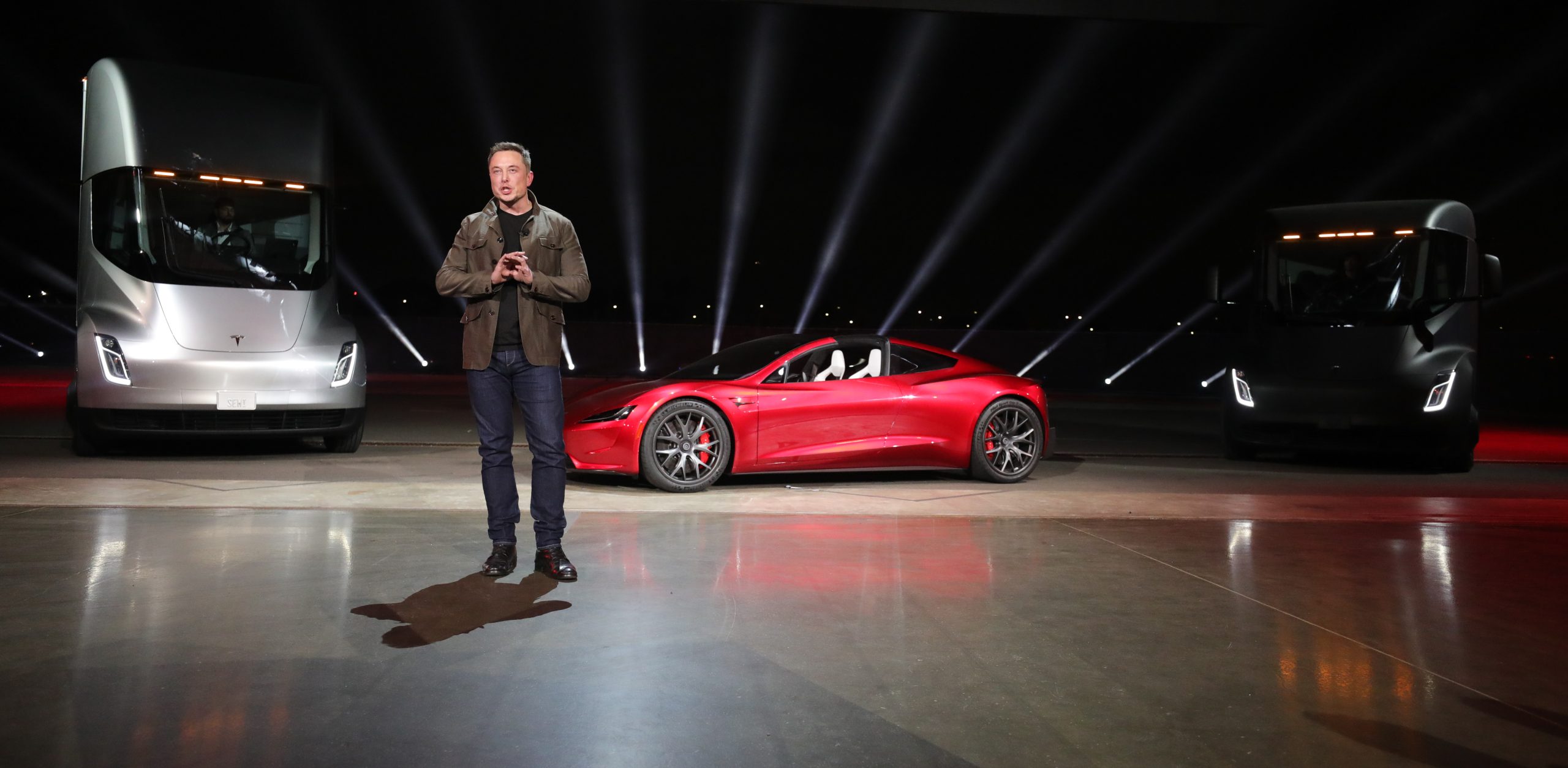
Tesla CEO Elon Musk certainly tipped off some details of the Tesla Roadster event with a broadening of information regarding the company’s decision to delay the unveiling for two weeks.
For years, people have speculated about what the Roadster will be capable of. While there have been plenty of things said about what it *could* do, we have not seen or been told by Tesla what it will actually be capable of.
However, over the past few days, Tesla’s weather updates have truly pushed the speculation into Plaid Mode, basically all but confirming the car will have some sort of aerial capability — whether that would be hovering or fully flying remains to be seen — but it definitely seems that it will be able to leave the ground intentionally.
“Because this event can only be held outdoors…”
Tesla posted on Monday that it would delay the Roadster event until October 15, and it indicated that it had to do this because the event “can only be held outdoors.”
With the potential SpaceX collaboration to develop cold-gas thrusters that will help the vehicle go airborne, doing this indoors is probably not a safe, or even plausible, possibility.
Roadster event update
We’ve been tracking the weather closely with local meteorologists, but given the severe conditions predicted & because this event can only be held outdoors, we’ve made the difficult decision to reschedule.
New date is October 15. Additional details to…
— Tesla (@Tesla) September 28, 2026
FAA Airspace Restriction
The FAA gave Tesla a Temporary Flight Restriction (TFR) for 10,000 feet above ground level, much higher than the typical 2,000-foot restrictions that are usually placed at SpaceX’s McGregor, Texas site.
Tesla Roadster event requires restricted airspace, and the FAA obliges
Some have said that this massive increase is due to Tesla’s need to restrict unauthorized drone use for spying on the event.
Elon Admits High Winds
“Due to high winds, the new Roadster demo is postponed by 2 weeks,” Musk said in a post on X yesterday.
Due to high winds, the new Roadster demo is postponed by 2 weeks https://t.co/dV3ojDh1iT
— Elon Musk (@elonmusk) September 30, 2026
A reply reading, “What’s strong wind got to do with a car demo with four grounded wheels?” was directly below Musk’s post, satirically and sarcastically probing for more details.
All signs are pointing toward an aerial demonstration for the Roadster.
Elon Musk
Elon Musk and Trump are closer than ever, and Tesla could be the big winner
Elon Musk sat beside Trump as AI leaders signed a voluntary White House safety accord.
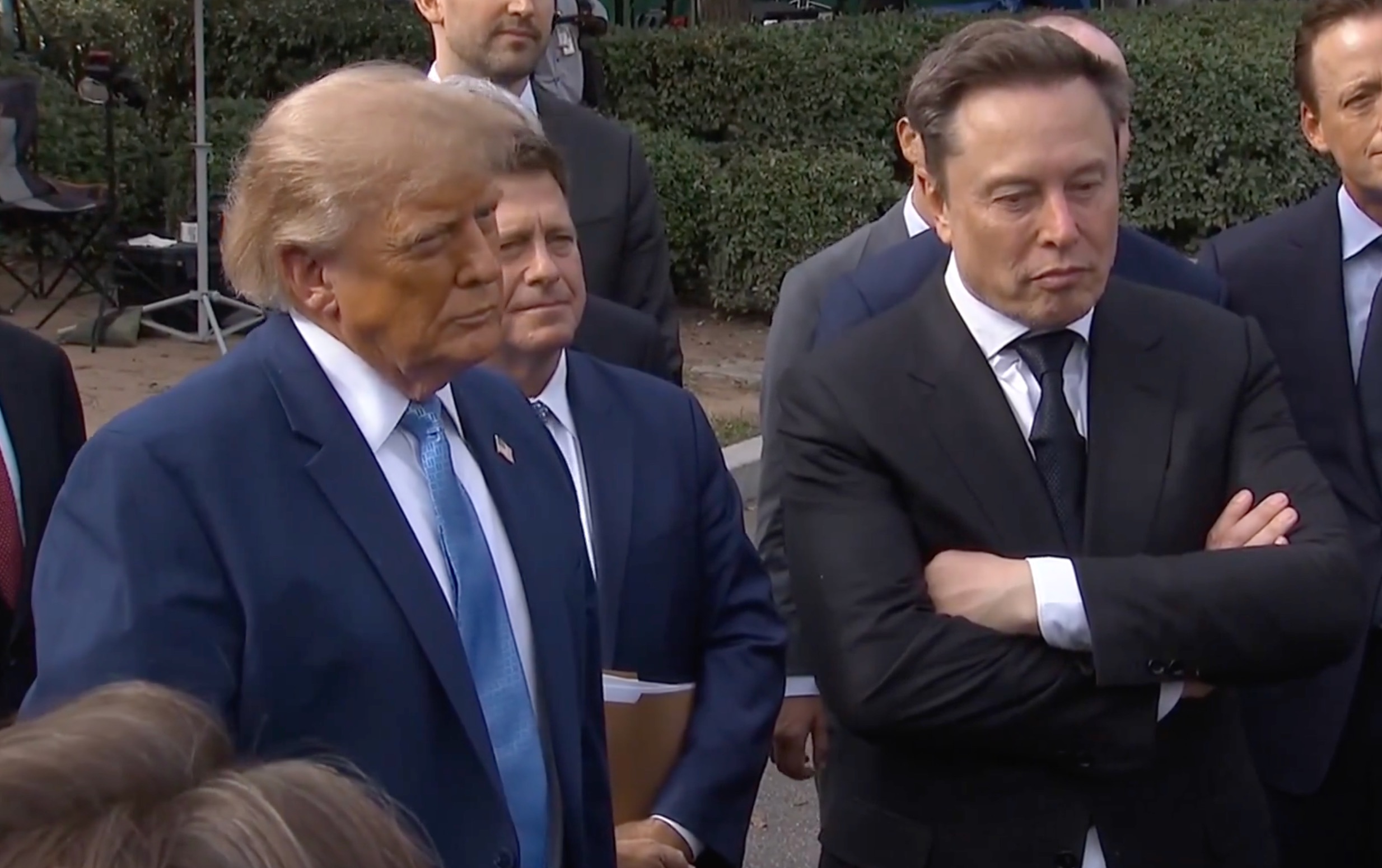
Elon Musk had the seat right next to President Donald Trump on Tuesday as the White House hosted the leaders of America’s biggest artificial intelligence companies for a lunch that ended with a voluntary industry accord on AI safety.
A seating chart Trump posted on Truth Social placed Musk at the president’s left in the East Room, with Nvidia CEO Jensen Huang on his right, according to an Associated Press reporter. Anthropic CEO Dario Amodei, OpenAI President Greg Brockman, Meta’s Mark Zuckerberg, Google’s Sundar Pichai, Microsoft’s Satya Nadella and Amazon founder Jeff Bezos also attended, along with Vice President JD Vance and House Speaker Mike Johnson.
🚨 Elon Musk is currently speaking to the media alongside President Trump after a meeting with AI Leaders in Washington today
Trump says AI is now being called “Super Intelligence” or SI pic.twitter.com/woJJqUVP9B
— TESLARATI (@Teslarati) September 29, 2026
After the lunch, Trump told reporters outside the West Wing that the executives had signed “The White House Accord on Superintelligence: A Joint Commitment on Frontier SI Responsibilities.” Johnson described it as a voluntary statement of principles built on “robust internal controls and layers of internal and external review,” while Zuckerberg said company boards would independently review reports from outside auditors. Trump called the document “morally binding,” said he would name a new AI czar within days, and signed an executive order formally renaming artificial intelligence “super intelligence,” CNBC reported.
Musk was not in the room for Tesla alone. Since SpaceX absorbed xAI, he runs the company behind Grok and one of the largest AI training operations anywhere. On September 25, he said another 220,000 Nvidia GB300 chips would come online at Colossus 2 within a week, with more expected in November and December.
“I think it is worth highlighting the positive benefits of A.I. … S.I., pardon me.”
“Thank you.”@elonmusk catches his own slip after calling the technology “A.I.” while speaking alongside President Trump and other tech leaders, quickly correcting himself to “super… pic.twitter.com/fH7CFileNb
— Fox News (@FoxNews) September 29, 2026
SpaceX confirms third massive compute deal at Colossus data center
Musk also used the trip to restate his energy ambitions. “SpaceX is aiming together with Tesla to do 200 gigawatts of solar production per year,” he said at an event in Washington. It is the same combined target he laid out that feeds directly into Terafab, the Tesla and SpaceX chip venture that will need enormous amounts of power.
The showing between Musk and Trump has come a long way, since the two had the very public split in mid 2025 after Musk opposed the “Big Beautiful Bill” and left DOGE. They reconciled at Charlie Kirk’s memorial that September, and Trump later called their relationship “good”. Since then, Musk has joined Trump’s China delegation in May and attended last week’s White House state dinner for Chinese President Xi Jinping.
For Tesla, that access to government official could pay dividends. As Teslarati noted in January, federal autonomy rules, NHTSA oversight and a single national standard for driverless vehicles all run through an administration Musk can more easily reach directly as Tesla works to scale Robotaxi and Cybercab beyond Texas.

The Pentagon taps Elon Musk to design the battlefield of the future

SpaceX set to launch astronauts and a classified Falcon Heavy mission on the same day


