Investor's Corner
SpaceX gets an absolutely crazy price target after rough IPO

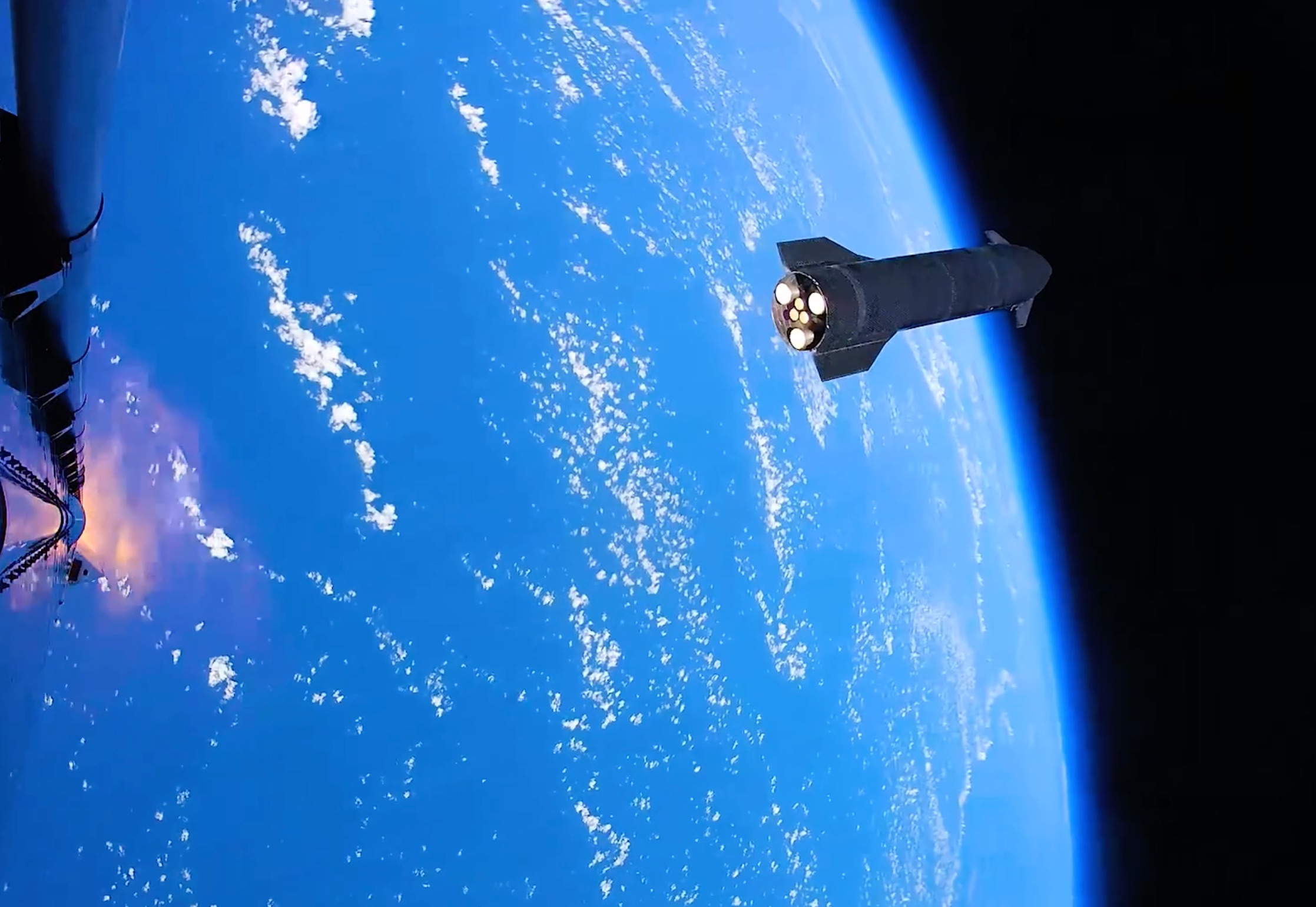
SpaceX (NASDAQ: SPCX) got an absolutely crazy price target rating from Raymond James after the company experienced a tough first few weeks following its Initial Public Offering (IPO).
Despite the tumultuous start, SpaceX has plenty of believers, and the company’s massively successful Starship launch last Friday, its 13th test flight of the massive rocket, went so smoothly that Raymond James analysts pushed its price target on the company to roughly 7 times its current trading level.
SpaceX Starship just nailed something it’s never done before
The firm officially put a “Strong Buy” rating and an $800 price target on the stock. It currently trades at around $113. Its all-time high is $225.64, reaching this trading level shortly after shares first went public.
Raymond James’ price target is tied to the firm’s confidence after Starship’s 13th test flight. Analysts at the firm said it was an incremental step that reduces engineering risks, citing the widely successful heat shield test that CEO Elon Musk recently detailed, the smooth deployment of Starlink V3 satellites, and a successful in-space engine relight.
SpaceX also managed to see Starship splash down safely in the Indian Ocean, while the Super Heavy Booster fell down to the Gulf of America with no incidents.
It is interesting to see these launches have such a tremendous impact on the stock and what investors think of it. After SpaceX initially delayed the Starship launch last week, shares fell tremendously. Most probably did not realize that the stand-down is a standard practice, especially if everything is not perfect.
The mission was initially aborted due to an issue with Raptor engines. This was resolved, and Starship launched last Friday after another delay on Thursday, which was caused by weather.
Now that analysts have seen what SpaceX launches are capable of and how impressive the feat is, firms are adjusting their price targets accordingly, making it known that they have high expectations for the space exploration company.



Give the gift of Tesla upgrades.
Shop for someone else or treat yourself. Get more shopping power with a Teslarati gift card.
Elon Musk
Elon Musk reveals Tesla’s next vehicle without a steering wheel
Elon Musk says Tesla plans a driverless Model Y for families too big for Cybercab.

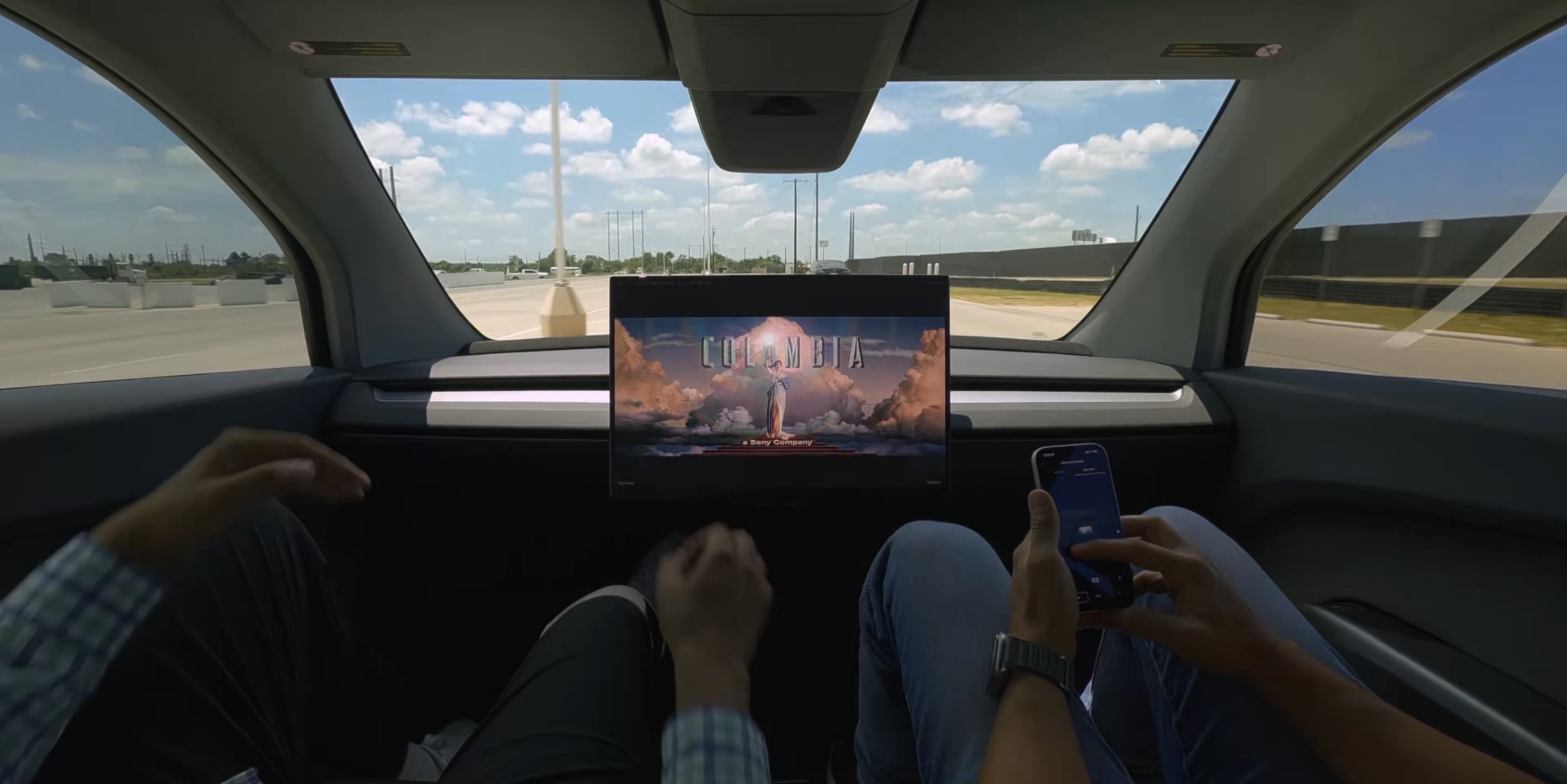
Tesla is planning a driverless version of the Model Y with room for six or seven people, Elon Musk said this week, giving families and groups an alternative to the two-seat Cybercab. Speaking remotely from China at the New York Times DealBook Summit on Wednesday, Musk said the vehicle would have no steering wheel or pedals. He did not give a launch date, price or production location.
The idea came up when Andrew Ross Sorkin asked whether Tesla would eventually stop selling conventional cars as it shifts Cybertruck capacity toward the Cybercab. Musk defended the two-seat design, saying average occupancy is about 1.2 people per car and that a two-seater covers roughly 90 percent of passenger miles. Bigger groups, he said, would be served by the larger autonomous Model Y.
Sorkin also mentioned he had ordered a Model Y L for his family and was still waiting on it. Musk called the six-seat, long-wheelbase SUV Tesla’s most popular car and suggested all Model Y production might need to move to the longer version. “It’s what most people seem to want,” Musk said, though he did not announce any change to Tesla’s production lines.
A driverless Model Y would add a third vehicle to Tesla’s autonomous lineup. Model Y Robotaxis already run 24 hours a day in eight cities, and Cybercab rides expanded to Dallas on Thursday after launching in Austin in September, as Teslarati reported. Tesla also began inviting select customers to buy a Cybercab for personal use last week at $29,990, with deliveries targeted for December.
Musk also addressed whether a Tesla and SpaceX merger should pay out under his compensation plan. Under the change in control terms of his 2025 CEO award, a deal could accelerate vesting, Electrek has noted. Musk said it should not. “I don’t think I should be compensated with any kind of award just for doing a merger. That would be unreasonable and not right,” he said. “You should keep your deals and stay true to your word.”
On the merger itself, Musk said the companies would “probably” be better together because of growing overlap in AI, chips and robotics, but stressed the decision rests with independent committees and shareholders, and that a Tesla vote “may or may not succeed.” Tesla holds its annual shareholder meeting on December 3, with merger talks reportedly progressing toward a possible announcement as soon as December.
Elon Musk
Tesla and SpaceX merger talks hit a new stage, and one hurdle remains
Tesla and SpaceX merger talks are reportedly advancing, and a deal could arrive by December.
Tesla and SpaceX are moving closer to a combination, with a deal announcement possible as soon as December, Bloomberg reported on Thursday, citing people familiar with the matter. The companies have also discussed a scenario in which the announcement slips into early 2027.
Boards and advisers on both sides are now working through the terms of the deal and the governance structure of the combined company, according to the report. One open item is how many SpaceX shares Tesla investors would receive. Bloomberg had previously reported that the two companies were aiming to announce a deal in the first half of next year and close it before the end of President Donald Trump’s term, so a December announcement would pull that schedule forward by months.
Tesla shares rose as much as 1.9% to $398.35 after the report, while SpaceX gained 0.6% to $140.63. SpaceX carries a market value of about $1.9 trillion following its June IPO, and Tesla is valued at about $1.55 trillion, which would make a combination the largest corporate deal on record. Neither company responded to requests for comment.
The talks became official on October 20, when Elon Musk said on SpaceX’s third quarter earnings call that both companies had formed special committees of independent directors to study a merger, as Teslarati reported. Musk said he could not take part because he is “a conflicted party” and called the process “an odd kabuki dance.” He also noted that Tesla would need approval from 50 percent of all outstanding shares, a bar the company missed in 2025 when a board declassification proposal won support from only 39.4 percent.
China remains the biggest structural problem. Bloomberg’s sources said the companies still need to work out how to isolate Tesla’s large and profitable manufacturing business in China from SpaceX’s U.S. government and defense contracts. JPMorgan analyst Rajat Gupta described those two factors last month as “key dynamics that are at odds with each other” for regulatory and shareholder approval. Musk has repeatedly said Tesla has no plans to separate its China business, a position he restated in August after ARK Invest predicted a merger announcement before the end of the year.
Washington adds another layer. Democrats took control of Congress in this month’s midterms and have pledged to investigate Musk’s business and political activities, which could bring added scrutiny to a deal involving one of the Pentagon’s most important launch and satellite contractors.
The report also lands three weeks before Tesla’s December 3 annual meeting at Giga Texas. That ballot has only three items, led by the re-election of Musk, board chair Robyn Denholm and JB Straubel, and includes no merger proposal. Any deal announced in December would likely require a separate special meeting for Tesla shareholders to vote on it.
The two companies already share a growing list of projects, including the Terafab semiconductor plant in Texas. Tesla’s next generation Roadster, which uses cold gas thrusters built on SpaceX hardware, turned up on display at SpaceX headquarters last month and has become one of the clearest public examples of that overlap.
Elon Musk
Nvidia’s board meets on Jensen Huang, and Elon Musk already has an answer
Elon Musk says it would be an honor to hire Jensen Huang amid Nvidia turmoil.
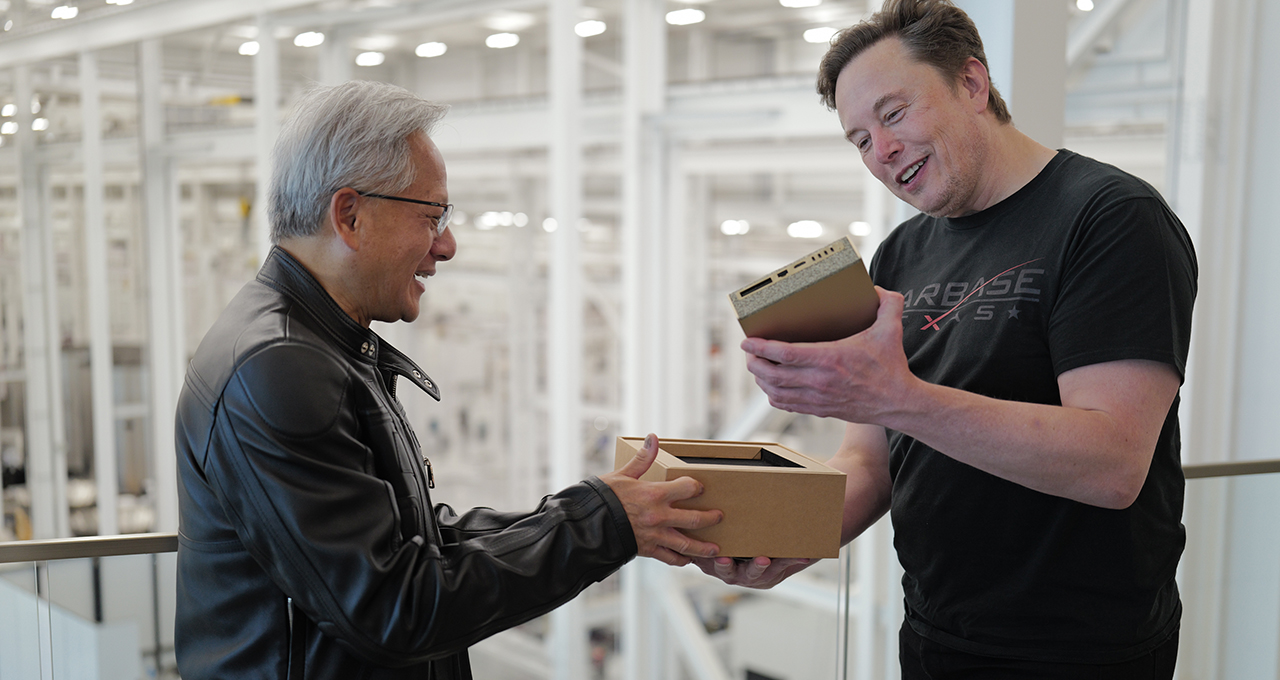
Elon Musk says he would welcome Jensen Huang at one of his companies if Nvidia’s board decides to push out its longtime chief executive.
On Wednesday evening, the financial account ZeroHedge posted “Elon please hire Jensen” on X. Musk replied roughly two hours later: “That would be an honor.” Neither Huang nor Nvidia had responded publicly as of Wednesday night.
Musk’s reply came as Nvidia’s board met to decide Huang’s future. The Wall Street Journal reported that directors were preparing to oust him following reports of two extramarital relationships. One involves Alice Huang, a Singapore-based businesswoman whom U.S. intelligence officials reportedly believe was working for China’s Ministry of State Security. The New York Times separately reported a relationship with Kimberly Powell, Nvidia’s vice president of health care. Huang acknowledged being unfaithful in a memo to employees on Sunday but gave no details.
@zerohedge That would be an honor
— Elon Musk (@elonmusk) November 12, 2026
Under Nvidia’s bylaws, a majority of its 11 directors can remove the CEO with or without cause. Bloomberg reported that the board has been working with an outside firm on possible replacements and may name an interim chief, with CFO Colette Kress seen as the likely pick. Nvidia shares fell more than 8 percent in extended trading, according to CNBC, and the company is scheduled to report quarterly earnings on November 17.
Musk has more riding on Nvidia’s leadership than most tech executives. In August, he told investors on SpaceX’s first earnings call as a public company that it would build its AI infrastructure exclusively on Nvidia hardware, calling Vera Rubin “the best architecture.” SpaceX is also working with Nvidia on the compute payload for Starmind, its planned orbital AI constellation. In October, SpaceX said it had a binding commitment for a roughly $40 billion lease of Vera Rubin GPUs and related equipment, with the leases expected to begin in the first half of 2027.
The scale of that dependence is already enormous. On its Q3 call, SpaceX said it was bringing roughly 200,000 to 220,000 Nvidia GB300 GPUs online each month and expects 2.5 to 3 GW of nameplate compute by the end of the year. That buildout is now reaching new sites like the proposed $24 billion power plant and supercomputer campus at Starbase.
The relationship between the two executives also goes back nearly a decade. Huang has often told the story of personally delivering Nvidia’s first DGX-1 AI supercomputer to Musk in 2016, when no other customer wanted one. “Nobody wanted to be part of it, except for Elon,” Huang said on the Joe Rogan Experience last December.
Musk did not say what role Huang might fill, and his reply stops short of a formal offer. Huang co-founded Nvidia in 1993 and still owns about 3.6 percent of its stock, so any move to a Musk company would depend on whether, and how, he leaves the chipmaker he has run for more than three decades.

Tesla Full Self-Driving v15 rollout begins: full release notes and improvements

Tesla Full Self-Driving v15 gets release date from Elon Musk


