Elon Musk
Elon Musk follows Trump’s lead, says a SpaceX name change is coming
Elon Musk says SpaceXAI will become SpaceXSI, marking its second rebrand in under three months.

Elon Musk wants to rename his artificial intelligence company again, less than three months after its last rebrand.
In a string of posts on X early Sunday morning, Musk wrote “No more AI,” followed by “SI” and “It’s better.” He then added, “SpaceX is a super intelligence company.” When a user asked whether SpaceXAI could become SpaceXSI, Musk replied, “Yes, we will make that change.”
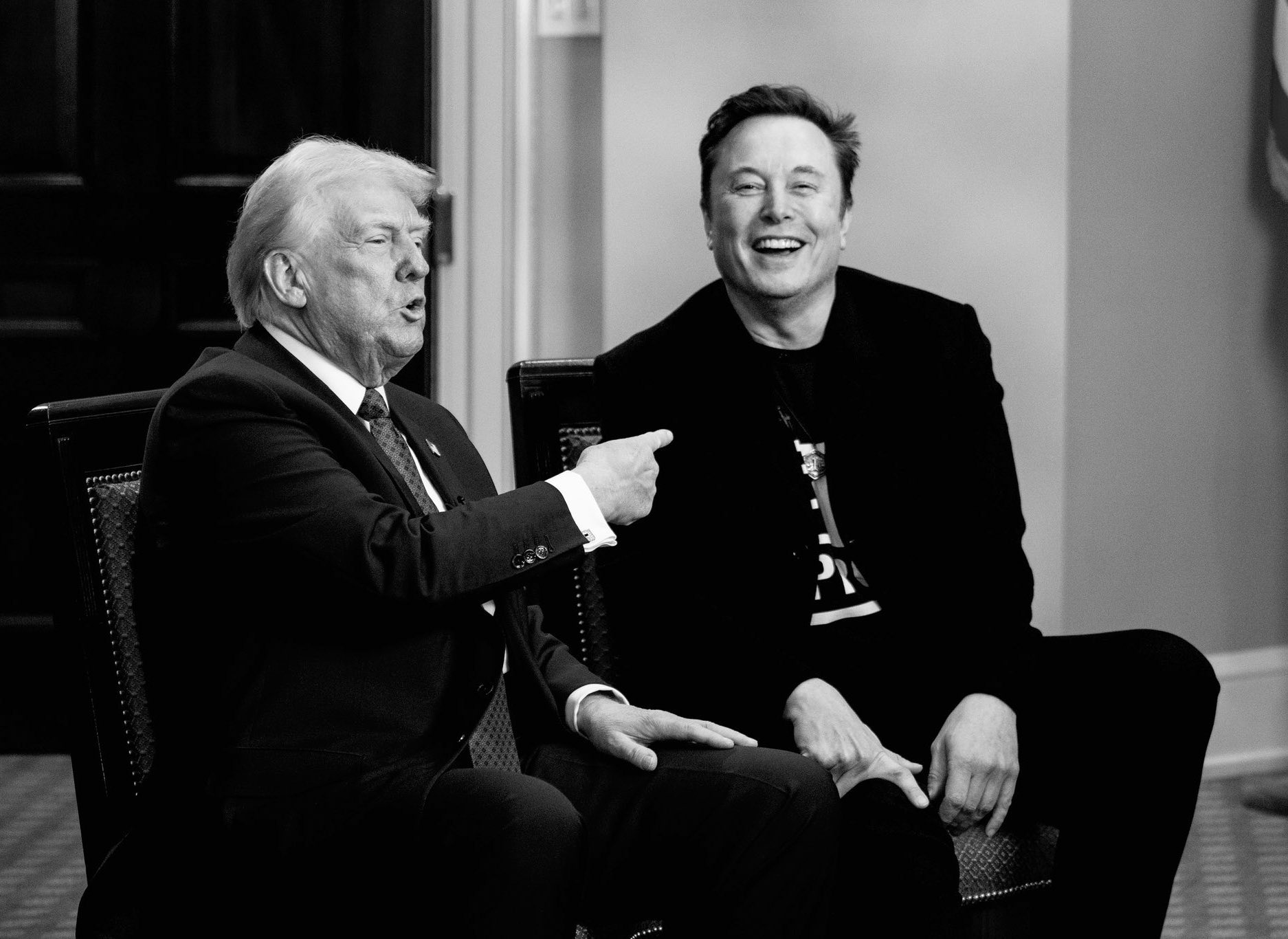
The posts extend a terminology push that began at the White House last week. On September 29, President Donald Trump signed an executive order directing federal agencies to replace “artificial intelligence” and “AI” with “Super Intelligence” and “SI” on government websites, policy documents and press releases. The same day, Musk sat beside Trump as the heads of the largest AI companies signed a voluntary safety accord, as Teslarati reported. Speaking to reporters afterward, Musk caught himself mid sentence: “I think it is worth highlighting the positive benefits of A.I. … S.I., pardon me.”
Elon Musk and Trump are closer than ever, and Tesla could be the big winner
SpaceXSI would be the third name for the business since February. SpaceX acquired xAI on February 2 in a deal that valued the combined company at $1.25 trillion. In May, Musk said xAI would be dissolved as a separate company, and on July 6 the division adopted the SpaceXAI name and a new logo that placed the xAI letters inside the SpaceX identity.
Musk gave no timeline. He did not say whether SpaceXSI would be a legal name change or a branding update, whether the @SpaceXAI handle on X would change, or how the shift would apply to products like Grok. The company had not issued a formal announcement as of Sunday morning.
The change would reach well beyond a chatbot. SpaceXAI now houses Grok, the X platform, the Colossus training clusters in Memphis and the coding tool Cursor, which SpaceX acquired in August. It also runs the orbital compute effort SpaceX is building around Nvidia hardware, which Musk said during the company’s first earnings call would be exclusive to Nvidia.
It’s unclear if rivals like Anthropic, OpenAI, Google, Meta and Nvidia have plans to also rename their companies or products. OpenAI CEO Sam Altman has continued to say “AI” in public, while Nvidia CEO Jensen Huang has gone partway, describing data centers as “super intelligence factories.”
The rename would also line up SpaceX’s AI branding with the federal government’s language as Musk takes on a new advisory role at the Pentagon, where he is helping lead the Project Meridian study on the future of warfare.


Give the gift of Tesla upgrades.
Shop for someone else or treat yourself. Get more shopping power with a Teslarati gift card.
Elon Musk
Tesla’s Unsupervised FSD future likely to bring Starlink to every model
Elon Musk says every Tesla could get built-in Starlink next year, and AI4.5 is changing.
Elon Musk says Starlink could be built directly into every Tesla model by the end of next year, and he is tying it to the company’s push toward unsupervised Full Self-Driving. Replying on X Sunday to PayPal co-founder David Marcus, who said he could not wait for an embedded Starlink option beyond the Cybercab, Musk wrote: “Hopefully available towards the end of next year. This will be important for unsupervised FSD, so passengers have high bandwidth everywhere for work and entertainment.”
He added one exception: “Except in China, as Starlink is illegal there.”
The Cybercab is the only Tesla with Starlink today. The two-seater carries a flush-mounted Starlink V5 terminal on its rear hatch, and the newest units began giving public rides in Dallas this week. Riders do not yet appear to be able to connect to it, and Tesla AI chief Ashok Elluswamy has said the link is used mainly for navigation, customer service and fleet management rather than safe driving, as Teslarati reported. Musk’s comments suggest passenger connectivity is part of the plan once the hardware spreads to the rest of the lineup.
The timing lines up with Tesla’s goal of letting owners add their own cars to its Robotaxi network. Musk said last week that trials could start as soon as next month, as Teslarati covered, and the company began rolling out FSD v15 to customers on Saturday. Tesla says the release is 25 times better at handling safety critical cases than v14, according to its release notes.
Musk also shared new details on Tesla’s next vehicle computer. “AI4.5 is a relatively small performance improvement that is mostly due to needing to upgrade RAM to LPDDR5X,” he wrote in a reply to Sawyer Merritt. In a follow-up post, he said Tesla had trimmed the memory to save money: “RAM is super expensive, so we reduced AI4.5 from 32GB to 24GB. That will be fine. It’s hard to use 32GB anyway, given memory bandwidth constraints.”
That marks a change from earlier this year, when Musk said on Tesla’s first quarter call that an interim upgrade would double RAM on each chip from 16GB to 32GB. Memory prices have climbed sharply as AI data centers absorb supply, and Musk said Sunday that “AI4 costs twice as much now due to memory and storage price hikes.” He also confirmed the next generation chip will not go into cars for now. Asked when AI5 would arrive in new vehicles, he replied, “It’s going to Optimus. Cars will remain at AI4. That’s enough to solve superhuman driving.” He has said AI5 has roughly 12 times the compute of AI4.
Musk also gave a rare look at how the v15 driving software is built. Tesla has had “a ~pixel-perfect world model since last year, which is critical for synthetic data generation,” he wrote, while “the (much) smaller version of that in the car is a conditional mean-flow model, based on the recent sequence of Tesla Universal Vision Encoder.” In practice, Tesla trains on a large model that can generate realistic driving scenes, then runs a compact version that predicts what happens next from recent camera input.
Tesla has not said which vehicles will get AI4.5 or when, and Musk gave no price for adding Starlink to cars outside the Cybercab.

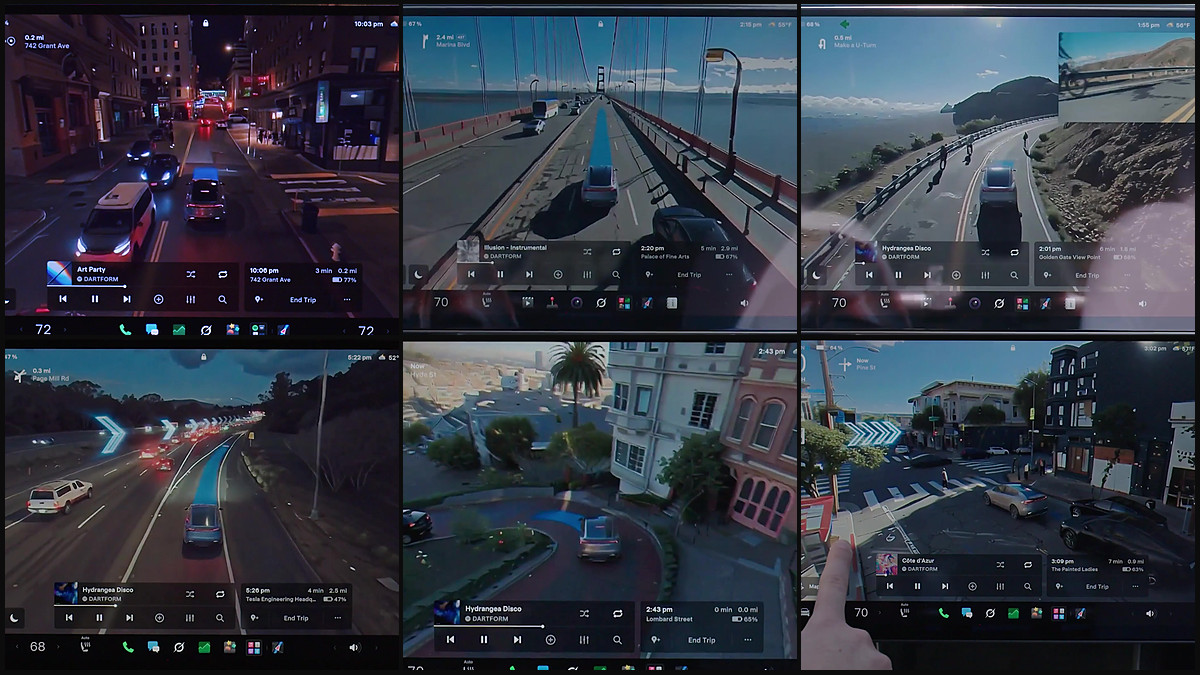
Tesla has announced that Full Self-Driving version 15 is now rolling out, after CEO Elon Musk said earlier today that the wide rollout would occur in December.
Now, Tesla is rolling out to Early Access Program (EAP) members v15’s first builds, and there are a lot of new improvements.
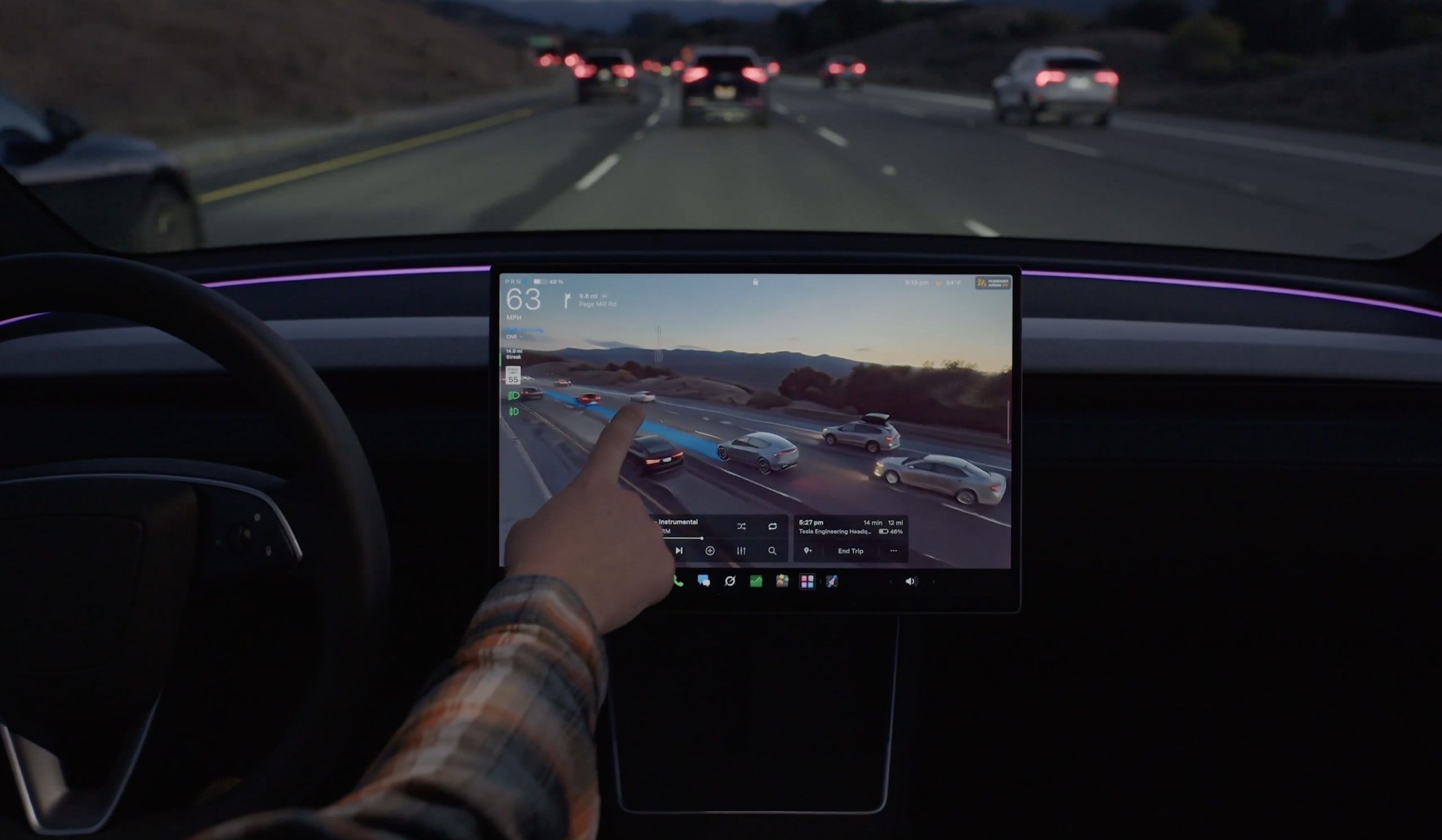
Tesla explicitly stated that safety improvements come in the form of “25x better handling of safety critical cases.” It is also rolling out “Tesla Reality View,” a new version of the Driver Visualization that appears to be much more realistic and could potential use Unreal Engine, according to the teaser video Tesla posted on social media. This “adds a live visualization of the drive that lets you see & control what FSD is planning to do.”
FSD v15 now starting to roll out – upgrading every part of the end-to-end driving network
Safety
25x better handling of safety critical casesTesla Reality View
Adds a live visualization of the drive that lets you see & control what FSD is planning to doNavigation for start & end of the trip now learns end-to-end from fleet route preferences. Later v15 releases will expand this to the entire route.
You also should notice better detection of signs, animals, debris, potholes and standing water, plus more natural speed handling in school zones and inclement weather.
Lastly, FSD can now slow for speed cameras & Bike Rack Mode lets you enable FSD w/ bike racks or similar hitch accessories
— Tesla (@Tesla) November 21, 2026
Perhaps the biggest improvements that Tesla mentioned, however, are that of Navigation fixes and better detection and aversion from potholes, debris, and animals, as well as “more natural speed handling in school zones and inclement weather.”
Tesla also added a new “Bike Rack Mode,” which will enable FSD’s use when bike racks or other hitch accessories are attached.
Tesla also revealed the full Release Notes for v15:
- Upgraded vision encoder shared between FSD, Robotaxi, and Optimus, which is trained on millions of internet videos for improved generalization and data efficiency, improving the critical intervention rate by 25x.
- Introduced Tesla Augmented Reality, replacing all of the explicit model signals into a single end-to-end visualization using less total compute.
- Improved navigation by using an end-to-end learned model based on route preference data from the fleet.
- Improved parking location selection by using personalized parking history, and the map will now display multiple parking options at your destination.
- Improved driver monitoring by increasing vision-based attention monitoring availability with hats and sunglasses and decreasing strictness in higher speed driver profiles.
- Improved detection of road signs, small animals, road debris, and chains.
- Improved detection of potholes, road details, and avoidance of deep standing water.
- Improved speed handling for each driver profile, school zones and speed limits, and inclement weather.
- Improved Autoshift functionality by unifying with FSD-based gear predictions.
- Tesla Reality View New: real-time generative driving visualization that continuously streams a view from an arbitrary virtual camera situated above your vehicle, enabling you to see and control what FSD is planning to do. Select between fullscreen visualizations, maps or a split view – or choose quiet mode for a calming cabin experience. Upcoming navigation turns display directly in the driving visualization. Turn signals are quieter and fade out after a few clicks.
- Speed Camera Slowdown: FSD (Supervised) can now slow down when it detects a speed camera. Press the accelerator or increase your speed profile to cancel the slowdown. If you cancel twice at the same camera, your Tesla saves that location and will not slow down there again. To remove saved cameras, go to Controls > Service > Manage Saved Locations.
- Bike Rack Mode With Bike Rack Mode, you can now engage FSD (Supervised) when a bike rack or similar hitch accessory is installed. When Bike Rack Mode is enabled, FSD (Supervised) pulls over near your destination and does not reverse. Autopark, Summon, and Backup chimes and warnings will be disabled.
It sounds like there are some really great improvements, and this is probably just a handful of what other improvements will come from these upgrades. For example, the UI changes will likely come with some other features that will be discovered upon the public having hands-on experience with it.
Musk said this morning that a wide release would occur sometime in December.
We’re looking forward to testing it when it arrives to us!
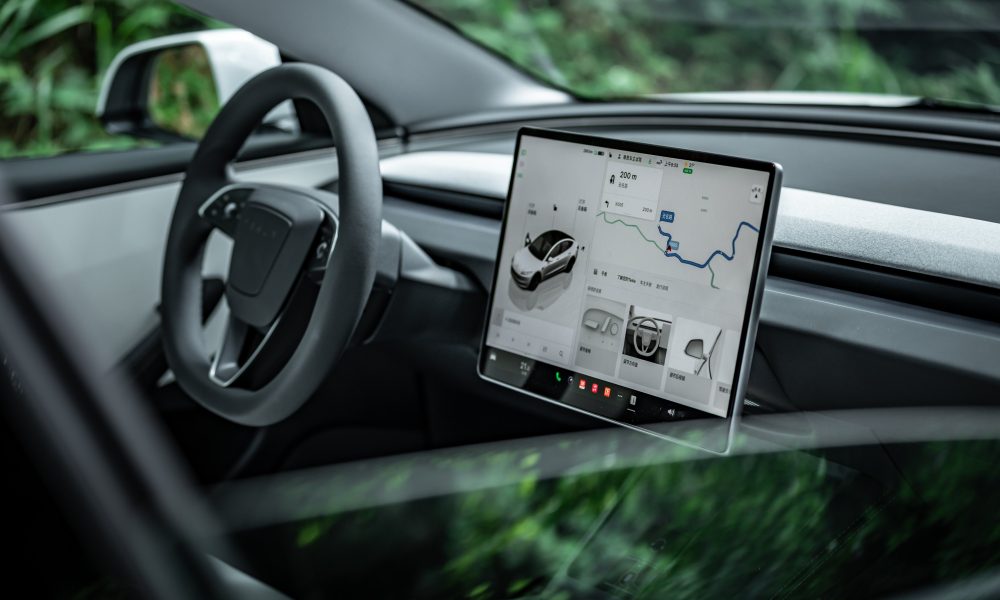
Tesla Full Self-Driving v15 has received an official release date from CEO Elon Musk, who says the newest and most capable version of the suite will go wide in December with the 2026 Holiday Update.
That means the first iterations of the suite could actually come sooner, as the Early Access Program is the initial batch of owners to receive a new FSD release. Musk’s comments released a few tidbits of information, but nothing overwhelmingly revealing about its capabilities.
Musk was talking about supervised fine-tuning, stating that it is like “getting a haircut with a chainsaw,” before stating that FSD v15 will roll out wide for owners next month:
SFT is more like getting a haircut with a chainsaw than it is “fine-tuning”! Should just be built into primary training.
And having a “system prompt” is silly! Default behavior should be sensible.
The above are already true for Tesla AI (not yet deserving of “super”). It is the most efficient AI on Earth.
FSD V15 goes to wide release next month. It will be something special.
— Elon Musk (@elonmusk) November 21, 2026
Musk’s Confirmed Changes and Fixes
Musk simply confirmed the new Full Self-Driving version would roll out with the 2026 Holiday Update, and the only two explicit changes he confirmed were updates to the User Interface (UI) and two small changes.
Musk’s comments on the UI confirm there are big changes coming to it, as he stated:
@roger_kappler Yeah.
The new user interface will re-render reality in a mind-bending way. Hard to describe, but it’s awesome.
— Elon Musk (@elonmusk) November 21, 2026
The UI changes will likely upgrade AMD Ryzen-equipped Tesla vehicles running AI4 to visualize vehicles using the Unreal Engine, something that was found in coding last year:
Tesla plans to use Unreal Engine for driver visualization with crazy upgrade
Additionally, one user stated that their biggest complaints with v14’s most recent releases is that they have to “stop refusing to use the HOV lane” and last-second lane changes to merge or turn happen too frequently. Musk said these should be fixed in v15.
@riley_stahura Should be fixed in V15
— Elon Musk (@elonmusk) November 21, 2026
In the past, we’ve also gotten small bits of detail about the v15 release, including from Tesla’s Head of AI, Ashok Elluswamy, who stated back in September that there are improved safety and collision avoidance systems coming with the v15 release.
Tesla plans big safety improvements for Full Self-Driving v15
The big prediction for v15 is whether this will enable at least some unsupervised driving in personal Teslas. There are likely to be some massive jumps in capability, although FSD has already proven itself to be a great way to travel. Nevertheless, there are a lot of things it could do better.
FSD still struggles with parking, it has routine bugs from update to update, it does not recognize potholes or large bumps on the road, speed control is a common complaint, and Navigation has been one of the biggest pain points.
However, v15 will likely bring massive improvements to capability and give people more options, like potentially parking orientation and more refined spot selection. We can only wait and see what Tesla will include.

Tesla’s Unsupervised FSD future likely to bring Starlink to every model

Tesla Full Self-Driving v15: Reality View review, new features explained


