Investor's Corner
Tesla’s ‘Alien Dreadnought’ factory takes a step forward with structural cable patent

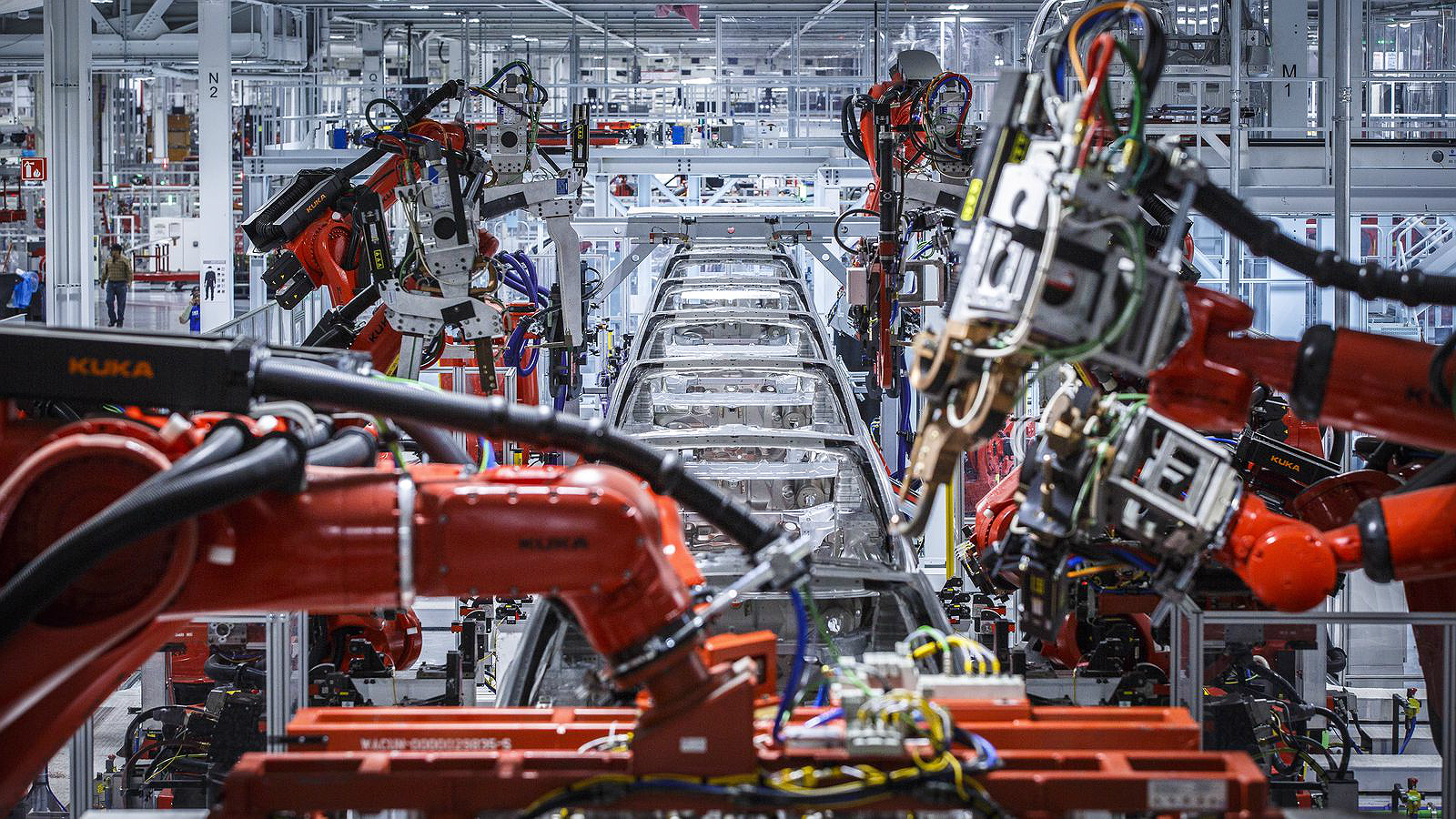
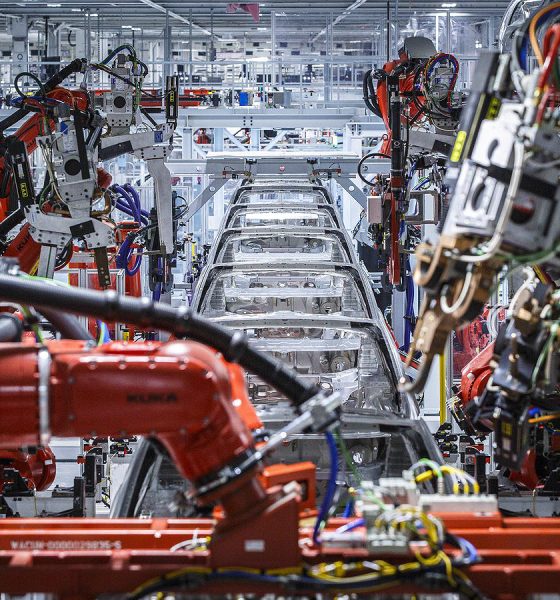
When Elon Musk envisioned the Model 3 production line, he saw a factory that was so automated; it looked like it was literally out of this world. In later statements, Musk shared Tesla’s internal name for the automated factory – Alien Dreadnought – a reference to the fascinating, intricate extraterrestrial motherships that are a trope of classic sci-fi franchises. Musk also noted that the Alien Dreadnought should be operational sometime in 2018.
The Model 3 production ramp would eventually teach Elon Musk that his timeline for the Alien Dreadnought was far too optimistic. Since starting the production of the electric car, Tesla has been met with bottleneck after bottleneck in both the Fremont factory and Gigafactory 1. While Tesla was eventually able to find a system that balances robot and human work to effectively ramp the Model 3, Musk would later admit that Tesla overreached when it came to the automation of its production lines. In a post on Twitter, Musk candidly noted that human workers are still underrated.
Yes, excessive automation at Tesla was a mistake. To be precise, my mistake. Humans are underrated.
— Elon Musk (@elonmusk) April 13, 2018
While Elon Musk’s Alien Dreadnought factory might be coming later than expected, the company appears to be paving the way for even more automation in its factories. A recently published patent on Thursday, for one, outlines a structural cable design that is fully optimized for automated manufacturing. In the discussions of the patent, Tesla described the rationale of a structural cable that is rigid by design.
“The structural cable according to the present disclosure is a cable with structural integrity that may be manipulated into place by a robotic arm as part of an automated process while providing reliable data connections to its desired location. As part of the form manipulation, the structural cable preferentially allows manipulation into different geometries allowing for placement that avoids obstacles, and that can be performed in a reproducible manner so as to be implemented as part of an automated process.”
Tesla notes in its patent that traditional cables, due to their non-rigid nature, are best installed by human hands, which connect the appropriate connectors to their respective ports during the production process. The electric car maker notes that this is due to the cables lacking “sufficient structural integrity and rigidity to be easily picked up, moved, and placed by a robotic arm,” as well as their inability to be formed into pre-determined shapes.
“Because traditional cables are not rigid, they may not be easily formed into different shapes and routed to a pre-determined location amidst tight spatial constraints. Routing traditional, flexible cables during manufacturing, for example to connect different components during automobile manufacturing, typically cannot be automated and therefore require humans to place by hand. Such manual placement is time-consuming, tedious, and costly. Hence, there is a need for a structural cable that overcomes the aforementioned drawbacks.”
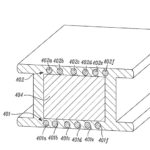
Tesla’s designs for its structural cable design as outlined in the newly-published patent. [Source: Patentscope]
Tesla intends to work around these compromises by using a rigid structural cable, which could be easily picked up and installed automatically by a robotic arm. By using such components, Tesla would be able to optimize the level of automation in its facilities even further.
“An advantage of this flat cable configuration with known geometries and wires/conductors spaced at known dimensions (and preferably collinear) is that the process of connecting the flat wires/conductors to connectors may be automated through, for example crimping, traditional soldering, or laser soldering. In a specific implementation, encased wires are held on a flat conveyer or with a robotic arm, and the wires are stripped using a stripping attachment so as to preserve the wire spacing. The robotic arm (or another robotic arm) may then pick up a connector and crimp the connector to the wires by pressing down (or utilizing an appropriate tool).”
It should be noted that while Elon Musk’s Alien Dreadnought factory is delayed, the company’s production lines are already heavily automated. Back in the Q1 2018 earnings call, for one, Elon Musk noted that Tesla was able to reduce the time it takes to produce Model 3 battery packs by 94%, from seven hours per unit to under 17 minutes per pack. Tesla has since improved its production lines in the Fremont factory and Gigafactory 1, and this Q4 2018, the company intends to optimize its operations even further. Gigafactory 1, for example, is expected to receive new battery cell assembly lines from Panasonic this quarter. New Grohmann machines, which are expected to improve production, are also expected to go online in the Nevada facility this Q4 as well.
The full text of Tesla’s patent for its structural cables could be accessed here.


Elon Musk
Tesla eyes supply partners for Optimus mass production
Tesla certified three Chinese suppliers for Optimus mass production, signaling its robot timeline is accelerating.

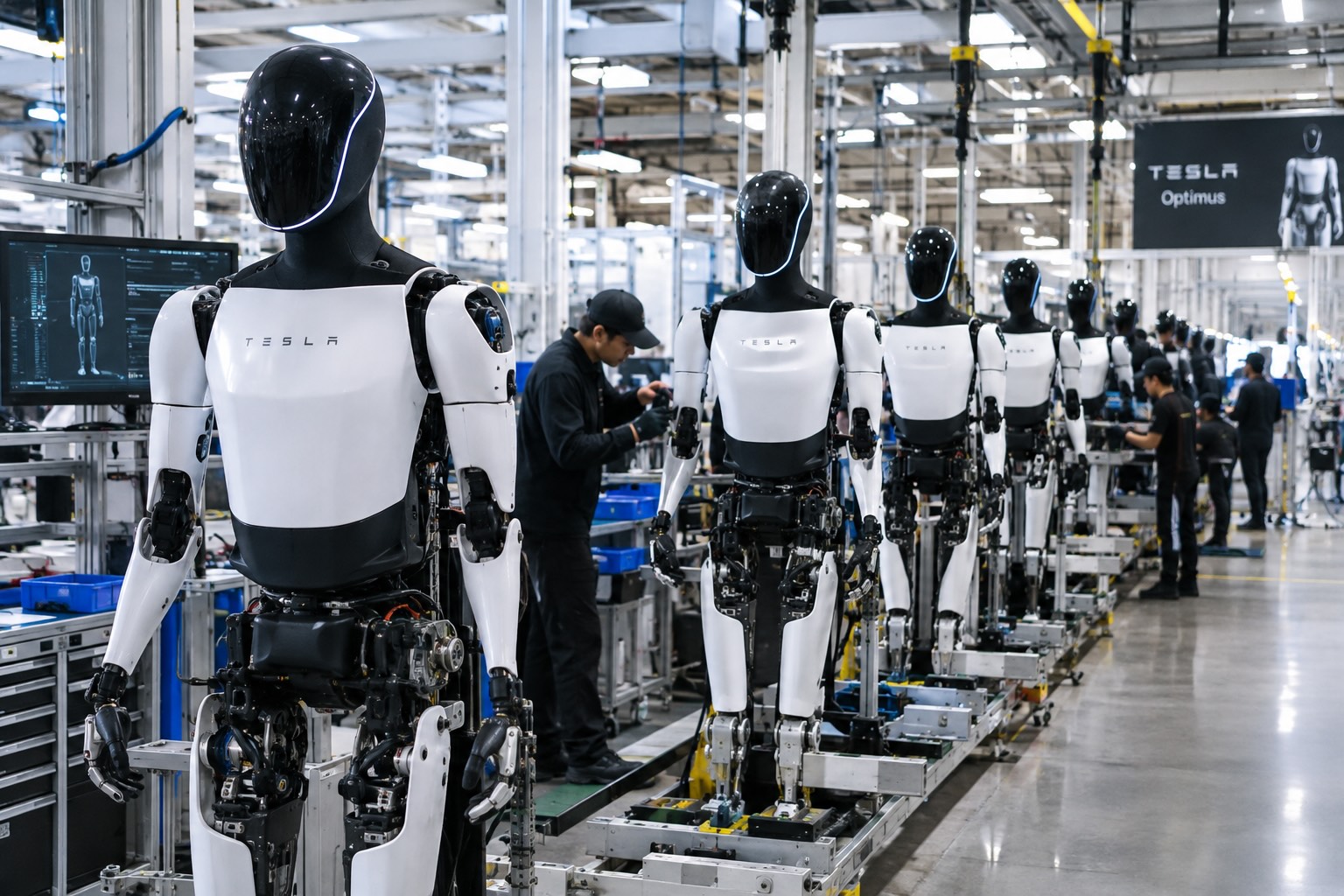
Tesla’s robotics team traveled to Ningbo, in China’s Zhejiang province, on September 16 and spent the following day auditing component suppliers for Optimus, according to a Bloomberg report cited by RobotAIGeek. The visit moved three manufacturers from provisional status to certified mass production partners: Tuopu Group, which handles actuators and chassis components, Ningbo Joyson Electronic, a sensor supplier, and Zhejiang Sanhua Intelligent Controls, which builds thermal management systems. All three already supply parts to Tesla’s electric vehicles, and the audit reportedly came with fresh orders that supply chain reports put at an initial batch of roughly 5,000 units.
Tuopu, Joyson, and Sanhua built their manufacturing base serving the automotive industry, where tolerances and volume requirements are already close to what a mass produced humanoid robot demands. Sanhua in particular has history here. Teslarati reported last October that the company had received a roughly $685 million order for linear actuators tied to Optimus, a volume industry watchers estimated could cover around 180,000 robots once production ramped.
Supply chain reports tied to this week’s audit put Tesla’s near term production goal at about 1,000 Optimus units a week by late September, rising to 2,000 to 2,500 units a week by the end of the year. That pace would put real weight behind the timeline Tesla has been building toward since May, when it wound down Model S and Model X production at Fremont to convert that floor space into a dedicated Optimus line targeting one million units annually. JPMorgan analysts who toured the factory in August confirmed the conversion took roughly four months, a pace Musk has called unprecedented for a facility that size.
New drone video shows Tesla’s Optimus Factory reaching a turning point
Fremont is only the first phase. A second, larger Optimus plant is rising at Gigafactory Texas, where drone footage shared by Joe Tegtmeyer last week showed the structural steel nearing completion on the north end of the building. Tesla has said that facility is meant to eventually support production of up to 10 million units a year, though volume output there is not expected before 2027.
Commercial sales of Optimus are still targeted for the second half of 2027, but production is expected to start well before then. JPMorgan analyst Rajat Gupta has said Tesla’s “Optimus Academy” program, which uses early units to collect real world training data inside Tesla’s own facilities, is expected to be running later this year. Bloomberg Intelligence analyst Ian Ma described the Ningbo audits as “a positive commercialization signal for China’s humanoid supply chain,” noting that sentiment could improve further if the visit leads to confirmed supplier nominations and larger orders. The Solactive China Humanoid Robotics Index rose about 1.4% on the news, though it remains down roughly 30% for the year.
Investor's Corner
New drone video shows Tesla’s Optimus Factory reaching a turning point
New drone footage shows Tesla’s dedicated Optimus factory steel frame nearing completion at Giga Texas.
Tesla’s dedicated Optimus factory at Gigafactory Texas is closing in on a finished steel frame, according to drone footage posted Thursday afternoon by longtime site observer Joe Tegtmeyer. In the video, Tegtmeyer said structural steel assembly is now about five column grids away from reaching the building’s north perimeter beam, putting the primary skeleton in its final stretch roughly six months after Tesla broke ground on the North Campus site in late March.
The Giga Texas Optimus Factory latest update … construction keeps moving fast!
Steel assembly is now only about 5 column grids from the north perimeter beam. Concrete is going in on the three upper floors, rebar is still being laid for more pours, and footing / grade-beam work… pic.twitter.com/qvFPvwnYzW
— Joe Tegtmeyer 🚀 🤠🛸😎 (@JoeTegtmeyer) September 17, 2026
Tegtmeyer’s footage shows concrete already going in on three upper floors while crews continue laying rebar and pouring grade beam footings at ground level. That kind of parallel work, steel rising at one end of the site while concrete sets at the other, is a scheduling approach Tesla used at the original Giga Texas building and appears to be repeating here to save time before the plant’s targeted 2027 production start.
Teslarati has tracked the building’s progress since Tesla confirmed construction was officially underway in May, when the first steel structure went up on what was then bare, reclaimed land. The facility is part of a more than 5.2 million square foot expansion of Giga Texas’s North Campus that Tesla has said will eventually run nearly the length of the existing vehicle factory, over 4,000 feet, while sitting somewhat narrower. Musk has pegged the long term output target at 10 million Optimus units a year once the line is running at full capacity, a volume that would dwarf the one million unit pilot line Tesla is standing up separately at its Fremont, California factory.
Tesla Giga Texas to feature massive Optimus V4 production line
The Texas facility sits alongside another major buildout on the same campus. Terafab, the joint Tesla and SpaceX chip fabrication plant that will eventually supply the silicon running Optimus units in the field. Housing robot assembly and chip production on the same grounds is a deliberate supply chain decision, cutting down on the shipping and lead time that would otherwise sit between the two.
Tesla has not given an updated timeline beyond its previously stated goal of bringing high volume Optimus production online at the site in the summer of 2027. Fremont’s smaller pilot line began mass producing the current Gen 3 robot in January, with that plant expected to build tens of thousands of units this year primarily to generate the real world data Tesla needs to refine the robot’s software before Giga Texas ramps up. Six months of visible construction progress, tracked almost entirely through Tegtmeyer’s recurring drone flights, gives the clearest outside look yet at how seriously Tesla is treating that 2027 deadline.
Investor's Corner
Tesla and SpaceX take “Terafab” Trademark fight to Federal Court
Tesla and SpaceX sue a small Illinois firm after cease and desist letters over Terafab.

Tesla and SpaceX are asking a federal judge to rule that their planned Terafab chip factory does not infringe a small Illinois company’s trademark, a request that arrives only after months of quiet negotiation broke down this summer.
The dispute traces to May 18, when Tesla filed three U.S. trademark applications for “Terafab” and “Tesla Terafab,” covering semiconductor chips and related chip making services. TERA-print LLC, a nanotechnology company that has held a federal trademark for “Tera-Fab” since 2021, responded five days later with a cease and desist letter. According to the lawsuit, first reported by Reuters, TERA-print argued that Tesla and SpaceX’s use of “Terafab” would confuse consumers familiar with its own trademark, which covers a desktop photolithography printer sold to researchers for sensor and bioengineering work.
What stands out in the filing is the timing of TERA-print’s own paperwork. One day before sending that cease and desist letter, on May 22, TERA-print applied to expand its existing registration to cover semiconductor materials, silicon chips, nanoelectronic devices and AI design services, categories it had not previously claimed. Tesla and SpaceX call that filing opportunistic in their complaint, noting it arrived two months after Tesla’s public Terafab announcement and just days after Tesla’s own trademark applications went in.
Elon Musk launches TERAFAB: The $25B Tesla-SpaceXAI chip factory that will rewire the AI industry
By June 10, TERA-print was threatening to sue for federal trademark infringement, false designation of origin and unfair competition, the complaint states. Rather than wait to be sued, Tesla, SpaceX and SpaceXAI met with TERA-print six separate times between June and August trying to resolve the dispute directly. Those talks collapsed, and the companies filed for declaratory judgment this week in the U.S. District Court for the Western District of Texas, asking a judge to find that “Terafab” does not infringe TERA-print’s mark before TERA-print can file a claim of its own.
TERA-print isn’t backing down. The company told PCMag it discussed a settlement with Tesla as recently as September 2 and feels misled by what it called Tesla’s professed interest in settling. Its CTO, Andrey Ivankin, said TERA-print holds a Defense Department contract to fabricate semiconductors and partially owns Mattiq Inc., an AI company built on TERA-print’s products, and that the company will vigorously defend its rights.
Tesla and SpaceX argue the overlap is superficial. Terafab is planned as a $16.8 billion complex spanning roughly 100 million square feet at the Grimes County site SpaceX confirmed last month, built to produce chips for Optimus robots, Tesla’s AI computing needs and SpaceX’s orbital data center ambitions, a scale and purpose the companies say no reasonable consumer would confuse with a tabletop lab printer. TERA-print’s product line has stayed focused on lithography tools for biological and sensor research since it registered its mark in 2021.
The trademark fight is the second legal dispute tied to the Terafab project in the past week, following a separate SpaceX suit aimed at keeping company records about the facility out of public view, as KBTX reported. Whether construction proceeds under the Terafab name now depends on a federal judge in Austin.

Tesla Roadster is available for order once again following brief hold

Tesla Full Self-Driving expands to another European country


