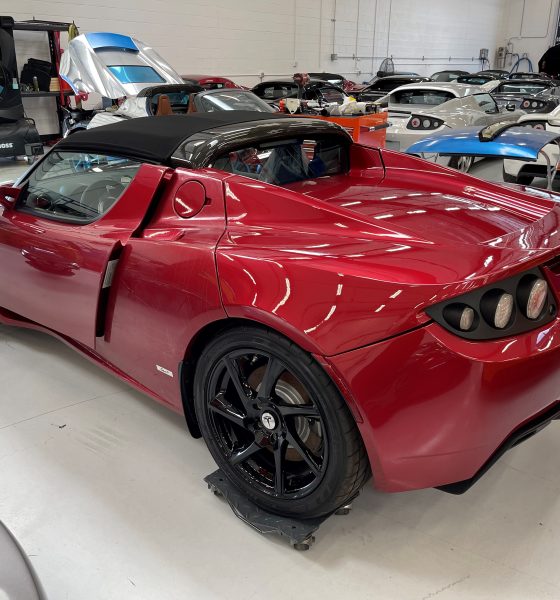

The abandoned Tesla Roadsters that were found in shipping containers in China have finally arrived in the United States, months after being discovered.
We’ve been covering the tale of the abandoned Tesla Roadsters for months, and after delays from weather, customs agencies, and other bottlenecks, they are finally here in the U.S. and in the hands of Gruber Motor Company, who handled the bidding war for the three original Roadster units.
Tesla Roadster trio found in shipping containers accumulates massive bids
According to Pete Gruber, CEO of Gruber Motor Company, these units arrived in the United States earlier this week and are already being examined by him and his team of engineers. He said on the company’s website:
“THEY ARE HERE, unloaded 3 sea containers from China with a 45-ton crane. Next week, the Roadsters will be carefully removed, connected to laptops, diagnostics run, odometer readings recorded, and analyzed for main battery condition after 13 years of slumber. Stay tuned!”
The Roadsters are in impeccable condition, as they have been sitting inside shipping crates in China for the last 13 years.
Credit: Pete Gruber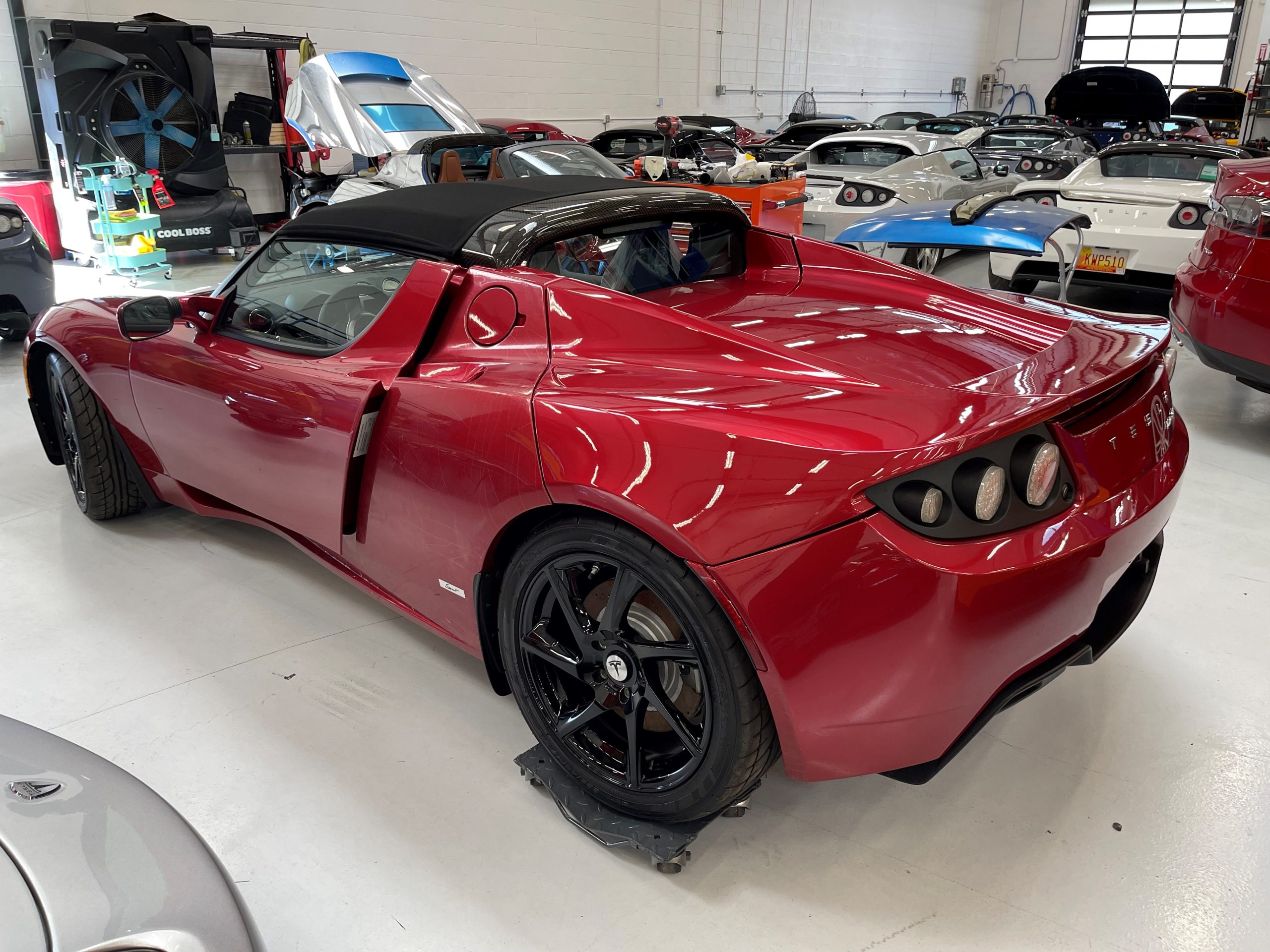
Gruber explains the condition of the vehicles currently, including this one, which is VIN 1107:
“Despite some PPF hiccups, it seems like the clear coat is still good! Tires from 2010, squeaky clean trunk latches, and a glimpse of aging PPF above the letters.”
There is some evidence of rodent mischief, as Gruber calls it, as some electrical wiring is slightly damaged due to being chewed up by mice and rats that made their way into the shipping containers during the 13 years these units sat.
Credit: Pete Gruber | Facebook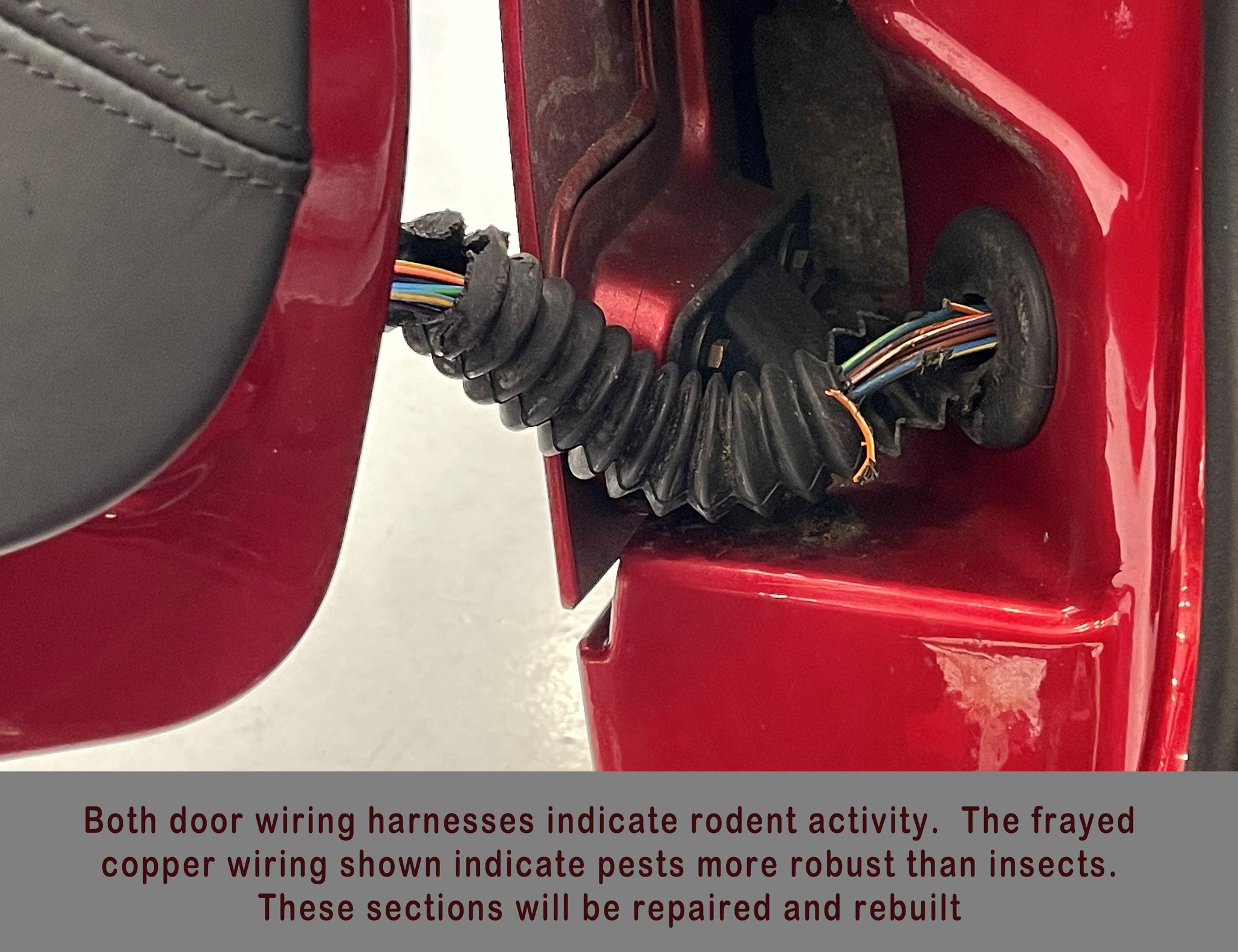
The Roadsters were put into an auction that Gruber Motor Company was in control of, and currently, the top bid is still $2 million for the three units. However, that bidder was not able to find insurance coverage on the three vehicles, and he told Teslarati last month that there were some issues with finding coverage for the cars as parts were not available, and the owner planned to lease the units.
Although he didn’t agree with the idea, he said that he believes the auction for the three cars will reignite in the coming months as they are going to attract more lucrative buyers. Now that they’re in the U.S. and people can come to see them, there may be plenty of bids well north of $2 million.
I’d love to hear from you! If you have any comments, concerns, or questions, please email me at joey@teslarati.com. You can also reach me on Twitter @KlenderJoey, or if you have news tips, you can email us at tips@teslarati.com.


 BLACK FRIDAY DEALS
BLACK FRIDAY IS HERE.
YOUR TESLA DESERVES AN UPGRADE.
Now is the time to upgrade your drive. Discover exceptional deals on premium Tesla accessories, interior protection, storage, styling and everyday essentials.
Tesla removed the most annoying part of Full Self-Driving with its latest v15 release. The suite, which aims to reduce critical interventions by 25-times, is no longer looking for input on why you took over.
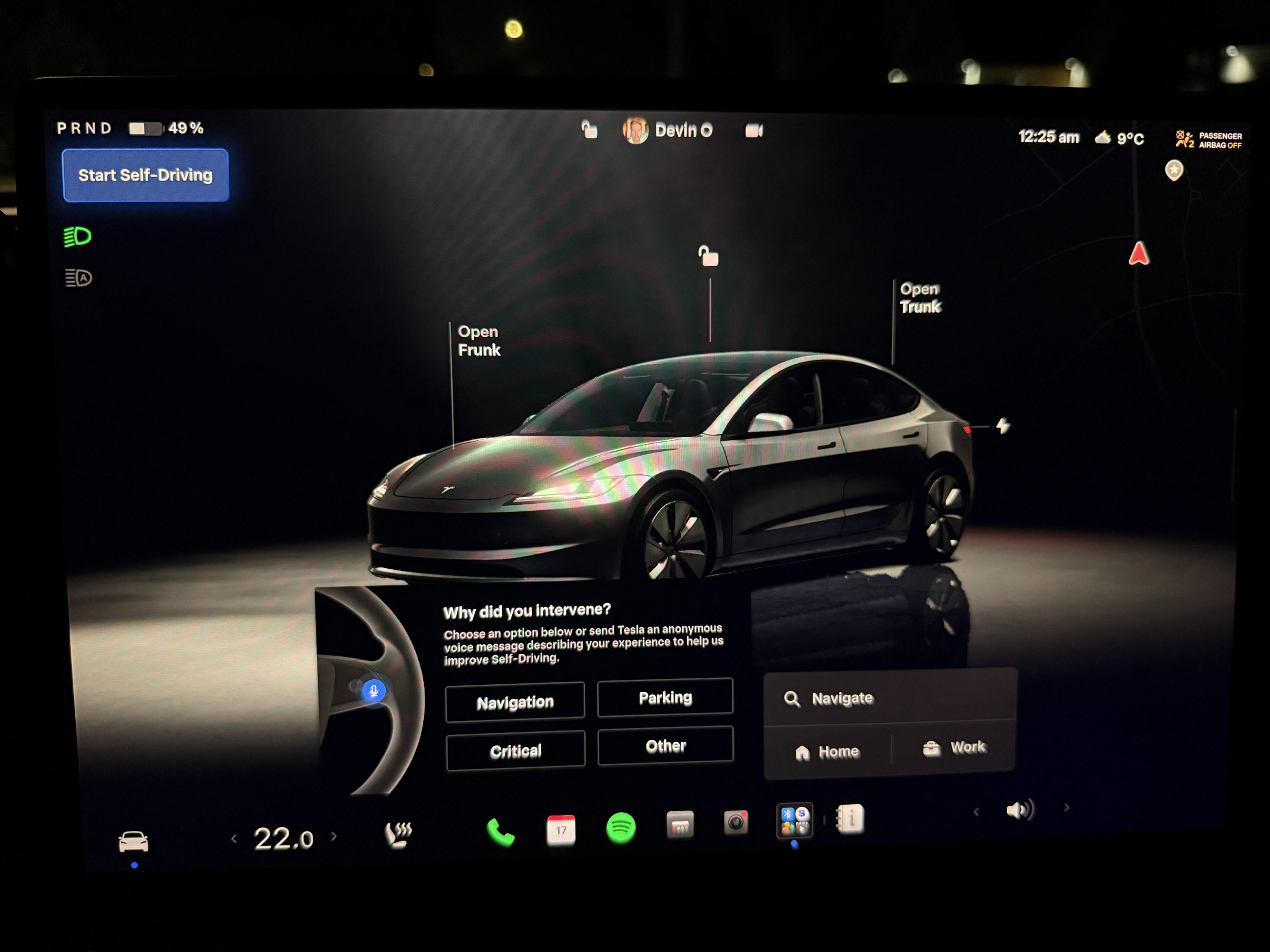
As FSD v15 rolled out last weekend, perhaps one of the first things I noticed as an Early Access Program (EAP) member is that Tesla had finally removed the Interventions Menu:
🚨 Tesla has removed the Interventions Menu when you take over FSD: https://t.co/H3YGhnAy1c
— TESLARATI (@Teslarati) November 22, 2026
With the Full Self-Driving v14 update, Tesla implemented an Interventions Menu, a short list of four options; Parking, Navigation, Critical, and Other. These were the options given to drivers to give immediate feedback directly to Tesla as to why their FSD suite was interrupted from operation.
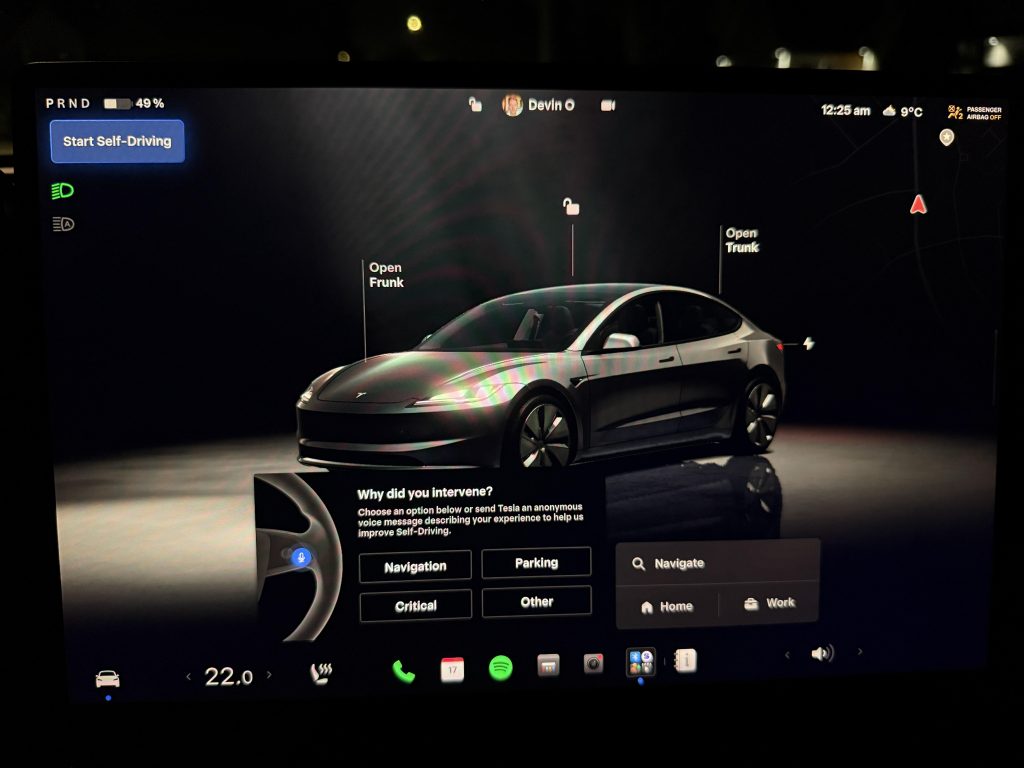
Credit: Devin Olsen
The issue with the menu was it did not go away without an input. The only way to truly avoid it was to be on a phone call when taking over, as it would not appear. However, many owners indicated they were so annoyed with the menu, they would simply input each reason as “Critical,” which is usually reserved for major instances.
It is unclear whether Tesla removed the Intervention Menu because of the complaints owners gave about its required nature, differing from past input methods that were totally optional, or if the company is simply taking it away because it feels it does not need it.
The FSD v15 suite is already incredibly robust in terms of performance, as it comes with a variety of new features including pothole and debris avoidance, Navigation fixes, and the new Reality View function that has truly stolen the show.
Overall, the removal of the Interventions Menu is a welcome change and I believe many owners will also find that FSD is simply more pleasant to use when you do not have to justify why you took over. It seems to me that Tesla will be able to utilize its SI to determine the cause of the intervention, instead of having owners, in a fit of annoyance, simply press whichever option their finger happens to land on first.
Elon Musk
SpaceX rejects $738M fed subsidy, betting on Starlink alone
SpaceX gave up hundreds of millions in broadband grants, yet Starlink is still showing up.

SpaceX is walking away from roughly $738 million in federal broadband subsidies while still committing to connect the rural homes and businesses Starlink won under the program.
The National Telecommunications and Information Administration (NTIA) said SpaceX will serve every location awarded to it under the Broadband Equity, Access, and Deployment (BEAD) program at no cost to the program. A senior NTIA official told Broadband Breakfast that SpaceX approached the agency with the idea after struggling with differing contract terms across all 50 states, including state demands for financial reporting and penalties for defaulting.
“I am pleased this new agreement has the potential to save taxpayers hundreds of millions of dollars while getting more Americans connected faster,” NTIA Administrator Arielle Roth said. Telecompetitor, citing administration officials, put the forgone amount lower, at about $636 million.
Under NTIA’s new model agreement, SpaceX must still meet BEAD’s minimum speeds of 100 Mbps down and 20 Mbps up, pass the program’s performance testing, and file a report every six months. New subscribers at covered locations will receive the Starlink dish and router at no cost, and SpaceX must offer a low cost service plan. The monthly subscription itself is not waived.
The deal drops BEAD’s financial audit, procurement, and reporting provisions. States also cannot levy penalties if SpaceX falls short, and their only remedy is to return those locations to the program for a new award.
State broadband offices now have two options: sign the model agreement or rebid the SpaceX locations at a cost in line with their already approved plans. Some states had already signed contracts with SpaceX, but the NTIA official said those agreements are no longer on the table. Two state officials told Broadband Breakfast the directive caught states by surprise.
SpaceX still gains something by staying in. Holding its BEAD locations with a $0 award keeps other federal broadband money from flowing to competitors in those rural areas, according to the NTIA official.
Starlink’s role in BEAD expanded after NTIA’s 2025 “Benefit of the Bargain” overhaul dropped the program’s preference for fiber and opened awards to low Earth orbit satellite providers. Arizona, for example, awarded SpaceX $17.1 million to cover 10,749 locations, while Virginia awarded $3.3 million for 5,579.
Elon Musk reshared Sawyer Merritt’s summary of the NTIA terms on X, adding a single word: “Starlink.” The move comes a week after Musk said the FAA turned down a free Starlink offer before a nationwide ground stop, a claim that drew a public rebuttal from Transportation Secretary Sean Duffy. Musk has also hinted that Starlink could come to every Tesla as the company pursues Unsupervised FSD.
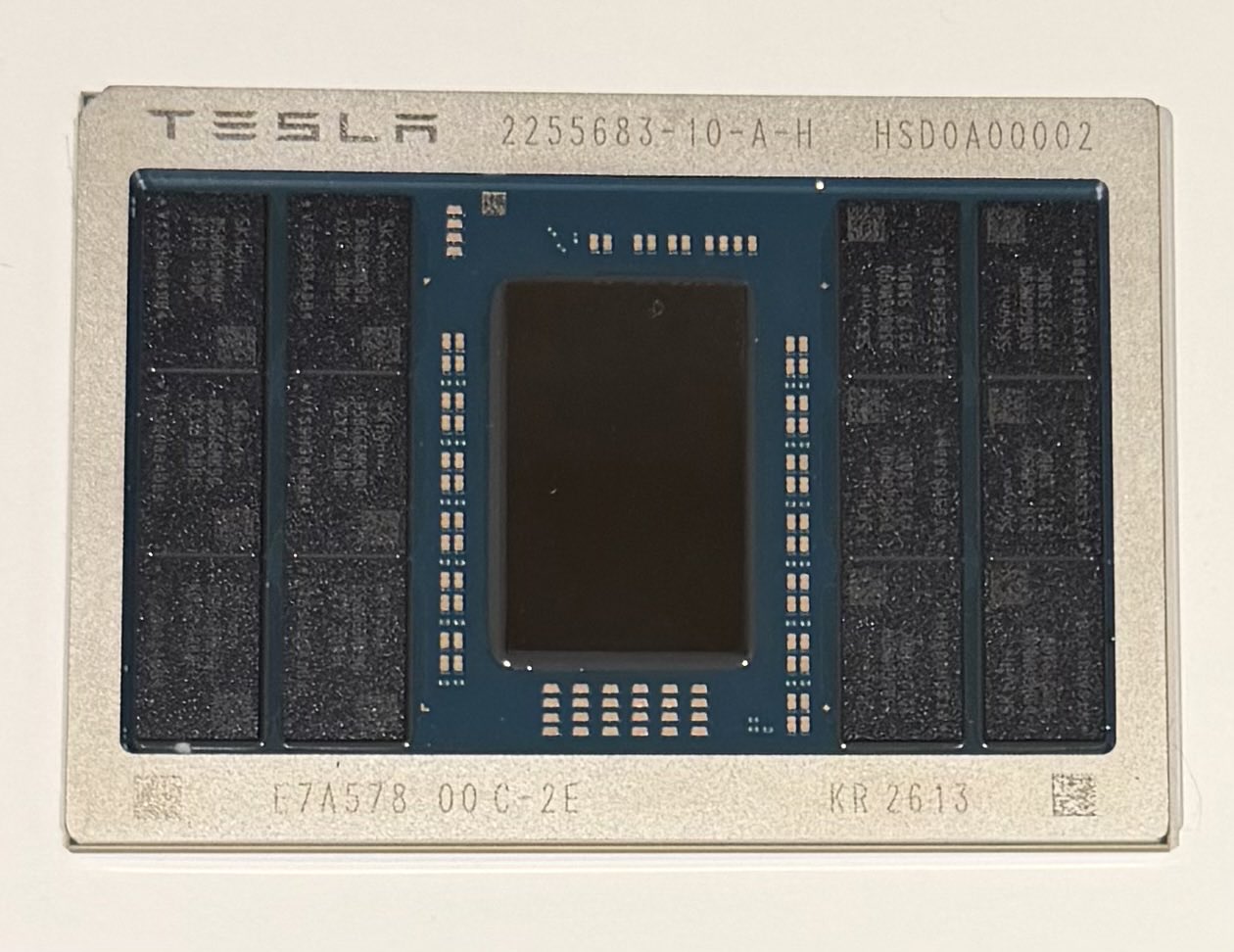
Tesla will set aside its AI5 chip exclusively for the Optimus robot, a product that CEO Elon Musk said he believes will one day be the biggest in the world. The decision sparked conversation regarding AI4’s prowess and capability as a self-driving chip, and less-than-fond memories of the Hardware 3 conundrum that many owners find themselves in to this day.
Musk stated on November 22 that Tesla vehicles will remain on the AI4 computer, which he said it sufficient to achieve “superhuman driving,” while the next generation AI5 chip will be set aside for Optimus. Musk was initially asked by a Hardware 3 Model Y owner when AI5 would appear in new cars.
@JBrunner8484 @BLKMDL3 @wholemars It’s going to Optimus. Cars will remain at AI4. That’s enough to solve superhuman driving.
— Elon Musk (@elonmusk) November 22, 2026
“It’s going to Optimus. Cars will remain at AI4. That’s enough to solve superhuman driving,” Musk wrote. The exchange quickly drew high engagement and follow-up questions from owners about potential retrofits for AI3 vehicles and the status of FSD.
The statement is consistent with some comments Musk made in the first quarter earnings call. In April, he said that AI5 would be prioritized for Optimus and the company’s AI training clusters rather than vehicles, because AI4 had already proven to offer enough computing capability for unsupervised self-driving at safety levels well above that of humans.
Musk also said on that call that Hardware 3 vehicles would lack the capacity for unsupervised self-driving, and that Tesla would be working on an upgrade plan for those owners if they wanted to bolster their cars with new cameras and a computer.
At one time, HW3 owners were led to believe fully unsupervised FSD would be capable with their vehicles. That revelation was dismissed and earlier this year, they were given clarity.
AI4, also known as HW4, is the computer currently installed in new Tesla vehicles. It powers recent FSD software, including the v15 series that introduced the “Reality View” overhead visualization generated in real time on the car’s AI accelerators. Tesla has also discussed an intermediate AI4+ or AI4.5 variant focused mainly on increased memory and modest performance gains, driven in part by rising memory and storage costs.
Tesla Full Self-Driving v15: Reality View review, new features explained
Musk noted around the same time that the AI4 computer itself had roughly doubled in cost due to those component price increases.
By directing AI5 toward Optimus, Tesla is allocating its highest-performance silicon to the humanoid robot and training infrastructure. AI5 has reached tape-out and entered pilot production, with broader volume manufacturing targeted for 2027.
The decision underscores Tesla’s view that vehicle autonomy can be solved on existing AI4 hardware while the more complex perception, planning, and motor-control demands of a general-purpose humanoid robot benefit from the next chip generation.
For current and prospective Tesla owners, Musk’s message is that AI4 cars already have the hardware headroom necessary for fully autonomous travel. Customers should see if as welcome clarification that could influence purchasing decisions for them moving forward.

Tesla removed the most annoying part of Full Self-Driving

SpaceX rejects $738M fed subsidy, betting on Starlink alone


