Lifestyle
What it was like inside the Model 3 unveiling event

 It’s not very often that I am rendered speechless. Yet here I am, nearly a week since attending Tesla’s Model 3 unveiling event, without yet having put a single word down on paper about how it felt to be there. The only word that comes to mind when I’ve tried is ‘magic,’ so I’ll go with that.
The atmosphere was felt long before I walked onto the grounds. In fact, it was turning into the parking structure that I saw my very first Model X in real life. That sight was plenty to shake off the cobwebs of a long day of traveling; as was being invited to step into a shuttle bus to be driven the very short distance to the event’s entrance. The few other soon-to-be revelers on the shuttle had the same grin on their faces that I did. Perhaps it was just me, but I felt the shuttle bus driver was also in a good mood.
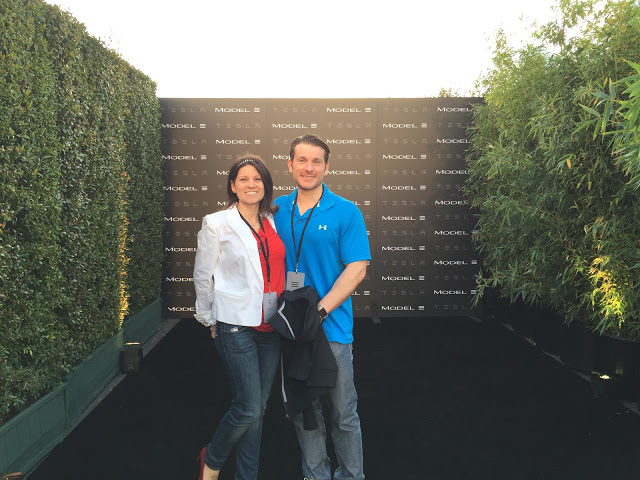
Once dropped off, we lined up to be checked in. Eager to share in the excitement with others, I promptly struck up a conversation with the two gentlemen waiting in line just ahead of us. As it turned out, they were none other than Roger and Matt Pressman of Evannex! Having reviewed the book Owning Model S, they were familiar with me and my contributions here, so chatting came easy. As promised, IDs were checked. We were handed badges and asked to wear them around our necks as we were ushered in through a beautiful green space with a Model 3 backdrop, perfect for pictures.
Immediately, we were greeted by yet another smiling face. A pleasant young woman dressed in black offered to take our picture in front of the backdrop. I was glad for the offer, since I knew once the event got started there may not be time for pictures.
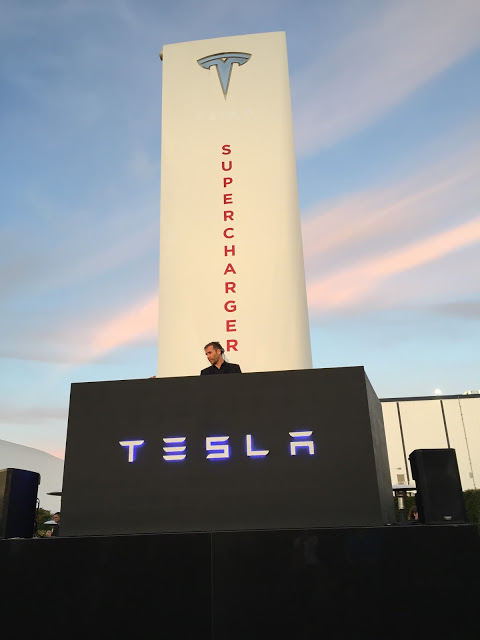
Looking around beyond the nicely decorated bars I noticed Superchargers. We were in a parking lot. Only, it a was carpeted parking lot. Nicely carpeted in fact and Superchargers oddly made beautiful display pieces. The whole place looked gorgeous and the sky that time of the day complimented it all so well.
Looking around at the many happy faces, my excitement grew for the familiar ones from the internet I hoped to catch a glimpse of in person. In fact, I was also waiting on those whose faces I had not before seen including two fellow Pennsylvanians who also hit the ticket lottery and made the trip out West and Teslarati’s very own, Gene. Very shortly after arriving, those two fine Pennsylvanians, Chris and Dave, and their guests (one spouse and one very lucky young man) found me. Everyone wore the very same look of awe on their faces as I was. We were all so thrilled just to be standing where we were at that moment.
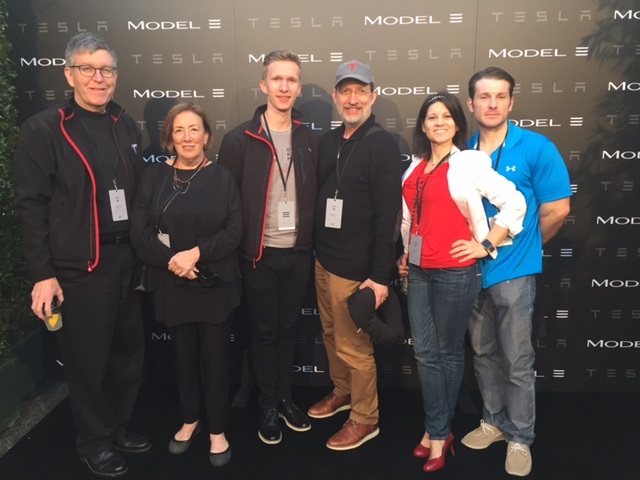
It’s mathematically impossible for all 6 people in a picture to smile at the same time
The bars were nicely stocked and the folks serving were a joy, so I grabbed something and stood with a fantastic view of a gorgeous blue Model X, while chatting. After a few minutes, I was too excited to stand still and decided to do a few laps around the event. I caught glimpses of writers such as Motley Fool’s Daniel Sparks and Bloomberg’s Dana Hull, both of whom I later had the pleasure of chatting with. I felt humbled as I walked by Tesla royalty Bonnie and Bjørn, and did a double take after passing that girl from that show I used to love. Having never attended a party like this, the whole feeling was a bit surreal. As I said earlier, magic.
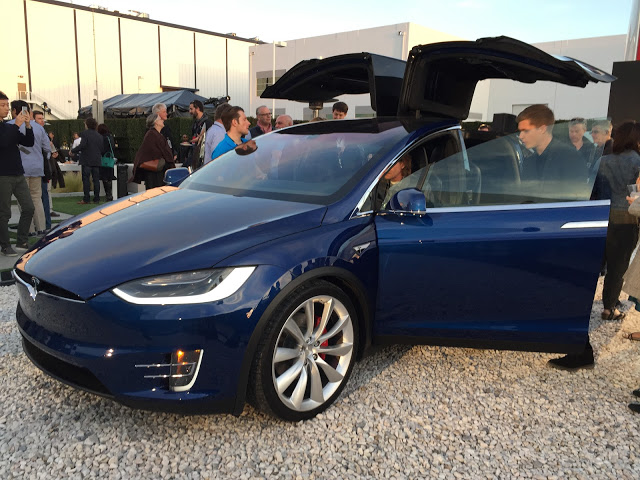
A crowd started gathering near the entry doors to the inside portion of the event, where the big show was set to occur shortly. Being all too honored just to be in attendance, I didn’t worry about getting in quickly and taking a place near the stage. It was a small, intimate event as promised, and there was plenty of room for all. The sun was just about gone at this point and the feel of a party was obvious. Everyone was anxiously awaiting the big reveal.
A Model S and Model X were prominently displayed to one side, and both were gorgeous. The stage was modern and guests were staring intently or holding up phones waiting for the big moment. Then it happened. After a long day of traveling and one heck of a scare from an erroneous flight cancellation notice (which, by the way, almost caused us to miss the flight that was not at all cancelled), Franz von Holzhausen took the stage. He was wearing a well-fitting blazer, no tie and just the right amount of facial scruff as if to say “This is the big moment and I’m fully confidant you’re going to love it!” In fact, he probably said something just like it in his short speech welcoming us and introducing Elon. I had hoped to hear a little more from him but can appreciate that since this was a live broadcast about the car, it was probably best kept prompt. (New life goal: meet this man for real!)
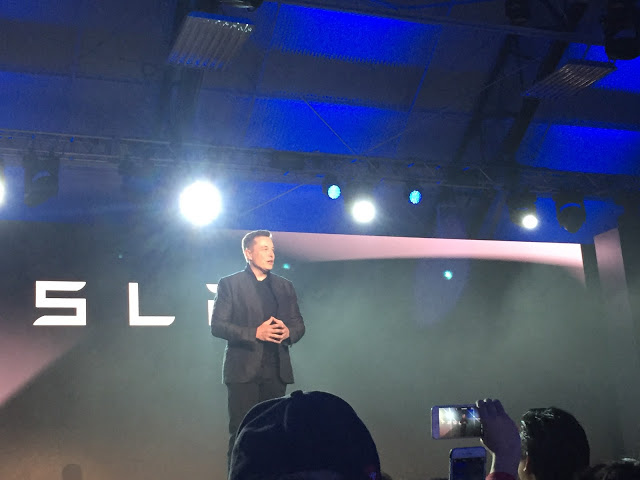
Next came Elon, right on cue. We are used to his speech patterns by now but I for one think he did an excellent job of being clear, focused and happy. He gave us just a few tidbits about the car, including 5-star safety ratings and the expected 215 miles on a charge. While neither were surprising, both drew massive cheers from the crowd. The most massive cheer, however, would come when the announcement was made that over 100,000 reservations had been made sight unseen. I projected that many within a day or so after the unveiling, but having that many before really blew me away. It also seemed to blow away everyone else in the crowd, especially the guy who yelled “You did it!” to Elon.

I’ll be the first to admit when I saw the car, I was taken aback by the front end. The rest of it was glorious but it took me spending the rest of the evening staring from all angles to appreciate that front. That instant hesitation however, was completely eclipsed by the reality of what was happening. A hundred thousand people willingly dropped a cool grand for a car they hadn’t yet seen, and won’t be in their hands for two years.
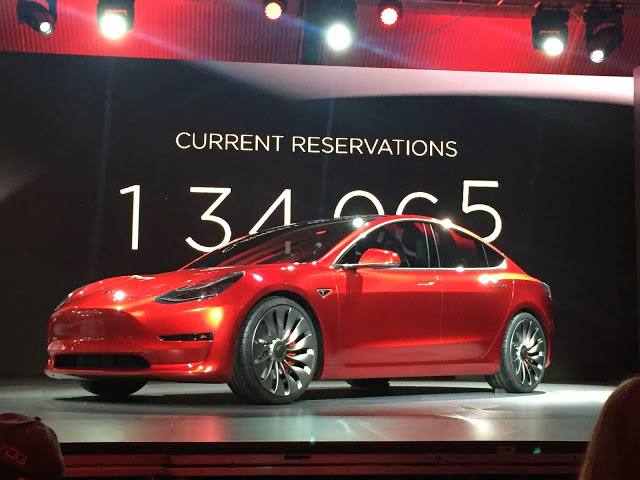
Now unveiled, online reservations started pouring in. There was a ticker on the screen behind the red Model 3 prototype, which had been left on stage. That number would double, as we now know, by the end of Saturday. Test rides were in high demand, and done numerically, so there was a large gap of time between the presentation ending and my pass #428 being called to ride. I took that time to mingle more, ride along for a Model X Ludicrous launch and congratulate as many Tesla employees as I could.
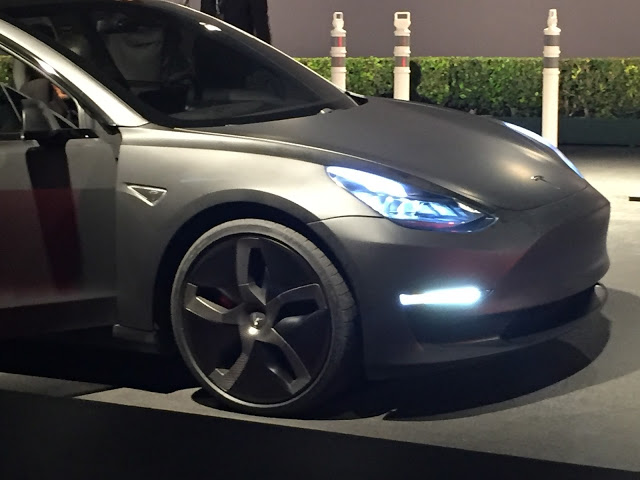
The Model 3 that was being used for test rides was a gorgeous matte silver with black rims and the same shaped door handles as the Model S. I got a nice close up while in line for the Model X test ride, which literally made my ears pop. You read and understand about the marvel that is the Model X and about how fast a ludicrous launch feels but you can’t fully fathom it until you experience it firsthand. It handled a slalom course like a race car and the handsome gentleman driving was kind in correcting my assumption that he was a professional driver for Tesla. (He was actually a high level person in product design.) In fact, he was as much a joy as the car and got a laugh out of my rolling down a window to wave at a camera. That was, after all, far better than the alternative worst case scenario he imagined, which was that I needed to roll down the window after such an intense acceleration.
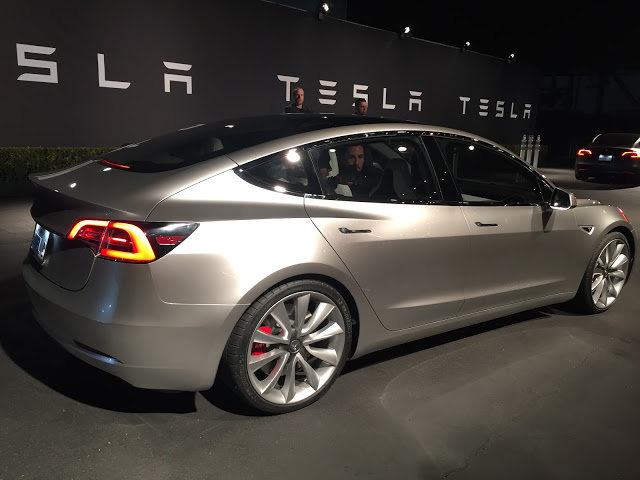
Once our batch of pass numbers was shown on the screen, it was time to line up for the Model 3 ride. I had the pleasure of standing behind and speaking with a fellow owner who once had an electric car that pre-dates the EV1. He was one of many interesting people I chatted with throughout the night, in what I can only assume was about the most friendly group of strangers ever to be at one party.
Once our turn came up, I quickly volunteered to sit in the middle of the back seat. My husband is not tall but broad shouldered and the other person in the rear with us was quite tall. While I wouldn’t want to be on a long ride with 2 other adults in the back seat in the Model 3 (or any other car!) it certainly did fit us all. It had head room for days, thanks to the glass roof and offset support. I did notice that the driver’s knees looked like they were unnaturally bent and assumed he was uncomfortable. I asked him whether he was tall or the car was small. He confirmed that he was 6’4” and had the seat up a lot further than usual to leave extra room in the rear. He also mentioned that the Model 3 is one of very few cars that he can drive without setting the driver’s seat all the way back.
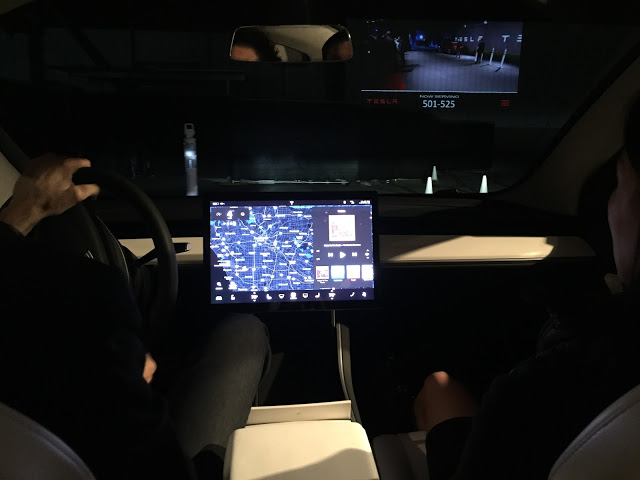
I noticed the horizontal screen, as did most others and will assume that it will be a little more integrated in its final format. Having it stick out to me seems far too risky for either theft or accidental damage. The Model S and X have their screens beautifully integrated so I have no worries about what the final product will be.
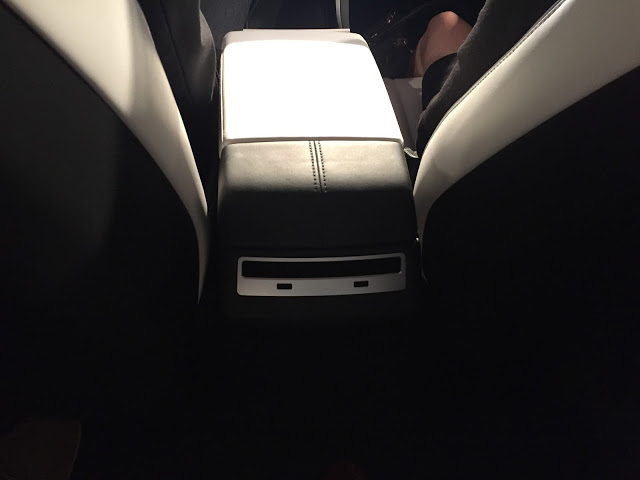
For some reason, I happened to notice two USB ports in the rear of the center console area, accessible to rear passengers. In today’s connected world, it’s pretty smart. You can power anything from a cell phone to those seat back mounted video screens by USB. What I also noticed was that the center console area extended toward the center screen and did not drop down to an empty floor like in pre-center console Model S cars. I sincerely hope for the open space to be an option on the 3, though having a mandatory center console is by no means a deal breaker. In fact, I can’t think of anything that would be a deal breaker with this car, short of it coming out looking like a Pontiac Aztech, which we knew it wouldn’t.
The test ride was short and sweet. Like the rest of the event, it left me wondering how the heck we are all going to survive waiting so long for this car to become a reality. Fortunately, Tesla has tossed us just enough scraps to keep us chomping at the bit. A little twitter Q&A provided more fuel over the weekend and an impending Part 2 reveal will leave us with plenty to speculate. Let the wait begin.


Elon Musk
Elon Musk drops a surprise update on Boring Company’s next big dig
Musk says Boring Company could shrink the Austin to San Antonio drive to just minutes.

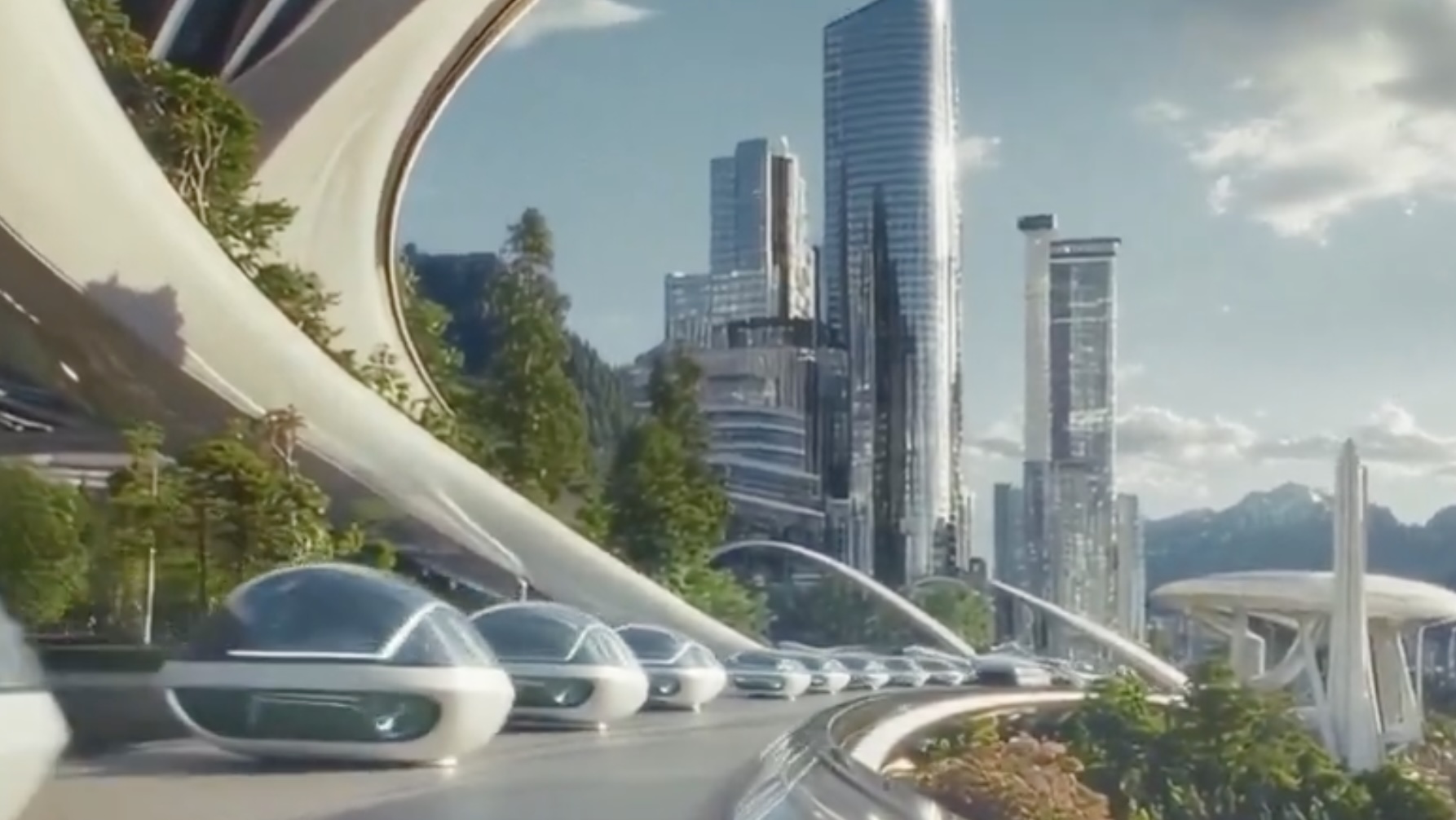
Elon Musk says The Boring Company is working on what he called “a simple, precursor Hyperloop” tunnel connecting Austin and San Antonio, targeting speeds above 200 mph and cutting a drive that can take up to two and a half hours down to a consistent under 30 minutes. Musk posted the idea on X Sunday, in a reply to a repost of an AI generated video imagining a science fiction future with human colonies on other worlds, which he shared with the line “This is the future we shall bring into being.”
This is the future we shall bring into being pic.twitter.com/8aD0w8MDVc
— Elon Musk (@elonmusk) September 20, 2026
The Boring Company’s own account picked up the idea in the same thread, adding a detail about how the trip would actually work: “Because Loop/Hyperloop is express (i.e. no intermediate stops), one could travel from an Austin parking lot to a favorite San Antonio restaurant in about 30 minutes. As long as they both have Loop stations.” That framing ties the proposed intercity link to the same station model the company already runs in Las Vegas, where riders enter the tunnel network through small, garage style stops rather than one central terminal.
This is not the company’s first run at the Austin to San Antonio corridor. Boring Company floated tunnels between the two cities as far back as 2021, and later competed for a separate San Antonio Loop project tied to the airport before that specific bid stalled. Pitches for tunnels in Chicago, Los Angeles, and a New York to Washington corridor have followed a similar pattern of big announcement without a shovel in the ground.
What is different this time is the balance sheet, especially since The Boring Company closed a 3 billion dollar funding round led by investors in the United Arab Emirates earlier this month at a valuation near 23 billion dollars, giving the tunneling company more capital to chase speculative projects than it had during its earlier Texas pitches. The company is also mid-build on two other intercity systems it has actually broken ground on, inc;luding a Nashville tunnel linking downtown to the airport, where a second boring machine finished commissioning in June, and its Las Vegas network, where the station count keeps climbing on paper faster than tunnels get dug.
That gap between announcement and execution is the reason to treat Sunday’s post as an opening bid rather than a project. A tunnel spanning roughly 80 miles between two metro areas, running at speeds Boring Company has not demonstrated over any real distance, would dwarf anything the company has built. For now, the Austin to San Antonio Hyperloop exists as a caption under an AI generated space video.
Elon Musk
Tesla eyes supply partners for Optimus mass production
Tesla certified three Chinese suppliers for Optimus mass production, signaling its robot timeline is accelerating.
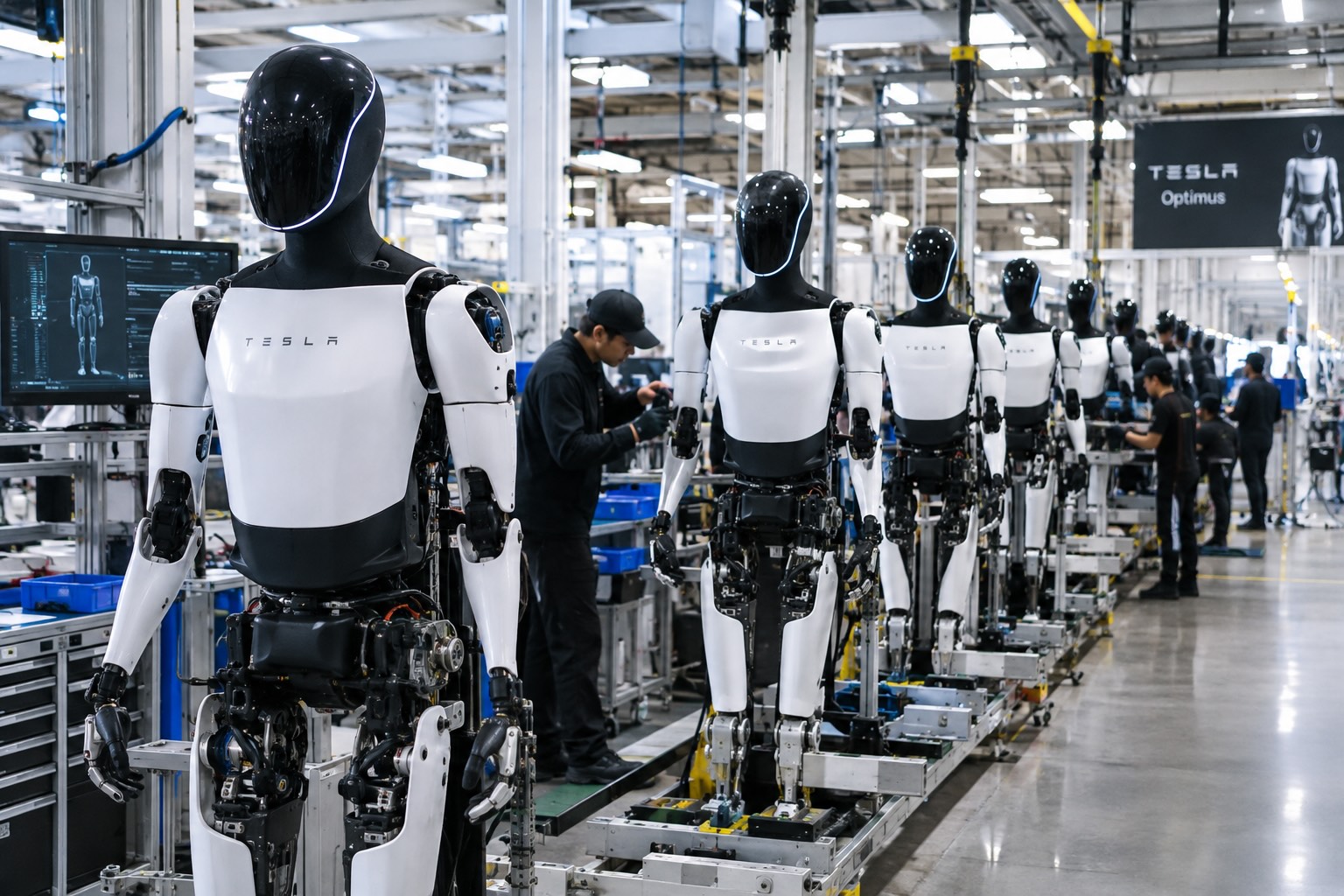
Tesla’s robotics team traveled to Ningbo, in China’s Zhejiang province, on September 16 and spent the following day auditing component suppliers for Optimus, according to a Bloomberg report cited by RobotAIGeek. The visit moved three manufacturers from provisional status to certified mass production partners: Tuopu Group, which handles actuators and chassis components, Ningbo Joyson Electronic, a sensor supplier, and Zhejiang Sanhua Intelligent Controls, which builds thermal management systems. All three already supply parts to Tesla’s electric vehicles, and the audit reportedly came with fresh orders that supply chain reports put at an initial batch of roughly 5,000 units.
Tuopu, Joyson, and Sanhua built their manufacturing base serving the automotive industry, where tolerances and volume requirements are already close to what a mass produced humanoid robot demands. Sanhua in particular has history here. Teslarati reported last October that the company had received a roughly $685 million order for linear actuators tied to Optimus, a volume industry watchers estimated could cover around 180,000 robots once production ramped.
Supply chain reports tied to this week’s audit put Tesla’s near term production goal at about 1,000 Optimus units a week by late September, rising to 2,000 to 2,500 units a week by the end of the year. That pace would put real weight behind the timeline Tesla has been building toward since May, when it wound down Model S and Model X production at Fremont to convert that floor space into a dedicated Optimus line targeting one million units annually. JPMorgan analysts who toured the factory in August confirmed the conversion took roughly four months, a pace Musk has called unprecedented for a facility that size.
New drone video shows Tesla’s Optimus Factory reaching a turning point
Fremont is only the first phase. A second, larger Optimus plant is rising at Gigafactory Texas, where drone footage shared by Joe Tegtmeyer last week showed the structural steel nearing completion on the north end of the building. Tesla has said that facility is meant to eventually support production of up to 10 million units a year, though volume output there is not expected before 2027.
Commercial sales of Optimus are still targeted for the second half of 2027, but production is expected to start well before then. JPMorgan analyst Rajat Gupta has said Tesla’s “Optimus Academy” program, which uses early units to collect real world training data inside Tesla’s own facilities, is expected to be running later this year. Bloomberg Intelligence analyst Ian Ma described the Ningbo audits as “a positive commercialization signal for China’s humanoid supply chain,” noting that sentiment could improve further if the visit leads to confirmed supplier nominations and larger orders. The Solactive China Humanoid Robotics Index rose about 1.4% on the news, though it remains down roughly 30% for the year.
Elon Musk
Tesla primes Cybercabs for 4K streaming and high bandwidth gaming with Starlink integration
Tesla is now shipping Cybercabs from Giga Texas with Starlink hardware built in as standard.
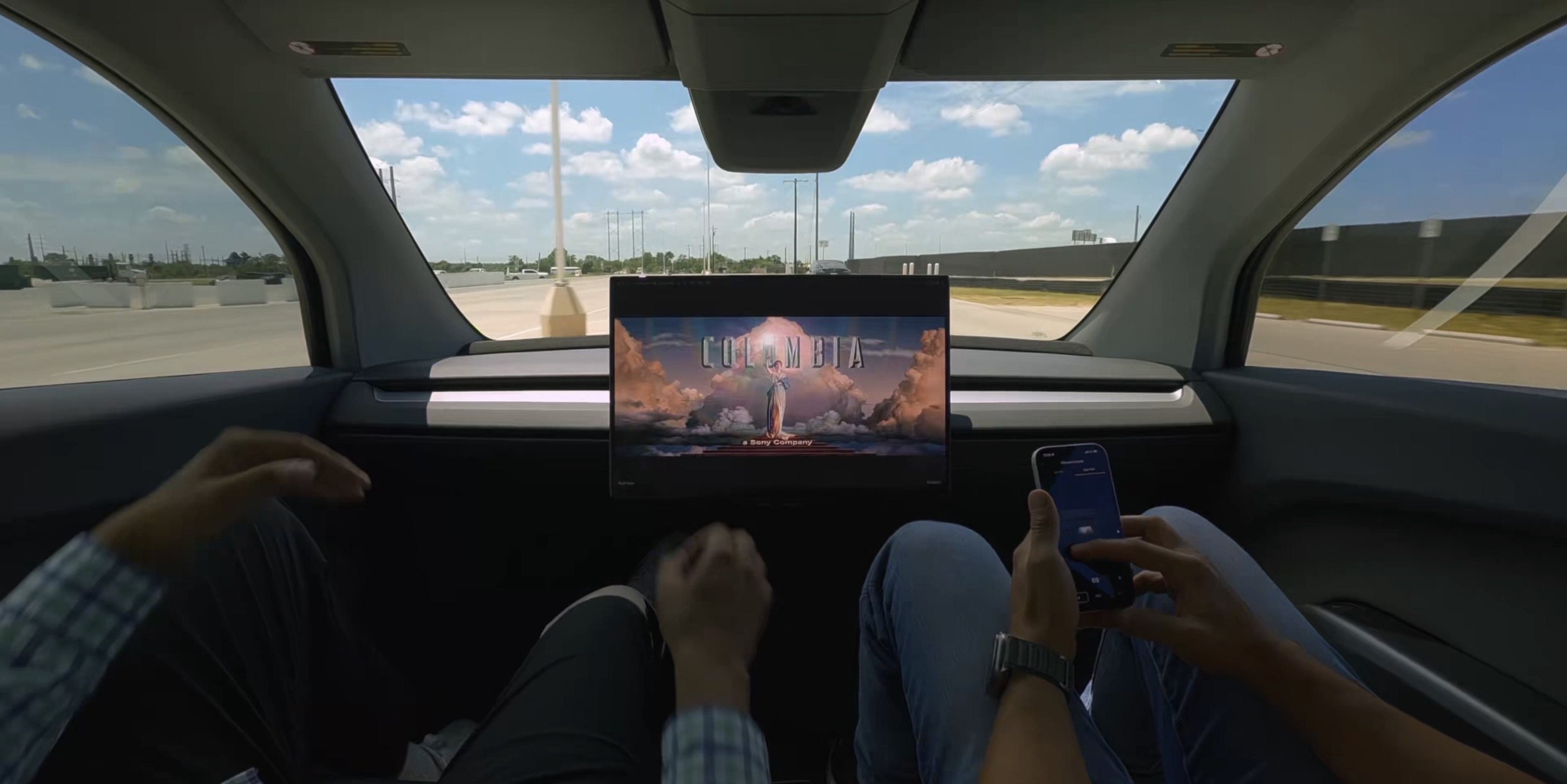
Tesla’s Cybercabs are now leaving Gigafactory Texas with Starlink hardware on the rear hatch in significant numbers, according to drone footage captured Tuesday by longtime Austin drone observer Joe Tegtmeyer. Production at the factory ramped back up after the Labor Day weekend, and his flyover of the outbound lot showed rows of gold Cybercabs alongside Model Y Long Wheelbase units, many carrying the satellite module for the first time as standard equipment rather than a one off retrofit.
Giga Texas today is busy with production coming back up following the long weekend. Of interest today in the outbound lot is the appearance of hundreds of Mode; YL’s and many more Cybercabs and for the 1st time equipped with the Starlink module one the hatch in big numbers.
At… pic.twitter.com/G9yl6s51m4
— Joe Tegtmeyer 🚀 🤠🛸😎 (@JoeTegtmeyer) September 8, 2026
Tesla first showed Starlink built into an actual Cybercab on August 10, when the Robotaxi account posted images of a single gold unit with the antenna integrated into the roofline above the taillights and called it the first Cybercab with Starlink integration. That followed a July reveal where Tesla and Starlink jointly posted a cutaway diagram of the antenna placement without a working vehicle to back it up. Ashok Elluswamy, Tesla’s VP of AI software, said at the time that the connection isn’t required for the car to drive itself. It exists mainly for navigation, customer service and keeping tabs on the fleet.
Musk has made a different case in public. During Tesla’s Q2 earnings call, he said the company can’t afford robotaxis stranded in what he called “Bermuda Triangles of lack of cellular connectivity,” and he separately claimed on X that Starlink will eventually reach every Tesla built, calling it the only way to deliver high bandwidth to billions of vehicles. He has also pitched the antenna as an entertainment upgrade, telling riders they would be able to stream 4K video or play games during a trip.
The rollout has moved fast since. Robotaxi service opened to the public in Austin on September 3, and Cybercabs had already been spotted with Starlink hardware in Houston and near Miami International Airport in the weeks before Tuesday’s factory footage showed the module shipping at volume rather than on scattered test units. Whether the satellite link earns its keep is still an open question. Tesla’s unsupervised service currently runs in dense metro geofences in Texas and Florida, markets where cellular coverage is already strong, which is not where the rural dead zones Musk describes tend to show up.

Tesla Roadster is available for order once again following brief hold

Tesla Full Self-Driving expands to another European country


