
News
SpaceX’s next launch could still break rocket reuse record despite more delays

After multiple delays, SpaceX’s next launch is once again ~24 hours out and the Falcon 9 booster assigned to still has a shot at breaking a world record for rocket reuse.
Originally expected to launch as early as early July, SpaceX’s South Korean ANASIS II military communications satellite slipped to July 11th, followed by several more delays to July 19th. After one (hopefully) final slip, ANASIS II is now scheduled to launch no earlier than (NET) 5 pm EDT (21:00 UTC) on Monday, July 20th.
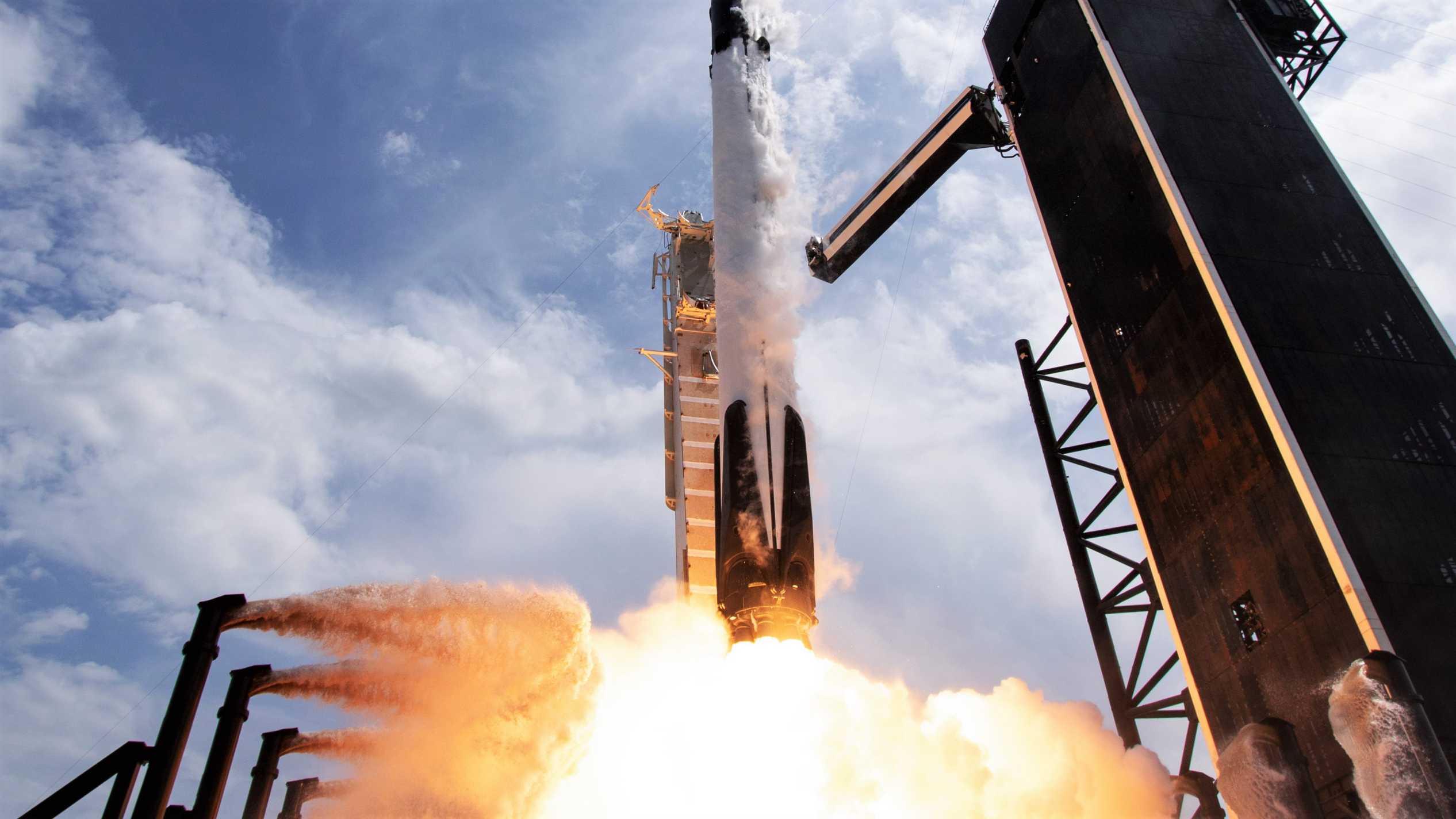
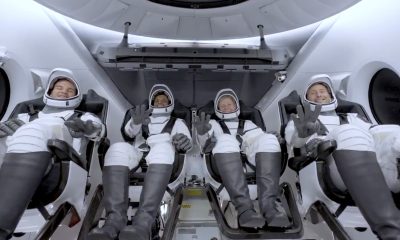
In a sign that SpaceX’s rocket reuse program continues to make progress, the company assigned Falcon 9 booster B1058 to the launch – initially just 45 days after it debuted in support of Crew Dragon’s own May 30th astronaut launch debut.
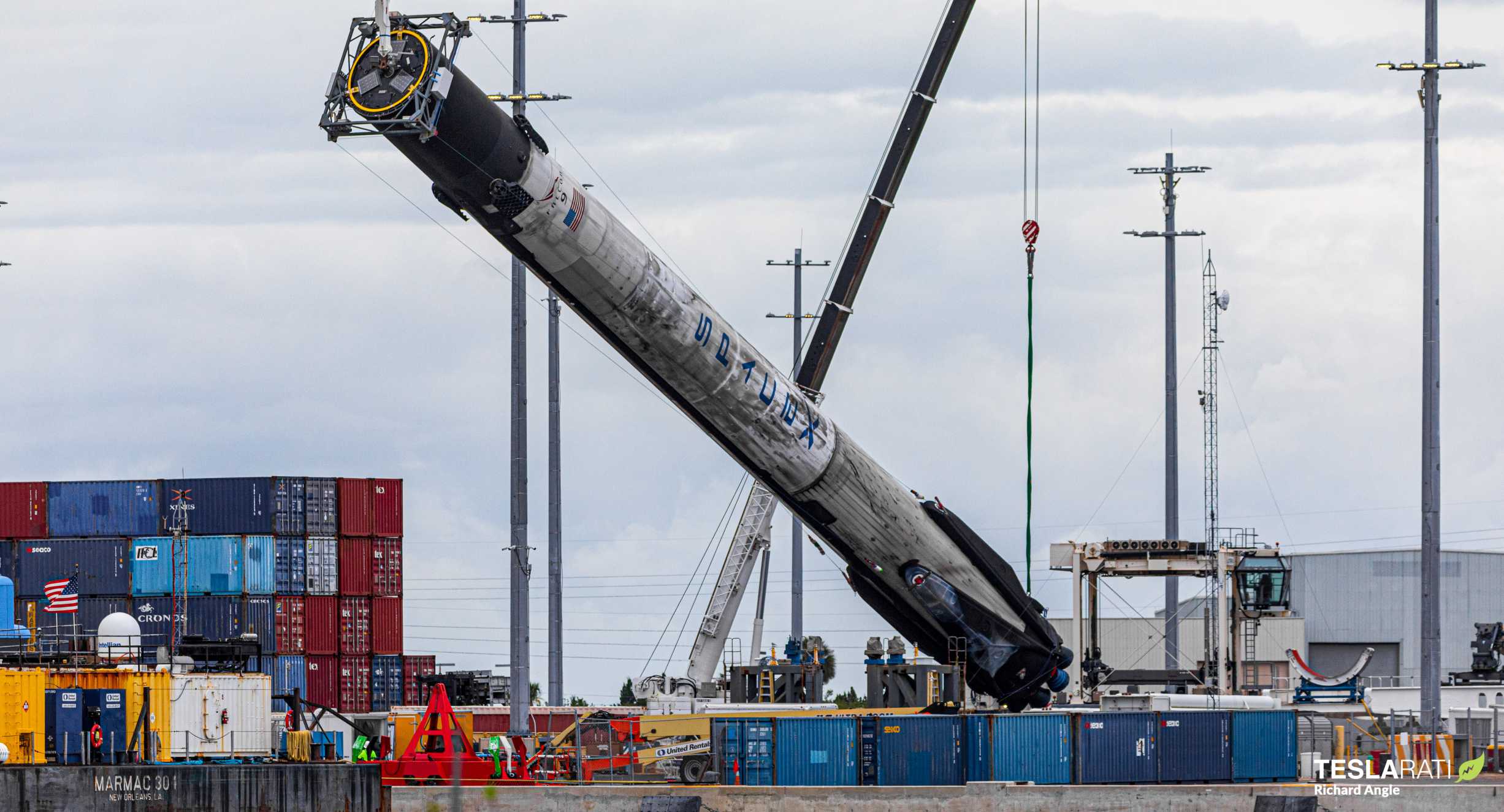
As previously discussed on Teslarati, a 45-day turnaround would have crushed a 54-day world record held by NASA’s Space Shuttle that was set more than three decades ago. While the Space Shuttle was an orbital vehicle and likely 10-100 times more complex than SpaceX’s Falcon 9 booster, the workforce it needed to set that turnaround record was closer to 500-1000 times larger than the teams needed to reuse Falcon 9.
To “reuse” Space Shuttles and the Main Engines (SSMEs; now RS-25s) that powered them, NASA and its contractors had to extensively disassemble and reassemble the vehicles, removing and refurbishing the engines and several thruster pods before reinstalling them. Up to 4000 parts would have to be replaced each launch, while 7000 of the main engines’ 50,000 parts would also have to be replaced periodically. According to NASA, each Shuttle required at least 750,000 work hours of refurbishment and rework between flights. Per comments recently made by CEO Elon Musk, SpaceX may require just a few dozen employees and 4-6 weeks to turn a Falcon 9 booster around. That could mean that as few as 5000-10,000 work hours are required per Falcon 9 reuse, 75-150 times fewer than the Shuttle’s average.
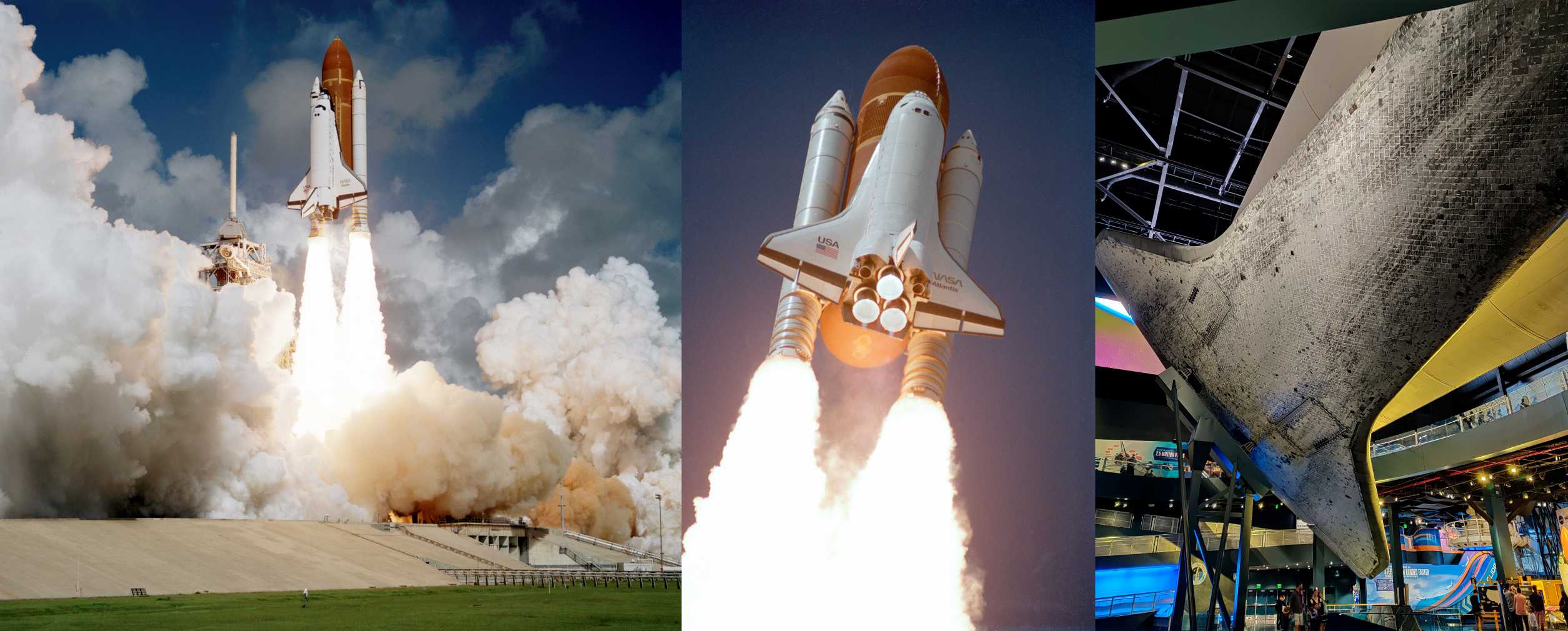
As of now, Falcon 9 booster B1058 could still beat Space Shuttle Atlantis’ 54-day record if it launches before July 23rd. A July 20th launch would still break the Shuttle’s record by three days despite roughly three weeks of ANASIS II mission delays. Notably, most – if not all – of those delays appear to have been caused by issues found on the second stage, new hardware that is expended after every launch. Falcon 9 B1058 completed a successful static fire test on July 11th, just 42 days after it launched astronauts into orbit and just 38 days after the booster returned to dry land after its first flight.
With a little luck, B1058’s proven potential for smashing reuse records will mean that SpaceX is able to rapidly turn the rocket around for future launches, assuming successful landings. For now, SpaceX’s next launch is on track to lift off NET 5 pm EDT (21:00 UTC) on July 20th. In a rarity, SpaceX has a nearly four-hour window to launch, leaving plenty of flexibility if weather or minor technical bugs require some additional time. The company’s official webcast will begin roughly 15 minutes prior to liftoff.
Check out Teslarati’s Marketplace! We offer Tesla accessories, including for the Tesla Cybertruck and Tesla Model 3.









Elon Musk
Tesla reveals it is using AI to make factories more sustainable: here’s how
Tesla is using AI in its Gigafactory Nevada factory to improve HVAC efficiency.

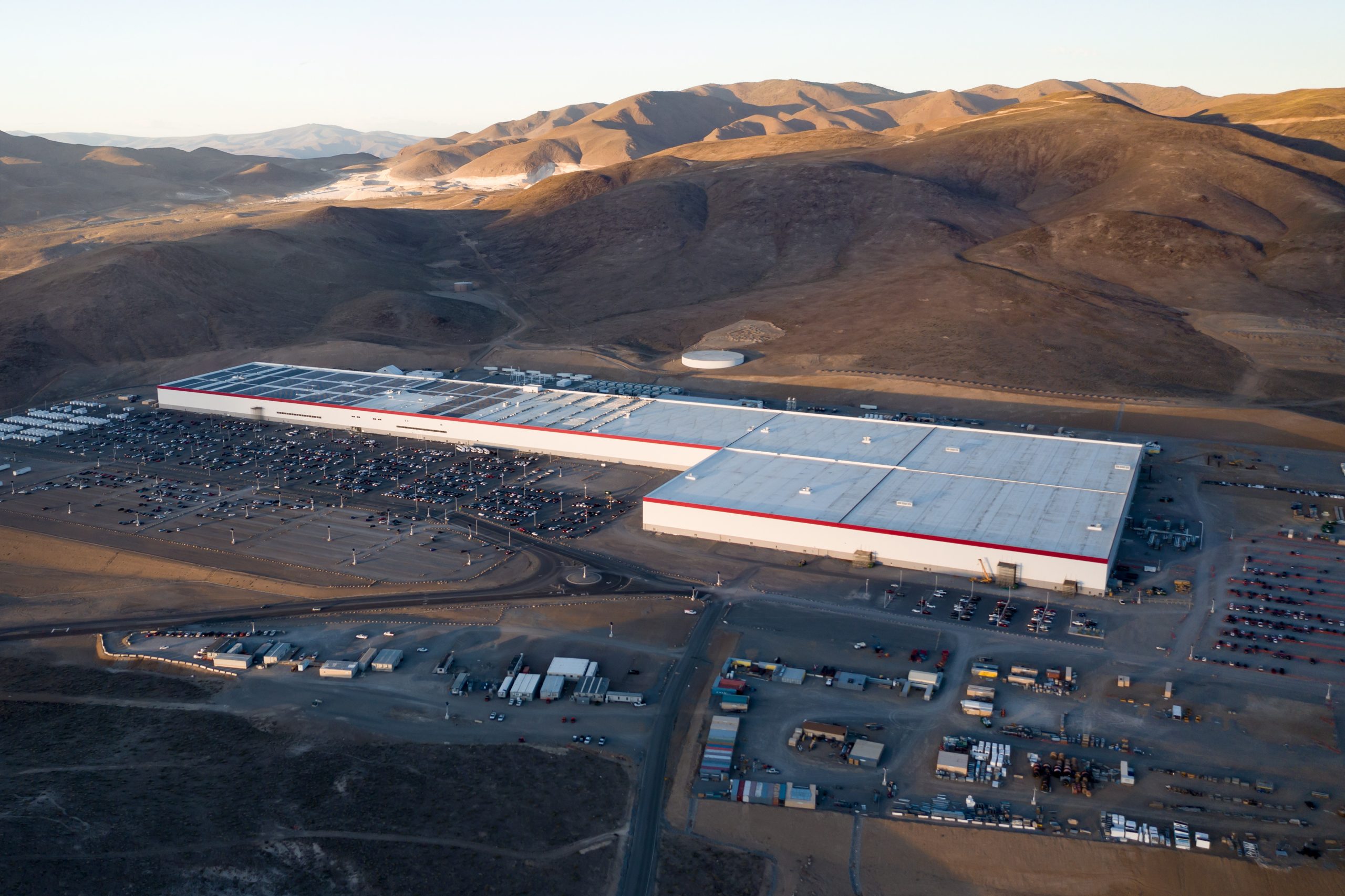
Tesla has revealed in its Extended Impact Report for 2024 that it is using Artificial Intelligence (AI) to enable its factories to be more sustainable. One example it used was its achievement of managing “the majority of the HVAC infrastructure at Gigafactory Nevada is now AI-controlled” last year.
In a commitment to becoming more efficient and making its production as eco-friendly as possible, Tesla has been working for years to find solutions to reduce energy consumption in its factories.
For example, in 2023, Tesla implemented optimization controls in the plastics and paint shops located at Gigafactory Texas, which increased the efficiency of natural gas consumption. Tesla plans to phase out natural gas use across its factories eventually, but for now, it prioritizes work to reduce emissions from that energy source specifically.
It also uses Hygrometric Control Logic for Air Handling Units at Giafactory Berlin, resulting in 17,000 MWh in energy savings each year. At Gigafactory Nevada, Tesla saves 9.5 GWh of energy through the use of N-Methylpyrrolidone refineries when extracting critical raw material.
Perhaps the most interesting way Tesla is conserving energy is through the use of AI at Gigafactory Nevada, as it describes its use of AI to reduce energy demand:
“In 2023, AI Control for HVAC was expanded from Nevada and Texas to now include our Berlin-Brandenburg and Fremont factories. AI Control policy enables HVAC systems within each factory to work together to process sensor data, model factory dynamics, and apply control actions that safely minimize the energy required to support production. In 2024, this system achieved two milestones: the majority of HVAC infrastructure at Gigafactory Nevada is now AI-controlled, reducing fan and thermal energy demand; and the AI algorithm was extended to manage entire chiller plants, creating a closed-loop control system that optimizes both chilled water consumption and the energy required for its generation, all while maintaining factory conditions.”
Tesla utilizes AI Control “primarily on systems that heat or cool critical factory production spaces and equipment.” AI Control communicates with the preexisting standard control logic of each system, and any issues can be resolved by quickly reverting back to standard control. There were none in 2024.
Tesla says that it is utilizing AI to drive impact at its factories, and it has proven to be a valuable tool in reducing energy consumption at one of its facilities.
Elon Musk
Tesla analysts believe Musk and Trump feud will pass
Tesla CEO Elon Musk and U.S. President Donald Trump’s feud shall pass, several bulls say.
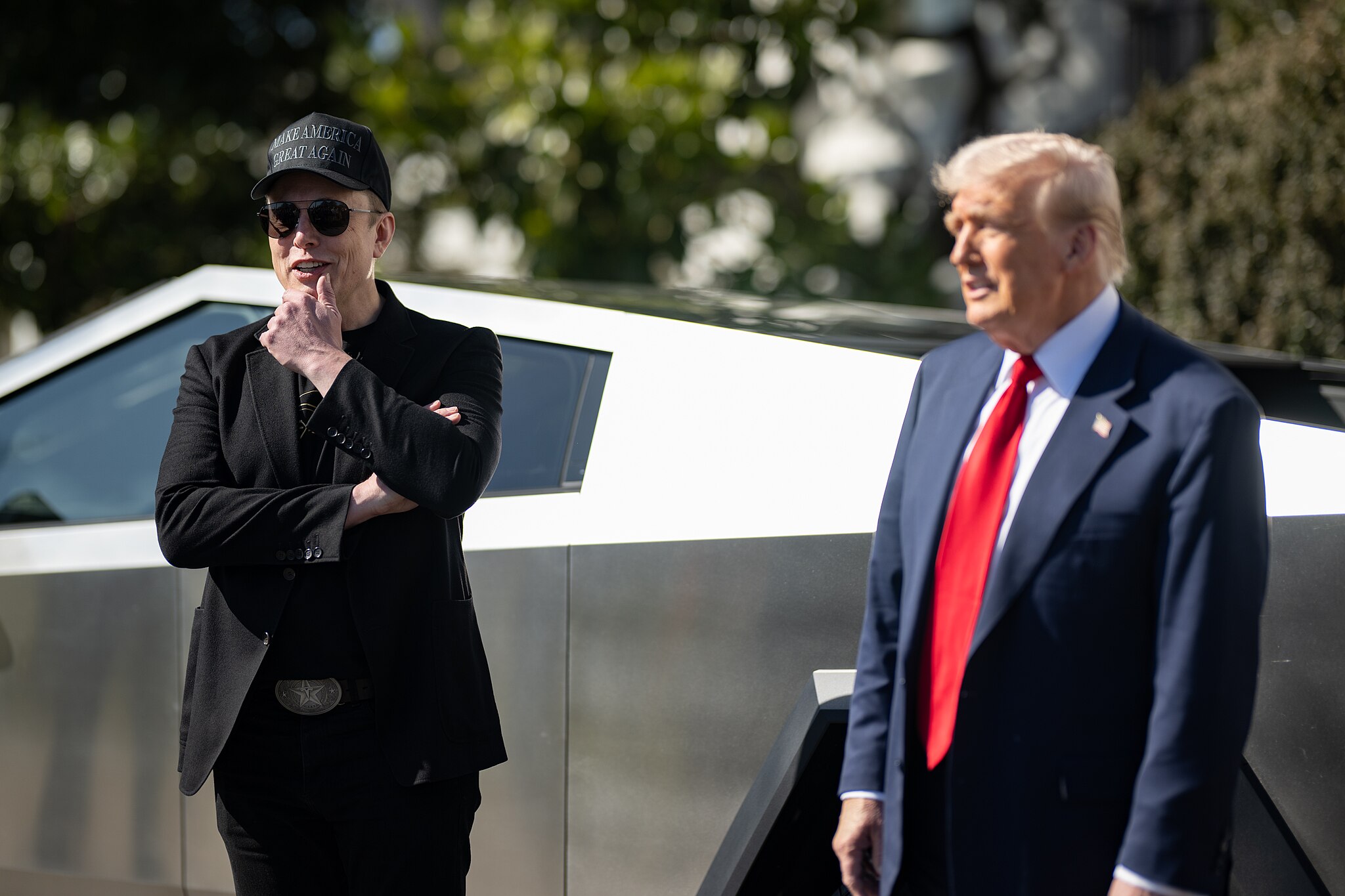
Tesla analysts are breaking down the current feud between CEO Elon Musk and U.S. President Donald Trump, as the two continue to disagree on the “Big Beautiful Bill” and its impact on the country’s national debt.
Musk, who headed the Department of Government Efficiency (DOGE) under the Trump Administration, left his post in May. Soon thereafter, he and President Trump entered a very public and verbal disagreement, where things turned sour. They reconciled to an extent, and things seemed to be in the past.
However, the second disagreement between the two started on Monday, as Musk continued to push back on the “Big Beautiful Bill” that the Trump administration is attempting to sign into law. It would, by Musk’s estimation, increase spending and reverse the work DOGE did to trim the deficit.
Every member of Congress who campaigned on reducing government spending and then immediately voted for the biggest debt increase in history should hang their head in shame!
And they will lose their primary next year if it is the last thing I do on this Earth.
— Elon Musk (@elonmusk) June 30, 2025
President Trump has hinted that DOGE could be “the monster” that “eats Elon,” threatening to end the subsidies that SpaceX and Tesla receive. Musk has not been opposed to ending government subsidies for companies, including his own, as long as they are all abolished.
How Tesla could benefit from the ‘Big Beautiful Bill’ that axes EV subsidies
Despite this contentious back-and-forth between the two, analysts are sharing their opinions now, and a few of the more bullish Tesla observers are convinced that this feud will pass, Trump and Musk will resolve their differences as they have before, and things will return to normal.
ARK Invest’s Cathie Wood said this morning that the feud between Musk and Trump is another example of “this too shall pass:”
BREAKING: CATHIE WOOD SAYS — ELON AND TRUMP FEUD “WILL PASS” 👀 $TSLA
She remains bullish ! pic.twitter.com/w5rW2gfCkx
— TheSonOfWalkley (@TheSonOfWalkley) July 1, 2025
Additionally, Wedbush’s Dan Ives, in a note to investors this morning, said that the situation “will settle:”
“We believe this situation will settle and at the end of the day Musk needs Trump and Trump needs Musk given the AI Arms Race going on between the US and China. The jabs between Musk and Trump will continue as the Budget rolls through Congress but Tesla investors want Musk to focus on driving Tesla and stop this political angle…which has turned into a life of its own in a roller coaster ride since the November elections.”
Tesla shares are down about 5 percent at 3:10 p.m. on the East Coast.
Elon Musk
Tesla scrambles after Musk sidekick exit, CEO takes over sales
Tesla CEO Elon Musk is reportedly overseeing sales in North America and Europe, Bloomberg reports.
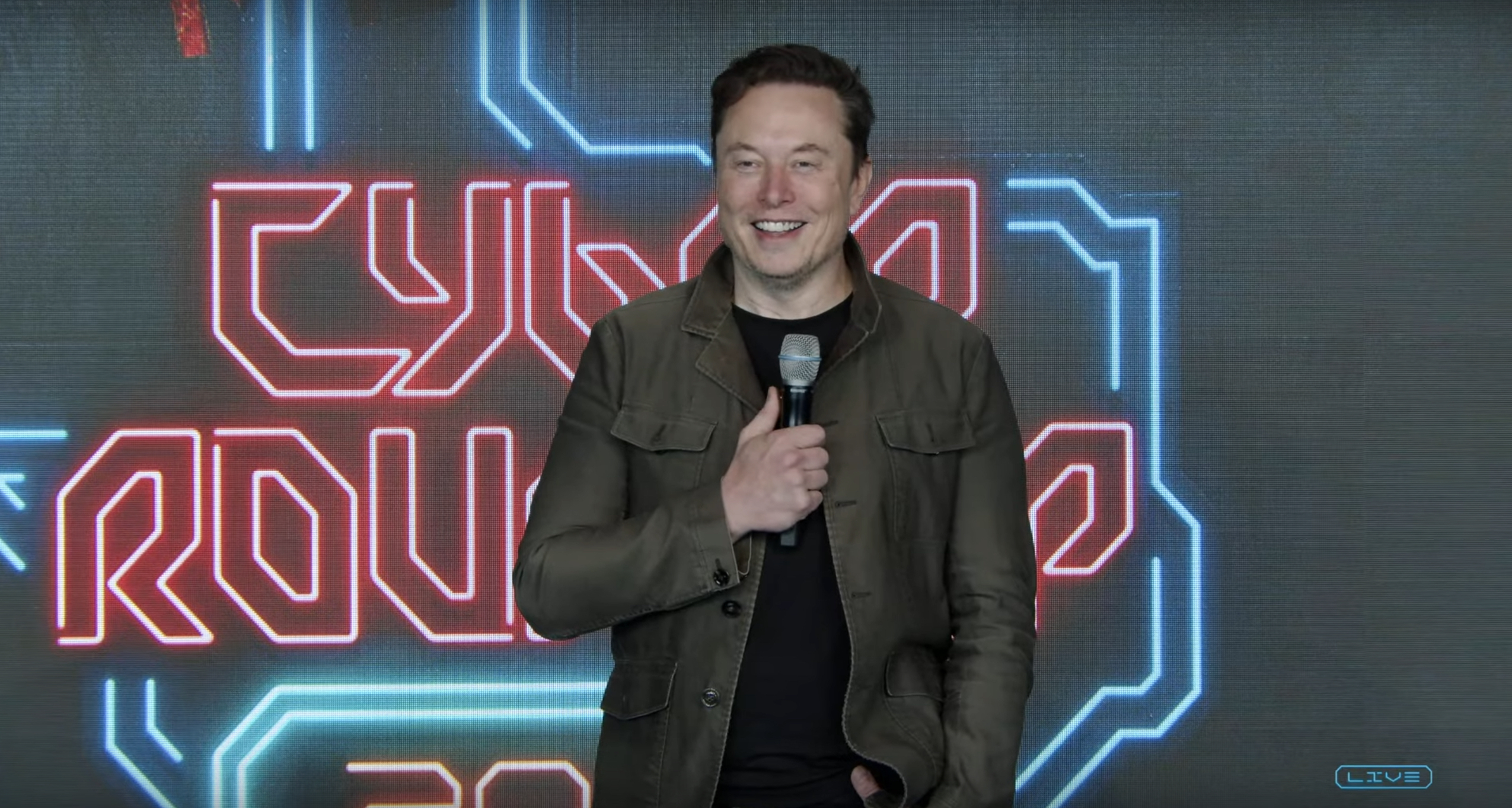
Tesla scrambled its executives around following the exit of CEO Elon Musk’s sidekick last week, Omead Afshar. Afshar was relieved of his duties as Head of Sales for both North America and Europe.
Bloomberg is reporting that Musk is now overseeing both regions for sales, according to sources familiar with the matter. Afshar left the company last week, likely due to slow sales in both markets, ending a seven-year term with the electric automaker.
Tesla’s Omead Afshar, known as Elon Musk’s right-hand man, leaves company: reports
Afshar was promoted to the role late last year as Musk was becoming more involved in the road to the White House with President Donald Trump.
Afshar, whose LinkedIn account stated he was working within the “Office of the CEO,” was known as Musk’s right-hand man for years.
Additionally, Tom Zhu, currently the Senior Vice President of Automotive at Tesla, will oversee sales in Asia, according to the report.
It is a scramble by Tesla to get the company’s proven executives over the pain points the automaker has found halfway through the year. Sales are looking to be close to the 1.8 million vehicles the company delivered in both of the past two years.
Tesla is pivoting to pay more attention to the struggling automotive sales that it has felt over the past six months. Although it is still performing well and is the best-selling EV maker by a long way, it is struggling to find growth despite redesigning its vehicles and launching new tech and improvements within them.
The company is also looking to focus more on its deployment of autonomous tech, especially as it recently launched its Robotaxi platform in Austin just over a week ago.
However, while this is the long-term catalyst for Tesla, sales still need some work, and it appears the company’s strategy is to put its biggest guns on its biggest problems.

Tesla reveals it is using AI to make factories more sustainable: here’s how

Tesla analysts believe Musk and Trump feud will pass

Tesla scrambles after Musk sidekick exit, CEO takes over sales


-
 Elon Musk1 day ago
Tesla investors will be shocked by Jim Cramer’s latest assessment
-
 News6 days ago
Tesla Robotaxi’s biggest challenge seems to be this one thing
-

 News2 weeks ago
Tesla’s Grok integration will be more realistic with this cool feature
-
 Elon Musk2 weeks ago
Elon Musk slams Bloomberg’s shocking xAI cash burn claims
-
 News2 weeks ago
Tesla China roars back with highest vehicle registrations this Q2 so far
-
 News2 weeks ago
Texas lawmakers urge Tesla to delay Austin robotaxi launch to September
-
 News2 weeks ago
Tesla dominates Cars.com’s Made in America Index with clean sweep
-
 Elon Musk1 week ago
First Look at Tesla’s Robotaxi App: features, design, and more