Elon Musk
Starship’s next chapter: SpaceX eyes tower catch after flawless Flight 11
Elon Musk has revealed the tentative timeframe for Starship’s next milestone that would push the spacecraft’s reusability to a whole new level.

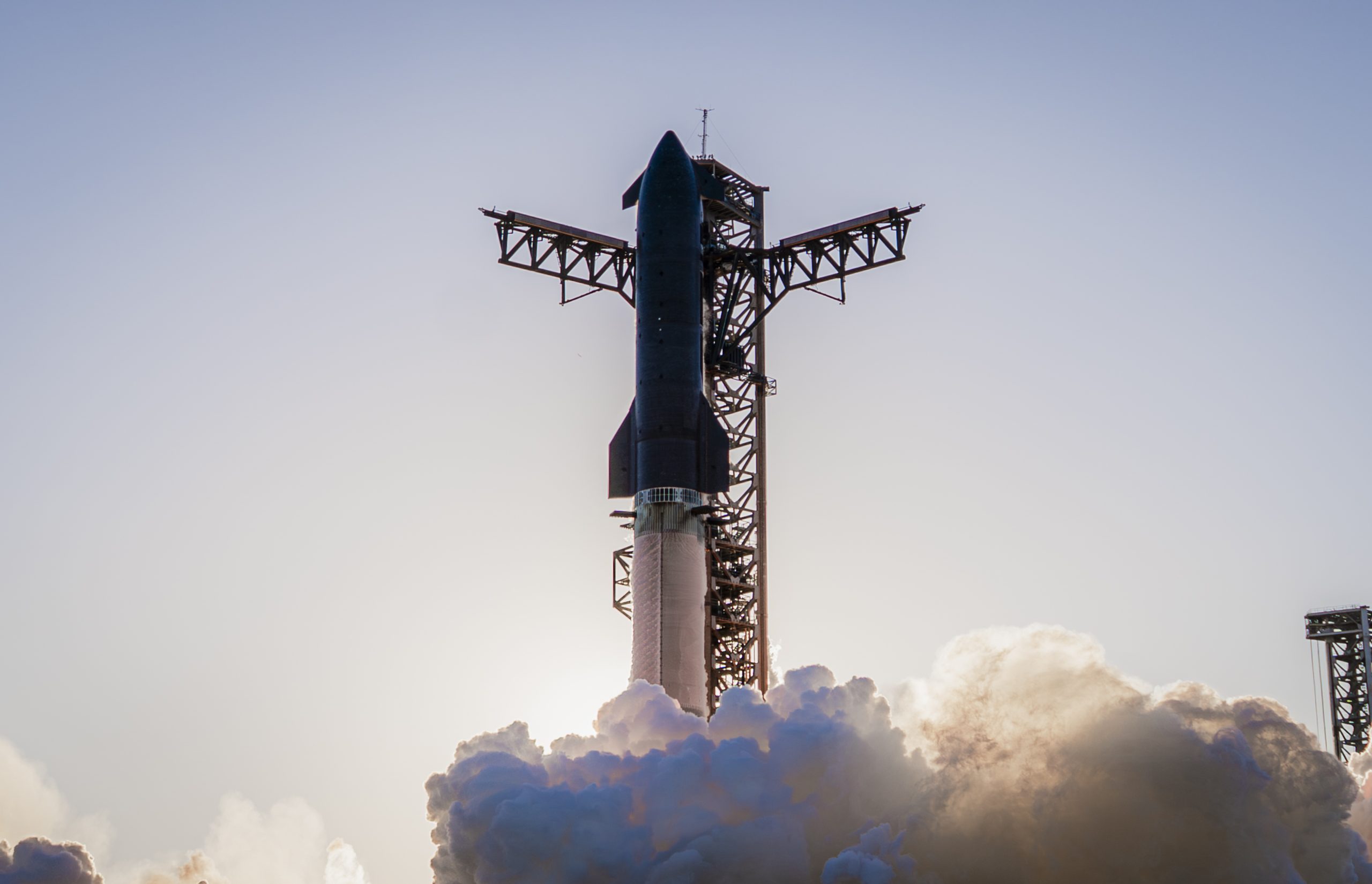
Elon Musk has revealed the tentative timeframe for Starship’s next milestone that would push the spacecraft’s reusability to a whole new level.
Following Flight 11’s flawless mission, Musk noted on X that SpaceX will be aiming to catch the Starship Upper Stage with its launch tower as early as spring 2026. This should pave the way for SpaceX to start optimizing Starship for maximum reusability.
Flight 11 closes the Starship V2 chapter on a high note
Starship’s eleventh flight, which launched from Starbase, Texas, achieved every major mission objective. The Super Heavy booster completed a successful ascent, hover, and soft splashdown in the Gulf of America, while the upper stage executed an orbit burn, deployed Starlink simulators, and returned with a controlled reentry over the Indian Ocean.
This mission officially closed the chapter on the second-generation Starship and first-generation Super Heavy booster, and it set the stage for a redesigned vehicle built for orbital payload missions, propellant transfer, and beyond. It should be noted that Elon Musk has mentioned on X that Starship V3, at least if things go well, might be capable of reaching Mars.
Elon Musk confirms tower catch attempt set for spring
After Flight 11’s success, Musk confirmed that SpaceX will attempt to catch the Starship Upper Stage with its launch tower arms, fondly dubbed by the spaceflight community as “chopsticks,” in the coming months. Musk’s announcement came as a response to an X user who asked when the tower could start catching the Starship Upper Stage. In his reply, Musk simply wrote “Springtime.”
Starship’s reusability is a key feature of the spacecraft, with SpaceX aiming to achieve a launch cadence that is almost comparable to conventional aircraft. For such a scenario to be feasible, launch tower catches of both Starship’s Upper Stage and its Super Heavy booster have to be routine.


Elon Musk
Tesla FSD mocks BMW human driver: Saves pedestrian from near miss
Tesla FSD anticipated a BMW driver’s lane drift before the human behind the wheel could react.

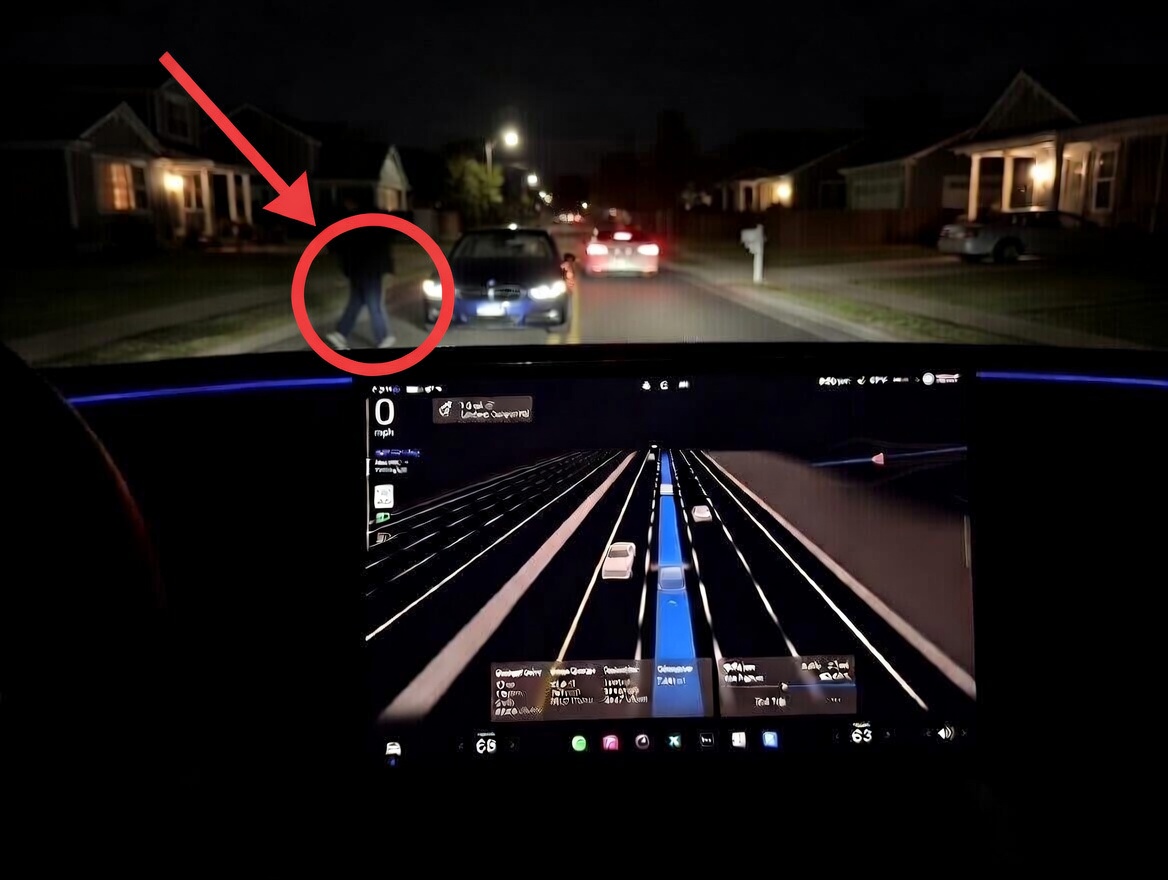
A video posted to r/TeslaFSD this week put a sharp spotlight on Tesla’s Full Self-Driving (FSD) software being able to react to pedestrian intent than an actual human driver behind the wheel. In the Reddit clip, a BMW driver can be seen rolling through a neighborhood street completely unaware of a pedestrian stepping in to cross. At the same time, a Tesla driving on FSD had already begun slowing down before the pedestrian even began their attempt to cross the street The BMW kept moving, prompting the pedestrian to hop back, while the Tesla came to a stop and provide right-of-way for the human to safely cross.
That gap between what the BMW driver saw and what FSD had already processed is the story. Tesla FSD wasn’t reacting to a person in the street, rather it was reading the signals that a person was about to enter it based on the pedestrian’s movement, trajectory, and their trajectory to telegraph intent.
Tesla’s FSD is now built on an end-to-end neural network trained on billions of real-world miles, learning to interpret subtle human behavioral cues the same way an experienced human driver does instinctively. The difference is consistency. A human driver distracted for two seconds misses what FSD does not.
Tesla sues California DMV over Autopilot and FSD advertising ruling
Reddit commenters in the thread were blunt about the BMW driver’s failure, with several pointing out that the pedestrian was visible well before the crossing. One response put it plainly that the car on FSD saw the situation developing before the human in the other car had registered there was a situation at all.
Tesla has published data showing FSD (Supervised) is 54% safer than a human driver, accumulated across billions of miles driven on the system. Elon Musk has said FSD v14 will outperform human drivers by a factor of two to three, and that v15 has “a shot” at a 10x improvement. Pedestrian safety is where the stakes are highest, and where intent prediction closes the gap fastest. At 30 mph, a car covers roughly 44 feet per second. An extra second of awareness from reading a person’s body language rather than waiting for them to step out is often the difference between a near miss and a fatality.
Video and community discussion: r/TeslaFSD on Reddit
FSD saves man from becoming a pancake. BMW driver nearly flattens him.
by
u/Qwertygolol in
TeslaFSD
Elon Musk
Tesla drives drunk owner while he naps, Police still arrest him on DUI
A Vacaville man let his Tesla drive while he napped, but police had other ideas.
![Tesla drives drunk owner, Police arrest on DUI [Credit: Vacaville Police via Facebook]](https://www.teslarati.com/wp-content/uploads/2026/03/tesla-fsd-drunk-driver-dui-arrest-e1774678014371.jpg)
A Northern California man found a creative solution to drunk driving this week by letting his Tesla drive him around while he took a booze snooze. Police in Vacaville arrested a man on a DUI charge after he was found, what appears to be, completely passed out behind the wheel of a Tesla Model Y, which was safely self-navigating the owner through busy streets. The man’s passenger seat told the rest of the story, with a four-pack of Sutter Home wine bottles and a box of Round Table pizza clearly visible.
According to the Vacaville Police Department, as posted through their Facebook page, a concerned community member spotted the very relaxed driver, stayed on the line with dispatch, and guided officers to the intersection of Elmira Road and Shasta Drive where they stopped the vehicle. Alcohol and marijuana were confirmed. No medical emergency, and what appears to be just an extremely committed drunken nap.
-
![Tesla drives drunk owner, Police arrest on DUI [Credit: Vacaville Police via Facebook]](https://www.teslarati.com/wp-content/uploads/2026/03/tesla-fsd-drunk-driver-dui-arrest-e1774678014371-300x259.jpg)
- Tesla drives drunk owner, Police arrest on DUI [Credit: Vacaville Police via Facebook]
-
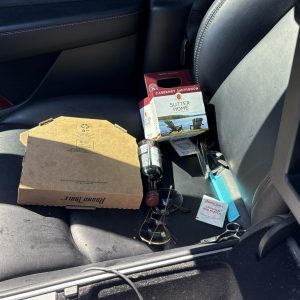
- Tesla drunk driver passenger seat , Police arrest on DUI [Credit: Vacaville Police via Facebook]
The Vacaville Police noted that California permits drivers to use assistive driving features like Tesla’s FSD, but the law still requires them to be “conscious, alert, and not under the influence while operating them.” The post drew some humorous reactions in the comments section, with one commenter piping in, “That time when his vehicle had more situational awareness than he did.” Another commenter chimed in, “Sutter all the way home….”
Tesla Full Self-Driving v14.2.1 texting and driving: we tested it
The incident lands in an interesting moment for Tesla. Elon Musk caused his own stir in December 2025 when he responded to a user question about whether FSD v14.2.1 allowed texting behind the wheel with a simple “Depending on context of surrounding traffic, yes.” He had earlier told investors that drivers turning off autopilot to check texts while steering with their knees was “significantly less safe” than simply letting FSD run, which he called “kind of the killer app.” Neither statement included anything about Sutter Home wine being part of the equation.
Elon Musk
TIME honors SpaceX’s Gwynne Shotwell: From employee No. 7 to world’s most valuable company
Time Magazine honors Gwynne Shotwell as SpaceX reaches a $1.25 trillion valuation and eyes its IPO.
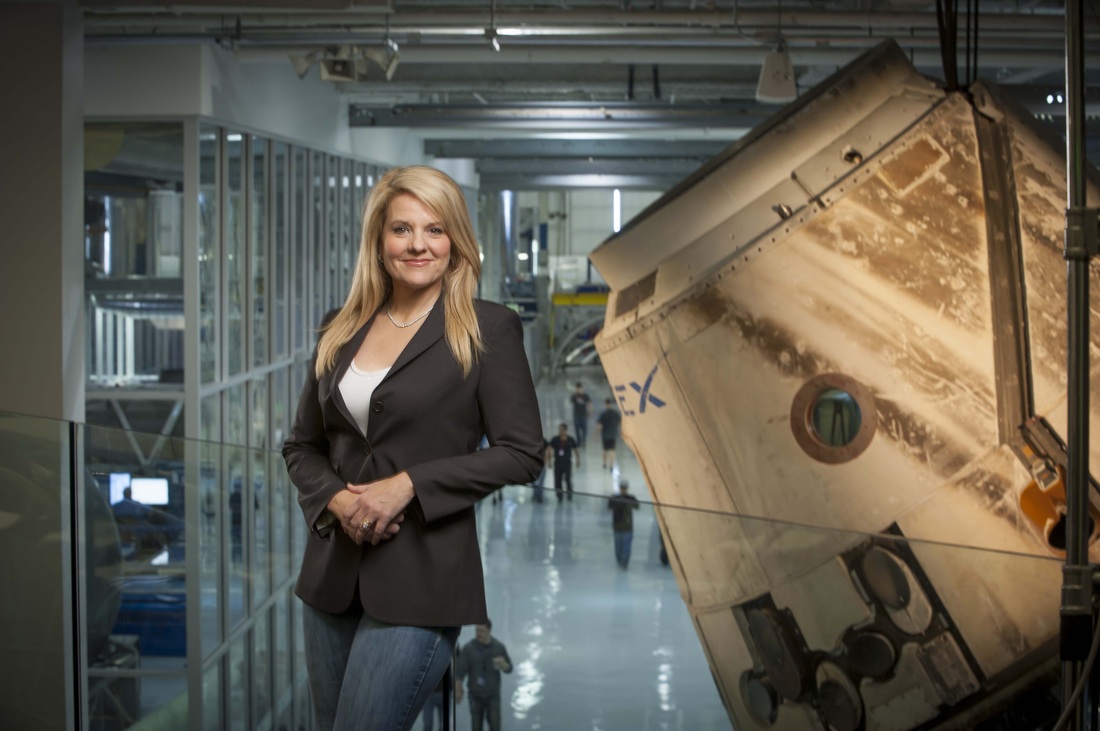
TIME Magazine has put SpaceX President and COO Gwynne Shotwell on its cover, and the timing could not be more fitting. Published today, the profile of Shotwell arrives at a moment when the company she has quietly run for more than two decades stands at the center of the most consequential developments in aerospace, artificial intelligence, and the future of human civilization.
Shotwell joined SpaceX in 2002 as its seventh employee and has never stopped expanding her role. She oversees day-to-day operations across multiple executive teams spanning Falcon, Starlink, Starship, and now xAI following SpaceX’s February 2026 merger with Elon Musk’s artificial intelligence company, a deal that made SpaceX the world’s most valuable private company at a reported valuation of $1.25 trillion. A highly anticipated IPO is expected in the second quarter of 2026.
Will Tesla join the fold? Predicting a triple merger with SpaceX and xAI
Her track record is historic. She oversaw the first landing of an orbital rocket’s first stage, the first reuse and re-landing of an orbital booster, and the first private crewed launch to Earth orbit in May 2020. She built the Falcon launch manifest from nothing to more than 170 contracted missions representing over $20 billion in business. Under her operational leadership, SpaceX completed 96 successful missions in 2023 alone and has now flown more than 20 crewed Falcon 9 missions. Starlink, which she championed as a financial pillar of the company long before it was a mainstream topic, now connects tens of millions of users worldwide and provided a critical communications lifeline to Ukraine following the 2022 invasion.
Elon Musk has never been shy about what Shotwell means to him and to SpaceX. When she shared her vision for worldwide internet connectivity through Starlink, Musk responded on X with a simple statement, “Gwynne is awesome.” It is a sentiment that has been echoed across the industry. NASA Administrator Bill Nelson once said of Musk: “One of the most important decisions he made, as a matter of fact, is he picked a president named Gwynne Shotwell. She runs SpaceX. She is excellent.”
Gwynne is awesome https://t.co/tiXtMWJmPE
— Elon Musk (@elonmusk) September 28, 2024
Now, with Starship targeting its first crewed lunar landing under the Artemis program by 2028, an xAI integration underway, and a pending IPO that could reshape capital markets, Shotwell’s mandate has never been larger. She told Time that 18 Starships are already in various stages of construction at Starbase. “By 2028,” she said, gesturing across the factory floor, “these should be long gone. They better have flown by then.” If Shotwell’s history at SpaceX is any guide, they will.

Tesla FSD mocks BMW human driver: Saves pedestrian from near miss

Tesla Robotaxi gets a small but significant change

Tesla makes latest announcement on Model S and Model X

Elon Musk says Tesla is developing a new vehicle: ‘Way cooler than a minivan’

Elon Musk launches TERAFAB: The $25B Tesla-SpaceXAI chip factory that will rewire the AI industry


