
Tesla has initiated a recall for 1.8 million vehicles over a fault that may cause a car to not detect an unlatched hood. The recall has been addressed by the electric vehicle maker through an over-the-air (OTA) software update.
As per a Safety Recall Report from the National Highway Traffic Safety Administration (NHTSA), the recall affects 2013-2024 Tesla Model S, 2016-2024 Tesla Model X, 2017-2024 Tesla Model 3, and 2020-2024 Tesla Model Y vehicles. The total number of vehicles potentially involved in the recall is 1,850,363 units, though only 1% are estimated to actually have the defect.
The Safety Recall Report noted that in affected vehicles, the hood latch assembly may not detect an open condition when a customer opens the hood. Such a fault could result in drivers not being notified that their hood is open, even when the vehicle is placed into Drive. The hood may then unlatch and obstruct the driver’s view while the vehicle is in motion, increasing the risk of a collision.
Tesla started its investigation into the matter on March 25, 2024 when it received customer complaints about unintended hood opening events on Model 3 and Model Y vehicles in China. In mid-April, Tesla identified the fault affecting vehicles in China as latch switch deformations. Interestingly enough, the issue was particularly evident in vehicles produced in China but not so much in cars produced in North America and Europe.
“From mid-April 2024 through June 7, 2024, Tesla continued to recover and perform analysis on samples from the field in China to better understand the condition and latch commonalities across vehicle lines and regions. Rates of occurrence were higher in China for reasons unknown, as compared to lower rates of occurrence in markets in Europe and North America,” the NHTSA Safety Recall Report read.
Tesla ultimately decided to recall affected vehicles on July 17, 2024. As of July 20, 2024, Tesla has identified three warranty claims or field reports of US vehicles that were related to the hood latch issue. The company, however, noted that it was not aware of any crashes, injuries, or deaths related to the fault.
Similar to most of its vehicle recalls, the fix for the fault is a software update. Tesla described its remedy for the hood latch issue as follows. “Beginning on June 18, 2024, at no cost to customers, affected vehicles received an over-the-air software remedy with firmware release 2024.20.3. Firmware release 2024.20.3 or a later firmware release detects the open hood and provides a customer-facing user interface notification of the hood open state,” the Safety Recall Report read.
Tesla Model S, Model 3, Model X, and Model Y units that were produced starting July 15, 2024 were manufactured with software 2024.20.100, which already includes a fix for the hood latch issue.
The NHTSA Safety Recall Report about Tesla’s hood latch issue can be viewed here.
RCLRPT-24V554-9039 by Simon Alvarez on Scribd
Don’t hesitate to contact us with news tips. Just send a message to simon@teslarati.com to give us a heads up.


News
Tesla adds a new feature to Navigation in preparation for a new vehicle
After CEO Elon Musk announced earlier this week that the Semi’s mass production processes were scheduled for later this year, the company has been making various preparations as it nears manufacturing.

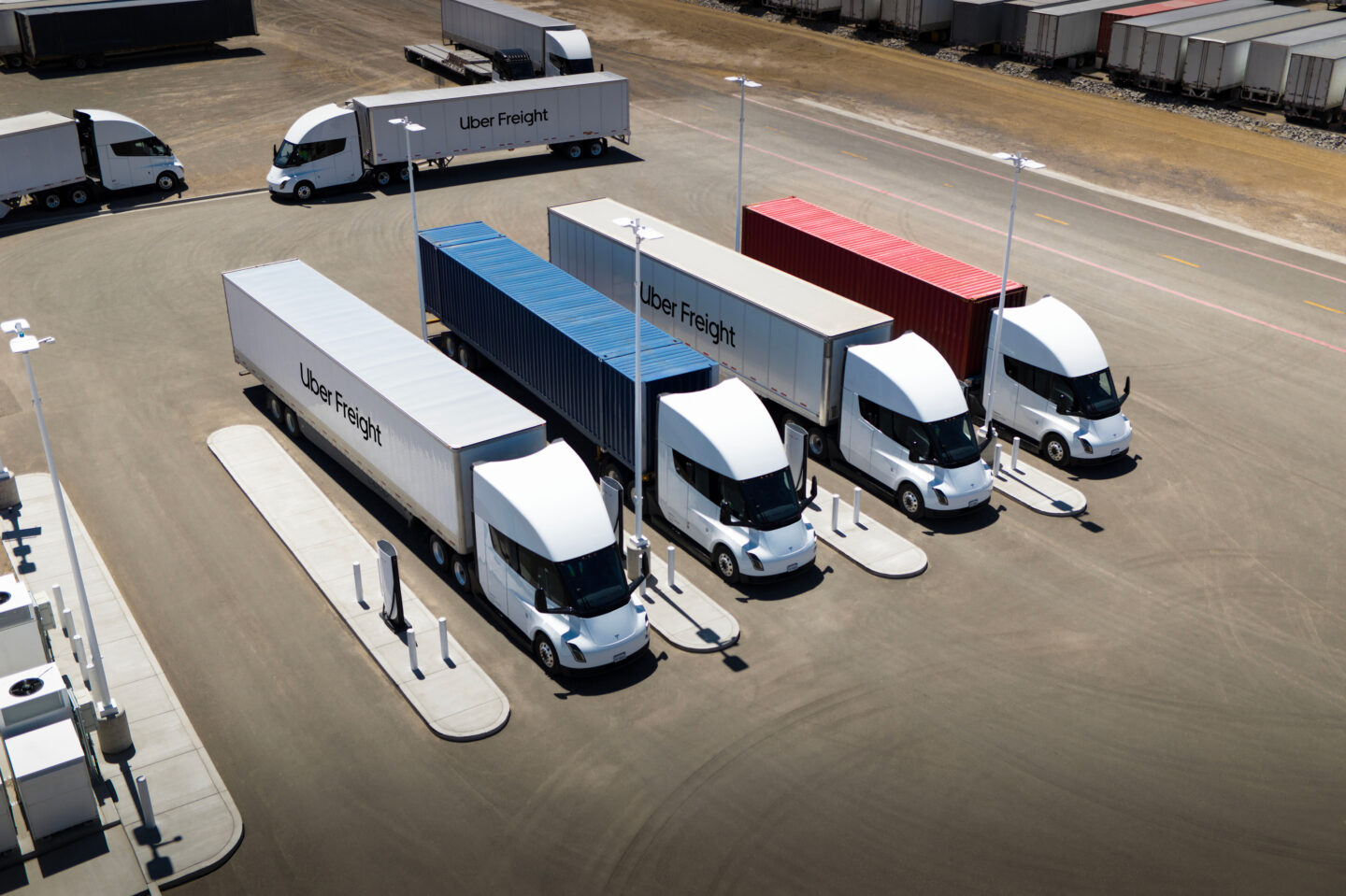
Tesla has added a new feature to its Navigation and Supercharger Map in preparation for a new vehicle to hit the road: the Semi.
After CEO Elon Musk announced earlier this week that the Semi’s mass production processes were scheduled for later this year, the company has been making various preparations as it nears manufacturing.
Elon Musk confirms Tesla Semi will enter high-volume production this year
One of those changes has been the newly-released information regarding trim levels, as well as reports that Tesla has started to reach out to customers regarding pricing information for those trims.
Now, Tesla has made an additional bit of information available to the public in the form of locations of Megachargers, the infrastructure that will be responsible for charging the Semi and other all-electric Class 8 vehicles that hit the road.
Tesla made the announcement on the social media platform X:
We put Semi Megachargers on the map
→ https://t.co/Jb6p7OPXMi pic.twitter.com/stwYwtDVSB
— Tesla Semi (@tesla_semi) February 10, 2026
Although it is a minor development, it is a major indication that Tesla is preparing for the Semi to head toward mass production, something the company has been hinting at for several years.
Nevertheless, this, along with the other information that was released this week, points toward a significant stride in Tesla’s progress in the Semi project.
Now that the company has also worked toward completion of the dedicated manufacturing plant in Sparks, Nevada, there are more signs than ever that the vehicle is finally ready to be built and delivered to customers outside of the pilot program that has been in operation for several years.
For now, the Megachargers are going to be situated on the West Coast, with a heavy emphasis on routes like I-5 and I-10. This strategy prioritizes major highways and logistics hubs where freight traffic is heaviest, ensuring coverage for both cross-country and regional hauls.
California and Texas are slated to have the most initially, with 17 and 19 sites, respectively. As the program continues to grow, Florida, Georgia, Illinois, Washington, New York, and Nevada will have Megacharger locations as well.
For now, the Megachargers are available in Lathrop, California, and Sparks, Nevada, both of which have ties to Tesla. The former is the location of the Megafactory, and Sparks is where both the Tesla Gigafactory and Semifactory are located.
Elon Musk
Tesla stock gets latest synopsis from Jim Cramer: ‘It’s actually a robotics company’
“Turns out it’s actually a robotics and Cybercab company, and I want to buy, buy, buy. Yes, Tesla’s the paper that turned into scissors in one session,” Cramer said.
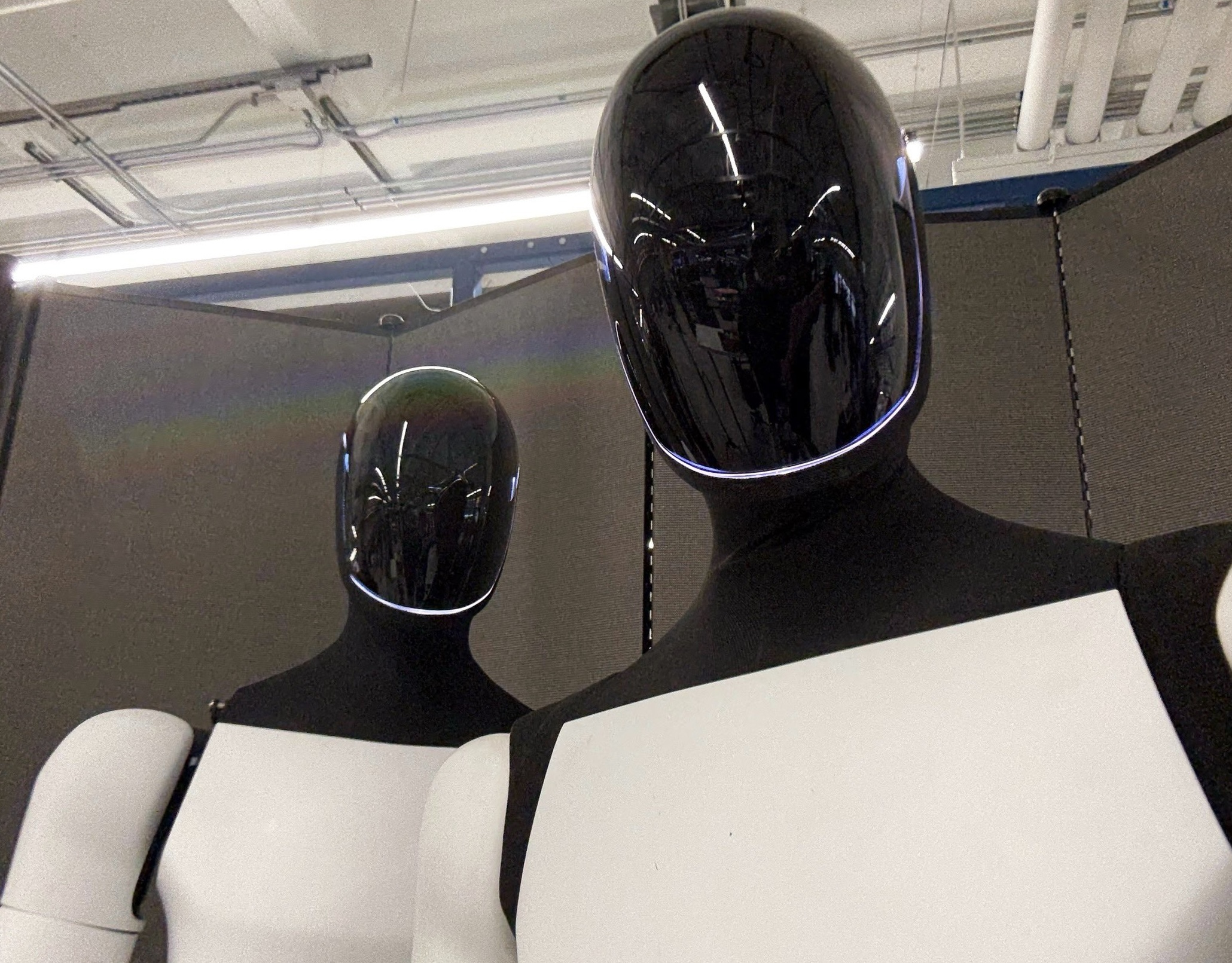
Tesla stock (NASDAQ: TSLA) got its latest synopsis from Wall Street analyst Jim Cramer, who finally realized something that many fans of the company have known all along: it’s not a car company. Instead, it’s a robotics company.
In a recent note that was released after Tesla reported Earnings in late January, Cramer seemed to recognize that the underwhelming financials and overall performance of the automotive division were not representative of the current state of affairs.
Instead, we’re seeing a company transition itself away from its early identity, essentially evolving like a caterpillar into a butterfly.
The narrative of the Earnings Call was simple: We’re not a car company, at least not from a birds-eye view. We’re an AI and Robotics company, and we are transitioning to this quicker than most people realize.
Tesla stock gets another analysis from Jim Cramer, and investors will like it
Tesla’s Q4 Earnings Call featured plenty of analysis from CEO Elon Musk and others, and some of the more minor details of the call were even indicative of a company that is moving toward AI instead of its cars. For example, the Model S and Model X will be no more after Q2, as Musk said that they serve relatively no purpose for the future.
Instead, Tesla is shifting its focus to the vehicles catered for autonomy and its Robotaxi and self-driving efforts.
Cramer recognizes this:
“…we got results from Tesla, which actually beat numbers, but nobody cares about the numbers here, as electric vehicles are the past. And according to CEO Elon Musk, the future of this company comes down to Cybercabs and humanoid robots. Stock fell more than 3% the next day. That may be because their capital expenditures budget was higher than expected, or maybe people wanted more details from the new businesses. At this point, I think Musk acolytes might be more excited about SpaceX, which is planning to come public later this year.”
He continued, highlighting the company’s true transition away from vehicles to its Cybercab, Optimus, and AI ambitions:
“I know it’s hard to believe how quickly this market can change its attitude. Last night, I heard a disastrous car company speak. Turns out it’s actually a robotics and Cybercab company, and I want to buy, buy, buy. Yes, Tesla’s the paper that turned into scissors in one session. I didn’t like it as a car company. Boy, I love it as a Cybercab and humanoid robot juggernaut. Call me a buyer and give me five robots while I’m at it.”
Cramer’s narrative seems to fit that of the most bullish Tesla investors. Anyone who is labeled a “permabull” has been echoing a similar sentiment over the past several years: Tesla is not a car company any longer.
Instead, the true focus is on the future and the potential that AI and Robotics bring to the company. It is truly difficult to put Tesla shares in the same group as companies like Ford, General Motors, and others.
Tesla shares are down less than half a percent at the time of publishing, trading at $423.69.
Elon Musk
SpaceX secures win as US labor board drops oversight case
The NLRB confirmed that it no longer has jurisdiction over SpaceX.
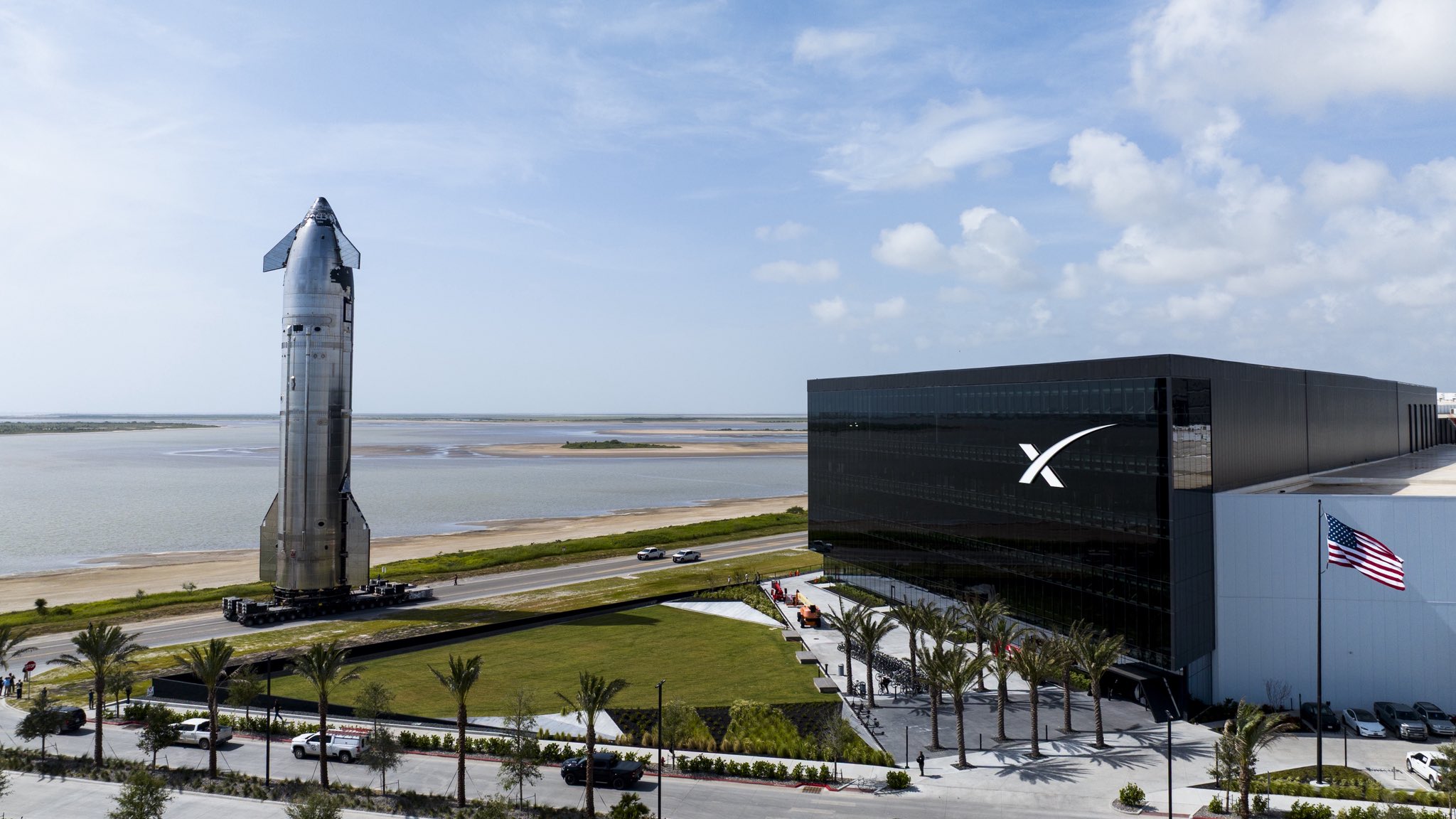
SpaceX scored a legal victory after the National Labor Relations Board (NLRB) decided to dismiss a case which accused the company of terminating engineers who were involved in an open letter against founder Elon Musk.
The NLRB confirmed that it no longer has jurisdiction over SpaceX. The update was initially shared by Bloomberg News, which cited a letter about the matter it reportedly reviewed.
In a letter to the former employees’ lawyers, the labor board stated that the affected employees were under the jurisdiction of the National Mediation Board (NMB), not the NLRB. As a result, the labor board stated that it was dismissing the case.
As per Danielle Pierce, a regional director of the agency, “the National Labor Relations Board lacks jurisdiction over the Employer and, therefore, I am dismissing your charge.”
The NMB typically oversees airlines and railroads. The NLRB, on the other hand, covers most private-sector employers, as well as manufacturers such as Boeing.
The former SpaceX engineers have argued that the private space company did not belong under the NMB’s jurisdiction because SpaceX only offers services to “hand-picked customers.”
In an opinion, however, the NMB stated that SpaceX was under its jurisdiction because “space transport includes air travel” to get to outer space. The mediation board also noted that anyone can contact SpaceX to secure its services.
SpaceX had previously challenged the NLRB’s authority in court, arguing that the agency’s structure was unconstitutional. Jennifer Abruzzo, the NLRB general counsel under former United States President Joe Biden, rejected SpaceX’s claims. Following Abruzzo’s termination under the Trump administration, however, SpaceX asked the labor board to reconsider its arguments.
SpaceX is not the only company that has challenged the constitutionality of the NLRB. Since SpaceX filed its legal challenge against the agency in 2024, other high-profile companies have followed suit. These include Amazon, which has filed similar cases that are now pending.

Tesla adds a new feature to Navigation in preparation for a new vehicle

Tesla stock gets latest synopsis from Jim Cramer: ‘It’s actually a robotics company’


