News
Tesla tightens Giga Berlin’s safety measures as Brandenburg sees spike in Covid cases

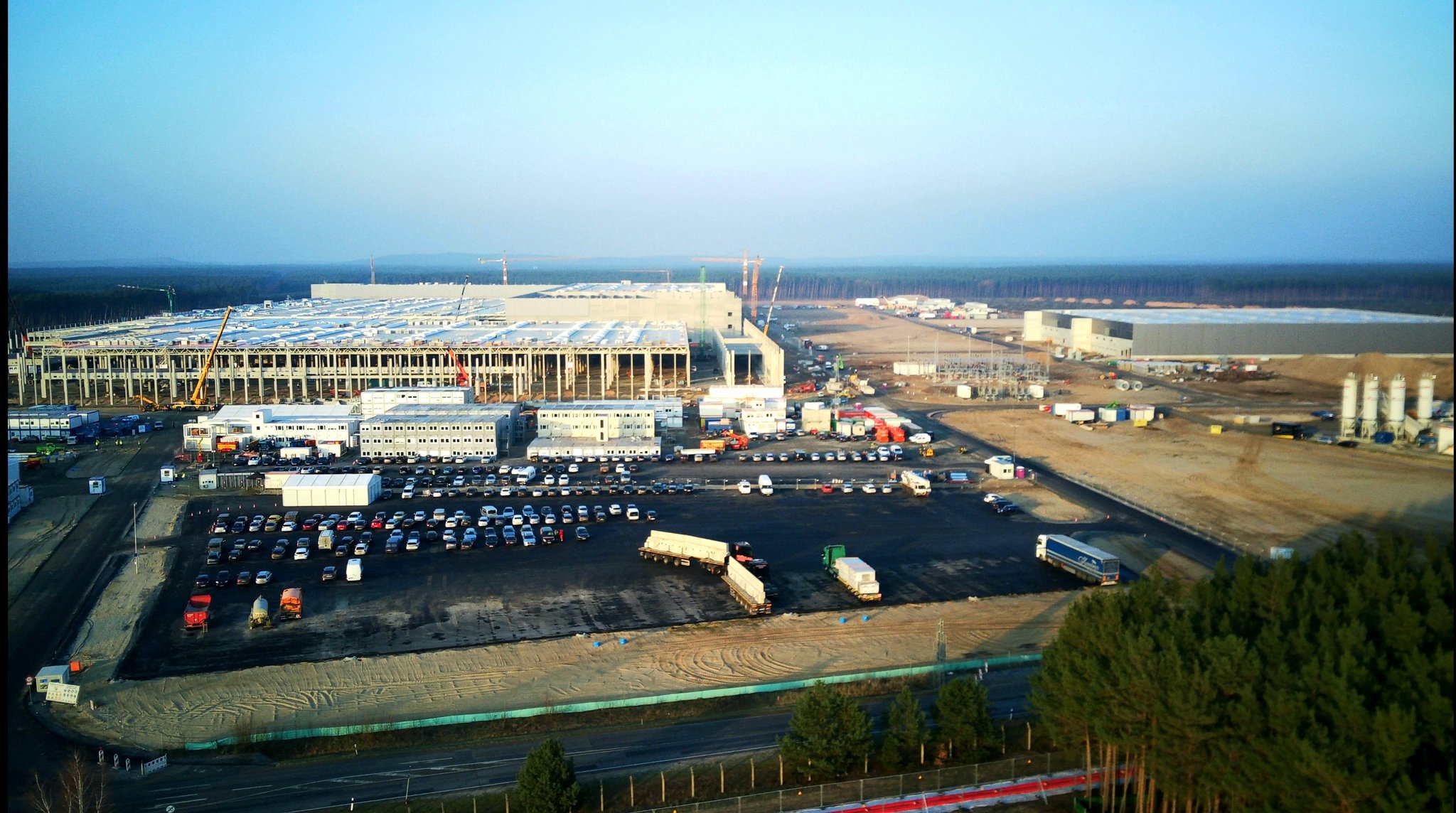
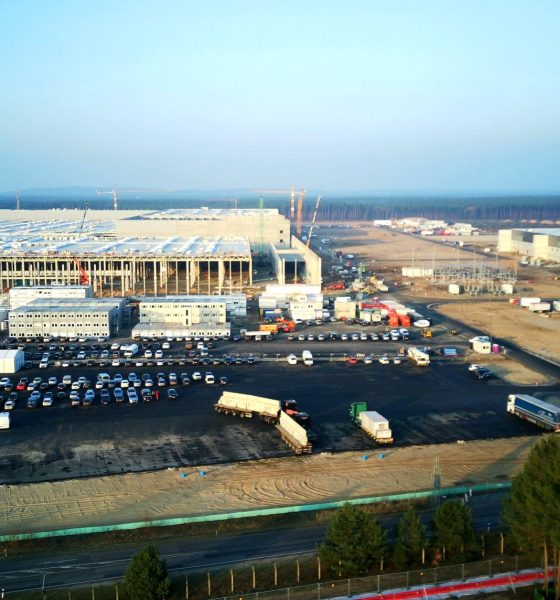
Tesla is reportedly implementing stricter health and safety measures in its Gigafactory Berlin site. The initiative comes as the Brandenburg region experiences a fresh wave of Covid infections, and as several workers in the Gigafactory Berlin site tested positive for the virus.
As noted by local media outlet Tagesspiegel, at least 20 coronavirus cases have been confirmed in Tesla’s upcoming electric vehicle production plant. About 40 workers on the site have reportedly been placed in quarantine as well.
Citing an industry insider, the publication noted that Tesla has adopted “extensive safety and hygiene measures” in the Giga Berlin complex. The company has also stated that it will be carrying out “regular employee tests with the help of its own test center on the construction site.” Information gathered by Tagesspiegel indicated that rapid Covid tests are being carried out in a tent at the Giga Berlin site.
District spokesman Mario Behnke stated that the confirmed coronavirus cases in the Giga Berlin complex are pretty unsurprising considering the ongoing spike of infections happening in the state. “It was to be expected that one of the largest construction sites in Germany would not be left out in a pandemic that was just accelerating again,” he said.
Tesla has considerable experience handling the coronavirus outbreak, with Gigafactory Shanghai being one of the facilities that experienced a mandatory shutdown last year during the pandemic’s early stages in China. Tesla developed a strict set of health and safety measures that allowed it to reopen Giga Shanghai safely.
These measures were later adopted in the Fremont Factory when reopening the site amidst the United States’ Covid shutdowns last year. Based on the recent reports from Germany, Tesla may be enacting its Covid measures for its Germany site as well.
While 20 confirmed cases and 40 workers in quarantine are notable, it is pertinent to note that the Brandenburg region had over 3,000 new Covid cases in the past seven days. This makes the infections in the Giga Berlin site about 0.6% of the total number of new coronavirus cases in the state. The Ministry of Health in Germany, for its part, announced that the Brandenburg region recorded 651 new Covid cases yesterday, following 778 new cases the day before.
Don’t hesitate to contact us for news tips. Just send a message to tips@teslarati.com to give us a heads up.


Elon Musk
The Boring Company’s latest Tesla tunnel truck mod “fits like a glove”
The Boring Company has modified a Tesla powered tunnel truck to carry freight containers underground.

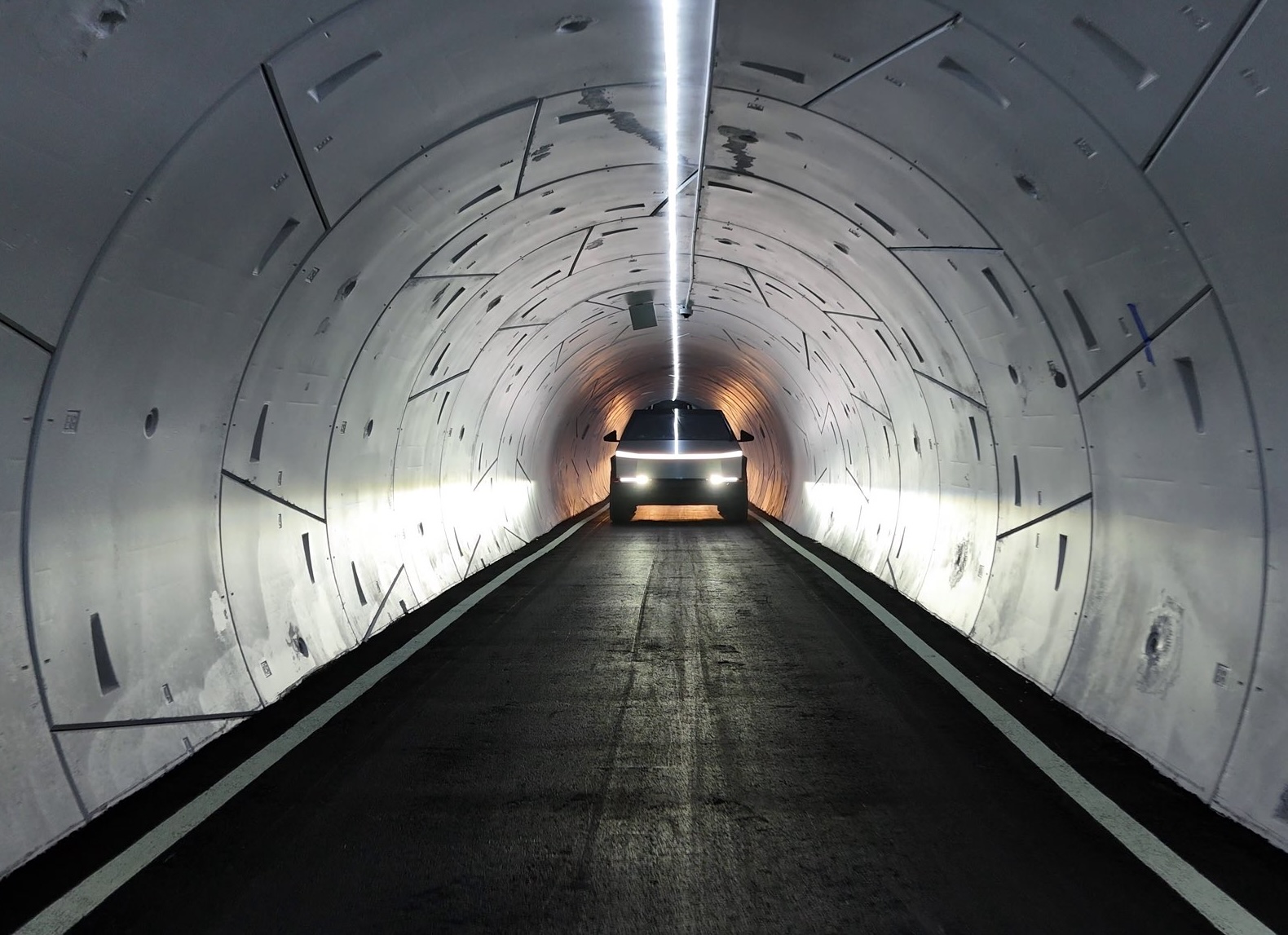
The Boring Company has found a second job for the Tesla hardware it already runs underground. In a post on X, Elon Musk’s tunneling company showed its latest Prufrock Liner Truck modified to carry a standard 20 foot shipping container. “Using TBC tunnels to transport freight,” the company wrote. “The latest Prufrock Liner Truck (using Tesla Model 3 batteries and drive units) has been modified to carry a standard 20′ shipping container. Fits like a glove!”
The photo shows a red container sitting on a long, low white chassis parked outside, with drive hardware visible at one end. The Boring Company did not say where or when freight hauling would start, which customers it has in mind, or how many trucks it is converting.
Using TBC tunnels to transport freight.
The latest Prufrock Liner Truck (using Tesla Model 3 batteries and drive units) has been modified to carry a standard 20’ shipping container.
Fits like a glove! https://t.co/VV0phWK4fc
— The Boring Company (@boringcompany) October 19, 2026
Until now, the liner trucks have hauled concrete. Teslarati reported in August on Liner Truck 3, which uses Model 3 battery packs and drive units to move more than 22,000 pounds of precast tunnel segments to the boring machine. It has 28 miles of range, tops out at 12 mph, and is piloted remotely from the company’s operations center in Texas. The freight version appears to be the same platform with a different bed, and The Boring Company has not said whether it will also be remotely piloted.
Freight has been on the company’s menu for years. When TBC updated its product lineup in 2021, its freight tunnel was described as sized to fit a standard shipping container, “barely.” The company later used the idea at Tesla’s own factory, where Prufrock 3 dug a tunnel to Giga Texas that now moves finished Cybertrucks away from the production line.
The Boring Company closed a $3 billion Series D in September at a $23 billion valuation, and Teslarati has covered how that money is tied to a UAE tunneling push and a faster Nashville build. In Nashville, Prufrock MB1 and MB2 are mining at the same time, and a third machine is expected to launch in late October. Each machine needs a steady supply of liner trucks, so any design that works for segments and containers alike gives the company more use out of the same Tesla parts.
The Vegas Loop remains the only Boring Company system open to the public, and it moves passengers in Tesla vehicles. A freight service would be a separate product, and the post gave no indication that one is close to launch. For now, it is a truck, a container and a short caption saying they fit together.

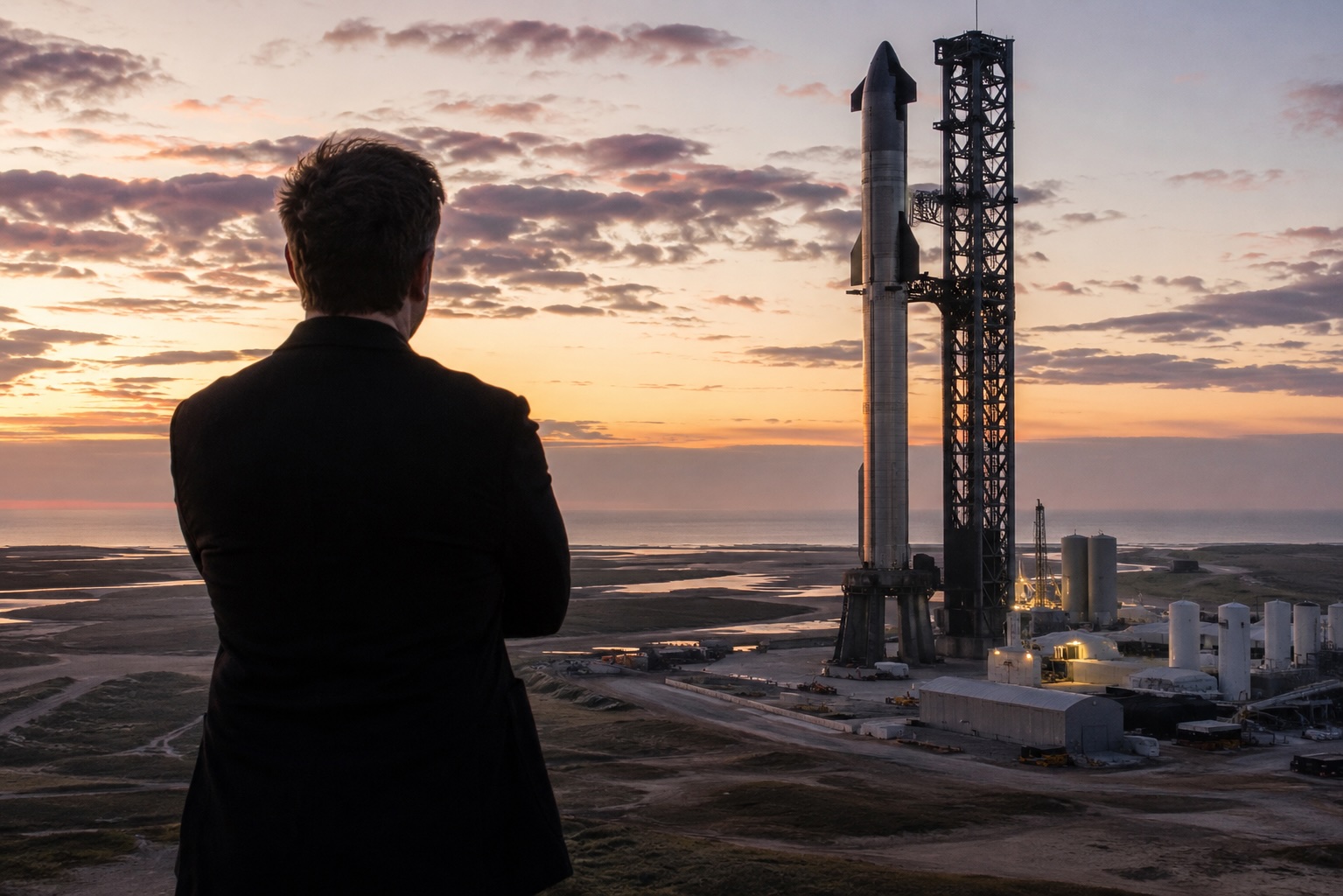
Elon Musk said he is planning to give “every one of his SpaceX shares to every kid in America” in 2027, stating that “this will be the first of many.”
SpaceX went public earlier this year, and its stock price has been relatively stable since leveling off shortly after its IPO. Based on its current price, it’s a gift of just over $10 billion to children across the United States.
It appears to be closely related to President Donald Trump’s bank accounts for children, which were set up earlier this year as Trump Accounts.
Just hours earlier, Anthropic had announced the establishment of its Anthropic Public Benefit Fund, “a new wholly-owned entity dedicated entirely to public benefit.” Musk responded by stating he recommended “giving the shares directly to the public,” and that he would be doing it that way.
Just a little bit later, Musk said children across the U.S. would be getting a share from him:
Next year, I will give one of my SpaceX shares to every kid in America.
This will be the first of many.
— Elon Musk (@elonmusk) October 19, 2026
There are roughly 70 million children, meaning someone under the age of 18, in the United States, according to the Federal Interagency Forum on Child and Family Statistics. Musk’s ownership of SpaceX stock shows he has around 849 million Class A shares of SpaceX stock, according to filings with the SEC.
Elon Musk revealed in a post on X that “Permits were impossible to get,” explaining the fate of The Boring Company’s most ambitious East Coast proposal.
The comment responded to a query about what became of his July 20, 2017 announcement that he had “just received verbal govt approval” for an underground Hyperloop connecting New York City, Philadelphia, Baltimore, and Washington, D.C., capable of carrying passengers from the Big Apple to the Nation’s Capital in just 29 minutes.
The Boring Company receives verbal ‘approval’ to build NY to DC Hyperloop tunnel
The 2017 post, which envisioned city-center stations and multiple elevators in each city, sparked immediate scrutiny. Local and state officials in New York, Philadelphia, Baltimore, and D.C. said they had no knowledge of any approval. A White House spokesperson confirmed only “promising conversations” about the transformative infrastructure.
Musk clarified shortly after that there was “still a lot of work” to do for formal approvals.
@cybrtrkguy Permits were impossible to get
— Elon Musk (@elonmusk) October 19, 2026
Limited progress followed, as Maryland Governor Larry Hogan’s administration issued a conditional utility permit and supported work near Fort Meade. In 2018, Washington, D.C., granted a preliminary permit for site preparation and excavation on a vacant lot at 53 New York Ave. NE in the NoMa neighborhood, which The Boring Company said could become a station.
A draft environmental assessment for a D.C.-Baltimore segment was released in 2019. Yet, by April 2021, the company had removed the project from its website, and the Federal Highway Administration reported receiving no indication of further interest. Communication with Maryland officials had ceased.
The full corridor would have required coordination among the District of Columbia, Maryland, Pennsylvania, New York, the Federal Highway Administration, the Army Corps of Engineers, the National Park Service, and other agencies.
Environmental reviews under the National Environmental Policy Act, utility clearances, and approvals for novel infrastructure added to the overall complexity of the project and its approval.
Speculation on the permitting barriers centers around a few factors, but a multi-state, multi-level route involving unproven high-speed vacuum-tube technology inherently triggers exhaustive safety, environmental, and engineering reviews that can stretch for years, even for conventional projects.
There are also other elements, of course, like officials who may face political exposure if a privately funded, untested system encountered anything such as cost overruns, delays, or safety issues. On the outset of this project, there were limited things such as engineering plans or demonstrated technology maturity, which also added to the potential skepticism.
The East Coast vision for Boring Co., once framed as a privately funded revolution that could reshape Northeast travel, quietly ended without construction of the promised network. Musk’s recent statement frames the outcome as a regulatory impasse, unfortunate but not unexpected.

The Boring Company’s latest Tesla tunnel truck mod “fits like a glove”

Elon Musk will give ‘every kid in America’ a SpaceX share in 2027

Elon Musk reveals why Boring Co’s biggest East Coast project never happened

SpaceX reveals how its 1 Million AI satellite network will work and prevent space collisions

Tesla Roadster: Three configs, one can fly, 0-60 in 0.8 seconds


