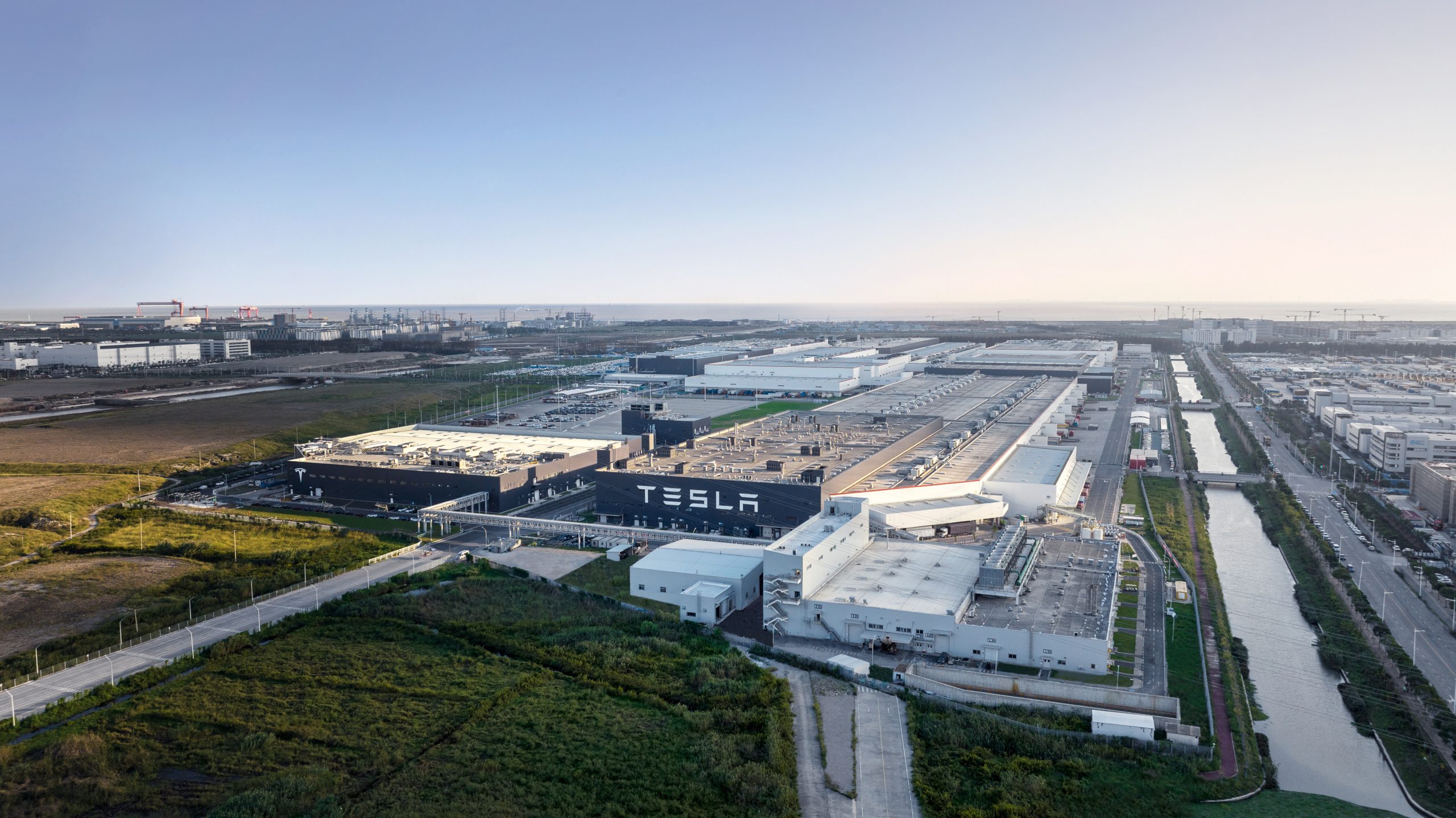
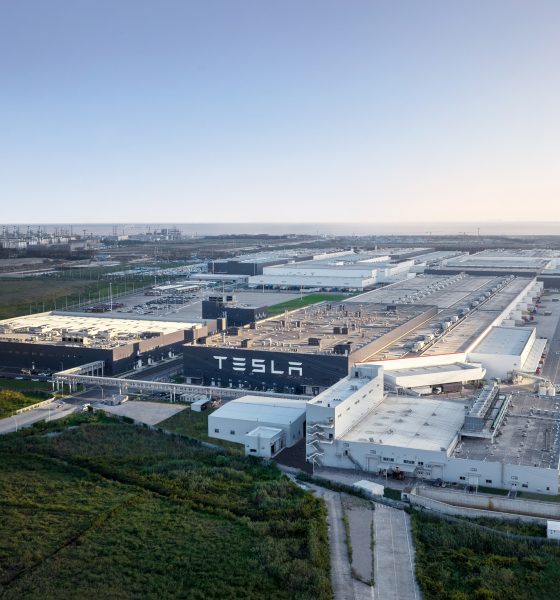

Tesla’s Gigafactory in China had its highest monthly delivery in several months in August, with the Model 3 and Model Y units built at the plant reaching their sales levels after two months in the quarter since 2022.
On Monday, X user Roland Pircher noted that, in August, Tesla’s Giga Shanghai had its highest monthly output since March, with the factory selling 86,697 Model 3 and Y units domestically and in other markets than China. The result marks the highest Tesla China has seen in the first two months of Q3 since the fourth quarter of 2022, and the second highest ever, echoing high registration numbers witnessed in the Chinese market in recent weeks.
Tesla Giga Shanghai wholesale (sales in China and exports) for August was 86,697 Model Y & 3. 🇨🇳
This is the highest result after two months in the quarter since 22Q4 and the second highest ever. pic.twitter.com/PiP4pAitWo
— Roland Pircher (@piloly) September 2, 2024
The news comes after Tesla has had some success with zero-interest loan offers on both the Model 3 and Model Y in China over the past few months. Last week, Tesla also quietly extended the loan offers to run through the end of the third quarter, which could be telling for how deliveries go in the coming weeks.
Interestingly, a local media report last week suggested that Tesla may be looking to start producing a seven-seat Model Y at Giga Shanghai in October. Currently, the automaker only produces a five-seat variant of its electric SUV, even for those produced in Germany and the U.S.
Tesla is also widely expected to debut a refreshed Model Y design, codenamed Juniper, in early 2025. Not unlike the subtle redesign and simplification of the Model 3, released last year in Asian and European markets and this year in North America, the refreshed Model Y is expected to include basic interior and exterior redesigns, and fewer parts to make it slightly more cost-effective to produce.
The Tesla Model Y Juniper has been spotted testing in recent months, though Elon Musk has continually said that there won’t be a refreshed version of the SUV coming at all this year.
Tesla ranks 4th in China’s NEV market in July, Model 3 sees huge gains
What are your thoughts? Let me know at zach@teslarati.com, find me on X at @zacharyvisconti, or send us tips at tips@teslarati.com.


Elon Musk
SpaceX’s Starship V3 is almost ready and it will change space travel forever
SpaceX is targeting April for the debut test launch of Starship V3 “Version 3”

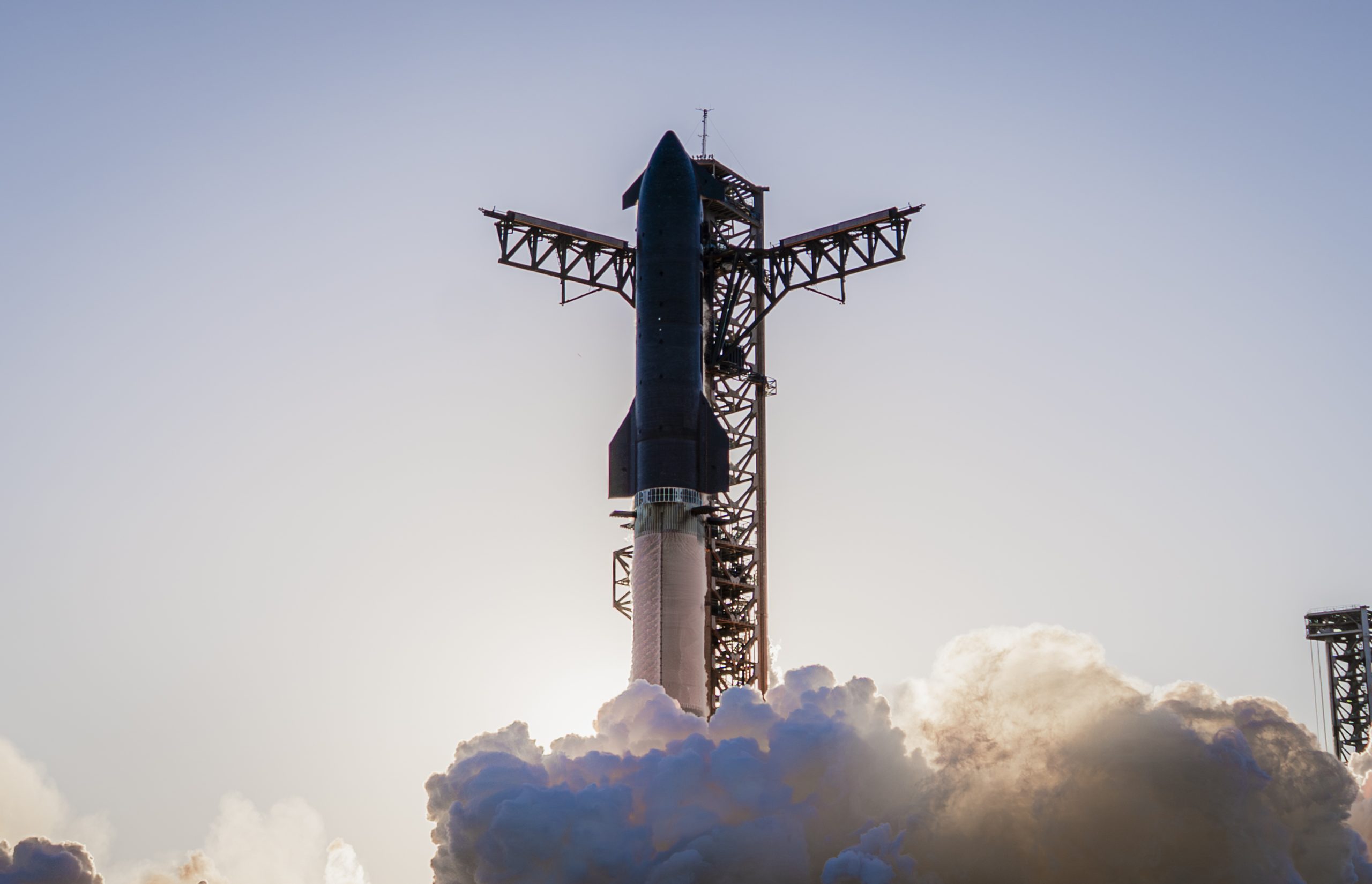
SpaceX is closing in on one of the most anticipated rocket launches in history, as the company readies for a planned April test launch and debut of its next-gen Starship V3 “Version 3”.
The latest iteration of Starship V3 has a slightly taller Super Heavy booster and Starship upper stage than their predecessors, and produce stronger, more efficient thrust using SpaceX’s upgraded Raptor 3 engines. V3 also features increased propellant capacity, targeting a total payload capacity of over 100 tons to low Earth orbit, compared to around 35 tons for its predecessor. With Musk’s lifelong aspiration to colonize Mars one day, the increased payload capacity matters enormously, because Mars missions require moving massive amounts of cargo, fuel, and eventually, people. But the most critical upgrade may be orbital refueling. SpaceX’s entire deep space architecture depends on moving large amounts of propellant in space, and having orbital refueling capabilities turn Starship from just a rocket into a true transport system. Without it, neither the Moon nor Mars is reachable at scale.
Initial Super Heavy V3 and Starbase Pad 2 activation campaign complete, wrapping up several days of testing that loaded cryogenic fuel and oxidizer on a V3 vehicle for the first time. While the 10-engine static fire ended early due to a ground-side issue, we saw successful… pic.twitter.com/uHGji17srv
— SpaceX (@SpaceX) March 18, 2026
A fully reusable Starship and Super Heavy, SpaceX aims to drive marginal launch costs down and at a tenfold reduction compared to current market leaders. To put that in perspective, getting a kilogram of cargo to orbit today costs thousands of dollars. Bring that number down far enough and space stops being an exclusive domain. That price point unlocks mass deployment of satellite constellations, large-scale science payloads, and affordable human transport beyond Earth orbit. It also means the Moon stops being a destination we visit and starts being one we inhabit.
NASA expects Starship to take off for the Moon’s South Pole in 2028, with the ultimate goal of establishing a permanently crewed science station there. A successful V3 flight this spring keeps that timeline alive. As for Mars, Musk has shifted focus toward building a self-sustaining city on the Moon first, arguing that the Moon can be reached every 10 days versus Mars’s 26-month alignment window. Mars remains the horizon, but the Moon is the proving ground.
Elon Musk hasn’t been shy with hyping the upcoming Starship V3 launch. In a social media post on Wednesday, he confirmed the first V3 flight is getting closer to launch. SpaceX also announced its initial activation campaign for V3 and Starbase Pad 2 was complete, wrapping up several days of cryogenic fuel testing on a V3 vehicle for the first time. The countdown is on. April can’t come soon enough.
Cybertruck
Tesla Cybertruck gets long-awaited safety feature
Tesla has announced the rollout of its innovative anti-dooring protection feature to the Cybertruck via the 2026.8 software update.

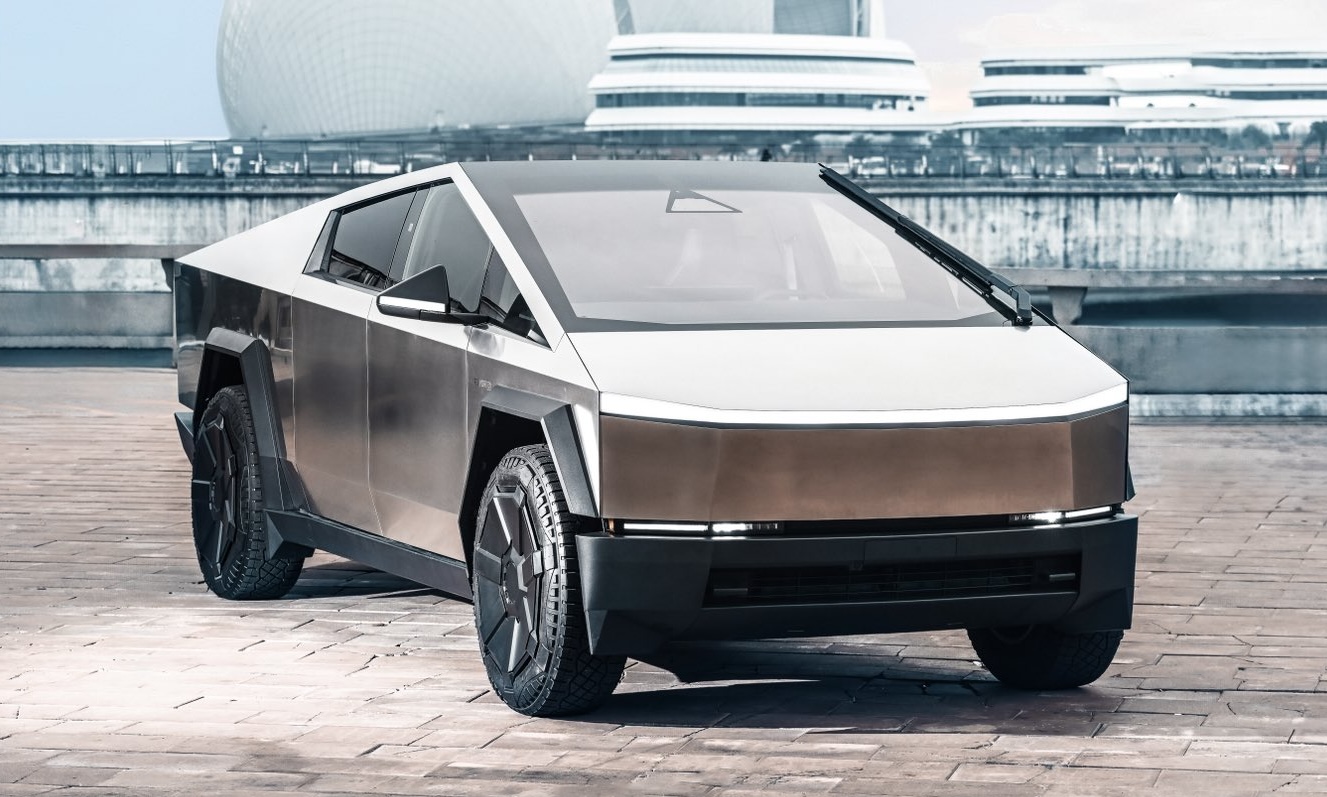
Tesla is rolling out a new and long-awaited feature to the Cybertruck all-electric pickup, and it is a safety addition geared toward pedestrian and cyclist safety, as well as accidents with other vehicles.
Tesla has announced the rollout of its innovative anti-dooring protection feature to the Cybertruck via the 2026.8 software update.
This safety enhancement uses the vehicle’s existing cameras to detect approaching cyclists, pedestrians, or vehicles in the blind spot while parked. Upon attempting to open a door, if a hazard is detected, the system activates: the blind spot indicator light flashes, an audible chime sounds, and the door will not open on the initial button press.
Drivers must wait briefly and press the button again to override, providing crucial seconds to avoid an accident.
Anti-dooring protection now rolling out to @Cybertruck
This feature comes standard on every new Model 3, Model Y & Cybertruck – using cameras to delay door opening if a cyclist, pedestrian or other vehicle is detected approaching in your blind spot
— Tesla North America (@tesla_na) March 17, 2026
The feature, also known as Blind Spot Warning While Parked, comes standard on every new Model 3 and Model Y, and is now extending to the Cybertruck. Leveraging Tesla’s vision-based system without requiring new hardware, it represents a cost-effective software solution that builds on community suggestions dating back to 2018.
This technology addresses the persistent danger of “dooring,” where a driver opens a car door into the path of a passing cyclist or pedestrian.
Tesla implemented this little-known feature to make its cars even safer
Dooring incidents are alarmingly common in urban environments.
According to Chicago data, in 2011 alone, there were 344 reported dooring crashes, accounting for approximately 20 percent of all bicycle crashes in the city, nearly one incident per day.
While numbers have fluctuated (dropping to 11 percent in 2014 before rising again), dooring consistently represents 10-20 percent of bike-related crashes in major cities.
A national analysis of emergency department data estimates over 17,000 dooring-related injuries treated in the U.S. over a decade, with many involving fractures, contusions, and head trauma, particularly affecting upper extremities.
By automatically intervening, Tesla’s system not only protects vulnerable road users but also safeguards its owners from potential liability and enhances overall road safety.
As cities promote cycling for sustainable transport, features like this demonstrate how advanced driver assistance and camera systems can evolve beyond highway driving to everyday urban scenarios.
Enthusiastic responses on social media highlight appreciation for the proactive safety measure, with some calling for broader rollout to older models where hardware permits. Tesla continues to push the boundaries of vehicle safety through over-the-air updates, making its fleet smarter and safer over time.
Elon Musk
Tesla Roadster is ‘sorcery and magic’ and might be worth the wait, Uber founder says
Perhaps the wait will be worth it, especially according to Uber founder Travis Kalanick, who recently teased the Roadster’s potential capabilities based on what he has heard from internal Tesla sources.
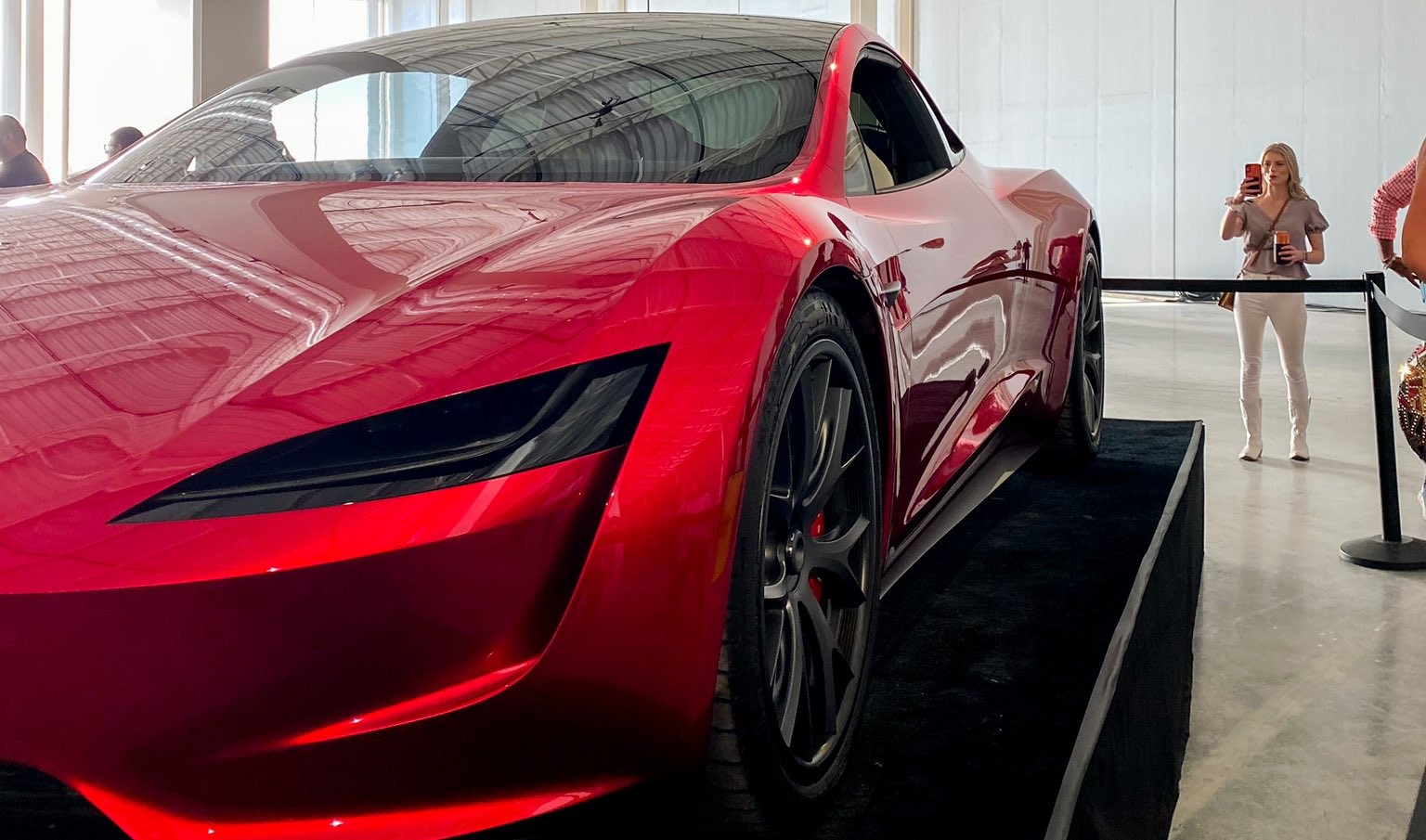
Tesla is planning to unveil the Roadster in late April after years of waiting. But the wait might be worth it, according to Travis Kalanick, the founder of Uber, who recently shed some light on his expectations for the all-electric supercar.
We all know the Roadster is supposed to have some serious capability. CEO Elon Musk has said on numerous occasions that the Roadster will be unlike anything else ever produced. It might go from 0-60 MPH in about a second, it might hover, it might have SpaceX cold gas thrusters.
However, the constant delays in the Roadster program and its unveiling event continue to send Tesla fans into confusion because they’re just not sure when, or if, they’ll ever see the finished product.
Perhaps the wait will be worth it, especially according to Uber founder Travis Kalanick, who recently teased the Roadster’s potential capabilities based on what he has heard from internal Tesla sources.
Kalanick said on X:
When I’ve run into people who are in the know, I inquire, they tell me nothing, but their eyebrows raise and their eyes widen in a way that can only mean something of sorcery and magic is coming…
— travis kalanick (@travisk) March 17, 2026
Musk has said this vehicle is not going to be geared for safety, and that, “If safety is your number one goal, do not buy the Roadster.”
There has been so much hype regarding the Roadster that it is hard to believe the company could not come through on some kind of crazy features for the vehicle.
However, the latest delay that Tesla put on the unveiling event is definitely eye-opening, especially considering it is the latest in a series of pushbacks the company has put on the vehicle for the past several years.
Tesla has made several jumps in the Roadster project over the past few months, as it has ramped up hiring for the vehicle and also applied for a patent for a new seat design.
The car has been a back-burner project for Tesla, as it has been focusing primarily on autonomy and the rollout of Robotaxi and Cybercab. Additionally, its other vehicle projects, like the Model 3 and Model Y refreshes, took precedence.
Tesla still plans to unveil the Roadster next month, so we can hope the company can stick to this timeframe.

SpaceX’s Starship V3 is almost ready and it will change space travel forever

Tesla Cybertruck gets long-awaited safety feature


