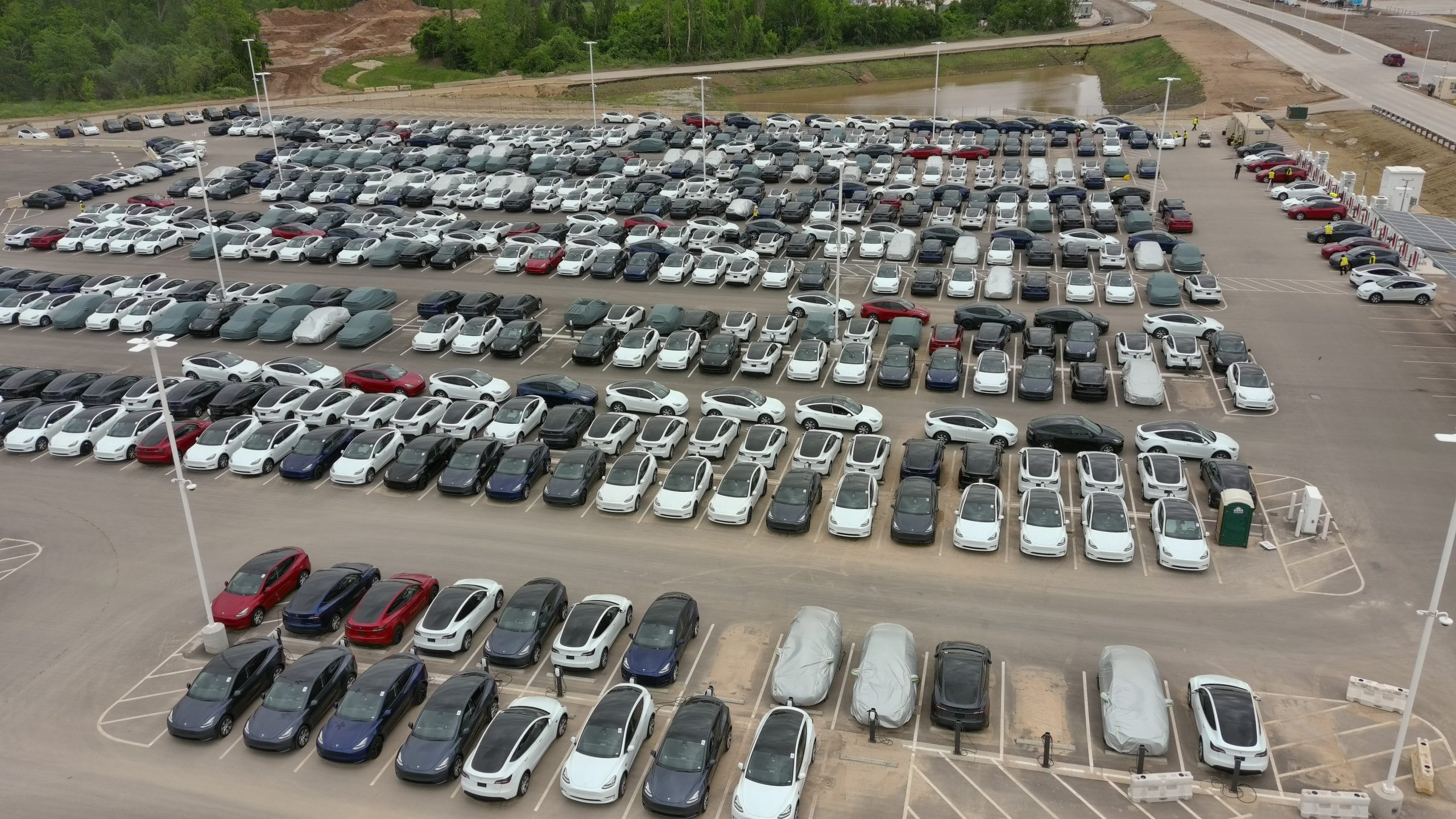

Tesla has deployed a software update to a number of its Model S, X, and Y vehicles to fix a backup cam issue, as detailed in a recall notice shared by the U.S. National Highway Traffic Safety Administration (NHTSA) last week.
The NHTSA detailed the issue in a recall letter on Tuesday, noting that certain Model S, X, and Y vehicles with the Autopilot and Full Self-Driving (FSD) computer Hardware 4.0 (HW4) would not correctly display a rearview image while in reverse. The recall applies to 199,575 vehicles with the 2023 model year that are running software versions 2023.44.30 to 2023.44.30.6, according to the notice.
Tesla immediately shared a software update to fix the issue, and the letter says the NHTSA will mail owner notification letters on March 22. The NHTSA recall number for the problem is 24V-035, while the manufacturer recall number is SB-24-00-002. The report also says that Tesla introduced the software update version 2023.44.100.1 earlier this month, after assessing the condition of the affected vehicle and software versions.
The latest recall comes as many Tesla and electric vehicle (EV) owners have criticized the use of the term “recall” for issues that can be fixed with an immediate over-the-air (OTA) software update—rather than needing to be serviced by the OEM.
Last month, it was widely publicized that 2 million Tesla vehicles were involved in a recall due to issues with Autopilot’s Autosteer system not providing enough safety checks for drivers. In response, Tesla deployed software version 2023.44.30, which fixed the issues by increasing driver attentiveness monitoring measures and by making warning labels clearer.
Even Tesla CEO Elon Musk himself has commented on the use of the term recall in the past, last February calling it “anachronistic and just flat wrong” to use the word when referring to a software update.
Definitely. The word “recall” for an over-the-air software update is anachronistic and just flat wrong!
— Elon Musk (@elonmusk) February 16, 2023
Musk pointed out in 2022 that many of these issues haven’t caused any injuries, adding that the term was outdated and inaccurate. Most automakers in the industry are also following Tesla into offering software updates to their vehicles because of their convenience, and some of them have also faced recalls on easy OTA fixes.
Despite the criticism, the NHTSA currently still defines these kinds of issues as recalls, even if they don’t need to be physically serviced.
“NHTSA is empowered with robust tools and authorities to protect the public, to investigate potential safety issues, and to compel recalls when it finds evidence of noncompliance or an unreasonable risk to safety,” said an NHTSA spokesperson to Teslarati in an emailed response on whether the agency was considering new terminology for software-based recalls.
“Manufacturers are required to initiate a recall for any repair, including a software update, that remedies an unreasonable risk to safety. NHTSA recalls can include any required repair, which includes a software update, to remedy a potential safety risk. Manufacturers are also required to submit any communications to owners, dealers, and others about any software updates that address a defect, whether it is safety related or not.”
Updated 1/29/24: Added quote from the NHTSA.
Tesla advised by US Senators to recall vehicles over alleged suspension faults
What are your thoughts? Let me know at zach@teslarati.com, find me on X at @zacharyvisconti, or send your tips to us at tips@teslarati.com.


Cybertruck
Tesla drops latest hint that new Cybertruck trim is selling like hotcakes
According to Tesla’s Online Design Studio, the new All-Wheel-Drive Cybertruck will now be delivered in April 2027. Earlier orders are still slated for early this Summer, but orders from here on forward are now officially pushed into next year:

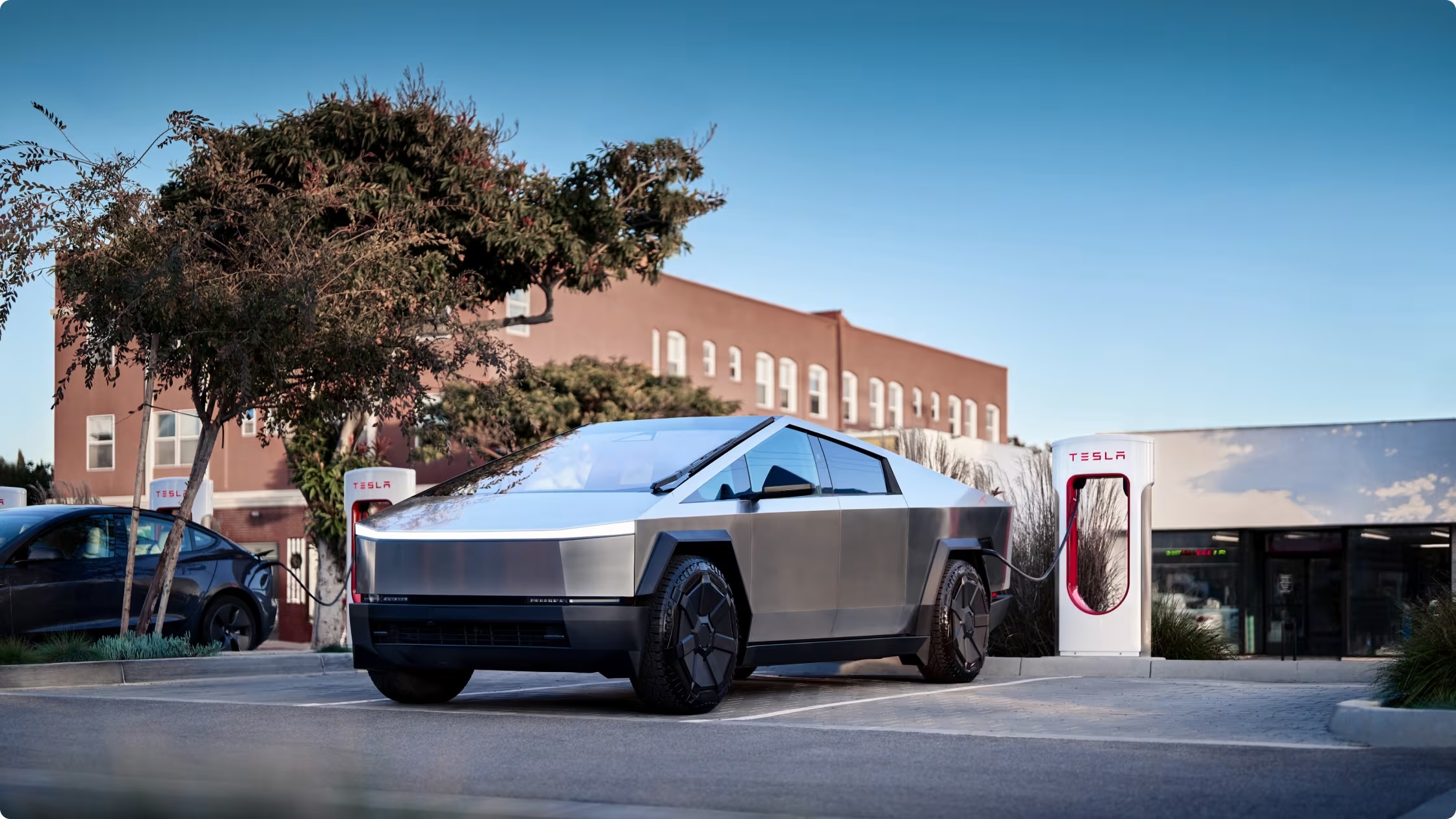
Tesla’s new Cybertruck offering has had its delivery date pushed back once again. This is now the second time, and deliveries for the newest orders are now pushed well into 2027.
According to Tesla’s Online Design Studio, the new All-Wheel-Drive Cybertruck will now be delivered in April 2027. Earlier orders are still slated for early this Summer, but orders from here on forward are now officially pushed into next year:
🚨 Tesla has updated the $59,990 Cybertruck Dual Motor AWD’s estimated delivery date to April 2027.
First deliveries are still slated for June, but if you order it now, you’ll be waiting over a year.
Demand appears to be off the charts for the new Cybertruck and consumers are… pic.twitter.com/raDCCeC0zP
— TESLARATI (@Teslarati) February 26, 2026
Just three days ago, the initial delivery date of June 2026 was pushed back to early Fall, and now, that date has officially moved to April 2027.
The fact that Tesla has had to push back deliveries once again proves one of two things: either Tesla has slow production plans for the new Cybertruck trim, or demand is off the charts.
Judging by how Tesla is already planning to raise the price based on demand in just a few days, it seems like the company knows it is giving a tremendous deal on this spec of Cybertruck, and units are moving quickly.
That points more toward demand and not necessarily to slower production plans, but it is not confirmed.
Tesla Cybertruck’s newest trim will undergo massive change in ten days, Musk says
Tesla is set to hike the price on March 1, so tomorrow will be the final day to grab the new Cybertruck trim for just $59,990.
It features:
- Dual Motor AWD w/ est. 325 mi of range
- Powered tonneau cover
- Bed outlets (2x 120V + 1x 240V) & Powershare capability
- Coil springs w/ adaptive damping
- Heated first-row seats w/ textile material that is easy to clean
- Steer-by-wire & Four Wheel Steering
- 6’ x 4’ composite bed
- Towing capacity of up to 7,500 lbs
- Powered frunk
Interestingly, the price offering is fairly close to what Tesla unveiled back in late 2019.
Elon Musk
Elon Musk outlines plan for first Starship tower catch attempt
Musk confirmed that Starship V3 Ship 1 (SN1) is headed for ground tests and expressed strong confidence in the updated vehicle design.

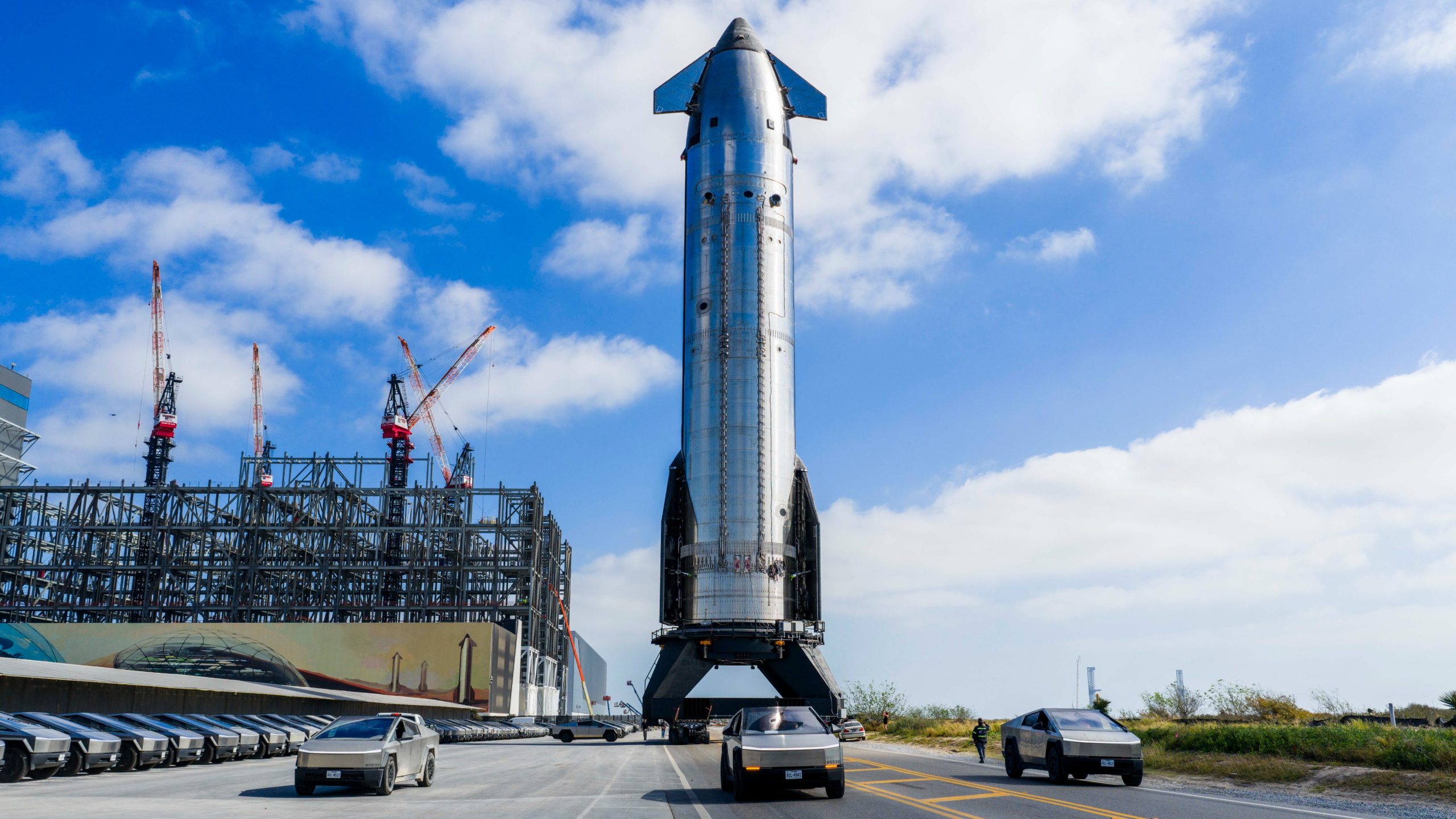
Elon Musk has clarified when SpaceX will first attempt to catch Starship’s upper stage with its launch tower. The CEO’s update provides the clearest teaser yet for the spacecraft’s recovery roadmap.
Musk shared the details in recent posts on X. In his initial post, Musk confirmed that Starship V3 Ship 1 (SN1) is headed for ground tests and expressed strong confidence in the updated vehicle design.
“Starship V3 SN1 headed for ground tests. I am highly confident that the V3 design will achieve full reusability,” Musk wrote.
In a follow-up post, Musk addressed when SpaceX would attempt to catch the upper stage using the launch tower’s robotic arms.
“Should note that SpaceX will only try to catch the ship with the tower after two perfect soft landings in the ocean. The risk of the ship breaking up over land needs to be very low,” Musk clarified.
His remarks suggest that SpaceX is deliberately reducing risk before attempting a tower catch of Starship’s upper stage. Such a milestone would mark a major step towards the full reuse of the Starship system.
SpaceX is currently targeting the first Starship V3 flight of 2026 this coming March. The spacecraft’s V3 iteration is widely viewed as a key milestone in SpaceX’s long-term strategy to make Starship fully reusable.
Starship V3 features a number of key upgrades over its previous iterations. The vehicle is equipped with SpaceX’s Raptor V3 engines, which are designed to deliver significantly higher thrust than earlier versions while reducing cost and weight.
The V3 design is also expected to be optimized for manufacturability, a critical step if SpaceX intends to scale the spacecraft’s production toward frequent launches for Starlink, lunar missions, and eventually Mars.
News
Tesla FSD (Supervised) could be approved in the Netherlands next month: Musk
Musk shared the update during a recent interview at Giga Berlin.

Tesla CEO Elon Musk shared that Full Self-Driving (FSD) could receive regulatory approval in the Netherlands as soon as March 20, potentially marking a major step forward for Tesla’s advanced driver-assistance rollout in Europe.
Musk shared the update during a recent interview at Giga Berlin, noting that the date was provided by local authorities.
“Tesla has the most advanced real-world AI, and hopefully, it will be approved soon in Europe. We’re told by the authorities that March 20th, it’ll be approved in the Netherlands,’ what I was told,” Musk stated.
“Hopefully, that date remains the same. But I think people in Europe are going to be pretty blown away by how good the Tesla car AI is in being able to drive.”
Tesla’s FSD system relies on vision-based neural networks trained on real-world driving data, allowing vehicles to navigate using cameras and AI rather than traditional sensor-heavy solutions.
The performance of FSD Supervised has so far been impressive. As per Tesla’s safety report, Full Self-Driving Supervised has already traveled 8.3 billion miles. So far, vehicles operating with FSD Supervised engaged recorded one major collision every 5,300,676 miles.
In comparison, Teslas driven manually with Active Safety systems recorded one major collision every 2,175,763 miles, while Teslas driven manually without Active Safety recorded one major collision every 855,132 miles. The U.S. average during the same period was one major collision every 660,164 miles.
If approval is granted on March 20, the Netherlands could become the first European market to greenlight Tesla’s latest supervised FSD (Supervised) software under updated regulatory frameworks. Tesla has been working to secure expanded FSD access across Europe, where regulatory standards differ significantly from those in the United States. Approval in the Netherlands would likely serve as a foundation for broader EU adoption, though additional country-level clearances may still be required.

Tesla drops latest hint that new Cybertruck trim is selling like hotcakes

Elon Musk outlines plan for first Starship tower catch attempt


