Lifestyle
Unplugged Performance unveils first ever Tesla Cybertruck aftermarket wheel

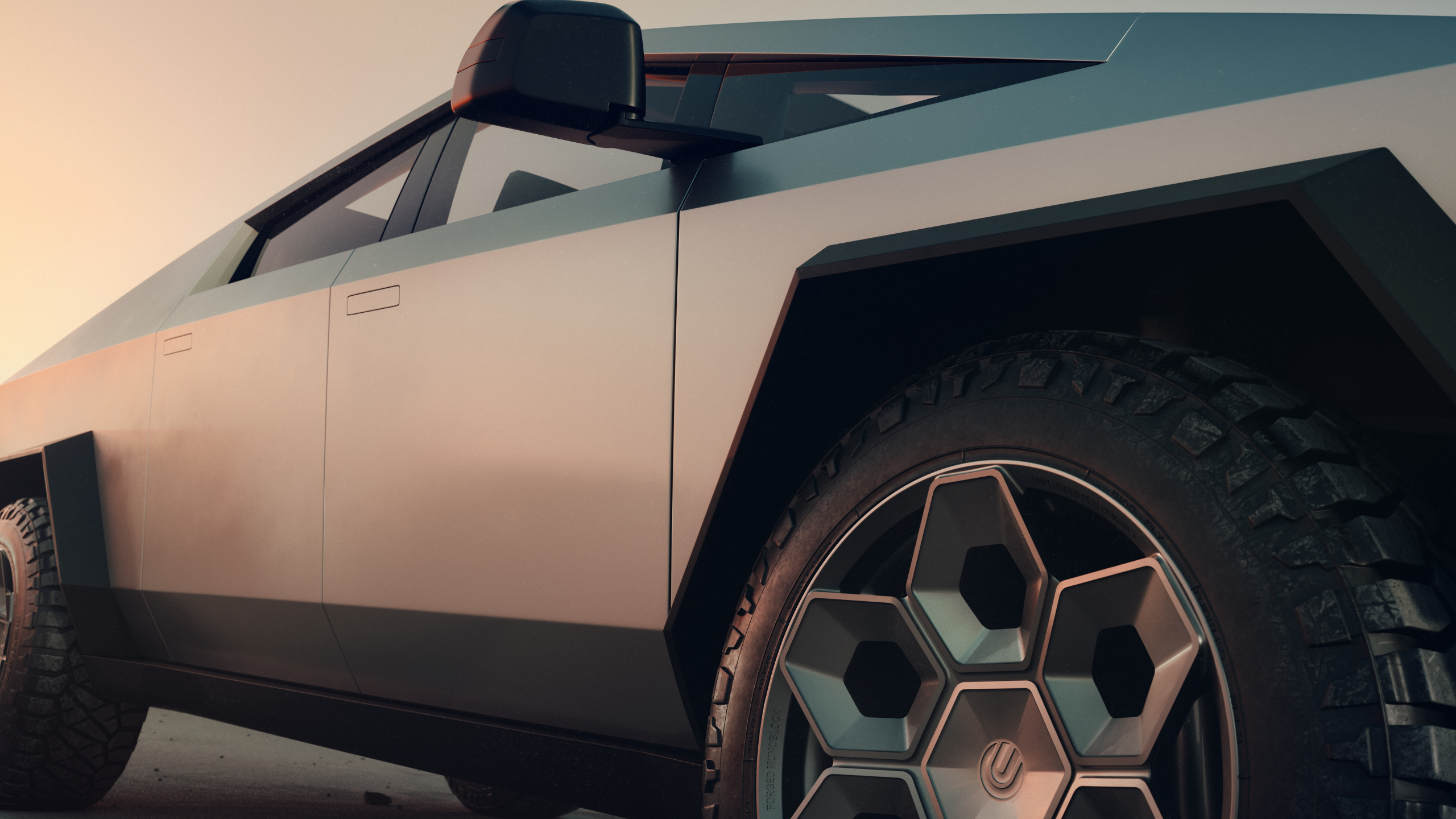
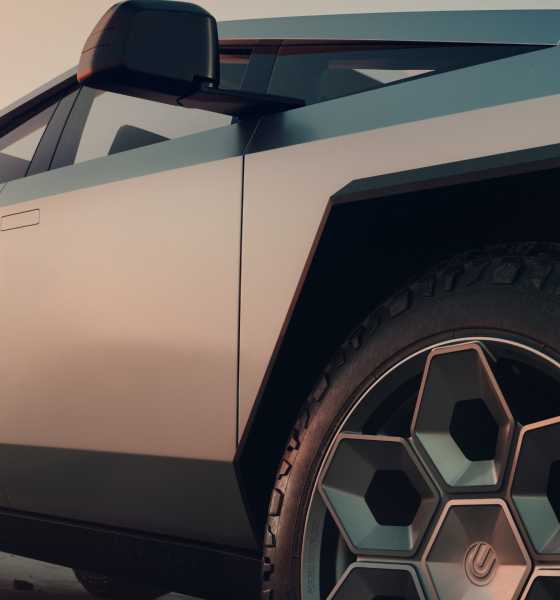
Unplugged Performance (UP) unveiled the first-ever Tesla Cybertruck aftermarket wheel on Wednesday. The CYBRHEX Forged wheel was designed by UP which partnered with Sasha Selipanov, an accomplished sports car designer whose work can be seen on the Bugatti Chiron, Lamborghini Huracan, Koenigsegg Gemera, Koenigsegg CC850, and many more.
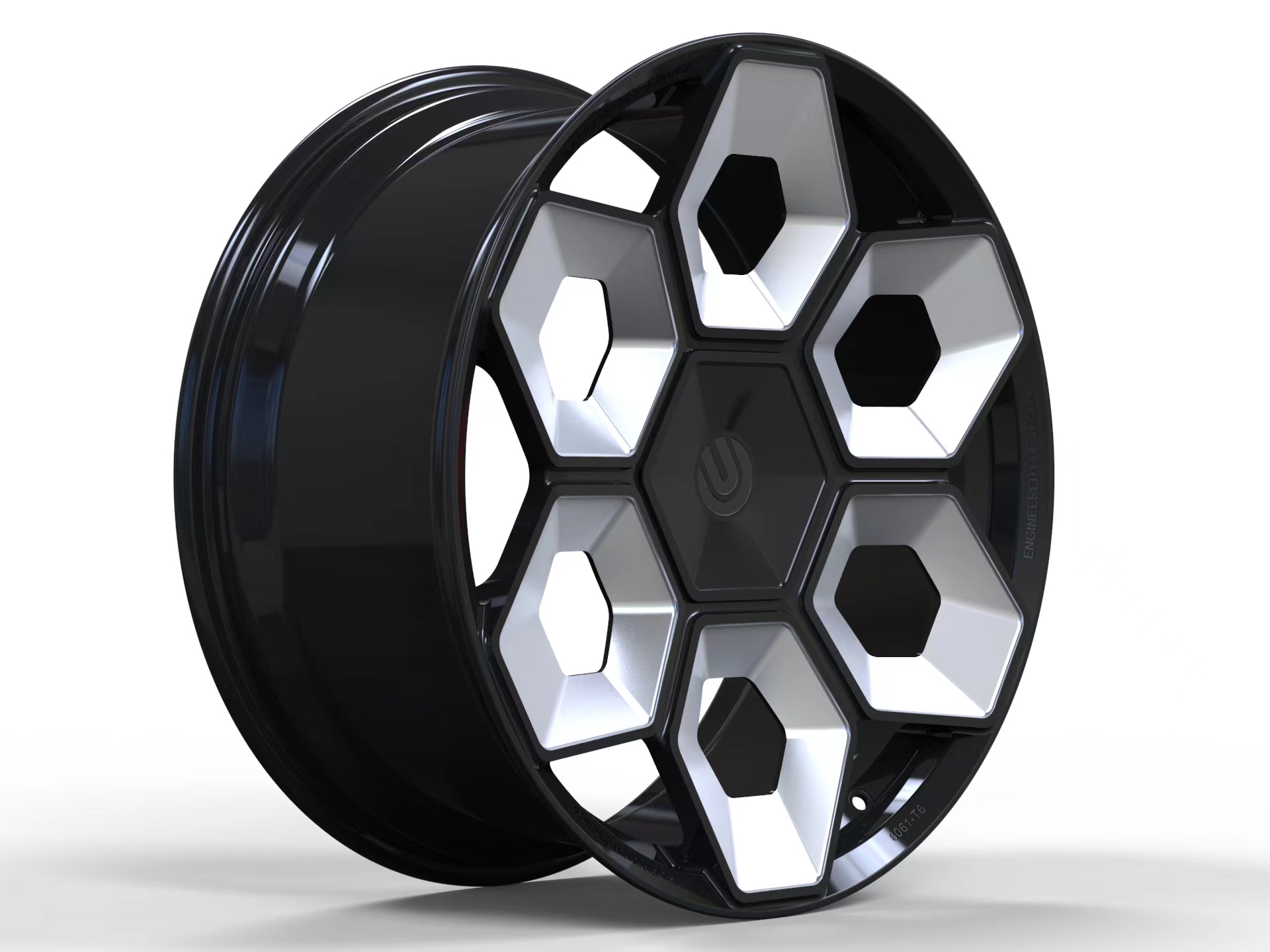
UP CEO Ben Schaffer was having a late-night conversation with Selipanov about design. Selipanov showed an old concept car that he developed, the Pharoah. The design dated back to 2007 and predated Selipanov’s work with Lamborghini, Bugatti, and Koenigsegg. Schaffer immediately liked it and thought it brought up feelings of an unlimited future where the lines between retro and futuristic designs blurred. The CYBRHEX wheel is the result of that late-night conversation.
Along with the new aftermarket Cybertruck wheel, Schaffer said that the new design is a sign of things to come regarding UP’s support of the Cybertruck’s future.
Credit: Unplugged Performance
“The Cybertruck represents an exciting phase and future for our brand. Having started as the first engineering house to enhance Tesla vehicles, we’re thrilled with the Cybertruck’s potential to cross all boundaries and surpass legacy assumptions of what a vehicle can do,” said Schaffer
“We have enormous plans to support the Cybertruck future, and this wheel debut is a sign of things to come as we re-write expectations. It remains our priority at UP to continue our partnerships with cutting-edge, world-class factories as well as the brightest and best minds in design.”
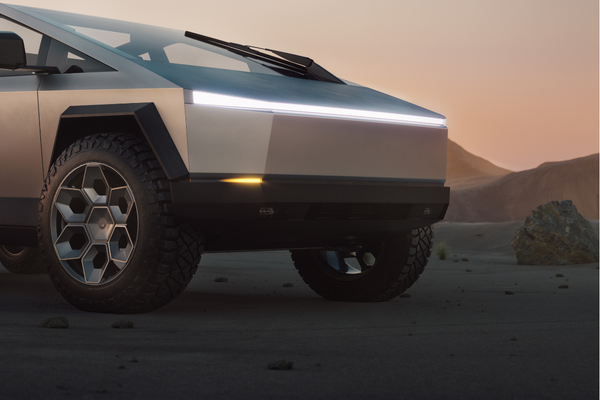
Schaffer also shared thoughts about the design of both the wheel and electric vehicle it was made for.
“There’s a shared quality of timelessness with CYBRHEX design and the Cybertruck. The 70’s inspired wedge design in both cases represents a visual that would be equally appropriate inserted in scenes from the 1970s, the 2000s, or even a hundred years into the future. This design aesthetic also would be equally appropriate on earth or roaming the surface of other planets. A desire to push the limits of design, and a shared passion for the art of making exciting cars inspired our collaboration to turn the concept into reality.” he said.
Selipanov added that he was excited to team up with UP for the new design and wanted something that would be fit for both Earth and Mars.
“I’m excited to team up with Unplugged Performance for this new wheel design. We aimed for something that looks equally at home on Earth and on Mars. The result is a great match for the brutalist aesthetics of the Tesla Cybertruck.”Selipanov said.
“It is fantastic to see the return of brutalist “wedge” shapes to car design. Pioneered in the 1970s by the great Italian design masters, this form language always looked towards the future and towards space exploration in particular. My 2007 Pharaoh sketches were inspired by that era in car design, I am thrilled to have contributed to Unplugged Performance’s new CYBRHEX wheel,” he added.
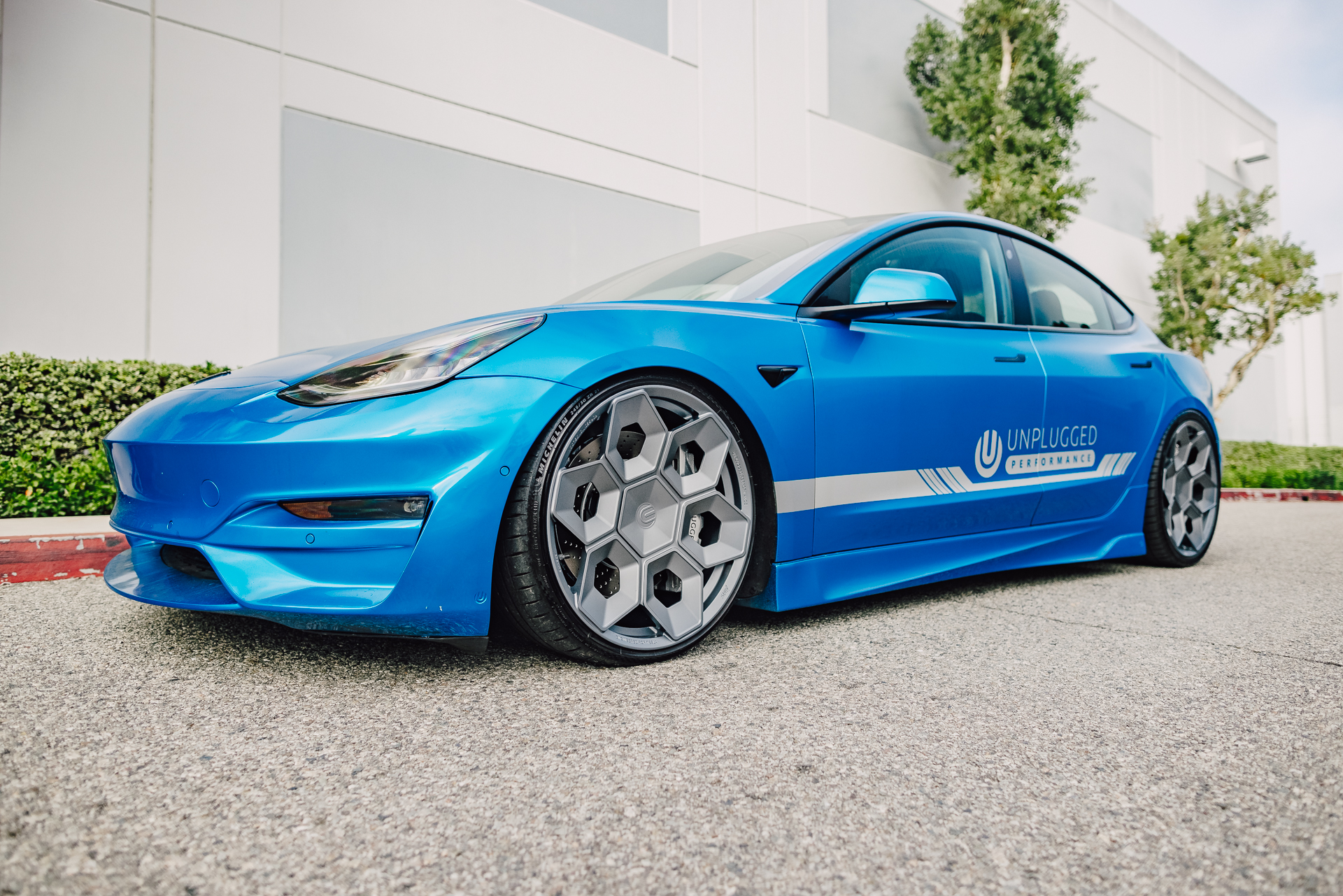
“The ‘CG in real-life’ CYBRHEX design has already been fitted on the Model S Plaid with Tesla’s large carbon ceramic brake kit and has been developed for the entire range of Tesla Vehicles, including the Model S, Model 3, Model X and Model Y,” UP said in a press release. You can view all the photos in the gallery below.
[rl_gallery id=”221206″]
Disclosure: Johnna is a $TSLA shareholder and believes in Tesla’s mission.
Your feedback is essential. If you have any comments or concerns or see a typo, you can email me at johnna@teslarati.com. You can also reach me on Twitter at @JohnnaCrider1.
Teslarati is now on TikTok. Follow us for interactive news & more. Teslarati is now on TikTok. Follow us for interactive news & more. You can also follow Teslarati on LinkedIn, Twitter, Instagram, and Facebook.


Elon Musk
Elon Musk’s Boring Company lands a new Middle East deal, and Nashville is about to get faster
The Boring Company signs Abu Dhabi tunnel agreement while adding more Prufrock machines in Nashville.

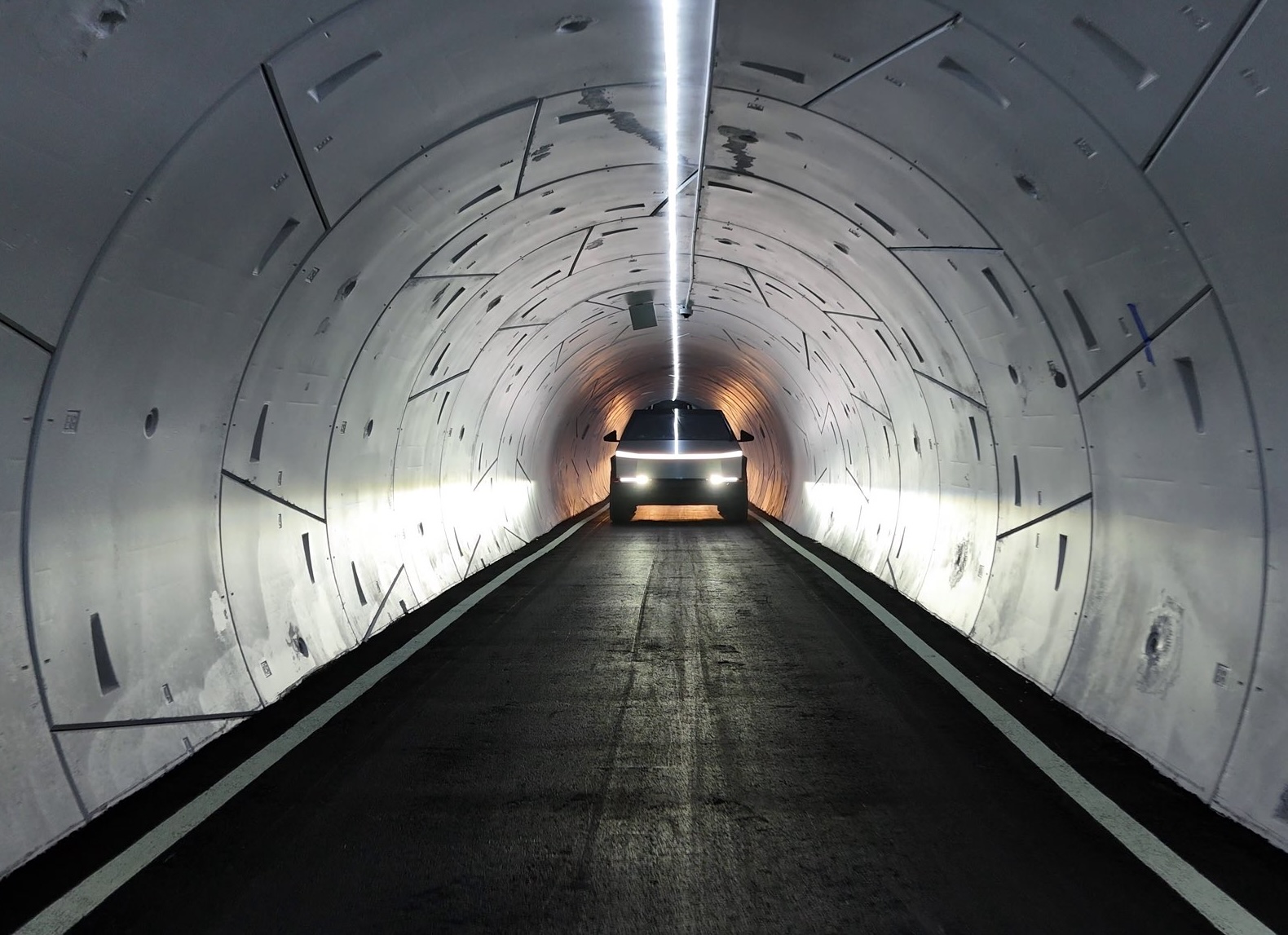
The Boring Company has signed an agreement with Abu Dhabi to study underground transport and utility tunnels across the emirate, adding a second UAE city to its pipeline as it prepares to also scale up tunneling back home in Nashville.
The deal was signed Thursday at the Liveability and Investment Exhibition (LIVEX 2026) by Boring Company President Steve Davis and Maysarah Mahmoud Salim Eid, director general of the Abu Dhabi Projects and Infrastructure Centre (ADPIC), according to the Abu Dhabi Media Office. Mohamed Ali Al Shorafa, chairman of the emirate’s Department of Municipalities and Transport, attended the signing.
Under the agreement, the two sides will assess feasibility, delivery and operating models for tunnels that could carry passengers or utilities. They will also look at Abu Dhabi’s potential as a regional hub for tunneling work. The current phase is exploratory, and no construction commitment or project budget has been announced.
“Abu Dhabi provides an ideal environment to explore the next generation of underground infrastructure solutions, supported by its ambitious growth vision and strong commitment to advanced technologies,”
Davis said. He added that the company wants to assess how tunnels can “expand urban capacity more efficiently, and enable better use of available space.”
The timing lines up with the money, considering last month, The Boring Company closed a $3 billion Series D led by the UAE and affiliated investors, valuing the company at $23 billion, as Teslarati reported. That round came with a commitment to build more than 150 kilometers of tunnel across the UAE, separate from the Dubai Loop pilot already under contract with Dubai’s Roads and Transport Authority. That pilot covers 6.4 kilometers and four stations linking DIFC and Dubai Mall at a cost of about $154 million.
Back home, The Boring Company projects in Nashville are also scaling up, with the company telling local NewsChannel 5 that a third Prufrock machine could start digging the Music City Loop in late October. A fourth is also targeted before the end of the year. Two machines are already mining Nashville limestone at the same time, and work is underway on a new launch site for the third.
The company said it has made more than 300 design and performance upgrades to its original Nashville machine. It is also working with property owners on more than 40 planned stations, with approvals in place for a future Nashville International Airport connection, a downtown station near the Music City Center, and stops at residential towers and the JW Marriott.
Construction on the Music City Loop began the same evening Tennessee and federal regulators approved the project’s lease in February, and the company targeted its first operational segment for late 2026. Back in Las Vegas, The Boring Company has said it plans to double its Vegas Loop station count by year’s end.
Lifestyle
Tesla FSD changed its mind mid-intersection, and it may have saved a life
Tesla shares dashcam footage of FSD Supervised stopping mid intersection to avoid a T-bone crash.
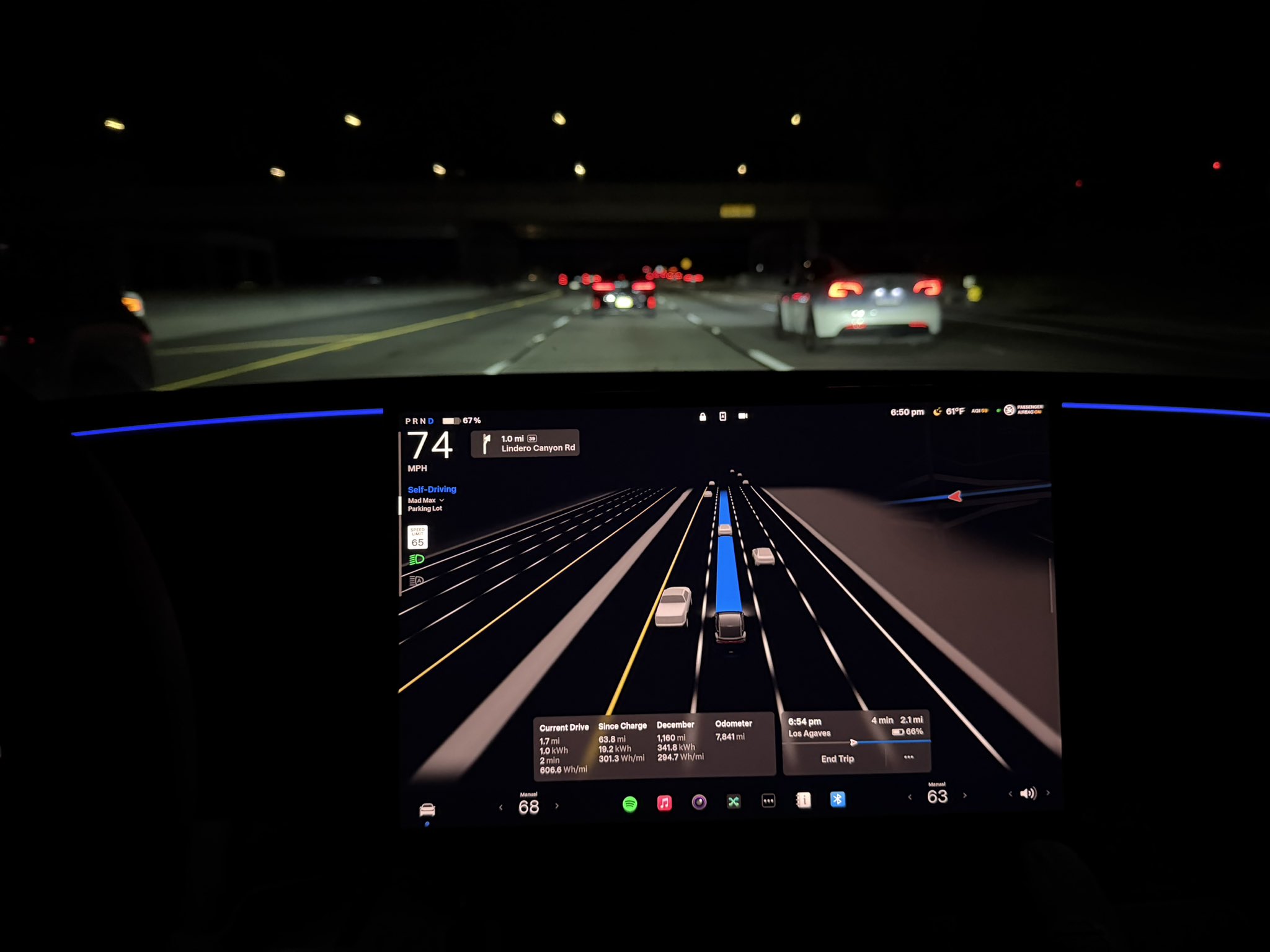
Tesla is putting another Full Self-Driving save in front of its 24.8 million followers on X.
On Tuesday morning, Tesla’s main account shared a dashcam clip with the caption “FSD Supervised preventing T-bone crash.” The footage came from an owner posting as TheNewGrid, who described what happened at a stop sign: “I looked at the car coming to the stop sign figured they would stop, my car went, then came to a stop mid intersection as they flew by. Had I been manually driving this would have resulted in a crash.”
The sequence is the notable part. FSD had already started crossing when the other driver ran the stop sign. Instead of pressing on, the car braked hard in the middle of the intersection and let the crossing vehicle pass in front of it. By the owner’s own account, they had made the same assumption the software initially made, that the other car would stop, and would not have corrected in time.
FSD Supervised preventing T-bone crash
— Tesla (@Tesla) October 6, 2026
The clip is the latest in a run of safety posts Tesla has amplified over the past several days. On Saturday, the company shared a video from Selling Sunset star Jason Oppenheim, who sold his Bentley for a Model Y and said he was buying Teslas with FSD for 10 of his employees. Ashok Elluswamy, who leads Tesla AI, followed up by writing that Tesla self-driving “reacts to other people cutting into your path with super-human response times.” On Monday, a Cybertruck owner posted footage of FSD moving across three lanes from a red light to clear a path for an ambulance approaching from behind.
This recent clip also lands a few weeks after Tesla began shipping Automatic Collision Evasion with FSD v14.3.9, a feature that can activate FSD on the driver’s behalf when a frontal collision is imminent or the driver appears distracted. Elluswamy said in September that “even earlier prediction of hazards, even faster reaction time and overall significantly better safety and collision avoidance” are coming with v15, the release Tesla has tied to round the clock Robotaxi operation.
The safety messaging matters beyond social media. Tesla has said FSD Supervised was 4.1 times less likely to crash than manual driving across 100 million kilometers on European roads, and it has been putting those figures in front of regulators. Eight EU countries have now approved FSD Supervised, with Croatia the most recent, but the EU’s bloc-wide vote originally set for October 6 has been pushed to December at the earliest.
FSD Supervised is still a Level 2 system, and the driver remains responsible at all times. Even heavy users find reasons to step in. Teslarati’s Joey Klender, who uses FSD for about 76 percent of his driving, laid out five recurring issues on Tuesday that still prompt him to intervene. Clips like this one show the other column of that ledger: moments where the software caught a mistake a human was about to make.
Lifestyle
Tesla wins over Netflix’s Selling Sunset star, who’s now ditching his Bentley
Selling Sunset’s Jason Oppenheim swapped his Bentley for a Tesla and promised ten for employees.
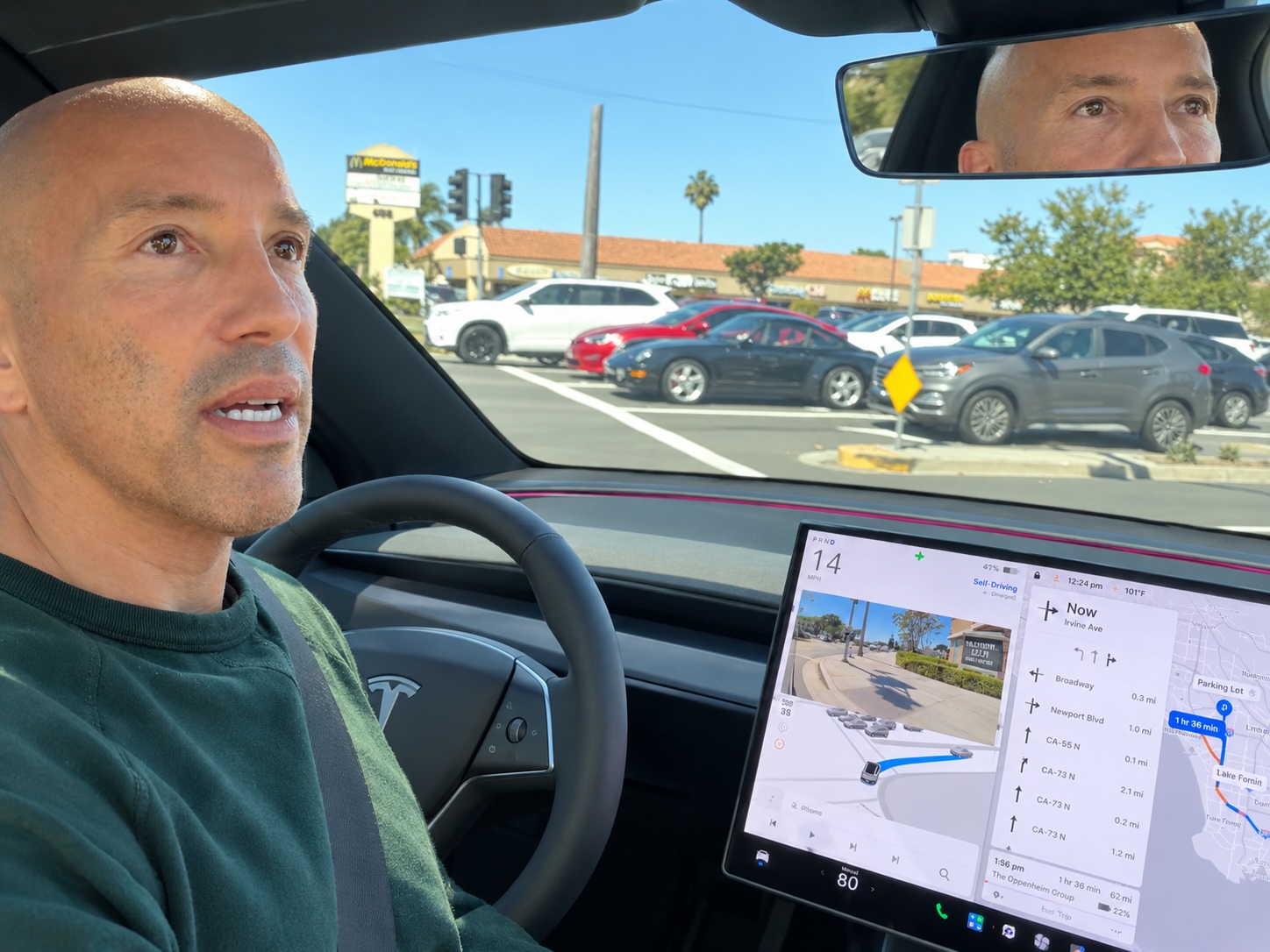
Jason Oppenheim, the luxury real estate broker best known as the star of Netflix’s Selling Sunset, has parked his Bentley for good and moved into a Tesla Model Y, and he says Full Self-Driving (Supervised) is the reason.
Oppenheim, who founded The Oppenheim Group, the Los Angeles brokerage at the center of the show, posted a video to X on Saturday evening that he called “the most important video I’ve ever posted.” In it, he rides from Newport Beach to his firm’s Los Angeles office, a trip he put at roughly an hour and 15 minutes, while FSD handles the drive and parks the car without him touching the wheel or the accelerator. He said he handed the Bentley to his father because he no longer has any use for it.
Tesla shared the clip from its main account on X about two hours later, pulling out the quote that has since spread well beyond the Tesla community:
“[FSD Supervised] is life-changing. I was on the phone with my brother last night, and I made him buy one. He literally bought one while we were talking. I’m buying 10 of my employees a Tesla with FSD. It’s 8x safer than the average driver. There’s nothing more important than the safety of you and your loved ones.”
Oppenheim was candid about why the safety pitch landed with him. He admitted in the video that he is a distracted driver who answers emails and texts behind the wheel, and framed the employee purchases as a way to keep his team off their phones while driving. Elon Musk posted “Tesla FSD feels like magic” less than half an hour after the video went live.
The endorsement lands at a convenient moment for Tesla. The company delivered 486,532 vehicles in Q3, beating Wall Street’s estimates and marking its best quarter ever without the $7,500 federal EV tax credit.
A public service announcement. https://t.co/NYa1IpKwBX
— Jason Oppenheim (@OppenheimJason) October 4, 2026
Tesla FSD has been subscription only in the U.S. since February at $99 per month, and Tesla said in its Q2 update that active subscriptions hit 1.48 million, up 56 percent year over year, with more than 55 percent of new North American deliveries leaving with FSD attached. That attach rate is the figure Ron Baron cited last month when he told CNBC “the time to buy the stock is now.” At current pricing, Oppenheim’s 10 employee cars alone would add $990 a month, or about $11,880 a year, in FSD revenue.
Tesla AI head Ashok Elluswamy said in July that FSD had logged more than 12 billion miles while going roughly twice as far between collisions as manual driving. FSD also remains a supervised system, so Oppenheim and his employees are still required to watch the road, even as Tesla rolls out v14.3.10 with Automatic Collision Evasion, which can steer or brake on its own to avoid a frontal crash.

It’s official: SpaceX takes aim at Verizon, AT&T, and T-Mobile

Trump presents Elon Musk with National Medal of Science, calls him “modern-day Thomas Edison”

Elon Musk’s Boring Company lands a new Middle East deal, and Nashville is about to get faster

The Pentagon taps Elon Musk to design the battlefield of the future

Tesla Roadster’s new patent preps white-knuckle speeds, keeping it grounded


