Elon Musk
USDOT Secretary visits Tesla Giga Texas, hints at national autonomous vehicle standards
The Transportation Secretary also toured the factory’s production lines and spoke with CEO Elon Musk.

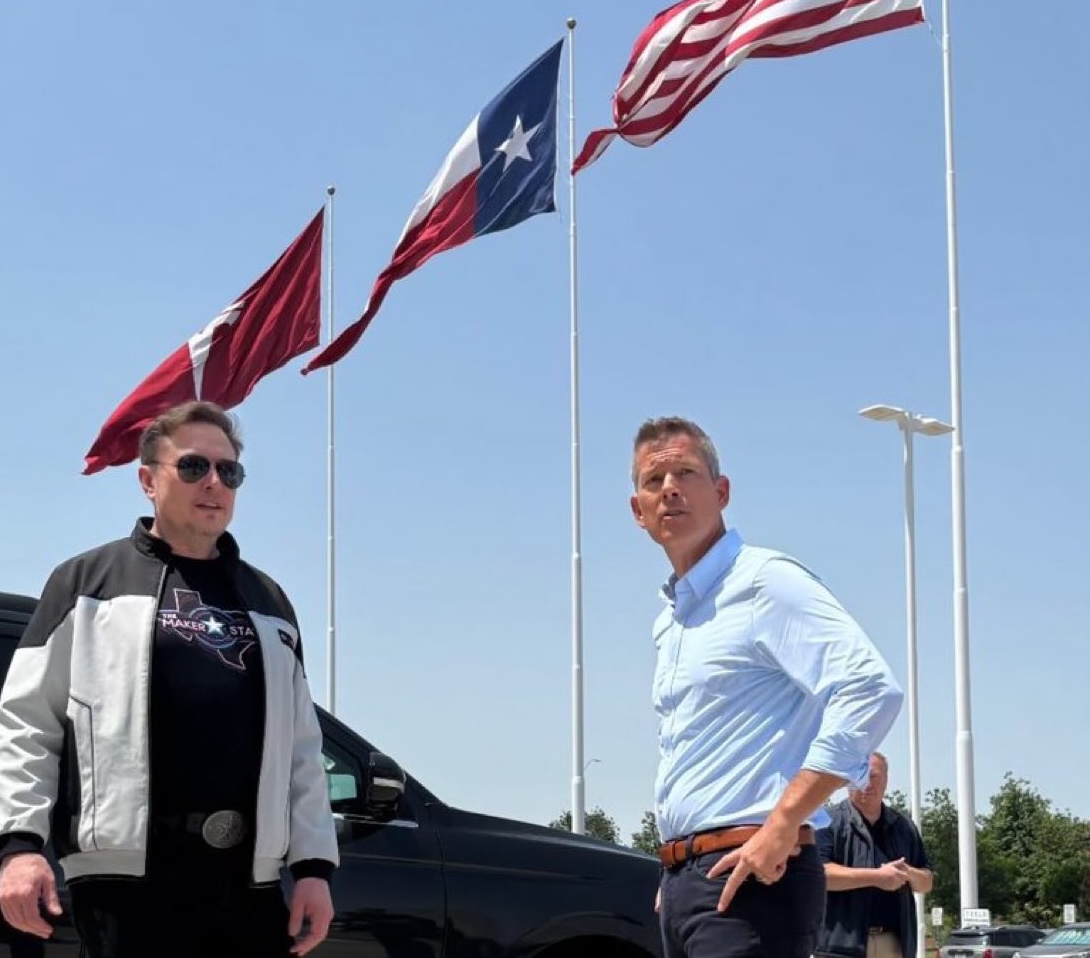
United States Department of Transportation (USDOT) Secretary Sean Duffy recently visited Tesla’s Gigafactory Texas complex, where he toured the factory’s production lines and spoke with CEO Elon Musk. In a video posted following his Giga Texas visit, Duffy noted that he believes there should be a national standard for autonomous vehicles in the United States.
Duffy’s Giga Texas Visit
As could be seen in videos of his Giga Texas visit, the Transportation Secretary seemed to appreciate the work Tesla has been doing to put the United States in the forefront of innovation. “Tesla is one of the many companies helping our country reach new heights. USDOT will be right there all the way to make sure Americans stay safe,” Duffy wrote in a post on X.
He also praised Tesla for its autonomous vehicle program, highlighting that “We need American companies to keep innovating so we can outcompete the rest of the world.”
National Standard
While speaking with Tesla CEO Elon Musk, the Transportation Secretary stated that other autonomous ride-hailing companies have been lobbying for a national standard for self-driving cars. Musk shared the sentiment, stating that “It’d be wonderful for the United States to have a national set of rules for autonomous driving as opposed to 50 independent sets of rules on a state-by-state rules basis.”
Duffy agreed with the CEO’s point, stating that, “You can’t have 50 different rules for 50 different states. You need one standard.” He also noted that the Transportation Department has asked autonomous vehicle companies to submit data. By doing so, the USDOT could develop a standard for the entire United States, allowing self-driving cars to operate in a manner that is natural and safe.


Elon Musk
Tesla drives drunk owner while he naps, Police still arrest him on DUI
A Vacaville man let his Tesla drive while he napped, but police had other ideas.

![Tesla drives drunk owner, Police arrest on DUI [Credit: Vacaville Police via Facebook]](https://www.teslarati.com/wp-content/uploads/2026/03/tesla-fsd-drunk-driver-dui-arrest-e1774678014371.jpg)
A Northern California man found a creative solution to drunk driving this week by letting his Tesla drive him around while he took a booze snooze. Police in Vacaville arrested a man on a DUI charge after he was found, what appears to be, completely passed out behind the wheel of a Tesla Model Y, which was safely self-navigating the owner through busy streets. The man’s passenger seat told the rest of the story, with a four-pack of Sutter Home wine bottles and a box of Round Table pizza clearly visible.
According to the Vacaville Police Department, as posted through their Facebook page, a concerned community member spotted the very relaxed driver, stayed on the line with dispatch, and guided officers to the intersection of Elmira Road and Shasta Drive where they stopped the vehicle. Alcohol and marijuana were confirmed. No medical emergency, and what appears to be just an extremely committed drunken nap.
-
![Tesla drives drunk owner, Police arrest on DUI [Credit: Vacaville Police via Facebook]](https://www.teslarati.com/wp-content/uploads/2026/03/tesla-fsd-drunk-driver-dui-arrest-e1774678014371-300x259.jpg)
- Tesla drives drunk owner, Police arrest on DUI [Credit: Vacaville Police via Facebook]
-
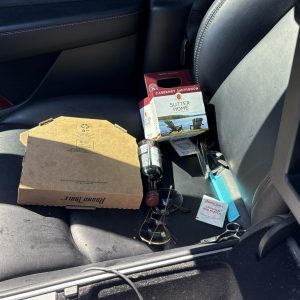
- Tesla drunk driver passenger seat , Police arrest on DUI [Credit: Vacaville Police via Facebook]
The Vacaville Police noted that California permits drivers to use assistive driving features like Tesla’s FSD, but the law still requires them to be “conscious, alert, and not under the influence while operating them.” The post drew some humorous reactions in the comments section, with one commenter piping in, “That time when his vehicle had more situational awareness than he did.” Another commenter chimed in, “Sutter all the way home….”
Tesla Full Self-Driving v14.2.1 texting and driving: we tested it
The incident lands in an interesting moment for Tesla. Elon Musk caused his own stir in December 2025 when he responded to a user question about whether FSD v14.2.1 allowed texting behind the wheel with a simple “Depending on context of surrounding traffic, yes.” He had earlier told investors that drivers turning off autopilot to check texts while steering with their knees was “significantly less safe” than simply letting FSD run, which he called “kind of the killer app.” Neither statement included anything about Sutter Home wine being part of the equation.
Elon Musk
TIME honors SpaceX’s Gwynne Shotwell: From employee No. 7 to world’s most valuable company
Time Magazine honors Gwynne Shotwell as SpaceX reaches a $1.25 trillion valuation and eyes its IPO.
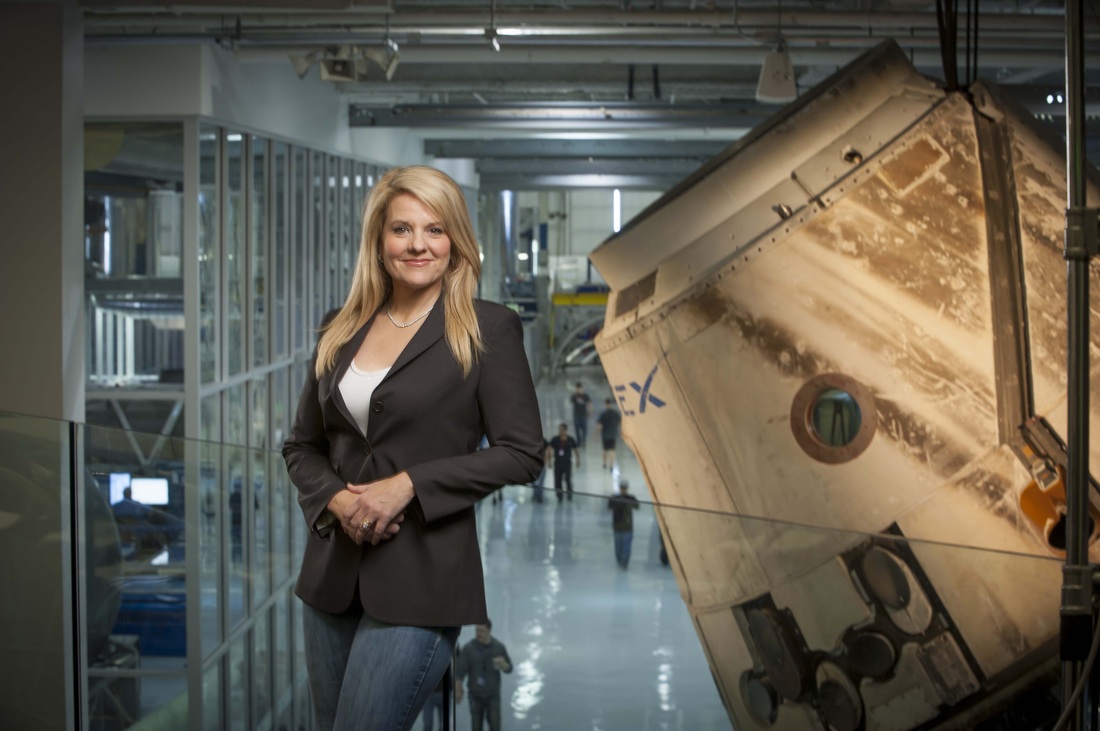
TIME Magazine has put SpaceX President and COO Gwynne Shotwell on its cover, and the timing could not be more fitting. Published today, the profile of Shotwell arrives at a moment when the company she has quietly run for more than two decades stands at the center of the most consequential developments in aerospace, artificial intelligence, and the future of human civilization.
Shotwell joined SpaceX in 2002 as its seventh employee and has never stopped expanding her role. She oversees day-to-day operations across multiple executive teams spanning Falcon, Starlink, Starship, and now xAI following SpaceX’s February 2026 merger with Elon Musk’s artificial intelligence company, a deal that made SpaceX the world’s most valuable private company at a reported valuation of $1.25 trillion. A highly anticipated IPO is expected in the second quarter of 2026.
Will Tesla join the fold? Predicting a triple merger with SpaceX and xAI
Her track record is historic. She oversaw the first landing of an orbital rocket’s first stage, the first reuse and re-landing of an orbital booster, and the first private crewed launch to Earth orbit in May 2020. She built the Falcon launch manifest from nothing to more than 170 contracted missions representing over $20 billion in business. Under her operational leadership, SpaceX completed 96 successful missions in 2023 alone and has now flown more than 20 crewed Falcon 9 missions. Starlink, which she championed as a financial pillar of the company long before it was a mainstream topic, now connects tens of millions of users worldwide and provided a critical communications lifeline to Ukraine following the 2022 invasion.
Elon Musk has never been shy about what Shotwell means to him and to SpaceX. When she shared her vision for worldwide internet connectivity through Starlink, Musk responded on X with a simple statement, “Gwynne is awesome.” It is a sentiment that has been echoed across the industry. NASA Administrator Bill Nelson once said of Musk: “One of the most important decisions he made, as a matter of fact, is he picked a president named Gwynne Shotwell. She runs SpaceX. She is excellent.”
Gwynne is awesome https://t.co/tiXtMWJmPE
— Elon Musk (@elonmusk) September 28, 2024
Now, with Starship targeting its first crewed lunar landing under the Artemis program by 2028, an xAI integration underway, and a pending IPO that could reshape capital markets, Shotwell’s mandate has never been larger. She told Time that 18 Starships are already in various stages of construction at Starbase. “By 2028,” she said, gesturing across the factory floor, “these should be long gone. They better have flown by then.” If Shotwell’s history at SpaceX is any guide, they will.
Elon Musk
SpaceX’s IPO might arrive sooner than you think
Musk has hinted for years that an eventual public offering was inevitable, though he has stressed the need to maintain operational focus. Insiders have told outlets that the CEO is pushing for a significant retail investor allocation, reportedly more than 20 percent of shares, and tighter lock-up periods to limit early selling pressure.

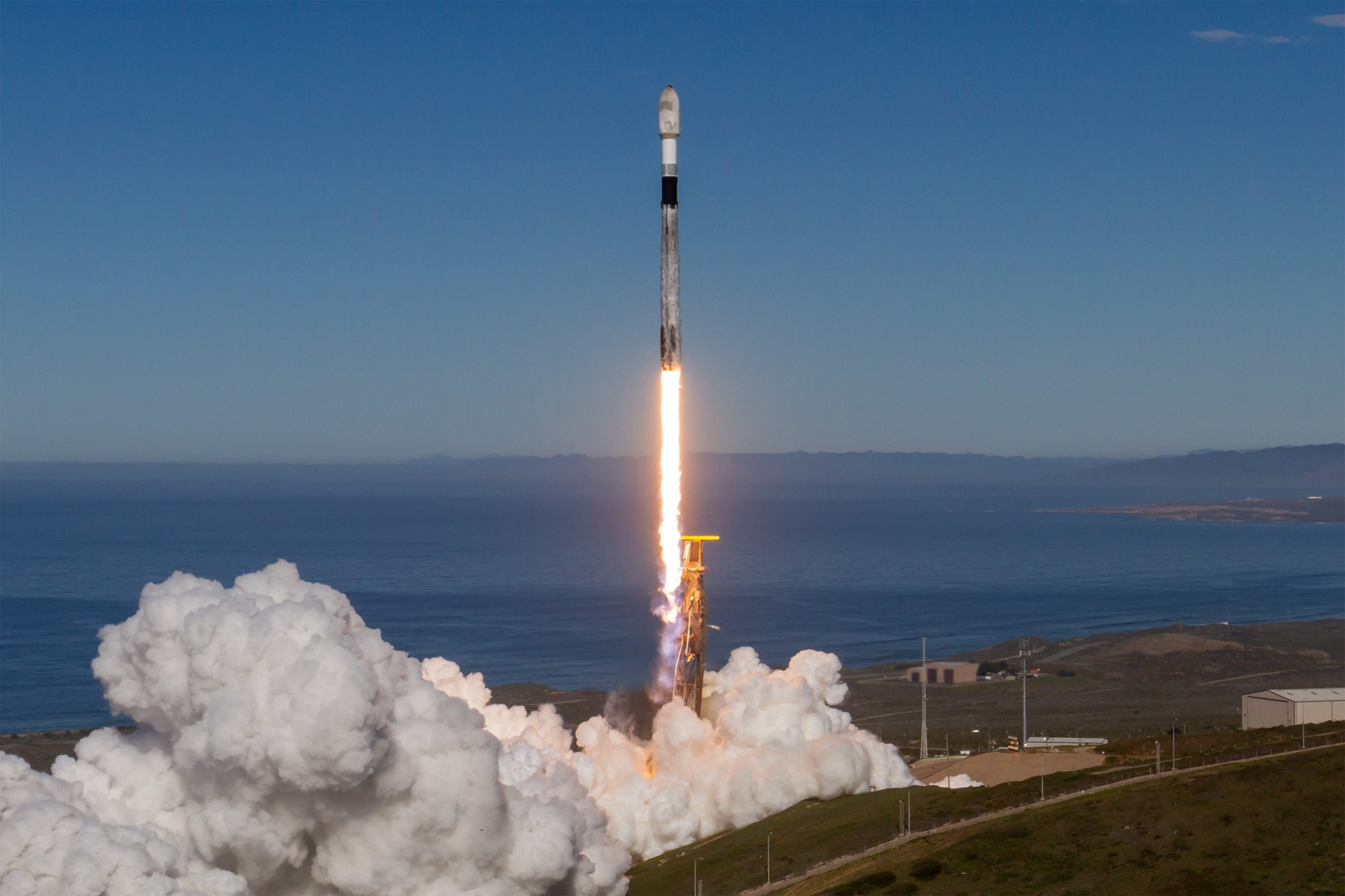
Elon Musk’s SpaceX is on the verge of one of the most anticipated Initial Public Offerings (IPO) in history.
However, a new report from The Information indicates the rocket and satellite giant is aiming to file its IPO prospectus with U.S. regulators as soon as this week, or early next week at the latest.
People familiar with the plans told The Information that advisers involved in the process expect the IPO could raise more than 75 billion dollars, potentially making it the largest stock market debut ever and eclipsing Saudi Aramco’s 29.4 billion dollar offering in 2019.
The filing would mark the formal start of what has long been rumored: SpaceX’s transition from a closely held private powerhouse to a publicly traded company.
The timing aligns with earlier signals.
In late February, Bloomberg reported that SpaceX was targeting a confidential IPO filing in March and a possible public listing in June, with a valuation north of 1.75 trillion dollars. At the time, the company’s private valuation hovered around 1.25 trillion dollars.
SpaceX considering confidential IPO filing this March: report
Starlink, SpaceX’s satellite internet constellation, has been the primary driver of that surge, now serving millions of customers worldwide and generating steady revenue. Recent Starship test flights and a record pace of Falcon launches have further bolstered investor confidence.
Musk has hinted for years that an eventual public offering was inevitable, though he has stressed the need to maintain operational focus. Insiders have told outlets that the CEO is pushing for a significant retail investor allocation, reportedly more than 20 percent of shares, and tighter lock-up periods to limit early selling pressure.
A June listing would give SpaceX immediate access to public capital markets at a moment when demand for space-related stocks remains high. It would also allow early employees and long-time investors to cash out portions of their stakes while giving everyday shareholders a chance to own a piece of the company behind reusable rockets, global broadband, and NASA contracts.
Of course, nothing is certain until the SEC filing appears. Market conditions, regulatory reviews, and Musk’s own schedule could still shift timelines.
Yet the latest word from The Information suggests the window has opened. If the filing lands this week, SpaceX’s roadshow could begin in earnest within weeks, setting the stage for what many analysts already call the IPO of the decade.

Tesla Robotaxi gets a small but significant change

Tesla makes latest announcement on Model S and Model X
![Tesla drives drunk owner, Police arrest on DUI [Credit: Vacaville Police via Facebook]](https://www.teslarati.com/wp-content/uploads/2026/03/tesla-fsd-drunk-driver-dui-arrest-e1774678014371-80x80.jpg)
Tesla drives drunk owner while he naps, Police still arrest him on DUI

Elon Musk says Tesla is developing a new vehicle: ‘Way cooler than a minivan’

Elon Musk launches TERAFAB: The $25B Tesla-SpaceXAI chip factory that will rewire the AI industry


