Space
NASA’s next Mars rover will pave the way for humans

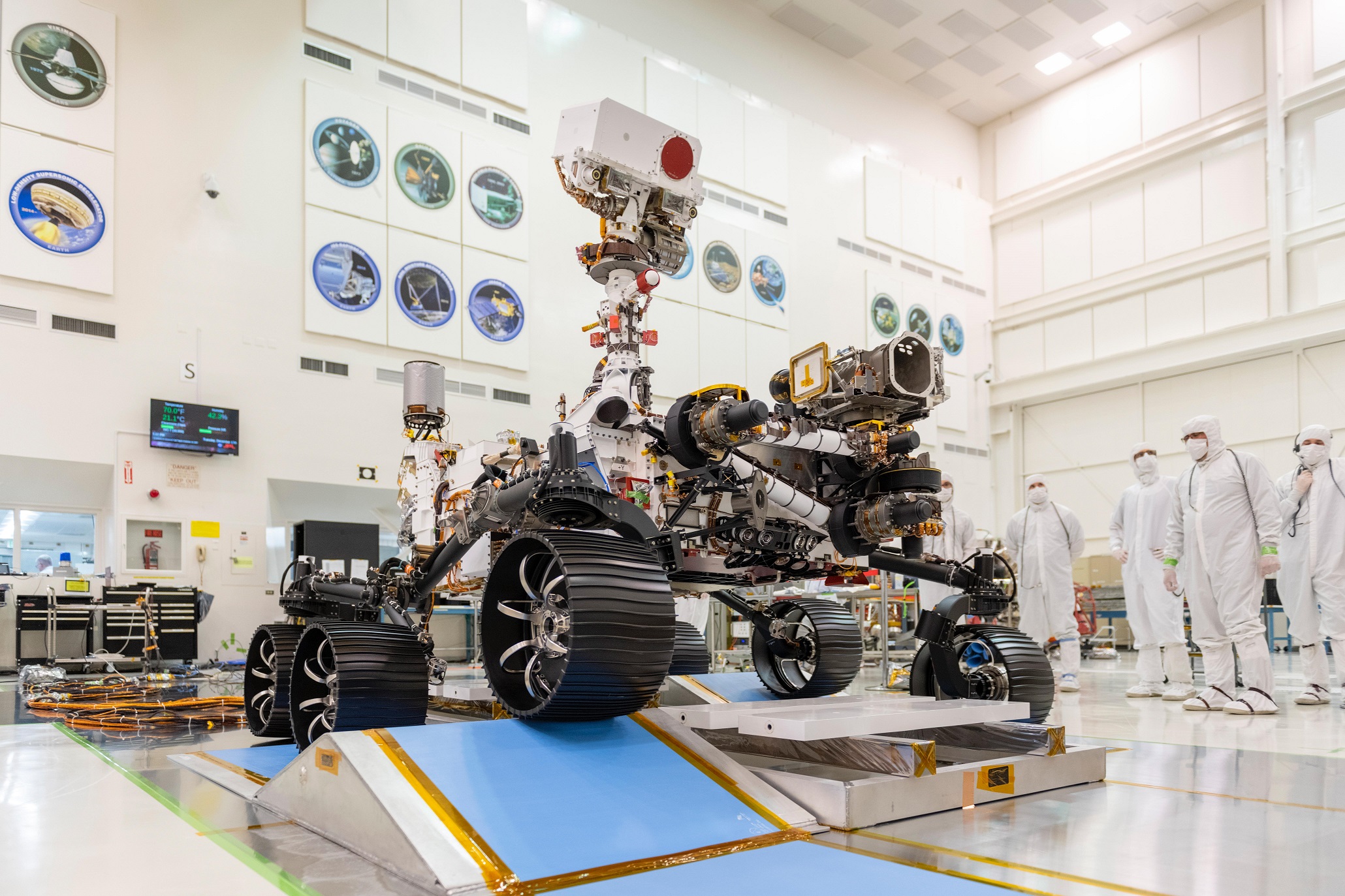
NASA’s Mars 2020 rover is scheduled to land on the red planet in February 2021, and when it does, it will touch down in Jezero Crater, the site of an ancient lake that existed 3.5 billion years ago. The next generation rover, which will get an official name soon, will build on the success of the robotic explorers who came before it by collecting the first samples of Mars for a future return to Earth.
But the new rover will also lay the groundwork for future human exploration by testing new technologies.
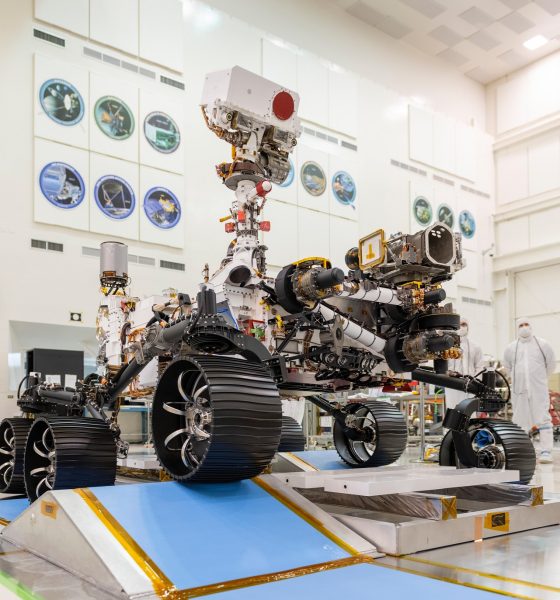
The Mars 2020 rover, which looks nearly identical to the Curiosity rover that landed in 2012, will begin its mission exploring Jezero Crater. The six-wheeled rover is equipped with a suite of instruments designed to help it look for signs of life called biosignatures.
Artist rendition depicting the early Martian environment (right) versus the Mars we see today (left). Credit: NASA’s Goddard Space Flight Center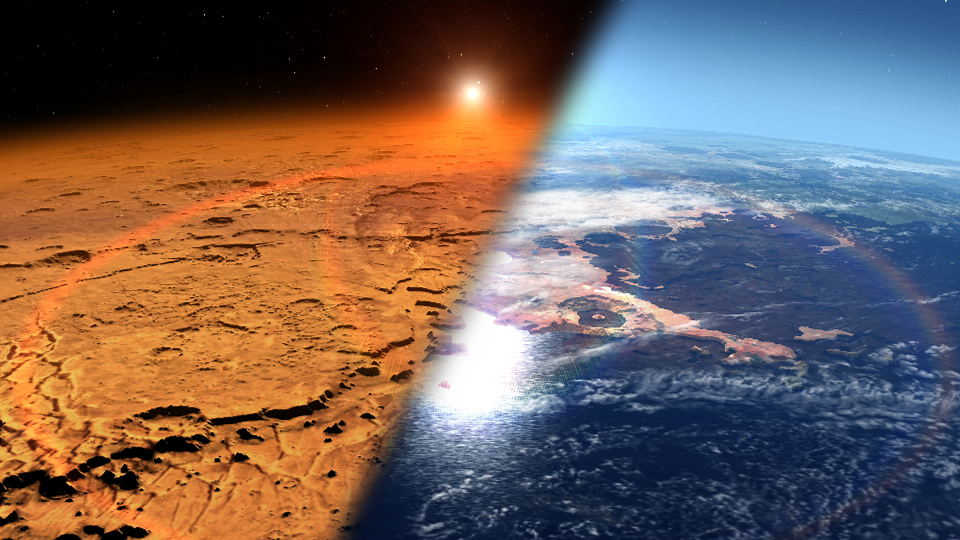
NASA believes that Mars was habitable sometime in its past. The inhospitable desert-like planet we see today was not always the case. Mars’ once ample atmosphere eroded over time, stripped away by solar particles, resulting in the thin atmosphere we see today.
But so far, we haven’t been able to detect any real signs of ancient life yet. The rover’s team thinks that its specialized suite of instruments will change that.
The twin Mars Exploration Rovers (Spirit and Opportunity) were tasked with finding evidence of water, and they were successful right out of the gate. The Mars Science Laboratory (aka Curiosity) was designed to understand habitability and if the conditions were right for life. Now, the Mars 2020 rover will take that one step further and search for actual signs of life.
Artist rendition depicting the early Martian environment (right) versus the Mars we see today (left). Credit: NASA’s Goddard Space Flight Center
The 2020 rover will do so by drilling into its surroundings and extracting samples that will be returned to Earth at a later time. Returning the samples is a challenge that NASA is already starting to tackle. The agency estimates that the earliest it can send a mission to fetch the rover’s samples would be some time around 2026 or 2027.
In the meantime, 2020 will be busy sciencing the heck out of Mars to search for microbial life as well as testing out technologies that future human missions will rely on.
Here’s how four of those instruments will work.
Terrain Relative Navigation
Landing on Mars is tricky. To date, only about half of the missions attempted have successfully touched down on the red planet. The 2020 rover will be equipped with a specialized feature to help it avoid any potential hazards in the landing zone.
Past missions, like Curiosity, needed a landing spot that was free of debris (like rocks, boulders, etc). But 2020 will be able to navigate around them. That’s because the rover is equipped with a unique lander vision system. This system take pictures during the parachute descent stage. It then compares those images to an onboard map.
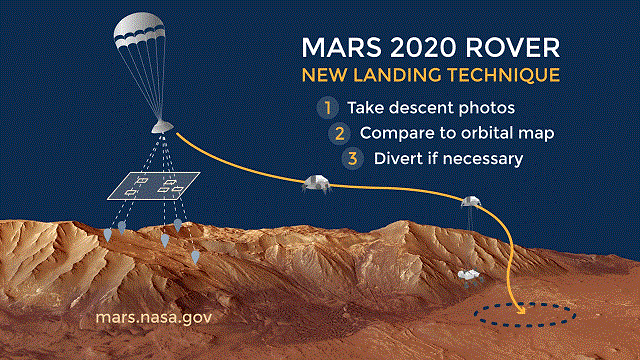
A view of how the terrain-relative navigation works. Credit: NASA/JPL_Caltech
The computer matches the map (which is created from orbital imagery), to create a guide that can identify landmarks such as craters and mountains.
The system then ranks landing sites based on safety, and can even identify a hazard. The Mars 2020 mission will be the first to test out this new system. If all goes well, it will be used on future missions, including human missions to Mars and even the moon.
MOXIE
Astronauts traveling to Mars will need oxygen to breathe and to use as rocket fuel. However, hauling it with the other cargo is expensive and not a viable solution. The Mars 2020 rover is equipped with an instrument on called the Mars Oxygen In-Situ Resource Utilization Experiment (MOXIE for short).
MOXIE will convert carbon dioxide (a gas that’s abundant on Mars) into the oxygen, which astronauts can use as needed. 2020 is equipped with a small, prototype version of the equipment needed for future human missions.
The team will study how the experiment performs and use that data to scale up the technology to use on subsequent missions. But how will it work?
MOXIE can only run for a few hours at a time, and only about once a month. (That’s because the system uses a full day’s worth of rover power each time it runs.) Humans use about 20 grams per hour of oxygen and MOXIE can only produce about half of that.
In order to support a crew of 4-6 astronauts and be able to generate propellant, future iterations of MOXIE will need to produce about 200 times that amount of oxygen.
MEDA
The Mars Environmental Dynamics Analyzer, aka MEDA, is a suite of sensors designed to study the Martian weather, as well as dust and radiation and how they change over the Martian seasons.
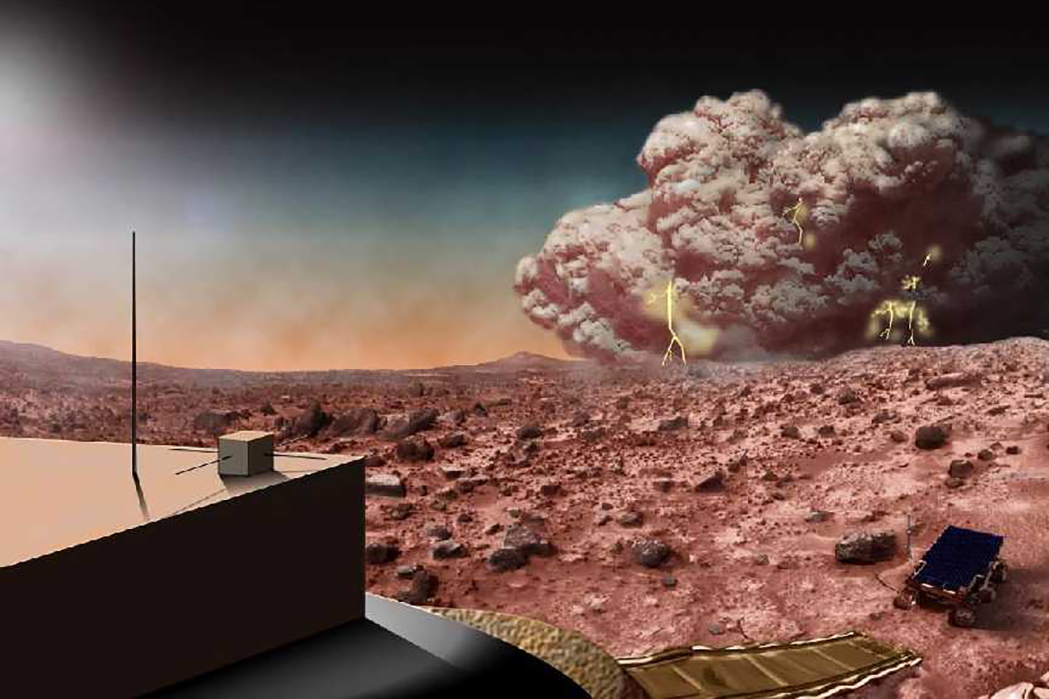
NASA is trying to better understand dust storms and other Martian weather phenomenon. Credit: NASA
Day and nighttime temperatures on Mars can fluctuate by as much as 80 or 90 degrees. MEDA will help scientists track those changes as well as measure radiation from the surface, to understand how much the sun heats the air. This solar heating causes changes in the Martian wind and can help scientists better understand the Martian water cycle.
Understanding the current weather patterns and environment could also lead to a better understanding of Mars’s history and shed light on how it transitioned from a warm, habitable planet into the dusty, cold desert we see today.
RIMFAX
The Mars 2020 rover will be equipped with a ground-penetrating radar instrument: Radar Imager for Mars’ Subsurface Experiment, or RIMFAX.
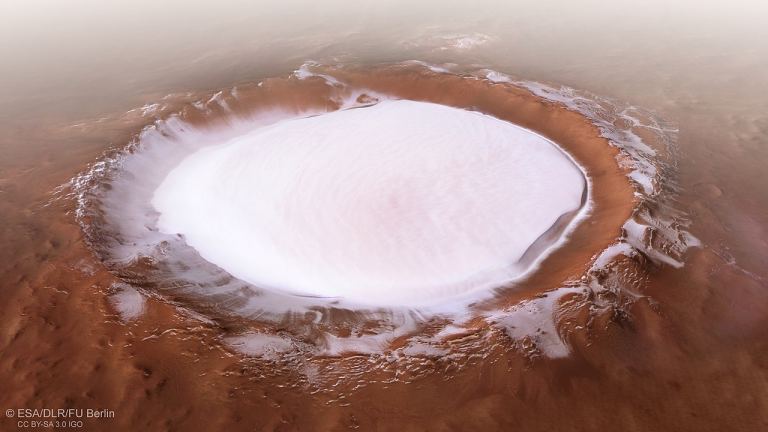
The Korolev crater on Mars as seen by Mars Express. Credit: ESA/DLR/FU Berlin
Scientists hope that RIMAX will help them study the history of Jezero Crater by peering below the surface. With the instrument’s help, scientists will be able to look at subsurface rock and ice. To date, only orbital observations have been made of the Martian polar ice, but this will increase our understanding of the planet’s inner geology.
The Mars 2020 rover is scheduled to launch in July of 2020, and will land on the Martian surface six months later. If all goes according to plan, we may finally be able to answer the question of whether or not Mars once hosted life.


Elon Musk
SpaceX’s next Starship launch is about to attempt its biggest leap yet
SpaceX targets September 22 for Starship Flight 14, its first attempt to reach real orbit.

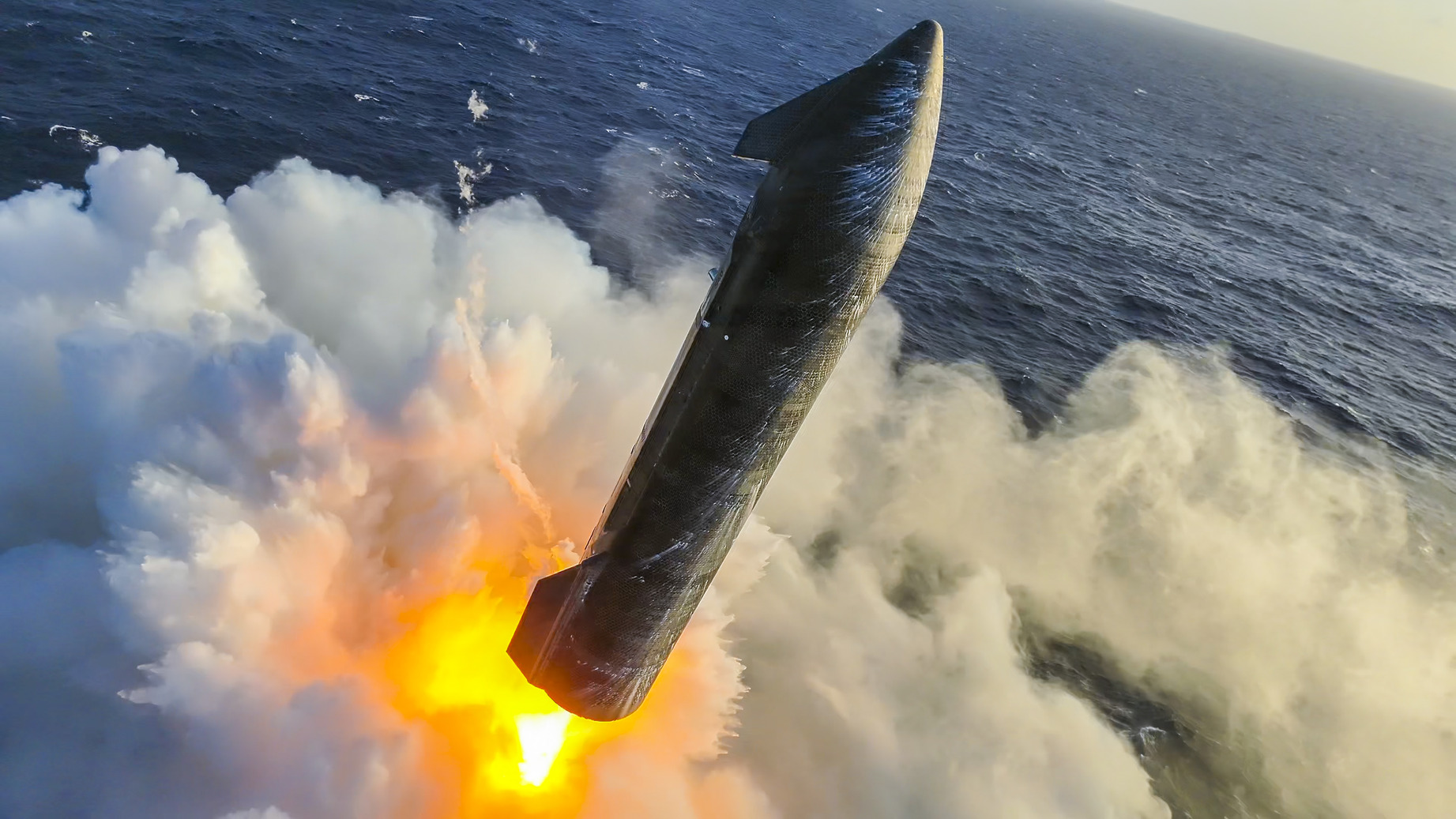
SpaceX has set September 22 as the target date for Starship’s 14th test flight, and this one carries a different goal than any of the 13 that came before it. Every previous Starship mission has intentionally flown a suborbital arc, reentering the atmosphere within the same hour it launched. Flight 14 is designed to send the craft into a genuine orbit around Earth for the first time.
The launch window opens at 7:15 a.m. Central time at Starbase in South Texas and runs for 75 minutes, pending regulatory approval, according to SpaceX’s mission description published Tuesday. If the flight goes as planned, Starship will circle the planet roughly six times at an altitude near 275 kilometers over about ten hours before a deorbit burn sends it toward a splashdown in the Pacific Ocean west of Chile, a departure from the Indian Ocean recoveries used on the last several flights.
The mission also marks the first attempt to put a working batch of Starlink V3 satellites into actual service. Flight 13 carried 20 of the new satellites in July, but because that mission never left a suborbital trajectory, the payload reentered along with the ship instead of separating into orbit.
SpaceX tells the FCC that Starship Flight 14 is going to orbit
Each V3 satellite is rated for roughly one terabit per second of downlink capacity, so a successful deployment on Flight 14 would be SpaceX’s largest single jump in network bandwidth since Starlink began flying on Falcon 9.
Flight 13 still did the heavier lifting on the technical side. That July mission flew a deliberately more stressful reentry profile to test Starship’s heat shield, and the ship survived its softest splashdown yet, intact enough for drone inspections shortly after landing. Elon Musk said the flight delivered “all the heat shield data we needed and then some,” a result Teslarati covered in detail when he later said SpaceX had solved the vehicle’s biggest reusability challenge. Flight 14 is where SpaceX starts spending that confidence on an actual orbital insertion rather than another controlled fall back to Earth.
One thing Flight 14 will not attempt is a tower catch of the ship. Musk floated the idea right after Flight 13, but walked the timeline back in August, saying a catch attempt was more likely “in a few months.” The Super Heavy booster will still aim for its own recovery, targeting an offshore landing point in the Gulf of America, the same approach used on recent flights.
September 22 is SpaceX’s own target, not a locked date. Starship’s schedule has slipped before over hardware readiness and FAA sign off, and the company has said as much in its own mission notes. But the plan itself represents the clearest marker yet that Starship is moving from a suborbital test program into something meant to carry paying payloads and, eventually, people.
News
SpaceX tells the FCC that Starship Flight 14 is going to orbit
SpaceX filed with the FCC for Starship Flight 14, its first true orbital launch attempt.
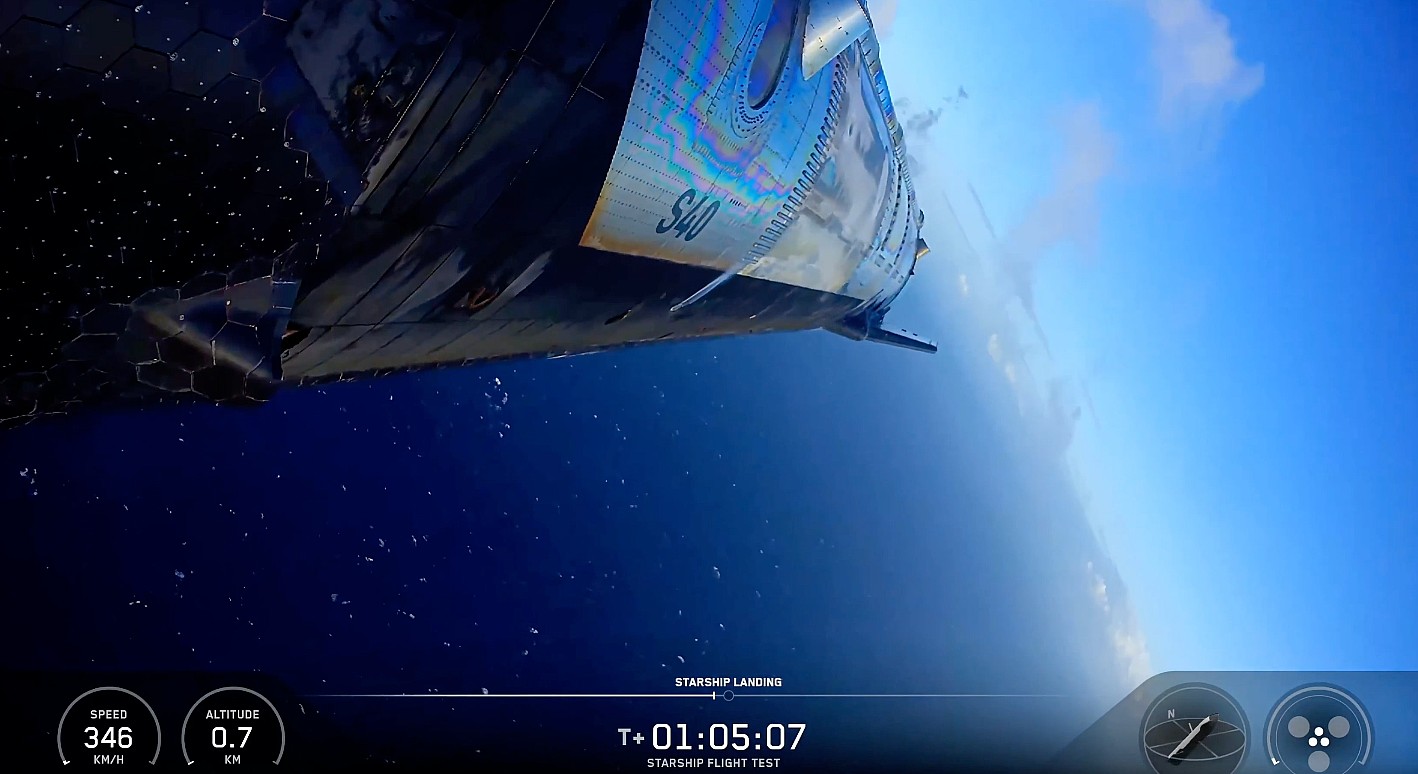
SpaceX has asked the Federal Communications Commission for permission to fly Starlink terminals during Starship’s fourteenth flight test, and the filing lays out a genuine trip to orbit, something the program has never attempted.
Every Starship flight so far, including Flight 13’s successful splashdown in the Indian Ocean on July 24, has flown a suborbital arc that ends with the ship reentering the atmosphere within the same hour it launches. The FCC paperwork describes a mission profile built around an actual orbital insertion instead.
The payload is the other half of the story. Flight 13 carried 20 production Starlink V3 satellites, but because that mission never reached orbit, the satellites reentered along with the ship rather than joining the constellation, something Teslarati covered in detail after SpaceX released footage shot from one of those satellites as it drifted away from Starship in space. Flight 14 is designed to close that gap. If the orbital insertion holds, the roughly 20 V3 satellites onboard would separate into an operational orbit and could eventually go into service, each one rated for about 1 terabit per second of downlink capacity by SpaceX’s own account.
SpaceX announces new Starbase for ‘thousands of Starship launches annually’
Elon Musk first flagged the orbital attempt during SpaceX’s August 4 earnings call, the company’s first as a public entity following its June IPO under the ticker SPCX. He also floated catching the ship with the Starbase tower on the same flight, an idea he walked back on August 20, saying the catch attempt would more likely come “in a few months,” as Teslarati reported at the time. Flight 14 will instead target a splashdown for the ship in the Indian Ocean, the same recovery method used since Flight 12.
Hardware has been catching up to the ambition. Booster 21 completed a full 33-engine static fire on August 28, and Ship 41 finished its own six-engine test the week before. An airspace briefing circulated to pilots on August 20 listed September 15 as the target date, later than the end of August window Musk mentioned on the earnings call, though SpaceX has not confirmed a launch date publicly and Starship schedules routinely slip while hardware and FAA paperwork line up.
The FCC filing itself does not guarantee a launch date. It covers communications authority, and not flight readiness, considering SpaceX still needs Ship 41 fully stacked and cleared by the FAA before Flight 14 can fly. But the filing is a real marker of intent and it puts a specific regulatory process behind what had so far only been Musk’s word on the earnings call.

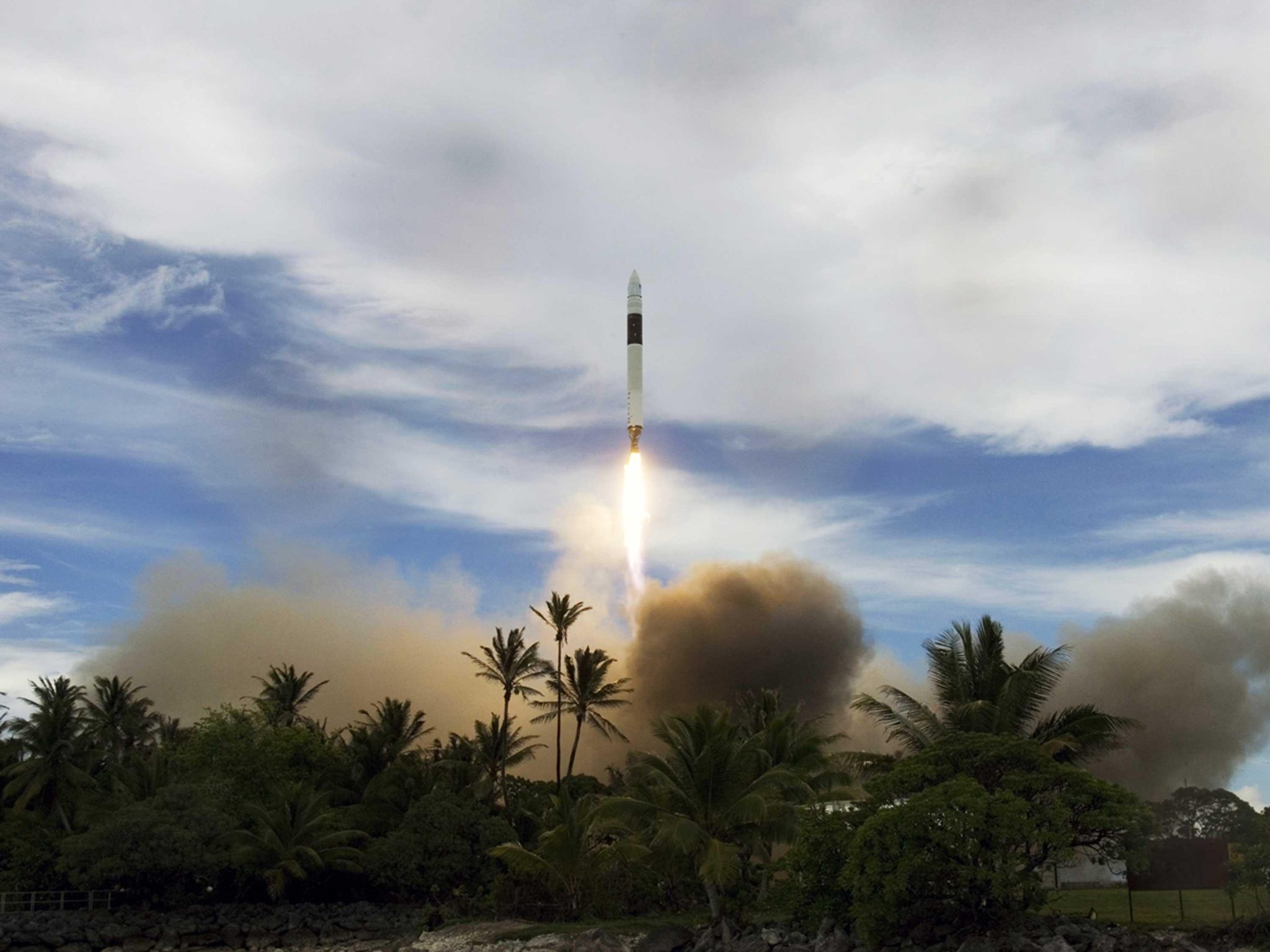
Elon Musk recently restated a fact that still defines SpaceX’s origin story: if Falcon 1’s fourth launch had failed, the company would not exist. The comment answered a reminder that after three consecutive losses, SpaceX had money for only one more attempt.
On X, Peter Diamandis said that the present-day acknowledgement of SpaceX’s success does not discount the rough start the company had. “Almost nobody remembers that Elon’s first rocket failed three times, and there was money for exactly only one more attempt.”
Musk said, “If the 4th launch had failed, SpaceX would not exist.”
If the 4th launch had failed, SpaceX would not exist
— Elon Musk (@elonmusk) August 30, 2026
In late 2008, the firm was nearly out of cash. Another failure would have ended payroll, closed the Hawthorne factory, and left the Falcon 9 and Dragon programs as unfinished drawings.
The first flight lifted off from Omelek Island on 24 March 2006. Thirty-three seconds later, a corroded aluminum fitting on a fuel line leaked. Kerosene ignited around the Merlin engine, control was lost, and the vehicle came apart. The small DARPA payload, FalconSAT-2, survived the short flight only to land on a storage shed near the pad. Investigators later traced the fitting to a materials mix-up that should never have reached the rocket.
Flight 2, on 21 March 2007, looked far better at first. The first stage burned cleanly and handed off to the Kestrel-powered upper stage. The vehicle crossed 100 kilometers and reached a peak of about 289 kilometers. Then propellant slosh in the second-stage tank started a circular coning motion that grew until the engine shut down. Telemetry faded as the stage tumbled, and SpaceX had reached space but not orbit. Over the next year, the team redesigned everything from the ground up, including tanks, baffles, and the new regeneratively cooled Merlin 1C.
That engine flew on Flight 3 on 2 August 2008. The first stage performed almost perfectly and reached 217 kilometers. After main-engine cutoff, leftover fuel in the cooling channels produced a faint residual thrust, roughly 10 pounds per square inch of chamber pressure. On a Texas test stand, the effect was invisible beneath ambient air pressure. In vacuum it was enough to push the spent first stage back into the second stage after separation. The stages collided, the upper stage spun, and the mission was lost. Musk later said a slightly longer delay before staging would have saved the flight.
Six weeks later, the team assembled Flight 4 from remaining parts and flew it on 28 September 2008 at 23:15 UTC. The payload was Ratsat, a 165-kilogram aluminum mass simulator built in-house. Staging was delayed so residual thrust could decay. The Kestrel ignited, the fairing split away, and nine and a half minutes after liftoff the vehicle was in orbit. After a coast, the second stage restarted, settling into a 621-by-643-kilometer path at 9.35 degrees inclination. Falcon 1 became the first privately developed liquid-fueled rocket to reach Earth orbit. Musk called the insertion “middle of the bull’s-eye.”
SpaceX restores a Falcon 1 rocket for 10th anniversary of first launch success
That success unlocked NASA’s Commercial Resupply Services award later that year. Without it, there would have been no Falcon 9, no reusable first stages, and no Dragon cargo or crew flights to the International Space Station. Launch prices would have remained far higher. Starlink’s constellation would not exist; broadband from low Earth orbit would still be a paper concept.
Ride-share markets, high launch cadence, and the current pace of lunar and Mars hardware would be years behind. Communications, Earth observation, and the cost of putting anything into space would look more like the 2000s than the 2020s.
One extra second of residual thrust in August 2008 would have written a different decade.

NHTSA just escalated its Tesla Cybercab investigation in a big way

Tesla uber bull Ron Baron says ‘the time to buy the stock is now’


