News
Volkswagen's software issues with the ID.3 are worse than reported: 'It is an absolute disaster'

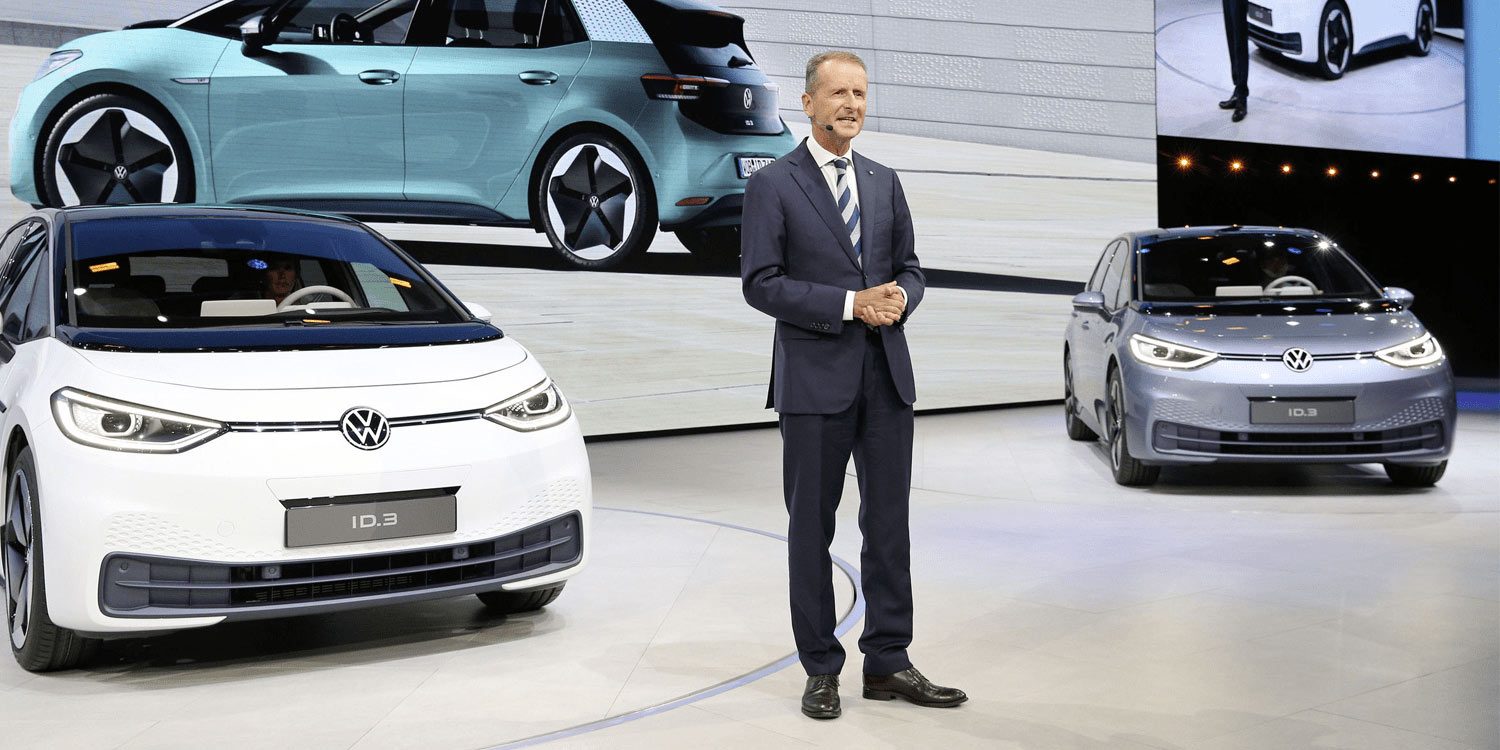
The software issues plaguing the Volkswagen ID.3 have been reported for some time, but new details from insiders at the German automaker have hinted that the all-electric hatchback’s problems may be worse than initially reported. The update comes amidst a confirmation of the ID.3’s software challenges by a VW spokesperson.
Local media reports have indicated that Volkswagen will likely only release a toned-down version of the ID.3 at first due to the ongoing problems with the vehicle’s software. Thus, Volkswagen will probably still stick with its long-communicated delivery schedule this summer, as noted by CEO Herbert Diess while presenting annual figures last week. To accomplish this, “one or the other planned function” of the ID.3 will reportedly be canceled, and later delivered through an update.
These details were confirmed by a Volkswagen spokesperson, who addressed the topic in a statement to news outlet sueddeutsche.de. “Things are not going great,” the spokesperson said. Insiders quoted by the publication painted a much graver picture. “It is no longer a laughing matter,” the insiders noted.
The publication’s sources indicated that the ID.3 is far from being ready for the market and that Volkswagen is “not even close to an industrial production process at ID.3.” As for the vehicles that will reportedly be delivered this coming summer, the insiders related that they would be tasked to “tinker them by hand so that something is there.” This does not have anything to do with series production, though.
An internal source from Volkswagen explained that ID.3’s software issues were mostly due to a lack of qualified personnel. But apart from the lack of programmers and vehicle software specialists, key individuals have also been departing from VW. Among these is Martin Hoffman, the CIO responsible for Volkswagen’s IT division, who will be leaving the automaker at the end of this month. “It’s an absolute disaster. We just can’t get the people,” the insiders said.
Amidst these issues, Volkswagen is reportedly tagging in an unlikely ally to help prepare the ID.3 for production. This ally would be Daimler, which is already in talks with BMW for joint software development. A small meeting between some of Volkswagen and Daimler’s key executives was reportedly held recently, and it was discussed how the two automakers could collaborate to develop an operating system for cars. Such a deal would likely put Daimler in a tricky situation, as cooperation among Germany’s three top automakers is very unlikely.
Overall, it appears that the importance of in-vehicle software is becoming more and more evident among Germany’s automakers, and it seems that Volkswagen would do what it can to make sure that it can at least reduce the lead currently enjoyed by Tesla. The American electric car maker had shunned existing supply chains when it was developing its electric cars’ software, developing its in-vehicle systems from scratch. Unlike traditional automakers, Tesla’s software runs on a central control unit, giving it a much more efficient structure that is optimized for software updates and maintenance.


 BLACK FRIDAY DEALS
BLACK FRIDAY IS HERE.
YOUR TESLA DESERVES AN UPGRADE.
Now is the time to upgrade your drive. Discover exceptional deals on premium Tesla accessories, interior protection, storage, styling and everyday essentials.

Tesla removed the most annoying part of Full Self-Driving with its latest v15 release. The suite, which aims to reduce critical interventions by 25-times, is no longer looking for input on why you took over.
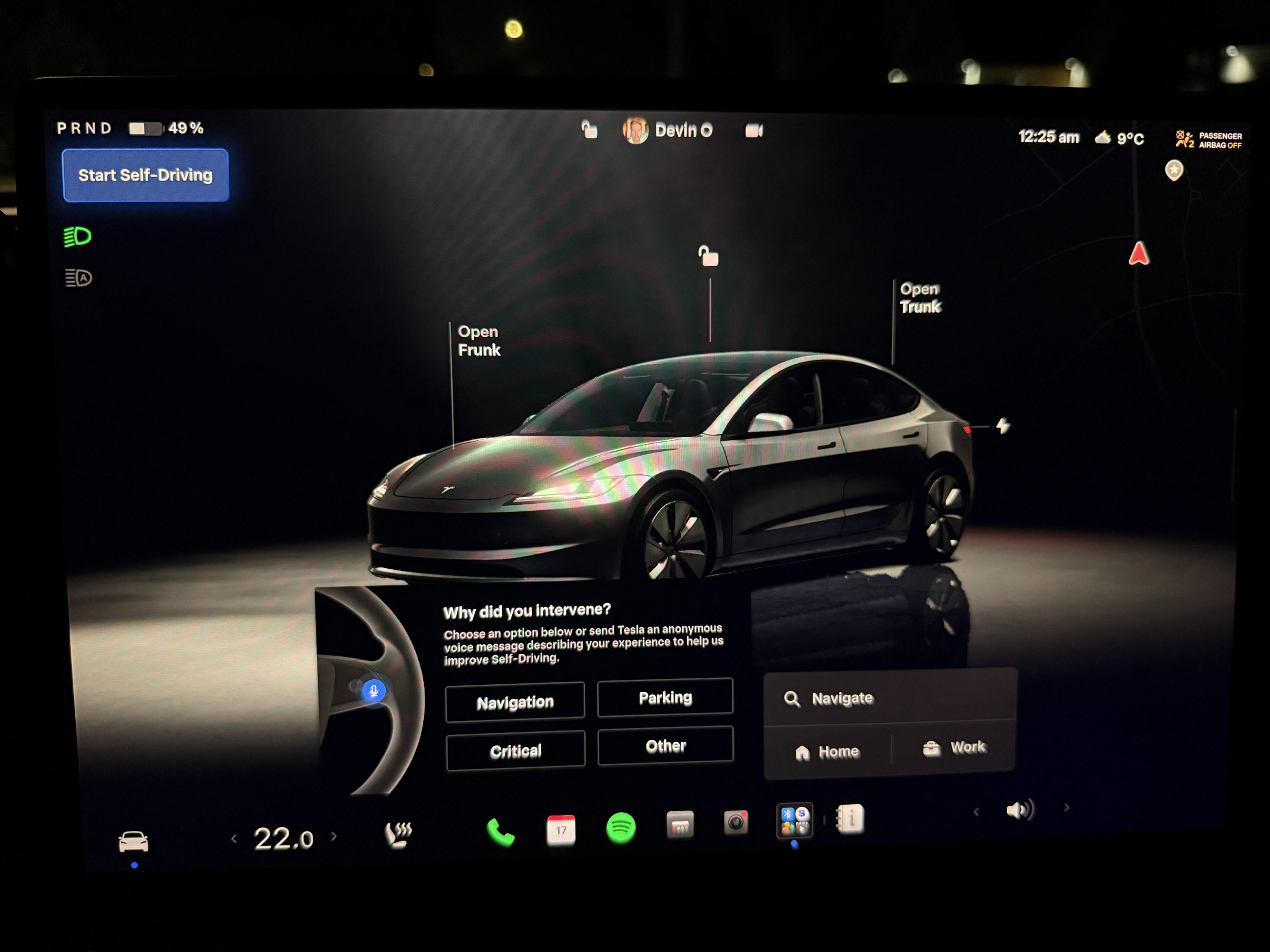
As FSD v15 rolled out last weekend, perhaps one of the first things I noticed as an Early Access Program (EAP) member is that Tesla had finally removed the Interventions Menu:
🚨 Tesla has removed the Interventions Menu when you take over FSD: https://t.co/H3YGhnAy1c
— TESLARATI (@Teslarati) November 22, 2026
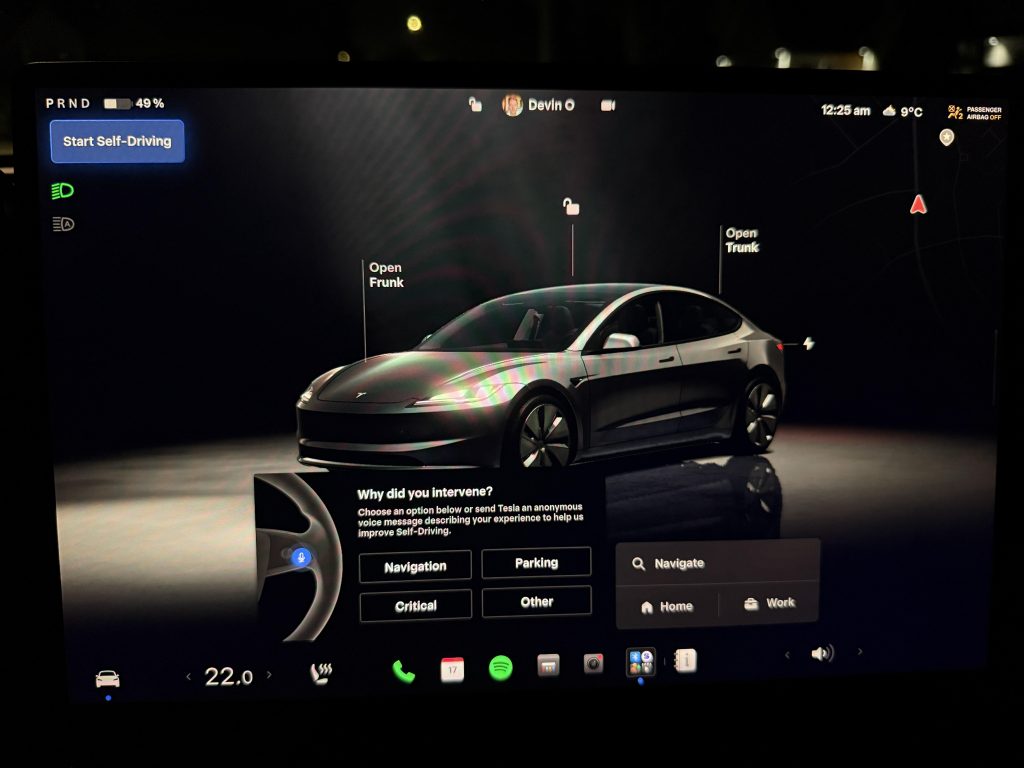
With the Full Self-Driving v14 update, Tesla implemented an Interventions Menu, a short list of four options; Parking, Navigation, Critical, and Other. These were the options given to drivers to give immediate feedback directly to Tesla as to why their FSD suite was interrupted from operation.
Credit: Devin Olsen
The issue with the menu was it did not go away without an input. The only way to truly avoid it was to be on a phone call when taking over, as it would not appear. However, many owners indicated they were so annoyed with the menu, they would simply input each reason as “Critical,” which is usually reserved for major instances.
It is unclear whether Tesla removed the Intervention Menu because of the complaints owners gave about its required nature, differing from past input methods that were totally optional, or if the company is simply taking it away because it feels it does not need it.
The FSD v15 suite is already incredibly robust in terms of performance, as it comes with a variety of new features including pothole and debris avoidance, Navigation fixes, and the new Reality View function that has truly stolen the show.
Overall, the removal of the Interventions Menu is a welcome change and I believe many owners will also find that FSD is simply more pleasant to use when you do not have to justify why you took over. It seems to me that Tesla will be able to utilize its SI to determine the cause of the intervention, instead of having owners, in a fit of annoyance, simply press whichever option their finger happens to land on first.
Elon Musk
SpaceX rejects $738M fed subsidy, betting on Starlink alone
SpaceX gave up hundreds of millions in broadband grants, yet Starlink is still showing up.

SpaceX is walking away from roughly $738 million in federal broadband subsidies while still committing to connect the rural homes and businesses Starlink won under the program.
The National Telecommunications and Information Administration (NTIA) said SpaceX will serve every location awarded to it under the Broadband Equity, Access, and Deployment (BEAD) program at no cost to the program. A senior NTIA official told Broadband Breakfast that SpaceX approached the agency with the idea after struggling with differing contract terms across all 50 states, including state demands for financial reporting and penalties for defaulting.
“I am pleased this new agreement has the potential to save taxpayers hundreds of millions of dollars while getting more Americans connected faster,” NTIA Administrator Arielle Roth said. Telecompetitor, citing administration officials, put the forgone amount lower, at about $636 million.
Under NTIA’s new model agreement, SpaceX must still meet BEAD’s minimum speeds of 100 Mbps down and 20 Mbps up, pass the program’s performance testing, and file a report every six months. New subscribers at covered locations will receive the Starlink dish and router at no cost, and SpaceX must offer a low cost service plan. The monthly subscription itself is not waived.
The deal drops BEAD’s financial audit, procurement, and reporting provisions. States also cannot levy penalties if SpaceX falls short, and their only remedy is to return those locations to the program for a new award.
State broadband offices now have two options: sign the model agreement or rebid the SpaceX locations at a cost in line with their already approved plans. Some states had already signed contracts with SpaceX, but the NTIA official said those agreements are no longer on the table. Two state officials told Broadband Breakfast the directive caught states by surprise.
SpaceX still gains something by staying in. Holding its BEAD locations with a $0 award keeps other federal broadband money from flowing to competitors in those rural areas, according to the NTIA official.
Starlink’s role in BEAD expanded after NTIA’s 2025 “Benefit of the Bargain” overhaul dropped the program’s preference for fiber and opened awards to low Earth orbit satellite providers. Arizona, for example, awarded SpaceX $17.1 million to cover 10,749 locations, while Virginia awarded $3.3 million for 5,579.
Elon Musk reshared Sawyer Merritt’s summary of the NTIA terms on X, adding a single word: “Starlink.” The move comes a week after Musk said the FAA turned down a free Starlink offer before a nationwide ground stop, a claim that drew a public rebuttal from Transportation Secretary Sean Duffy. Musk has also hinted that Starlink could come to every Tesla as the company pursues Unsupervised FSD.
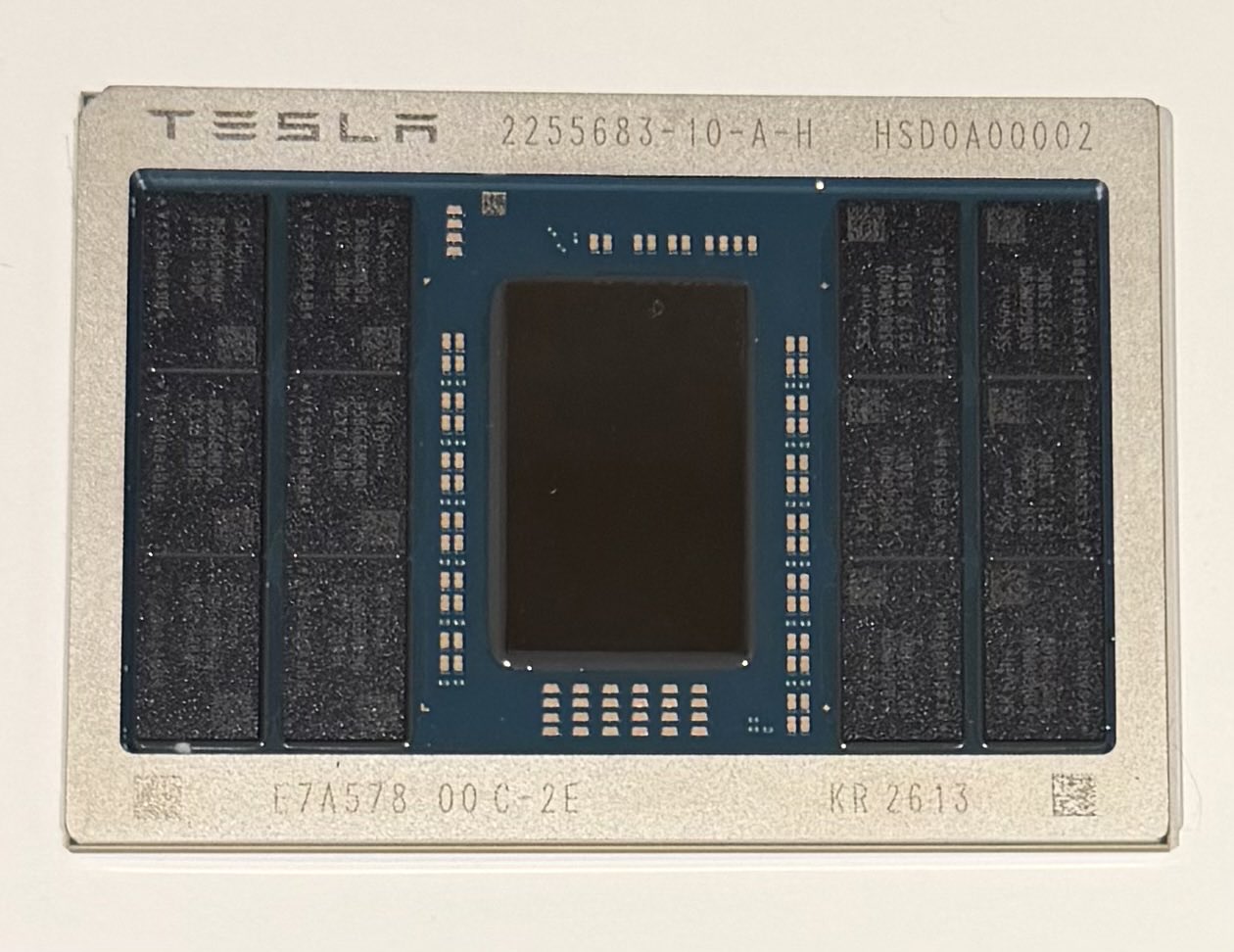
Tesla will set aside its AI5 chip exclusively for the Optimus robot, a product that CEO Elon Musk said he believes will one day be the biggest in the world. The decision sparked conversation regarding AI4’s prowess and capability as a self-driving chip, and less-than-fond memories of the Hardware 3 conundrum that many owners find themselves in to this day.
Musk stated on November 22 that Tesla vehicles will remain on the AI4 computer, which he said it sufficient to achieve “superhuman driving,” while the next generation AI5 chip will be set aside for Optimus. Musk was initially asked by a Hardware 3 Model Y owner when AI5 would appear in new cars.
@JBrunner8484 @BLKMDL3 @wholemars It’s going to Optimus. Cars will remain at AI4. That’s enough to solve superhuman driving.
— Elon Musk (@elonmusk) November 22, 2026
“It’s going to Optimus. Cars will remain at AI4. That’s enough to solve superhuman driving,” Musk wrote. The exchange quickly drew high engagement and follow-up questions from owners about potential retrofits for AI3 vehicles and the status of FSD.
The statement is consistent with some comments Musk made in the first quarter earnings call. In April, he said that AI5 would be prioritized for Optimus and the company’s AI training clusters rather than vehicles, because AI4 had already proven to offer enough computing capability for unsupervised self-driving at safety levels well above that of humans.
Musk also said on that call that Hardware 3 vehicles would lack the capacity for unsupervised self-driving, and that Tesla would be working on an upgrade plan for those owners if they wanted to bolster their cars with new cameras and a computer.
At one time, HW3 owners were led to believe fully unsupervised FSD would be capable with their vehicles. That revelation was dismissed and earlier this year, they were given clarity.
AI4, also known as HW4, is the computer currently installed in new Tesla vehicles. It powers recent FSD software, including the v15 series that introduced the “Reality View” overhead visualization generated in real time on the car’s AI accelerators. Tesla has also discussed an intermediate AI4+ or AI4.5 variant focused mainly on increased memory and modest performance gains, driven in part by rising memory and storage costs.
Tesla Full Self-Driving v15: Reality View review, new features explained
Musk noted around the same time that the AI4 computer itself had roughly doubled in cost due to those component price increases.
By directing AI5 toward Optimus, Tesla is allocating its highest-performance silicon to the humanoid robot and training infrastructure. AI5 has reached tape-out and entered pilot production, with broader volume manufacturing targeted for 2027.
The decision underscores Tesla’s view that vehicle autonomy can be solved on existing AI4 hardware while the more complex perception, planning, and motor-control demands of a general-purpose humanoid robot benefit from the next chip generation.
For current and prospective Tesla owners, Musk’s message is that AI4 cars already have the hardware headroom necessary for fully autonomous travel. Customers should see if as welcome clarification that could influence purchasing decisions for them moving forward.

Tesla removed the most annoying part of Full Self-Driving

SpaceX rejects $738M fed subsidy, betting on Starlink alone


