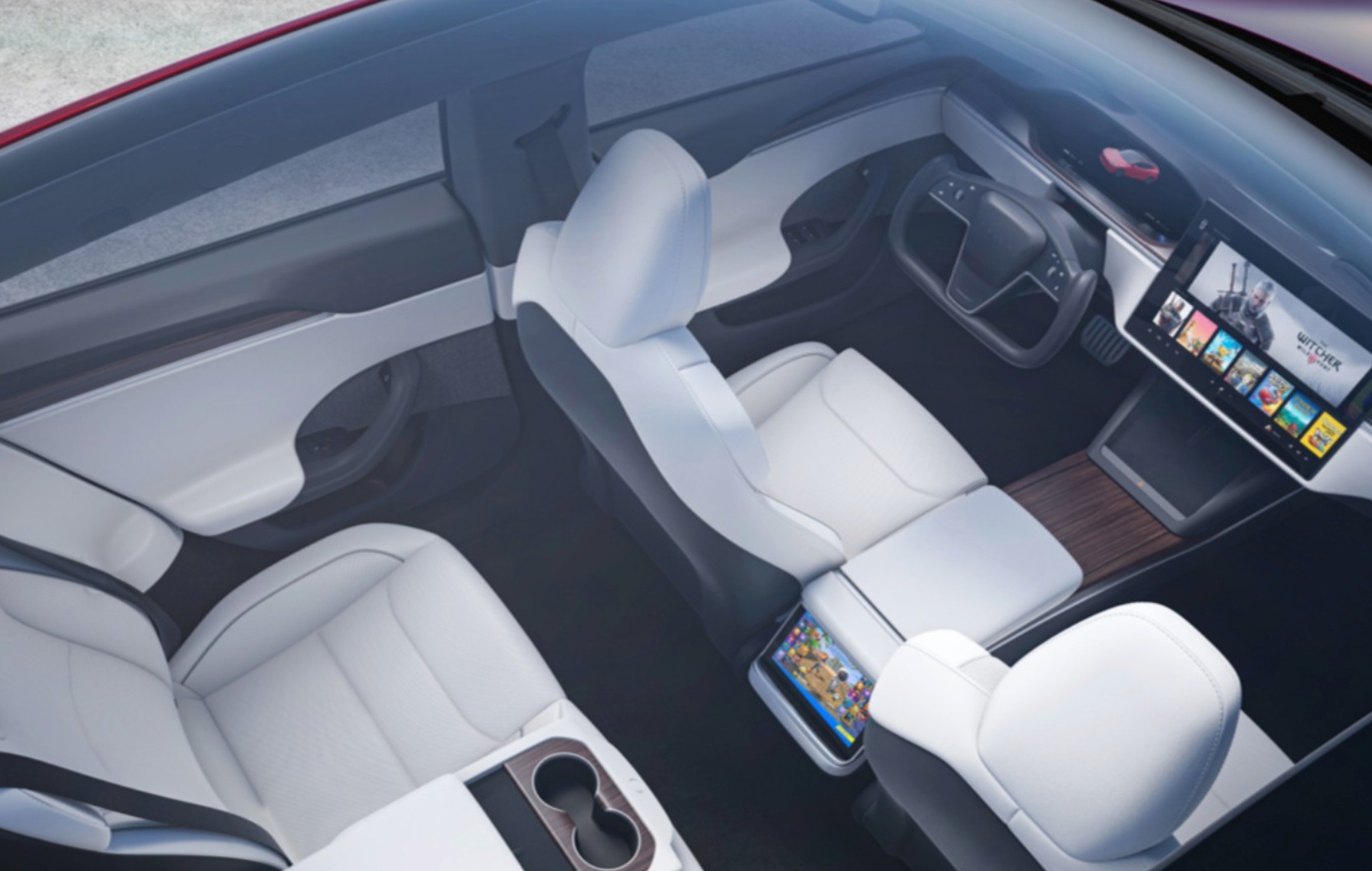
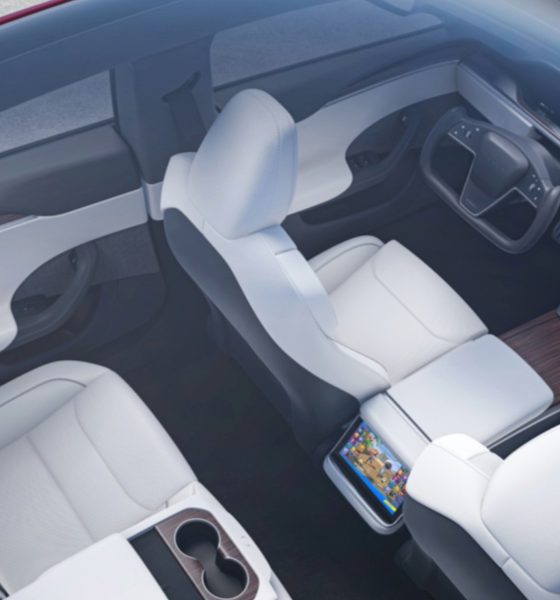

When Tesla launched the new Model S and Model X last week, critics immediately pounced on the vehicles’ uniquely-shaped “yoke” steering system. If recent comments from UK regulators are any indication, however, it appears that Tesla’s yoke steering for the refreshed flagship vehicles will find a welcome home on Britain’s roads.
Vehicles on UK roads are governed by several regulatory bodies. In a recent report, The Sunday Times opted to get confirmation from the appropriate agency to see if Tesla’s steering yoke would be approved for public use or not. The publication reached out to the Driver and Vehicle Safety Agency (DVSA), which referred it to the Vehicle Certification Agency (VCA). The VCA then passed the Times to the Department for Transport (DfT).
The UK Department for Transport oversees all agencies and policy decisions that involve roads, vehicles, and road safety. Following an inquiry, the publication received a short response, and it was quite positive for the US-based electric car maker: “The regulations relating to steering equipment (UN-ECE Regulation 79) does not stipulate any shape or size of the steering wheel,” the DfT wrote.
The UK body’s response echoes the stance of The Netherlands’ Rijksdienst voor het Wegverkeer (RDW), which supervises vehicle and driving licensing, registration, and control in the country. In a recent statement to a local news agency, the RDW confirmed that Tesla’s uniquely-shaped steering system for the Model S and Model X are completely legal. The agency even cited the same UN-ECE Regulation 79 to highlight its point.
The DfT guidance on MOT inspections references the testing of various steering systems, including yokes and handlebars. Based on the agency’s guidelines, a steering system could pass as long as there isn’t excessive play, wear, or damage the would render a vehicle dangerous. Designs that could result in accidents would also trigger a recall. In short, as long as Tesla can demonstrate that the new Model S and Model X’s steering yoke is safe, it would be completely legal for use on UK roads.
However, the DfT did note that there is something on Tesla’s new flagship cars that warrant concern. Tesla notes in its official webpage that the Model S and Model X features wireless controller compatibility that allows gaming from any seat in the vehicle. According to the DfT, UK law indicates that features like video games must not be available to front-seat passengers when the car is in motion. If Tesla allows Arcade games to be displayed on the Model S and Model X refresh’s main display while the vehicles are moving, the company could run afoul of regulators, even if the front passenger is the one playing games, not the driver.
“By law, drivers can only use screens when viewing driving information related to the state of the vehicle or its equipment, when navigation is displayed, or when assisting in viewing the road around the vehicle. Under the Road Vehicles (Constriction and Use) regulations, screens used for anything else should not be visible to the driver while the vehicle is being driven,” a DfT spokesperson said.
Do you have anything to share with the Teslarati Team? We’d love to hear from you, email us at tips@teslarati.com or reach out to me at maria@teslarati.com.



Give the gift of Tesla upgrades.
Shop for someone else or treat yourself. Get more shopping power with a Teslarati gift card.

Tesla has announced that Full Self-Driving version 15 is now rolling out, after CEO Elon Musk said earlier today that the wide rollout would occur in December.
Now, Tesla is rolling out to Early Access Program (EAP) members v15’s first builds, and there are a lot of new improvements.
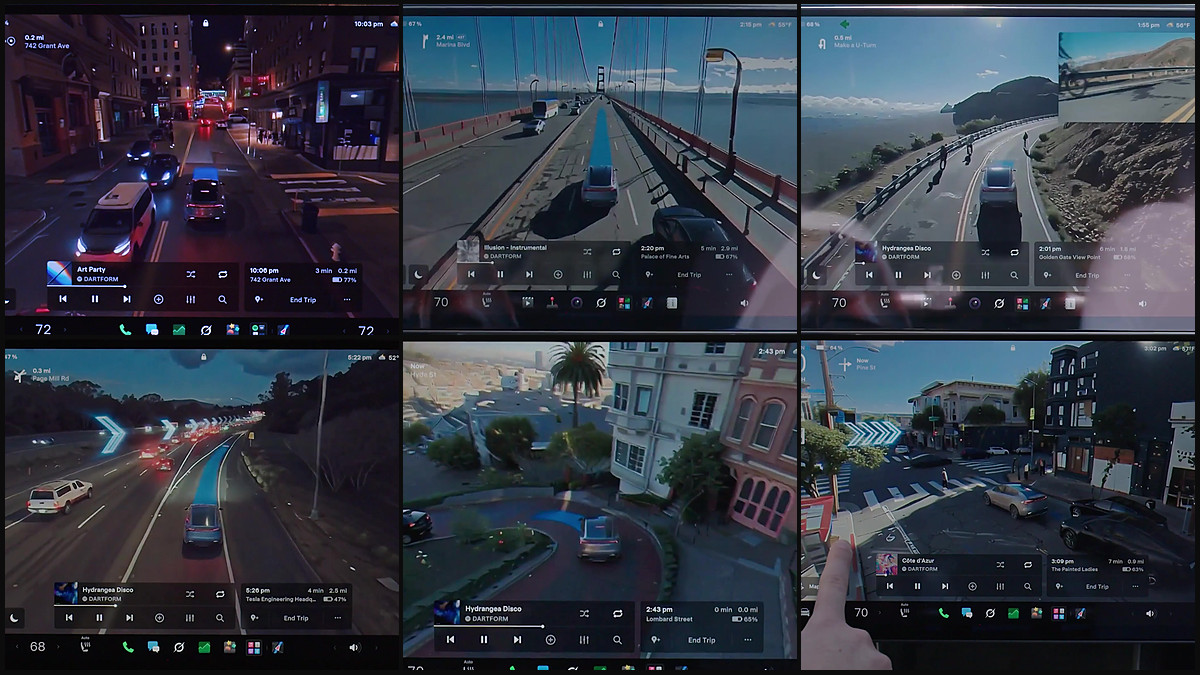
Tesla explicitly stated that safety improvements come in the form of “25x better handling of safety critical cases.” It is also rolling out “Tesla Reality View,” a new version of the Driver Visualization that appears to be much more realistic and could potential use Unreal Engine, according to the teaser video Tesla posted on social media. This “adds a live visualization of the drive that lets you see & control what FSD is planning to do.”
FSD v15 now starting to roll out – upgrading every part of the end-to-end driving network
Safety
25x better handling of safety critical casesTesla Reality View
Adds a live visualization of the drive that lets you see & control what FSD is planning to doNavigation for start & end of the trip now learns end-to-end from fleet route preferences. Later v15 releases will expand this to the entire route.
You also should notice better detection of signs, animals, debris, potholes and standing water, plus more natural speed handling in school zones and inclement weather.
Lastly, FSD can now slow for speed cameras & Bike Rack Mode lets you enable FSD w/ bike racks or similar hitch accessories
— Tesla (@Tesla) November 21, 2026
Perhaps the biggest improvements that Tesla mentioned, however, are that of Navigation fixes and better detection and aversion from potholes, debris, and animals, as well as “more natural speed handling in school zones and inclement weather.”
Tesla also added a new “Bike Rack Mode,” which will enable FSD’s use when bike racks or other hitch accessories are attached.
Tesla also revealed the full Release Notes for v15:
- Upgraded vision encoder shared between FSD, Robotaxi, and Optimus, which is trained on millions of internet videos for improved generalization and data efficiency, improving the critical intervention rate by 25x.
- Introduced Tesla Augmented Reality, replacing all of the explicit model signals into a single end-to-end visualization using less total compute.
- Improved navigation by using an end-to-end learned model based on route preference data from the fleet.
- Improved parking location selection by using personalized parking history, and the map will now display multiple parking options at your destination.
- Improved driver monitoring by increasing vision-based attention monitoring availability with hats and sunglasses and decreasing strictness in higher speed driver profiles.
- Improved detection of road signs, small animals, road debris, and chains.
- Improved detection of potholes, road details, and avoidance of deep standing water.
- Improved speed handling for each driver profile, school zones and speed limits, and inclement weather.
- Improved Autoshift functionality by unifying with FSD-based gear predictions.
- Tesla Reality View New: real-time generative driving visualization that continuously streams a view from an arbitrary virtual camera situated above your vehicle, enabling you to see and control what FSD is planning to do. Select between fullscreen visualizations, maps or a split view – or choose quiet mode for a calming cabin experience. Upcoming navigation turns display directly in the driving visualization. Turn signals are quieter and fade out after a few clicks.
- Speed Camera Slowdown: FSD (Supervised) can now slow down when it detects a speed camera. Press the accelerator or increase your speed profile to cancel the slowdown. If you cancel twice at the same camera, your Tesla saves that location and will not slow down there again. To remove saved cameras, go to Controls > Service > Manage Saved Locations.
- Bike Rack Mode With Bike Rack Mode, you can now engage FSD (Supervised) when a bike rack or similar hitch accessory is installed. When Bike Rack Mode is enabled, FSD (Supervised) pulls over near your destination and does not reverse. Autopark, Summon, and Backup chimes and warnings will be disabled.
It sounds like there are some really great improvements, and this is probably just a handful of what other improvements will come from these upgrades. For example, the UI changes will likely come with some other features that will be discovered upon the public having hands-on experience with it.
Musk said this morning that a wide release would occur sometime in December.
We’re looking forward to testing it when it arrives to us!
Tesla Full Self-Driving v15 has received an official release date from CEO Elon Musk, who says the newest and most capable version of the suite will go wide in December with the 2026 Holiday Update.
That means the first iterations of the suite could actually come sooner, as the Early Access Program is the initial batch of owners to receive a new FSD release. Musk’s comments released a few tidbits of information, but nothing overwhelmingly revealing about its capabilities.
Musk was talking about supervised fine-tuning, stating that it is like “getting a haircut with a chainsaw,” before stating that FSD v15 will roll out wide for owners next month:
SFT is more like getting a haircut with a chainsaw than it is “fine-tuning”! Should just be built into primary training.
And having a “system prompt” is silly! Default behavior should be sensible.
The above are already true for Tesla AI (not yet deserving of “super”). It is the most efficient AI on Earth.
FSD V15 goes to wide release next month. It will be something special.
— Elon Musk (@elonmusk) November 21, 2026
Musk’s Confirmed Changes and Fixes
Musk simply confirmed the new Full Self-Driving version would roll out with the 2026 Holiday Update, and the only two explicit changes he confirmed were updates to the User Interface (UI) and two small changes.
Musk’s comments on the UI confirm there are big changes coming to it, as he stated:
@roger_kappler Yeah.
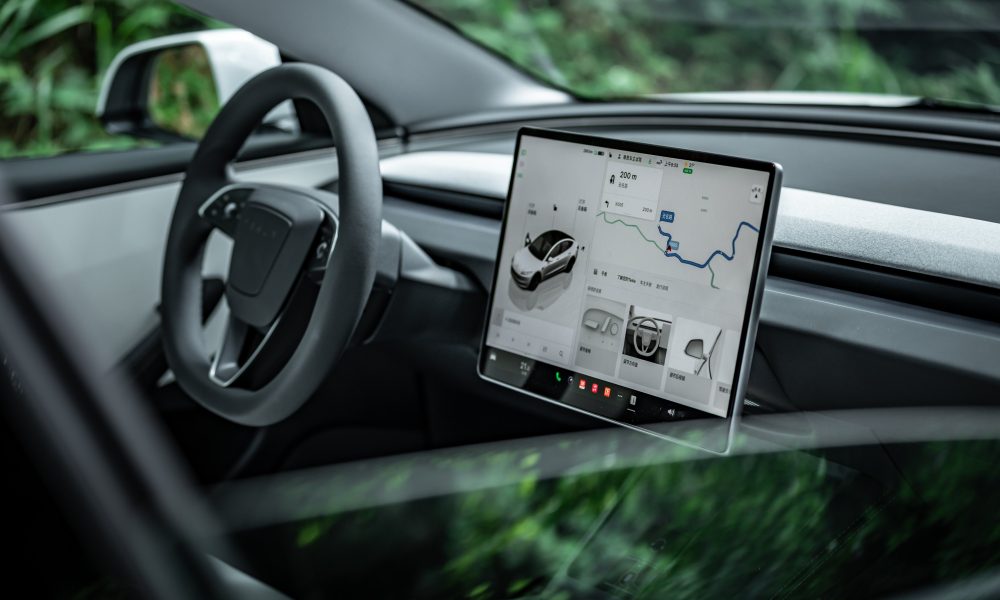
The new user interface will re-render reality in a mind-bending way. Hard to describe, but it’s awesome.
— Elon Musk (@elonmusk) November 21, 2026
The UI changes will likely upgrade AMD Ryzen-equipped Tesla vehicles running AI4 to visualize vehicles using the Unreal Engine, something that was found in coding last year:
Tesla plans to use Unreal Engine for driver visualization with crazy upgrade
Additionally, one user stated that their biggest complaints with v14’s most recent releases is that they have to “stop refusing to use the HOV lane” and last-second lane changes to merge or turn happen too frequently. Musk said these should be fixed in v15.
@riley_stahura Should be fixed in V15
— Elon Musk (@elonmusk) November 21, 2026
In the past, we’ve also gotten small bits of detail about the v15 release, including from Tesla’s Head of AI, Ashok Elluswamy, who stated back in September that there are improved safety and collision avoidance systems coming with the v15 release.
Tesla plans big safety improvements for Full Self-Driving v15
The big prediction for v15 is whether this will enable at least some unsupervised driving in personal Teslas. There are likely to be some massive jumps in capability, although FSD has already proven itself to be a great way to travel. Nevertheless, there are a lot of things it could do better.
FSD still struggles with parking, it has routine bugs from update to update, it does not recognize potholes or large bumps on the road, speed control is a common complaint, and Navigation has been one of the biggest pain points.
However, v15 will likely bring massive improvements to capability and give people more options, like potentially parking orientation and more refined spot selection. We can only wait and see what Tesla will include.
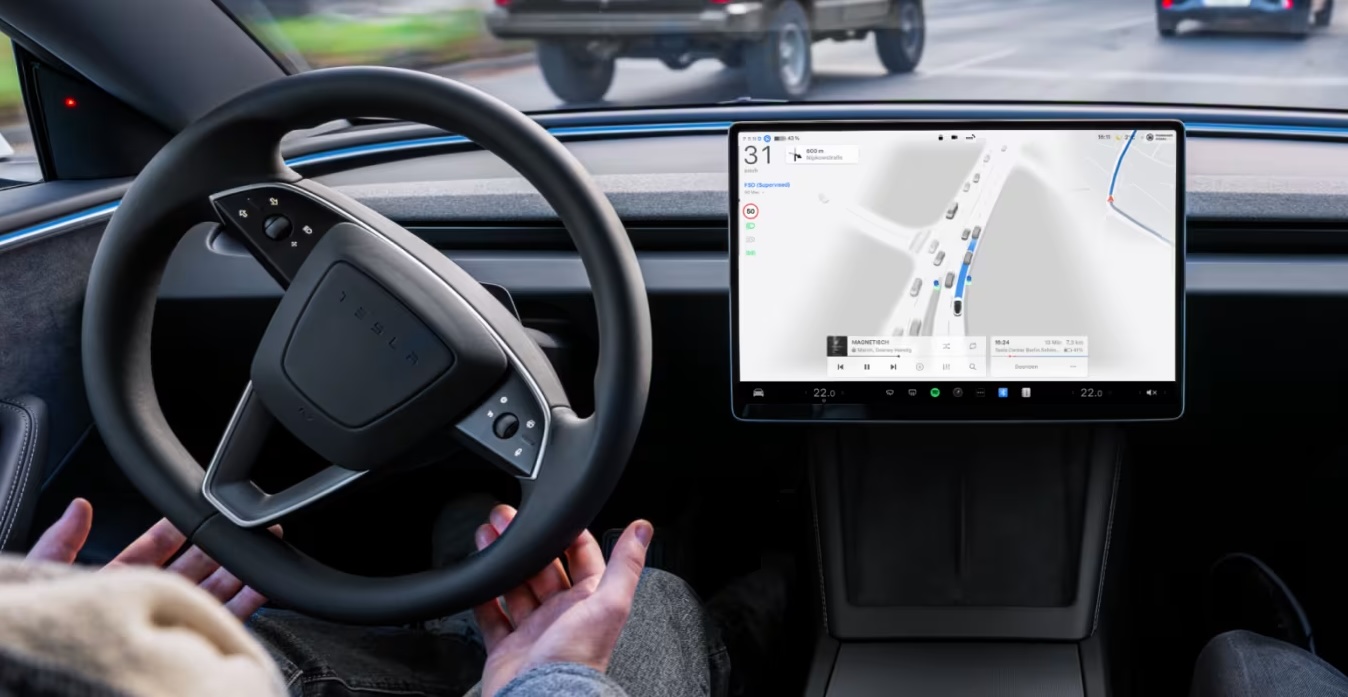
Tesla Assisted Driving (TAD), the European equivalent of the Full Self-Driving suite in the U.S., has officially landed approval to operate in Italy, the 12th European Union country to allow the suite.
Italy marks a huge accomplishment for Tesla’s approval processes in Europe, as it marks the first truly major European country to give an approval.
On November 20, Italy’s Ministry of Transport granted provisional type-approval for Tesla Assisted Driving (TAD), the company’s advanced driver-assistance system. Transport Minister Matteo Salvini announced the decision on X, describing it as “another step forward toward innovation, technology and the mobility of the future, whilst always prioritising public safety.”
Sono orgoglioso di annunciare un’altra importante novità per la mobilità in Italia.
Il @mitgov_it, dopo puntuale verifica tecnica di fattibilità, ha dato il via libera all’omologazione provvisoria del sistema di guida assistita Tesla Assisted Driving, anticipando il processo di riconoscimento comunitario, attualmente in fase di definizione.
Un altro passo avanti verso l’innovazione, la tecnologia e la mobilità del futuro, sempre mettendo al primo posto la sicurezza dei cittadini.
— Matteo Salvini (@matteosalvinimi) November 20, 2026
The approval followed a thorough technical feasibility assessment and positions Italy as the twelfth European country to authorize the technology, but the first among the European Union’s largest markets.
TAD, previously marketed as FSD (Supervised), will roll out in Italy shortly through an Over-the-Air update and will be available on a subscription basis at €99 per month.
This Italian green light carries substantially greater weight than the preceding approvals. The system first received provisional type-approval from the Netherlands’ RDW in April. Subsequent recognitions came primarily from smaller countries, like Lithuania, Denmark, Belgium, Croatia, Finland, and others.
Italy, by contrast, is the Union’s third-most populous member state and one of the traditional “big four” alongside Germany, France, and Spain. Its urban environments are particularly dense and present a more demanding real-world test for the system than many earlier markets.
The approval also follows a late-October conversation between Elon Musk and Salvini, after which the minister publicly supported a swift EU-level decision. Full bloc-wide authorization requires a qualified majority of at least 15 member states representing 65 percent of the EU population. Italy’s move adds meaningful population weight and political momentum ahead of potential discussions in the Technical Committee on Motor Vehicles.
Tesla marked the occasion with a video of a vehicle navigating Roman streets near the Colosseum, underscoring the system’s ability to handle the city’s distinctive traffic patterns.
For Tesla, the Italian authorization represents a strategic foothold in a major European car market, potentially accelerating both customer adoption and the case for broader regulatory acceptance across the continent.

Tesla Full Self-Driving v15 rollout begins: full release notes and improvements

Tesla Full Self-Driving v15 gets release date from Elon Musk


