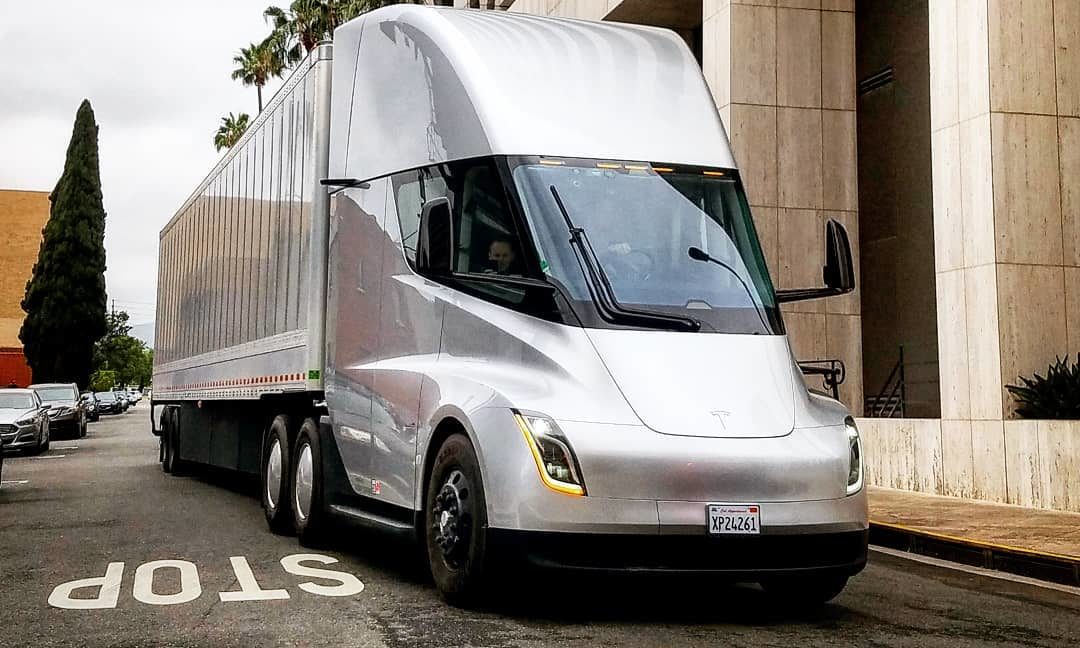
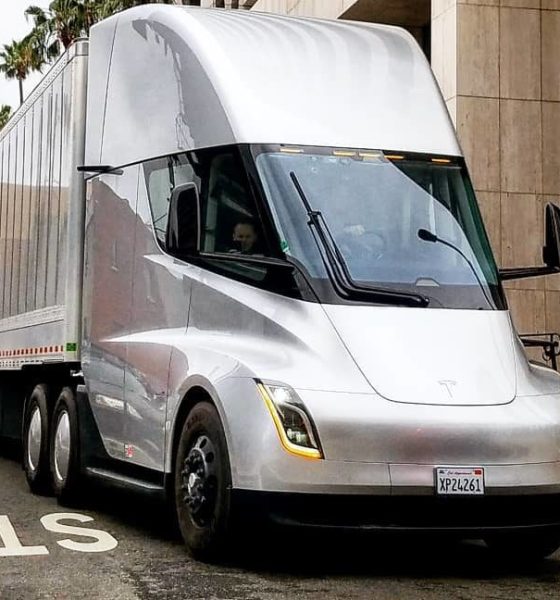

The Tesla Semi was recently spotted near one of the company’s most historic locations — the West Los Angeles Service Center — a site where Elon Musk famously met with early reservation holders of the Tesla Roadster at a time when the company was on the verge of bankruptcy.
According to Mirk_idk, an auto enthusiast on Instagram, he spotted the Tesla Semi just as it was leaving Santa Monica Blvd., the same street as Tesla’s LA Service Center, on May 24 at around 10:30 a.m. local time. The auto enthusiast noted that the Semi appeared to be accompanied by two Model S sedans. There were also two people in the electric long-hauler, one of whom acknowledged him as he snapped a photo of the vehicle.
Just like the Semi’s recent sighting in Sunnyvale, CA, the electric truck was hauling a trailer when it was photographed. Its rear wheels were also equipped with covers that are reminiscent of the Model 3’s Aero Wheels.
https://www.instagram.com/p/BjK5inOFv6S/?taken-by=mirks_idk
The Tesla Semi’s latest appearance is particularly noteworthy, considering that Los Angeles is the location of two important Tesla facilities — the LA Service Center and the Tesla Design Center. The Tesla Design Center, the facility where the Semi and the next-generation Roadster were designed, is just 13 miles away from the site of the recent sighting. The LA Service Center, on the other hand, has a more historical significance to the company.
Back in 2008, Tesla, together with Musk’s private space venture, SpaceX, were feeling the effects of a worsening economy. Both companies were a few steps away from folding, and Elon Musk was exhausting his options. Musk ultimately decided to raise the price of the original Roadster to help the company’s funds. The meeting with some of the Roadster’s reservation holders happened at the LA service center.
Part of the fateful meeting was featured in the documentary Revenge of the Electric Car, which featured Tesla during the development days of the Roadster. Musk later described the meeting as “very tough” and that there was anger from some people in the room.
“I cannot understate the degree of grief that I’ve personally gone through, and that many people in Tesla have gone through to make this work. I wish we didn’t have to waste prices. It sucks. I can’t carry Tesla entirely by myself. I just don’t have the resources do it. We can’t sell cars for less than they cost us to produce,” Musk said during the meeting.

Elon Musk unveils the Tesla Semi on November 2017.
As history would show, of course, Musk would eventually pull off the near-impossible after that meeting, ultimately saving both SpaceX and Tesla from going under. Tesla closed its much-needed financing round on Christmas Eve 2008. According to Musk during a Q&A session at the Paris-Sorbonne University in December 2015, the financing round concluded “on the last hour of the last day when it was possible.”
The Tesla Semi is a Class 8 electric truck that is capable of hauling up to 80,000 pounds of cargo. The vehicle is equipped with four Model 3-derived electric motors and is capable of sprinting from 0-60 mph in 5 seconds without any load. With a full 80,000-pound load, the long-hauler can hit highway speeds in 20 seconds. The Semi is expected to start production in 2019.
As the company prepares to begin the manufacture of the electric trucks, Tesla has started utilizing the vehicles for battery pack deliveries between Gigafactory 1 in Sparks, NV to the Fremont CA facility. Multiple sightings of the trucks in the middle of their transport runs have been reported since then.
The Semi has also been spotted on the site of some of its biggest buyers. Earlier this year, the electric truck was sighted in the Anheuser-Busch Brewery in St. Louis, MO. It also made an appearance in Dallas, TX, where it was demoed for PepsiCo employees. The black matte Tesla Semi was sighted on the back of a truck at a highway near Des Moines, IA as well, close to the headquarters of Ruan Transportation Management Systems.


Elon Musk
Tesla’s secretive “Project Crystal Sun” gets a big green light in Texas
Fort Bend County approved four incentive agreements Thursday for Tesla’s proposed $10.1 billion solar factory.

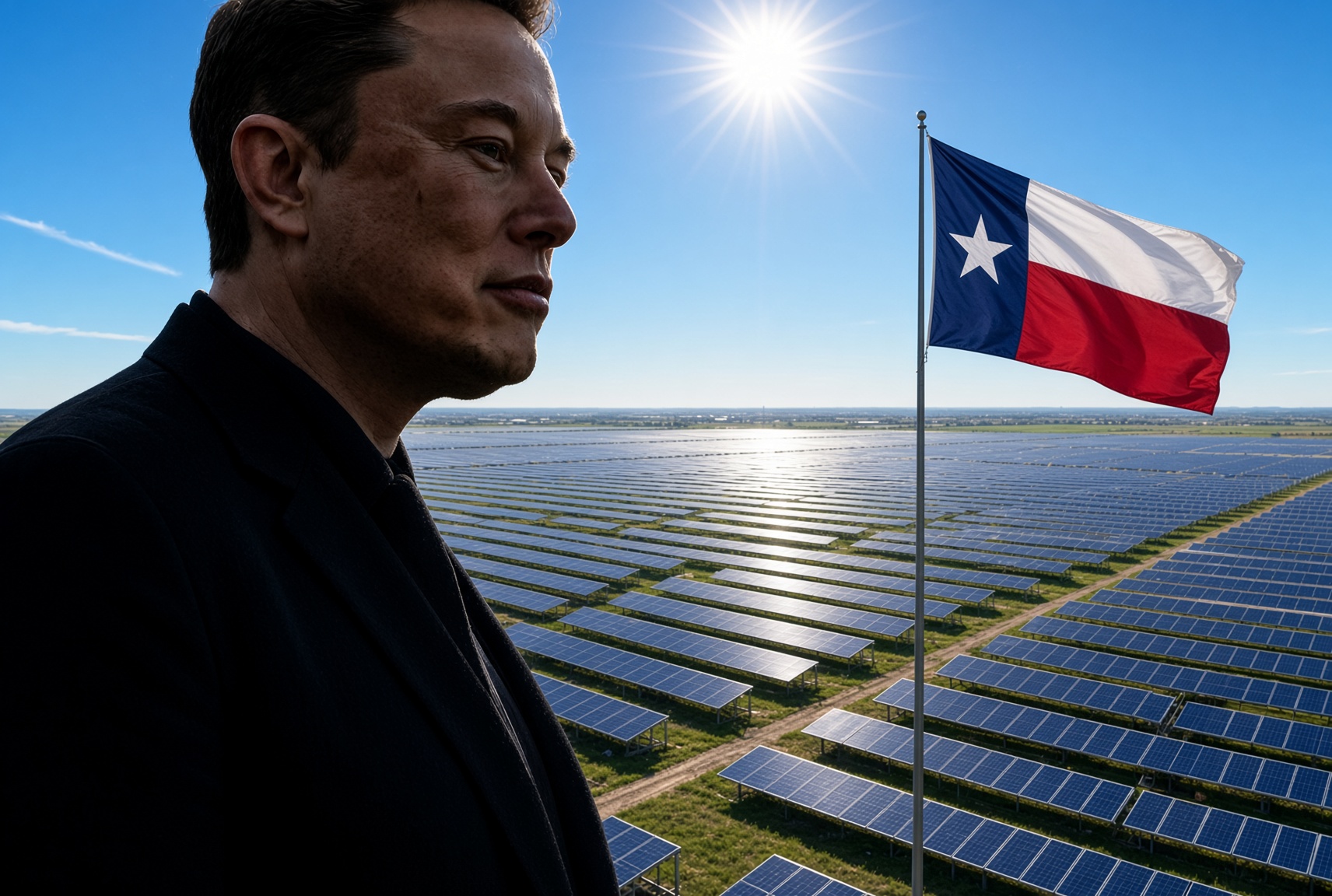
Fort Bend County commissioners on Thursday approved a package of tax incentives for Tesla’s proposed $10.1 billion solar cell factory near Needville, Texas, giving the company one of the last local approvals it needs before it decides where to build. All four Tesla agreements passed 4 to 0.
The votes covered a property tax abatement inside Reinvestment Zone No. 34, a Chapter 381 economic development agreement, a foreign trade zone non-objection paired with payments in lieu of certain taxes, and a separate payment in lieu of taxes “true up” agreement, according to agenda notes from the Fort Bend Commissioners Court meeting.
The project, known internally as “Project Crystal Sun,” would make solar cells and finished modules on roughly 3,000 acres near FM 762 and FM 1994, south of the Brazos River. As Teslarati reported when the filing first surfaced in August, Tesla’s application under the state’s JETI Act splits the investment into $1.5 billion in real property and $8.6 billion in equipment, with 9,712 permanent jobs projected by 2033 and commercial operations targeted for the first quarter of 2029. The plant would handle the full chain from ingot and wafer production through cell testing.
Inside Tesla’s secretive $10 Billion “Project Crystal Sun” filing
Thursday’s approval does not lock in the site. Tesla has told the Texas Comptroller it is still weighing other locations, and site selection adviser David Dennison told Lamar Consolidated ISD trustees in September that the race had narrowed to Fort Bend and one out of state rival with a “very compelling package,” according to the Houston Chronicle. Tesla hopes to decide before the end of 2026, and the incentives still need sign off from the Comptroller and the Governor’s office.
Local officials have now done nearly everything within their control. Commissioners created the reinvestment zone in an August 24 special meeting, with Interim County Judge Daniel Wong formally withdrawing himself over his engineering firm’s past work with Tesla. Lamar CISD trustees voted 7 to 0 on September 15 to advance a JETI agreement that would tax Tesla’s qualifying property at 50 percent of its value for maintenance and operations from 2029 through 2038.
The plant lines up with a target Elon Musk set on Tesla’s Q4 2025 earnings call in January, when he said the company would “work toward getting 100 GW a year of solar cell production, integrating across the entire supply chain from raw materials all the way to finished solar panels.” In March, Tesla was reported to be negotiating a $2.9 billion purchase of Chinese solar manufacturing equipment bound for Texas. The Houston area already hosts Tesla’s Megafactory in Brookshire, where Megapack 3 production has started. Tesla said on its Q3 call that Megapack supply for 2027 is nearly sold out, and Musk wrote on X Thursday that the company is “increasing production of Megapacks as much as possible,” as demand from data centers climbs.

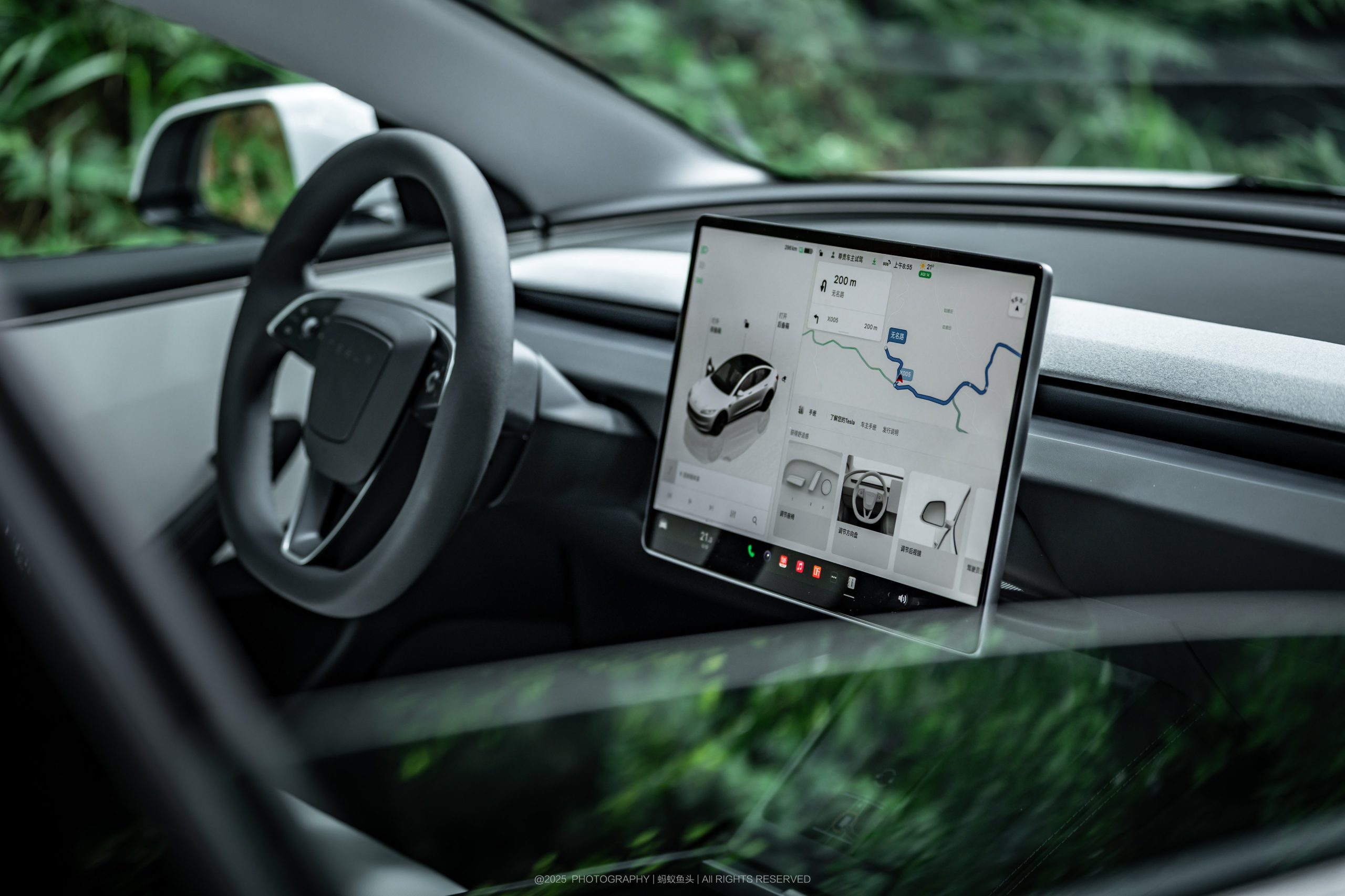
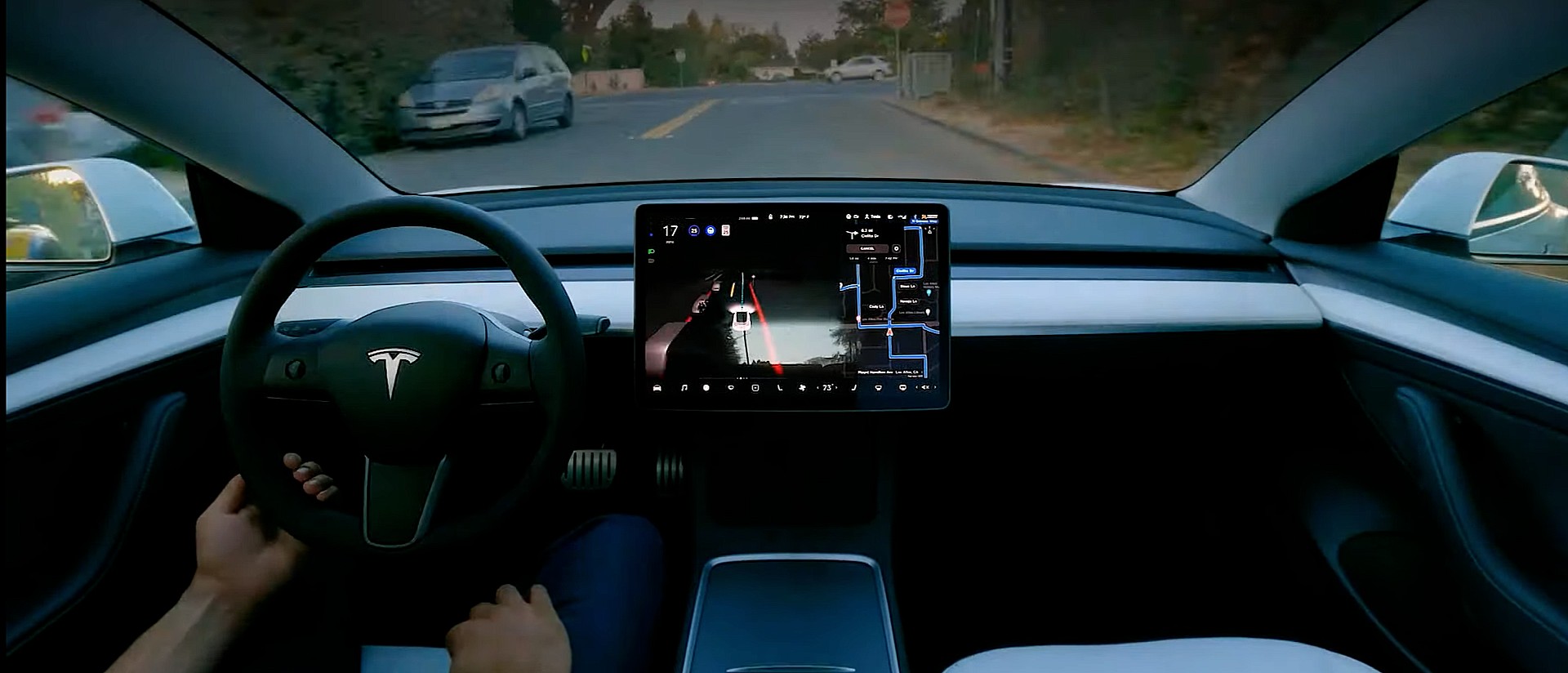
Tesla revealed plans to develop its own maps internally to fix Navigation issues and give owners more control over their routing.
On the company’s Q3 2026 Earnings Call, a question was asked about FSD Navigation issues, particularly speed limit recognition, parking, and routing. These are issues that surface from version to version and seem to be seriously challenging for Tesla’s AI team to resolve.
Tesla’s Head of AI, Ashok Elluswamy, said in response to the question:
“You’re totally right that we shouldn’t be depending on external people’s maps. So we are building our own maps, but not like the same way as OneMoreMap. We are building an entirely new architecture with essentially AI-based mapping and navigation.”
He continued:
“It’s going to be super awesome. It’s going to be integrated with voice. You can talk to it, ask for different routes. It’s going to learn your personalized preferences, plus the fleet preferences. The collective intelligence of all the cars is going to flow into making the maps and navigation super cool.”
Elluswamy said this issue should be confronted, and the mapping should be available for people by the time the v15 release starts deploying to customers.
“And over the next several months,” he added, “it’s just going to take over all of the navigation functions, parking, destination handling. And it will know you better than you know yourself in some regard for the driving task, and then handle it fully.”
Tesla Summon got insanely good in FSD v14.3.2 — Navigation? Not so much
Navigation is perhaps the most notable complaint with FSD, and although it has gotten better, it is still flawed. Much of the time, FSD will take people on routes that are not preferred by the driver, but Tesla tried to combat this with a routing feature in the Summer 2026 Update.
Tesla currently relies on Google for map data, but it is sort of counterintuitive to believe the company would rely on a third party for this. These improvements will be welcome, as routing and navigation have been such a pain point for so many owners for so long.
Quotes via Motley Fool
Tesla Full Self-Driving (Supervised) showed a record attach rate at delivery for new vehicles in the third quarter of 2026.
75 percent of new vehicle deliveries in North America included a subscription to FSD software, up from 55 percent in the prior quarter, a 20-percentage-point sequential gain in the company’s most mature market.
Tesla Q3 2026 Earnings results: in-line revenues, slight beat on EPS
Tesla shed light on the Q3 Shareholder Deck that 75 percent of new deliveries came with an FSD subscription:
“FSD (Supervised)⁴ attach rate continued to grow, reaching over 75% of new vehicle deliveries in North America – our most mature market – a nearly twenty percentage point sequential increase. We believe that FSD is driving demand in markets where it is available, and we continue to work with regulators to get it approved in other markets. “
The higher attach rate accompanied strong growth in the overall FSD consumer base, as active subscriptions rose to 1.75 million, a 67 percent year-over-year increase. For the first time, more than half of paid customers are on the monthly subscription, which is priced at $99 per month in the U.S.
People are buying FSD with a car attached, not the other way around
— Elon Musk (@elonmusk) October 21, 2026
The transition to subscriptions has accelerated since Tesla discontinued the one-time purchase option in most markets earlier this year. The recurring model improves revenue visibility and margins compared with large upfront payments. With three-quarters of North American deliveries now including FSD, the software is now an evidently large contributor to Tesla’s economics and ancillary revenue.
Geographic expansion remains important for further gains. FSD is now available in nine countries in the EU, and more than 100,000 customers have driven over 160 million kilometers. Tesla is pursuing broader EU-wide approval, with a related vote expected in December. Similar progress in additional markets could support higher attach rates beyond North America.
These results came as Tesla had a strong quarterly delivery performance of 486,532 vehicles in the quarter, which came with its largest passenger-vehicle backlog in four years. Battery supply continued to limit volume, but the company has pointed to FSD as a clear difference-maker that is helping sustain demand. As supervised capabilities improve, the attach rate will likely continue to improve.
At face value, it is a key measure of how Tesla is converting sales into autonomy progress.

Tesla’s secretive “Project Crystal Sun” gets a big green light in Texas

Tesla is building its own maps to fix Navigation issues


