Space
NASA’s next Mars rover will pave the way for humans

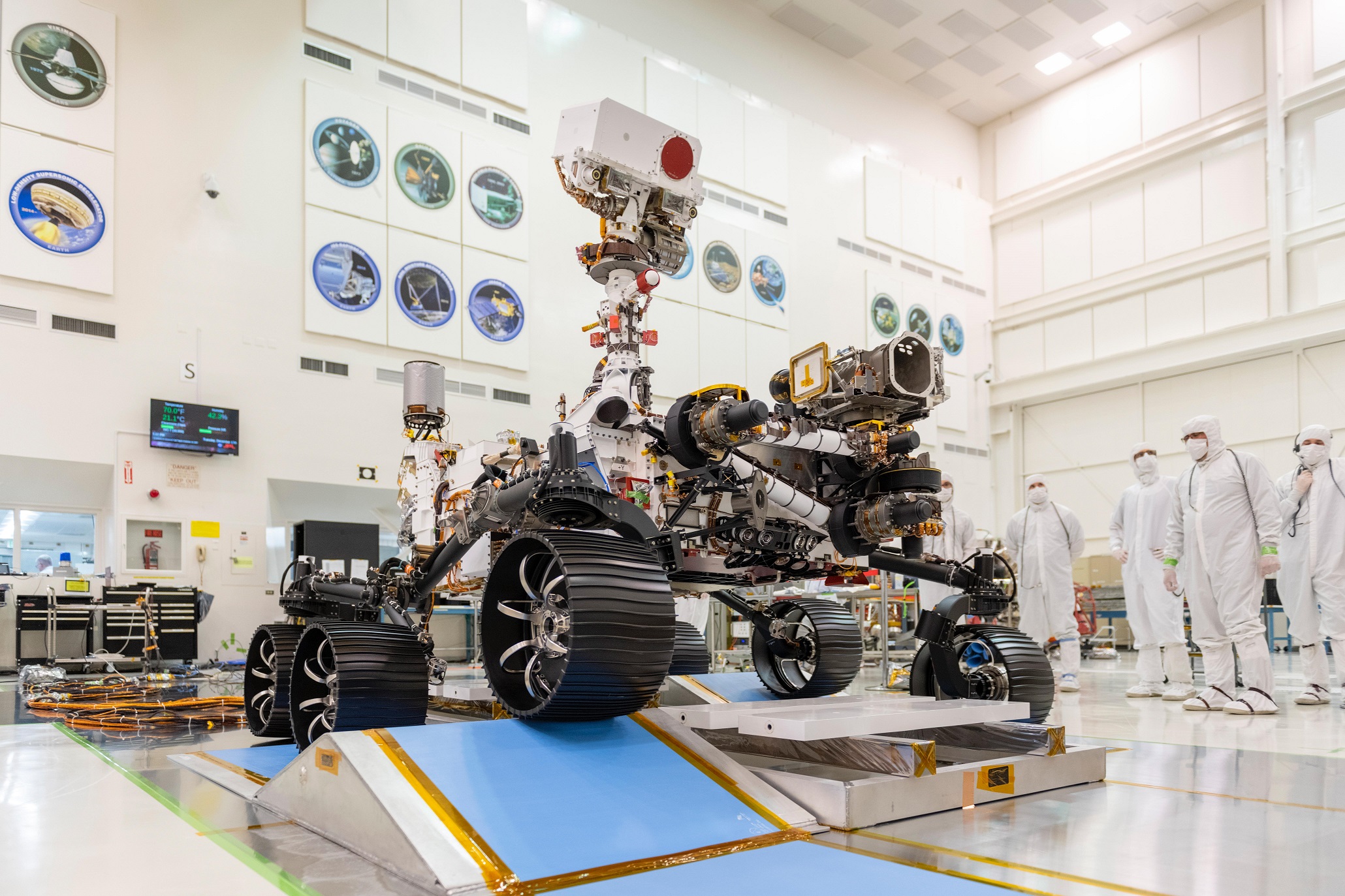
NASA’s Mars 2020 rover is scheduled to land on the red planet in February 2021, and when it does, it will touch down in Jezero Crater, the site of an ancient lake that existed 3.5 billion years ago. The next generation rover, which will get an official name soon, will build on the success of the robotic explorers who came before it by collecting the first samples of Mars for a future return to Earth.
But the new rover will also lay the groundwork for future human exploration by testing new technologies.
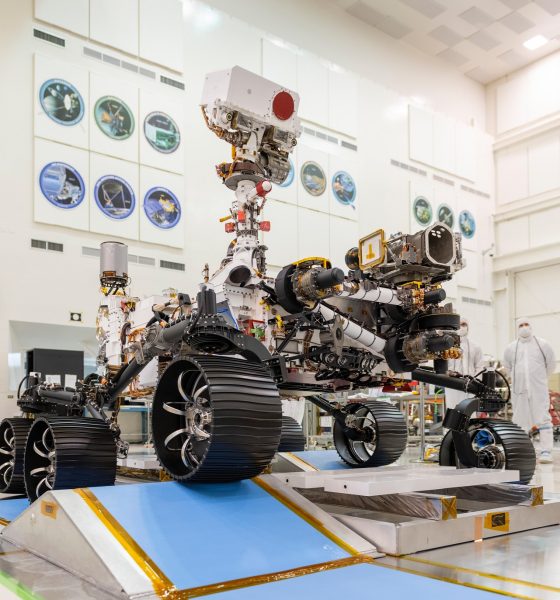
The Mars 2020 rover, which looks nearly identical to the Curiosity rover that landed in 2012, will begin its mission exploring Jezero Crater. The six-wheeled rover is equipped with a suite of instruments designed to help it look for signs of life called biosignatures.
Artist rendition depicting the early Martian environment (right) versus the Mars we see today (left). Credit: NASA’s Goddard Space Flight Center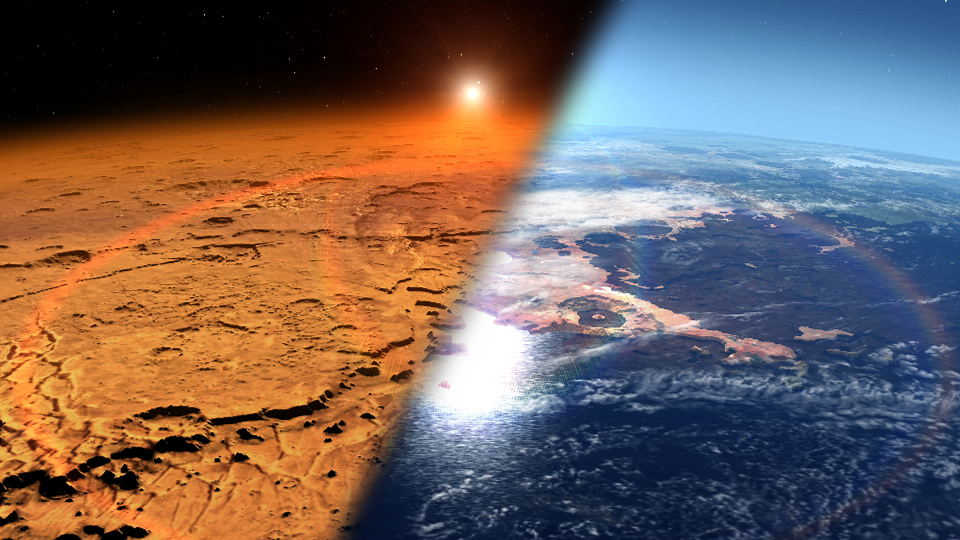

NASA believes that Mars was habitable sometime in its past. The inhospitable desert-like planet we see today was not always the case. Mars’ once ample atmosphere eroded over time, stripped away by solar particles, resulting in the thin atmosphere we see today.
But so far, we haven’t been able to detect any real signs of ancient life yet. The rover’s team thinks that its specialized suite of instruments will change that.
The twin Mars Exploration Rovers (Spirit and Opportunity) were tasked with finding evidence of water, and they were successful right out of the gate. The Mars Science Laboratory (aka Curiosity) was designed to understand habitability and if the conditions were right for life. Now, the Mars 2020 rover will take that one step further and search for actual signs of life.
Artist rendition depicting the early Martian environment (right) versus the Mars we see today (left). Credit: NASA’s Goddard Space Flight Center
The 2020 rover will do so by drilling into its surroundings and extracting samples that will be returned to Earth at a later time. Returning the samples is a challenge that NASA is already starting to tackle. The agency estimates that the earliest it can send a mission to fetch the rover’s samples would be some time around 2026 or 2027.
In the meantime, 2020 will be busy sciencing the heck out of Mars to search for microbial life as well as testing out technologies that future human missions will rely on.
Here’s how four of those instruments will work.
Terrain Relative Navigation
Landing on Mars is tricky. To date, only about half of the missions attempted have successfully touched down on the red planet. The 2020 rover will be equipped with a specialized feature to help it avoid any potential hazards in the landing zone.
Past missions, like Curiosity, needed a landing spot that was free of debris (like rocks, boulders, etc). But 2020 will be able to navigate around them. That’s because the rover is equipped with a unique lander vision system. This system take pictures during the parachute descent stage. It then compares those images to an onboard map.
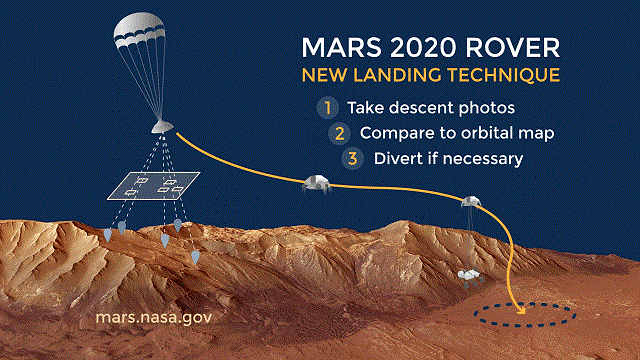
A view of how the terrain-relative navigation works. Credit: NASA/JPL_Caltech
The computer matches the map (which is created from orbital imagery), to create a guide that can identify landmarks such as craters and mountains.
The system then ranks landing sites based on safety, and can even identify a hazard. The Mars 2020 mission will be the first to test out this new system. If all goes well, it will be used on future missions, including human missions to Mars and even the moon.
MOXIE
Astronauts traveling to Mars will need oxygen to breathe and to use as rocket fuel. However, hauling it with the other cargo is expensive and not a viable solution. The Mars 2020 rover is equipped with an instrument on called the Mars Oxygen In-Situ Resource Utilization Experiment (MOXIE for short).
MOXIE will convert carbon dioxide (a gas that’s abundant on Mars) into the oxygen, which astronauts can use as needed. 2020 is equipped with a small, prototype version of the equipment needed for future human missions.
The team will study how the experiment performs and use that data to scale up the technology to use on subsequent missions. But how will it work?
MOXIE can only run for a few hours at a time, and only about once a month. (That’s because the system uses a full day’s worth of rover power each time it runs.) Humans use about 20 grams per hour of oxygen and MOXIE can only produce about half of that.
In order to support a crew of 4-6 astronauts and be able to generate propellant, future iterations of MOXIE will need to produce about 200 times that amount of oxygen.
MEDA
The Mars Environmental Dynamics Analyzer, aka MEDA, is a suite of sensors designed to study the Martian weather, as well as dust and radiation and how they change over the Martian seasons.
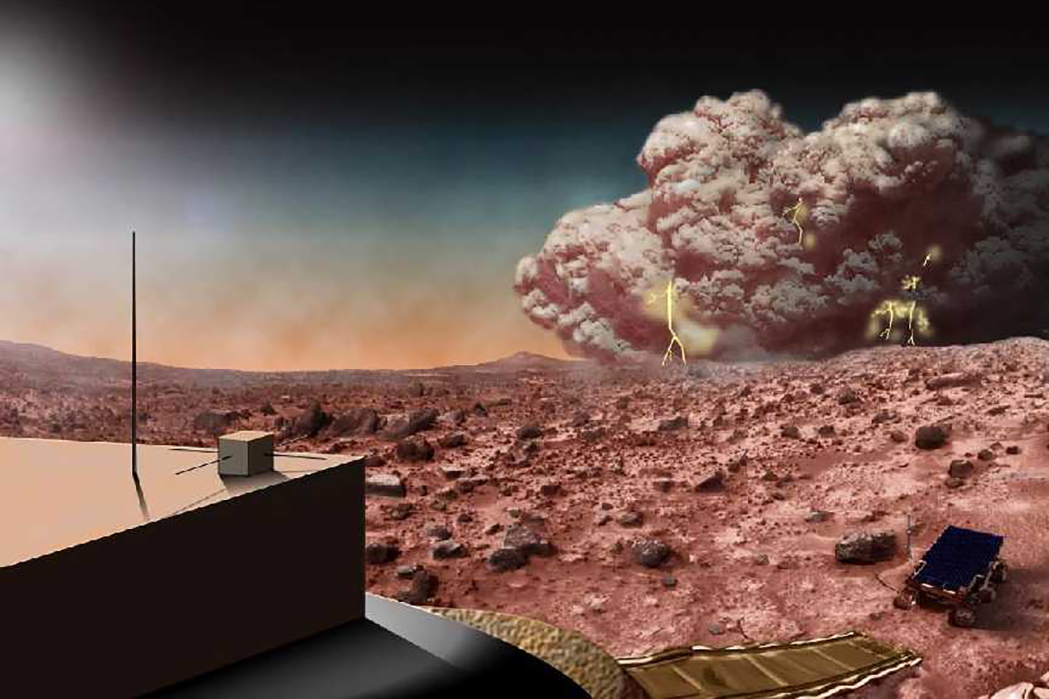
NASA is trying to better understand dust storms and other Martian weather phenomenon. Credit: NASA
Day and nighttime temperatures on Mars can fluctuate by as much as 80 or 90 degrees. MEDA will help scientists track those changes as well as measure radiation from the surface, to understand how much the sun heats the air. This solar heating causes changes in the Martian wind and can help scientists better understand the Martian water cycle.
Understanding the current weather patterns and environment could also lead to a better understanding of Mars’s history and shed light on how it transitioned from a warm, habitable planet into the dusty, cold desert we see today.
RIMFAX
The Mars 2020 rover will be equipped with a ground-penetrating radar instrument: Radar Imager for Mars’ Subsurface Experiment, or RIMFAX.
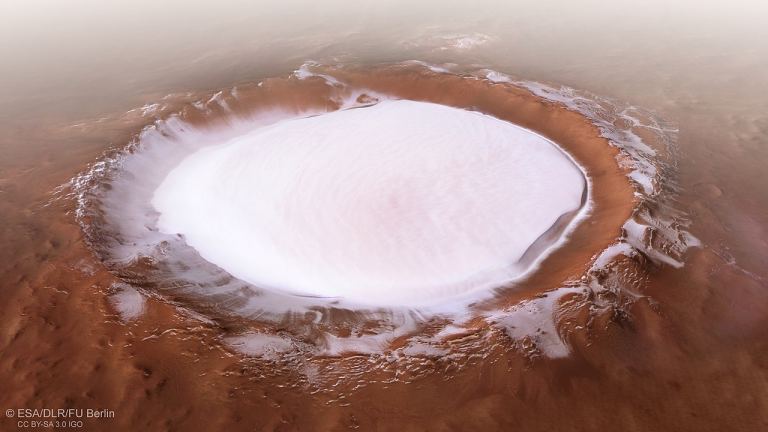
The Korolev crater on Mars as seen by Mars Express. Credit: ESA/DLR/FU Berlin
Scientists hope that RIMAX will help them study the history of Jezero Crater by peering below the surface. With the instrument’s help, scientists will be able to look at subsurface rock and ice. To date, only orbital observations have been made of the Martian polar ice, but this will increase our understanding of the planet’s inner geology.
The Mars 2020 rover is scheduled to launch in July of 2020, and will land on the Martian surface six months later. If all goes according to plan, we may finally be able to answer the question of whether or not Mars once hosted life.



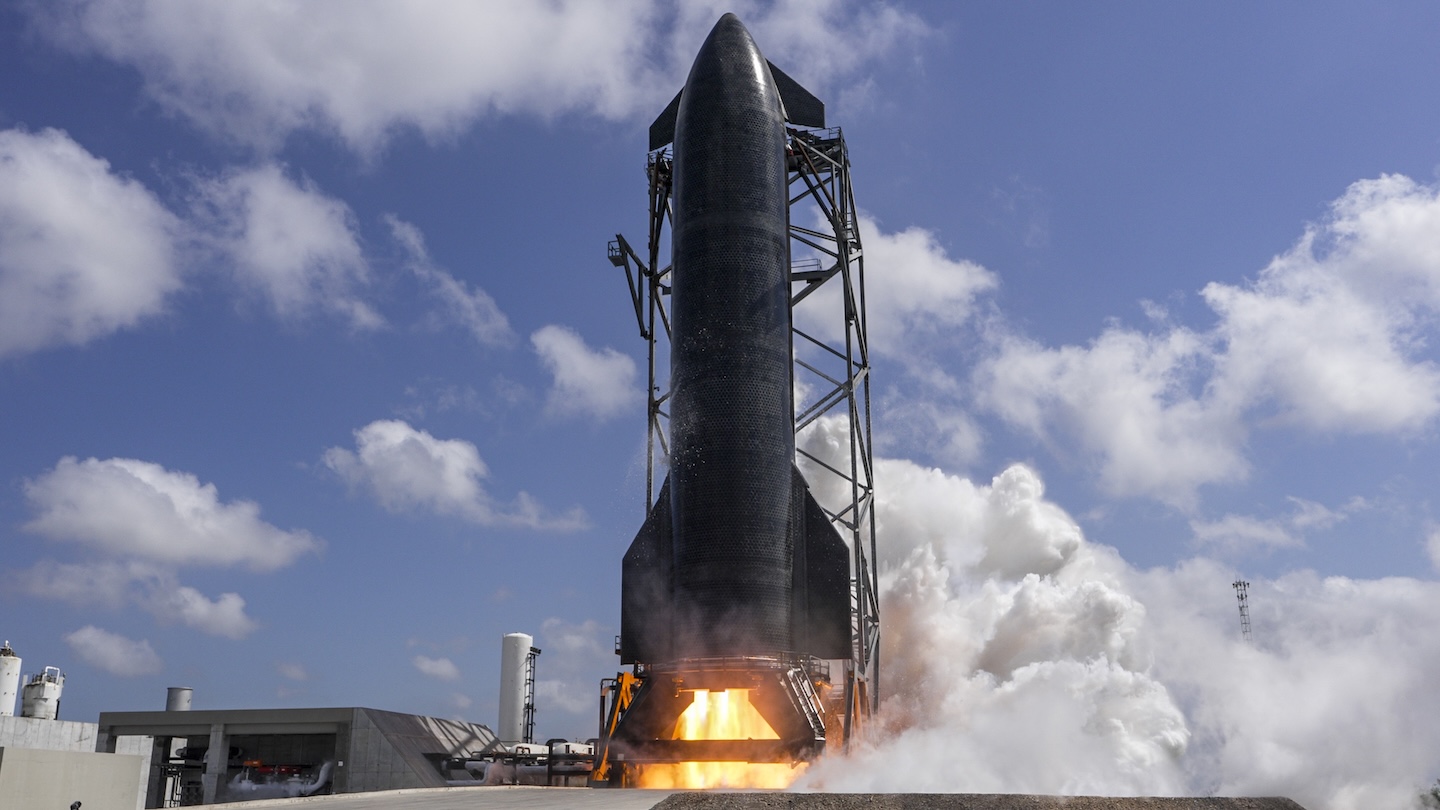
SpaceX CEO Elon Musk announced today that the company will likely attempt to catch the Starship upper stage with its launch tower arms “in a few months.”
In a post on X, Musk wrote, “Looks like we will probably catch the ship with the tower in a few months. If there had been a tower out to sea where we practiced landing the ship, it would have been caught.” He added that the first reflight of a Starship vehicle is expected by the end of 2026 or early 2027, describing it as “a fork in the road of history for consciousness reaching the stars.”
Looks like we will probably catch the ship with the tower in a few months. If there had been a tower out to sea where we practiced landing the ship, it would have been caught.
First reflight of the ship will be either end of this year or early next. That will be a fork in the… https://t.co/O5g9pqrzyo
— Elon Musk (@elonmusk) August 20, 2026
Musk’s prediction comes amid ongoing progress toward full reusability of the Starship system, a two-stage rocket designed for rapid turnaround and dramatically lower launch costs. Catching the upper stage, known simply as “ship,” with the Mechazilla tower’s mechanical arms would mark a major milestone. It would allow both stages to return directly to the launch site for quick refurbishment and reuse, eliminating the need for ocean recovery.
Musk has previously signaled plans for a ship catch. In July, shortly after SpaceX’s wildly successful Starship 13 mission, he stated that the company would attempt to catch the ship with the tower on the next flight unless problems emerged in the mission data review. Earlier comments also outline conditions such as successful soft ocean landings before attempting a land recovery to minimize risk.
SpaceX has solved Starship’s biggest challenge, Elon Musk says
The latest update from Musk adjusts this timeline to a few months, reflecting the iterative nature of the test campaign.
SpaceX has already demonstrated the tower catch technique successfully with the Super Heavy booster on a couple of occasions. The first successful booster catch occurred during Flight 5 in October 2024, when the massive first stage returned to the Starbase pad in Texas and was plucked from the air by the tower arms.
Additional catches followed on later flights, including Flight 7, proving the concept for the booster and building confidence in the system as a whole.
Achieving a similar catch for the upper stage would represent a significant step forward. The ship returns from much higher speeds and greater heat loads after orbital or near-orbital flight. Success would advance SpaceX’s goal of full and rapid reusability, potentially reducing the cost of access to orbit by a factor of 100 or more and supporting ambitions for frequent satellite deployments, lunar missions, and eventual Mars flights.
Musk has long emphasized that true reusability, refueling rather than discarding hardware, is essential for making humanity a multi-planetary species.
As SpaceX continues refining Starship through successive test flights, the coming months will test whether the ambitious catch timeline can be met. The combination of prior booster successes and improving ship landing precision suggests the company is steadily closing in on this historic capability.
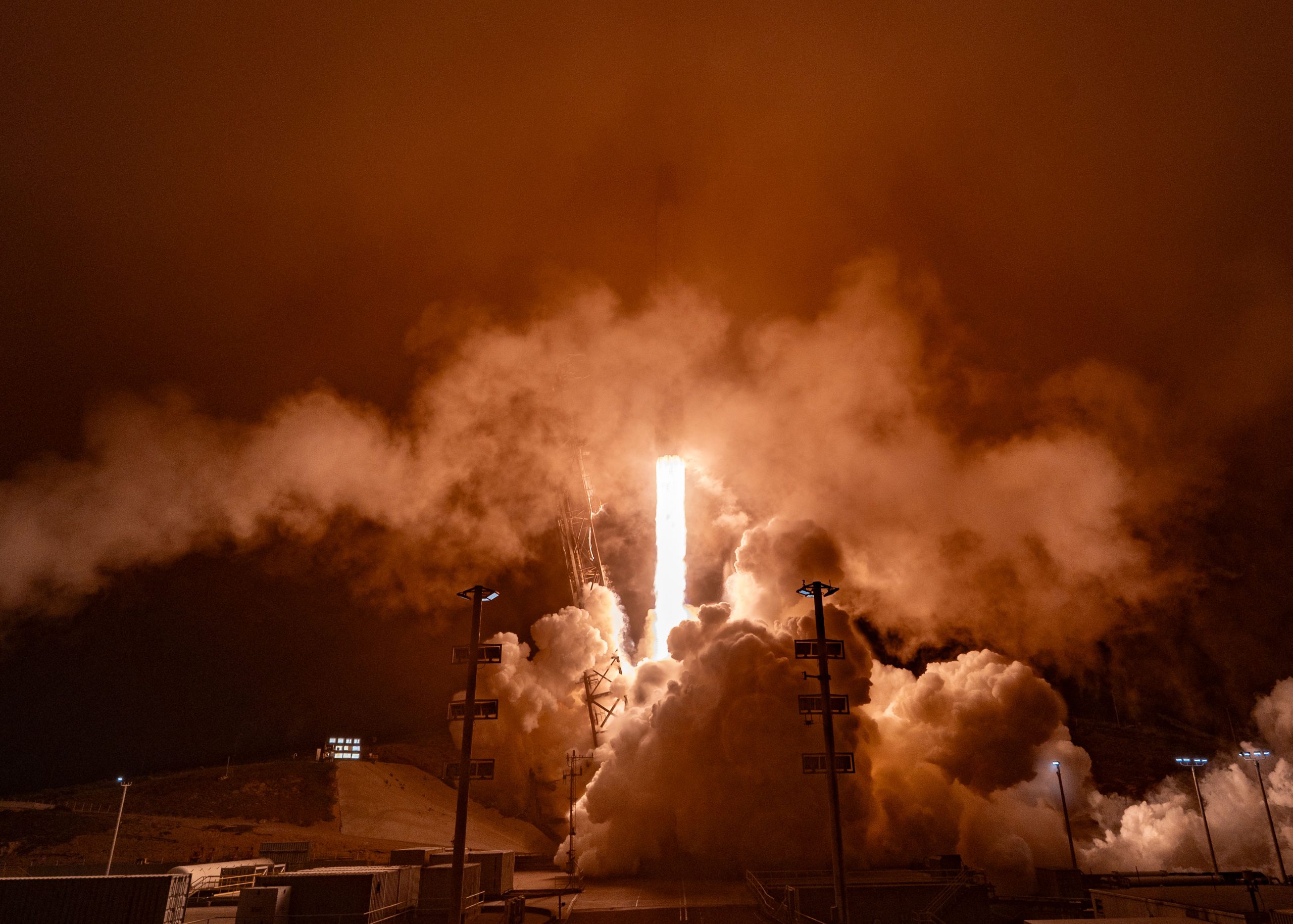
SpaceX has achieved an incredible milestone by launching its 11,000th Starlink satellite into orbit.
This accomplishment occurred during the Starlink Group 17-50 mission, which lifted off on August 19 at 04:01 UTC from Space Launch Complex 4 East at Vandenberg Space Force Base in California.
Falcon 9 launches 24 @Starlink satellites from California pic.twitter.com/UscpmAxDls
— SpaceX (@SpaceX) August 19, 2026
A Falcon 9 rocket carried 24 Starlink V2 Mini satellites on this flight, successfully deploying them into low Earth orbit approximately one hour after liftoff. The first stage booster, identified as B1097 on its twelfth flight, landed successfully on the droneship Of Course I Still Love You in the Pacific Ocean.
According to tracking data compiled around that date, this deployment brought the total number of Starlink satellites in orbit to just over 11,000.
The Starlink program began with test satellites known as Tintin A and B, launched on February 22, 2018. The first operational batch of 60 Starlink satellites followed on May 24, 2019, when a Falcon 9 rocket lifted off from Cape Canaveral. Those initial satellites marked the start of a rapid expansion that has continued for more than seven years.
SpaceX has conducted hundreds of dedicated Starlink missions since then, routinely launching batches of 20 to 30 satellites at a time using reusable Falcon 9 rockets. By mid-2026, the company had already surpassed 12,000 total satellites launched across all versions, with continuous replacements for units that deorbit as designed to manage space debris.
Looking ahead, SpaceX continues to expand the Starlink constellation to enhance global broadband coverage, capacity, and speed. The network already serves millions of users across more than 160 countries and supports applications ranging from residential internet to maritime, aviation, and emergency services.
Future plans center on next-generation hardware, including larger V3 satellites capable of delivering substantially higher throughput, which require the increased payload capacity of the Starship vehicle currently under development and testing.
In July, SpaceX submitted an application to the Federal Communications Commission seeking authority for a Gen3 constellation of up to 100,000 satellites. These spacecraft would operate in very low Earth orbit shells at altitudes near 325 kilometers and 475 kilometers. The filing requests use of existing Ku, Ka, V, and E band spectrum along with new greenfield W and D band frequencies between 92 and 275 GHz.
SpaceX states that the expanded system aims to deliver multi-gigabit symmetrical broadband to consumers, enterprises, governments, and billions of AI-powered devices worldwide while handling a majority of global internet traffic. Approval and subsequent deployment would depend on regulatory review and the operational readiness of Starship for high-volume launches.
This ambitious scale reflects SpaceX’s ongoing commitment to providing ubiquitous high-speed connectivity from space.

News
SpaceX just launched a secret payload from California
SpaceX launched a classified Space Force mission from Vandenberg, revealing almost nothing about its payload.

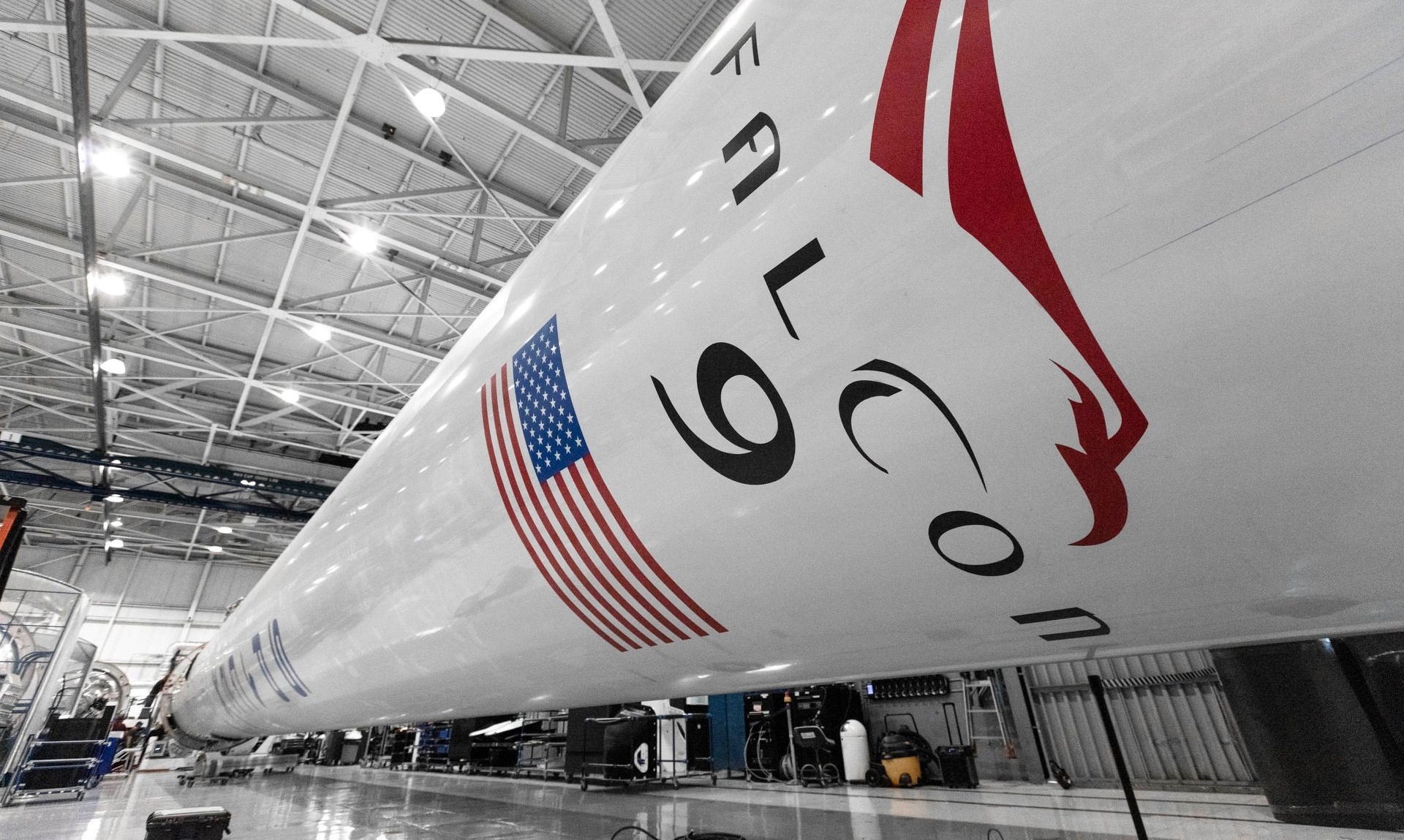
SpaceX launched a classified Falcon 9 mission for the U.S. Space Force from Vandenberg Space Force Base on Saturday night, and the government released almost nothing about what was on board. The mission, designated USSF-366, lifted off from Space Launch Complex 4E with a window that opened at 9:52 p.m. ET and ran into the early hours of Sunday, according to SpaceX’s own mission page, which described the payload only as classified. SpaceX confirmed the launch on its X account and pointed viewers to a livestream that began roughly ten minutes before liftoff.
Watch Falcon 9 launch the USSF-366 mission from pad 4E in California https://t.co/FFEzeYOds1
— SpaceX (@SpaceX) August 16, 2026

The lack of detail did not stop analysts from filling in the blanks. Independent tracking of the rocket’s stage drop zones matched the pattern SpaceX has used on previous Starlink Group 15 missions, according to reporting from Outer Space Today, which pointed to Starshield as the likely payload rather than a one off government satellite. Starshield is SpaceX’s national security product, a version of the Starlink satellite bus built to Pentagon specifications for earth observation, communications and hosted payloads. Unlike consumer Starlink, government agencies do not have to disclose what Starshield satellites are actually doing once they reach orbit.
USSF-366 is the latest entry in a steady flow of classified and semi classified work between SpaceX and the Space Force. The company picked up a $178.5 million task order in April to launch missile tracking satellites for the Space Development Agency, as Teslarati reported at the time, and followed that in July with a $1.6 billion award covering 18 more Falcon 9 missions from Vandenberg through the end of 2027, also detailed by Teslarati. Add those contracts up and SpaceX’s Pentagon business for 2026 alone tops $8 billion.
SpaceX scores another massive Pentagon deal to support military satellites
The Falcon 9 that flew Saturday landed back near the launch site, producing the sonic booms that have become routine for residents near Vandenberg. What is less routine is how little the public will likely ever learn about what the rocket carried. SpaceX and the Space Force have not confirmed the Starshield connection, and government satellite programs built on commercial buses rarely get identified beyond a mission number and a general orbit. For a company that live streams almost everything else it does, from Starship test flights to Optimus robot demos, USSF-366 is a reminder that some of SpaceX’s busiest work now happens entirely out of public view.

Tesla will launch Cybercab on September 3

SpaceX and a new Trump order that could rewrite the next decade of launches


