News
SpaceX readies for astronaut capsule recovery backup plan as rocket drone ship deploys to landing zone

Mission objectives of the SpaceX Crew Dragon Demo-2 test flight, have already commenced days ahead of the scheduled launch attempt. On Wednesday, May 27th at 4:33 pm EDT, Elon Musk’s rocket launching – and landing – company, SpaceX, will set out to achieve more firsts than it has ever attempted in one launch. The final Crew Dragon test flight will shuttle NASA astronauts Bob Behnken and Doug Hurley to the International Space Station for the very first time. Along with the primary mission objective to deliver the astronauts safely, many secondary objectives are built into the mission profile. One of which is autonomously turning the Falcon 9 booster around shortly after launch to land on a floating barge in the middle of the Atlantic Ocean.
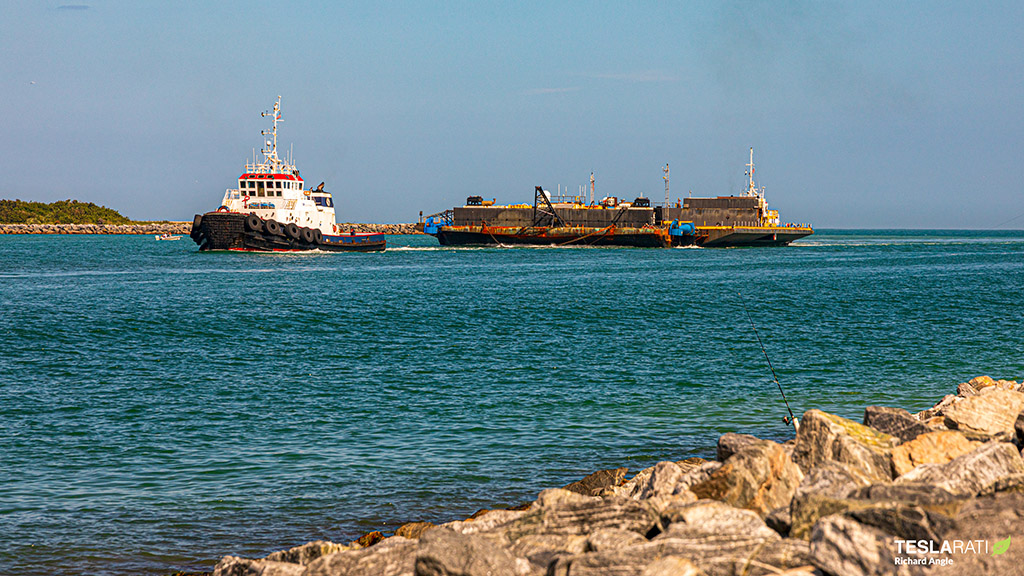
During the late hours of Saturday, May 23rd, a trusted veteran member of the SpaceX fleet of recovery vessels, Tug Hawk, returned to Port Canaveral to transport SpaceX’s autonomous spaceport drone ship, Of Course I Still Love You (OCISLY) to the designated booster recovery zone some 510km downrange. It seems that Tug Hawk and its crew returned specifically to assist with the recovery efforts of SpaceX’s highest-profile launch to date as there was already another tug at Port Canaveral available to assist that was not used. The arrival was captured by long-time port activity documenter, Julia Bergeron, and reported by the unofficial Twitter SpaceX recovery vessel tracking account, SpaceXFleet.
The SpaceX recovery fleet portion of the Demo-2 mission got underway on the morning of Sunday (May 24th). Space Coast local Greg Scott was at Port Canaveral to capture Tug Hawk’s departure with OCISLY in tow just twelve hours after arriving. About an hour later, the OCISLY support vessel that carries cargo and crew essential for booster recovery efforts, GO Quest, departed. It will take Tug Hawk and OCISLY approximately two days to travel to the recovery zone, arriving about 24 hours before the launch attempt.
The propulsive landing of a booster at sea is not a new concept for SpaceX. However, it is a practice that can be somewhat tricky to get right every time due to a multitude of factors. Recently, SpaceX suffered the loss of the Falcon 9 boosters B1056 and B1048 following recent Starlink satellite launches. Both boosters suffered unrelated issues with high winds and software glitches resulting in failed attempts to stick the landing on OCISLY. However, SpaceX successfully demonstrated the reliability of the Falcon 9 landing capability with the flawless launch and landing of the April 22nd Starlink Falcon 9 B1051 booster.
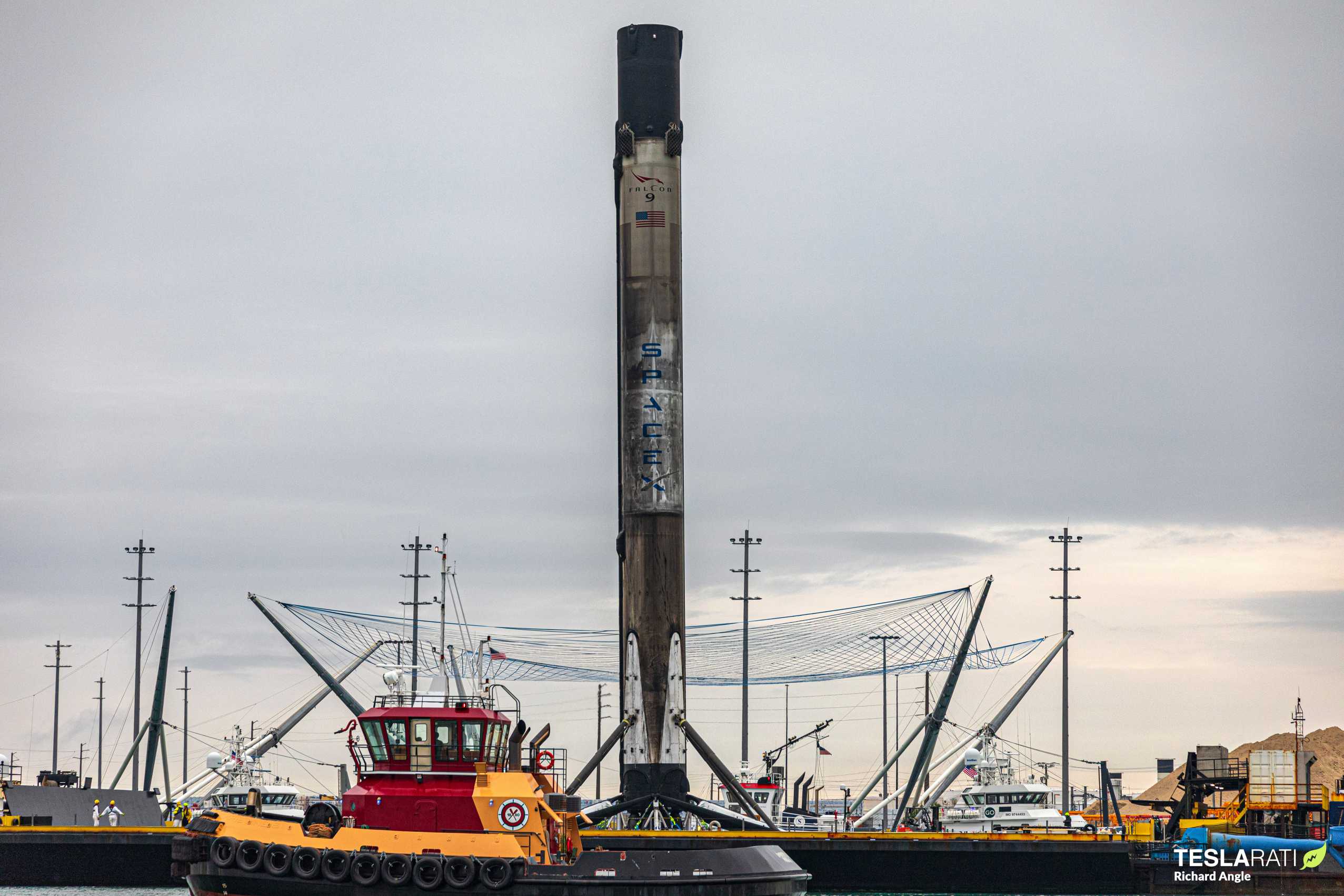
A special circumstance of the Demo-2 mission is the added recovery requirements of the Crew Dragon capsule. With Crew Dragon launching from LC-39A at the Kennedy Space Center in Florida and splashdown designated for the Atlantic Ocean, various recovery zones span almost the entire length of the United States’ eastern seaboard and across the Atlantic Ocean to Ireland. Special recovery zones also are located throughout the Gulf of Mexico.
Typically, the recovery of a crew capsule would only be thought to occur upon mission end when it is on approach for splashdown after re-entry. However, the specially equipped SpaceX Crew Dragon recovery vessels, GO Searcher and GO Navigator, are required to be able to respond to a number of locations during launch and through the entire duration of Crew Dragon’s time on orbit chasing down the International Space Station prior to docking – for Demo-2 that will be nineteen hours. This is to ensure that in the unlikely event of Crew Dragon experiencing an emergency pad or launch abort scenario, the crew aboard can be safely rescued.
To this end, GO Searcher departed Port Canaveral days ago destined for the Naval Air Station in Pensacola on Florida’s west coast. GO Navigator will remain at Port Canaveral until Crew Dragon returns for a splashdown following the conclusion of Demo-2. Dual Dragon recovery vessels stationed on either side of Florida ensures that Hurley and Behnken can be rescued should they require emergency recovery.
Should Demo-2 pass SpaceX’s upcoming final Launch Readiness Review scheduled for Monday, May 25th, all will proceed toward the launch attempt on Wednesday, May 27th at 4:33 pm EDT.
Check out Teslarati’s newsletters for prompt updates, on-the-ground perspectives, and unique glimpses of SpaceX’s rocket launch and recovery processes.


Cybertruck
Tesla drops latest hint that new Cybertruck trim is selling like hotcakes
According to Tesla’s Online Design Studio, the new All-Wheel-Drive Cybertruck will now be delivered in April 2027. Earlier orders are still slated for early this Summer, but orders from here on forward are now officially pushed into next year:

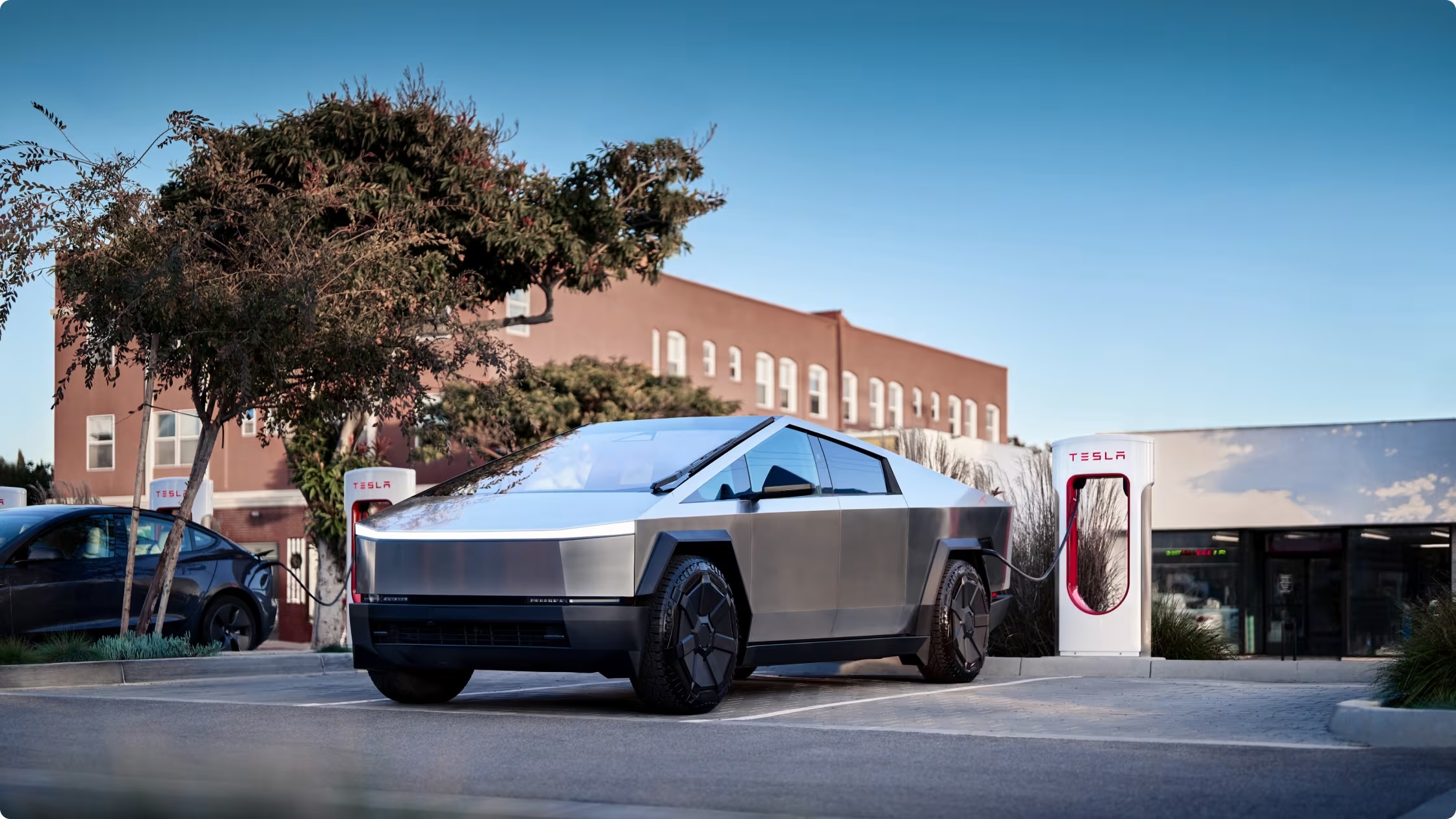
Tesla’s new Cybertruck offering has had its delivery date pushed back once again. This is now the second time, and deliveries for the newest orders are now pushed well into 2027.
According to Tesla’s Online Design Studio, the new All-Wheel-Drive Cybertruck will now be delivered in April 2027. Earlier orders are still slated for early this Summer, but orders from here on forward are now officially pushed into next year:
🚨 Tesla has updated the $59,990 Cybertruck Dual Motor AWD’s estimated delivery date to April 2027.
First deliveries are still slated for June, but if you order it now, you’ll be waiting over a year.
Demand appears to be off the charts for the new Cybertruck and consumers are… pic.twitter.com/raDCCeC0zP
— TESLARATI (@Teslarati) February 26, 2026
Just three days ago, the initial delivery date of June 2026 was pushed back to early Fall, and now, that date has officially moved to April 2027.
The fact that Tesla has had to push back deliveries once again proves one of two things: either Tesla has slow production plans for the new Cybertruck trim, or demand is off the charts.
Judging by how Tesla is already planning to raise the price based on demand in just a few days, it seems like the company knows it is giving a tremendous deal on this spec of Cybertruck, and units are moving quickly.
That points more toward demand and not necessarily to slower production plans, but it is not confirmed.
Tesla Cybertruck’s newest trim will undergo massive change in ten days, Musk says
Tesla is set to hike the price on March 1, so tomorrow will be the final day to grab the new Cybertruck trim for just $59,990.
It features:
- Dual Motor AWD w/ est. 325 mi of range
- Powered tonneau cover
- Bed outlets (2x 120V + 1x 240V) & Powershare capability
- Coil springs w/ adaptive damping
- Heated first-row seats w/ textile material that is easy to clean
- Steer-by-wire & Four Wheel Steering
- 6’ x 4’ composite bed
- Towing capacity of up to 7,500 lbs
- Powered frunk
Interestingly, the price offering is fairly close to what Tesla unveiled back in late 2019.
Elon Musk
Elon Musk outlines plan for first Starship tower catch attempt
Musk confirmed that Starship V3 Ship 1 (SN1) is headed for ground tests and expressed strong confidence in the updated vehicle design.

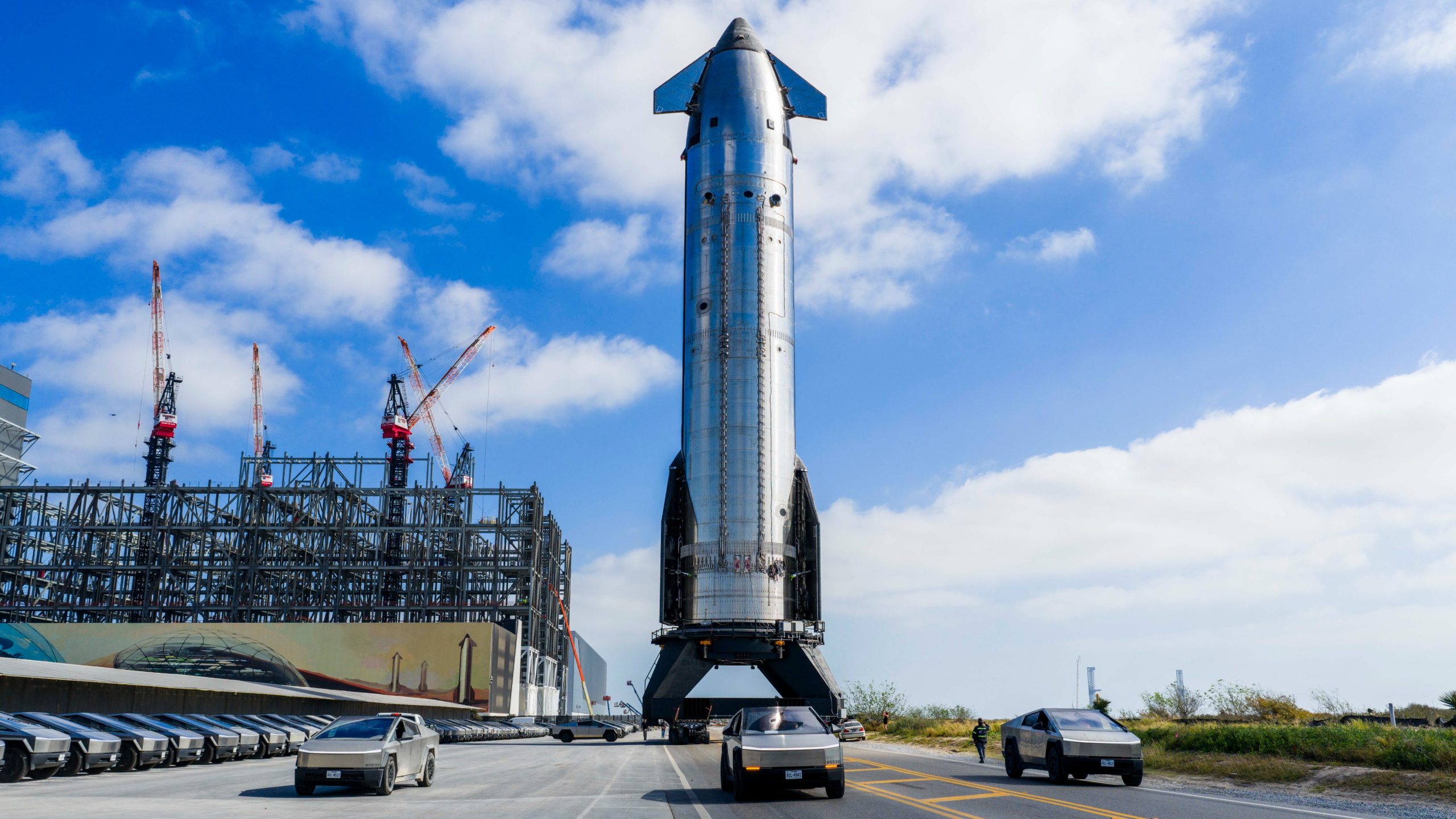
Elon Musk has clarified when SpaceX will first attempt to catch Starship’s upper stage with its launch tower. The CEO’s update provides the clearest teaser yet for the spacecraft’s recovery roadmap.
Musk shared the details in recent posts on X. In his initial post, Musk confirmed that Starship V3 Ship 1 (SN1) is headed for ground tests and expressed strong confidence in the updated vehicle design.
“Starship V3 SN1 headed for ground tests. I am highly confident that the V3 design will achieve full reusability,” Musk wrote.
In a follow-up post, Musk addressed when SpaceX would attempt to catch the upper stage using the launch tower’s robotic arms.
“Should note that SpaceX will only try to catch the ship with the tower after two perfect soft landings in the ocean. The risk of the ship breaking up over land needs to be very low,” Musk clarified.
His remarks suggest that SpaceX is deliberately reducing risk before attempting a tower catch of Starship’s upper stage. Such a milestone would mark a major step towards the full reuse of the Starship system.
SpaceX is currently targeting the first Starship V3 flight of 2026 this coming March. The spacecraft’s V3 iteration is widely viewed as a key milestone in SpaceX’s long-term strategy to make Starship fully reusable.
Starship V3 features a number of key upgrades over its previous iterations. The vehicle is equipped with SpaceX’s Raptor V3 engines, which are designed to deliver significantly higher thrust than earlier versions while reducing cost and weight.
The V3 design is also expected to be optimized for manufacturability, a critical step if SpaceX intends to scale the spacecraft’s production toward frequent launches for Starlink, lunar missions, and eventually Mars.
News
Tesla FSD (Supervised) could be approved in the Netherlands next month: Musk
Musk shared the update during a recent interview at Giga Berlin.

Tesla CEO Elon Musk shared that Full Self-Driving (FSD) could receive regulatory approval in the Netherlands as soon as March 20, potentially marking a major step forward for Tesla’s advanced driver-assistance rollout in Europe.
Musk shared the update during a recent interview at Giga Berlin, noting that the date was provided by local authorities.
“Tesla has the most advanced real-world AI, and hopefully, it will be approved soon in Europe. We’re told by the authorities that March 20th, it’ll be approved in the Netherlands,’ what I was told,” Musk stated.
“Hopefully, that date remains the same. But I think people in Europe are going to be pretty blown away by how good the Tesla car AI is in being able to drive.”
Tesla’s FSD system relies on vision-based neural networks trained on real-world driving data, allowing vehicles to navigate using cameras and AI rather than traditional sensor-heavy solutions.
The performance of FSD Supervised has so far been impressive. As per Tesla’s safety report, Full Self-Driving Supervised has already traveled 8.3 billion miles. So far, vehicles operating with FSD Supervised engaged recorded one major collision every 5,300,676 miles.
In comparison, Teslas driven manually with Active Safety systems recorded one major collision every 2,175,763 miles, while Teslas driven manually without Active Safety recorded one major collision every 855,132 miles. The U.S. average during the same period was one major collision every 660,164 miles.
If approval is granted on March 20, the Netherlands could become the first European market to greenlight Tesla’s latest supervised FSD (Supervised) software under updated regulatory frameworks. Tesla has been working to secure expanded FSD access across Europe, where regulatory standards differ significantly from those in the United States. Approval in the Netherlands would likely serve as a foundation for broader EU adoption, though additional country-level clearances may still be required.

Tesla drops latest hint that new Cybertruck trim is selling like hotcakes

Elon Musk outlines plan for first Starship tower catch attempt


