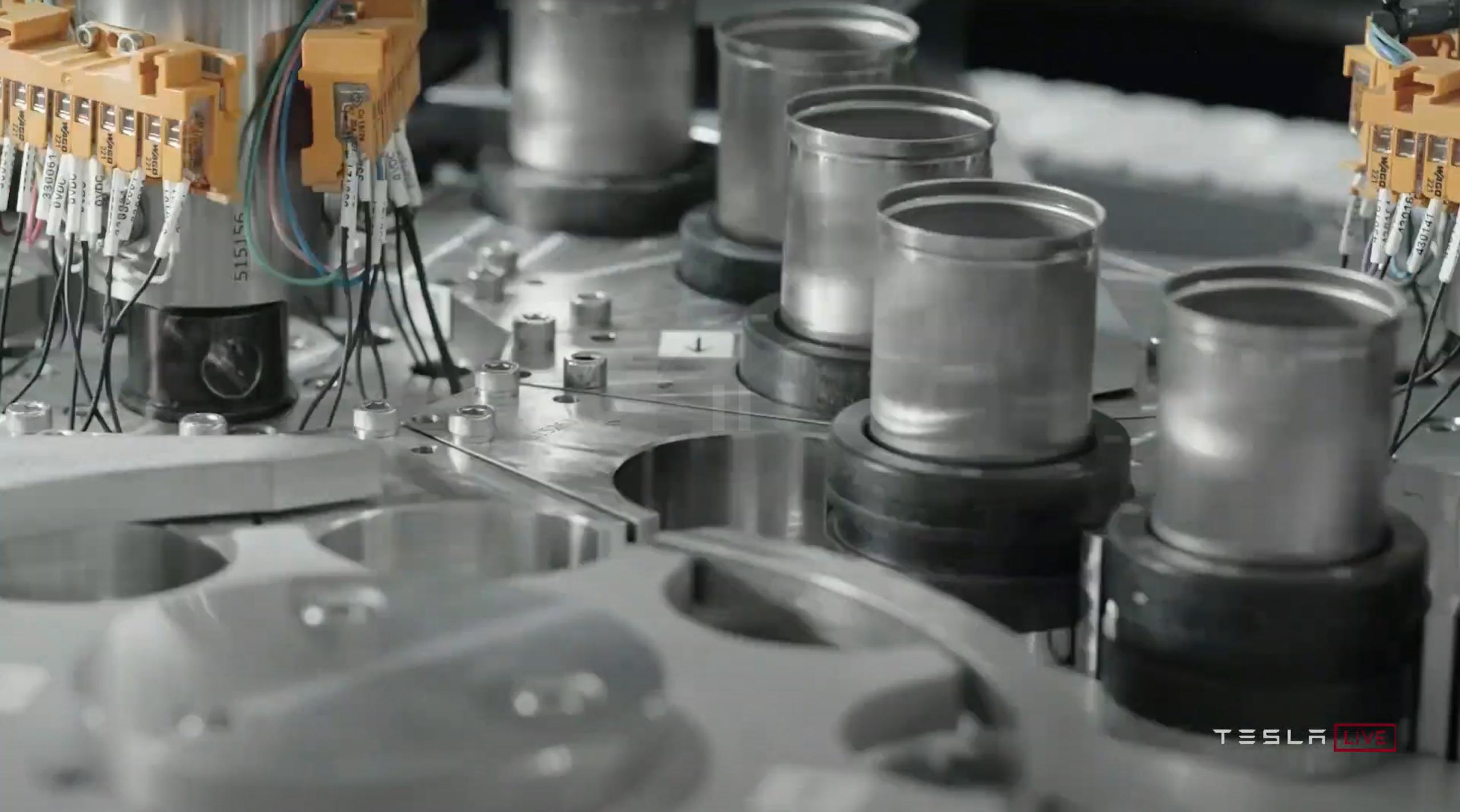

Tesla has finally updated the public about the development of its 4680 battery cells, giving new details regarding the development and performance of the new chemistry and additional details about the structural battery pack and how it is performing in crash tests.
4680 Battery Cell
Unveiled at Tesla Battery Day in September 2020, the 4680 battery cell is set to be arguably the most crucial technological development in the company’s mission to accelerate the transition to sustainable energy. During the presentation last year, CEO Elon Musk and VP of Powertrain Drew Baglino outlined the capabilities of the new 4680 battery cell, highlighting five times the energy, a sixteen percent increase in range, six times the power, for less money. The event revealed Tesla’s lengthy research into the 46-millimeter tabless cell and how it performed most efficiently in charging. At the event, Musk said that Tesla is “starting to ramp up production at our pilot 10 GWh factory just around the corner.” Since then, updates have been hard to come by, but we know that companies are building prototypes of the cell and giving them to Tesla in attempts to win a huge contract.
Tesla debuts new 4680 battery cell: 500% more energy, 6X power, range increase
Testing and Efficiency
Tesla said that it has successfully proven the performance and lifetime of the new cell through rigorous testing processes. As of right now, the only thing that remains is ironing out the manufacturing processes of the cell, which continue to plague Tesla’s production output.
The company stated:
“We have successfully validated performance and lifetime of our 4680 cells produced at our Kato facility in California. We are nearing the end of manufacturing validation at Kato: field quality and yield are at viable levels, and our focus is now on improving the 10% of manufacturing processes that currently bottleneck production output. While substantial progress has been made, we still have work ahead of us before we can achieve volume production.”
The cell’s development is evidently coming along great, according to the automaker’s analysis. The cell is set to be utilized in the Model Y produced at Giga Texas and Giga Berlin. Both facilities are set to begin manufacturing the all-electric crossover later this year.
Manufacturing has always been one of the most complex riddles that automakers, Tesla included, need to solve to improve efficiency and accuracy. It is a never-ending battle, and finding new and more effective ways to produce and manufacture products accurately and with high quality becomes more complex, despite technological advances. The volume production of the 4680 cell is being held up by the final 10% of manufacturing processes that need to be figured out. However, with less than a year of knowing about the facility, Tesla has evidently made tremendous strides in the manufacturing efforts of the cell, and the company could see robust developments and improvements in production after these bottlenecks are solved.
Finally, Tesla also shed more light on the development of the 4680 structural battery pack. Tesla outlined details on this at its Battery Day event as well, stating that the battery pack would be a part of the vehicle’s increased strength and rigidity. It all came down to design.
Credit: Tesla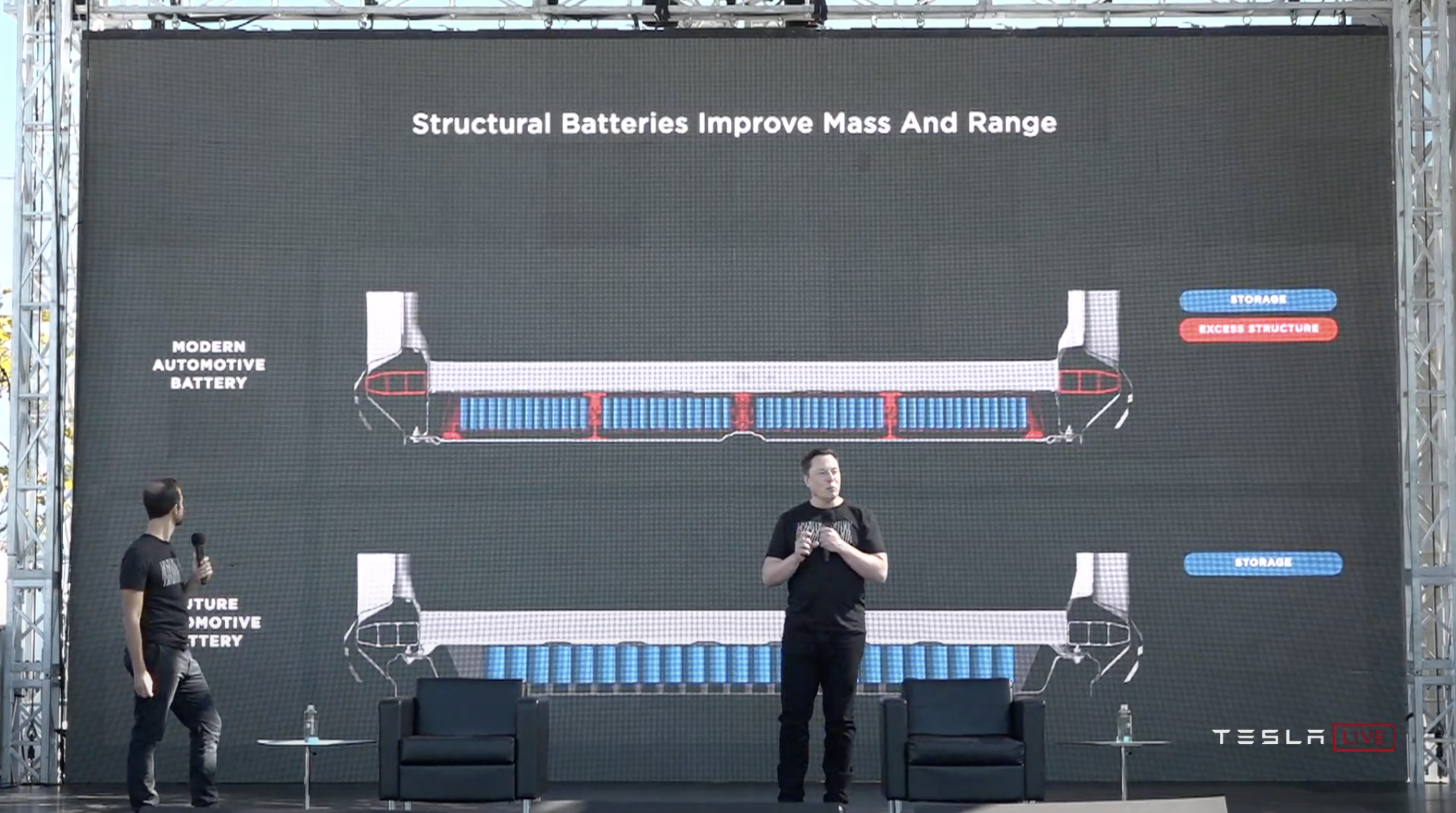
“The non-cell portion of the battery has negative mass,” Musk said. “We saved more mass in the rest of the vehicle than in the non-cell portion of the battery. So how do you really minimize the mass of the battery? Make it negative.”
The design increased structural rigidity and stiffness, preventing deformation in the event of a crash. However, testing needed to be performed, and Tesla is doing it in-house. The company stated:
“Internal crash testing of our structural pack architecture with a single-piece front casting has been successful.”
Tesla beat Wall Street estimates by posting a revenue of $11.958 billion, non-GAAP Earnings per Share of $1.45, profitability of $1.3 billion, and a free cash flow of $619 million.
Tesla will hold its Q2 2021 Earnings Call at 5:30 PM EST, 2:30 PM PST.


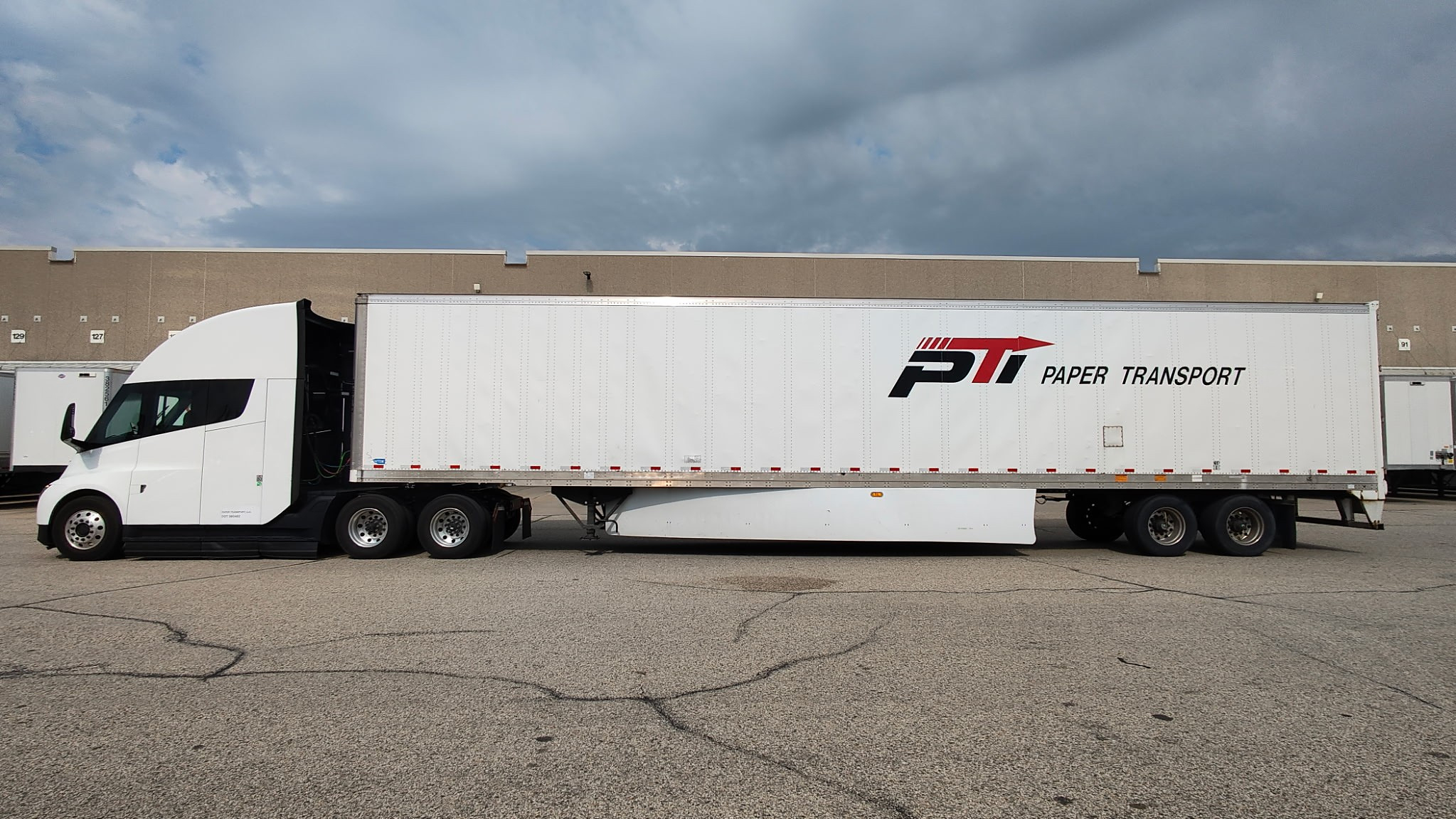
The Tesla Semi is entering a new Pilot Program with Paper Transport, LLC (PTI), a Wisconsin-based transportation provider. The company will test the Semi’s Long Range configuration through “dedicated operations within the Chicago market.”
Chicago presents an interesting challenge for the Semi, as it will be a colder-weather climate that will test the Semi’s ability to operate in lower temperatures and in potentially large accumulations of snow. This is something Tesla has been testing with the Semi in Alaska and even in Northern California during the colder months, but Chicago will present a truly tough midwestern winter.
Tesla Semi spotted on journey home after winter performance testing
PTI says it is using the Semi to evaluate its strategy of reducing transportation emissions while maintaining performance, reliability, and cost efficiency. These are major arguments for the Semi being introduced into new fleets.
CEO of PTI Tyler Ellison said:
“PTI has been a leader in sustainable transportation solutions for over 15 years. We take a consultative approach to helping customers identify and implement the right transportation solution for their network. Our partnership with Tesla expands our portfolio alongside renewable natural gas and intermodal, giving customers more ways to reduce Scope 3 emissions without compromising service or economics.”
PTI is far from the first company to adopt the Semi within a fleet, as Tesla entered strategic agreements with PepsiCo. and its subsidiary Frito-Lay for a Pilot Program that extended throughout the California region.
Tesla has let companies like those utilize the Semi to determine whether it would be suitable for their operations. Additionally, Tesla gets valuable information regarding the Semi’s performance, knowing what to improve and what is ideal for companies that will utilize the all-electric truck for regional and nationwide logistics.
PTI plans to utilize the Long Range configuration, which is priced at $290,000 and features a range of approximately 500 miles, a three-motor powertrain, up to 800 kW of drive power, and consumption of just 1.7 kWh per mile.
Tesla Semi pricing revealed after company uncovers trim levels
VP of Maintenance at PTI, Bryan Ellen, added:
“We are excited to partner with Tesla, leveraging their ever-evolving technology. We are bullish in our estimation of the parallels available between our dedicated model and the efficiency of their fully electric Class 8 tractor. We anticipate a growing synergy between our businesses as we work to facilitate this sustainable solution for our customers.”
PTI has logged more than 87 million miles using sources like compressed and renewable gas, but now is looking to take it a step further with fully electric operations.
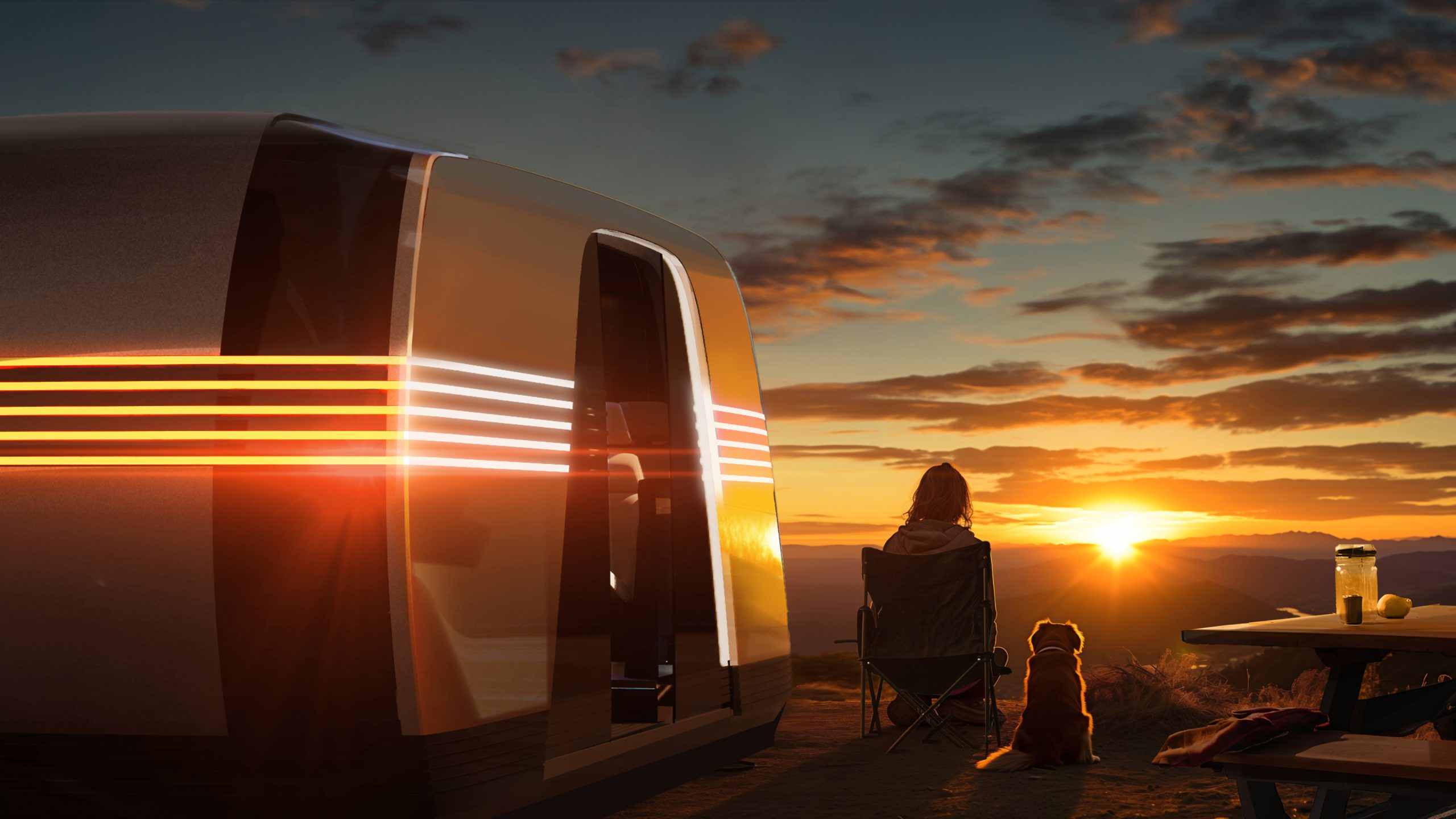
Tesla revealed on Monday that it is building a new autonomous vehicle at Gigafactory Texas, its plant just outside of the City of Austin. This particular vehicle will be geared toward those who are in need of a wheelchair-accessible car that would require no human driver for operation.
According to a new report from Wired, Tesla’s Senior Policy Advisor, India Herdman, told members of the Washington D.C. City Council on Monday:
“We are in development for a purpose-built, wheelchair-accessible autonomous vehicle. We know that paratransit can be very difficult, and people who are confined to wheelchairs permanently should still be able to move around freely, so that is an active product being built by Tesla in Texas.”
This builds upon what CEO Elon Musk said last year on X, which confirmed the company was working on accessible rides within its Robotaxi platform, which currently is confined to the Model Y.
Absolutely
— Elon Musk (@elonmusk) September 19, 2025
Tesla is also developing the Cybercab, which started employee rides last week. However, this vehicle is not necessarily geared toward wheelchair accessibility.
That leaves a major gap in the autonomous ride-sharing program that Tesla is attempting to build; the company has been pretty clear that it does not want to complicate its manufacturing lines by bringing in a wide array of body styles.
However, it seems necessary to have something larger that could help transport people to appointments when they cannot drive. For wheelchair accessibility, the Robovan, which was unveiled at the “We, Robot” event in October 2024, seems to be the most ideal solution:
Herdman did not indicate whether she was referring to the Robovan or if Tesla is building yet another body style that is geared toward full autonomy but also caters to the handicapped.
Tesla might need to develop something specifically for the handicapped in order to align with the Americans with Disabilities Act, which prevents discrimination against people with disabilities in transportation services. Uber was hit with a lawsuit late last year for “refusing to reasonably modify its policies, practices, or procedures where necessary to avoid discriminating against riders with disabilities.”
Tesla would obviously like to avoid this.
It will be interesting to see what Tesla will do with this project, and whether it will introduce something new to the market or just continue with the Robovan.
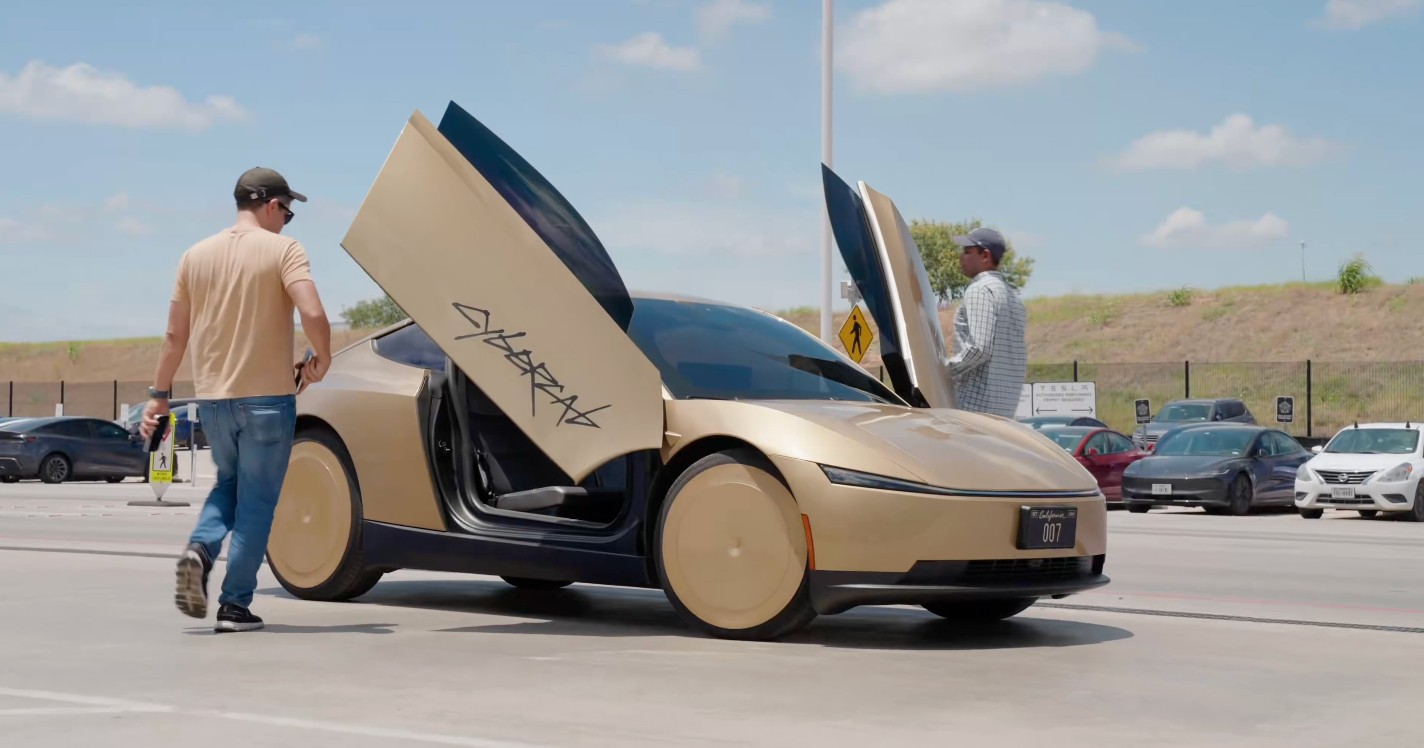
Tesla weirdly confirmed that its steering wheel-less and pedal-less Cybercab vehicle is now in the process of giving employees rides, a huge milestone for the vehicle program.
But the entire thing was super strange. On Friday, Tesla released a video stating that there was “Cool news from Giga Texas” and that employees were now taking rides in Cybercabs that have no manual controls. The units seen on public roads are engineering vehicles that have manual controls inside, a necessity as Tesla moved through the testing phase.
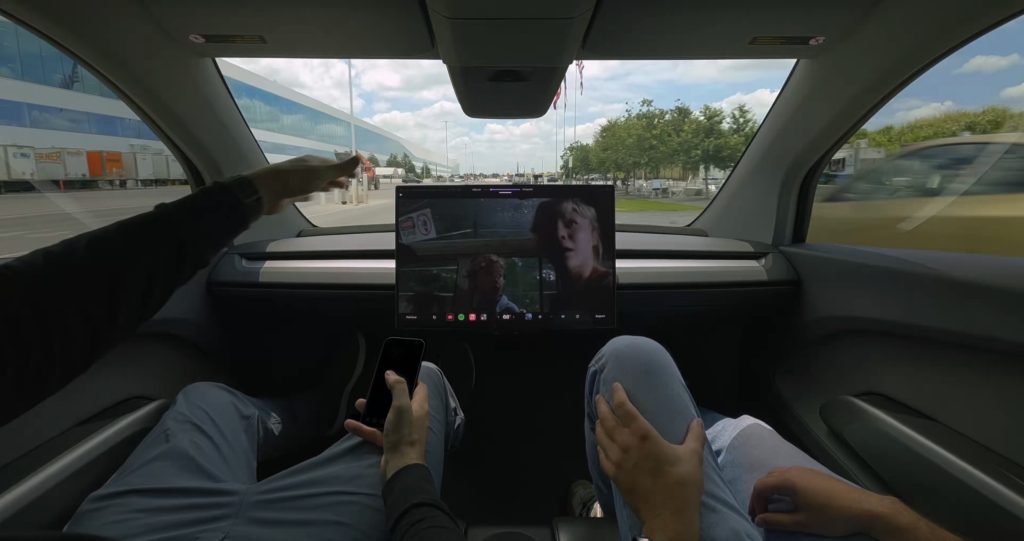
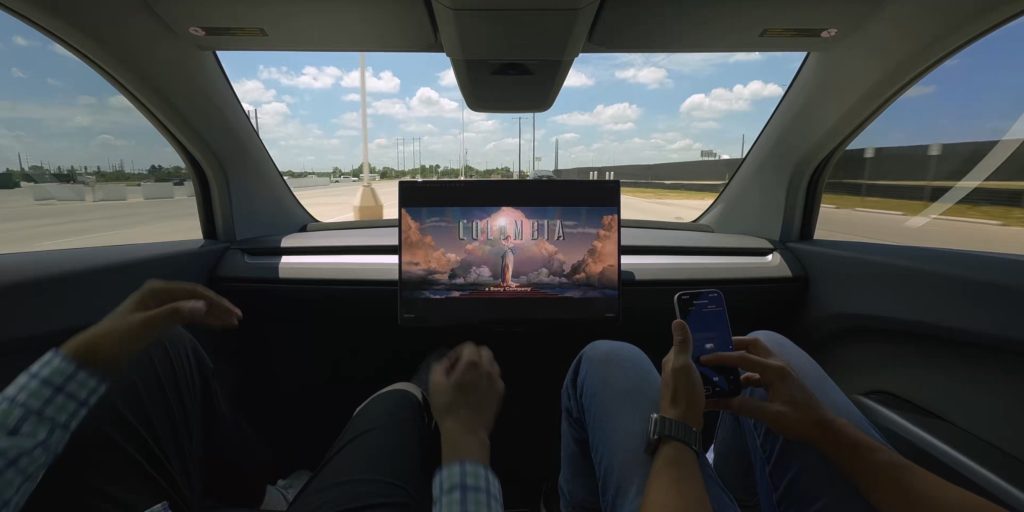
However, Tesla removed the video and reposted it shortly after with a more vague title. It seems like the employee rides are still going, but the video was adjusted slightly. The initial upload showed employees doing things like watching movies and adjusting the climate, but these snippets were removed in the second upload.
Cool news from Giga Texas pic.twitter.com/gvbG456Tzw
— Tesla Robotaxi (@robotaxi) July 11, 2026
Both images below were uploaded with the first video, but were removed after Tesla re-uploaded the announcement. These are not available in the second upload
Credit: Tesla
Credit: Tesla
Nevertheless, the announcement from Tesla is that the Cybercab is operating with employees inside who can control the vehicle’s audio, video, climate, and destination settings through their smartphone app.
Tesla has already been testing Cybercab engineering units, but last month, it was able to self-certify for SAE Level 4, which would enable unsupervised self-driving in Texas. The company is moving toward that, and the plans have always been to launch Cybercab rides this year.
The Cybercab is potentially looked at as the next generation of Tesla’s mobility leg. For the past 15 years, the company has been known as somewhat of an automaker, among many other things. However, these passenger vehicles that Tesla has manufactured are now moving into a new realm, as they will eventually drive themselves with no supervision thanks to the Full Self-Driving suite.
The Cybercab is just the next step of that: a true vehicle developed for the sole purpose of ride-hailing. It has no human controls, it has only two seats, and it will get passengers from Point A to Point B with no awkward driver, no need for manual inputs, and with no stress.
Tesla is moving forward with other developments related to the Cybercab project as well. However, the big announcement will come when Tesla finally announces that it is launching Cybercab rides to the general public, something that it plans to launch either late this year or early 2027.

Tesla Semi enters new Pilot Program with interesting challenge

Tesla is building a wheelchair-accessible Robotaxi


