Lifestyle
Does the Tesla Network have any serious self-driving competitors?

Elon Musk has made it clear that the Tesla Network’s potential is no joke.
“The fundamental utility of your vehicle will increase by a factor of 5,” he told the audience during Tesla’s Investor Autonomy Day earlier this year. Then, during a broad investor call in May, he reportedly said that self-driving would give Tesla a $500 billion dollar market cap with vehicles worth up to $250,000 in the next few years thanks to their Robotaxi capabilities. Each car will be capable of doing about 100 hours of self-driving hours of work per week to their owners’ benefit. Musk’s even more astounding prediction was that Tesla’s Full Self-Driving chip and real-time development data being fed by current vehicles on the road will lead to some 1 million Robotaxi-capable Tesla cars by next year.
Of course, Tesla isn’t the only company vying for autonomous taxi riders. Is there anything Tesla Network competitors are supposed to do that gives them a competitive edge? I’ve become curious recently and decided to have a look. These kinds of questions can’t be left unanswered, you know!
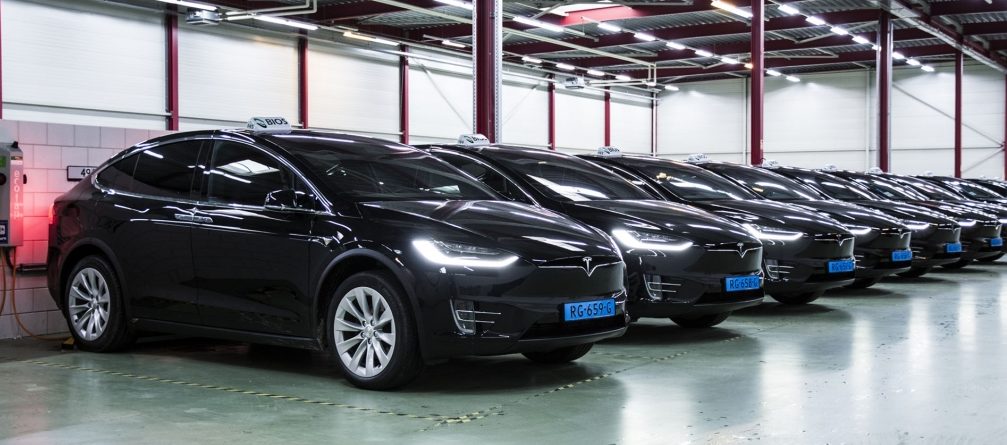
Waymo is probably one of the most well known Robotaxi companies making headway in the self-driving arena. Their vehicle program aims to “help…people run errands, commute to work…[and]…drop off kids at school,” among other things shown on the company’s website. I’m seeing lots of family focus in their marketing, and Waymo’s pitch even includes giving elderly and disabled people more mobility options. It’s all very ‘feel good’ and great, but not quite distinct from what Tesla aims to do with the Robotaxi. I mean, just owning a Tesla will provide those capabilities, and if you don’t own one, you can rent one to do all those tasks just the same.
Next, there’s Uber, whose self-driving cars are part of the company’s ultimate goal of becoming the “one-stop shop for the movement of people and powering local commerce around the world,” according to its CEO Dara Khosrowshahi. Actually, Uber is totally banking on the Robotaxi concept for survival. Former CEO Travis Kalanick made some comments to that effect in 2016. “What would happen if…we weren’t part of the autonomy thing? Then the future passes us by, basically, in a very expeditious and efficient way,” he told Business Insider in an interview.
Uber is definitely taking aim at a similar audience as the Tesla Network, or the ride-hailers anyway. The biggest difference between the two companies, however, is the assumption by Uber that people will gradually move away from vehicle ownership altogether, including the people it currently pays to drive other people around. Drivers are expensive! So, Uber hopes to get rid of them in favor of a fleet of company-owned autonomous vehicles.
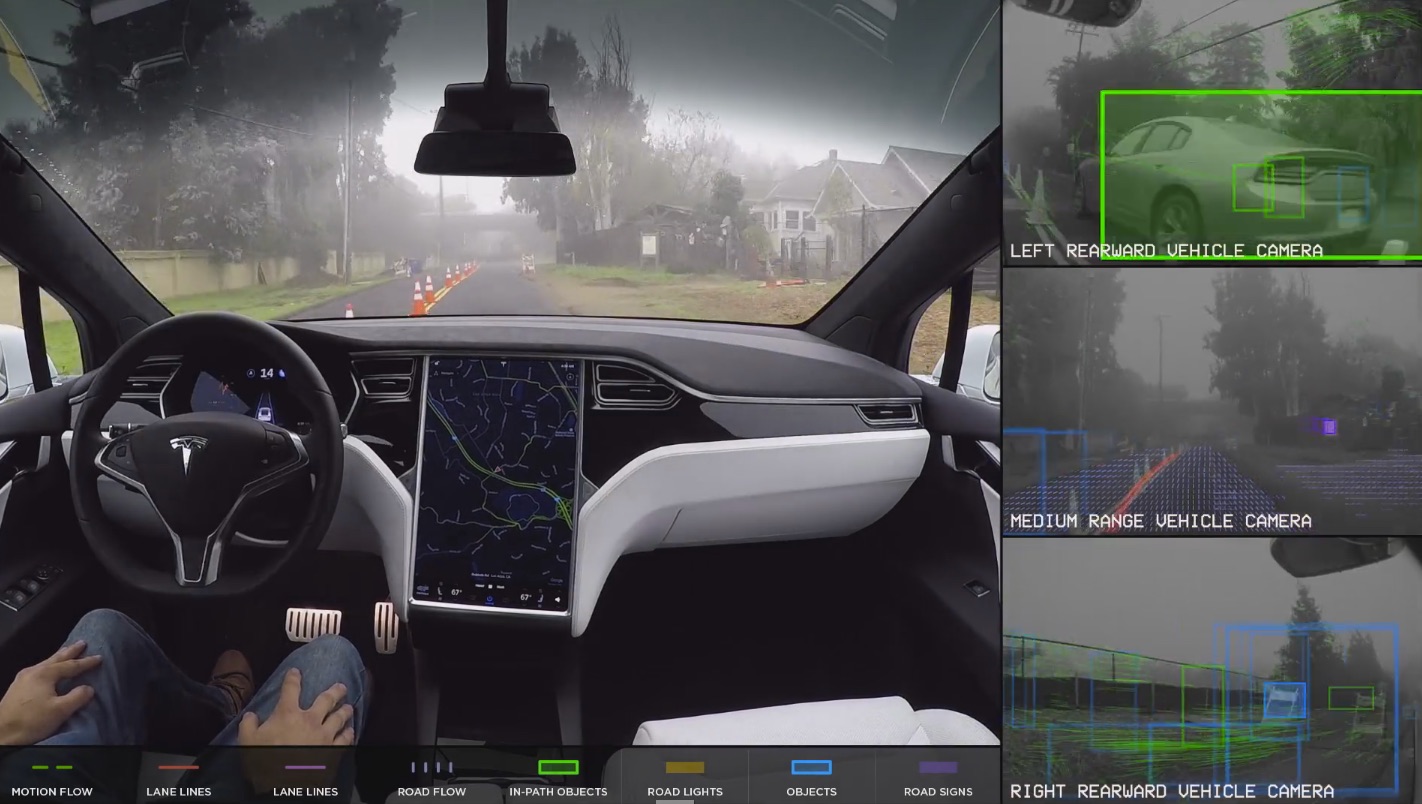
Elon Musk has argued that this semi-traditional one owner, one gazillion cars approach is unwieldy. Also, if a certain percentage of those riders are financially capable of owning an autonomous car, why would they pay Uber to constantly hitch rides when their own car could do the same thing and earn that money for themselves? Well, that’s the point of the Tesla Network. If people are taking privately-owned self-driving cars from place to place via a company like Uber, why wouldn’t they be a private owner themselves if given access to a connective network?
Lyft is more or less in the same boat as Uber on this, but with a twist. They’ve recently begun offering Waymo rides via their app in Phoenix, Arizona, which is a pretty cool development for the future of Robotaxis. It does have a similarity with the Tesla Network in that Waymo’s vehicles are privately owned by someone other than the ride sharing app provider. If, say, Tesla owners could put their cars onto the Lyft app for service, there would be a one-to-one similarity with the Tesla Network. That doesn’t look like it’s Lyft’s preferred approach, though, as the company is developing its own self-driving system. Perhaps there will be a mixed approach? I’m sure Tesla will take note of competing connectivity apps and have incentives to purchase a Tesla for Robotaxi duties over other self-driving cars.
Tesla does, of course, intend to compete directly with Uber and Lyft in ways outside of private owners on its network. “Tesla will for sure operate its own ride-hailing service. We’ll compete directly with Uber and Lyft, obviously. There will be a company-owned fleet where there aren’t enough customer cars to be rented out. So if we find in a particular metro (where) there aren’t enough customers who are willing to add their car to the shared fleet, that’s where we’d supplant with the company-owned fleet,” Elon Musk said during the company’s Q3 call in 2018.
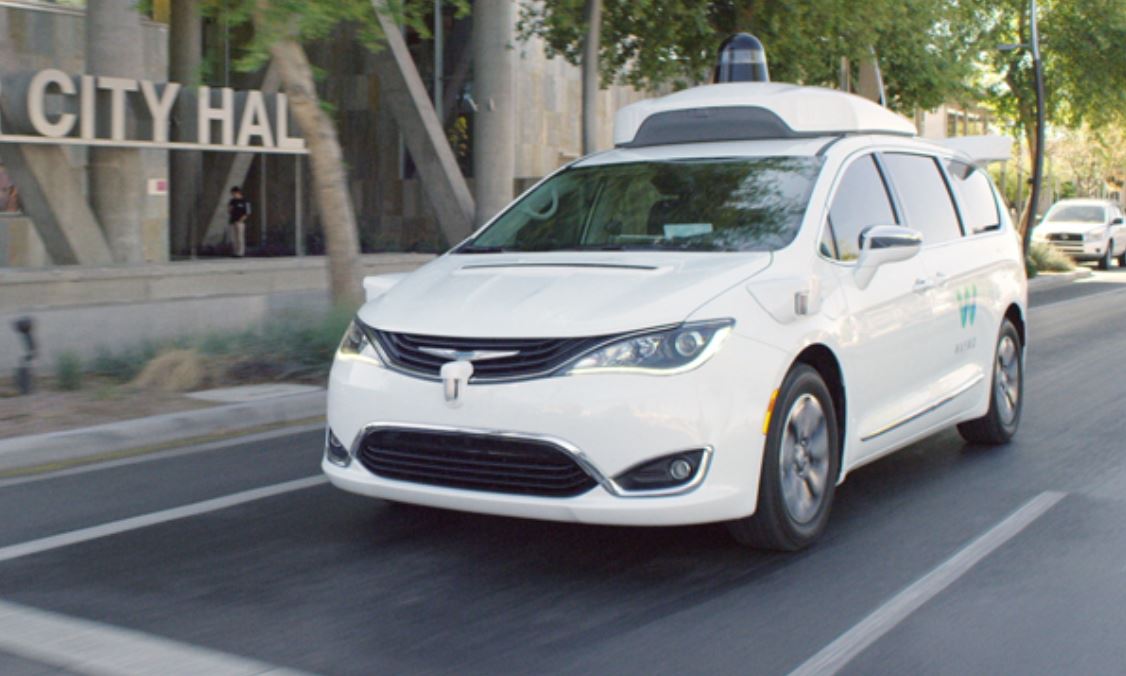 Waymo’s fully self-driving Chrysler Pacifica Hybrid minivan on public roads. | Image: Waymo
GM Cruise might be building vehicles that could be competitive in something akin to the Tesla Network. Their cars are purpose-built to be self-driven, similar to how Tesla’s cars are built electric from the ground up, and it looks like there could be individual ownership instead of only company ownership. There’s a big disadvantage for GM Cruise, though. They’re not Tesla.
Musk’s famous goal with the company was to build an amazing car that just happened to be electric, and he’s succeeded on an incredible scale which has been recognized by test agencies and auto publications time and time again. I’d argue that GM will have to have something either much more appealing or much less expensive than a Tesla if they want to eventually compete with a future Tesla Network of private owners. Otherwise, they’re in the boat with Uber and Lyft and competing with millions of Robotaxi-capable… Teslas.
What about chip companies that are developing self-driving solutions? Any good ideas there?
NVIDIA looks to be developing super amazing computing hardware and software for automotive brands to license for their own vehicles rather than developing in-house. Considering the expenditure a self-made system requires, this isn’t surprising, and even Tesla (i.e., Musk) was criticized for deciding to go this route for the Full Self-Driving computer. NVIDIA’s partners, however, look to be interested in owner-initiated self-driving rather than a money making capability in and of itself, i.e., regular drivers using their cars for regular things. Aurora, too, is developing their own autonomous driving system with the intention of licensing it to other partners in the hopes that their product will become the “nerve center” of self-driving vehicles, but nothing that gives their Robotaxi capabilities a nudge over Tesla.
It goes without saying that the software and technology needs to build a successful AI are significant, and a car maker will probably save a lot of money using someone else’s system initially. Perhaps those companies could use Aurora’s or NVIDIA’s system to keep themselves in the running or catch them up for a while where they’ve fallen behind consumer demand. There’s just one problem, though, for legacy auto companies doing the catching up – they’re not all electric.
In his Autonomy Day remarks, Musk wasn’t very kind about Tesla’s gas-guzzling brethren and their Robotaxi hopes. Any non-electric venture will not be competitive, he said flatly. Considering Tesla’s battery upgrades giving them a 1 million mile life cycle and the lower cost of plugging in for juice vs. filling up, this makes sense even without a deep analysis (although Musk has done plenty of that for sure).
Between Robotaxi competitors not making the case for single-party ownership of self-driving fleets and the low cost of electric vehicle taxis, Musk certainly seems to be right about the whole “buying any car besides a Tesla is like buying a horse” thing. I’m not seeing the case for another brand’s strategy having more benefit than the Tesla Network for those who own Tesla vehicles.
How about you?


Lifestyle
Tesla’s mirrorless Cybercab will give riders a visibility upgrade
Tesla engineer confirms Cybercab update letting riders pull up rear and repeater cameras on demand.

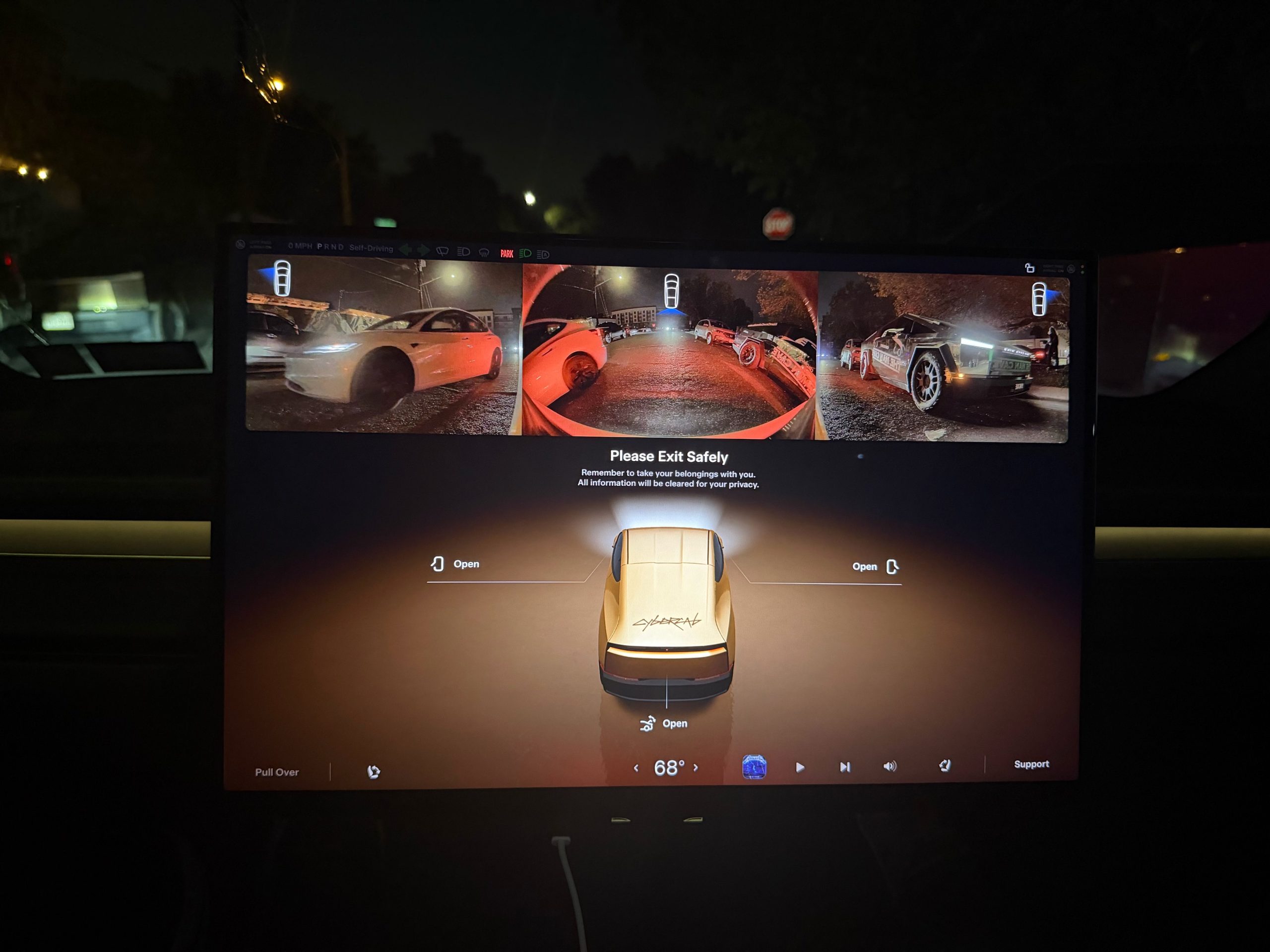
Tesla is working on a Cybercab update that would let passengers pull up the vehicle’s rear and side cameras on demand, and the request came straight from a rider.
The exchange played out on X late Friday. Cybercab rider Dan Burkland shared photos of the two-seater’s cabin screen after an evening ride, praised the UI team’s work, and left one request: let riders open the rear and repeater cameras whenever they want, “especially for peace of mind.” Tesla UI software engineer Evan (@CarCoder) answered with two words: “In development.”
The Tesla UI team absolutely crushed it with the infotainment software. Nicely done @CarCoder!
One feature request: Allow folks to pull up the rear & repeater cameras on demand. This would be great especially for peace of mind. https://t.co/mNAOSLx6pE
— Dan Burkland (@DBurkland) October 10, 2026
The idea fits a pattern Teslarati has tracked since public rides began. Days after paid Cybercab service opened in Austin, Tesla sent riders a survey that asked them to rate the touchscreen, the app and the cabin, and to pick the features they wanted most. We reported on that survey in September, and a camera view is the kind of small software change Tesla can push quickly if riders keep asking.
It also speaks to something unique about the vehicle. With no steering wheel, no pedals and no driver, passengers have no mirror to check and no way to see behind them. The hardware is clearly built for camera awareness, from the repeater cameras to the rear camera. Letting a passenger look through those same cameras would give a nervous first time rider a way to confirm what is around the car.
The timing matters because the fleet is growing fast. Tesla’s Robotaxi account said on Saturday that more than 300 Cybercabs are now serving Austin, an eightfold increase in 30 days, and Tesla AI chief Ashok Elluswamy named Dallas as the next city. More cars and more cities mean more people riding in a driverless vehicle for the first time, which is exactly when small trust features carry weight.
For now, the feature is confirmed only as in development. If Tesla follows its usual pattern with Cybercab software, riders could see it appear in a point release without any announcement, and Teslarati will watch for it.
Elon Musk
Elon Musk’s surprise addition to the X Takeover lineup has fans talking
Elon Musk will join Saturday’s X Takeover at Giga Texas for a live virtual interview.
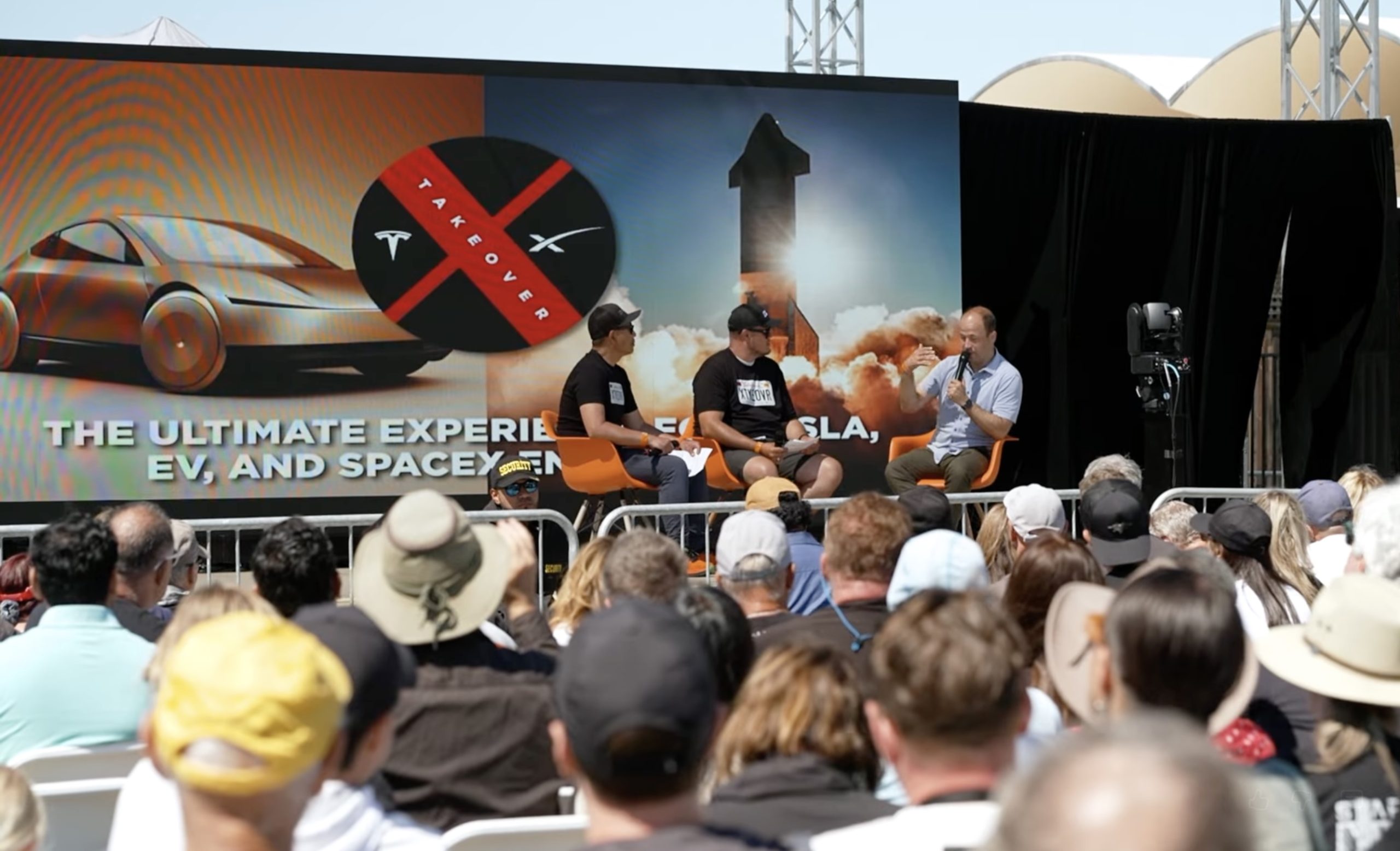
Elon Musk will join X Takeover at Giga Texas on Saturday for a live virtual interview, according to Sawyer Merritt, who shared the news late Thursday. Musk will not be on stage in Austin. The conversation is set to stream for free on the @teslaownersSV account on X.
Organizers had kept expectations in check. In a September update, Tesla Owners Silicon Valley said Musk had appeared at the event twice before but was not promising a third appearance, even as fans hoped he would walk the Giga Texas grounds in person. A virtual spot matches 2024, when Musk gave a surprise interview of about an hour to the crowd in San Luis Obispo, as Teslarati reported at the time.
Wasn’t expecting this 🫡
— Tesla Owners Silicon Valley (@teslaownersSV) October 9, 2026
This year’s edition is a first in several ways. It is the first X Takeover held outside California and the first at a Tesla facility, with tickets selling out in eight days. Tesla provides the venue, but the event is produced independently by Tesla Owners Silicon Valley. The main event runs from 10 a.m. to 6 p.m. CT, followed by a drone and light show at 9 p.m. Maye Musk is the keynote speaker, Franz von Holzhausen is set for a virtual keynote, and Nicki Minaj is the special guest. Joe Tegtmeyer, whose drone footage Teslarati used to track the Optimus factory steel frame at Giga Texas, is also on the speaker list.
Musk’s interview topics have not been revealed, but the backdrop is busy. Tesla doubled its Cybercab fleet in Austin in late September, and last week Musk explained why Robotaxi hours only moved from 10 p.m. to 11 p.m.. Merritt also reported Thursday that Texas DMV records now show 319 registered Cybercabs, up from 169. NHTSA’s deadline for Tesla’s sworn answers on Cybercab certification is October 30, and Tesla reports third quarter earnings on October 21.
Fans who cannot make it to Austin can watch the livestream on X. Musk tends to say more in unscripted settings than he does in prepared remarks, which is the reason this one is worth having open on Saturday.
Elon Musk
Elon Musk’s Boring Company lands a new Middle East deal, and Nashville is about to get faster
The Boring Company signs Abu Dhabi tunnel agreement while adding more Prufrock machines in Nashville.
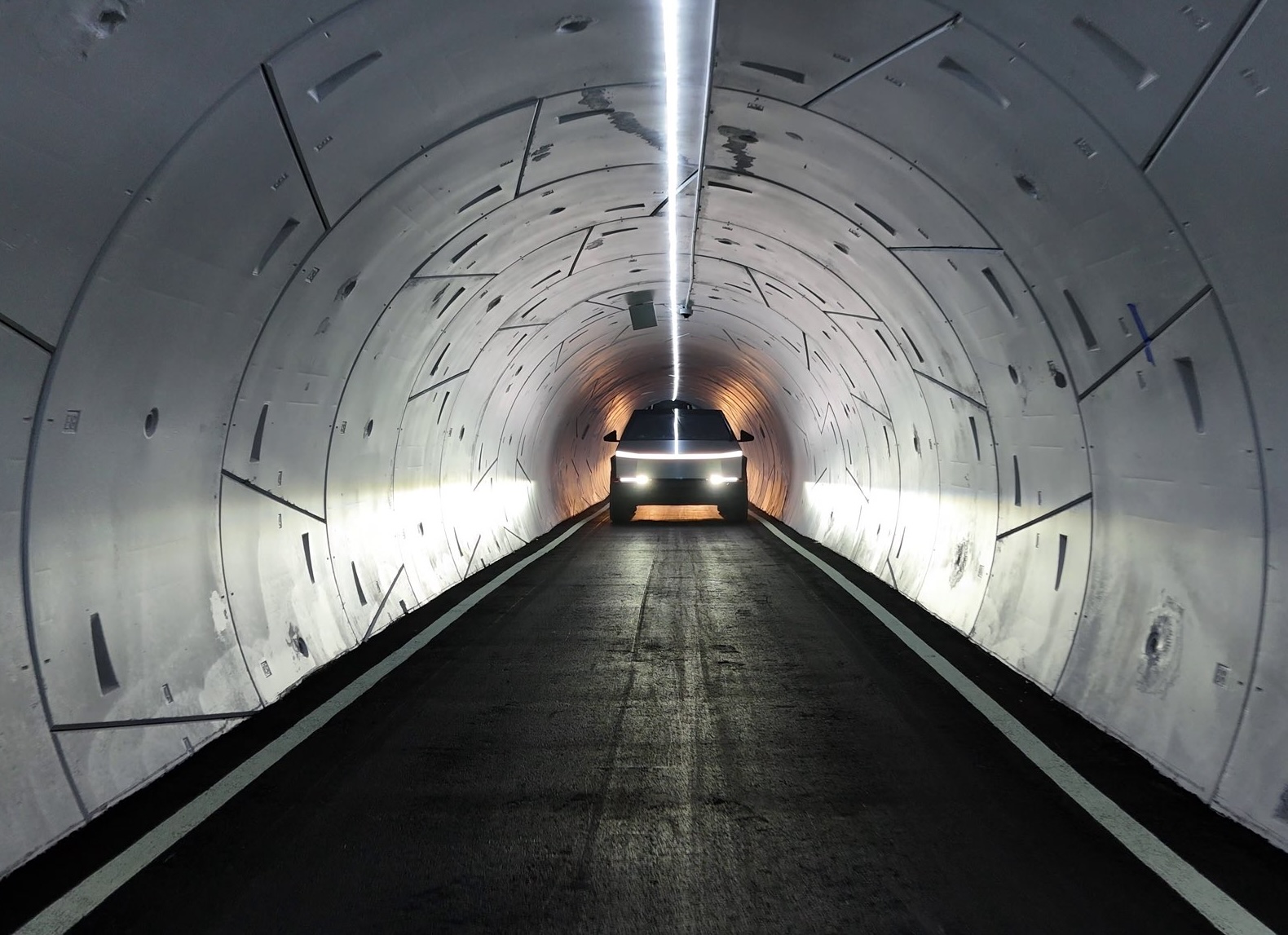
The Boring Company has signed an agreement with Abu Dhabi to study underground transport and utility tunnels across the emirate, adding a second UAE city to its pipeline as it prepares to also scale up tunneling back home in Nashville.
The deal was signed Thursday at the Liveability and Investment Exhibition (LIVEX 2026) by Boring Company President Steve Davis and Maysarah Mahmoud Salim Eid, director general of the Abu Dhabi Projects and Infrastructure Centre (ADPIC), according to the Abu Dhabi Media Office. Mohamed Ali Al Shorafa, chairman of the emirate’s Department of Municipalities and Transport, attended the signing.
Under the agreement, the two sides will assess feasibility, delivery and operating models for tunnels that could carry passengers or utilities. They will also look at Abu Dhabi’s potential as a regional hub for tunneling work. The current phase is exploratory, and no construction commitment or project budget has been announced.
“Abu Dhabi provides an ideal environment to explore the next generation of underground infrastructure solutions, supported by its ambitious growth vision and strong commitment to advanced technologies,”
Davis said. He added that the company wants to assess how tunnels can “expand urban capacity more efficiently, and enable better use of available space.”
The timing lines up with the money, considering last month, The Boring Company closed a $3 billion Series D led by the UAE and affiliated investors, valuing the company at $23 billion, as Teslarati reported. That round came with a commitment to build more than 150 kilometers of tunnel across the UAE, separate from the Dubai Loop pilot already under contract with Dubai’s Roads and Transport Authority. That pilot covers 6.4 kilometers and four stations linking DIFC and Dubai Mall at a cost of about $154 million.
Back home, The Boring Company projects in Nashville are also scaling up, with the company telling local NewsChannel 5 that a third Prufrock machine could start digging the Music City Loop in late October. A fourth is also targeted before the end of the year. Two machines are already mining Nashville limestone at the same time, and work is underway on a new launch site for the third.
The company said it has made more than 300 design and performance upgrades to its original Nashville machine. It is also working with property owners on more than 40 planned stations, with approvals in place for a future Nashville International Airport connection, a downtown station near the Music City Center, and stops at residential towers and the JW Marriott.
Construction on the Music City Loop began the same evening Tennessee and federal regulators approved the project’s lease in February, and the company targeted its first operational segment for late 2026. Back in Las Vegas, The Boring Company has said it plans to double its Vegas Loop station count by year’s end.

Why Elon Musk’s target date for buying an Optimus robot is harder than it sounds

Elon Musk drops a Thanksgiving hint about Starship’s biggest test yet

Tesla’s mirrorless Cybercab will give riders a visibility upgrade

The Pentagon taps Elon Musk to design the battlefield of the future

Tesla Roadster’s new patent preps white-knuckle speeds, keeping it grounded


