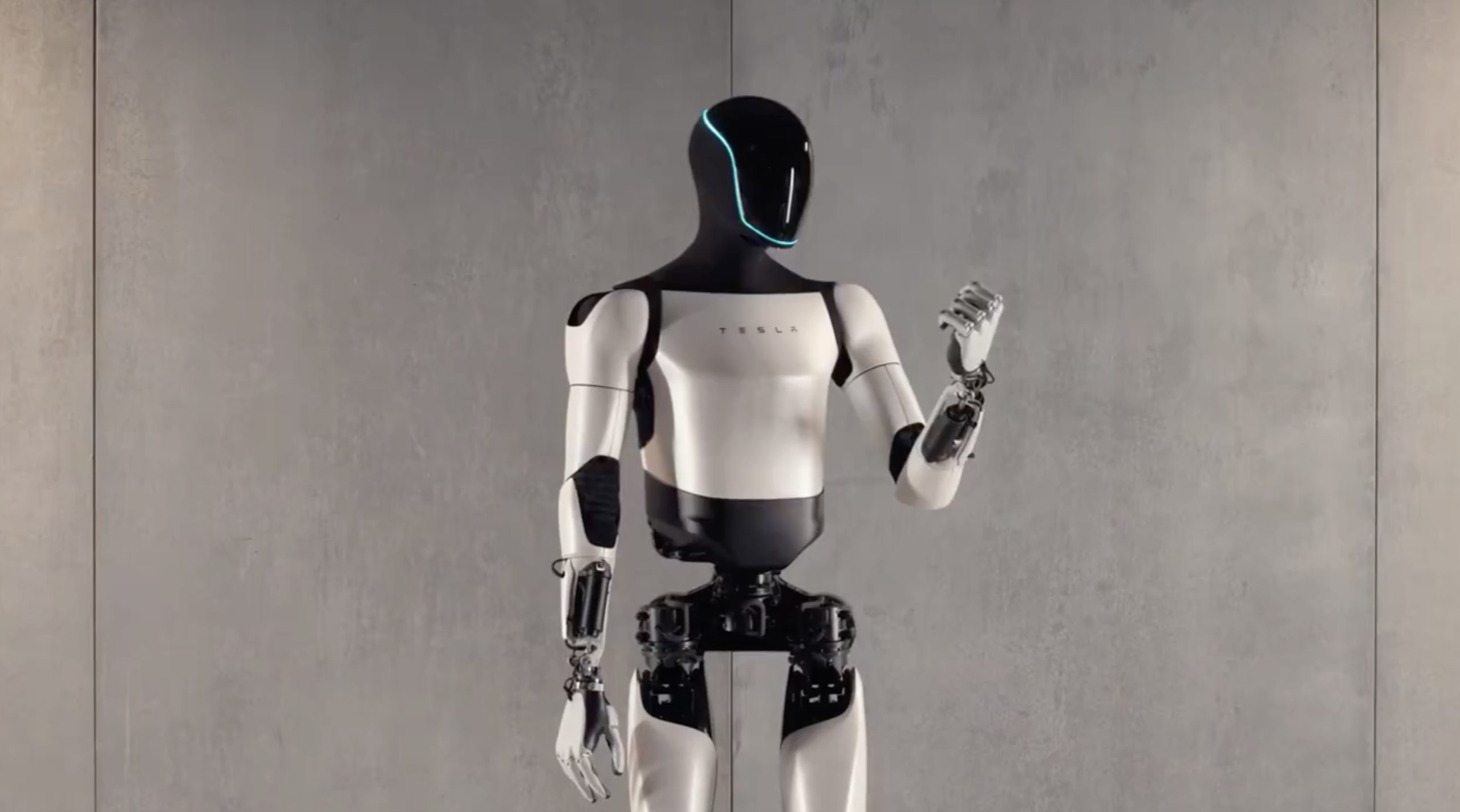

A collaboration between Tesla Optimus and Neuralink is now closer to fruition. Neuralink’s feasibility trials are expanding to include tests on controlling a robotic arm with the N1 implant.
“This is an important first step towards restoring not only digital freedom, but also physical freedom. More info to come, but the CONVOY Study will enable cross-enrolling participants from the ongoing PRIME Study,” noted the company in its announcement.
The approval for the Neuralink’s CONVOY Study could connect Tesla Optimus and the N1 implant. In July 2024, Elon Musk talked about patients with robotic arms or legs controlling their limbs through their minds with Neurlaink’s N1 implant.
We’re excited to announce the approval and launch of a new feasibility trial to extend BCI control using the N1 Implant to an investigational assistive robotic arm.
This is an important first step towards restoring not only digital freedom, but also physical freedom. More info…— Neuralink (@neuralink) November 25, 2024
“Let’s say somebody has lost their arms or legs. We could actually attach an Optimus arm or Optimus legs to a Neuralink implant so that the motor commands from your brain that would go to our biological arms now go to your robot arms or legs and you’d basically have cybernetic superpowers,” Musk said.
Tesla has been making significant progress with Optimus and is currently focused on finalizing the humanoid robot’s design. The tech company has carefully paid attention to the Optimus’ limbs, including the movement of its fingers, hips, and legs. The people behind Tesla Optimus studied human anatomy to ensure that the humanoid robot moves naturally.
In May 2024, Musk commented on Optimus’ hands, sharing that the humanoid robot’s hands will be upgraded to have 22 degrees of freedom (DoF). For comparison, human hands have 27 degrees of freedom.
“Optimus hands are among the best 5-finger, dexterous robot hands in the world. It’s got tactile sensing, 11 degrees of freedom compared to many competitors with only 6-7 DoF, and robustness to withstand lots of object interactions without constant maintenance,” commented Jim Fan, a Sr. Research Manage & Lead of Embodied AI (GEAR Lab) at NVIDIA.
Watch Neuralink’s Update from July 2024 below!
The Teslarati team would appreciate hearing from you. If you have any tips, contact me at maria@teslarati.com or via Twitter @Writer_01001101.



News
Tesla expands Unsupervised Robotaxi service to two new cities
This expansion builds directly on Tesla’s existing operations. Robotaxi has been ramping unsupervised rides in Austin for months and maintains activity in the San Francisco Bay Area.

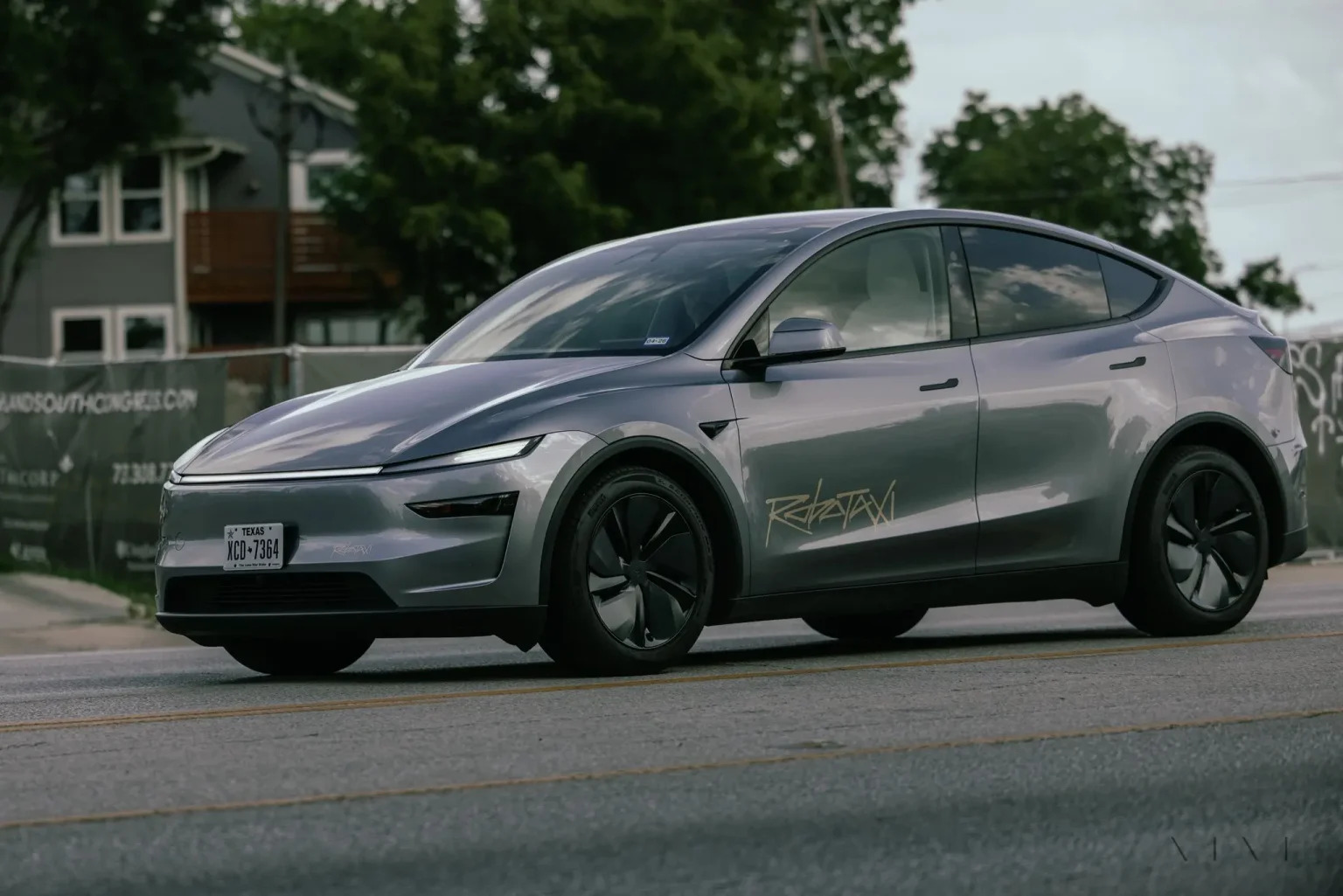
Tesla has taken a major step forward in its autonomous ride-hailing ambitions.
On April 18, the company’s official Robotaxi account announced that Robotaxi service is now rolling out in Dallas and Houston, Texas. The update signals the rapid scaling of unsupervised autonomous operations in the Lone Star State.
The announcement includes a compelling 14-second video captured from inside a Model Y. Shot from the passenger perspective, the footage shows the vehicle navigating suburban roads in both cities with zero driver intervention, with no Safety Monitor to be seen.
Robotaxi now rolling out in Dallas & Houston 🤠 pic.twitter.com/G3KFQwqGxB
— Tesla Robotaxi (@robotaxi) April 18, 2026
Tesla also shared geofence maps highlighting the initial service areas: a compact zone in Houston covering parts of Willowbrook and Jersey Village, and a similarly defined area in Dallas near Highland Park and central neighborhoods.
🚨 Tesla has expanded Robotaxi to two new cities: Houston and Dallas, joining Austin and the SF Bay Area as active Robotaxi areas https://t.co/S3Ck4EaGpR pic.twitter.com/N0qu0bcTyd
— TESLARATI (@Teslarati) April 18, 2026
This expansion builds directly on Tesla’s existing operations. Robotaxi has been ramping unsupervised rides in Austin for months and maintains activity in the San Francisco Bay Area.
With Dallas and Houston now live, Texas hosts three active hubs—an impressive concentration that triples the company’s Lone Star footprint in just weeks. The move aligns with Tesla’s Q4 2025 earnings guidance, which outlined a broader H1 2026 rollout across seven U.S. cities, including Phoenix, Miami, Orlando, Tampa, and Las Vegas.
Texas offers favorable regulations, high ride-share demand, and relatively straightforward suburban-to-urban driving patterns ideal for early autonomous scaling. While initial geofences appear modest—roughly 25 square miles per city—Tesla has historically expanded these zones quickly as it gathers real-world data.
Tesla confirms Robotaxi expansion plans with new cities and aggressive timeline
Unsupervised operation marks a critical milestone: passengers can summon, ride, and exit without safety drivers, a leap beyond many competitors still requiring human oversight.
For Tesla, the implications are significant. Successful scaling in major metros could accelerate the transition to a fully driverless fleet, unlocking new revenue streams and validating years of Full Self-Driving investment.
Riders gain convenient, potentially lower-cost mobility, while the company edges closer to Elon Musk’s vision of Robotaxis transforming urban transport.
As Tesla pushes into more cities this year, today’s launch in Dallas and Houston underscores its momentum. Hopefully, Tesla will be able to expand unsupervised rides to another U.S. state soon, which will mark yet another chapter in this short-but-encouraging Robotaxi story.
News
Tesla is pushing Robotaxi features to owner cars with Spring Update
Tesla has quietly begun rolling out one of its most forward-looking Robotaxi-inspired features to existing customer vehicles.
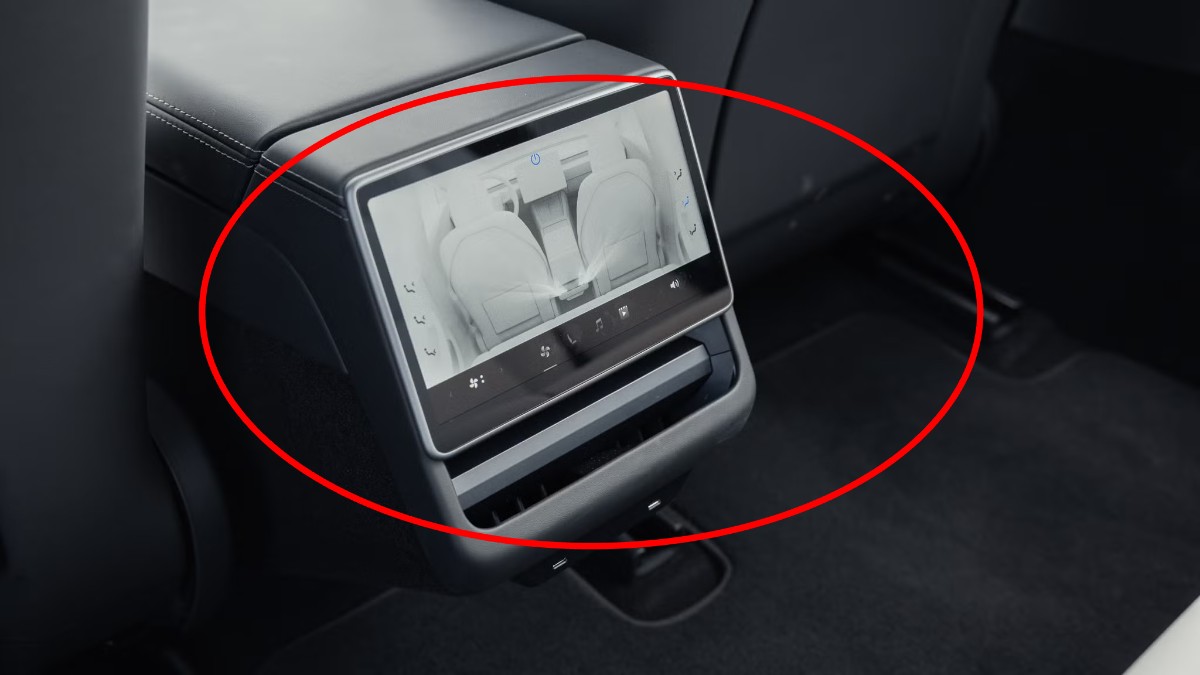
Tesla is starting to push Robotaxi features to owner cars, and the first instances are coming as the Spring 2026 Update starts to roll out.
Tesla has quietly begun rolling out one of its most forward-looking Robotaxi-inspired features to existing customer vehicles.
With the 2026 Spring Update (version 2026.14+), the rear passenger display now features a fully interactive navigation map that works while the car is driving — a capability previously reserved for Tesla Robotaxi.
First look at Tesla’s v2026.14.1 Spring Update.
🧭Rear screen interactive map #teslaupdate #tesla #teslasrpingupdate pic.twitter.com/yH3T4U8qHp— Sergiu Mogan (@sergiumogan) April 17, 2026
Until now, Tesla’s rear displays have been largely limited to media controls, climate settings, and static route overviews. The new interactive map transforms the backseat into an active navigation hub, exactly the kind of passenger-first interface Tesla has been prototyping for its driverless fleet.
In a Robotaxi, where no one sits behind the wheel, every rider will need intuitive, real-time map access. By shipping this UI into thousands of owner cars months ahead of the Cybercab’s planned unveiling, Tesla is stress-testing the software in real-world conditions and giving loyal customers an early taste of the autonomous future.
The rollout is still in its early wave. Only a small number of vehicles have received 2026.14.1 so far, but the feature is expected to expand rapidly in the coming weeks. Owners of Model S, Model X, Model 3, Model Y, and Cybertruck are all eligible.
For buyers of the new Signature Edition Model S and X Plaid vehicles — whose deliveries begin in May — the update will likely arrive shortly after they take delivery, meaning the final chapter of Tesla’s flagship lineup will ship with cutting-edge Robotaxi preview tech baked in.
Elon Musk has long emphasized that Tesla ships supporting infrastructure well before new products launch. This rear-map rollout is a textbook example of that philosophy — quietly preparing both the software and the customer base for a world of fully driverless rides.
While the interactive map may seem like a modest convenience upgrade on the surface, its deeper purpose is unmistakable. Tesla is using its massive installed base of vehicles as a proving ground for the exact passenger experience that will define the Robotaxi era.
For current owners, it’s a free preview of tomorrow’s mobility; for the company, it’s invaluable data and real-world validation before the Cybercab hits the streets.
News
Tesla Cybertruck sales bolstered by bold Musk move, report claims
If accurate, that means nearly one in every five Cybertrucks registered in the quarter was transferred internally within Musk’s business empire. The purchases, valued at more than $100 million, have continued into 2026.
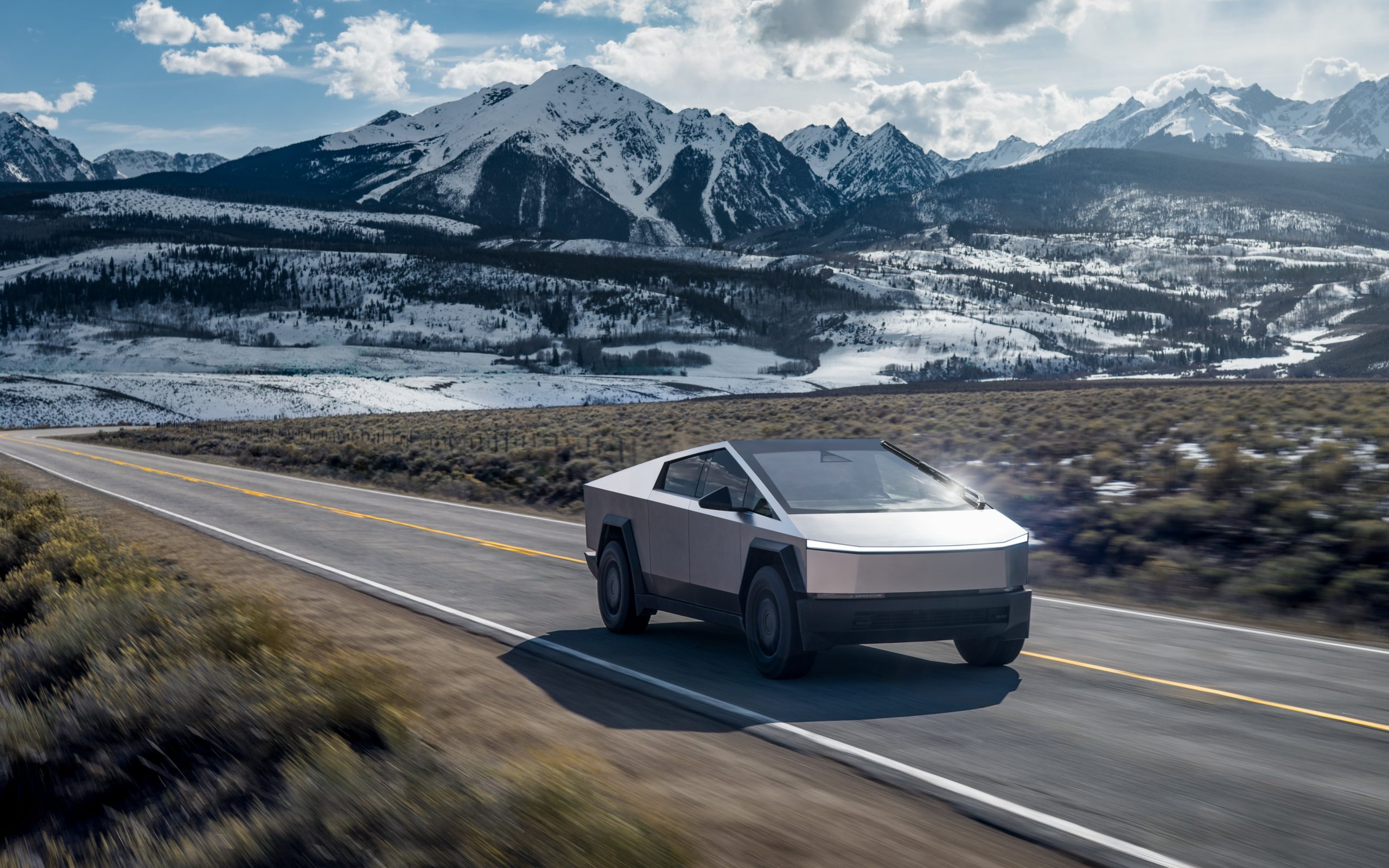
A new report from Bloomberg claims Tesla Cybertruck sales were inflated by internal buyers, meaning companies owned by CEO Elon Musk, and most notably, SpaceX.
According to a new registration data analysis, a significant portion of the fourth quarter’s Cybertruck sales came from Musk companies.
In the fourth quarter of 2025, 7,071 Cybertrucks were registered in the United States. SpaceX, Musk’s rocket and satellite company, accounted for 1,279 of those vehicles—more than 18 percent of the total. Musk’s additional ventures, including xAI, the Boring Company, and Neuralink, acquired another 60 trucks during the same period.
Tesla Cybertruck just won a rare and elusive crash safety honor
If accurate, that means nearly one in every five Cybertrucks registered in the quarter was transferred internally within Musk’s business empire. The purchases, valued at more than $100 million, have continued into 2026.
These internal sales supplemented the Cybertruck’s overall performance for the quarter, as without them, sales would have plunged 51 percent. The vehicle, which has repeatedly been called “the best product Tesla has ever made,” has fallen short of expectations due to pricing.
When first unveiled back in 2019, Tesla had a $39,990, $49,990, and $69,990 configuration for sale. Those prices inflated significantly as the truck was not released to customers until 2023. Those who had placed orders for affordable configurations were priced out.
Sam Fiorani, VP of Global Vehicle Forecasting at AutoForecast Solutions, said, “Tesla is running out of buyers for the Cybertruck.” In reality, there are probably a lot of buyers, but they simply cannot afford the truck at its current price point.
The Cybertruck was supposed to broaden Tesla’s appeal beyond its core lineup of sleek sedans and SUVs. While it has done a lot for brand notoriety, it has not lived up to its monumental expectations, and it’s simply because the truck has not been as available as most had thought.
The truck is still the best-selling electric pickup in the country, outpacing rivals like the Ford F-150 Lightning and Chevrolet Silverado EV. It is also not uncommon for companies to use their own vehicles for internal operations, like Ford using its own Transit van for Mobile Service.
However, this much inventory of Cybertrucks being purchased by Musk’s companies is not what you love to see as a fan or investor.

Tesla expands Unsupervised Robotaxi service to two new cities

Tesla is pushing Robotaxi features to owner cars with Spring Update


