News
Tesla should abandon the Semi and focus on its cars’ ‘quality issues’ first: analysts

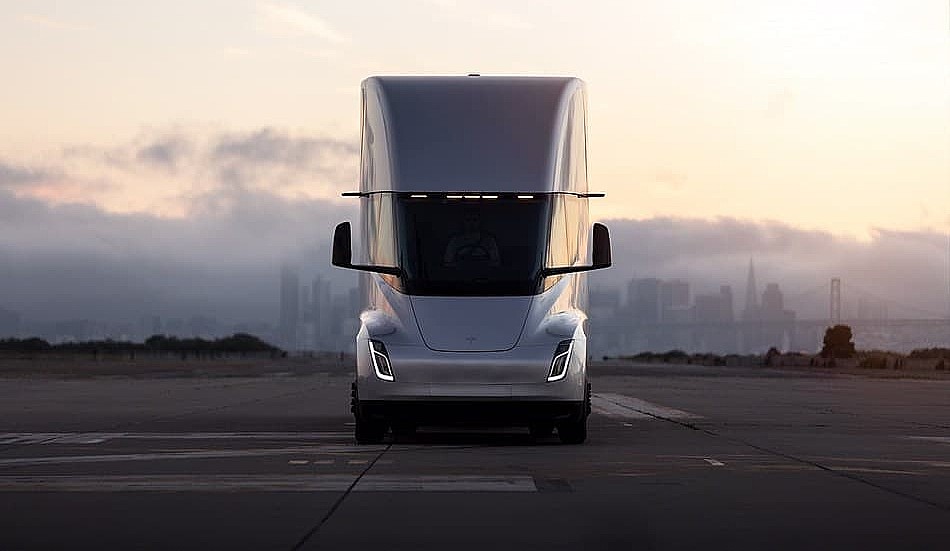
Amidst Tesla’s rise as the world’s most valuable automaker by market cap and the growth of its war chest thanks to its recent $5 billion capital raise, auto analysts have recently expressed doubt about whether the electric car maker should still pursue its Tesla Semi project. According to the analysts, it would be better for Tesla to abandon the Semi, and focus instead on improving its current vehicle lineup.
Michael Ramsey, a Gartner vice president and automotive analyst, stated that the Semi is a “distraction” for Tesla at this point, seeing as the long-haul trucking segment is a completely different business. The analyst stated that would be better for Tesla to spin off its efforts to another firm. “Tesla should drop or spin off its Semi efforts to someone else. It’s a different business and a distraction,” Ramsey said.
The Gartner analyst’s points were echoed by Sam Abuelsamid from Guidehouse Insights, who likened the Tesla Semi to the Nikola Badger, a vehicle that was recently discontinued by Nikola Motors following its renegotiation deal with General Motors. Citing “quality issues” with Tesla’s present lineup of vehicles, the analyst argued that the electric car maker should get its manufacturing straightened out first.
“The Semi is a distraction for Tesla,” Abuelsamid said in a statement to Freightwaves, adding that Tesla should “focus” on refining the quality of its current cars first.
Tesla, for its part, did not respond to the trucking publication’s request for comment.
Not all analysts are as pessimistic about the Tesla Semi. Garrett Nelson, a senior equities research analyst from investment research firm CFRA, stated that he is bullish on the all-electric Class 8 truck. Nelson noted that this year’s meteoric stock run-up provided Tesla with the capital necessary to accelerate growth, “and the Semi truck is an important part of the that.” The CFRA analyst further remarked that amidst Tesla’s ongoing projects, “2021 will be a year of execution.”
Despite the delays in the Tesla Semi’s release, companies that have placed orders for the all-electric Class 8 truck appear to be unfazed. When asked about its Semi orders, UPS noted in an emailed statement to Freightwaves that its relationship with Tesla is proprietary. “We have a good working relationship with Tesla, and they have been talking to us routinely about their plans. We look forward to receiving the Semis we’ve ordered, but have nothing more to share,” the UPS statement said.


Elon Musk
Tesla drives drunk owner while he naps, Police still arrest him on DUI
A Vacaville man let his Tesla drive while he napped, but police had other ideas.

![Tesla drives drunk owner, Police arrest on DUI [Credit: Vacaville Police via Facebook]](https://www.teslarati.com/wp-content/uploads/2026/03/tesla-fsd-drunk-driver-dui-arrest-e1774678014371.jpg)
A Northern California man found a creative solution to drunk driving this week by letting his Tesla drive him around while he took a booze snooze. Police in Vacaville arrested a man on a DUI charge after he was found, what appears to be, completely passed out behind the wheel of a Tesla Model Y, which was safely self-navigating the owner through busy streets. The man’s passenger seat told the rest of the story, with a four-pack of Sutter Home wine bottles and a box of Round Table pizza clearly visible.
According to the Vacaville Police Department, as posted through their Facebook page, a concerned community member spotted the very relaxed driver, stayed on the line with dispatch, and guided officers to the intersection of Elmira Road and Shasta Drive where they stopped the vehicle. Alcohol and marijuana were confirmed. No medical emergency, and what appears to be just an extremely committed drunken nap.
-
![Tesla drives drunk owner, Police arrest on DUI [Credit: Vacaville Police via Facebook]](https://www.teslarati.com/wp-content/uploads/2026/03/tesla-fsd-drunk-driver-dui-arrest-e1774678014371-300x259.jpg)
- Tesla drives drunk owner, Police arrest on DUI [Credit: Vacaville Police via Facebook]
-
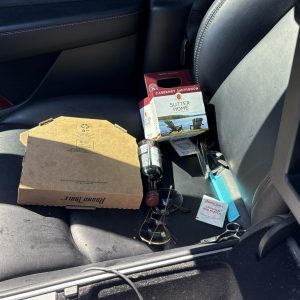
- Tesla drunk driver passenger seat , Police arrest on DUI [Credit: Vacaville Police via Facebook]
The Vacaville Police noted that California permits drivers to use assistive driving features like Tesla’s FSD, but the law still requires them to be “conscious, alert, and not under the influence while operating them.” The post drew some humorous reactions in the comments section, with one commenter piping in, “That time when his vehicle had more situational awareness than he did.” Another commenter chimed in, “Sutter all the way home….”
Tesla Full Self-Driving v14.2.1 texting and driving: we tested it
The incident lands in an interesting moment for Tesla. Elon Musk caused his own stir in December 2025 when he responded to a user question about whether FSD v14.2.1 allowed texting behind the wheel with a simple “Depending on context of surrounding traffic, yes.” He had earlier told investors that drivers turning off autopilot to check texts while steering with their knees was “significantly less safe” than simply letting FSD run, which he called “kind of the killer app.” Neither statement included anything about Sutter Home wine being part of the equation.
News
Tesla Semi is already winning over truck drivers
The consensus among participants is clear: the Semi feels quieter, quicker, and far less physically demanding than diesel rigs while delivering three times the power and dramatically lower operating costs.

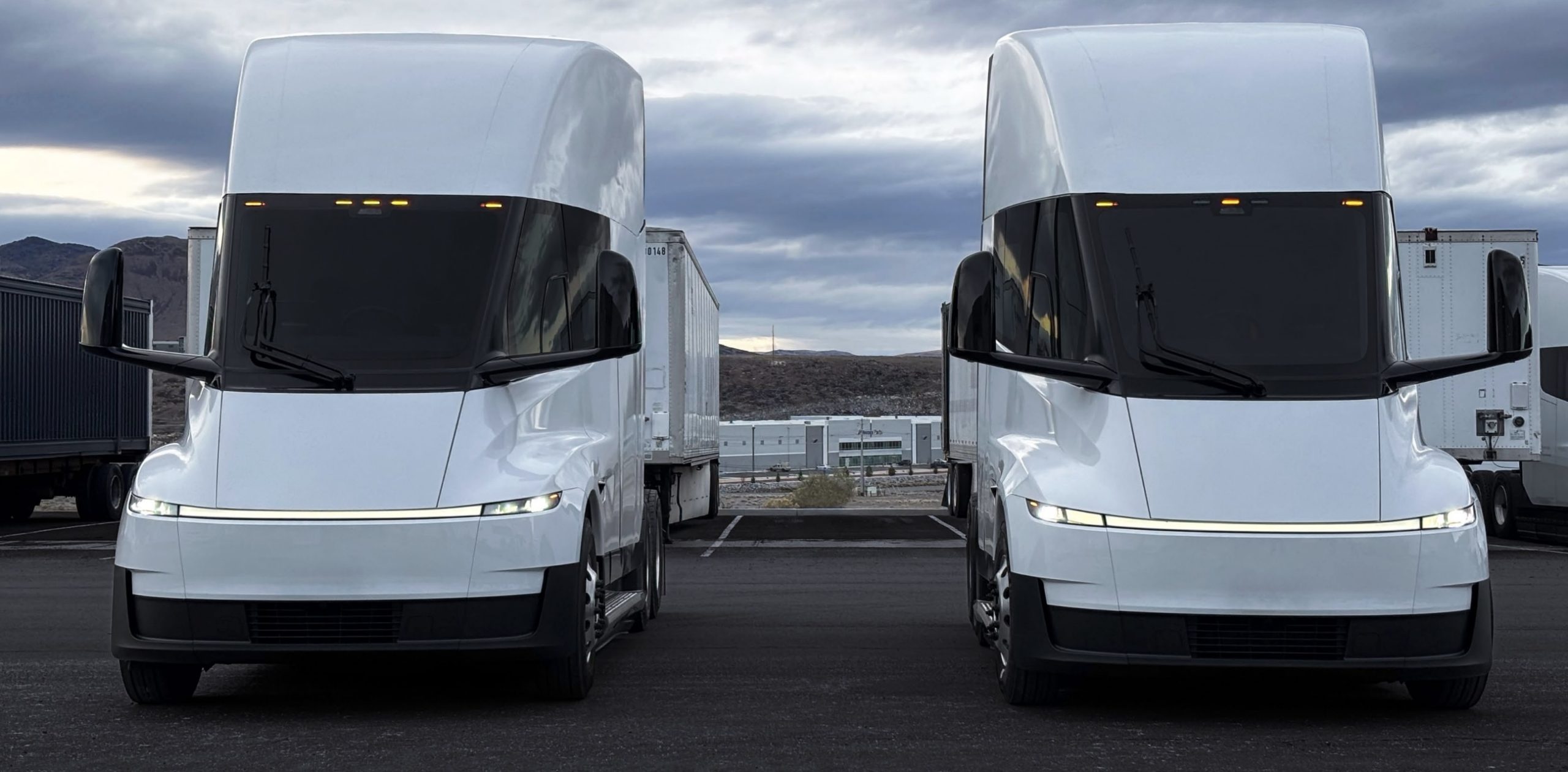
Tesla’s all-electric Semi is proving more than just a flashy concept as it is winning converts among the professionals who know trucks best.
As fleets roll out Pilot Programs for Tesla across North America, drivers are raving about the Class 8 electric truck’s unique features, including a centered driver’s seat, massive touchscreen visibility, instant torque, and absence of gear-shifting fatigue.
These features are transforming long days behind the wheel into noticeably easier, less stressful shifts.
Tesla Semi pricing revealed after company uncovers trim levels
In a recent Wall Street Journal profile of early pilots, Dakota Shearer of IMC Logistics described backing out of a tight spot he had mistakenly entered:
“I backed right out of there, no problem. It’s like I’d never done it in the first place. That right there showed me that the technology the Tesla has makes a big difference.”
His colleague Angel Rodriguez of Hight Logistics, who switched from a 13-speed diesel, agreed:
“It’s just easier on your body. It’s less stressful because you’re not really having to engage the clutch and the stick shift.”
Veteran drivers in other tests echo the same enthusiasm. Tom Sterba, a Senior Driver at Saia, spent days testing the Semi and came away impressed with the navigation and overall feel:
“The navigation systems in these trucks are just unbelievable. That’s what I love about it.”
Sterba summed up the experience with a line that has since gone viral among trucking circles:
“I hope I retire in this truck.”
Pilot programs with ArcBest, thyssenkrupp Supply Chain Services, and Mone Transport delivered similar feedback. Drivers consistently praised the center-seat layout for eliminating blind spots, the smooth acceleration, and the overall comfort and safety.
Real-world data backed the hype, as ArcBest logged thousands of miles at efficient consumption rates, even over the challenging routes, like Donner Pass, while other fleets beat Tesla’s own efficiency targets.
The consensus among participants is clear: the Semi feels quieter, quicker, and far less physically demanding than diesel rigs while delivering three times the power and dramatically lower operating costs.
The latest chapter in the Semi’s story arrived just days ago on Jay Leno’s Garage, as Leno became the first outsider to drive the updated long-range production model, joined by Tesla Chief Designer Franz von Holzhausen, and Semi Program Director Dan Priestley.
Tesla reveals various improvements to the Semi in new piece with Jay Leno
The episode revealed major upgrades heading to volume production this year: the truck sheds roughly 1,000 pounds, adopts a 48-volt architecture, switches to fully electric steering with Cybertruck-derived actuators, and uses 4680 battery cells engineered for an over-one-million-mile lifespan.
Aerodynamics improved, enabling a 500-mile range on the long-haul version, and about 325 miles on the shorter-wheelbase standard-range model. Megachargers can now deliver up to 1.2 megawatts, adding roughly 300 miles in about 30 minutes.
Leno hauled heavy loads and marveled at the turning radius and effortless power delivery. “I don’t feel like I’m pulling anything,” he said during the episode.
With hundreds of Semis already accumulating over 13.5 million fleet miles and high uptime, the future of heavy-duty trucking looks electric. Drivers are giving raving reviews, and they’re ready to climb aboard the electric trucking industry for good.
Investor's Corner
Tesla and SpaceX to merge in 2027, Wall Street analyst predicts
The move, Ives argues, is no longer a distant possibility but a logical next step, fueled by deepening operational ties, shared AI ambitions, and Elon Musk’s vision for dominating the next era of technology.
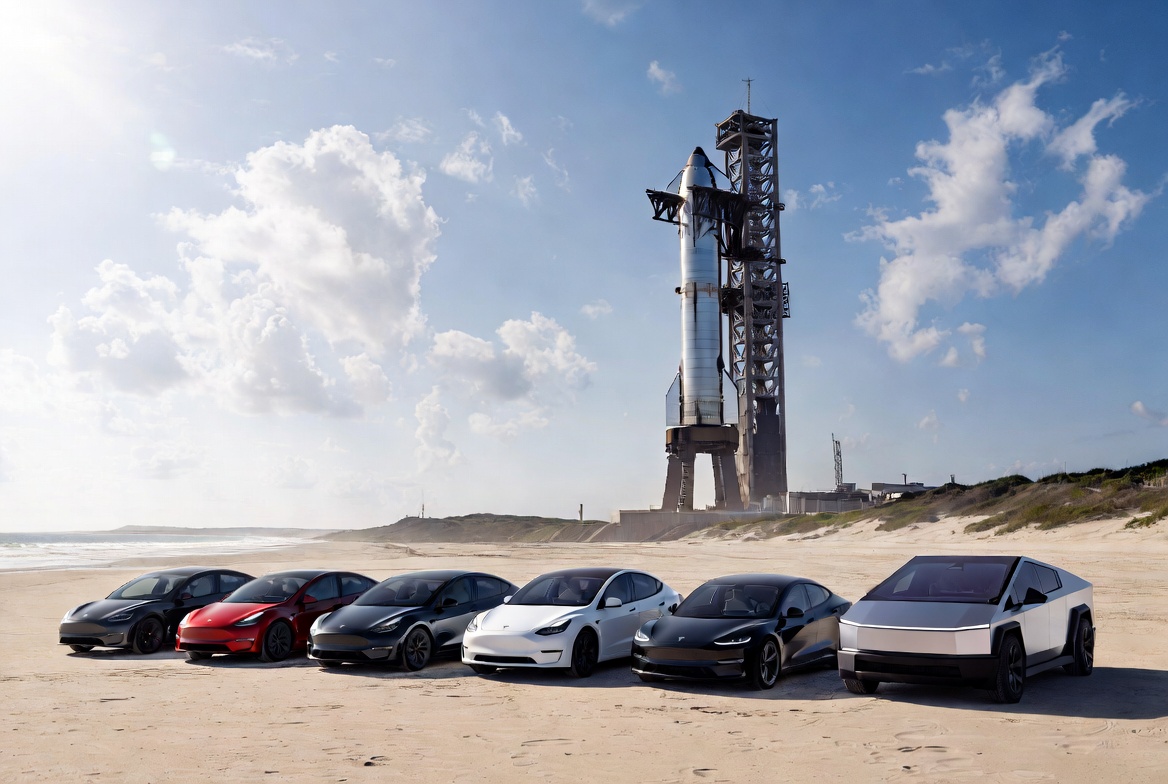
Tesla and SpaceX are two of Elon Musk’s most popular and notable companies, but a new note from one Wall Street analyst claims the two companies will become one sometime next year, as 2027 could see the dawn of a new horizon.
In a bold new research note, Wedbush analyst Dan Ives has reaffirmed his long-standing prediction: Tesla and SpaceX will merge in 2027.
The move, Ives argues, is no longer a distant possibility but a logical next step, fueled by deepening operational ties, shared AI ambitions, and Elon Musk’s vision for dominating the next era of technology.
He writes:
“Still Expect Tesla and SpaceX to Merge in 2027. We continue to believe that SpaceX and Tesla will eventually merge into one company in 2027 with the groundwork already in place for both operations to become one organization. Tesla already owns a stake in SpaceX after the company’s $2 billion investment in xAI got converted to SpaceX shares following SpaceX’s acquisition of xAI earlier this year initially tying both of Musk’s ventures closer together but still represents <1% of SpaceX’s expected valuation. The recent announcement of a joint Terafab facility between SpaceX and Tesla further ties both operations together making it more feasible to merge operations given the now existing overlap being built out across the two with this the first step.”
The groundwork is already being laid. Earlier this year, SpaceX acquired xAI, converting Tesla’s $2 billion investment in the AI startup into a small equity stake, less than 1 percent, in SpaceX.
Regulatory filings cleared the transaction in March 2026, formally linking the two Musk-led companies financially for the first time. Then came the announcement of a joint TERAFAB facility in Austin, Texas: two advanced chip factories, one dedicated to Tesla’s AI needs for vehicles and Optimus robots, the other targeting space-based data centers.
Elon Musk launches TERAFAB: The $25B Tesla-SpaceXAI chip factory that will rewire the AI industry
Ives calls Terafab the “first step” toward full operational integration.
SpaceX’s impending IPO, expected as soon as mid-June 2026, will turbocharge these plans. The company aims to raise approximately $75 billion at a roughly $1.75 trillion valuation, far exceeding earlier estimates.
Proceeds will fund Starship rocket flights, a NASA-contracted lunar base, expanded Starlink services across maritime, aviation, and direct-to-mobile applications, and crucially, orbital AI infrastructure
A major driver is the exploding demand for AI compute. U.S. data centers are projected to consume 470 TWh of electricity by 2030, constrained by power grids and land.
🚨 Wedbush’s Dan Ives says that Tesla and SpaceX will merge in 2027. SpaceX will IPO soon, his new note says:
“According to media reports, SpaceX could file a prospectus for an IPO imminently with the goal of raising ~$75 billion above the prior expectation of ~$50 billion…
— TESLARATI (@Teslarati) March 27, 2026
SpaceX’s strategy, launching millions of solar-powered satellites to host data centers in orbit, bypasses Earth’s energy bottlenecks. Solar energy captured in space avoids atmospheric losses and day-night cycles, offering a scalable solution for AI training and inference.
The xAI acquisition ties directly into this vision, positioning the combined entity as a leader in extraterrestrial computing.
The merger would create a formidable conglomerate spanning electric vehicles, robotics, satellite communications, human spaceflight, and defense.
Ives highlights SpaceX’s role in the Trump administration’s “Golden Dome” missile defense shield, which would leverage Starlink satellites for tracking.
For Tesla, access to SpaceX’s launch cadence and orbital assets could accelerate autonomous driving, Robotaxi fleets, and Optimus deployment.
Musk, who has signaled his desire to own roughly 25 percent of Tesla to steer its AI future, views the combination as essential to overcoming fragmented regulatory scrutiny from the FTC and DOJ.
Challenges remain. Antitrust hurdles could delay or reshape the deal, and shareholder approvals on both sides would be required. Yet Ives remains bullish, maintaining an Outperform rating on Tesla with a $600 price target, implying substantial upside from current levels. The analyst sees the merger as the “holy grail” for consolidating Musk’s disruptive tech empire.
If realized, a 2027 Tesla-SpaceX union would not only reshape corporate boundaries but redefine humanity’s trajectory in AI and space exploration. It would mark the moment two pioneering companies become one unstoppable force, pushing the limits of what’s possible on Earth and beyond.
![Tesla drives drunk owner, Police arrest on DUI [Credit: Vacaville Police via Facebook]](https://www.teslarati.com/wp-content/uploads/2026/03/tesla-fsd-drunk-driver-dui-arrest-e1774678014371-80x80.jpg)
Tesla drives drunk owner while he naps, Police still arrest him on DUI

Tesla Semi is already winning over truck drivers

Tesla and SpaceX to merge in 2027, Wall Street analyst predicts

Elon Musk says Tesla is developing a new vehicle: ‘Way cooler than a minivan’

Elon Musk launches TERAFAB: The $25B Tesla-SpaceXAI chip factory that will rewire the AI industry


