Lifestyle
Elon Musk is a one stop, pop culture to STEM recruiting shop, and that’s a good thing

WARNING
This column will be unabashedly full of pop culture references in honor of its topic. Check out the end of the piece for a Where’s Waldo-style treasure hunt to identify where they are. And by that I mean like the list at the back of the book. Or the companion list on the main pages under the scene descriptions. No, definitely more like the back of the book.
***
You may have noticed that Elon Musk has something of a cult following. (awkward pause for audience laughter)
Seriously, though. Have you ever wondered how the nerdy PayPal guy whose epidermis was showing a bit much became not just the purveyor of cool tech, but a standard of cool to which all others within similar realms are measured? Personally, I’ve become so accustomed to that reality that I forget there was a time when rockets couldn’t land themselves and $TSLAQ wasn’t a thing.
Speaking of cults, those guys should hand in their soda machine rings and retire already, no?
In my opinion, Elon Musk’s overall fusion of popular culture with both his businesses and public persona gives him a unique resonance with people – their resonance. And that’s a good thing when considering all the places he’s trying to take humanity.
As the “pop culture” chief executive, he clearly communicates how leading the ship of change is much more than just walking to the front and declaring himself king. He has to pitch the ship, show the blueprint, obtain the funding for construction, find the contractors, build it, employ people to run it, then campaign for customers, sell the tickets, and finally, sail the ship full of normal people, movie stars, a skipper, millionaires, their spouses, professors, and possibly someone named Mary Ann, all without crashing.
By the way, when I say “culture” I mean memes, movie quotes, cartoon references, sci-fi tributes, and Twitter conversations. Let’s assume my knowledge of philosophy pretty much begins and ends with Dr. Ellie Sattler’s outlook as conveyed to Jeff Goldblum.
Terms & conditions for “Not-a-Flamethrower”
Please use as directed to avoid unintentionally burning things down. For simple & concise instructions, we drew upon wisdom in great Dr Seuss book “Green Eggs and Ham”. #ThrowFlamesResponsibly pic.twitter.com/kgj8W8EOLJ
— Elon Musk (@elonmusk) June 9, 2018
There are a lot of technical languages needed to understand the many parts of Musk’s multifaceted journey, but there’s one language that unites them all – inspiration. This is where Musk’s immersion in pop culture comes in. He knows how to derive action plans from inspirational concepts because they inspire him, too. I think this is all an amazing benefit for science, technology, engineering, and mathematics (STEM) recruiting and mainstream STEM interest.
It’s easy to get lost in the woods of what Musk is trying to accomplish if you’re not careful, and that drives people to learn more so they understand. Electric cars have things like production lines, battery chemistry, the electrical nuances of Superchargers, and business logistics; SpaceX is literally rocket science, meaning things like materials engineering, chemistry, and orbital mechanics are the blue Yoshis for Reddit cred; The Boring Company involves machinery details and political maneuvering, among other things; and Neuralink would benefit from Neuralink for a non-scientist’s true understanding of how Neuralink works.
As a layperson looking at these things, I’m surprised by what I’m willing to research just to keep up with what Musk is doing, and I’m probably a fraction of a percent informed compared to the average Musk enthusiast. Anecdotally, I think that happens because he communicates his ideas using ‘big picture’ type expressions like flying cars and great dining on a trip to Mars, which makes them relatable, relevant, and exciting. And tying it all together is the fact that he’s almost always going to do what he says he’s going to do plus more.
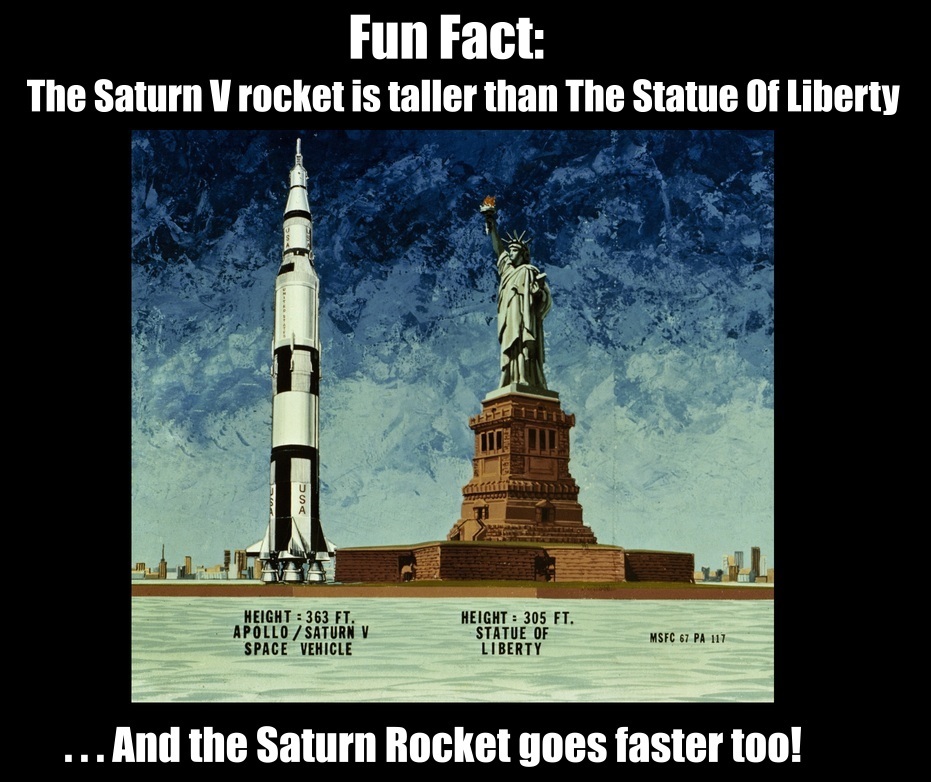
I mean, I’m sure Jeff Bezos is going to do all the things he’s said he’ll do with Blue Origin, but maybe what matters is less about how big your rocket is and more about how you plan to use it. The Saturn V was awe-inspiring not just because it was huge and powerful and the first of its kind. It was representing a human journey to a new frontier, and it brought a symbolic victory against an adversary that threatened the freedom of everything it touched. Falcon Heavy is awe-inspiring because of both its engineering and its role in the democratization of space travel. Starship is awe-inspiring because its first and primary purpose is to establish a human presence on another planet.
Bezos, on the other hand, has conquered human patience for the most part with Amazon and wants to give the ultra rich the ride of their life with Blue Origin. A $250,000 ticket to the Karman line for like 5 minutes of floating around in view of the Earth’s curvature is not exactly an everyday person thing. Good for those who can afford it, but not very inspiring for those who can never afford it. He’s also said things like, we’ll go to Mars “because it’s cool,” which is ironically not cool and gives the impression that he has a roommate named Patrick. SpaceX certainly has a “cool” factor, but people aren’t buying company mugs that say “Cool new hangout” across a picture of Mars when they’re filled with hot coffee.
Wow, I never knew trig would make its way into my writing…
For a specific example of Musk’s pop culture conversion to STEM interest I’m talking about, take The Boring Company. The whole venture started with a rant about traffic, was named such because it was a funny double entendre, and then was made even more amusing with Monty Python tie-ins and flamethrower merchandise inspired by Space Balls. Using pop culture, Elon Musk brought genuine, mainstream interest to the subject of public transportation logistics, no Rowan North required to give it a little extra spark.
This sort of public attention thing happens when big achievements or problems come up, sure. But there’s this one guy that keeps inspiring kids to go study STEM topics so they can work for his companies; this one guy keeps inspiring adults to start their own STEM ventures based on the ideas he’s promoting; this one guy keeps all of us thinking about what he’s doing and whether it’s going to work while admitting that, even if we have our doubts about whether it’s all feasible, it probably should work and we should maybe help it work.
Altogether, Elon Musk is a one-stop pop culture to STEM recruiting shop, and I think that’s a really good thing.
What do you think of Musk’s pop culture infusions into everything he does? Have any favorites? Any you wish weren’t a thing?
TREASURE HUNT
Find the following pop culture references in this column!
1. Bart Simpson breaks his leg
2. Homer Simpson joins a secret society
3. Titanic
4. Gilligan’s Island
5. Jurassic Park
6. Super Mario Brothers for Super Nintendo
7. Austin Powers: Goldmember
8. Spongebob Squarepants
9. Sine, Cosine, Tangent…
10. Ghostbusters 2016


Lifestyle
Tesla teases “Halloween Mode” update with Optimus rising from a graveyard
Tesla’s Halloween teaser hides a covered vehicle and an Optimus hand rising from the ground.

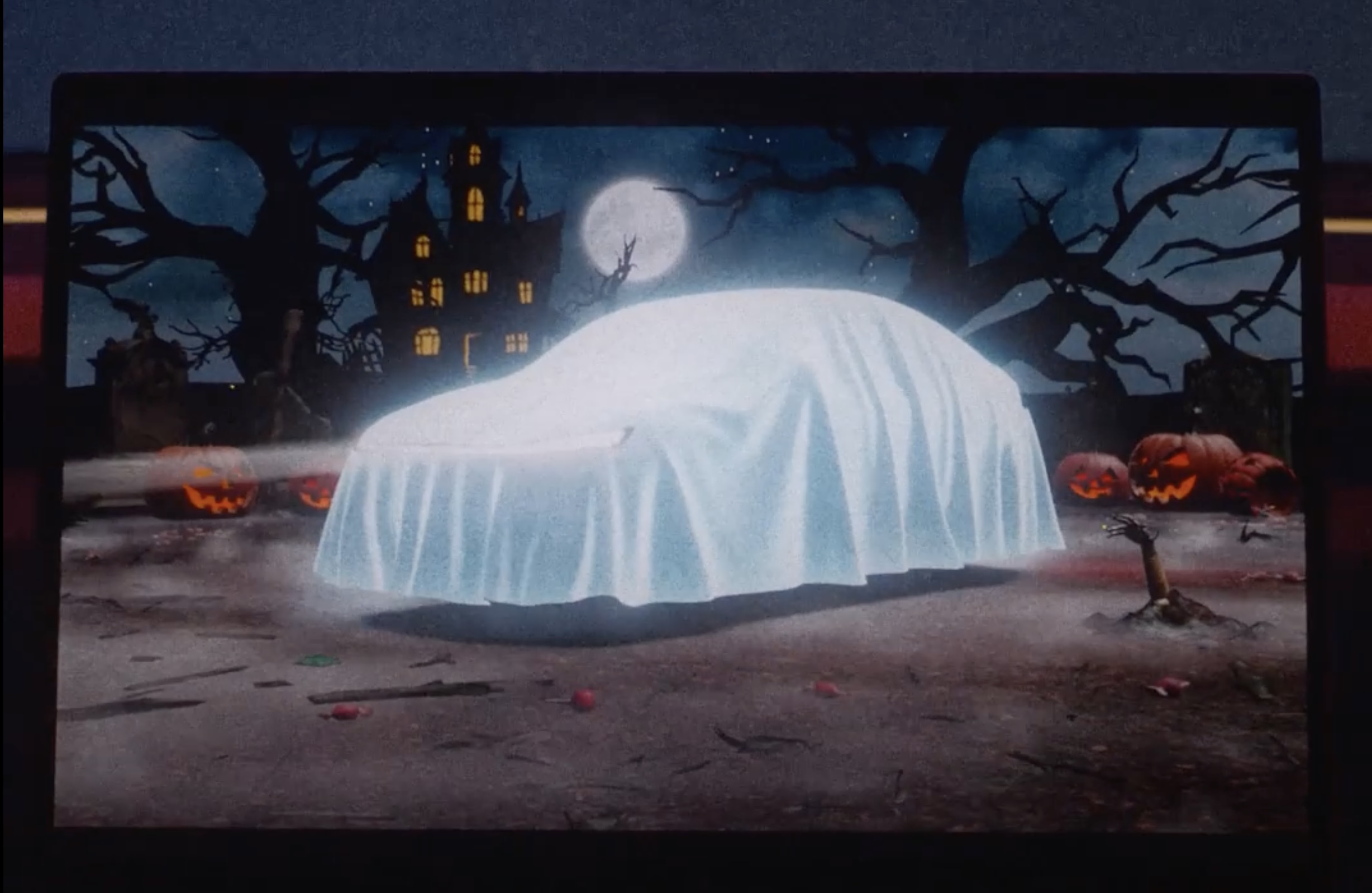
Tesla has started teasing a Halloween software update for its vehicles, with a short clip on X that reads, “Halloween is coming.” The clip opens on a glowing pumpkin before pulling back to the car’s center touchscreen, where the usual parked visualization has been replaced by a graveyard scene, and the vehicle draped with a white sheet so it reads as a cartoon ghost.
Halloween is coming pic.twitter.com/lM3ASUeOqX
— Tesla (@Tesla) October 1, 2026
The second detail is a robotic hand clawing its way out of the dirt like a zombie, which looks to be the hand of Tesla’s latest Optimus V3 humanoid robot. While Tesla still has not formally shown Optimus Gen 3 walking around in service, renders pulled from Tesla’s Android app last month gave the clearest look yet, including far more refined hands that Tesla has said carry 22 degrees of freedom. The hand has been the hardest part of the program. Musk has called it the majority of the robot’s engineering difficulty, and Tesla’s patents describe a design driven by tendons with the actuators moved into the forearm.
Tesla Optimus V3 hand and arm details revealed in new patents
Optimus also has a Halloween track record. Last October the robot handed out candy in Times Square, and a costumed “zombie” Optimus shuffled around the Tesla Diner in Los Angeles on Halloween night.
On the software side, Tesla’s 2025 Holiday Update expanded Santa Mode with a Santa sleigh, snowmen, snow effects, and a festive lock chime, so it wouldn’t be too far fetched if we saw something similar but themed for a Halloween Mode.
Lifestyle
Tesla’s newest feature lets you floor it out of a Supercharger while plugged in
Tesla’s new Emergency Drive Away feature lets owners flee a Supercharger while still plugged in.
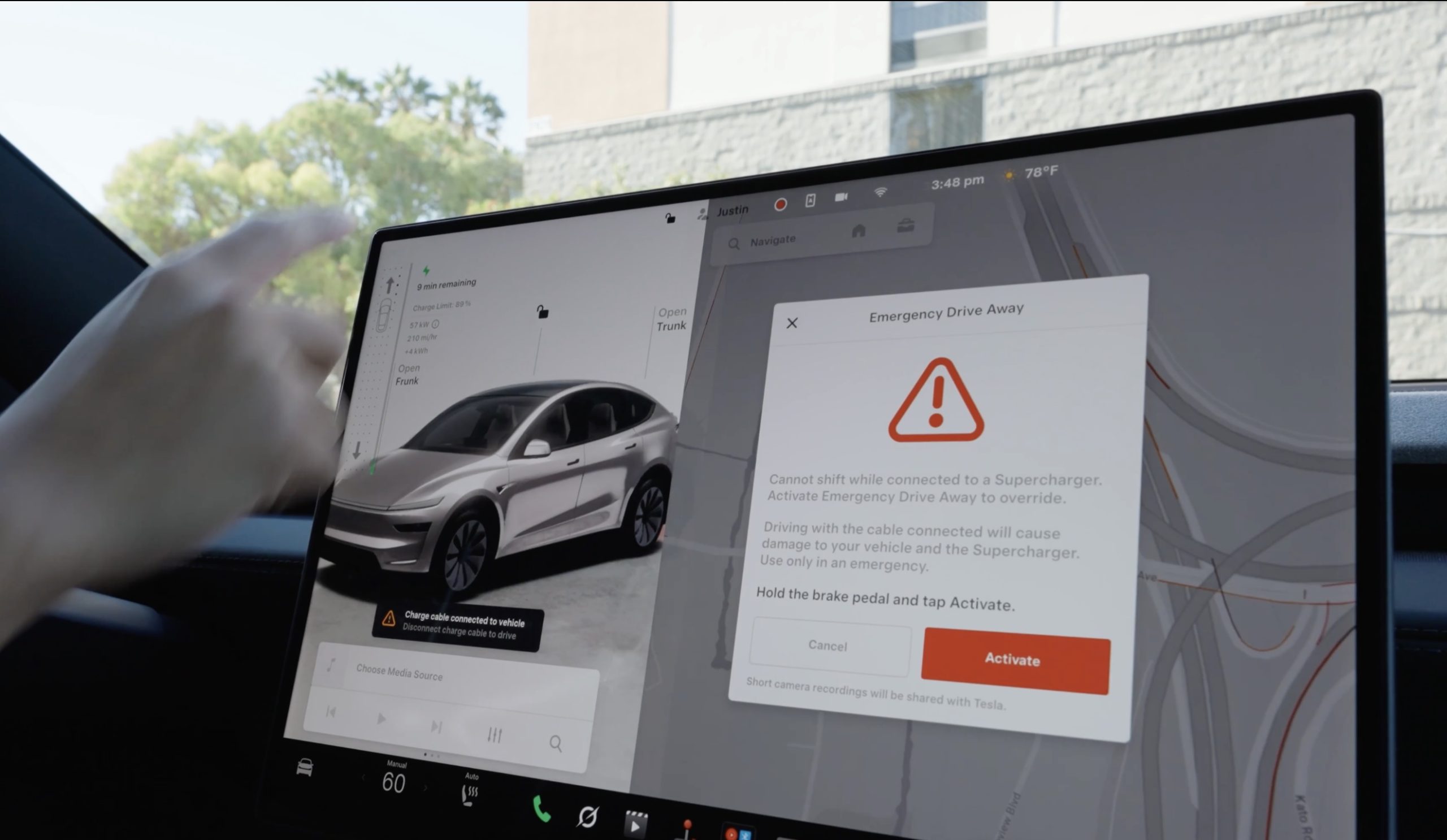
Tesla has given drivers a way to escape while a vehicle is plugged-in at a Supercharger, in the event of an emergency. The company’s charging team announced a new feature on X called Emergency Drive Away, which lets a driver shift into Drive and pull away while the charging cable is still connected to the car.
Until now, a Tesla would not leave Park with a charge cable plugged in. Drivers had to release the latch from the touchscreen, the Tesla app, or the button on the charge handle, then wait for the port to let go. Emergency Drive Away removes that lockout, but Tesla is clear that it comes at a cost. “Use of this feature will damage your vehicle and the Supercharger,” the company wrote, adding that the function is meant for emergencies only and that deliberate misuse will lead to “additional penalties.” Tesla did not say what those penalties are.
Emergency Drive Away lets you shift into Drive while still plugged into a Supercharger pic.twitter.com/40GSzyP4lG
— Tesla Charging (@TeslaCharging) October 1, 2026
The in-car prompt is just as direct, with the warning reading: “Driving with the cable connected will cause damage to your vehicle and the Supercharger. Short camera recordings will be shared with Tesla.” That footage gives Tesla a way to separate a real emergency from someone who simply did not want to wait for the latch.
The feature requires software update 2026.38.3, and Tesla said in replies to owners that it works at every Supercharger in the United States without new stall hardware. Model S and Model X vehicles built before 2021 are not supported, and the company says the feature applies to U.S. Superchargers “for now,” leaving Canada and other markets out at launch.
Tesla Supercharger argument leads to tragic shooting incident
Tesla did not tie the announcement to any specific event, but it arrives two months after a gunman opened fire at an In-N-Out in Twin Falls, Idaho, on August 1, targeting three people in two Teslas at the neighboring Supercharger. One of them, a 66 year old man from Salt Lake City, was killed. Superchargers have been the scene of violence before, including a fatal shooting at a station near Denver in 2023.
In the weeks after Twin Falls, owners pushed Tesla for a native way to escape a stall, and many pointed back to EVject, the aftermarket breakaway connector Tesla sued in 2024 over claims it lacked overtemperature protection. The two companies later reached an agreement that led EVject to recall its earlier connectors in favor of a version with thermal sensors.
Our mission has always been about providing peace of mind and eliminating sitting duck scenarios.
We patented the built-in breakaway charger tip on Feb 15, 2023. Awarded Jan 30, 2024. Then shared the designs with @TeslaCharging
Thank you @Tesla for rolling out a solution. This… https://t.co/djOzswLw9N
— EVject (@EVject) October 2, 2026
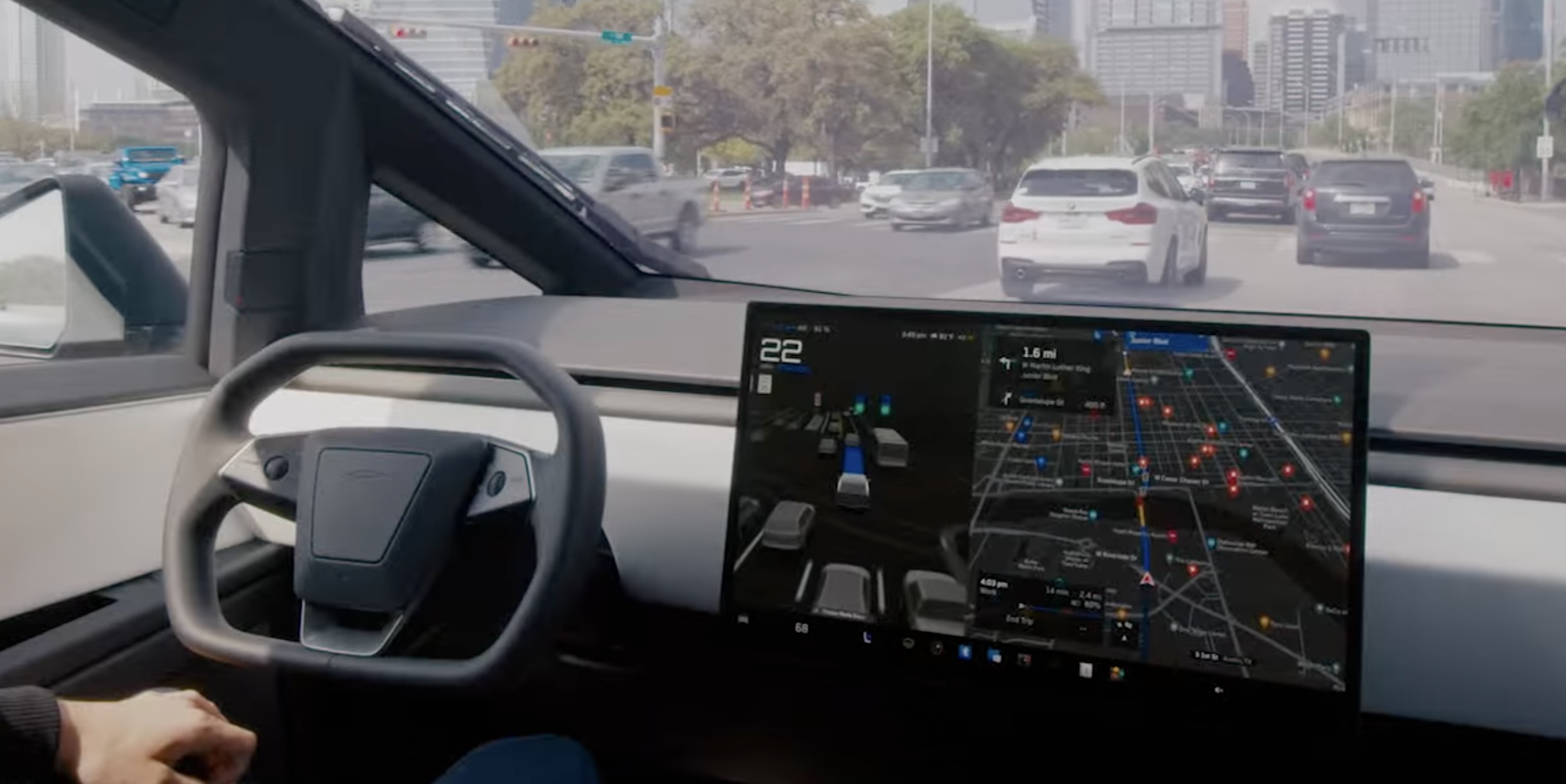
Tesla’s Automatic Collision Evasion feature can be seen in one of the first owner videos of it in action.
Tesla owner Spencer (@scotsrule08) posted on Monday that the feature “worked flawlessly,” saying FSD reengaged itself just as he was about to hit a curb. Ashok Elluswamy, who leads Tesla’s AI team, shared the clip and wrote, “A guardian angel always looking out for you.”
The video arrives in the middle of a staged rollout. Tesla first shipped Automatic Collision Evasion with FSD (Supervised) v14.3.9 in software update 2026.27.6 earlier this month, which Teslarati covered as it reached cars. Update 2026.27.10, which began going out on September 19, carried the feature improvements with FSD v14.3.10, according to release notes tracked by Not a Tesla App. The newer 2026.27.11 build is now reaching another wave of vehicles.
The new Automatic Collision Evasion feature worked flawlessly! FSD reengaged itself just as I was about to hit a curb.
Kudos @Tesla_AI team! 👏 pic.twitter.com/Fbp15HhpL2
— Spencer (@scotsrule08) September 28, 2026
The feature only runs on HW4 vehicles, and it requires an active FSD purchase or subscription with both FSD (Supervised) and Automatic Emergency Braking enabled. HW3 owners receive FSD v14.2 Lite in the same updates, but that build does not include collision evasion.
Tesla’s release notes describe two triggers. The first is an imminent frontal collision that braking alone may not prevent, in which case the car can activate FSD to steer, brake or accelerate around the hazard. That scenario is limited to highways below 85 mph, with no pedestrians or cyclists detected and no slippery road surface. The second covers a driver who appears inattentive, such as reaching into the back seat, or who seems to have switched off FSD by accident. Spencer’s curb clip appears to fall into that second category.
Tesla plans big safety improvements for Full Self-Driving v15
Once the system takes over, the accelerator is muted and light brake input will not cancel the maneuver. Drivers need to apply firm, deliberate steering force to take back control, and the car chimes to hand control back once the danger has passed.
Elluswamy recently noted that earlier hazard prediction, faster reaction time and better collision avoidance would arrive with FSD v15, the next major version.

Elon Musk follows Trump’s lead, says a SpaceX name change is coming

Starlink launches Communities Program for passive income through internet sharing


