News
Tesla’s Elon Musk gets fired up by competition, reduces Model S price to $69,420

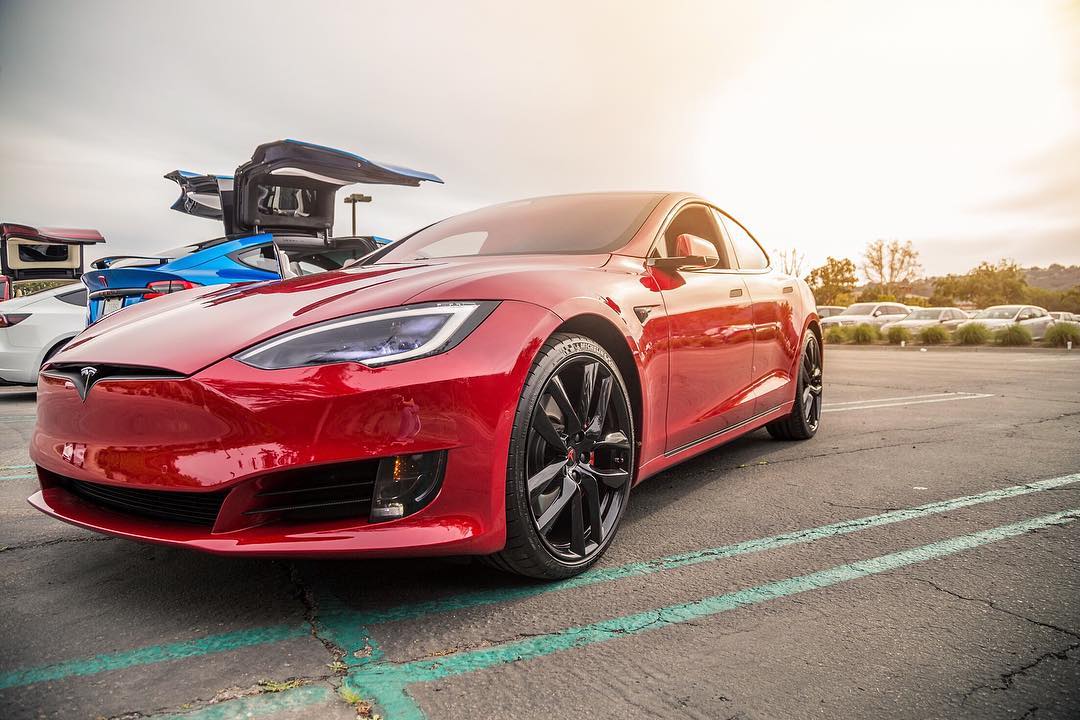
The Tesla Model S is poised to drop to its lowest price yet, with CEO Elon Musk stating that the premium flagship sedan will now start at just $69,420. The Model S price drop, the second one in two days, seemed to be correlated with the announcement of the base model Lucid Air.
Musk’s Twitter post announcing the Model S’ price drop did not specify Lucid Motors by name, though he did state that the “gauntlet has been thrown down,” suggesting that the price adjustment is in response to a competitor. The Tesla CEO seemed to be in light spirits in his announcement, however, with Musk stating that “the prophecy will be fulfilled.”
The gauntlet has been thrown down!
The prophecy will be fulfilled.
Model S price changes to $69,420 tonight!— Elon Musk (@elonmusk) October 14, 2020
Lucid released the price details for the Air sedan’s base variant earlier today. The company announced that the base Air sedan would cost $69,990 after incentives and will be available by early 2022 and can be reserved for $300.
Elon Musk dropped the price of the Model S to a meme-worthy $69,420 not long after Lucid announced the starting price of the base Air. This resulted in the electric car maker reducing the price of its flagship sedan for the second time. The Long Range Plus variant was reduced from a starting price of $74,990 to $71,990 just yesterday.
Introducing the new elemental version of the high-performance, ultra-efficient #LucidAir – post-luxury electric attainable from $69,900* (after US tax credit).
Reserve yours for just $300 and receive 3 years of included Nationwide @ElectrifyAm Charging. https://t.co/6EFqNo10MK pic.twitter.com/IToazgHBcn— Lucid Motors (@LucidMotors) October 14, 2020
As noted by Tesla investor Steve Mark Ryan of YouTube’s Solving the Money Problem channel, Tesla’s ability to drop the price of the Model S “effective immediately” is impressive. This is especially true considering that the base Air is not due until 2022, and it is very likely that Tesla would be able to improve the Model S further by then.
Musk seems to be fired up about the competition, particularly Lucid. Given Lucid and Tesla’s tenuous connection, it may not come as a surprise to some. Lucid CEO Peter Rawlinson is a Tesla alumnus, after all, and he played a role in the development of the Model S. He has also remarked that ultimately, Lucid is “nothing” until the company can actually mass-produce its first vehicle.
@Elonmusk is a savage— Eli Burton (@EliBurton_) October 14, 2020
Regardless of Tesla’s old ties to Lucid’s CEO, however, the recent Model S price drops may have revealed how the EV automaker will react to potential competition in the future. Tesla owner-enthusiast Eli Burton may have put it in the best words, “@Elonmusk is a savage.” Tesla is indeed a savage, and it is one that will not back down from a challenge.
Tesla bears have wondered how the all-electric car maker will react to competition from legacy automakers and new EV companies. Tesla’s latest actions may have just provided some answers.


Give the gift of Tesla upgrades.
Shop for someone else or treat yourself. Get more shopping power with a Teslarati gift card.

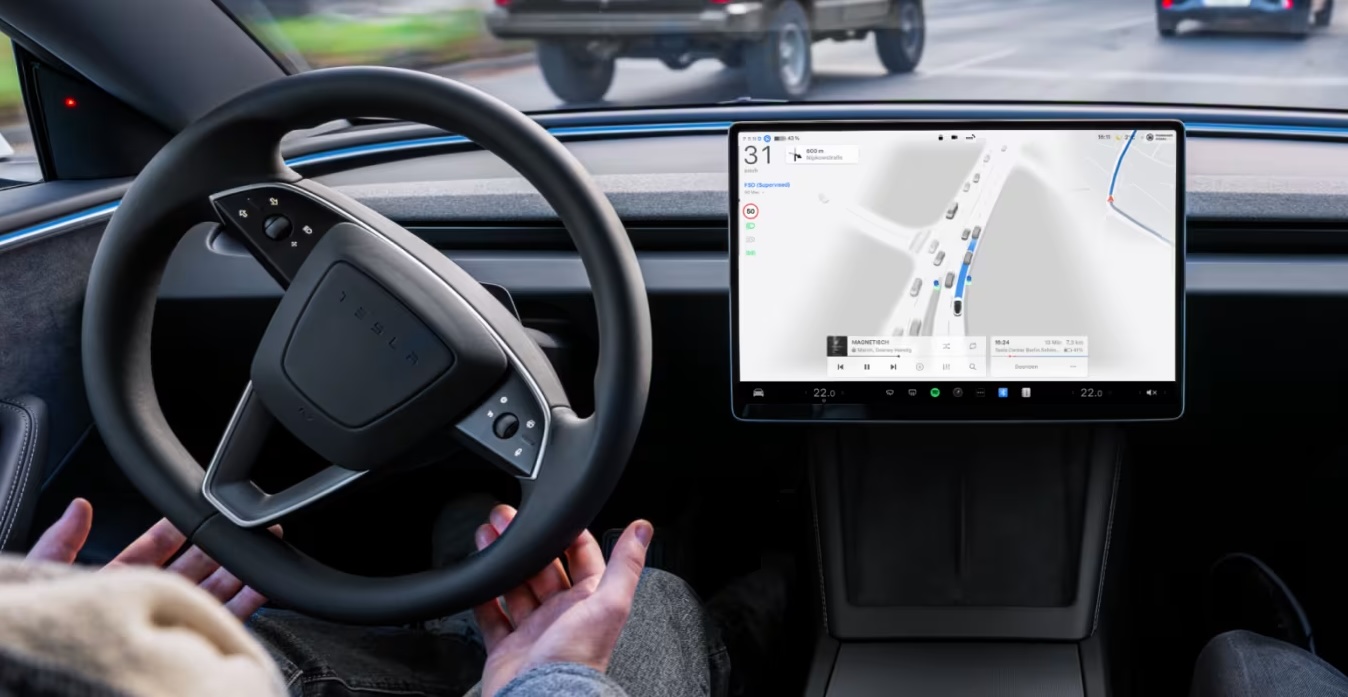
Tesla Assisted Driving (TAD), the European equivalent of the Full Self-Driving suite in the U.S., has officially landed approval to operate in Italy, the 12th European Union country to allow the suite.
Italy marks a huge accomplishment for Tesla’s approval processes in Europe, as it marks the first truly major European country to give an approval.
On November 20, Italy’s Ministry of Transport granted provisional type-approval for Tesla Assisted Driving (TAD), the company’s advanced driver-assistance system. Transport Minister Matteo Salvini announced the decision on X, describing it as “another step forward toward innovation, technology and the mobility of the future, whilst always prioritising public safety.”
Sono orgoglioso di annunciare un’altra importante novità per la mobilità in Italia.
Il @mitgov_it, dopo puntuale verifica tecnica di fattibilità, ha dato il via libera all’omologazione provvisoria del sistema di guida assistita Tesla Assisted Driving, anticipando il processo di riconoscimento comunitario, attualmente in fase di definizione.
Un altro passo avanti verso l’innovazione, la tecnologia e la mobilità del futuro, sempre mettendo al primo posto la sicurezza dei cittadini.
— Matteo Salvini (@matteosalvinimi) November 20, 2026
The approval followed a thorough technical feasibility assessment and positions Italy as the twelfth European country to authorize the technology, but the first among the European Union’s largest markets.
TAD, previously marketed as FSD (Supervised), will roll out in Italy shortly through an Over-the-Air update and will be available on a subscription basis at €99 per month.
This Italian green light carries substantially greater weight than the preceding approvals. The system first received provisional type-approval from the Netherlands’ RDW in April. Subsequent recognitions came primarily from smaller countries, like Lithuania, Denmark, Belgium, Croatia, Finland, and others.
Italy, by contrast, is the Union’s third-most populous member state and one of the traditional “big four” alongside Germany, France, and Spain. Its urban environments are particularly dense and present a more demanding real-world test for the system than many earlier markets.
The approval also follows a late-October conversation between Elon Musk and Salvini, after which the minister publicly supported a swift EU-level decision. Full bloc-wide authorization requires a qualified majority of at least 15 member states representing 65 percent of the EU population. Italy’s move adds meaningful population weight and political momentum ahead of potential discussions in the Technical Committee on Motor Vehicles.
Tesla marked the occasion with a video of a vehicle navigating Roman streets near the Colosseum, underscoring the system’s ability to handle the city’s distinctive traffic patterns.
For Tesla, the Italian authorization represents a strategic foothold in a major European car market, potentially accelerating both customer adoption and the case for broader regulatory acceptance across the continent.
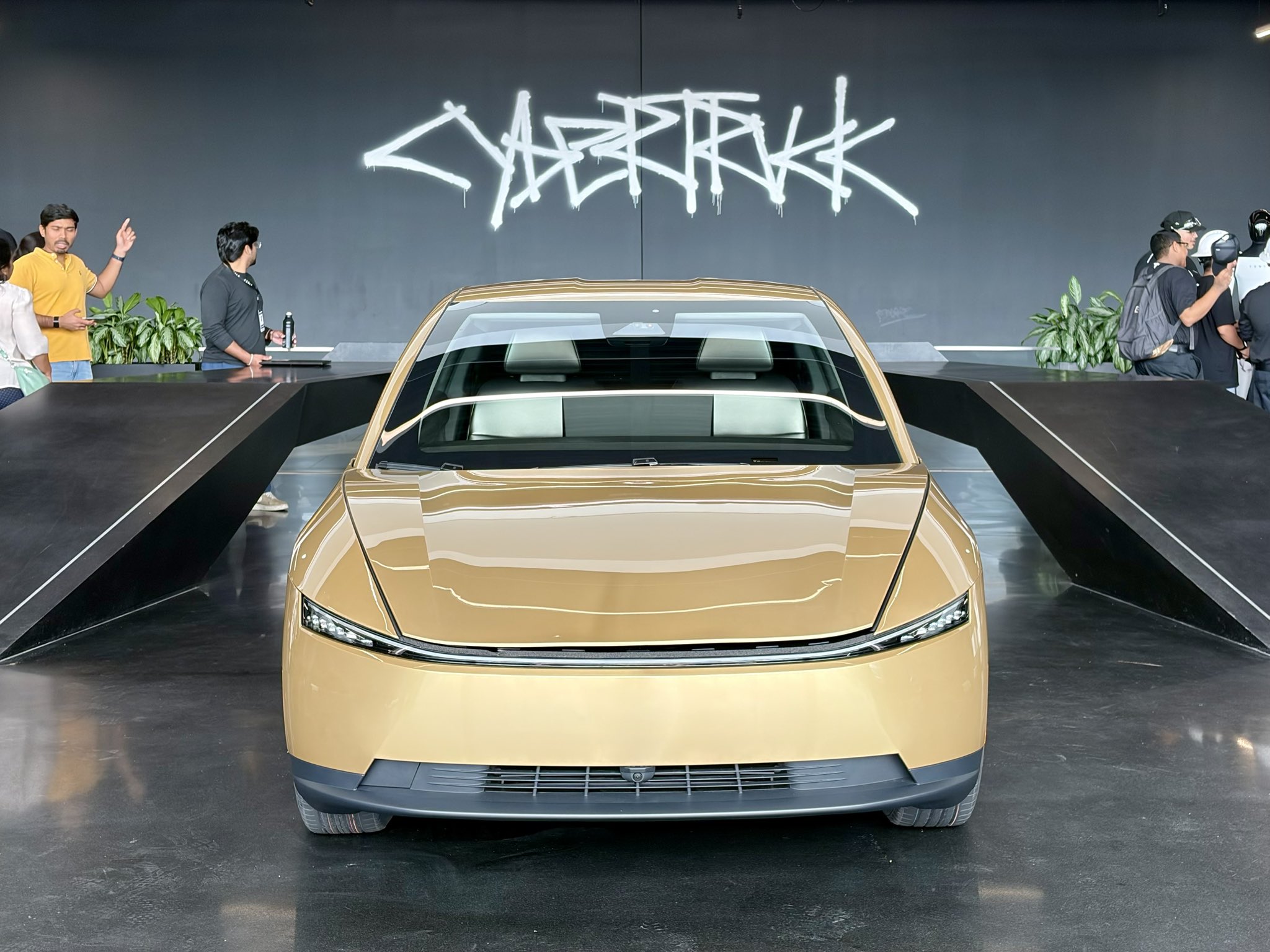
Tesla Cybercab is now officially available for personal-use orders to those the company has invited to purchase the car near Austin, Texas.
The two-seat car void of a steering wheel and pedals requires Tesla’s $299 per month “Autonomy Subscription,” as the company has made it abundantly clear that Cybercab “will not operate without an active Autonomy Subscription.”
This was the description of the Autonomy Subscription on the Cybercab. https://t.co/YJPkZkWKwc
— Sat (@sa_futurist) November 19, 2026
But what does that entail and why is it included? The Autonomy Subscription seems to cover all bases on both sides, ownership side and Tesla side, to ensure that the vehicle is functional, capable, and free of anything that could put anyone in danger.
The subscription’s core is the subscription to unsupervised autonomous driving within Tesla’s geofences. Owners control the trips through the Tesla app and the 21-inch center touchscreen.
Included features of the Autonomy Subscription:
- Fully autonomous operation with no steering wheel or pedals (required for the vehicle to function at all).
- Cellular connectivity, including Premium Connectivity features such as live traffic, media streaming, and Grok.
- 24/7 remote support available through the app and the vehicle’s touchscreen.
- Roadside assistance for issues including flat tires, lockouts, and charge depletion, with towing up to approximately 50 miles to a Tesla service center or the owner’s home.
- Tire inspections, rotations, replacements, and flat tire service.
- Windshield replacement, cleaning, and water-repellent coating.
- Wiper blade replacement and cleaning, plus washer fluid refills.
- Cabin air filter replacements.
- Exterior camera lens cleaning (including removal of film buildup on the forward-facing camera).
- Regular vehicle inspections.
- Unoccupied self-driving to and from Tesla service centers for scheduled work, along with remote diagnostics and app-based service scheduling.
Features are subject to change, and some third-party apps may require separate paid subscriptions. Insurance, registration, charging, parking, and general cleaning are not included.
Tesla also notes that its in-house Insurance is available, but not required for Cyberab.
Ordering screens that have been shared by those lucky enough to receive an invitation to order have revealed some new official specs.
The Cybercab carries an EPA-estimated range of 279 miles and can add up to 123 miles in 15 minutes of Supercharging, but that based on constant 65 mph highway efficiency. Dimensions are 69.0 inches wide, 55.4 inches tall, and 176.2 inches long, with 20.1 cubic feet of cargo space and 100 W USB power delivery. It uses eight exterior cameras plus a cabin camera (with washers on the exterior cameras) and has no side mirrors.
Warranty coverage includes a basic limited warranty of 4 years or 50,000 miles and an 8-year/100,000-mile battery and drive unit warranty guaranteeing at least 70 percent capacity retention.
Currently, it is limited to personal use inside Tesla’s geofences, but Cybercab owners can use them in any of the currently active Robotaxi areas.
Elon Musk
Elon Musk reveals Tesla’s next vehicle without a steering wheel
Elon Musk says Tesla plans a driverless Model Y for families too big for Cybercab.

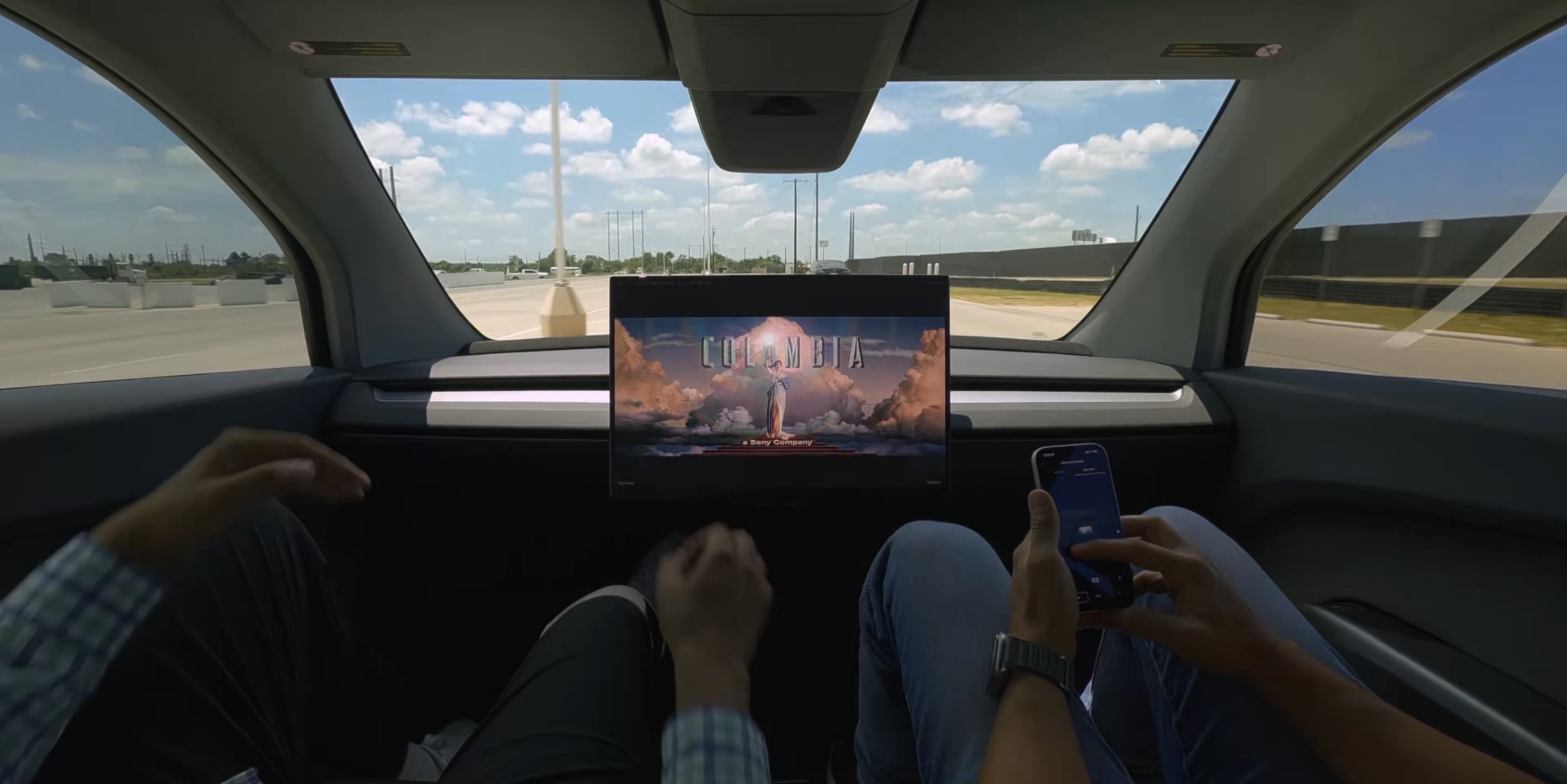
Tesla is planning a driverless version of the Model Y with room for six or seven people, Elon Musk said this week, giving families and groups an alternative to the two-seat Cybercab. Speaking remotely from China at the New York Times DealBook Summit on Wednesday, Musk said the vehicle would have no steering wheel or pedals. He did not give a launch date, price or production location.
The idea came up when Andrew Ross Sorkin asked whether Tesla would eventually stop selling conventional cars as it shifts Cybertruck capacity toward the Cybercab. Musk defended the two-seat design, saying average occupancy is about 1.2 people per car and that a two-seater covers roughly 90 percent of passenger miles. Bigger groups, he said, would be served by the larger autonomous Model Y.
Sorkin also mentioned he had ordered a Model Y L for his family and was still waiting on it. Musk called the six-seat, long-wheelbase SUV Tesla’s most popular car and suggested all Model Y production might need to move to the longer version. “It’s what most people seem to want,” Musk said, though he did not announce any change to Tesla’s production lines.
A driverless Model Y would add a third vehicle to Tesla’s autonomous lineup. Model Y Robotaxis already run 24 hours a day in eight cities, and Cybercab rides expanded to Dallas on Thursday after launching in Austin in September, as Teslarati reported. Tesla also began inviting select customers to buy a Cybercab for personal use last week at $29,990, with deliveries targeted for December.
Musk also addressed whether a Tesla and SpaceX merger should pay out under his compensation plan. Under the change in control terms of his 2025 CEO award, a deal could accelerate vesting, Electrek has noted. Musk said it should not. “I don’t think I should be compensated with any kind of award just for doing a merger. That would be unreasonable and not right,” he said. “You should keep your deals and stay true to your word.”
On the merger itself, Musk said the companies would “probably” be better together because of growing overlap in AI, chips and robotics, but stressed the decision rests with independent committees and shareholders, and that a Tesla vote “may or may not succeed.” Tesla holds its annual shareholder meeting on December 3, with merger talks reportedly progressing toward a possible announcement as soon as December.

Tesla Assisted Driving (TAD) lands approval in Italy, its 12th EU country

Tesla Cybercab’s ‘Autonomy Subscription’ covers all bases for a self-driving car


