News
Starlink poised to double its speeds to ~300 Mbps by the end of the year

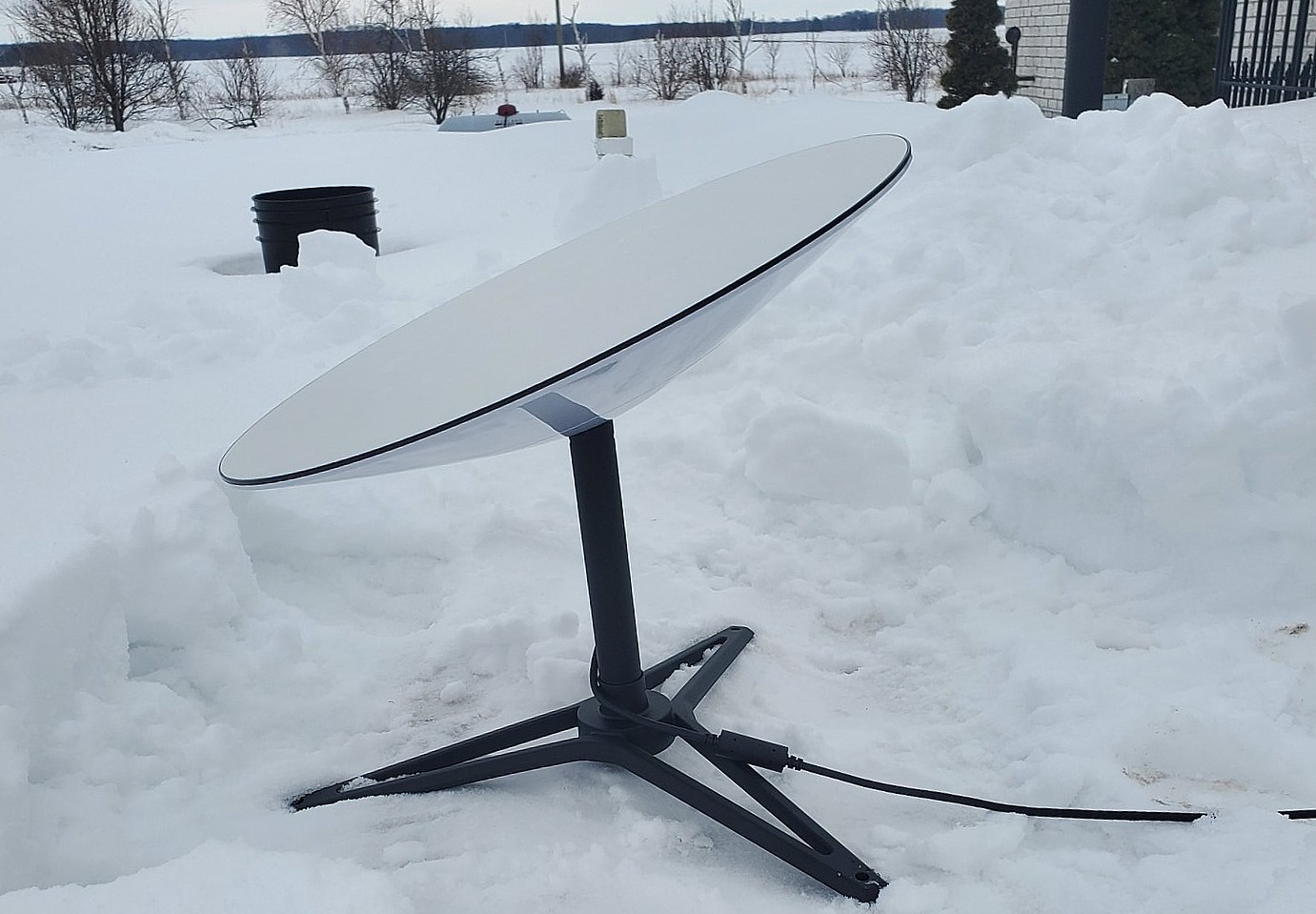
Starlink may already be providing rapid web access to several remote areas today, but the satellite internet service is poised to get even better this year. As per recent comments on Twitter from SpaceX CEO Elon Musk, Starlink’s speeds should double to about ~300 Mbps later this year, with latency dropping to about ~20 ms.
Musk’s comments came as a response to a series of tweets from Anthony Iemole, a SpaceX enthusiast who recently received his Starlink kit. Iemole noted that he currently pays $85 per month to his internet service provider, which should provide him with download speeds of about 80 Mbps. These speeds, however, have never been reached as he only gets about 10-15 Mbps regularly, and 25 Mbps on good days.
Speed will double to ~300Mb/s & latency will drop to ~20ms later this year
— Elon Musk (@elonmusk) February 22, 2021
These speeds were utterly crushed by Starlink, which promptly showed download speeds of 77 Mbps and upload speeds of 9.5 Mbps on the lower end. At its best so far, Iemole noted that Starlink was able to hit 130 Mbps. Granted, SpaceX’s satellite internet service is $14 more than his ISP’s $85 Mbps plan, but the speed boost and reliability provided by Starlink is well worth the slightly higher $99 monthly cost.
SpaceX only has a fraction of its planned Starlink satellites deployed today. Yet, even in its current state, the system is already providing speeds far beyond those offered by traditional remote internet service providers. This is encouraging, as Starlink is only bound to become even more robust as more satellites are deployed. Elon Musk emphasized this in a later tweet.
Most of Earth by end of year, all by next year, then it’s about densifying coverage.
Important to note that cellular will always have the advantage in dense urban areas.
Satellites are best for low to medium population density areas.
— Elon Musk (@elonmusk) February 22, 2021
As per Musk’s update, Starlink should cover most of the Earth by the end of the year, and the system should be able to provide global coverage next year. After this, it would be a game of densifying the system’s coverage to make it better and more reliable. The SpaceX CEO also highlighted that in dense urban areas, cellular internet will always have an advantage, but in low to medium population density areas, Starlink has the potential to be a real game-changer.
Recent filings to the Federal Communications Commission (FCC) have indicated that SpaceX intends to expand Starlink’s suite of services beyond satellite internet access. Among these is a phone service expected to offer comparable rates to current phone plans today, and battery backup services that should allow Starlink users to have internet access when the power goes down. The filings also mention plans to roll out a program that would make Starlink more affordable for low-income households, helped in part by the government’s Lifeline program.
Don’t hesitate to contact us for news tips. Just send a message to tips@teslarati.com to give us a heads up.



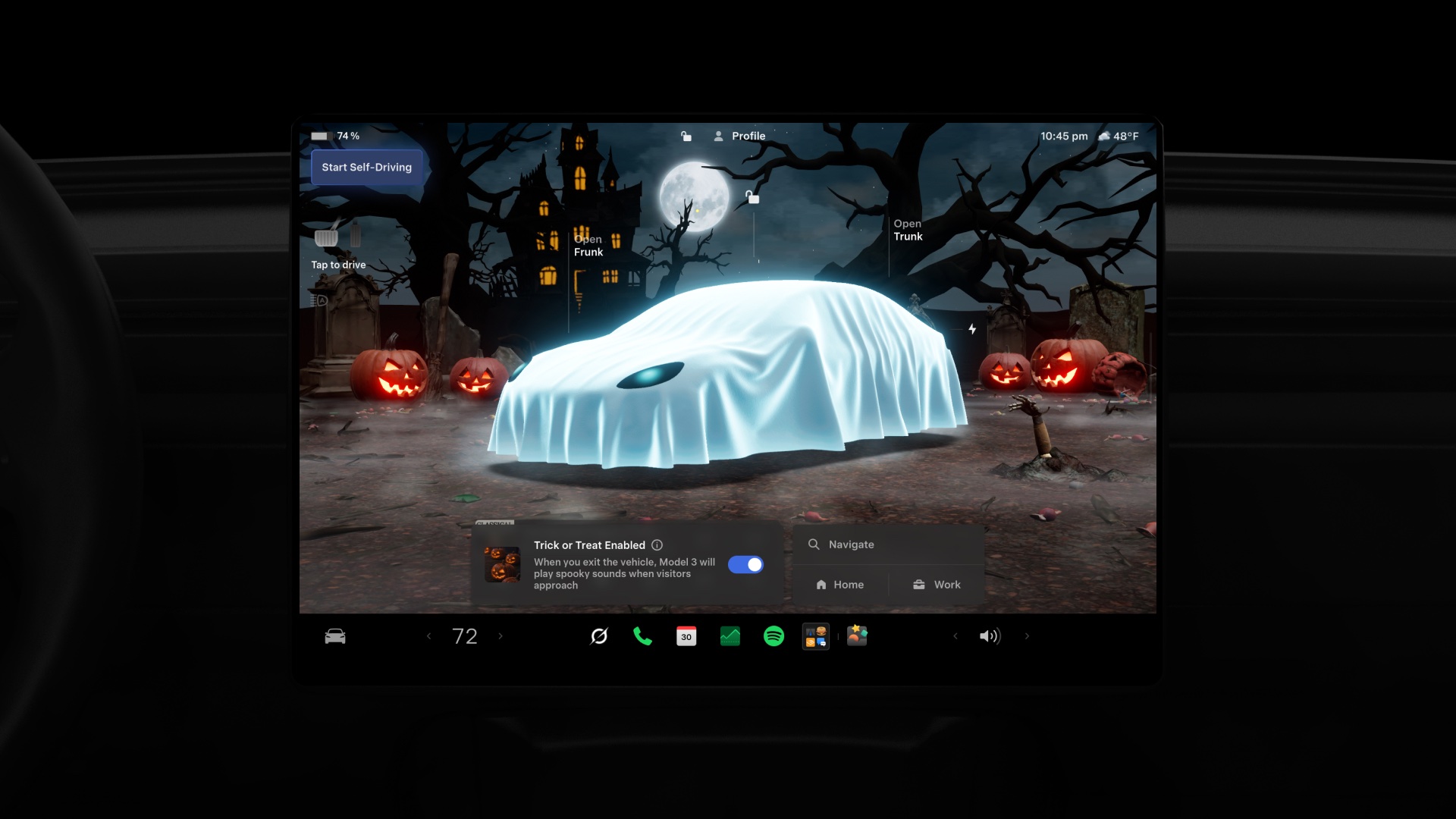
Tesla is now starting to ship a “Halloween Mode” that is filled with some creepy and fun features; the company says, “This spooky update turns your Tesla into a haunted house on wheels.”
The update is just the latest in a series of updates that Tesla typically ships out in a seasonal fashion. The Spring and Summer Updates provided some fun novelty items while also packing some cool features that are actually useful for the ownership experience.
This one seems to be more fun-forward, and there are not any updates to the Full Self-Driving suite or overall operation of the vehicle. Instead, these novelty features are geared toward getting you in the mood for the Fall and Halloween.
Halloween Mode now rolling out 🎃
This spooky update turns your Tesla into a haunted house on wheels
– Ghost costume on your car’s avatar
– Enable Trick or Treat to play spooky sounds & flicker the lights when visitors approach
– New haunting light show, wraps & lock sound
– A rather chilling Photobooth
– Frighten people remotely by speaking through the app…your car will say it in a voice of its own
Side effects may include neighborhood notoriety
— Tesla (@Tesla) October 6, 2026
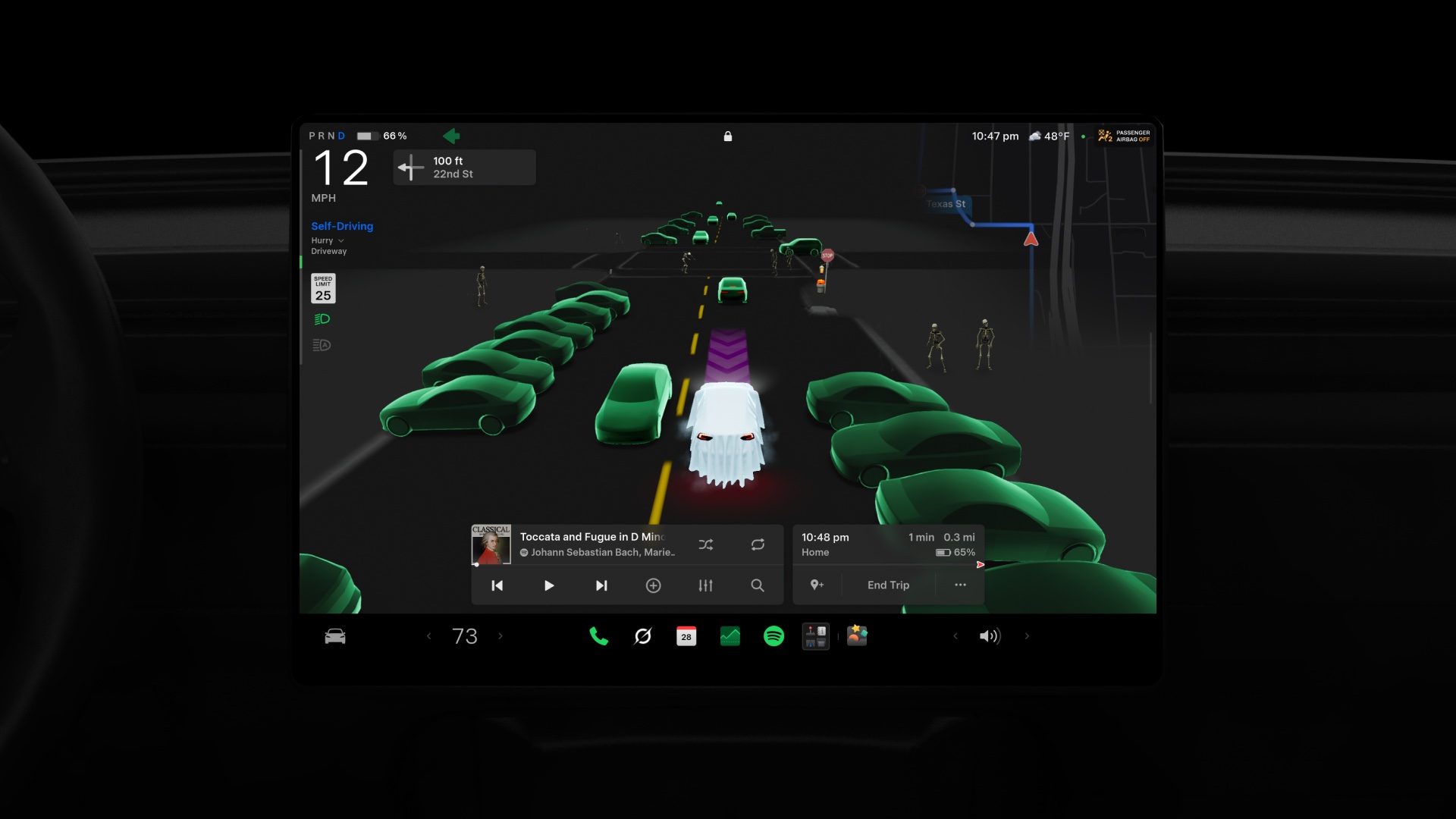
New Ghost Costume on Car Avatar
Driver Visualization will now show your vehicle as a ghost, as an all-white sheet is draped over the vehicle. Pedestrians are turned into mummies or skeletons, and other vehicles are all a spooky green:
Credit: Tesla
Additionally, the Park Scene with your Tesla now displays that ghost costume draped over your vehicle in the foreground of a scary backdrop with Jack-o-Lanterns and a haunted house:
Credit: Tesla
Trick or Treat Mode
Trick or Treat Mode will enable the vehicle to play spooky sounds and flicker the lights as visitors approach. This might be a nice touch for when you’re handing out candy to kids on Halloween Night.
Other Features
Tesla is also adding a new Light Show, new Wrap Options, and a new Lock Sound with this update.
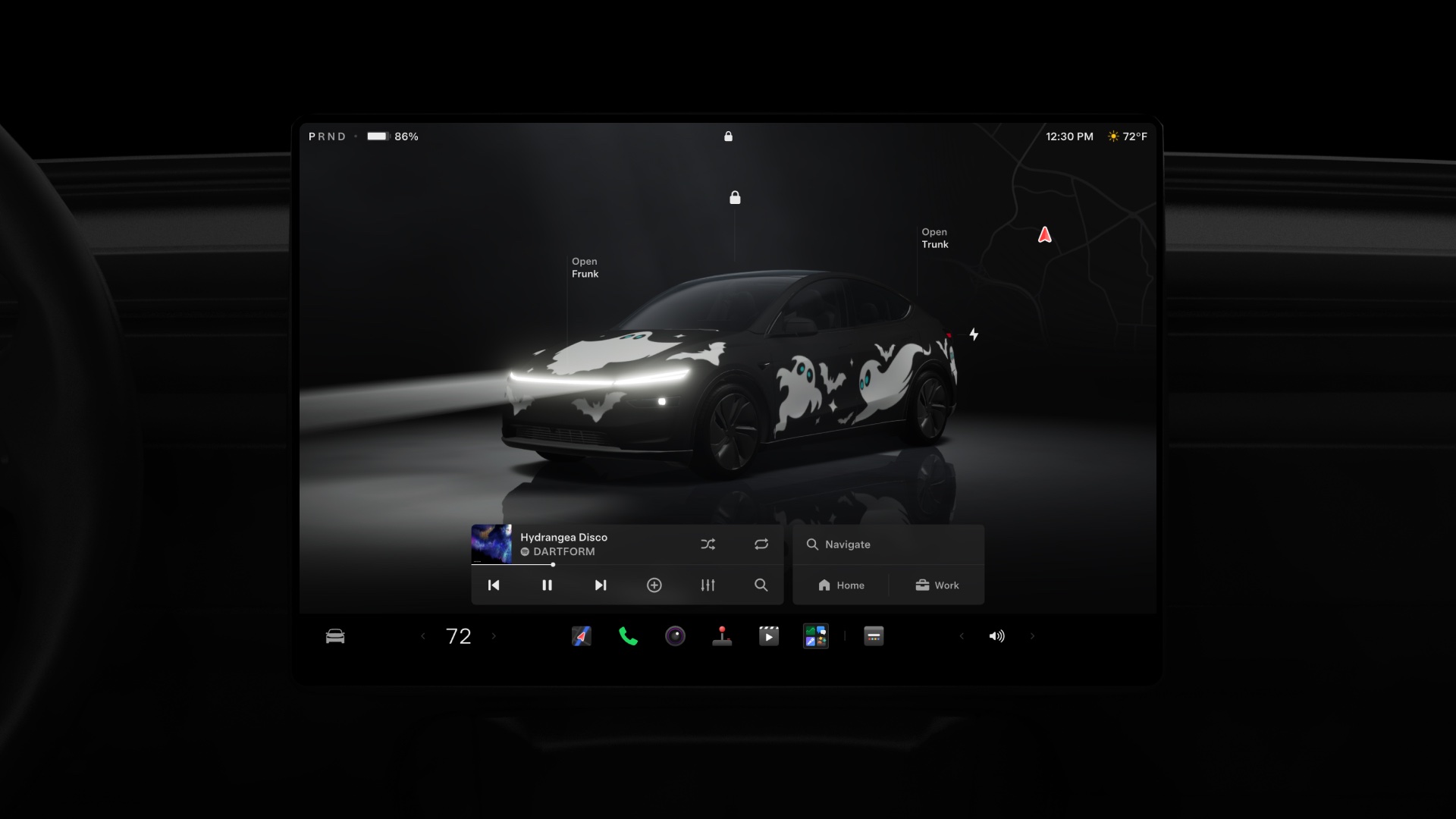
Credit: Tesla
Additionally, Photobooth has a new Halloween option:
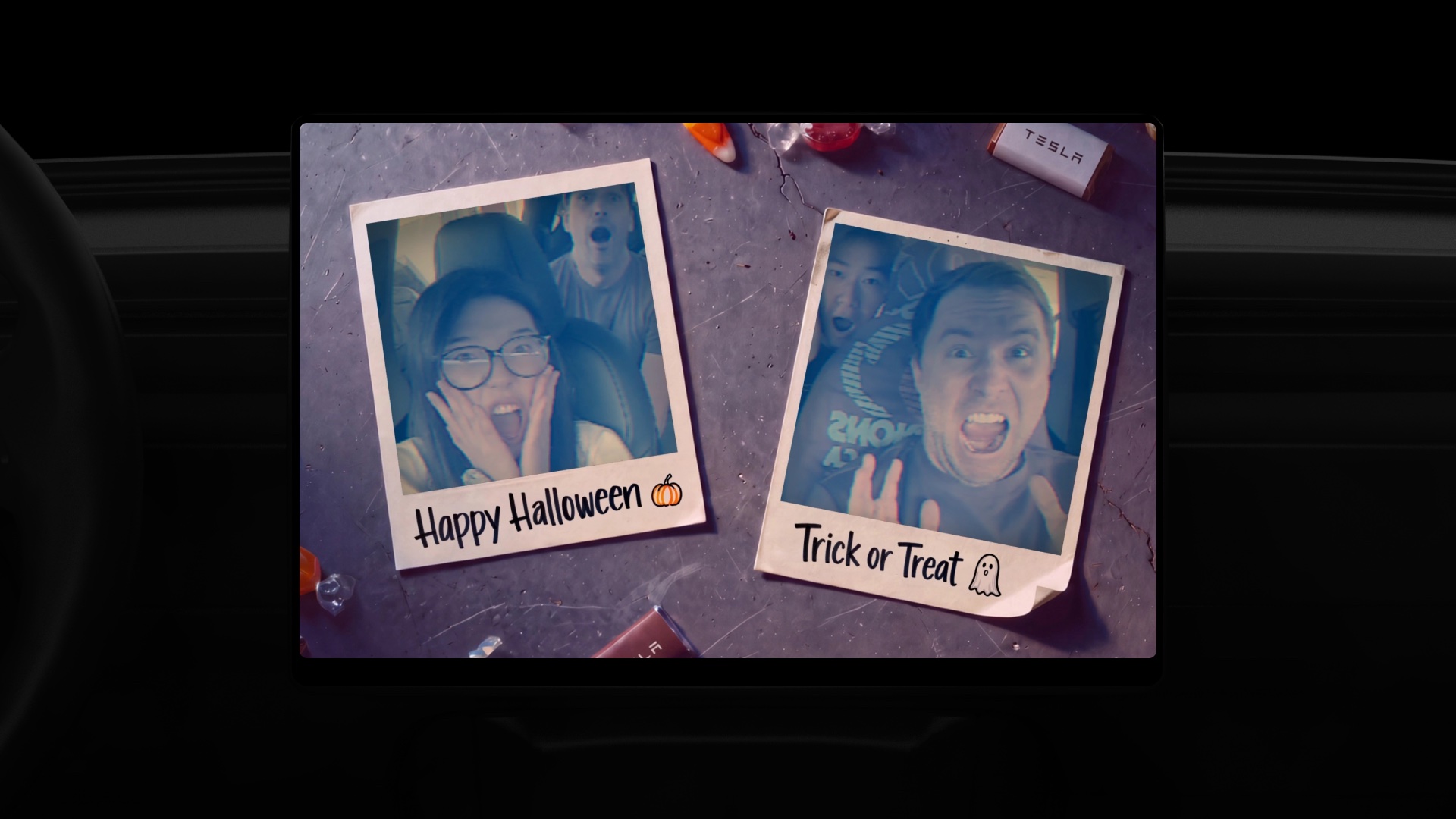
Credit: Tesla
You will also be able to speak remotely through the app and transmit your voice to people outside, which is not a new feature, but the car will say it in a voice of its own, which is a new feature with that bullhorn-like feature.
Investor's Corner
SpaceX reveals how its 1 Million AI satellite network will work and prevent space collisions
SpaceX reveals plans for one million Starmind AI satellites and calls out operators hiding maneuvers.

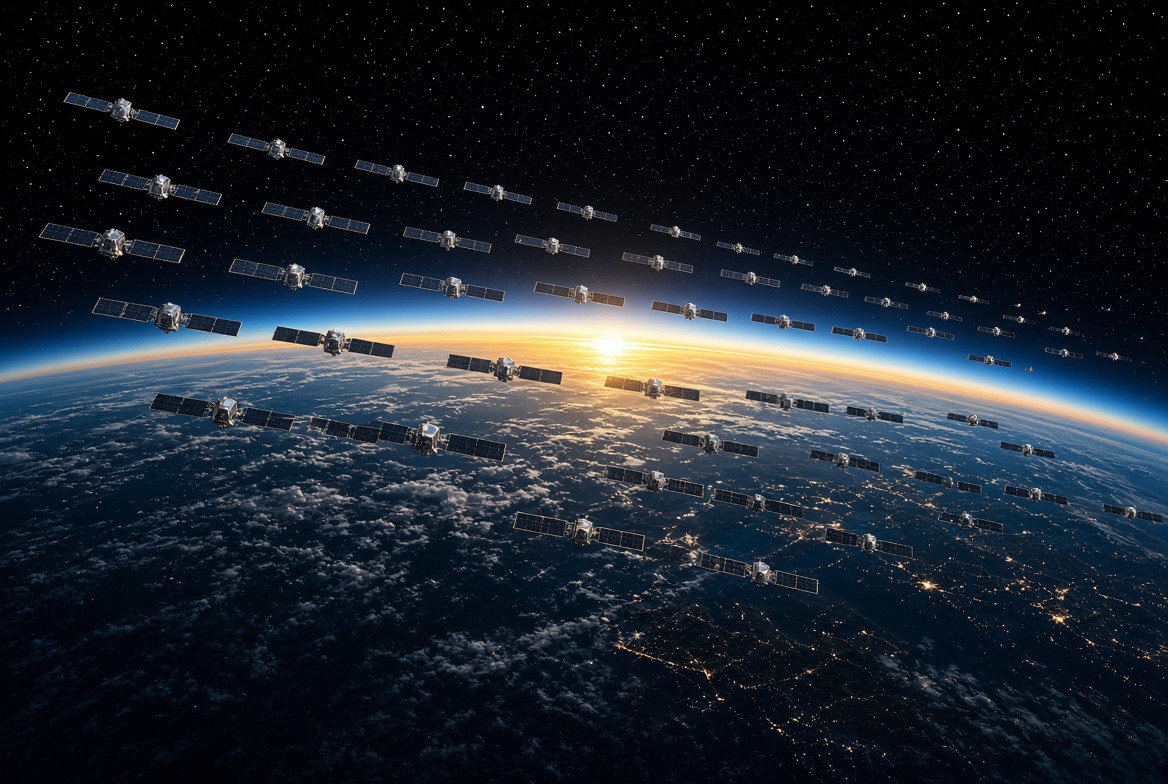
SpaceX has put the largest satellite count it has ever published into writing, and it says that plan only works if every other operator in orbit starts sharing what it knows.
In a new Space Safety page highlighted Tuesday morning by Sawyer Merritt on X, SpaceX said it “plans to operate up to 100,000 Starlink satellites and up to 1 million Starmind AI satellites to meet the growing demand for broadband and supercompute.” Starlink has a little over 11,000 satellites in orbit today, so the target alone implies roughly a ninefold expansion of the broadband network.
Starmind is SpaceX’s orbital AI compute constellation. Elon Musk confirmed the Starmind name in June after an xAI trademark filing surfaced, and in August SpaceX said it was working with Nvidia on the compute payload. The FCC accepted the filing for up to one million satellites back in February.
FCC accepts SpaceX filing for 1 million orbital data center plan
SpaceX also released a new render of what a full Starmind constellation could look like. Alongside it, SpaceX VP Michael Nicolls explained why the satellites will not operate on their own. “We need to operate clusters of satellites in tight formation to get enough coherent compute to run AI models efficiently,” Nicolls said. “A cluster will be 10-ish satellites connected with 10 terabits or so of bandwidth between them, and interconnected to the broader constellation.”
That is the most specific detail SpaceX has given on how Starmind will be built. Instead of a million independent servers, the network would work as tightly packed groups of about 10 satellites acting as one compute unit, with Starlink’s laser links carrying results back to Earth.
There is a bright and exciting future for humanity ahead – and space is fundamental to that future.
To achieve this, space safety must be done right. We encourage every operator to not only share ephemeris data proactively the same way Starlink already does, but to also adopt the high standards of space safety that SpaceX and Starlink use every day → https://t.co/QizAkQZvEm
— Starlink (@Starlink) October 6, 2026
Packing satellites that close together, at that scale, makes collision avoidance the central problem, and most of the Space Safety page is aimed at other operators. SpaceX said Starlink encountered collision risks with about 650 unique maneuvering third party satellites in 2026, and only about half of them shared data. Over six months, Starlink recorded roughly 164,000 more collision risks where the closest approach came within four hours of an unannounced maneuver.
Some operators keep maneuver plans private over proprietary concerns, while others cannot get government permission to share them. SpaceX called those policies “counterproductive,” saying they “largely only serve to create preventable collision risk between satellites.” Starlink is also offering a free ephemeris sharing and screening platform that returns risk results within a minute, backed by its Stargaze network of 30,000 optical sensors.
The push comes as the Starmind application draws opposition from astronomers and environmental groups. In a September filing with the FCC, SpaceX said each Starmind satellite could weigh up to 4,000 kg, nearly seven times the mass of a Starlink V2 Mini. Musk has brushed off crowding concerns before, telling viewers in June that “space is enormous” and that SpaceX already knows how to run very large constellations safely.
SpaceX’s Starmind page says its Gigasat factory in Bastrop, Texas, is designed to produce AI satellites at scale, with deployment of thousands of units starting as soon as late 2027.
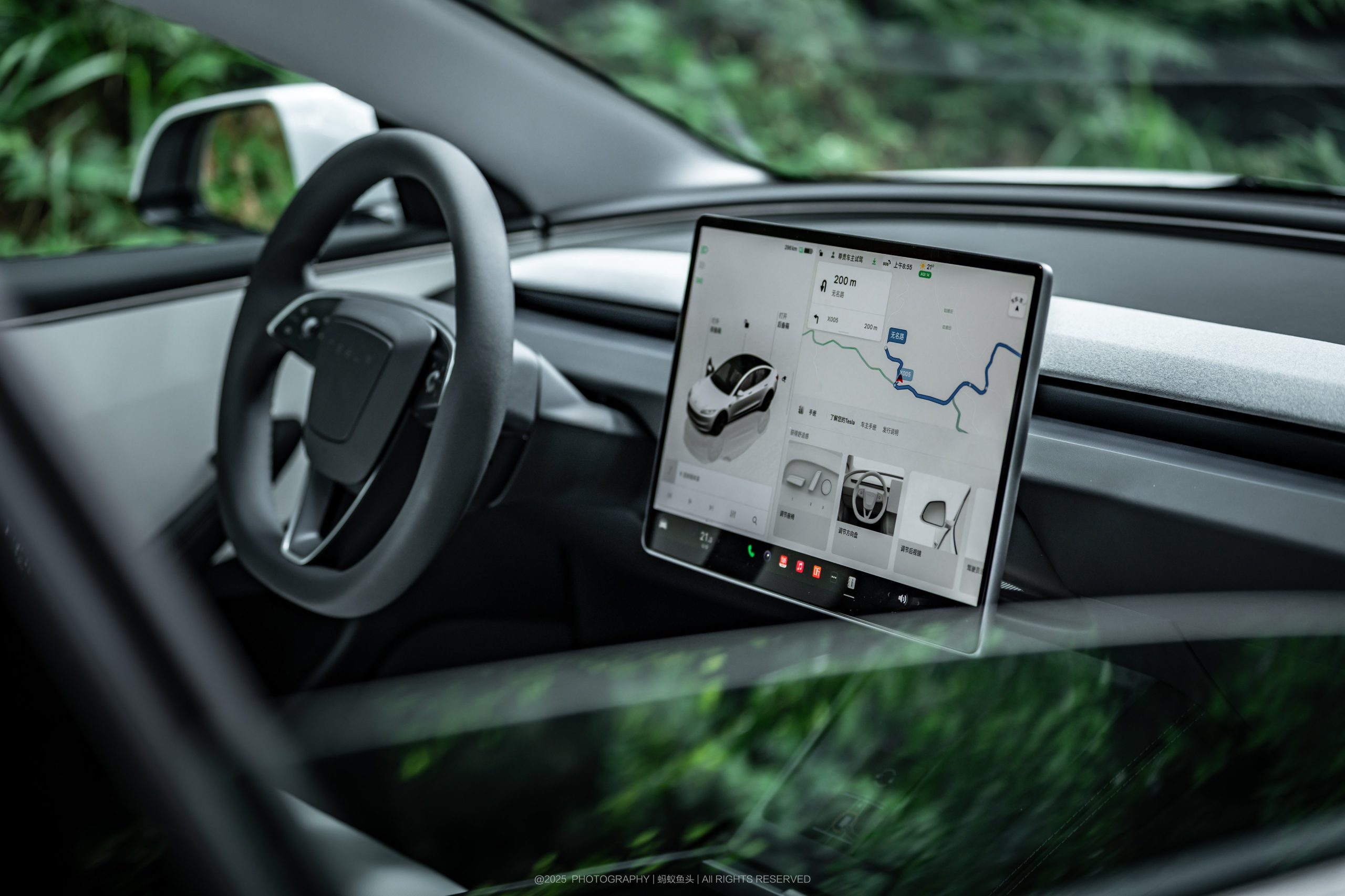
Tesla Full Self-Driving is really good. I have used it for over 76 percent of my driving since FSD v14 launched around this time last year, equating to about 76 percent of my miles using the suite. It’s truly the only way I prefer to travel, but admittedly I save some of the more fun drives for myself.
Even with all of the great things it has done for me, including saving me from being involved in an accident, there are still a handful of things that it needs to improve on. These issues recur from update to update, and while there have been some improvements, they still give me reasons to either soft or hard intervene.
A soft intervention means an adjustment that is needed without disengaging the suite, like manually using a turn signal to change lanes while the car still operates on FSD. What I’d consider to be a “hard intervention” is anything that requires me to disengage the suite altogether, like missing a turn or performing a maneuver I’m uncomfortable with. Of course, some hard interventions will be subjective.
Here are the five things I’d like to see Tesla really focus on through the final versions of v14 and hope to see completely improved with v15.
Speed Limit Recognition and Adjustment
There are entirely too many instances of FSD traveling at a speed that is just totally outrageous. While some of these events can occur on Hurry Mode, I’ve even had issues with it on Standard from time to time, and despite wanting more aggressive maneuvers or a slight bit of urgency, I don’t want to worry about getting a ticket while doing it.
The two areas I notice it the most are in school zones and on local roads. When a Speed Limit changes from 45 to 35, FSD does not always slow down in a way that would appease local law enforcement. On Hurry, 52-55 is pretty standard for a rate of travel in a 45 MPH zone. When it changes to 35, FSD shows zero urgency to slow down to an appropriate speed.
School Zones have been a true pain point, and as recently as last week, I had an issue with it:
Threw FSD into Sloth to see how it handled this school zone. You can see well before I enter it, the car is traveling 34 MPH, one MPH under the limit.
Still not slowing down nearly enough.
@Tesla_AI, not 25, not 30…15 MPH in School Zones https://t.co/YQuQ8ydhKh
— TESLARATI (@Teslarati) September 29, 2026
Realistically, most Speed Limit issues are a soft intervention, as I simply scroll into a slower Speed Profile to get the car to slow down. School Zones are a hard intervention, as they require me to completely take over and travel at the posted 15 MPH limit. Even on Sloth, it simply does not get down to a low enough speed.
Parking
Parking is one thing that has really improved over time, but there are still some pretty considerable hoops Tesla needs to jump through to get it to a point where it can be unsupervised.
Parking preferences seem to be where a lot of these issues will be resolved, as most of my complaints come from the fact that the place FSD chooses to park are usually not where I would personally choose to park. This morning, for example, when I arrived at the gym, FSD chose to park next to a vehicle that was parked with its two tires in the spot that FSD picked.
This is a big reason Parking Preferences with Supervised FSD will be so valuable.
If possible, parking a little further away and being distant from people like this is worth it. https://t.co/3Ac71KQiQ3
— TESLARATI (@Teslarati) June 7, 2026
There were three spots in between that car and the nearest car, so FSD could have chosen the spot that would have given a one-spot buffer between the two vehicles. In a parking lot full of empty spots, don’t be that guy who parks next to a car.
Generally, parking performance is vastly improved from where it was a year ago; I rarely am adjusting how it pulls or backs into a spot on v14.3.10, but in earlier versions, I definitely had my problems. It’s gotten really good since, and this version has been the best in terms of parking performance. It’s more about the places FSD choose to park, and not necessarily the parking itself.
There are also no options or map data to allow you to choose a charger at a place like a grocery store if it offers charging. These are things that are a bit more complex, but they will be needed for unsupervised FSD operation.
Navigation
Navigation was always going to be on this list, simply because it is one of the most inconsistent and mind-boggling things about FSD. Even after a year of intervening, sending voice notes, and overriding decisions, FSD still tries to take me out of my neighborhood the wrong way. You cannot turn left out of my neighborhood’s main entrance and exit, only right. Navigation still prompts a left turn out of my neighborhood’s main entrance and exit, instead of going around the neighborhood and exiting where a left turn is legal.
Tesla rolled out Preferred Routes with the Summer Update, and this has resolved some of the issues. I also found my own personal workaround:
🚨See if this cool Tesla Navigation Hack works for you!
I have used it to get out of my neighborhood legally with FSD, thus enabling completely hands-free drives! https://t.co/DlDsCQjxRI
— TESLARATI (@Teslarati) July 16, 2026
Some of the more mind-boggling things that FSD used to do with Navigation have been remedied, but it is still a frequent complaint for me and many other owners. I’d just like to see it adopt those preferred routes more frequently and maybe learn them a little faster.
Certain Highway Behaviors
Highway travel is the most consistent and perhaps FSD’s best use case. There is nothing better than having FSD handle busy highway traffic or just long, monotonous, and boring drives. I love to use it for my trips to the Flight 93 Memorial where I volunteer. When I drove manually, I chose to get a hotel and stay overnight because it’s about a 2.5 hour drive. FSD lets me make the drive, put in a volunteering shift, and drive home, without much fatigue. I have found that this is where FSD is most valuable for me, personally.
However, there are a few things FSD does on the highway that are just weird.
One thing I’ve had issues with as of late is that there will be times when I’m about a mile from my exit, the car is in the left lane and is traveling faster than the traffic in the cruising late. Instead of completing a pass and then getting over with no traffic ahead, the car will sometimes drastically and suddenly slow down, switch to the slow lane, and get behind a vehicle — all with a mile until the exit. On average, I’ll have around one minute from the time I get to my exit if it’s a mile away, because in most cases, I’m traveling somewhere around 60 MPH on the highway.
There is no reason to not complete that last pass, then get into the right lane, and have an unobstructed path to the exit. This is one of the more strange behaviors I’ve seen it do, and it really does feel like a bug. Here’s an example of it from FSD v14.3.7:
🚨 Tesla FSD v14.3.7 did nearly the exact opposite — nearly 2.5 miles before the exit it got over into the slow lane and got behind much slower traffic.
Now, v14.3.8, anecdotally, waited til the last minute to get off the highway https://t.co/Lc9vAKDyQC
— TESLARATI (@Teslarati) August 29, 2026
I ended up overriding the turn signal and using the accelerator to nudge the car to do what I wanted it to do. There was no reason to get in the left lane and add to the congestion in that lane.
Another thing that FSD does frequently is camps in the left lane, especially on Hurry. Cruising in the passing lane is illegal in Pennsylvania, and I know it is not a crime to do that everywhere. However, it is here, and I really wish the car was a little quicker to get over in the left lane when it’s cruising.
Here’s a pretty drastic example I had just a couple weeks back:
Recognizing Drastic Changes in Road Condition
I think anyone who has ever used FSD knows that potholes are a huge issue, but so are large bumps or sudden changes in road condition. At the intersection of Kreutz Creek Rd. and Rt. 462 in Hellam, PA the roads are nearly set up as a ramp, and going over it at a speed of over 35 MPH can send your head into the glass roof, your butt off your seat, and a brace for the sudden thud that is inevitably coming when you finally touch back down again.
You can see here I tried to change Speed Profiles quickly, but I did it a tad too late:
This is that big bounce that I mentioned in the quoted post.
It’s just a tad too drastic to take at the speed FSD wants to go over it. You can see me quickly swipe down into Sloth, but I intervened. https://t.co/81Oc82ZJcZ
— TESLARATI (@Teslarati) August 2, 2026
There are other roads in my area that should not be taken at even the posted Speed Limit because of the damage it could do to your car. Here’s another, where I disengaged FSD altogether:
🚨 I’ve talked in the past about my struggles with FSD when large bumps or sudden changes in sloping are approaching.
Today I tried switching down into Sloth from Standard but I did it a tad too late and I had to take over. You can see this isn’t a bump you take at 35 MPH https://t.co/f4tK13hsz1
— TESLARATI (@Teslarati) September 6, 2026
The recognition of these bumps is so crucial for two main reasons: they can cause injury, and they can cause damage to the car. These are reasons why the suite is supervised and drivers should remain attentive. I could not imagine going over that bump at an excessive speed if I had back issues, or if I were older.
Potholes are rarely recognized and usually require a lead car to avoid them. I had FSD use a lead car to avoid a pretty sizeable manhole cover a few weeks back:
🚨 Interesting observation on FSD v14.3.8 – Make note of the van in front of me as it swerves out of the way of a sewer cover
FSD followed this behavior, but interestingly did not swerve for the next sewer cover
What do we make of this? https://t.co/RO19941AIP
— TESLARATI (@Teslarati) September 2, 2026
Tesla says that there are improvements coming for potholes, so hopefully that means these bumps will also be recognized consistently.

Tesla ships ‘spooky’ Halloween Mode with creepy and fun features

SpaceX reveals how its 1 Million AI satellite network will work and prevent space collisions


