News
Tesla Model S Plaid with ‘practically alien’ tech unleashed: 1000 hp, lowest drag coefficient, and PS5-level gaming

The Tesla Model S Plaid formally made its debut at the company’s delivery event at the Fremont Factory today. The expectations for the Model S Plaid were high in the days leading up to its first deliveries, particularly as Tesla retired the Model S Plaid+ and raised the Model S Plaid’s base price by $10,000.
“Tonight we’re going to show you the next BEST version of the Model S,” Tesla Chief designer Franz von Holzhausen said at the beginning of the event.
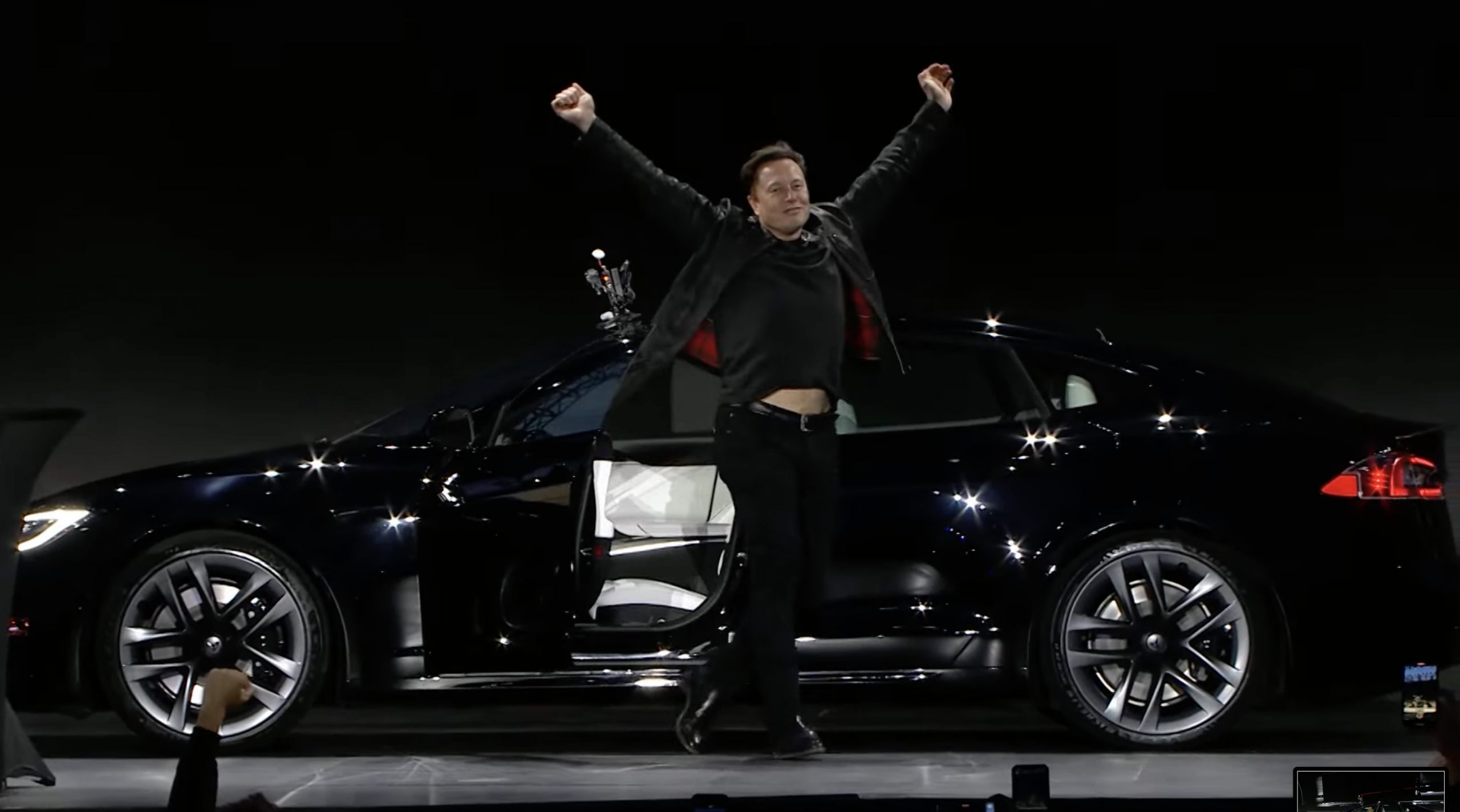
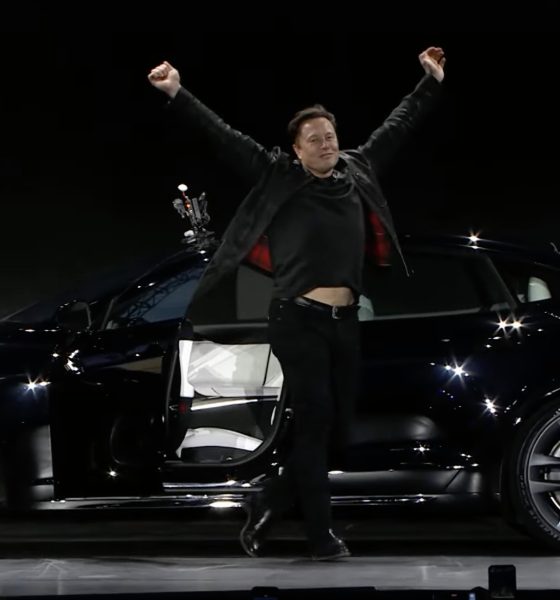
Elon Musk launched the Tesla Model S through the company’s newly finished test track and triumphantly celebrated the Plaid’s arrival on stage. In honor of the event and the new Model S Elon Musk wore a jacket with the plaid design at the back.
-

- (Credit: Tesla)
-

- (Credit: Tesla)
-

- (Credit: Tesla)
-

- Tesla CEO Elon Musk wears a Plaid Mode jacket at the company’s Model S Plaid Delivery Event on June 10th, 2021. (Credit: Tesla)
Below are the official specifications and details of the Model S Plaid.

Give the gift of Tesla upgrades.
Shop for someone else or treat yourself. Get more shopping power with a Teslarati gift card.
Price and Range
When Tesla announced the Model S Plaid during the release of its Q4 and FY 2020 Update Letter, the company listed the vehicle with an estimated EPA range of 390 miles per charge. The Plaid+ variant, which was discontinued, had a range similar to the Cybertruck with more than 500 miles per charge. Elon Musk described the Plaid’s speed as
Tesla also improved the Model S car’s Supercharging speed to 187 miles of range in 15 minutes. This is notable, as the Supercharger Network has now grown to 25,000 stations worldwide.
MODEL S PLAID TEST
At Fremont today pic.twitter.com/FQXXMAXWhU— JPR007 (@jpr007) June 11, 2021
Give the gift of Tesla upgrades.
Shop for someone else or treat yourself. Get more shopping power with a Teslarati gift card.
During the lead up to the flagship Tesla sedan’s deliveries, images of a Model S Plaid test unit’s Monroney sticker made the rounds online. The sticker listed some interesting information, including a range of 405 miles per charge. This is quite a bit higher than the 390 miles originally announced earlier this year, but lower than the 500+ miles of range that was listed for the discontinued Model S Plaid+.
During the event, Tesla officially announced that the Model S Plaid would have a range of 390 miles per charge.
Battery and Electric Motor
Give the gift of Tesla upgrades.
Shop for someone else or treat yourself. Get more shopping power with a Teslarati gift card.
The Model S Plaid was expected to maintain its 18650 battery, but with drastically improved cells. Videos from attendees of the delivery event have shared some videos of the flagship sedan’s battery pack, one of which can be seen below.
https://twitter.com/omg_tesla/status/1403169263251202050?s=20
During the delivery event, Tesla confirmed that the Model S Plaid would feature its most advanced battery to date. Elon Musk highlighted that the vehicle will have carbon-sleeved rotors, the first of its kind. He noted that mixing Carbon (C) and Copper (Cu) is very difficult because they have “very different rates of thermal expansion.”
Similar to other Teslas, the Model S Plaid will feature a single-speed transmission. “It’s single speed from 0-200 mph,” Elon Musk said. He noted that Tesla was able to break the two-second barrier with the Model S Plaid, quite a feat for a four-door production vehicle that seats five passengers. The vehicle can do 0-60mph in under two seconds.
Musk introduced a new and improved heat pump, which he called a HVAC system for the car. “It’s 30% better cold-weather range and requires 50% for cabin heating in freezing condition,” he said. With the use of a heat pump, the Model S Plaid would be capable of running at peak power for extended periods of time. This makes sense considering the that the vehicle was initially honed in the Nurburgring.
Give the gift of Tesla upgrades.
Shop for someone else or treat yourself. Get more shopping power with a Teslarati gift card.
Special Plaid Badge
The Tesla Model S Plaid has undergone a number of key changes over the past months. Previous test units and pre-production Model S Plaid vehicles featured a badge that read the words “PLAID” at the rear, but attendees of the delivery event revealed that the flagship sedan now features a new graphical badge with a plaid pattern, similar to the one seen in the background of the posters for event.
-

- (Credit: @DMC_Ryan/Twitter)
-

- (Credit: @klwtts/Twitter)
-
- (Credit: @DMC_Ryan/Twitter)
-
- Credit: @dealer_of_happy/Twitter
-
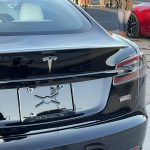
- Credit: @BLKMDL3/Twitter
Updated Yoke Steering
Apart from this, the yoke steering wheel of the Model S Plaid features an updated design that includes ridges on the side. This small change help drivers access the scrollers on the Model S Plaid’s yoke steering wheel through touch, similar to the “F” and “J” keys on the Qwerty keyboard. Drivers should be able to feel the scrollers thanks to the ridges without looking down at the wheel for a safer driving experience.


Lowest Drag Coefficient
Tesla also revealed that the drag coefficient (Cd) of the Tesla Model S Plaid is 0.208, beating the Lucid Air with a drag coefficient of .21, based on tests conducted by Windshear. A few attendees noticed Tesla Model S Plaid vehicles with red and black calipers. Although @klwatts noted that the black calipers were spotted on Model S Plaid test vehicles.
Give the gift of Tesla upgrades.
Shop for someone else or treat yourself. Get more shopping power with a Teslarati gift card.
Tesla Software
“I think engineering that is practically alien,” remarked Musk about the Model S Plaid’s features and details.
Elon Musk also introduced a new UI that will roll out in the next software update or later . It includes a new calendar and routes the vehicle based on the places drivers need to go. At this point in the event, he also finally agreed to add Waypoints for Tesla drivers.
Musk talked a bit about the Plaid’s PS5-level performance for entertainment purposes as well. He revealed a clip of Cyberpunk running on a Model S Plaid infotainment system.
-

- (Credit: Tesla)
-

- (Credit: Tesla)
Safety
Similar to its stablemates, the Model S Plaid was built for safety. Musk noted that the Model S Plaid would be “faster than any Porsche (and) safer than any Volvo.” The CEO also noted that Tesla is looking to make the Model S into one of the safest in the world. “We (Tesla) think we can get the lowest probability of [injury] any car ever tested,” Elon Musk said about the Model S. The NHTSA still has to test the Model S Plaid. however Tesla has a good chance of reaching its goal. Musk emphasized that the NHTSA’s top 5 vehicles with the lowest probability of injuries are Tesla vehicles.
Watch the Model S Plaid’s delivery event in the video below.
Give the gift of Tesla upgrades.
Shop for someone else or treat yourself. Get more shopping power with a Teslarati gift card.
The Teslarati team would appreciate hearing from you. If you have any tips, email us at tips@teslarati.com or reach out to me at maria@teslarati.com.


Elon Musk
Elon Musk makes surprise stop at Giga Shanghai with a message for Tesla’s China team
Elon Musk flew overnight to Giga Shanghai to personally thank Tesla’s China and APAC teams.

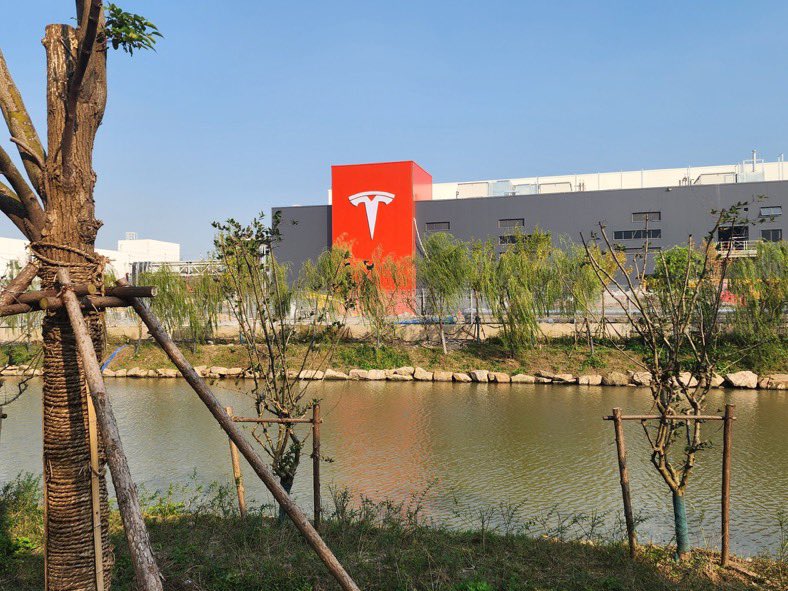
Elon Musk made an overnight stop at Gigafactory Shanghai on Thursday, flying in from Shenzhen to thank Tesla’s China and Asia-Pacific teams in person during a 24-hour trip to China. Tesla vice president Grace Tao confirmed the visit in a Weibo post, saying Musk met employees face to face, praised the Shanghai team’s manufacturing capabilities and execution, and discussed progress on driver assistance and humanoid robots.
Photos from the visit show Musk at the center of a large group of factory workers. “Let’s make the future look like the future,” he told the team, according to posts from the event that Musk shared on X. Attendees also said he urged employees to spend their time and resources on becoming truly useful and building products that matter to humanity, rather than chasing short-term speculation.
The trip was tied to APEC Leaders’ Week in Shenzhen, where Musk traveled as part of President Trump’s Asia delegation. It is also why he joined Wednesday’s New York Times DealBook Summit remotely, writing beforehand, “I will be in China, so it will be digital me.”
Before arriving in Shanghai, Musk met in Shenzhen with Ren Hongbin, chairman of the China Council for the Promotion of International Trade. A CCTV-affiliated account reported that Musk pledged Tesla would keep increasing production in China, though it gave no target or timeline.
Give the gift of Tesla upgrades.
Shop for someone else or treat yourself. Get more shopping power with a Teslarati gift card.
Giga Shanghai remains Tesla’s most productive factory. It shipped 810,889 Model 3 and Model Y vehicles in the first ten months of 2026, up 21.4 percent from a year earlier, according to figures cited by Reuters, and Tesla’s third quarter update lists its installed capacity at more than 950,000 vehicles a year.
Most of that output is now leaving China. Of the 67,829 vehicles Shanghai shipped in October, 59,012 were exports, leaving 8,817 for domestic buyers. Tesla’s China retail sales were down 66 percent from a year earlier that month, the lowest since July 2022, according to CnEVPost.
Musk’s comments on driver assistance will be watched closely by Chinese owners, who are still waiting on a full rollout of Tesla’s supervised self-driving software. Musk said a year ago he hoped for full approval in China around early 2026, but Tesla has not announced a launch date, as Teslarati has reported. The country is also a key test of Musk’s broader pitch: autonomy and Optimus are the businesses he has said will make up the vast majority of Tesla’s future value.

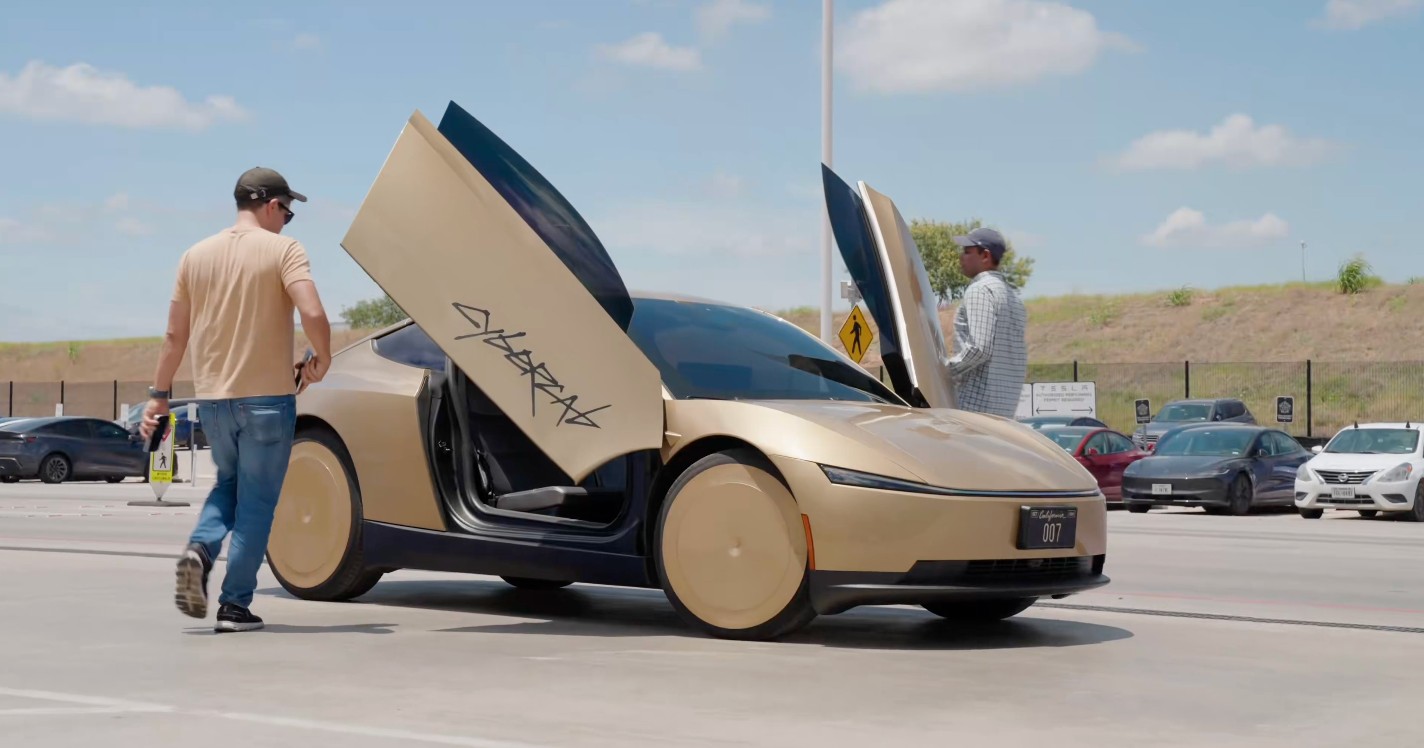
Tesla has opened public rides in its purpose-built Cybercab robotaxi in Dallas, the second U.S. city after Austin to receive the two-seat, steering-wheel-free vehicle.
On November 19, the company made it official with a post stating, “Howdy Dallas. Cybercab has arrived in your city.” Tesla has been teasing the expansion to Dallas for several weeks:
Howdy Dallas
Cybercab has arrived in your city https://t.co/4coXmRuIfz
— Robotaxi (@robotaxi) November 19, 2026
Riders can book through the Tesla Robotaxi app. Tesla had already been operating unsupervised Model Y Robotaxis in Dallas since April, the Cybercab addition brings its dedicated autonomous vehicle into the same network.
App notifications and the official post confirm the service is now available to the public, following a tease the day before and a commitment made on the October 21 Q3 2026 earnings call by AI software chief Ashok Elluswamy that Dallas would be next.
Cybercab rides first began in limited areas of Austin in early September 2026. After an invite-only event on September 3, public hailing started shortly thereafter. The Austin fleet grew rapidly, Musk later noted it had increased roughly tenfold in the first weeks, and the service has operated unsupervised, with hours expanding toward 24/7 coverage.
The vehicle, produced at Gigafactory Texas, features butterfly doors, no pedals or steering wheel, and relies entirely on Tesla’s unsupervised Full Self-Driving software.
Expanding Cybercab beyond Austin is a significant signal for several reasons. It shows Tesla moving from a concentrated pilot to multi-city deployment of its purpose-built robotaxi, validating that the software stack and vehicle-specific data accumulation can transfer to new environments.
Executives have described plans to reach additional cities by the end of 2026, using the same software alongside Model Y Robotaxis.
The move intensifies competition with Waymo, which operates larger unsupervised fleets across more markets, while reinforcing Tesla’s long-term bet on transportation-as-a-service as a core business. Most Cybercabs are expected to remain company-owned for the fleet rather than sold privately, allowing Tesla to control utilization and scale.
Your Tesla could be in the Robotaxi fleet next month, Elon Musk claims
Separately, Tesla has begun inviting select customers to purchase Cybercabs for personal use, with deliveries targeted for December.
Tesla priced the Cybercab $29,990 before taxes with a required $299 monthly Autonomy Subscription, and a $1,000 non-refundable deposit, with initial deliveries focused on Austin. Company leaders have emphasized that customer volumes will start small while the vast majority of vehicles stay in Tesla’s own Robotaxi network.
News
Tesla’s Cybercab fleet just had its biggest day ever
Tesla registered a record 200 Cybercabs in one day, and Dallas could be next up.
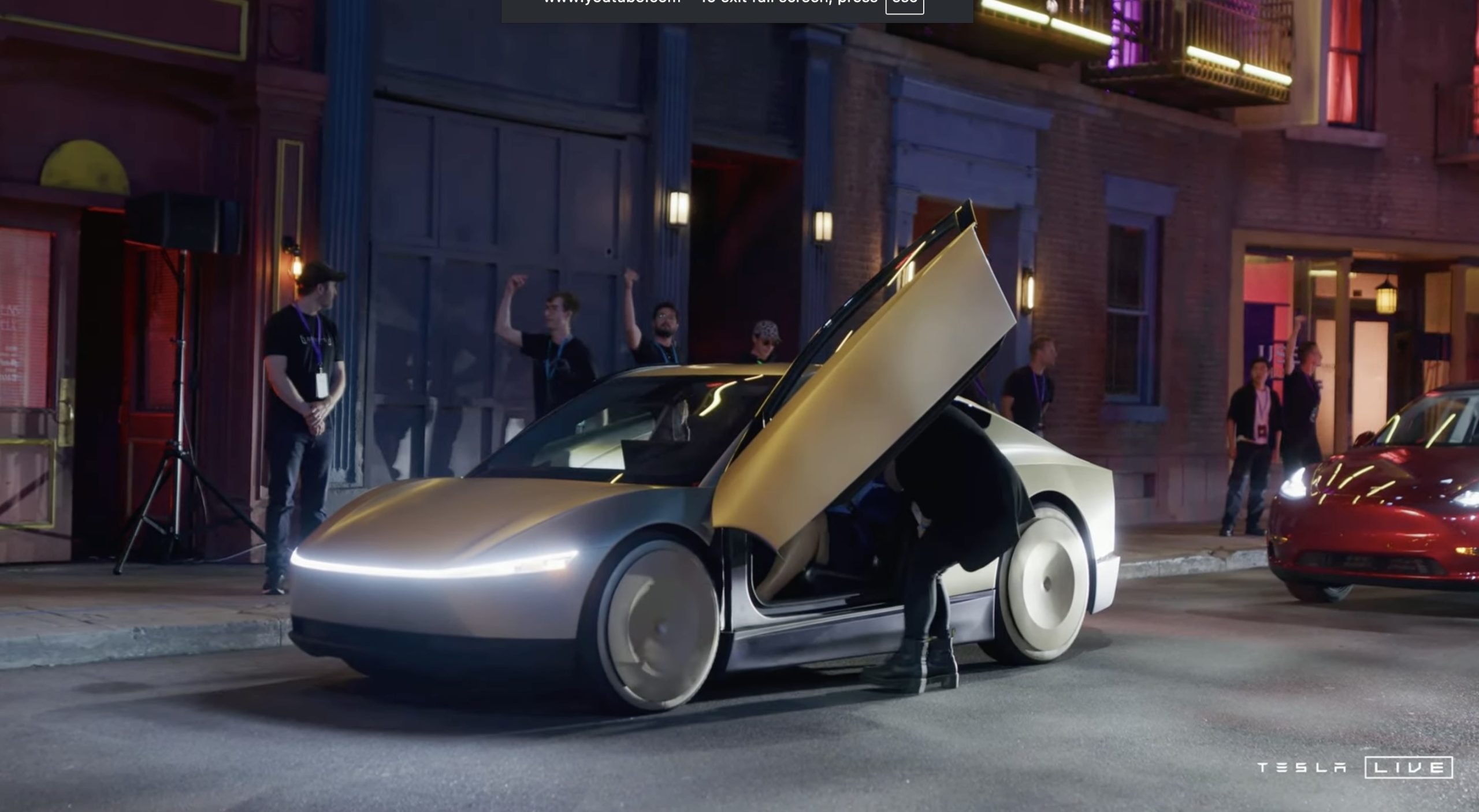
Tesla added a record 200 Cybercabs to its Texas Robotaxi fleet in a single day, pushing the purpose-built two-seater past 750 registered units in the state. The batch landed on the Texas Department of Motor Vehicles automated vehicle register at 3:45 p.m. CT on November 17 and included 200 Cybercabs and one Model Y. Tesla’s Cybercab count had sat at 573 since late October before the jump.
The additions also put Tesla back ahead of Waymo on the register. Tesla now has 1,507 vehicles registered for driverless operation in Texas against Waymo’s 1,321, a lead of 186. Waymo had been ahead by 15 vehicles before the batch arrived. Tesla first passed Waymo on November 10, as Teslarati reported, before Waymo briefly moved back in front.
🚨 There are more CYBERCABS in the Tesla Robotaxi fleet in Texas than Model Y! https://t.co/BdRK2LnnAP — TESLARATI (@Teslarati) November 18, 2026
Cybercabs now make up 51.3 percent of Tesla’s registered Texas fleet, at 773 units against 734 Model Ys. Waymo’s fleet in the state is split between 874 Jaguar I-PACEs and 447 Ojai vehicles.
The register does not say where vehicles will operate, and registration does not mean a car is carrying riders. Still, the timing lines up with Tesla’s plans for Dallas. On the company’s third quarter earnings call in October, AI chief Ashok Elluswamy said, “next month, we’ll be launching in Dallas,” and a video posted over the weekend showed more than 50 Cybercabs parked in rows at a Dallas lot, with more on a car carrier nearby. Tesla has not announced a start date.
Give the gift of Tesla upgrades.
Shop for someone else or treat yourself. Get more shopping power with a Teslarati gift card.
Dallas is already one of Tesla’s busiest Robotaxi markets. Model Y Robotaxis there have run without anyone in the driver’s seat around the clock since November 11, and the city logged 608,130 miles with no safety monitor between January 22 and October 18, second only to Austin, according to Tesla’s first Robotaxi Safety Report. Public Cybercab rides have been limited to Austin since the vehicle joined the service in September.
The fleet growth comes as Tesla shifts more of its factory capacity toward the Cybercab. The company is winding down Cybertruck production at Giga Texas by the end of summer 2027 to make room, and announced this week a €3 billion expansion of Giga Berlin with a new building designed to produce up to 1 million Cybercabs a year starting in 2029, as Teslarati covered.
Some Cybercabs will soon go to private owners too. Tesla began inviting select customers to buy the vehicle for personal use last week at $29,990 with a required $299 monthly Autonomy Subscription, with deliveries targeted for December in the same five Texas cities where Robotaxi operates.

Elon Musk makes surprise stop at Giga Shanghai with a message for Tesla’s China team

Tesla Cybercab without steering wheel and pedals expands public rides to Dallas


