News
Ford F-150 Lightning prevails in two high-intensity towing tests in cold and warm climates

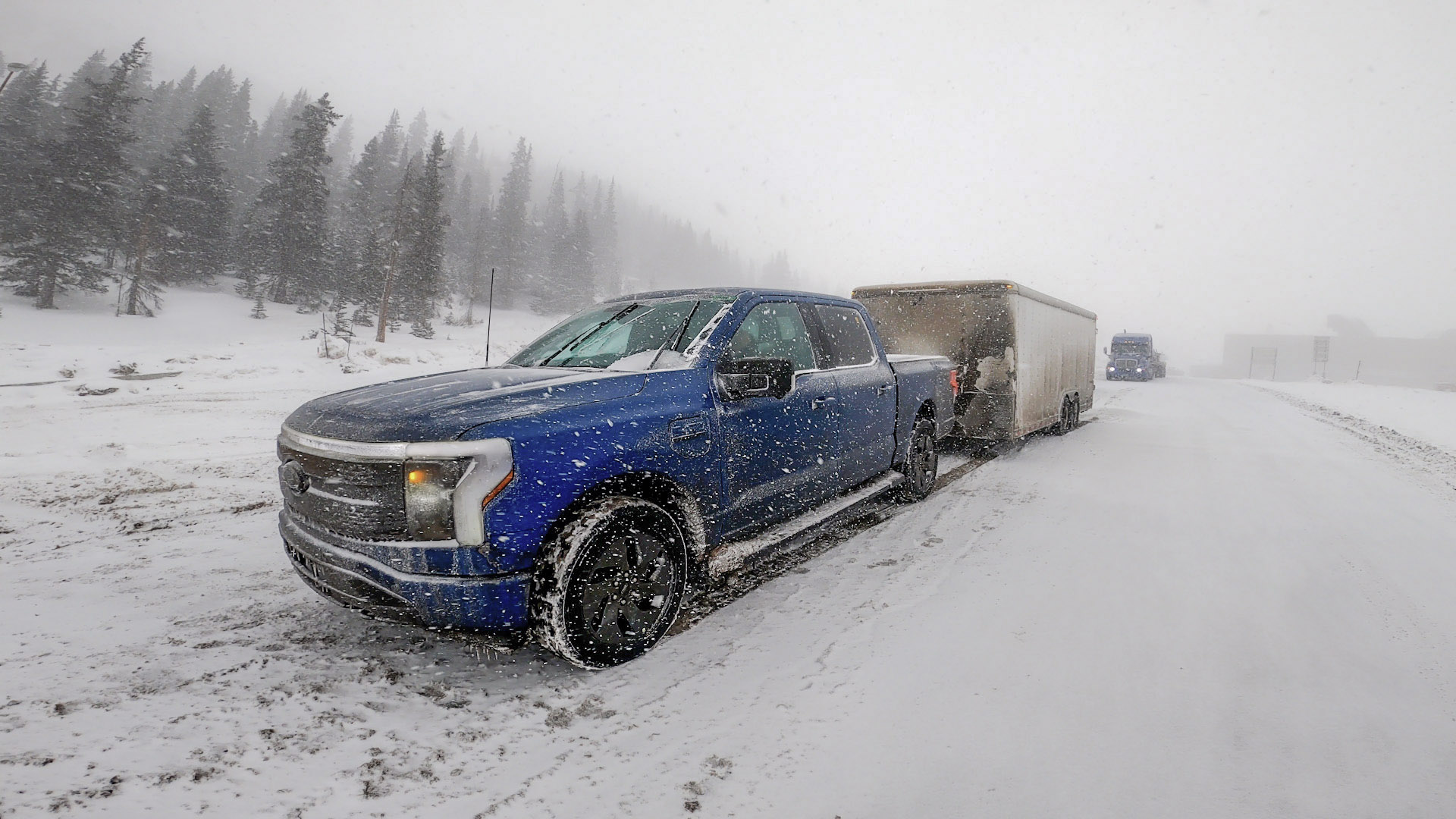
Ford announced today that its new F-150 Lightning all-electric pickup truck recently completed two grueling, high-intensity towing tests in various climates to fully assess the vehicle’s performance and capabilities while hauling. The 10,000-pound towing test revealed several strong suits, including the capability to perform under various climate settings.
However, customers will want to know what effect towing and the climate limitations had on the range, as the company recently confirmed its EPA-rated range ratings for several variants of the F-150 Lightning. Ford said it would release this information “in due course.”
Ford took the F-150 Lightning and 10,000-pound loaded trailers to Colorado’s I-70, which recorded its coldest day in February in Boulder in 123 years as temperatures sunk to -2° F near the Eisenhower Tunnel. This route was eight miles long, and ascends at a 7 percent incline to a maximum elevation of 11,158 feet.
Ford F-150 Lightning Range, efficiency revealed in Monroney sticker leak
To test the other side of things, Ford also tested the all-electric F-150 Lightning along State Route 68 between Las Vegas and the Hoover Dam. This route ascends from 550 feet to 3,500 feet in 11.4 miles, making for a grueling test of any powertrain, let alone one that is towing 10,000 pounds behind it.
Ford engineers completed the two tests in part of the F-150 Lightning’s development, which has gone on for “hundreds of hours” with towing alone.
While the tests show the incredible toughness of the trucks, which never was really in doubt due to Ford’s decades of expertise and its recognition as the leading manufacturer of pickups in the United States, the tests missed a critical piece of information: range.
Whether hauling snowmobiles to the cabin in the dead of winter or the pontoon to the lake in the dogdays of summer, the 2022 F-150® Lightning™ is tested to have customers covered. To help prove it, Ford engineers took the first all-electric F-Series to two of America’s toughest real-world towing routes during development – Davis Dam in the summer and TFLTruck’s Ike Gauntlet™ in the winter.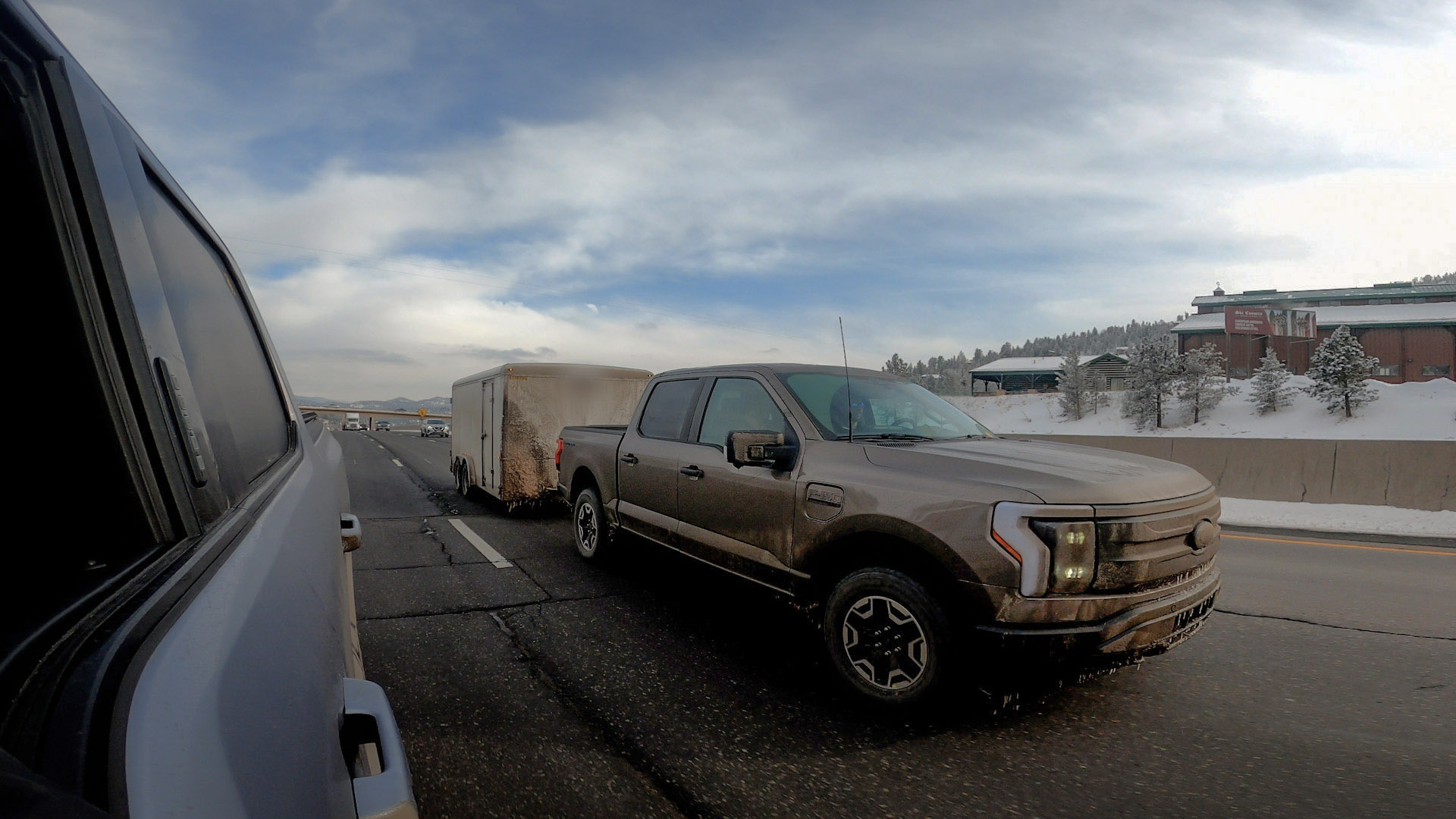
Towing is an extremely stressful test for any powertrain, but in electric vehicles, it contributes to significant loss of driving range due to the additional energy needed to pull. In the past, Tesla towing tests have revealed significant range losses, an understandable barrier due to the nature of the job. However, Ford’s testing in an extremely cold climate while towing would likely show major range loss, as frigid temperatures only hurt range, even when towing is not the task at hand.
A Ford spokesperson told Teslarati there was no information available on the tests’ effect on the F-150 Lightning’s range at the current time, but more information would be released in due course.
Last week, Monroney stickers from several Ford F-150 Lightning variants were released. The F-150 Lightning Base Pro Series had 230 miles of range, according to EPA estimates. Meanwhile, the Platinum Series with the extended range battery pack had a range rating of 300 miles. Ford later confirmed these range estimates in a statement.
I’d love to hear from you! If you have any comments, concerns, or questions, please email me at joey@teslarati.com. You can also reach me on Twitter @KlenderJoey, or if you have news tips, you can email us at tips@teslarati.com.


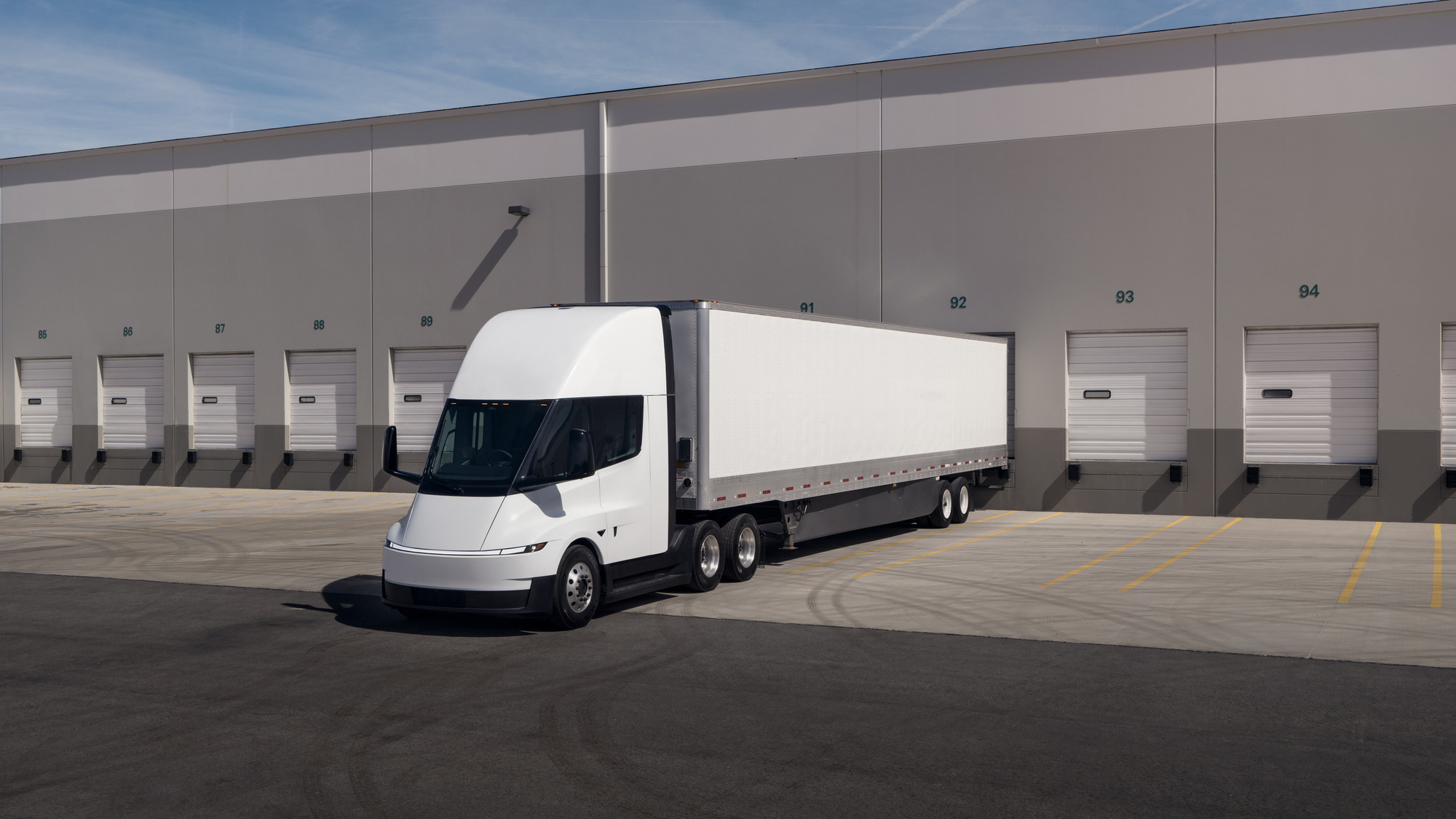
Tesla has snagged a deal with IMC Logistics to supply the company with 50 Semi units for its logistics operations.
IMC handles drayage and landside logistics and has over 2,700 asset trucks in its fleet. In its over forty years of service, it has established more than 50 locations across the United States and spans operations from coast to coast.
Jim Gillis of IMC said that the addition of the Tesla Semi will help IMC move toward a “zero-emission service for long-haul lanes.”
The move is one that has become more common over the past few years, as more and more companies doing large-scale logistics have moved to sustainable powertrains, using either Tesla or others.
🚨 IMC Logistics announced that it will add 50 Tesla Semis to its fleet https://t.co/ymh1Ca2IuX
— TESLARATI (@Teslarati) October 5, 2026
Tesla’s Semi program just entered its first truly public phase, as the company handed over its first production units to companies in September, although a pilot program with companies like PepsiCo. and Frito-Lay has been ongoing for years.
IMC announced its intention to purchase 50 Semi units from Tesla in September, and according to VP of Marketing and Public Relations on September 29 to Trucking Drive, the company will take delivery either this week or took delivery late last week.
With surging prices of diesel and high logistics costs, Tesla and the Semi could truly revolutionize how companies manage their fleets. With the advent of Full Self-Driving, the Semi will potentially cut down on driver fatigue and increase productivity, while decreasing the cost of operation per mile by being cheaper to refuel.
Tesla had a dedicated Semi handover event at the Semi factory in Sparks, Nevada, a few weeks back, as it officially introduced its truck to many company fleets that have been waiting to add these sustainable powertrains.
Lifestyle
Tesla wins over Netflix’s Selling Sunset star, who’s now ditching his Bentley
Selling Sunset’s Jason Oppenheim swapped his Bentley for a Tesla and promised ten for employees.

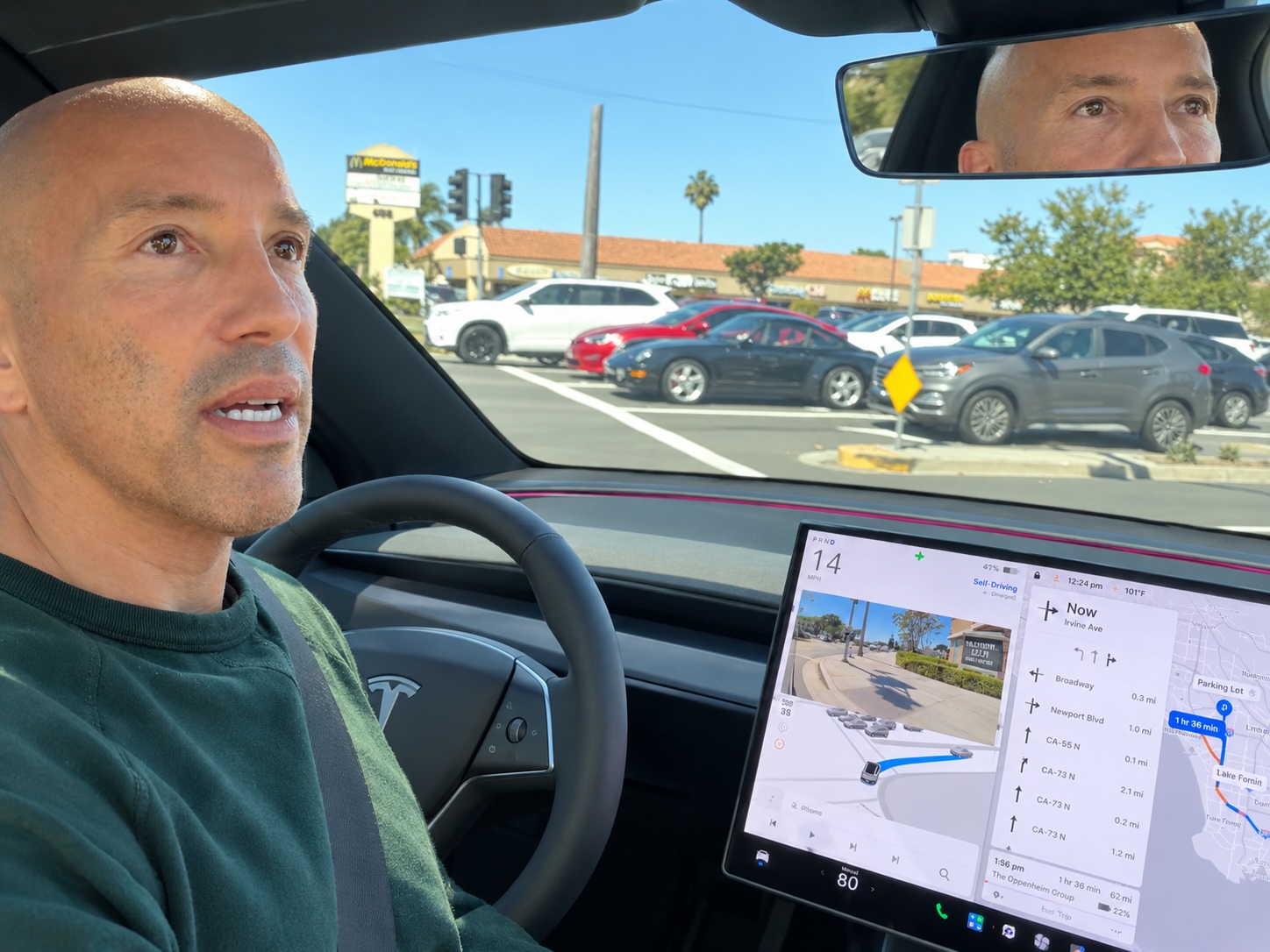
Jason Oppenheim, the luxury real estate broker best known as the star of Netflix’s Selling Sunset, has parked his Bentley for good and moved into a Tesla Model Y, and he says Full Self-Driving (Supervised) is the reason.
Oppenheim, who founded The Oppenheim Group, the Los Angeles brokerage at the center of the show, posted a video to X on Saturday evening that he called “the most important video I’ve ever posted.” In it, he rides from Newport Beach to his firm’s Los Angeles office, a trip he put at roughly an hour and 15 minutes, while FSD handles the drive and parks the car without him touching the wheel or the accelerator. He said he handed the Bentley to his father because he no longer has any use for it.
Tesla shared the clip from its main account on X about two hours later, pulling out the quote that has since spread well beyond the Tesla community:
“[FSD Supervised] is life-changing. I was on the phone with my brother last night, and I made him buy one. He literally bought one while we were talking. I’m buying 10 of my employees a Tesla with FSD. It’s 8x safer than the average driver. There’s nothing more important than the safety of you and your loved ones.”
Oppenheim was candid about why the safety pitch landed with him. He admitted in the video that he is a distracted driver who answers emails and texts behind the wheel, and framed the employee purchases as a way to keep his team off their phones while driving. Elon Musk posted “Tesla FSD feels like magic” less than half an hour after the video went live.
The endorsement lands at a convenient moment for Tesla. The company delivered 486,532 vehicles in Q3, beating Wall Street’s estimates and marking its best quarter ever without the $7,500 federal EV tax credit.
A public service announcement. https://t.co/NYa1IpKwBX
— Jason Oppenheim (@OppenheimJason) October 4, 2026
Tesla FSD has been subscription only in the U.S. since February at $99 per month, and Tesla said in its Q2 update that active subscriptions hit 1.48 million, up 56 percent year over year, with more than 55 percent of new North American deliveries leaving with FSD attached. That attach rate is the figure Ron Baron cited last month when he told CNBC “the time to buy the stock is now.” At current pricing, Oppenheim’s 10 employee cars alone would add $990 a month, or about $11,880 a year, in FSD revenue.
Tesla AI head Ashok Elluswamy said in July that FSD had logged more than 12 billion miles while going roughly twice as far between collisions as manual driving. FSD also remains a supervised system, so Oppenheim and his employees are still required to watch the road, even as Tesla rolls out v14.3.10 with Automatic Collision Evasion, which can steer or brake on its own to avoid a frontal crash.
Elon Musk
Elon Musk follows Trump’s lead, says a SpaceX name change is coming
Elon Musk says SpaceXAI will become SpaceXSI, marking its second rebrand in under three months.
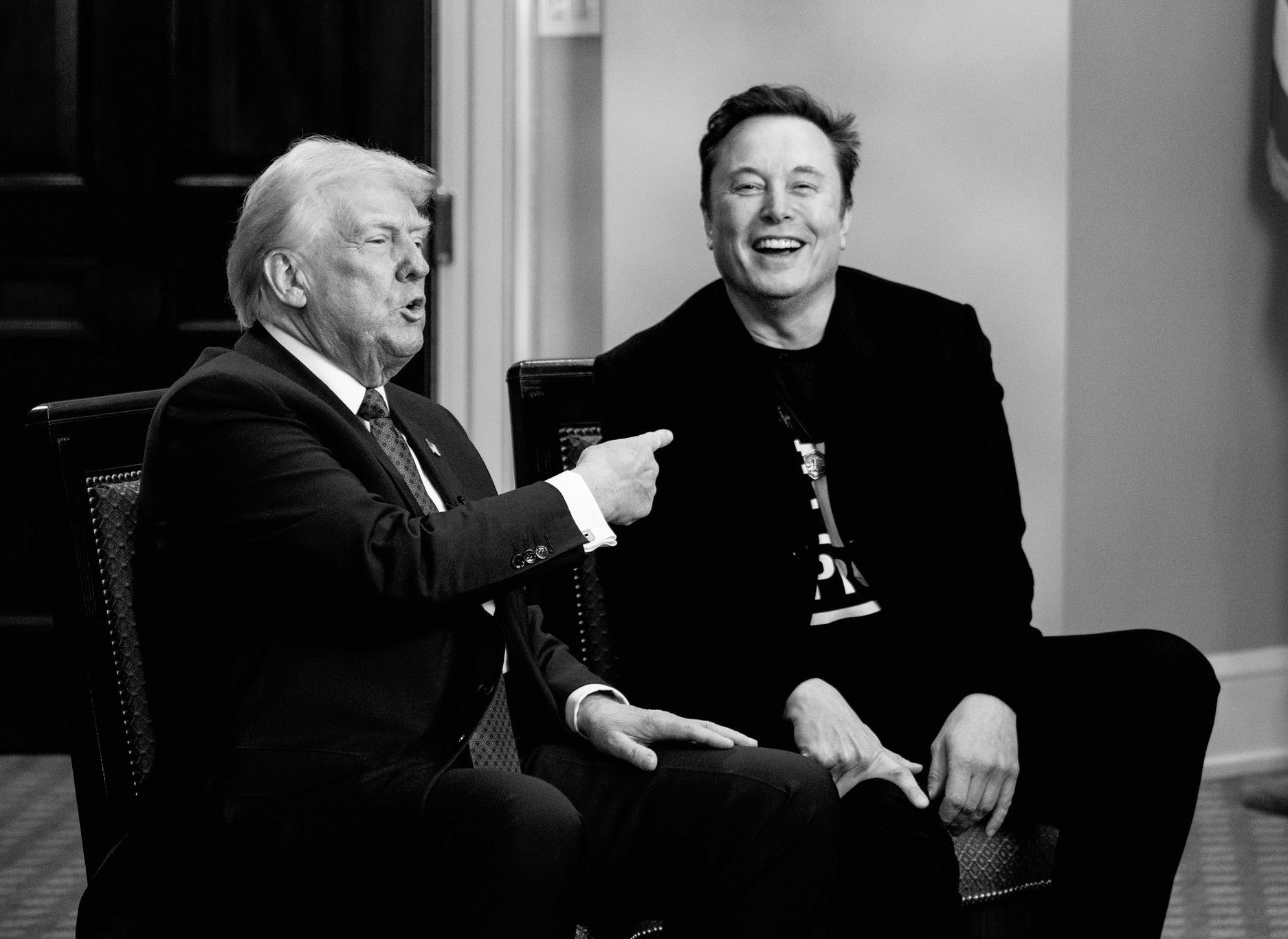
Elon Musk wants to rename his artificial intelligence company again, less than three months after its last rebrand.
In a string of posts on X early Sunday morning, Musk wrote “No more AI,” followed by “SI” and “It’s better.” He then added, “SpaceX is a super intelligence company.” When a user asked whether SpaceXAI could become SpaceXSI, Musk replied, “Yes, we will make that change.”
The posts extend a terminology push that began at the White House last week. On September 29, President Donald Trump signed an executive order directing federal agencies to replace “artificial intelligence” and “AI” with “Super Intelligence” and “SI” on government websites, policy documents and press releases. The same day, Musk sat beside Trump as the heads of the largest AI companies signed a voluntary safety accord, as Teslarati reported. Speaking to reporters afterward, Musk caught himself mid sentence: “I think it is worth highlighting the positive benefits of A.I. … S.I., pardon me.”
Elon Musk and Trump are closer than ever, and Tesla could be the big winner
SpaceXSI would be the third name for the business since February. SpaceX acquired xAI on February 2 in a deal that valued the combined company at $1.25 trillion. In May, Musk said xAI would be dissolved as a separate company, and on July 6 the division adopted the SpaceXAI name and a new logo that placed the xAI letters inside the SpaceX identity.
Musk gave no timeline. He did not say whether SpaceXSI would be a legal name change or a branding update, whether the @SpaceXAI handle on X would change, or how the shift would apply to products like Grok. The company had not issued a formal announcement as of Sunday morning.
The change would reach well beyond a chatbot. SpaceXAI now houses Grok, the X platform, the Colossus training clusters in Memphis and the coding tool Cursor, which SpaceX acquired in August. It also runs the orbital compute effort SpaceX is building around Nvidia hardware, which Musk said during the company’s first earnings call would be exclusive to Nvidia.
It’s unclear if rivals like Anthropic, OpenAI, Google, Meta and Nvidia have plans to also rename their companies or products. OpenAI CEO Sam Altman has continued to say “AI” in public, while Nvidia CEO Jensen Huang has gone partway, describing data centers as “super intelligence factories.”
The rename would also line up SpaceX’s AI branding with the federal government’s language as Musk takes on a new advisory role at the Pentagon, where he is helping lead the Project Meridian study on the future of warfare.

Tesla snags Semi supply deal with major logistics firm

Tesla wins over Netflix’s Selling Sunset star, who’s now ditching his Bentley


