News
Tesla Cybertruck spotted in California with tonneau cover, tailgate opening

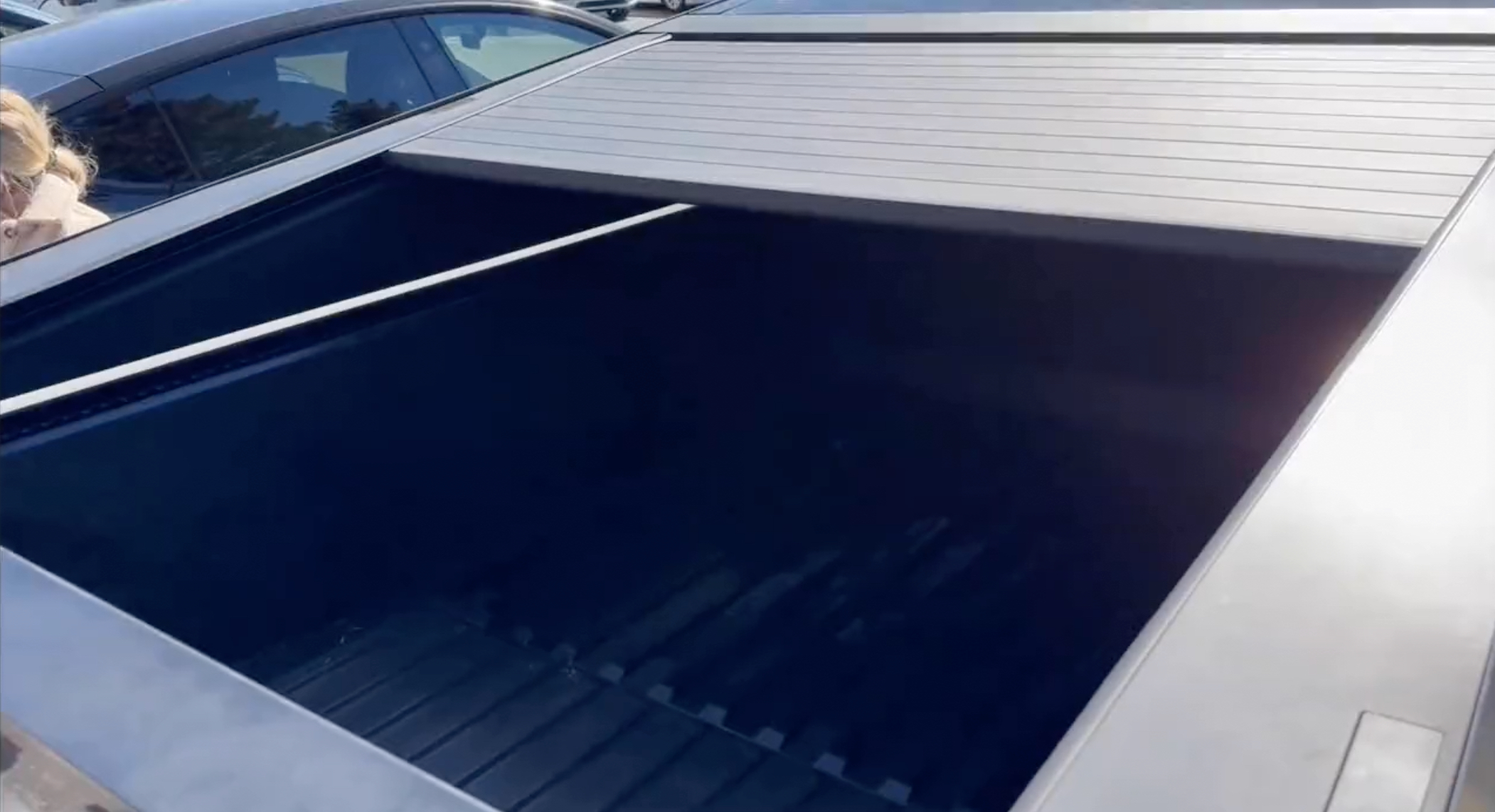
Several Tesla Cybertrucks have been spotted over the past few months, but new footage from a sighting in California over the weekend offers unique close-up looks at the electric pickup’s bed, tailgate and tonneau cover.
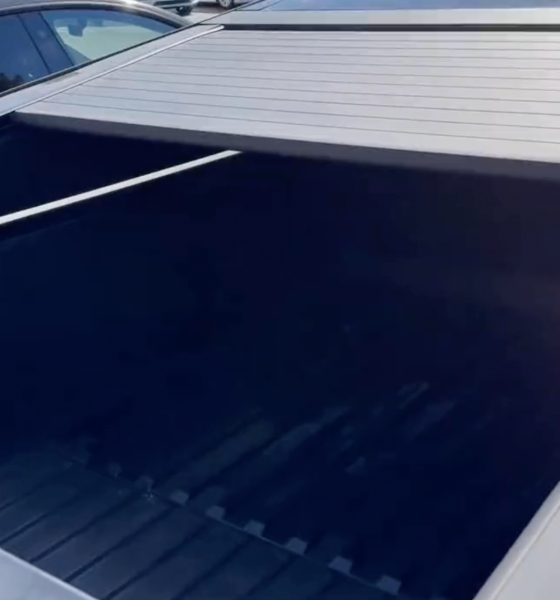
Bill from Tesla Owners Silicon Valley spotted a Cybertruck release candidate in Monterey on Sunday, as seen in a photo and video later shared by X user omg_Tesla/Rivian. In the video, you can see the Cybertruck’s tonneau cover being retracted, and you can also see the truck’s vault bed with the tailgate down.
The footage also shows the removable panel housing a sub-bed storage space, though it isn’t seen being removed in the shots. Interestingly, you can also hear the sound of the tonneau cover closing in the video as Bill asks if the driver can put the tailgate down.
Watch the full 50-second clip of the Cybertruck bed below.
Cybertruck spotted by Bill @teslaownersSV member in Monterey with tonneau cover opening and tailgate dropping pic.twitter.com/9iwLS9SBDx
— OMG_TESLA/RIVIAN (@omg_tesla) October 29, 2023
Like many of the Cybertrucks that have recently been seen, the vehicle includes a Texas manufacturer license plate and the “RC” and “RC Build Engineering Prototype” decals seen on many of those spotted in recent months.
The news comes after Tesla announced plans to hold a Cybertruck delivery event at Gigafactory Texas on November 30, as detailed in the automaker’s recent Q3 earnings call. It also comes after Cybertruck release candidates have been seen on public roads many times in the last couple of months, stoking excitement for initial deliveries of the highly anticipated electric pickup.
The Cybertruck has been seen with a number of interesting add-ons, including body wraps and a set of cargo racks that run across the truck bed. After it was confirmed that the Cybertruck would feature 800-volt charging architecture, the vehicle was also spotted charging at one of Tesla’s high-speed V4 Superchargers last week.
Despite the many sightings, Tesla still has yet to share official prices for the Cybertruck, nor has the company released any of the vehicle’s specs.
Tesla Cybertruck VIN Decoder goes live, revealing configurations and weight
What are your thoughts? Let me know at zach@teslarati.com, find me on X at @zacharyvisconti, or send your tips to us at tips@teslarati.com.




Tesla’s Full Self-Driving (Supervised) is heading to Czechia after the Czech Ministry of Transport recognised the Dutch RDW’s provisional type approval, making the country the seventh EU member state to clear the system for public roads. Tesla Europe announced on 21 September 2026 that “FSD Supervised is now approved in Czechia” and that rollout “will begin soon.”
The decision marks a notable reversal. Earlier in 2026, Prague had declined to automatically recognise the Netherlands’ April approval, citing concerns over speed-limit compliance, traffic-sign recognition and driver-attention monitoring, and arguing that a coordinated EU approach was preferable. Officials said months of expert review, talks with Tesla and other member states, and real-world data from countries already using the system resolved those issues.
🚨 Tesla FSD heading to Czechia 🇨🇿 pic.twitter.com/mkzlM9QjrB
— TESLARATI (@Teslarati) September 21, 2026
“Safety remains the top priority,” the ministry stated.
FSD Supervised remains a Level 2 driver-assistance system: the driver must stay engaged and is legally responsible. Eligible vehicles need AI4, the company’s most up-to-date hardware version. Tesla is expected to push the feature over the air in the coming days, following the pattern seen after earlier national approvals.
Europe’s rollout began when Dutch regulator RDW issued a provisional EU type approval on 10 April 2026 after extensive testing. Mutual recognition then produced a rapid cascade: Lithuania (20 May), Estonia (29 May), Denmark (9 June), Belgium (10 June) and Slovenia (7 September). Czechia now completes that list of seven.
The approvals cover only a modest share of the EU population, but they add political weight ahead of a 6 October vote by the Technical Committee on Motor Vehicles. A qualified majority, at least 15 of 27 member states representing 65 percent of the EU population, could open the remaining markets, including large ones such as Germany, France, Italy and Spain that have so far preferred to wait for a bloc-wide decision.
For Czech Tesla owners, the immediate prize is access to the same supervised highway and city driving already available in the other six countries. For Tesla, each new market generates additional European driving data and strengthens the case that FSD Supervised can operate safely under the continent’s varied road rules. The Czech approval is therefore both a local milestone and another incremental step toward a wider European launch.
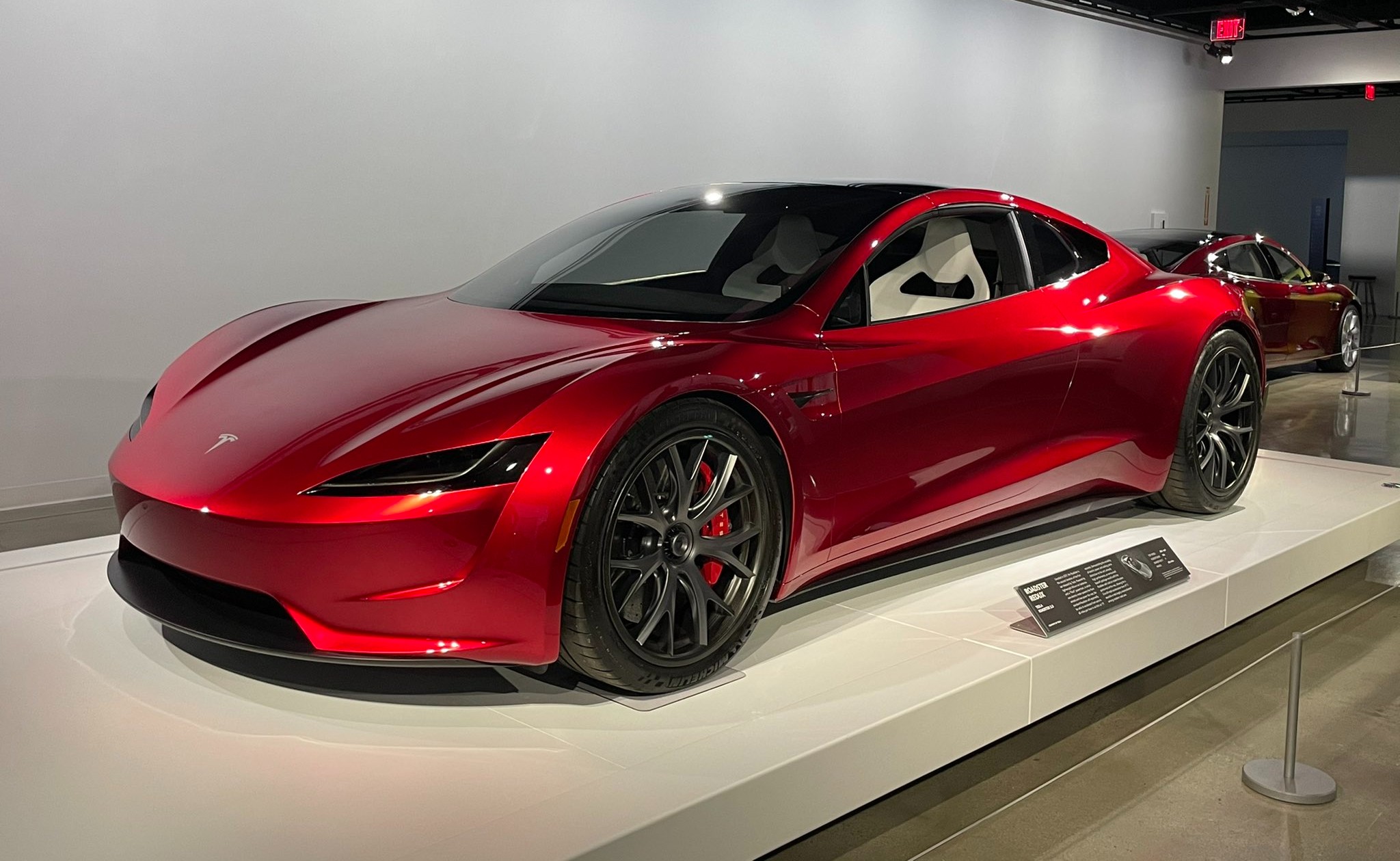
The Federal Aviation Administration (FAA) has established a Temporary Flight Restriction over SpaceX’s McGregor, Texas, rocket development and test facility, a move widely viewed as preparation for Tesla’s October 1 Roadster reveal. The restriction took effect September 18 and runs through October 2.
NOTAM FDC 6/3825 covers a 1.5-nautical-mile radius around the site near Waco and extends from the surface to 10,000 feet above ground level. The FAA cited hazards under 14 CFR 91.137(a)(3) and barred aircraft and drones from the zone. Tesla’s invitation to reservation holders already placed the event in Waco, about 20 minutes from McGregor, making the timing and location more than coincidental.
A TFR has appeared around SpaceX’s McGregor Testing Site up to 10,000ft and runs through until the 2nd of October 👀 pic.twitter.com/rcZ4p4JkLm
— Niall Anderson (@INiallAnderson) September 18, 2026
What stands out is the altitude. Typical recent TFRs at McGregor for engine static fires and component tests have used far lower ceilings, often around 2,000 feet. Raising the limit to 10,000 feet is unusually high even compared with some Starbase restrictions and signals operations that go beyond a standard ground-level engine test.
That extra airspace has fueled speculation about the long-promised SpaceX Package for the Roadster. Elon Musk has described cold-gas thrusters that could deliver sub-one-second 0-60 times and, more dramatically, brief lift-off. Reports earlier this year indicated Tesla planned a remote-controlled demonstration at McGregor in which the car would leave the ground with no one inside; spectators kept hundreds of yards away because of the noise.
The 10,000-foot envelope would give operators a large safety buffer even if the vehicle only hovers a short distance.
Tesla has not confirmed a flight demo. The company has only used the phrase “Go for launch” and posted a teaser image of the car on what looks like a launch pad. The TFR itself mentions only hazards. Still, closing airspace this high and this close to the reveal date strongly suggests the event will include more than a static display.
Whether the Roadster actually hovers on October 1 remains to be seen. What is certain is that the FAA has cleared a large vertical slice of Texas sky for whatever Tesla and SpaceX intend to show. Reservation holders heading to Waco will be among the first to find out if the car can do more than drive.
Elon Musk
Elon Musk drops a surprise update on Boring Company’s next big dig
Musk says Boring Company could shrink the Austin to San Antonio drive to just minutes.

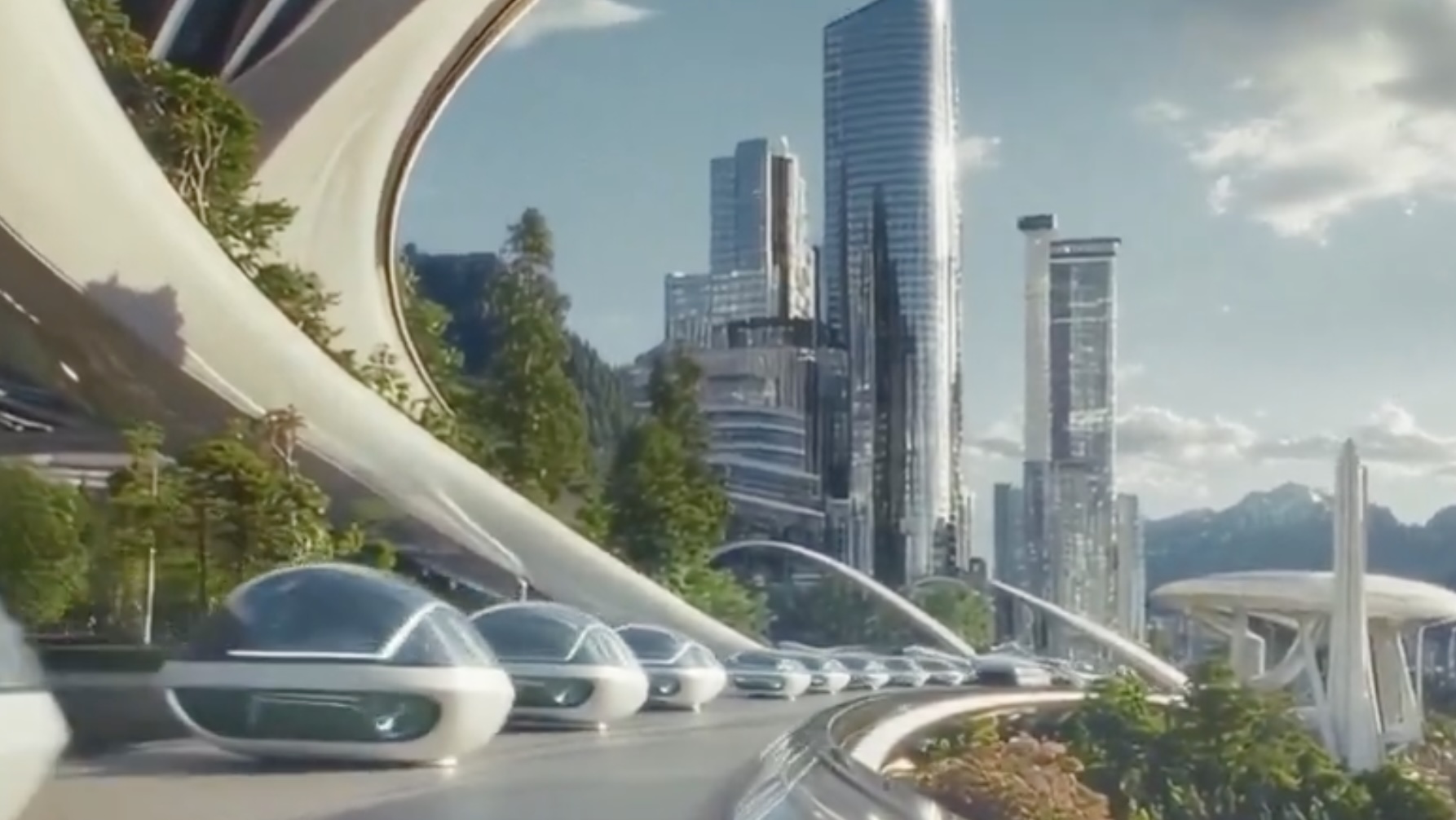
Elon Musk says The Boring Company is working on what he called “a simple, precursor Hyperloop” tunnel connecting Austin and San Antonio, targeting speeds above 200 mph and cutting a drive that can take up to two and a half hours down to a consistent under 30 minutes. Musk posted the idea on X Sunday, in a reply to a repost of an AI generated video imagining a science fiction future with human colonies on other worlds, which he shared with the line “This is the future we shall bring into being.”
This is the future we shall bring into being pic.twitter.com/8aD0w8MDVc
— Elon Musk (@elonmusk) September 20, 2026
The Boring Company’s own account picked up the idea in the same thread, adding a detail about how the trip would actually work: “Because Loop/Hyperloop is express (i.e. no intermediate stops), one could travel from an Austin parking lot to a favorite San Antonio restaurant in about 30 minutes. As long as they both have Loop stations.” That framing ties the proposed intercity link to the same station model the company already runs in Las Vegas, where riders enter the tunnel network through small, garage style stops rather than one central terminal.
This is not the company’s first run at the Austin to San Antonio corridor. Boring Company floated tunnels between the two cities as far back as 2021, and later competed for a separate San Antonio Loop project tied to the airport before that specific bid stalled. Pitches for tunnels in Chicago, Los Angeles, and a New York to Washington corridor have followed a similar pattern of big announcement without a shovel in the ground.
What is different this time is the balance sheet, especially since The Boring Company closed a 3 billion dollar funding round led by investors in the United Arab Emirates earlier this month at a valuation near 23 billion dollars, giving the tunneling company more capital to chase speculative projects than it had during its earlier Texas pitches. The company is also mid-build on two other intercity systems it has actually broken ground on, inc;luding a Nashville tunnel linking downtown to the airport, where a second boring machine finished commissioning in June, and its Las Vegas network, where the station count keeps climbing on paper faster than tunnels get dug.
That gap between announcement and execution is the reason to treat Sunday’s post as an opening bid rather than a project. A tunnel spanning roughly 80 miles between two metro areas, running at speeds Boring Company has not demonstrated over any real distance, would dwarf anything the company has built. For now, the Austin to San Antonio Hyperloop exists as a caption under an AI generated space video.

Tesla Full Self-Driving expands to another European country

Tesla Roadster event requires restricted airspace, and the FAA obliges


