Tesla
Elon Musk companies under scrutiny in the EU
The EU Commission was requested to look into funding for Musk’s companies as Trump’s tariffs loom.

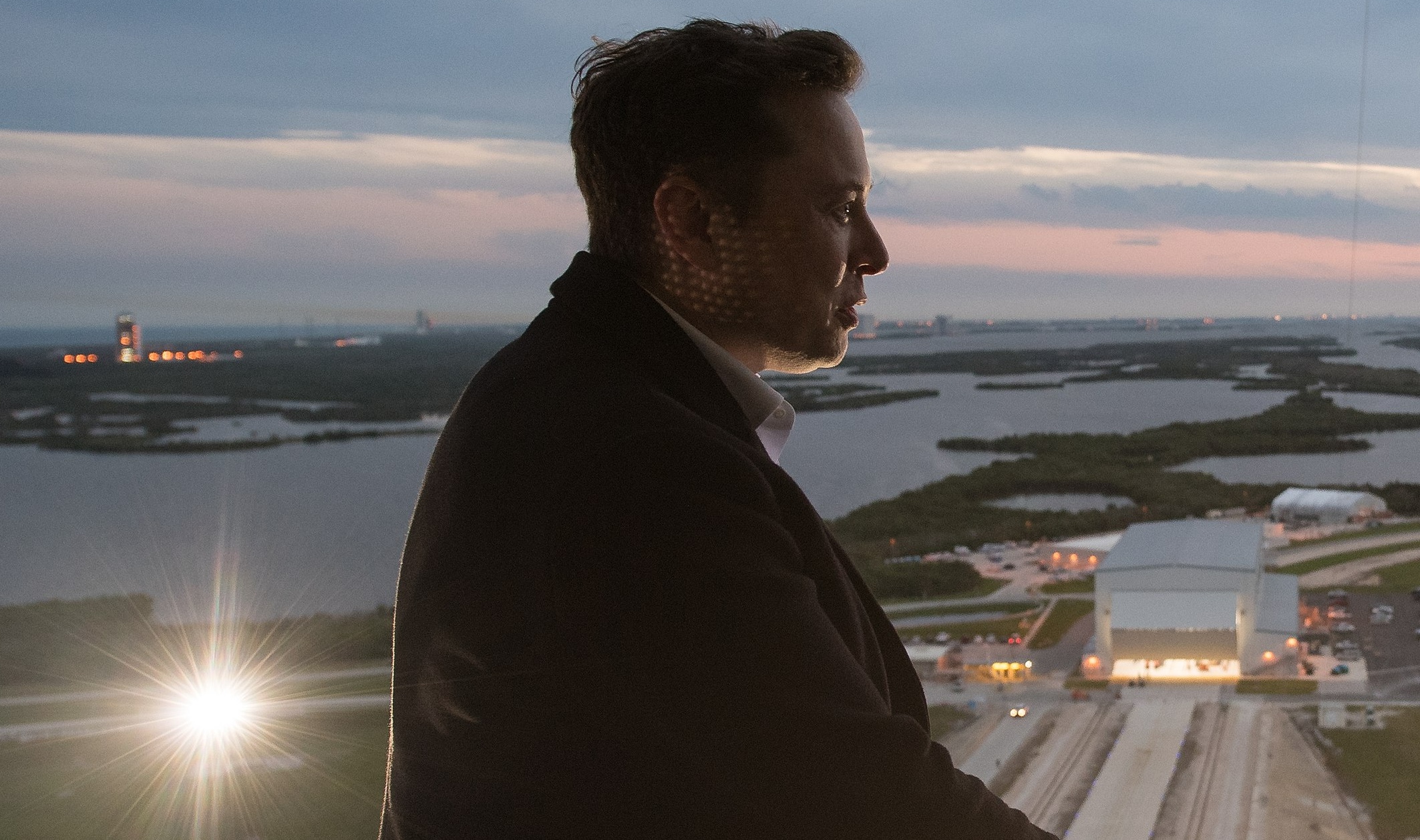
Elon Musk-led companies are under scrutiny in Europe (EU) as tensions continue to rise between the bloc and the United States.
Germany’s Green EU lawmaker Daniel Freund sent a letter to the European Commission requesting “a detailed list of EU funding allocated to companies owned or controlled by Elon Musk” in the past five years. The list reportedly includes some of Musk’s well-known companies, including SpaceX, Tesla, X, xAI, and Neuralink.
Trump’s Tariffs & Europe
The scrutiny on Elon Musk’s companies comes after U.S. President Trump implemented his tariffs on specific goods from Mexico, Canada, and China. A second wave of Trump’s tariffs will come in April and are expected to affect Europe.
According to Reuters, many European companies were not directly affected by Trump’s first wave of tariffs. However, they are now scrambling to adapt to Trump’s tariffs with their operations in North America in mind. European companies are also bracing for Trump to implement a 25% reciprocal rate on EU goods.
Elon Musk in the Middle
Looking into Elon Musk’s companies that received funding from the EU seems to be a way for Europe to negotiate with the Trump Administration regarding tariffs.
“Trump’s MAGA crowd, including Musk, have the clear aim to weaken or even destroy the EU. So we should have a very close look at the EU funding we provide to them. For me it’s clear: the EU should not give millions to people that want to destroy it,” Freund commented.


 BLACK FRIDAY DEALS
BLACK FRIDAY IS HERE.
YOUR TESLA DESERVES AN UPGRADE.
Now is the time to upgrade your drive. Discover exceptional deals on premium Tesla accessories, interior protection, storage, styling and everyday essentials.

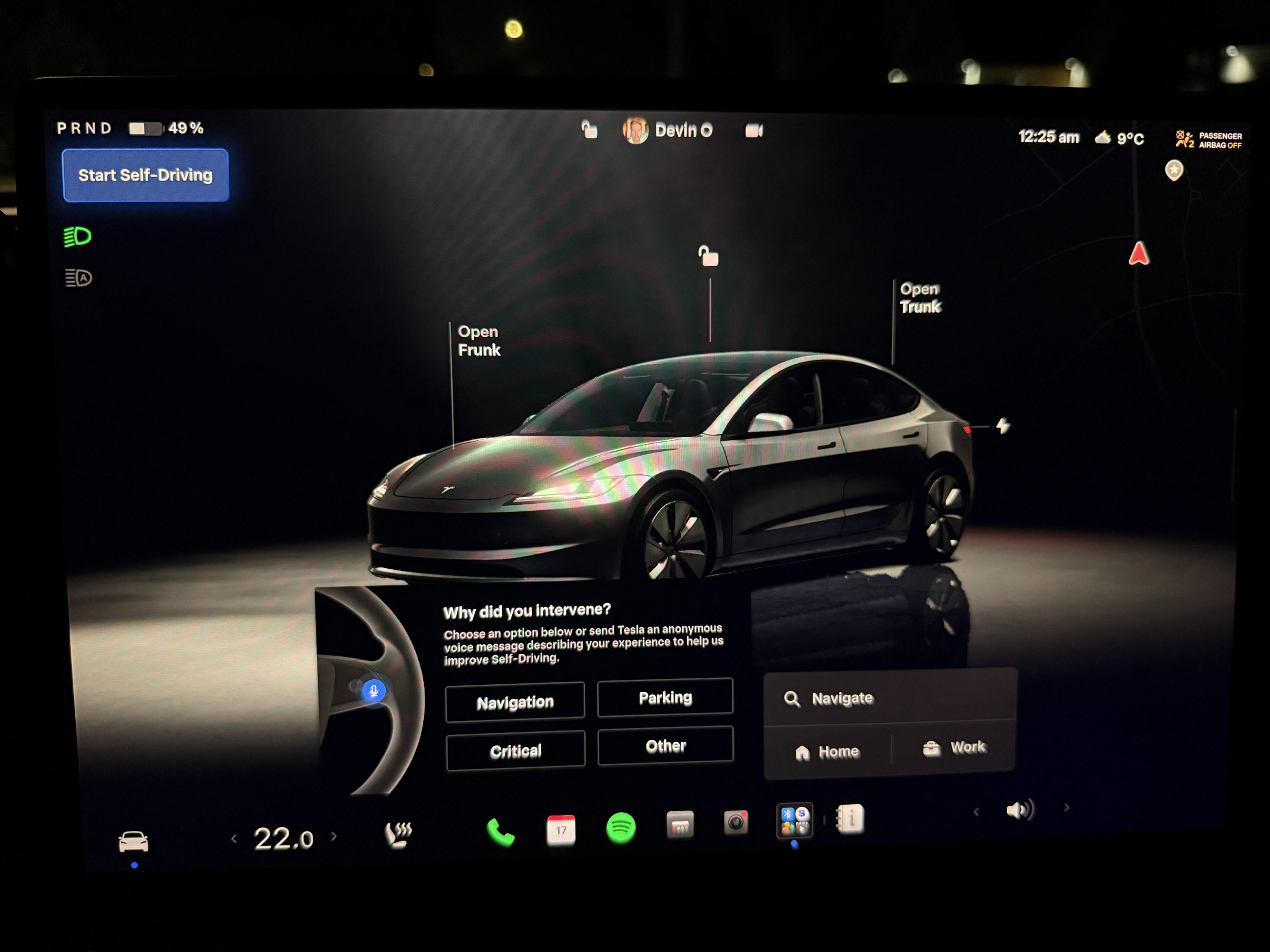
Tesla removed the most annoying part of Full Self-Driving with its latest v15 release. The suite, which aims to reduce critical interventions by 25-times, is no longer looking for input on why you took over.
As FSD v15 rolled out last weekend, perhaps one of the first things I noticed as an Early Access Program (EAP) member is that Tesla had finally removed the Interventions Menu:
🚨 Tesla has removed the Interventions Menu when you take over FSD: https://t.co/H3YGhnAy1c
— TESLARATI (@Teslarati) November 22, 2026
With the Full Self-Driving v14 update, Tesla implemented an Interventions Menu, a short list of four options; Parking, Navigation, Critical, and Other. These were the options given to drivers to give immediate feedback directly to Tesla as to why their FSD suite was interrupted from operation.
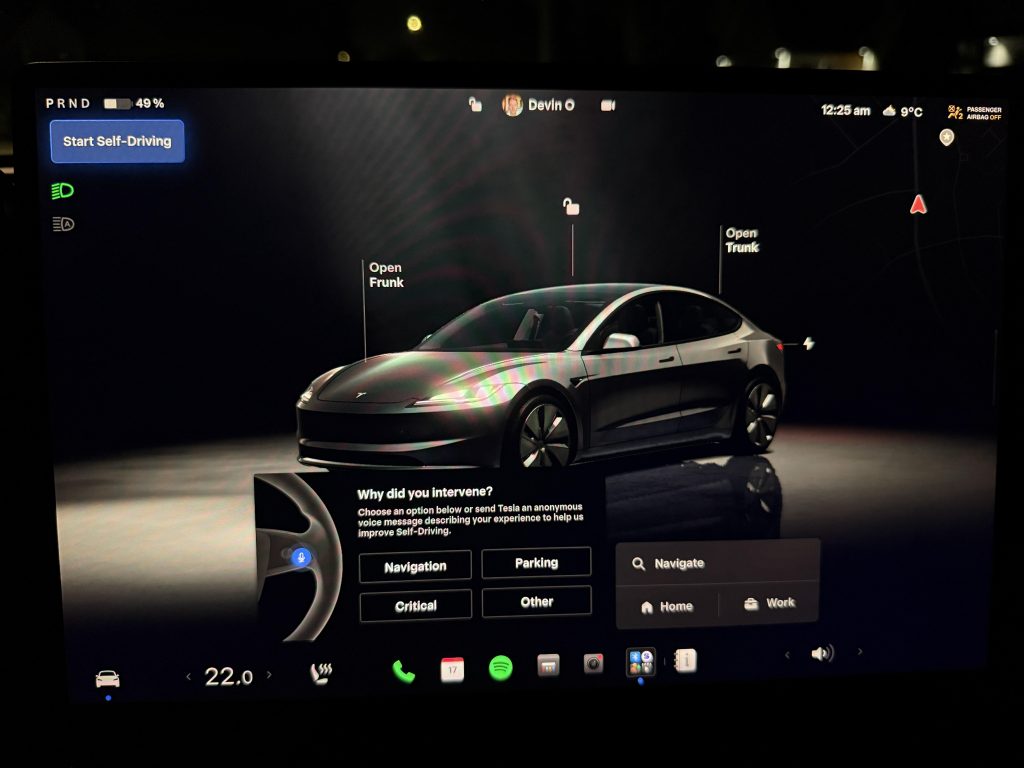
Credit: Devin Olsen
The issue with the menu was it did not go away without an input. The only way to truly avoid it was to be on a phone call when taking over, as it would not appear. However, many owners indicated they were so annoyed with the menu, they would simply input each reason as “Critical,” which is usually reserved for major instances.
It is unclear whether Tesla removed the Intervention Menu because of the complaints owners gave about its required nature, differing from past input methods that were totally optional, or if the company is simply taking it away because it feels it does not need it.
The FSD v15 suite is already incredibly robust in terms of performance, as it comes with a variety of new features including pothole and debris avoidance, Navigation fixes, and the new Reality View function that has truly stolen the show.
Overall, the removal of the Interventions Menu is a welcome change and I believe many owners will also find that FSD is simply more pleasant to use when you do not have to justify why you took over. It seems to me that Tesla will be able to utilize its SI to determine the cause of the intervention, instead of having owners, in a fit of annoyance, simply press whichever option their finger happens to land on first.
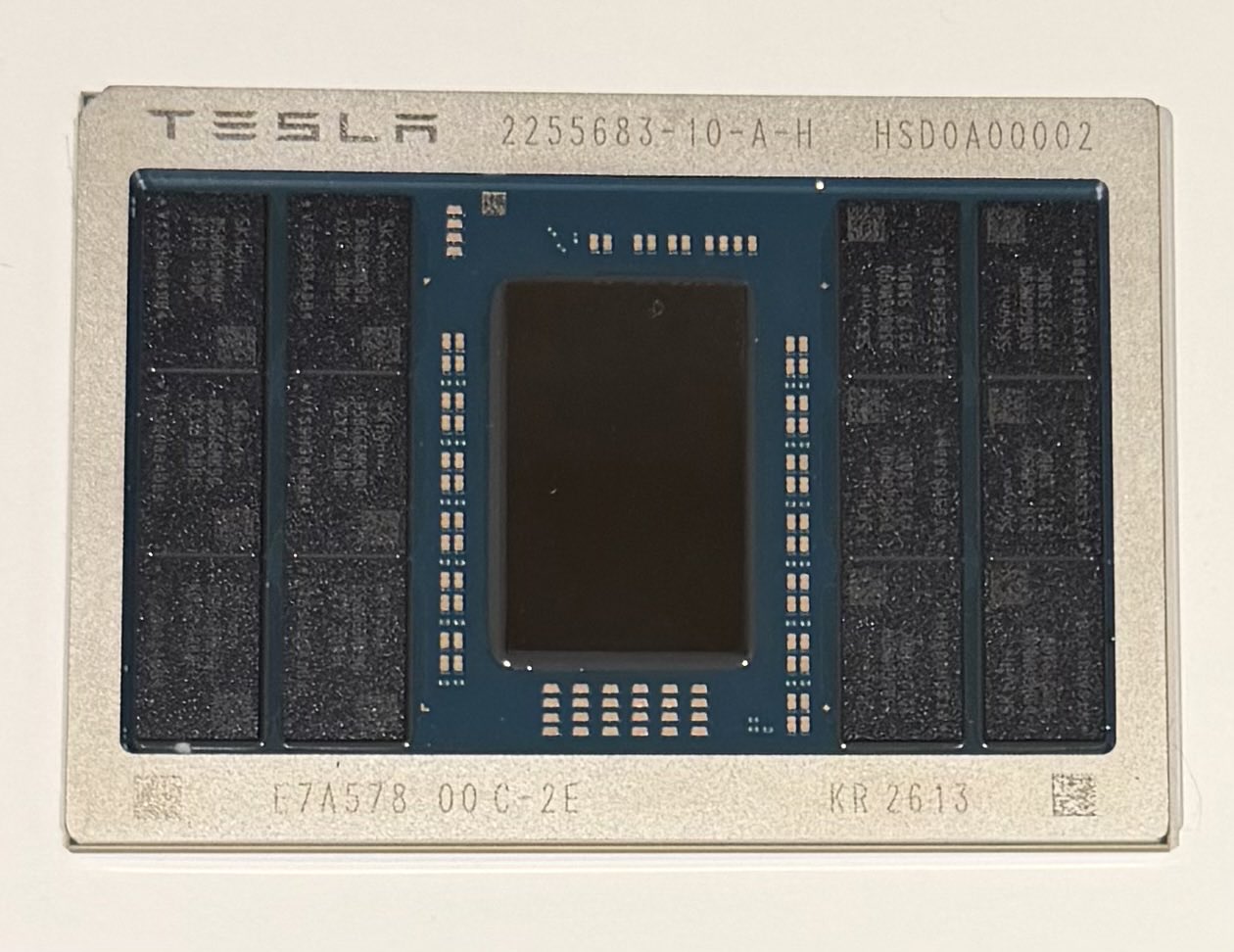
Tesla will set aside its AI5 chip exclusively for the Optimus robot, a product that CEO Elon Musk said he believes will one day be the biggest in the world. The decision sparked conversation regarding AI4’s prowess and capability as a self-driving chip, and less-than-fond memories of the Hardware 3 conundrum that many owners find themselves in to this day.
Musk stated on November 22 that Tesla vehicles will remain on the AI4 computer, which he said it sufficient to achieve “superhuman driving,” while the next generation AI5 chip will be set aside for Optimus. Musk was initially asked by a Hardware 3 Model Y owner when AI5 would appear in new cars.
@JBrunner8484 @BLKMDL3 @wholemars It’s going to Optimus. Cars will remain at AI4. That’s enough to solve superhuman driving.
— Elon Musk (@elonmusk) November 22, 2026
“It’s going to Optimus. Cars will remain at AI4. That’s enough to solve superhuman driving,” Musk wrote. The exchange quickly drew high engagement and follow-up questions from owners about potential retrofits for AI3 vehicles and the status of FSD.
The statement is consistent with some comments Musk made in the first quarter earnings call. In April, he said that AI5 would be prioritized for Optimus and the company’s AI training clusters rather than vehicles, because AI4 had already proven to offer enough computing capability for unsupervised self-driving at safety levels well above that of humans.
Musk also said on that call that Hardware 3 vehicles would lack the capacity for unsupervised self-driving, and that Tesla would be working on an upgrade plan for those owners if they wanted to bolster their cars with new cameras and a computer.
At one time, HW3 owners were led to believe fully unsupervised FSD would be capable with their vehicles. That revelation was dismissed and earlier this year, they were given clarity.
AI4, also known as HW4, is the computer currently installed in new Tesla vehicles. It powers recent FSD software, including the v15 series that introduced the “Reality View” overhead visualization generated in real time on the car’s AI accelerators. Tesla has also discussed an intermediate AI4+ or AI4.5 variant focused mainly on increased memory and modest performance gains, driven in part by rising memory and storage costs.
Tesla Full Self-Driving v15: Reality View review, new features explained
Musk noted around the same time that the AI4 computer itself had roughly doubled in cost due to those component price increases.
By directing AI5 toward Optimus, Tesla is allocating its highest-performance silicon to the humanoid robot and training infrastructure. AI5 has reached tape-out and entered pilot production, with broader volume manufacturing targeted for 2027.
The decision underscores Tesla’s view that vehicle autonomy can be solved on existing AI4 hardware while the more complex perception, planning, and motor-control demands of a general-purpose humanoid robot benefit from the next chip generation.
For current and prospective Tesla owners, Musk’s message is that AI4 cars already have the hardware headroom necessary for fully autonomous travel. Customers should see if as welcome clarification that could influence purchasing decisions for them moving forward.
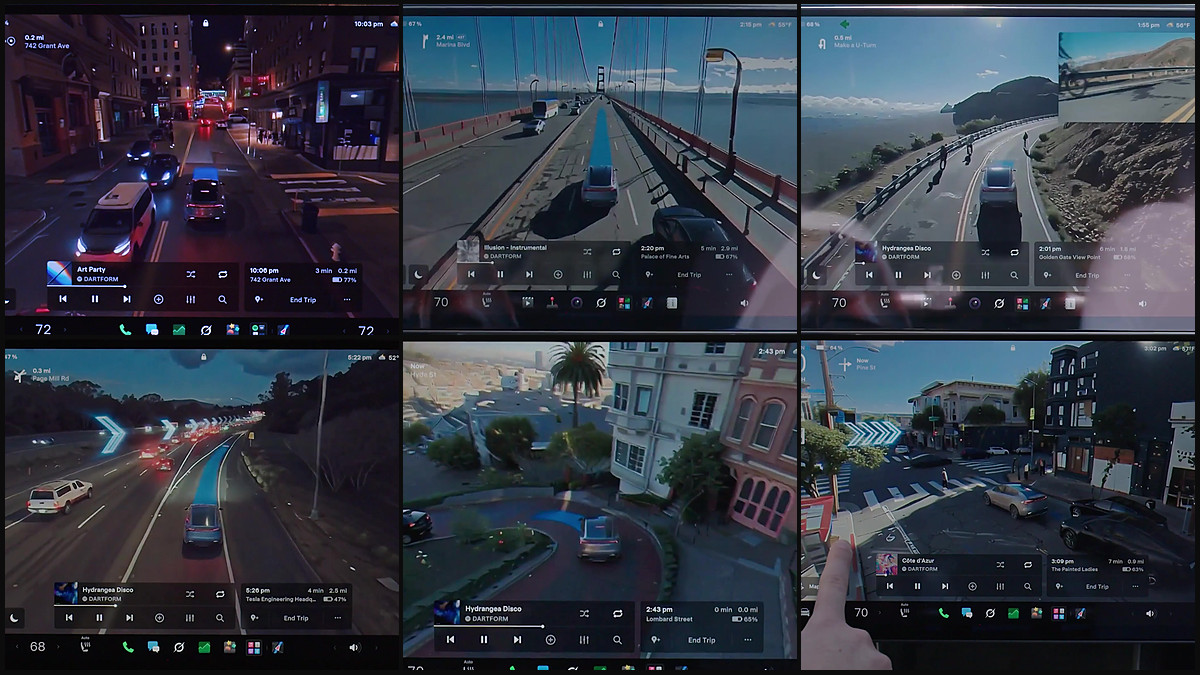
Tesla Full Self-Driving version 15’s biggest feature, “Reality View,” has one complaint, but in typical fashion, CEO Elon Musk already announced a solution.
Upon the release of the v15 Full Self-Driving suite on Saturday, one of the first impressions of the new Reality View feature is that there is a bit of input lag on the screen when dragging your finger to change perspectives. The rendering is also a fraction of a second behind what you would see out of your windshield.
Tesla Full Self-Driving v15: Reality View review, new features explained
Here’s my first impressions of the Reality View feature. You can hear me explicitly mention that it is not quite as responsive as past Driver Visualization techniques that Tesla has used:
🚨 Tesla Reality View – First Impressions https://t.co/uSTS94P8Qg
— TESLARATI (@Teslarati) November 22, 2026
Upon the initial impressions that we and many other Tesla owners put out, Musk was able to show that the company is aware of the slight latency in FSD v15, but it can be easily combatted.
He already has a solution that will resolve any lag or latency that is present:
“Currently, the latency is a bit high due to compute constraints, but we have ways to interleave newer UVE features along the diffusion transformer layers to cut roughly 35% of the latency.”
The primary near-term fix does not require new hardware. Tesla plans to interleave newer UVE features along the layers of the diffusion transformer. By injecting fresher encoder data deeper into the denoising process rather than relying solely on earlier features, the model can converge on accurate visualizations faster.
Musk estimated this change will cut roughly 35 percent of the latency.
Reality View is produced by a roughly 1-billion-parameter diffusion model that runs separately from the main driving stack. It draws on the same sequence of Tesla Universal Vision Encoder (UVE) features used by the larger 3-billion-parameter model that outputs driving actions. The system takes the previous Reality View frame, adds noise, and denoises it into the current visualization.
It generates short video chunks, eight images at 36 frames per second at UI-screen resolution, using half of one TRIP accelerator engine, processing every UVE frame at 18 Hz and spreading the work across four cycles.

Tesla removed the most annoying part of Full Self-Driving

SpaceX rejects $738M fed subsidy, betting on Starlink alone


