News
Tesla is missing one type of vehicle in its lineup and fans want it fast
Tesla is missing one vehicle from its lineup and its fans and owners are hoping the company builds it.

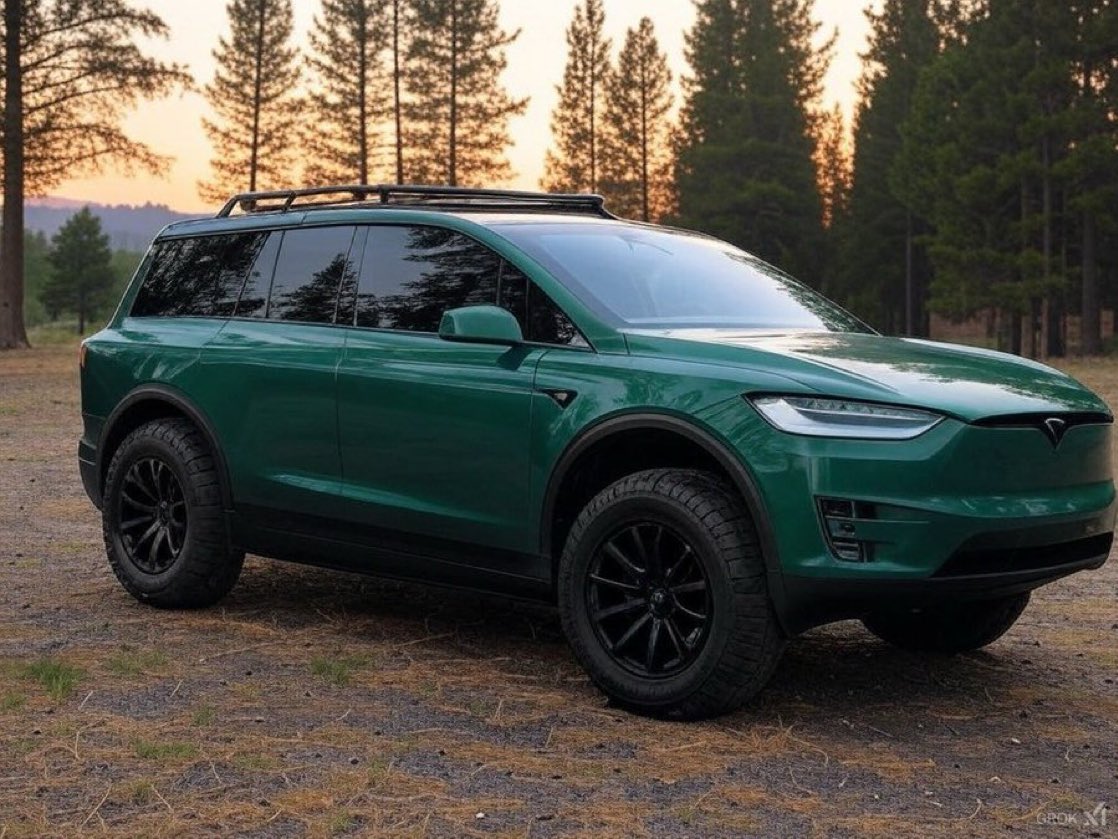
Tesla’s lineup of vehicles has expanded considerably over the last few years. At first, the company offered the Model S luxury sedan, then the Model X luxury SUV, which has the seats but not the space or the affordability that everyone is looking for.
The Model 3 and Model Y are sedan and crossover vehicles that have launched the company into the mass-market category. The Cybertruck brought out the company’s first-ever pickup design, and while it is unorthodox, it is certainly functional.
Tesla Cybertrucks join Jalisco’s police fleet ahead of FIFA World Cup
But there is one thing Tesla is missing in its lineup, and it is a vehicle type that many have waited for and want. The company currently has not announced any plans to produce it, but its fans are loud and persistent, and we’ve even nudged Tesla to consider making it.
It’s a full-size SUV.
This particular segment is dominated by combustion engines currently: Chevrolet Tahoe and GMC Yukon topped sales with 105,756 and 82,304 units sold, respectively. The Ford Expedition is just behind with 62,007 units sold last year. There are a few formidable competitors on the EV side of things, with the Rivian R1S, the GMC Hummer SUV EV, and even the Kia EV9.
However, Tesla has yet to dip its toe into this market, and it seems many of its fans are willing to admit that the company is missing a true “people mover” with enough space to handle a cross-country road trip with a handful of kids.
A legitimate, comfortably sized 3-row family SUV.
Not an undersized egg-shaped one with a 3rd row that can only fit contortionists, and design-limiting gimmicks like falcon wing doors that just add cost/complexity for a customer set that doesn’t want them.— Weather Nole (@WxGuesserNole) June 4, 2025
No question… we need a full size SUV built on the cybertruck’s platform.
— HARLAN Z. HILL 🇺🇸 (@Harlan) June 4, 2025
This, they should build this.
Cybertruck AWD drivetrain, but this as rough form. pic.twitter.com/SH4DvkvoIe
— Timothyz (@Timothyz) June 4, 2025
Why Not the Model X?
The Model X is likely Tesla’s lowest-selling vehicle. It contributes very little to the overall mission of the company, and even CEO Elon Musk once said that it, along with the Model S, is only produced due to “sentimental reasons.”
When it comes to the X, it’s simply not quite what people are looking for in terms of a “full-size SUV.” Instead, it is more of a van/crossover SUV hybrid. It does not have tons of cargo and interior space.
It does have a lot of great tech, a flashy look, and adequate range for that trip with the kids. It’s a great car, and one that Tesla is planning to refine with an upcoming refresh, its second this decade.
However, it falls short of what would qualify as a full-size SUV, especially considering its third row is a little tight, even for younger children.
But it’s not quite what many would consider as what Tesla needs to fill this void in its lineup.
What Could Be Coming?
Many fans say they would like to see a CyberSUV — something built on the Cybertruck platform but in the form of a full-size SUV. This is not totally out of the question, especially considering Tesla has already made it clear the Cybercab would adopt the same sort of aesthetic as the Cybertruck.
However, we can all agree it’s a far cry from what the Cybertruck truly is, and Tesla likely will not build something that’s even close to the pickup. It already admitted it would not adopt the stainless steel exoskeleton for future vehicles in the Q4 2024 Shareholder Deck.
So, if Tesla were to decide to build something that would be in the full-size SUV segment, it wouldn’t look like the Cybertruck.


Elon Musk
Elon Musk drops a surprise update on Boring Company’s next big dig
Musk says Boring Company could shrink the Austin to San Antonio drive to just minutes.

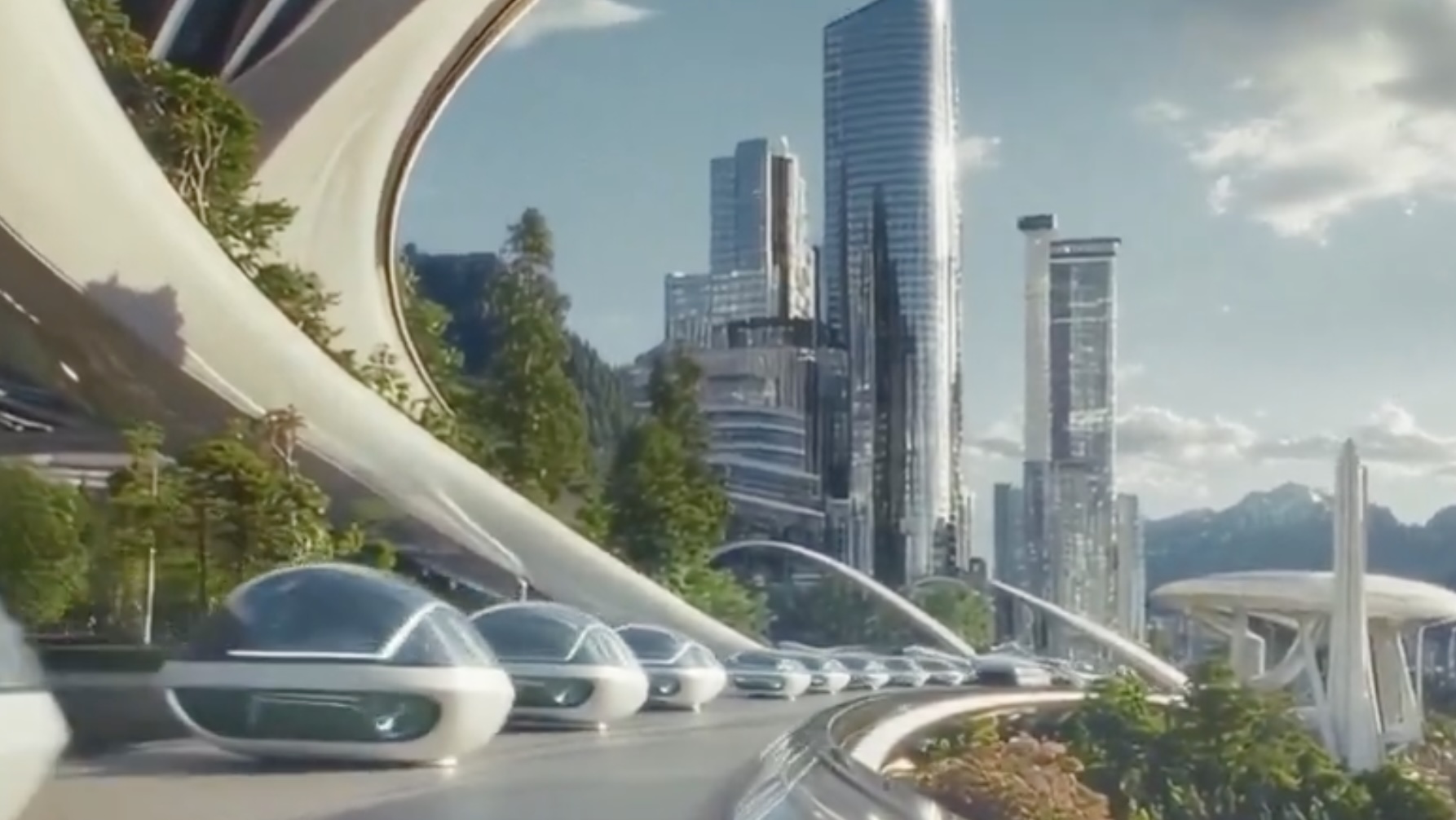
Elon Musk says The Boring Company is working on what he called “a simple, precursor Hyperloop” tunnel connecting Austin and San Antonio, targeting speeds above 200 mph and cutting a drive that can take up to two and a half hours down to a consistent under 30 minutes. Musk posted the idea on X Sunday, in a reply to a repost of an AI generated video imagining a science fiction future with human colonies on other worlds, which he shared with the line “This is the future we shall bring into being.”
This is the future we shall bring into being pic.twitter.com/8aD0w8MDVc
— Elon Musk (@elonmusk) September 20, 2026
The Boring Company’s own account picked up the idea in the same thread, adding a detail about how the trip would actually work: “Because Loop/Hyperloop is express (i.e. no intermediate stops), one could travel from an Austin parking lot to a favorite San Antonio restaurant in about 30 minutes. As long as they both have Loop stations.” That framing ties the proposed intercity link to the same station model the company already runs in Las Vegas, where riders enter the tunnel network through small, garage style stops rather than one central terminal.
This is not the company’s first run at the Austin to San Antonio corridor. Boring Company floated tunnels between the two cities as far back as 2021, and later competed for a separate San Antonio Loop project tied to the airport before that specific bid stalled. Pitches for tunnels in Chicago, Los Angeles, and a New York to Washington corridor have followed a similar pattern of big announcement without a shovel in the ground.
What is different this time is the balance sheet, especially since The Boring Company closed a 3 billion dollar funding round led by investors in the United Arab Emirates earlier this month at a valuation near 23 billion dollars, giving the tunneling company more capital to chase speculative projects than it had during its earlier Texas pitches. The company is also mid-build on two other intercity systems it has actually broken ground on, inc;luding a Nashville tunnel linking downtown to the airport, where a second boring machine finished commissioning in June, and its Las Vegas network, where the station count keeps climbing on paper faster than tunnels get dug.
That gap between announcement and execution is the reason to treat Sunday’s post as an opening bid rather than a project. A tunnel spanning roughly 80 miles between two metro areas, running at speeds Boring Company has not demonstrated over any real distance, would dwarf anything the company has built. For now, the Austin to San Antonio Hyperloop exists as a caption under an AI generated space video.
Elon Musk
Tesla eyes supply partners for Optimus mass production
Tesla certified three Chinese suppliers for Optimus mass production, signaling its robot timeline is accelerating.
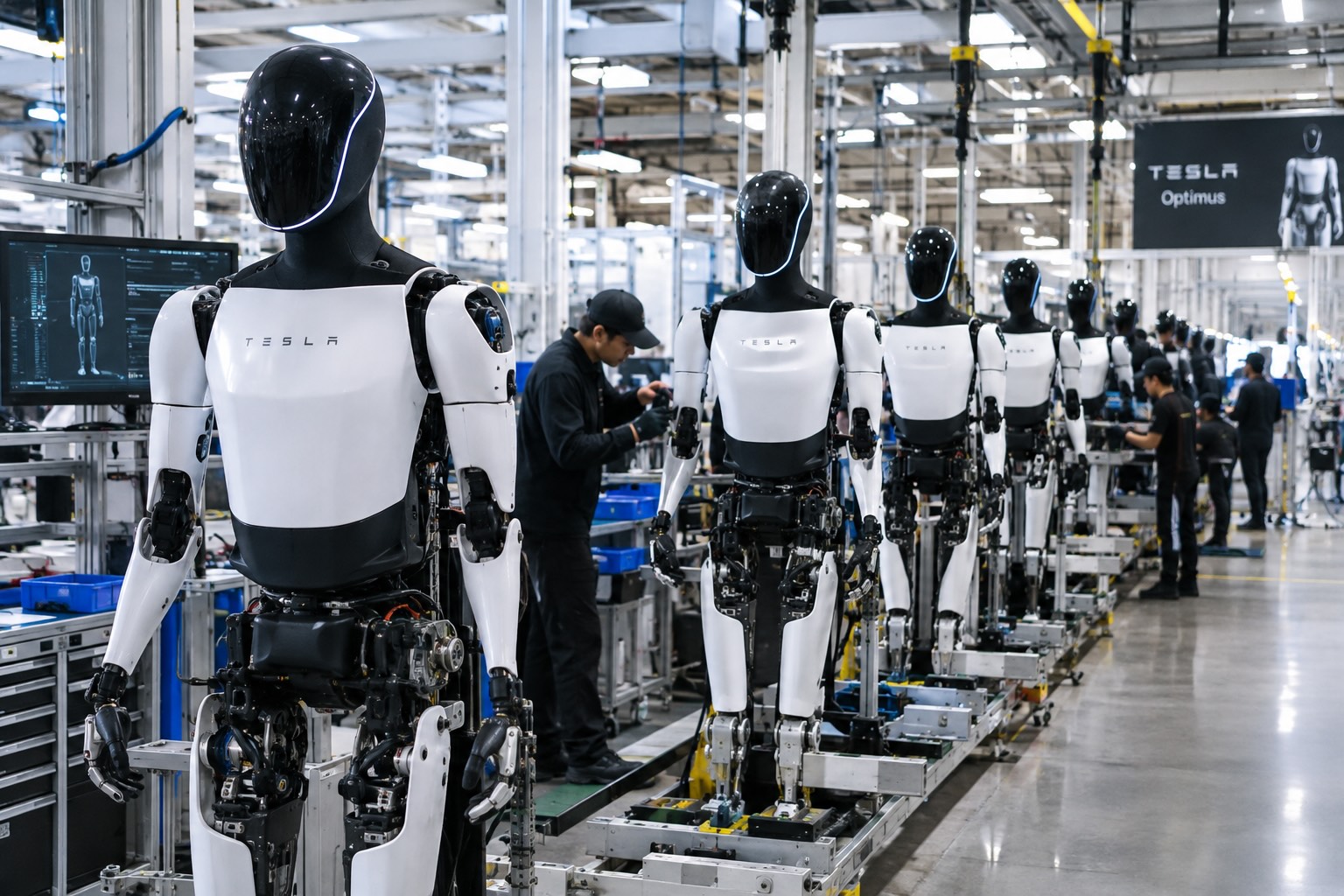
Tesla’s robotics team traveled to Ningbo, in China’s Zhejiang province, on September 16 and spent the following day auditing component suppliers for Optimus, according to a Bloomberg report cited by RobotAIGeek. The visit moved three manufacturers from provisional status to certified mass production partners: Tuopu Group, which handles actuators and chassis components, Ningbo Joyson Electronic, a sensor supplier, and Zhejiang Sanhua Intelligent Controls, which builds thermal management systems. All three already supply parts to Tesla’s electric vehicles, and the audit reportedly came with fresh orders that supply chain reports put at an initial batch of roughly 5,000 units.
Tuopu, Joyson, and Sanhua built their manufacturing base serving the automotive industry, where tolerances and volume requirements are already close to what a mass produced humanoid robot demands. Sanhua in particular has history here. Teslarati reported last October that the company had received a roughly $685 million order for linear actuators tied to Optimus, a volume industry watchers estimated could cover around 180,000 robots once production ramped.
Supply chain reports tied to this week’s audit put Tesla’s near term production goal at about 1,000 Optimus units a week by late September, rising to 2,000 to 2,500 units a week by the end of the year. That pace would put real weight behind the timeline Tesla has been building toward since May, when it wound down Model S and Model X production at Fremont to convert that floor space into a dedicated Optimus line targeting one million units annually. JPMorgan analysts who toured the factory in August confirmed the conversion took roughly four months, a pace Musk has called unprecedented for a facility that size.
New drone video shows Tesla’s Optimus Factory reaching a turning point
Fremont is only the first phase. A second, larger Optimus plant is rising at Gigafactory Texas, where drone footage shared by Joe Tegtmeyer last week showed the structural steel nearing completion on the north end of the building. Tesla has said that facility is meant to eventually support production of up to 10 million units a year, though volume output there is not expected before 2027.
Commercial sales of Optimus are still targeted for the second half of 2027, but production is expected to start well before then. JPMorgan analyst Rajat Gupta has said Tesla’s “Optimus Academy” program, which uses early units to collect real world training data inside Tesla’s own facilities, is expected to be running later this year. Bloomberg Intelligence analyst Ian Ma described the Ningbo audits as “a positive commercialization signal for China’s humanoid supply chain,” noting that sentiment could improve further if the visit leads to confirmed supplier nominations and larger orders. The Solactive China Humanoid Robotics Index rose about 1.4% on the news, though it remains down roughly 30% for the year.
Elon Musk
Elon Musk’s next Uranium in Uranus merch is Boring Company’s weirdest tease yet
Elon Musk teased a glowing new Boring Company merch idea, complete with a Geiger counter.
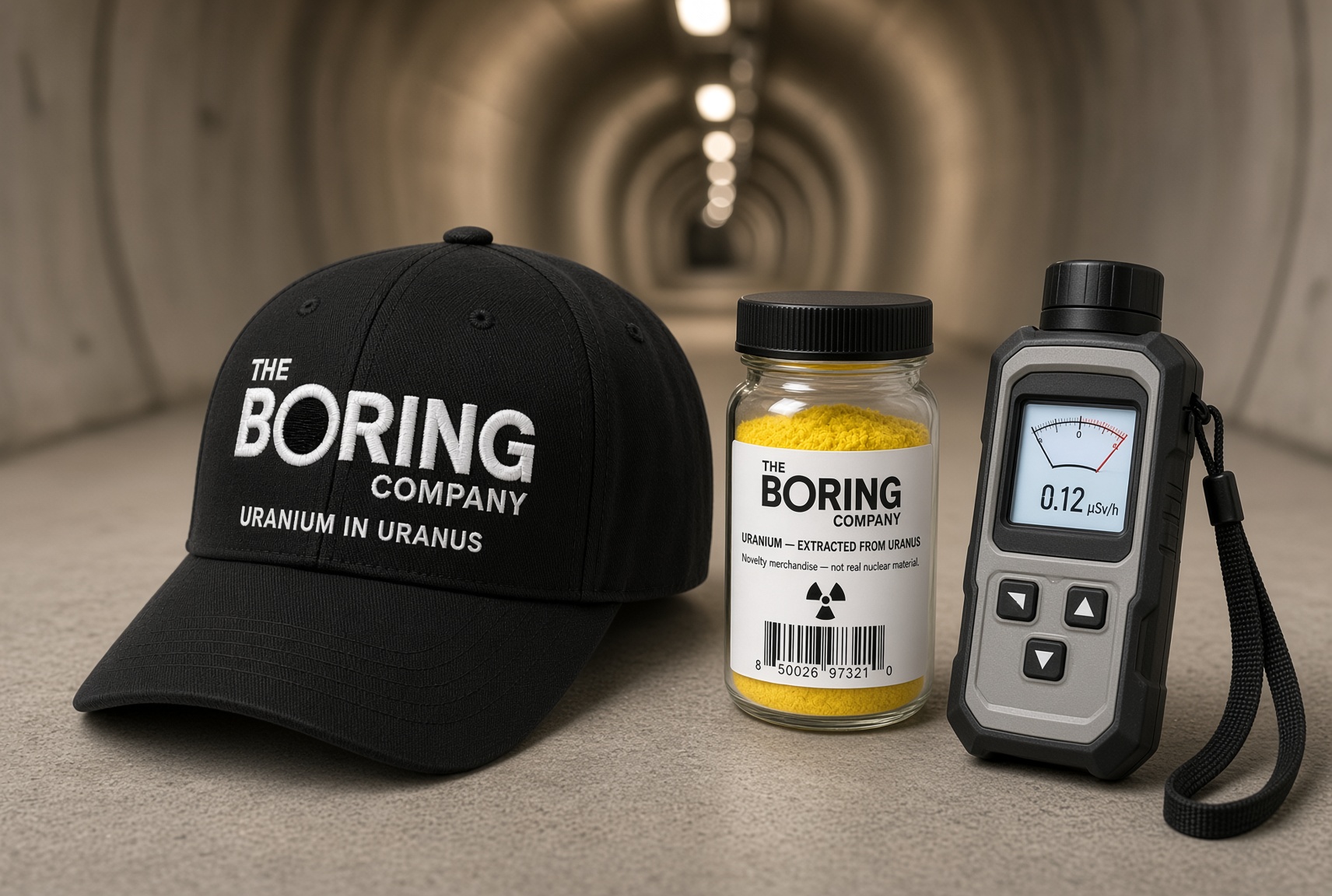
Elon Musk teased the next piece of Boring Company merchandise on X Saturday, and it is exactly as unserious as fans of the company’s product history have come to expect. “The next @boringcompany merch will put Uranium in Uranus,” Musk wrote in a thread posted early Saturday morning. He followed up by explaining that the item would glow in the dark, “because otherwise how could you find it,” and that a Geiger counter would be sold separately as “an optional strap-on.”
Musk closed the thread with a line that doubles as a mission statement for the tunneling company’s merchandise arm: “It’s not easy coming up with something that is both outrageously unsellable and yet extremely popular.”
The Boring Company has built a small but consistent side business out of novelty items that start as jokes and end up selling out. The company’s Not-a-Flamethrower raised roughly $10 million in a few days back in 2018, moving all 20,000 units it produced. Its Burnt Hair perfume, priced around $100 a bottle, sold out fast enough that scalpers were flipping units on eBay for ten times the retail price. Boring Bricks, made from tunneling spoil, followed the same playbook of teasing a product on X months before it became real.
Musk has not said what the actual item will be, only that it involves uranium and glows in the dark. Given the pattern, that vagueness is probably intentional. Past merch announcements have started as one-line jokes and taken weeks or months to turn into an actual product listing on the company’s site, and there is no guarantee this one follows through at all.
The timing lines up with a period of real momentum for the Boring Company outside of the joke merchandise. The company said last week it plans to double the number of operational stations on its Vegas Loop by the end of the year, a target tied to a hiring push for drivers and operations managers. Prufrock-5, one of the company’s tunnel boring machines, also just wrapped a test tunnel in Bastrop, Texas, and is expected to relaunch on its next assignment in November.
Whether the uranium joke turns into an actual product remains to be seen. Musk’s post did not include a price, a shipping date, or even a name for the item, which has historically meant a Boring Company website page goes up quietly, password protected, sometime before an announcement.

Elon Musk drops a surprise update on Boring Company’s next big dig

Tesla eyes supply partners for Optimus mass production


