Elon Musk
SpaceX turned a heralding moment for Starship into its greatest
Starship reached orbit despite losing an engine, deployed 26 Starlink V3 satellites on Flight 14.

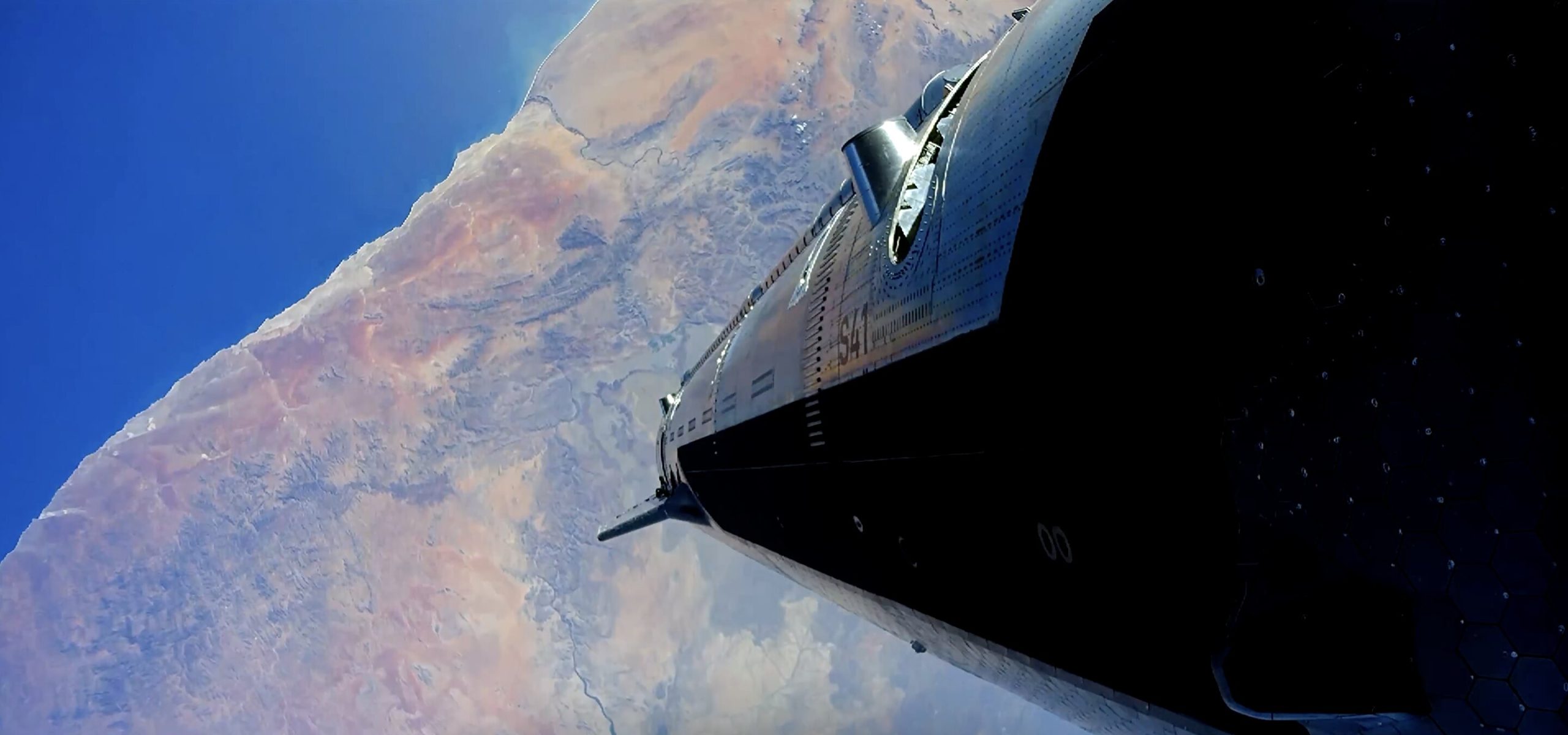
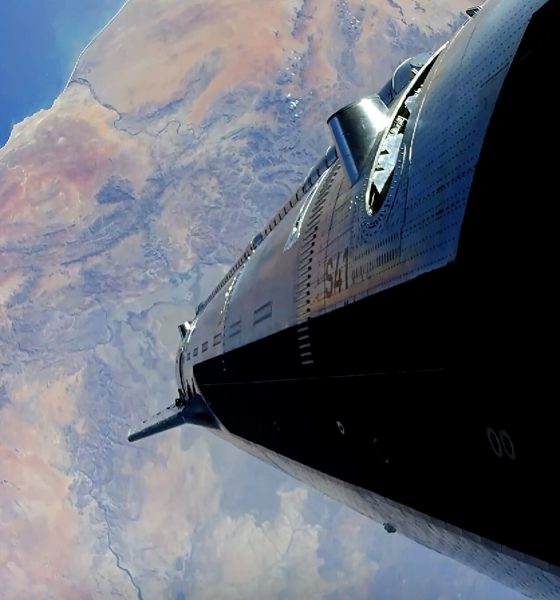
SpaceX’s Starship reached orbit for the first time on Monday, and for a few nail-biting minutes it looked like it wouldn’t. During ascent on Flight 14, one of Ship 41’s six Raptor engines shut down early, and SpaceX’s livestream host Dan Huot told viewers the team had decided not to commit to orbit. Minutes later, after what Huot described as a lot of conversation in the control room, the final poll came back in favor, and a roughly 19 second burn of a single Raptor pushed the ship into orbit about 170 miles up.
The reversal matters because SpaceX had written the exit ramp into the mission plan. The company said it would only fire the orbital insertion burn if flight controllers confirmed enough backup hardware remained for the deorbit burn, a condition Teslarati laid out ahead of the flight. Losing an engine was exactly the scenario that rule was built for.
Pressing forward fits Elon Musk’s history. Falcon 1 failed three straight times before its fourth launch reached orbit in 2008, with SpaceX nearly out of money, and Starship was developed by flying prototypes until they broke. What changed this year SpaceX going public, and with $SPCX sliding below its IPO price in July when Flight 13 slipped, the short interest climbed significantly, as Teslarati reported at the time. A Starship potentially lost today with revenue generating next-gen Starlink satellites aboard would have landed directly on shareholders.
Splashdown confirmed. Congratulations to the entire SpaceX team on the first orbital flight of Starship! pic.twitter.com/urjmiwnvNl
— SpaceX (@SpaceX) September 28, 2026
That pressure showed up after orbit. SpaceX cut a flight planned to last nearly 10 hours to about three, moving splashdown from west of Chile to the North Pacific near Hawaii. SpaceX gave no reason, though Musk said this month the company was being extremely cautious about debris risk. The single Raptor for deorbit worked, and Ship 41 completed its flip and landing burn before breaking apart in the water, an outcome SpaceX expected. Musk has structured SpaceX’s governance to shield long term bets from market pressure.
The payload is the bigger business story. Musk posted that all 26 Starlink V3 satellites deployed and are “operating nominally.” Each V3 is rated for about 1 Tbps of downlink and 160 Gbps of uplink, so this single launch adds roughly 26 Tbps, about 10 times what a Falcon 9 load of V2 Mini satellites adds. The V3 is too large for Falcon 9, making Starship the only vehicle that can build out the planned 100,000 satellite constellation, at up to 60 per flight once it reaches routine service. Unlike the 20 V3 units on Flight 13, which reentered on a suborbital path, these will raise their orbits and could begin serving customers within weeks and bring in hundreds of millions of additional dollars in projected Starlink revenue.
SpaceX has already begun winding down Falcon 9 Starlink launches from Florida in favor of Starship. Reported targets put Flight 15 as early as October 19, leaving about three weeks to diagnose Monday’s engine shutdown before the next orbital attempt.

Starship’s 14th flight is set to launch on Monday, Sept 28. The 75-minute launch window opens at 7:15 a.m. CT. Live coverage of the mission starts ~35 minutes before launch → https://t.co/uQKQvgaTmJ
— SpaceX (@SpaceX) September 27, 2026


Elon Musk
Elon Musk will give every American kid a SpaceX share every year
Elon Musk’s SpaceX stock giveaway to American kids just became something that repeats every year.
Elon Musk says the SpaceX shares headed to American children will not be a one time gift.
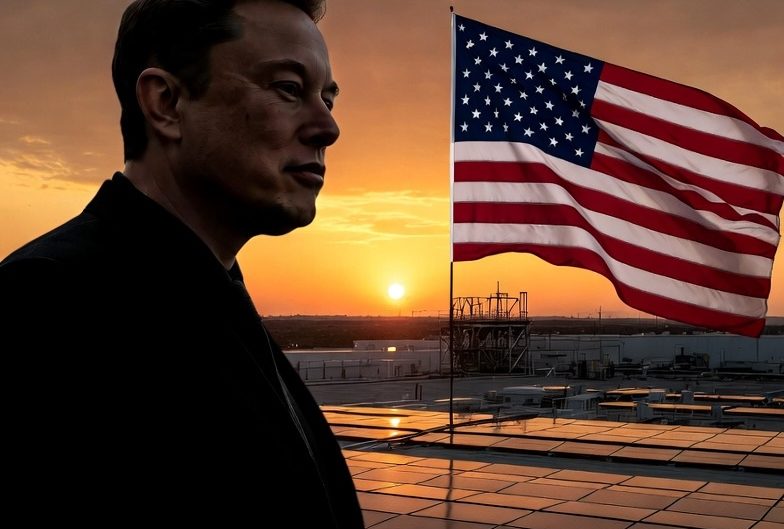
“I will be donating another share of SpaceX to all kids in America every year,” Musk wrote on X on Thanksgiving. He later quoted Sawyer Merritt’s estimate that the pledge covers about 70 million children, adding, “Vital that children have a stake in the future.”
At Wednesday’s closing price of $127.44, one share for 70 million children works out to roughly $9 billion a year, a figure that would rise or fall with SpaceX’s stock. Musk did not say how the annual shares would be distributed or whether they would also flow through Trump Accounts.
Vital that children have a stake in the future — Elon Musk (@elonmusk) November 27, 2026
The yearly pledge builds on an announcement made a day earlier. SpaceX said Wednesday it will donate one newly issued class A share to every currently active Trump Account, with Musk personally matching the gift. “Every child in America will receive two SpaceX shares, one from the company and one from me personally,” Musk wrote.
Combined with President and COO Gwynne Shotwell’s pledge of more than 2 million shares, that first round totals about 142 million shares worth roughly $18.1 billion. Musk said SpaceX’s share will be transferred next month, while “the share directly from me will be transferred when my lockup expires in June next year.”
Musk also offered the new shareholders some advice. “If SpaceX succeeds in making life multiplanetary and harnessing even a millionth of the Sun’s energy, it will be worth about a million times the current global economy,” he wrote, calling the goals “absurdly difficult” before adding, “I recommend holding on to your shares.”
The giveaway has grown quickly since October, when Musk first promised a SpaceX share to “every kid in America” in 2027. Shotwell had already committed her own stock to Trump Accounts, with those shares due to reach eligible children in December.
Trump Accounts, also known as 530A accounts, are tax advantaged investment accounts open to any U.S. child under 18 with a Social Security number. The White House said in October that nearly 70 million had been opened, more than 60 million of them through automatic enrollment, though it is unclear how many count as active.
The first gift was announced hours after the FCC authorized SpaceX to deploy up to 1 million Starmind data center satellites. It also arrives as Tesla and SpaceX special committees negotiate a possible all stock merger, which would make every child holding SpaceX stock an owner of the combined company if a deal closes.
Elon Musk
SpaceX rejects $738M fed subsidy, betting on Starlink alone
SpaceX gave up hundreds of millions in broadband grants, yet Starlink is still showing up.
SpaceX is walking away from roughly $738 million in federal broadband subsidies while still committing to connect the rural homes and businesses Starlink won under the program.
The National Telecommunications and Information Administration (NTIA) said SpaceX will serve every location awarded to it under the Broadband Equity, Access, and Deployment (BEAD) program at no cost to the program. A senior NTIA official told Broadband Breakfast that SpaceX approached the agency with the idea after struggling with differing contract terms across all 50 states, including state demands for financial reporting and penalties for defaulting.
“I am pleased this new agreement has the potential to save taxpayers hundreds of millions of dollars while getting more Americans connected faster,” NTIA Administrator Arielle Roth said. Telecompetitor, citing administration officials, put the forgone amount lower, at about $636 million.
Under NTIA’s new model agreement, SpaceX must still meet BEAD’s minimum speeds of 100 Mbps down and 20 Mbps up, pass the program’s performance testing, and file a report every six months. New subscribers at covered locations will receive the Starlink dish and router at no cost, and SpaceX must offer a low cost service plan. The monthly subscription itself is not waived.
The deal drops BEAD’s financial audit, procurement, and reporting provisions. States also cannot levy penalties if SpaceX falls short, and their only remedy is to return those locations to the program for a new award.
State broadband offices now have two options: sign the model agreement or rebid the SpaceX locations at a cost in line with their already approved plans. Some states had already signed contracts with SpaceX, but the NTIA official said those agreements are no longer on the table. Two state officials told Broadband Breakfast the directive caught states by surprise.
SpaceX still gains something by staying in. Holding its BEAD locations with a $0 award keeps other federal broadband money from flowing to competitors in those rural areas, according to the NTIA official.
Starlink’s role in BEAD expanded after NTIA’s 2025 “Benefit of the Bargain” overhaul dropped the program’s preference for fiber and opened awards to low Earth orbit satellite providers. Arizona, for example, awarded SpaceX $17.1 million to cover 10,749 locations, while Virginia awarded $3.3 million for 5,579.
Elon Musk reshared Sawyer Merritt’s summary of the NTIA terms on X, adding a single word: “Starlink.” The move comes a week after Musk said the FAA turned down a free Starlink offer before a nationwide ground stop, a claim that drew a public rebuttal from Transportation Secretary Sean Duffy. Musk has also hinted that Starlink could come to every Tesla as the company pursues Unsupervised FSD.

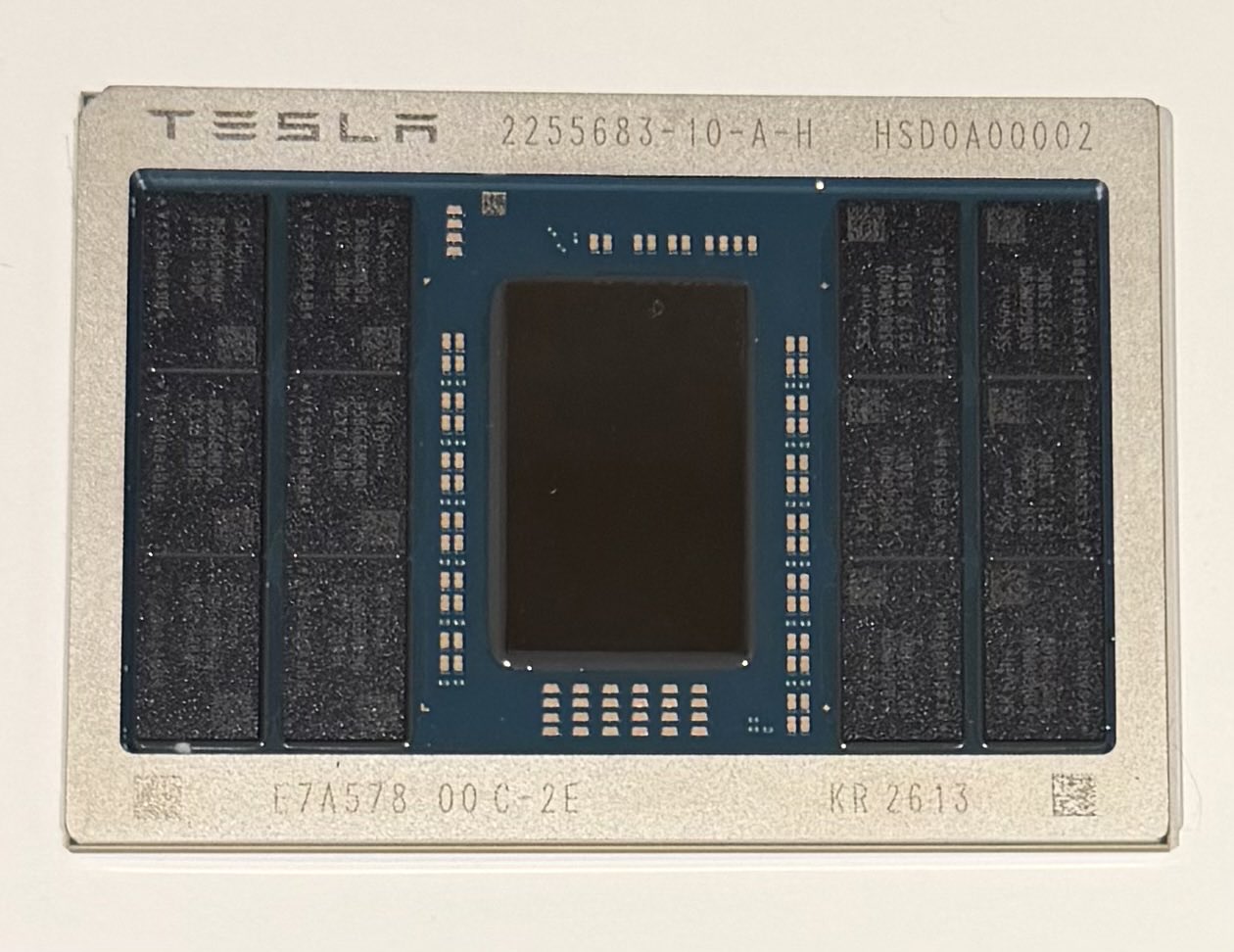
Tesla will set aside its AI5 chip exclusively for the Optimus robot, a product that CEO Elon Musk said he believes will one day be the biggest in the world. The decision sparked conversation regarding AI4’s prowess and capability as a self-driving chip, and less-than-fond memories of the Hardware 3 conundrum that many owners find themselves in to this day.
Musk stated on November 22 that Tesla vehicles will remain on the AI4 computer, which he said it sufficient to achieve “superhuman driving,” while the next generation AI5 chip will be set aside for Optimus. Musk was initially asked by a Hardware 3 Model Y owner when AI5 would appear in new cars.
@JBrunner8484 @BLKMDL3 @wholemars It’s going to Optimus. Cars will remain at AI4. That’s enough to solve superhuman driving.
— Elon Musk (@elonmusk) November 22, 2026
“It’s going to Optimus. Cars will remain at AI4. That’s enough to solve superhuman driving,” Musk wrote. The exchange quickly drew high engagement and follow-up questions from owners about potential retrofits for AI3 vehicles and the status of FSD.
The statement is consistent with some comments Musk made in the first quarter earnings call. In April, he said that AI5 would be prioritized for Optimus and the company’s AI training clusters rather than vehicles, because AI4 had already proven to offer enough computing capability for unsupervised self-driving at safety levels well above that of humans.
Musk also said on that call that Hardware 3 vehicles would lack the capacity for unsupervised self-driving, and that Tesla would be working on an upgrade plan for those owners if they wanted to bolster their cars with new cameras and a computer.
At one time, HW3 owners were led to believe fully unsupervised FSD would be capable with their vehicles. That revelation was dismissed and earlier this year, they were given clarity.
AI4, also known as HW4, is the computer currently installed in new Tesla vehicles. It powers recent FSD software, including the v15 series that introduced the “Reality View” overhead visualization generated in real time on the car’s AI accelerators. Tesla has also discussed an intermediate AI4+ or AI4.5 variant focused mainly on increased memory and modest performance gains, driven in part by rising memory and storage costs.
Tesla Full Self-Driving v15: Reality View review, new features explained
Musk noted around the same time that the AI4 computer itself had roughly doubled in cost due to those component price increases.
By directing AI5 toward Optimus, Tesla is allocating its highest-performance silicon to the humanoid robot and training infrastructure. AI5 has reached tape-out and entered pilot production, with broader volume manufacturing targeted for 2027.
The decision underscores Tesla’s view that vehicle autonomy can be solved on existing AI4 hardware while the more complex perception, planning, and motor-control demands of a general-purpose humanoid robot benefit from the next chip generation.
For current and prospective Tesla owners, Musk’s message is that AI4 cars already have the hardware headroom necessary for fully autonomous travel. Customers should see if as welcome clarification that could influence purchasing decisions for them moving forward.

Tesla aims to bolster Optimus with newest company acquisition

Tesla is rolling out its biggest battery upgrade through a software update


