
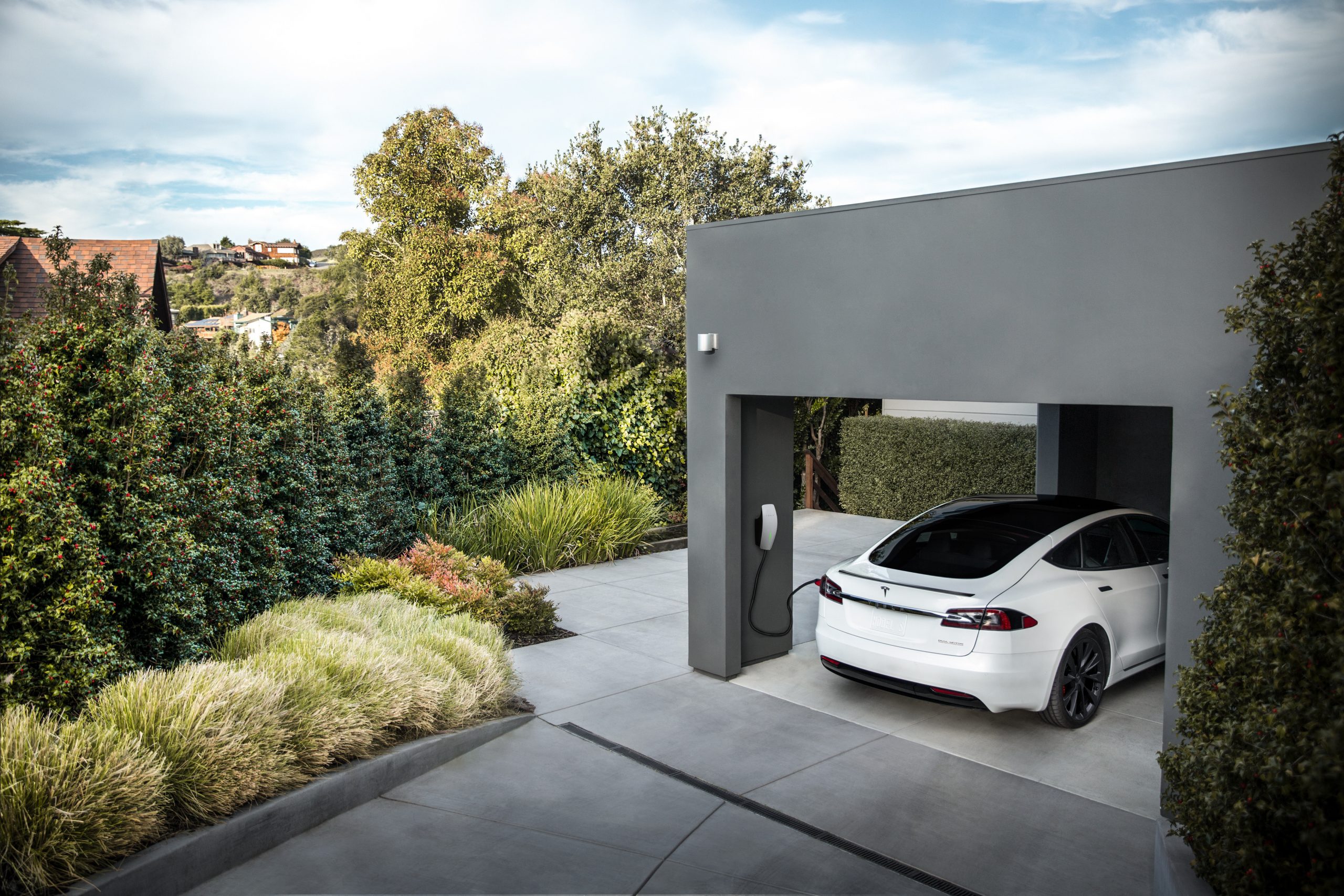

Bank of America made a drastic step forward today to make at-home residential electric vehicle chargers an easier purchase for car buyers.
BoA said it would allow consumers the option to finance residential electric vehicle chargers alongside their auto loans through the bank. The decision was based on the client’s wishes to have an easier, more streamlined solution for making EV ownership and driving more convenient.
The option of letting consumers finance the chargers will ultimately fall into the hands of dealers and manufacturers, the company said. However, its goal is to give customers easier access to at-home charging solutions as the United States EV infrastructure continues to grow under the Inflation Reduction Act (IRA).
“We aim to help people ‘go electric’ by providing financing for this critical accessory, which allows clients to charge their vehicles in their own homes and at convenient times,” Head of Consumer Vehicle Products for BoA, Fabien Thierry, said.
With the nationwide EV outlook expected to reach 26.4 million units by the end of the decade, Thierry said the IRA helps make electric options more appealing to consumers. However, it is no secret that where the sector is falling behind is with charging applications in both residential and commercial settings.
The IRA has set aside $7.5 billion to build out a national network of EV chargers. The White House said the chargers would likely be placed along heavily traveled highways that would suit long-distance travel, as well as in residential communities.
With at-home charging solutions costing as little as $300 and as much as several thousand dollars, the addition of BoA’s financing options for these plug-ins is helpful as they can alleviate the initial cost of buying an EV.
According to Kelley Blue Book, average new EV prices were $61,448 at the end of December, with new data expected to be released in the coming days. This was a $3,594, or a 5.5 percent decrease from November. This is not indicative of the actual cost of many new EVs, as the Chevrolet Bolt EV costs less than $30,000, for example.
BoA has made numerous strides to facilitate the transition to EVs, including a partnership with Electrify America to “more than double the number of financial centers equipped with electric vehicle (EV) charging stations by the end of 2023,” offering $4,000 or the purchase or $2,000 for the lease of an EV by a BoA employee, and an agreement with Polestar and Lucid Group for exclusive finance and lease offerings.
I’d love to hear from you! If you have any comments, concerns, or questions, please email me at joey@teslarati.com. You can also reach me on Twitter @KlenderJoey, or if you have news tips, you can email us at tips@teslarati.com.




Elon Musk
Elon Musk confirms Tesla is already rolling out a new feature for in-car Grok
Tesla is already making in-car Grok more robust with a simple but effective feature that CEO Elon Musk says is “coming.”
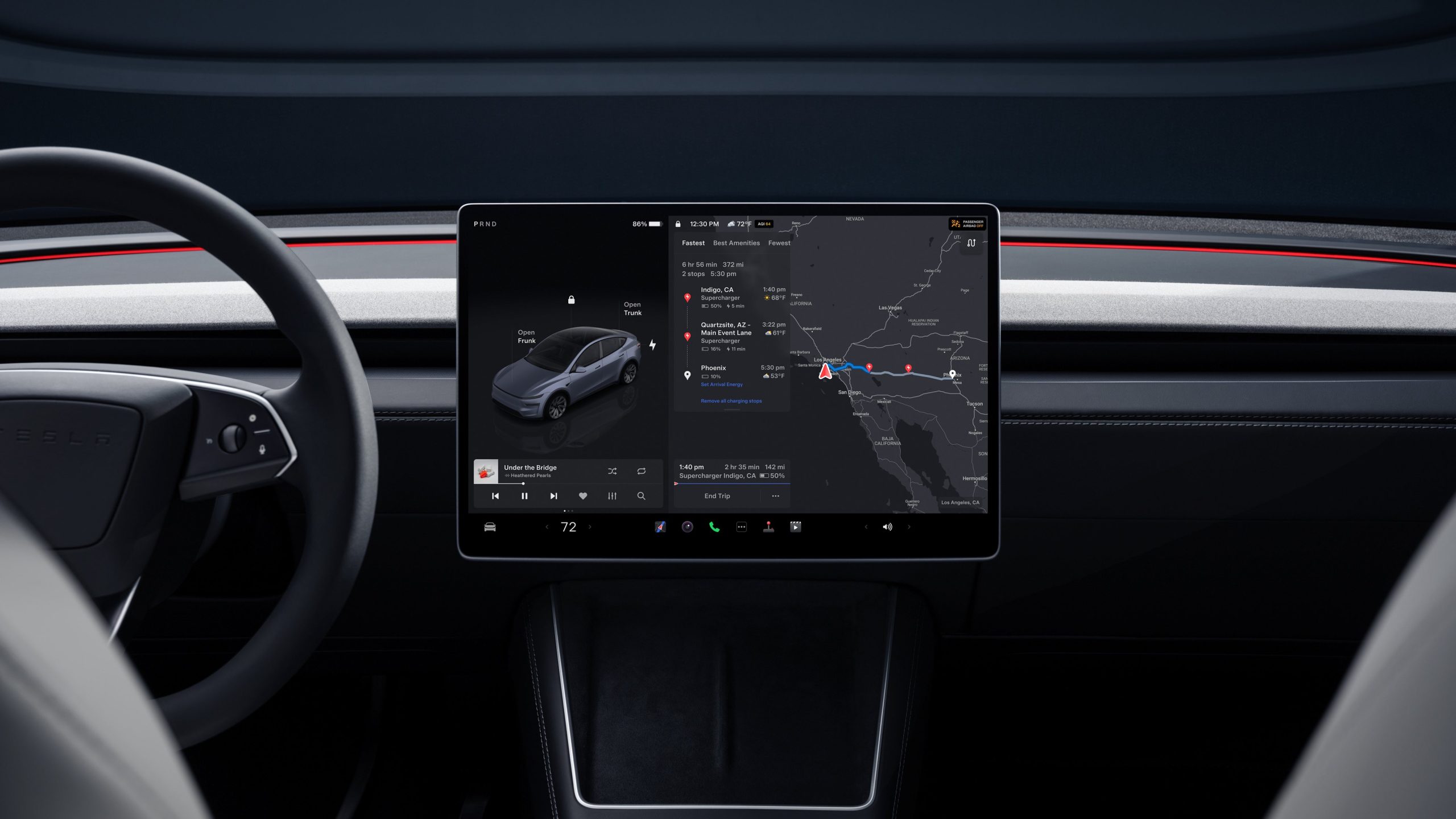
Tesla CEO Elon Musk has confirmed that the company will roll out a new feature for in-car Grok as it is rolling out to vehicles for the first time.
Grok was just recently added as a feature to Tesla vehicles within the past week, but owners are already requesting some small changes to make it more convenient to use.
Tesla debuts hands-free Grok AI with update 2025.26: What you need to know
The first is already on the way, Musk confirmed, as WholeMarsBlog requested a simple, but useful feature for Grok as it is used within Tesla vehicles.
Whole Mars requested that “Hey Grok” be used as a wake word, automatically activating the AI assistant without having to touch any buttons. Musk confirmed it is already in development and on the way to vehicles:
Coming
— Elon Musk (@elonmusk) July 16, 2025
This feature is incredibly similar to that of “Hey Siri” with iPhones and other iOS devices. The phone will recognize your voice and hear that prompt, automatically activating Siri. Apple’s assistant will then perform whatever task it is asked to perform. It’s a simple but effective performance feature.
Grok is already getting its first reviews from owners as it rolls out to owners for the first time. It is a long time coming, too. Tesla has been hinting that Grok would be enabled in the vehicles for a while now, and it just started its initial rollout last week.
After using @grok in my Tesla tonight, I’m insanely impressed.
I honestly went into it a bit skeptical on how useful it would actually be, but I asked it some real genuine questions and it nailed it every time.
Asked it if I take my Tesla to San Francisco next week, where… pic.twitter.com/R0QrK347vi
— Zack (@BLKMDL3) July 16, 2025
Hey @Tesla_Optimus … @grok wants to know if you’re free tonight pic.twitter.com/xXfSkg8M22
— Tesla (@Tesla) July 12, 2025
Grok is available in vehicles with the AMD chip and requires Premium Connectivity or a WiFi connection to use.
Elon Musk
Tesla reveals key detail of Supercharger Diner, but it’s bigger than you think
Tesla has finally released one key detail about the Supercharger Diner, and it is bigger than what it appears at face-value.
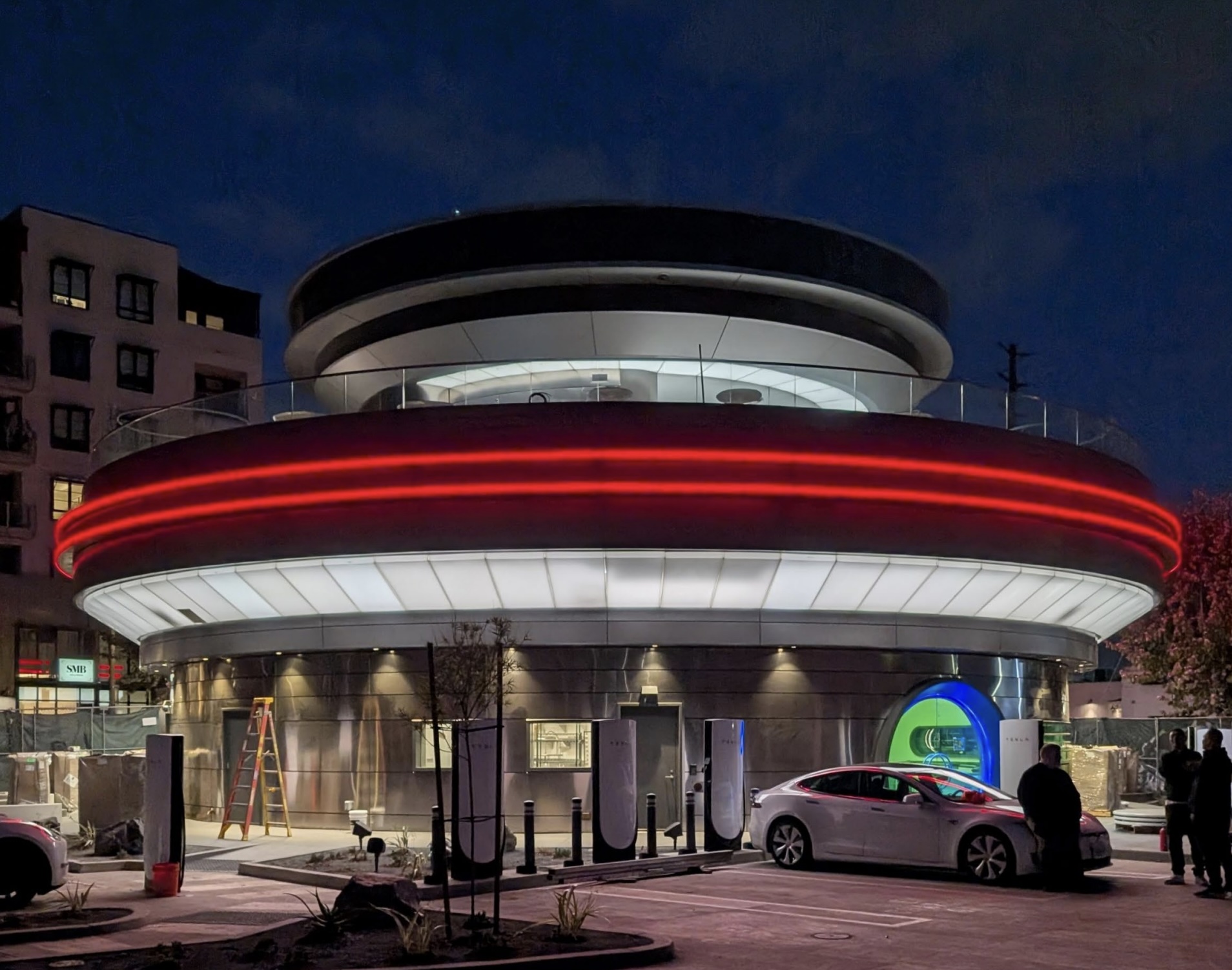
Tesla has revealed a key detail of its Supercharger Diner as its launch date appears to be nearing, based on what we are seeing at the site currently.
The Supercharger Diner is located on Santa Monica Boulevard in Los Angeles and was first proposed as an idea by CEO Elon Musk back in 2018. Musk envisioned a drive-in movie-style 1950s-inspired diner that would feature elements such as servers on roller skates, large movie screens, and a menu inspired by classic treats from several decades ago.
A project that first broke ground in 2023, the Supercharger Diner has been in development for over two years, as Tesla performed demolition work at the site back in February of that year.
It has slowly moved forward, and drone footage shot this week seems to show things are nearly up and running. Musk even mentioned that he had eaten at the Diner Supercharger this week.
There are still details that Tesla has yet to announce and confirm. The most important thing is regarding the menu that will be served at the diner.
Tesla has not hinted at what it will be making for patrons at the restaurant, but Musk commended the food and said the diner would be one of the coolest spots in LA.
🚨 Tesla has involved “almost every team at the company…in some form” in the development of the Supercharger Diner in Los Angeles https://t.co/wLC6t79vgu pic.twitter.com/o52SWWbYPd
— TESLARATI (@Teslarati) July 16, 2025
However, we now have details on another important thing about the restaurant: the hours.
Images taken by Aaron Cash of ABetterTheater.com show the diner will be open 24/7, as it appears on the front doors of the diner:
🚨 Tesla Diner in Los Angeles will be open 24/7 https://t.co/SlccUUlLIb pic.twitter.com/9I78ZGBdnz
— TESLARATI (@Teslarati) July 15, 2025
At first thought, it seems this will operate like any other diner, as many are open for 24 hours a day. Diners typically serve large menus with numerous options, catering to the tastes and moods of anyone who walks in.
People of all walks of life eat at diners, as the food is typically affordable, tasty, and available at any hour to serve those who are night owls or those who work non-typical schedules.
However, Tesla is a bit different, and it seems that this new venture into food service could eventually transition from human servers and cooks to robots, most notably the company’s in-house project of Optimus.
It is something straight out of a Star Wars movie. I can think of Obi-Wan Kenobi visiting Dex in his diner in Attack of the Clones to figure out where a poison dart was sourced from:
Eventually, Optimus will likely be working as an employee in the Tesla Diner, and 24/7 operation will be performed by the humanoid robot that aims to eliminate trivial tasks from humans.
News
First glimpse of Tesla Model Y with six seats and extended wheelbase
It’s longer and taller than the regular Model Y, and it has a cool new badge.

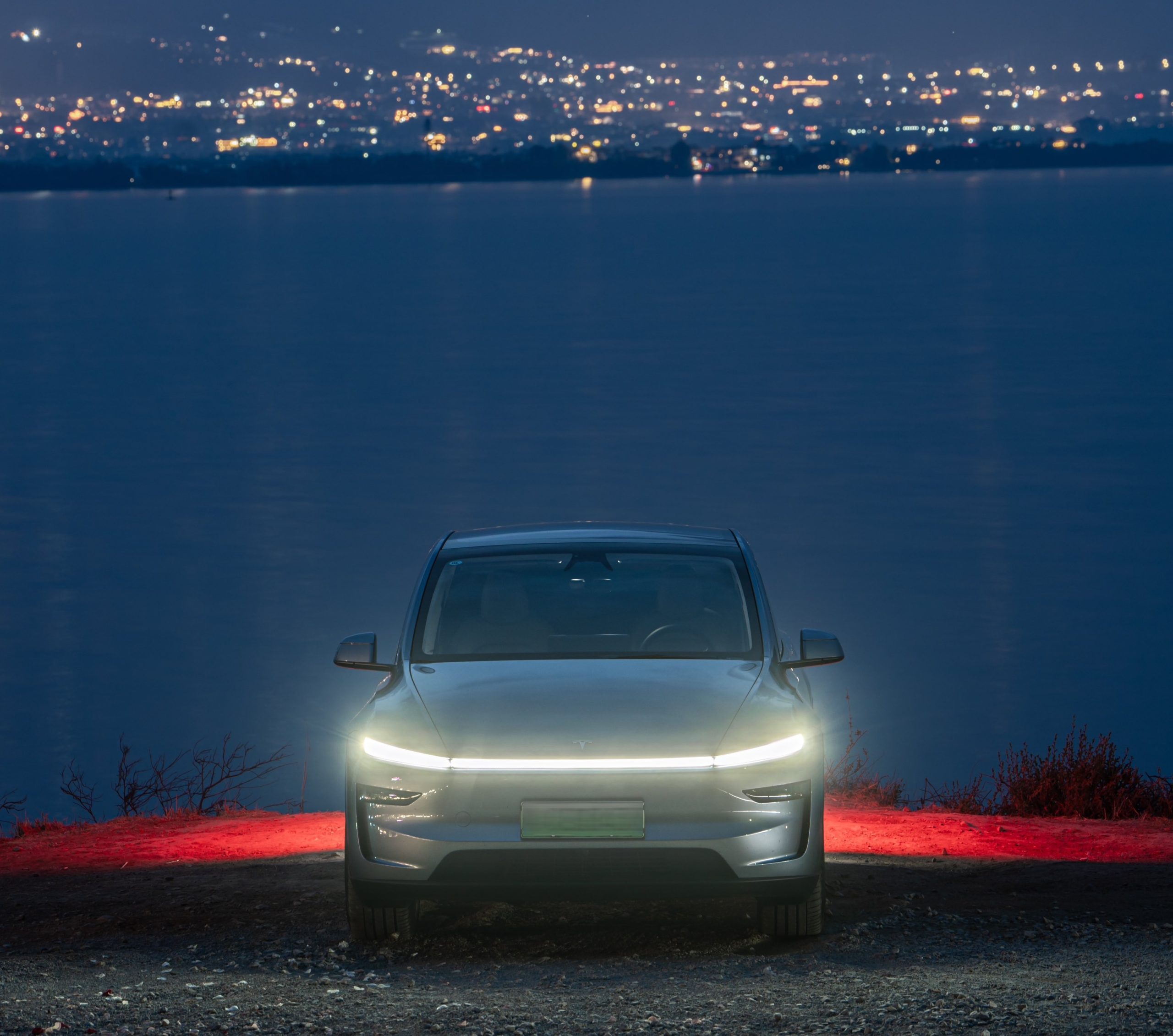
Tesla’s extended wheelbase Model Y has been announced by the electric vehicle maker on its official Weibo page in China. At the same time, details of the upcoming vehicle have been listed in the China Ministry of Industry and Information Technology’s (MIIT) new regulatory catalog.
The extended wheelbase Model Y
Tesla announced the upcoming vehicle on its official Weibo page, with the company noting that the new car will be called the “Model Y L.” Images posted by the company showed that the Model Y L will feature a “Model Y” badge with a stylized “Y” graphic. A teaser image of the vehicle taken from its side also emphasizes the extra space that was gained from its extended wheelbase.
The MIIT listing for the Model Y L indicated that the vehicle would be 4,976 mm long, 1,920 mm wide, and 1,668 mm high. Its wheelbase was listed in the MIIT’s catalog as 3,040 mm. In comparison, the new Model Y is currently 4,797 mm long, 1,920 mm wide, and 1,624 mm high, with a wheelbase of 2,890 mm.
Six seats and some power
Most notably, the extended wheelbase Model Y was listed in the MIIT regulatory catalog as a six-seat model. The vehicle is also listed with the product model number TSL6500BEVBA0, as noted in a CNEV Post report. And as hinted in Tesla China’s Weibo post, the vehicle will be released sometime in the fall.
The Model Y L is listed as a dual motor vehicle with peak power outputs of 142 kW and 198 kW for the front and rear motors. The vehicle is also listed with ternary batteries supplied by LG Energy Solution, and it reportedly weighs 2,088 kilograms (4603 pounds). In comparison, the new Model Y Dual Motor AWD weighs 4391 pounds.
Tesla China has not hinted at the price of the new Model Y L, though expectations are high that the vehicle will be priced at about RMB 400,000 ($55,764). It also remains to be seen if the Model Y L will also be produced in Tesla’s vehicle factories in the United States and Germany.

Elon Musk confirms Tesla is already rolling out a new feature for in-car Grok

Tesla reveals key detail of Supercharger Diner, but it’s bigger than you think

First glimpse of Tesla Model Y with six seats and extended wheelbase


-
 News4 days ago
Tesla debuts hands-free Grok AI with update 2025.26: What you need to know
-
 Elon Musk11 hours ago
Elon Musk’s xAI just posted the nerdiest job opening of all time
-
 News2 days ago
Tesla Robotaxi has already surpassed Waymo in this key metric
-
 News2 weeks ago
Tesla China breaks 8-month slump by selling 71,599 vehicles wholesale in June
-
Elon Musk7 days ago
xAI launches Grok 4 with new $300/month SuperGrok Heavy subscription
-
 Elon Musk1 week ago
Elon Musk confirms Grok 4 launch on July 9 with livestream event
-
 Elon Musk3 days ago
Elon Musk teases Tesla’s “most epic demo” by end of year
-
 News2 days ago
Tesla’s Robotaxi geofence in Austin grows, and its shape is hard to ignore