Investor's Corner
Elon Musk posts update on Tesla’s privatization, narrates meeting with Saudi Arabian sovereign fund

In an update on Tesla’s official blog, Elon Musk provided more details about his bid to take the company private. The CEO narrated how he brought the go-private initiative to Tesla’s board of directors, and how he got in touch with the Saudi Arabian sovereign wealth fund as a possible source of funding for Tesla’s privatization.
Musk released his update on Monday, less than an hour before markets opened. Musk noted that he initially notified the company’s board of directors about his intentions of making Tesla private on August 2. The board, save for Musk and his brother Kimbal, then met to discuss the proposal to take Tesla private. It was then agreed that Musk would be reaching out to the company’s prominent shareholders to discuss the idea of Tesla going private.
Apart from narrating how the proposal to take Tesla private was brought to the board of directors, Musk also explained the rationale behind his decision to announce that funding was “secured” on Twitter last week. The statement, according to Musk, came after a meeting with the Managing Director of the Saudi Arabian sovereign wealth fund on July 31. Musk also discussed the next steps that Tesla would take moving forward.
Elon Musk’s update on Tesla’s privatization appears to have positively affected the company’s stock. When markets opened on Monday, Tesla stock (NASDAQ:TSLA) was up 0.99% at $359.00 per share.
Following is the entirety of Musk’s update on Tesla’s possible privatization.
As I announced last Tuesday, I’m considering taking Tesla private because I believe it could be good for our shareholders, enable Tesla to operate at its best, and advance our mission of accelerating the transition to sustainable energy. As I continue to consider this, I want to answer some of the questions that have been asked since last Tuesday.
What has happened so far?
On August 2nd, I notified the Tesla board that, in my personal capacity, I wanted to take Tesla private at $420 per share. This was a 20% premium over the ~$350 then current share price (which already reflected a ~16% increase in the price since just prior to announcing Q2 earnings on August 1st). My proposal was based on using a structure where any existing shareholder who wished to remain as a shareholder in a private Tesla could do so, with the $420 per share buyout used only for shareholders that preferred that option.
After an initial meeting of the board’s outside directors to discuss my proposal (I did not participate, nor did Kimbal), a full board meeting was held. During that meeting, I told the board about the funding discussions that had taken place (more on that below) and I explained why this could be in Tesla’s long-term interest.
At the end of that meeting, it was agreed that as a next step, I would reach out to some of Tesla’s largest shareholders. Our largest investors have been extremely supportive of Tesla over the years, and understanding whether they had the ability and desire to remain as shareholders in a private Tesla is of critical importance to me. They are the ones who believed in Tesla when no one else did and they are the ones who most believe in our future. I told the board that I would report back after I had these discussions.
Why did I make a public announcement?
The only way I could have meaningful discussions with our largest shareholders was to be completely forthcoming with them about my desire to take the company private. However, it wouldn’t be right to share information about going private with just our largest investors without sharing the same information with all investors at the same time. As a result, it was clear to me that the right thing to do was announce my intentions publicly. To be clear, when I made the public announcement, just as with this blog post and all other discussions I have had on this topic, I am speaking for myself as a potential bidder for Tesla.
Why did I say “funding secured”?
Going back almost two years, the Saudi Arabian sovereign wealth fund has approached me multiple times about taking Tesla private. They first met with me at the beginning of 2017 to express this interest because of the important need to diversify away from oil. They then held several additional meetings with me over the next year to reiterate this interest and to try to move forward with a going private transaction. Obviously, the Saudi sovereign fund has more than enough capital needed to execute on such a transaction.
Recently, after the Saudi fund bought almost 5% of Tesla stock through the public markets, they reached out to ask for another meeting. That meeting took place on July 31st. During the meeting, the Managing Director of the fund expressed regret that I had not moved forward previously on a going private transaction with them, and he strongly expressed his support for funding a going private transaction for Tesla at this time. I understood from him that no other decision makers were needed and that they were eager to proceed.
I left the July 31st meeting with no question that a deal with the Saudi sovereign fund could be closed, and that it was just a matter of getting the process moving. This is why I referred to “funding secured” in the August 7th announcement.
Following the August 7th announcement, I have continued to communicate with the Managing Director of the Saudi fund. He has expressed support for proceeding subject to financial and other due diligence and their internal review process for obtaining approvals. He has also asked for additional details on how the company would be taken private, including any required percentages and any regulatory requirements.
Another critical point to emphasize is that before anyone is asked to decide on going private, full details of the plan will be provided, including the proposed nature and source of the funding to be used. However, it would be premature to do so now. I continue to have discussions with the Saudi fund, and I also am having discussions with a number of other investors, which is something that I always planned to do since I would like for Tesla to continue to have a broad investor base. It is appropriate to complete those discussions before presenting a detailed proposal to an independent board committee.
It is also worth clarifying that most of the capital required for going private would be funded by equity rather than debt, meaning that this would not be like a standard leveraged buyout structure commonly used when companies are taken private. I do not think it would be wise to burden Tesla with significantly increased debt.
Therefore, reports that more than $70B would be needed to take Tesla private dramatically overstate the actual capital raise needed. The $420 buyout price would only be used for Tesla shareholders who do not remain with our company if it is private. My best estimate right now is that approximately two-thirds of shares owned by all current investors would roll over into a private Tesla.
What are the next steps?
As mentioned earlier, I made the announcement last Tuesday because I felt it was the right and fair thing to do so that all investors had the same information at the same time. I will now continue to talk with investors, and I have engaged advisors to investigate a range of potential structures and options. Among other things, this will allow me to obtain a more precise understanding of how many of Tesla’s existing public shareholders would remain shareholders if we became private.
If and when a final proposal is presented, an appropriate evaluation process will be undertaken by a special committee of Tesla’s board, which I understand is already in the process of being set up, together with the legal counsel it has selected. If the board process results in an approved plan, any required regulatory approvals will need to be obtained and the plan will be presented to Tesla shareholders for a vote.


Elon Musk
Google wants more of SpaceX, reveals Elon Musk
Elon Musk says Google wants to rent more SpaceX compute as Anthropic renewal questions mount.

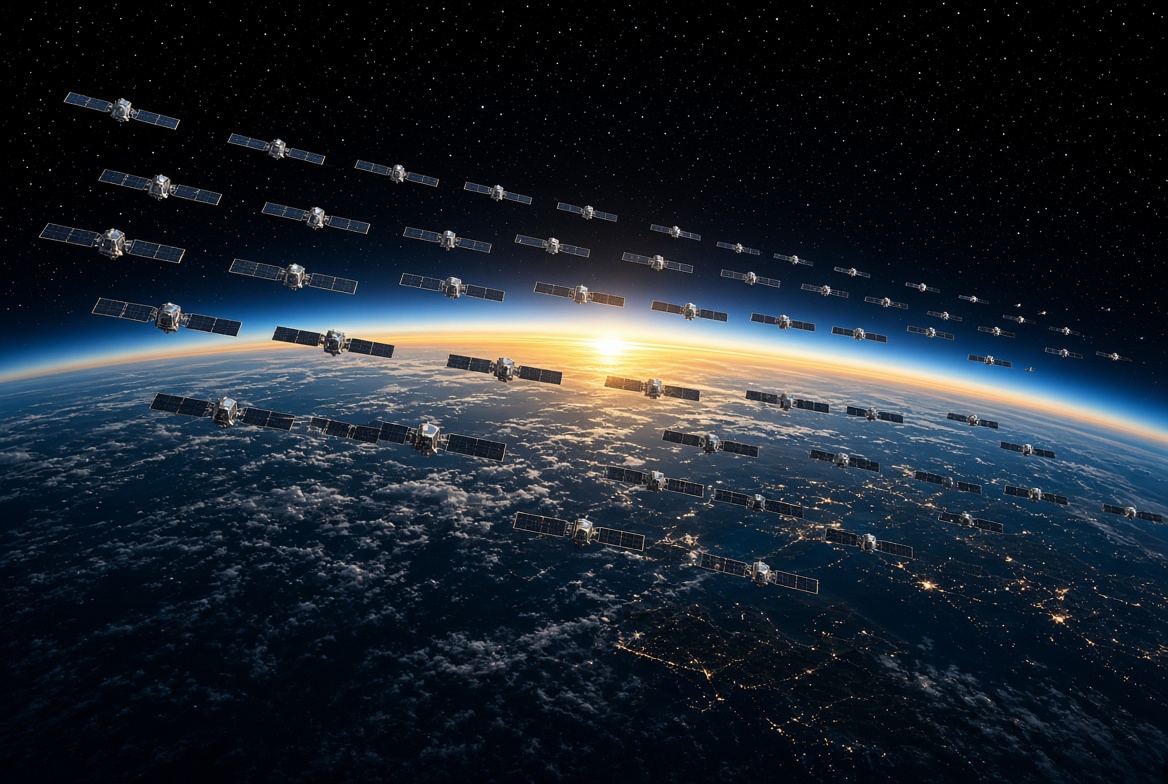
Elon Musk says Google wants more of SpaceX’s compute, a claim that comes just days after reports suggested the company’s biggest AI customer could be preparing to scale back.
“Not sure who will buy more, but Google has expressed interest in renting more compute from us,” Musk wrote on X late Friday night, replying to a post arguing that Google could eventually rent more capacity from SpaceX than Anthropic does. Musk did not say how much additional capacity Google wants or when an expanded deal might be signed.
Google already pays SpaceX $920 million a month for roughly 110,000 Nvidia GPUs and supporting hardware under an agreement that runs from October through June 2029, according to Reuters. Anthropic’s arrangement is larger. It started in May with all of Colossus 1 at $1.25 billion a month, as Teslarati reported, and is set to reach about $3.1 billion a month once all contracted capacity is delivered in December.
That Anthropic revenue is where the pressure has been building. Anthropic executives reportedly told analysts earlier this month that the deal would not be extended beyond the second quarter of 2027, and a SemiAnalysis note this week said the AI lab may not renew its contract for a cluster of about 50,000 H200 GPUs. Anthropic accounted for nearly a third of SpaceX’s revenue in the third quarter. Musk has countered that Anthropic told him it is “extremely likely” to keep renting and wants “significantly more.”
Musk also addressed reports that SpaceX has been cutting prices. The same SemiAnalysis note said SpaceX lowered its Blackwell spot quote for small clusters from about $15 per GPU hour to between $10 and $12. Musk said that is only part of the picture.
“The rental price for large, coherent blocks of compute configured for high-bandwidth training is increasing, sometimes very significantly, but the price for small amounts of compute (below ~5k GPUs) is decreasing,” he wrote. “Overall, the average rental price per GPU for SpaceX compute is rising.”
He followed with a jab at the traditional cloud providers: “People have no idea what happens when a super capable hardware company enters an arena of slowpokes. Hyposcalers would be a more accurate description.”
Speed is the argument Musk keeps returning to. Earlier this month, he said SpaceX can bring a data center online in eight or nine months, compared with about two and a half years for competitors, while acknowledging that the 90 day termination clauses in its compute contracts cut both ways. SpaceX is now pursuing a $50 billion supercompute campus in Cochise County, Arizona and a $24 billion gas plant and supercompute facility at Starbase, and both projects face public hearings on December 9.
Most of the capacity a larger Google deal would draw on has not been built yet. SpaceX ended the third quarter with 1.7 GW of nameplate compute and expects to finish 2026 at 2.5 to 3 GW, with roughly 10 GW more planned for 2027.
Elon Musk
Elon Musk will give every American kid a SpaceX share every year
Elon Musk’s SpaceX stock giveaway to American kids just became something that repeats every year.
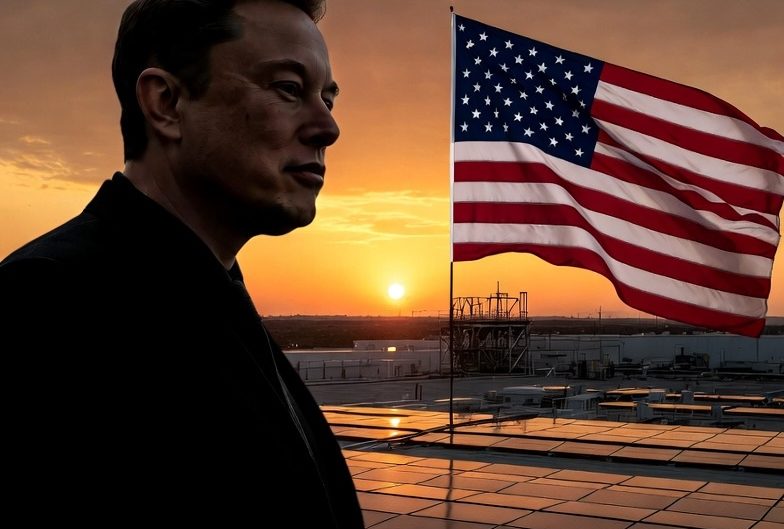
Elon Musk says the SpaceX shares headed to American children will not be a one time gift.
“I will be donating another share of SpaceX to all kids in America every year,” Musk wrote on X on Thanksgiving. He later quoted Sawyer Merritt’s estimate that the pledge covers about 70 million children, adding, “Vital that children have a stake in the future.”
At Wednesday’s closing price of $127.44, one share for 70 million children works out to roughly $9 billion a year, a figure that would rise or fall with SpaceX’s stock. Musk did not say how the annual shares would be distributed or whether they would also flow through Trump Accounts.
Vital that children have a stake in the future — Elon Musk (@elonmusk) November 27, 2026
The yearly pledge builds on an announcement made a day earlier. SpaceX said Wednesday it will donate one newly issued class A share to every currently active Trump Account, with Musk personally matching the gift. “Every child in America will receive two SpaceX shares, one from the company and one from me personally,” Musk wrote.
Combined with President and COO Gwynne Shotwell’s pledge of more than 2 million shares, that first round totals about 142 million shares worth roughly $18.1 billion. Musk said SpaceX’s share will be transferred next month, while “the share directly from me will be transferred when my lockup expires in June next year.”
Musk also offered the new shareholders some advice. “If SpaceX succeeds in making life multiplanetary and harnessing even a millionth of the Sun’s energy, it will be worth about a million times the current global economy,” he wrote, calling the goals “absurdly difficult” before adding, “I recommend holding on to your shares.”
The giveaway has grown quickly since October, when Musk first promised a SpaceX share to “every kid in America” in 2027. Shotwell had already committed her own stock to Trump Accounts, with those shares due to reach eligible children in December.
Trump Accounts, also known as 530A accounts, are tax advantaged investment accounts open to any U.S. child under 18 with a Social Security number. The White House said in October that nearly 70 million had been opened, more than 60 million of them through automatic enrollment, though it is unclear how many count as active.
The first gift was announced hours after the FCC authorized SpaceX to deploy up to 1 million Starmind data center satellites. It also arrives as Tesla and SpaceX special committees negotiate a possible all stock merger, which would make every child holding SpaceX stock an owner of the combined company if a deal closes.
Elon Musk
Elon Musk reveals Tesla’s next vehicle without a steering wheel
Elon Musk says Tesla plans a driverless Model Y for families too big for Cybercab.
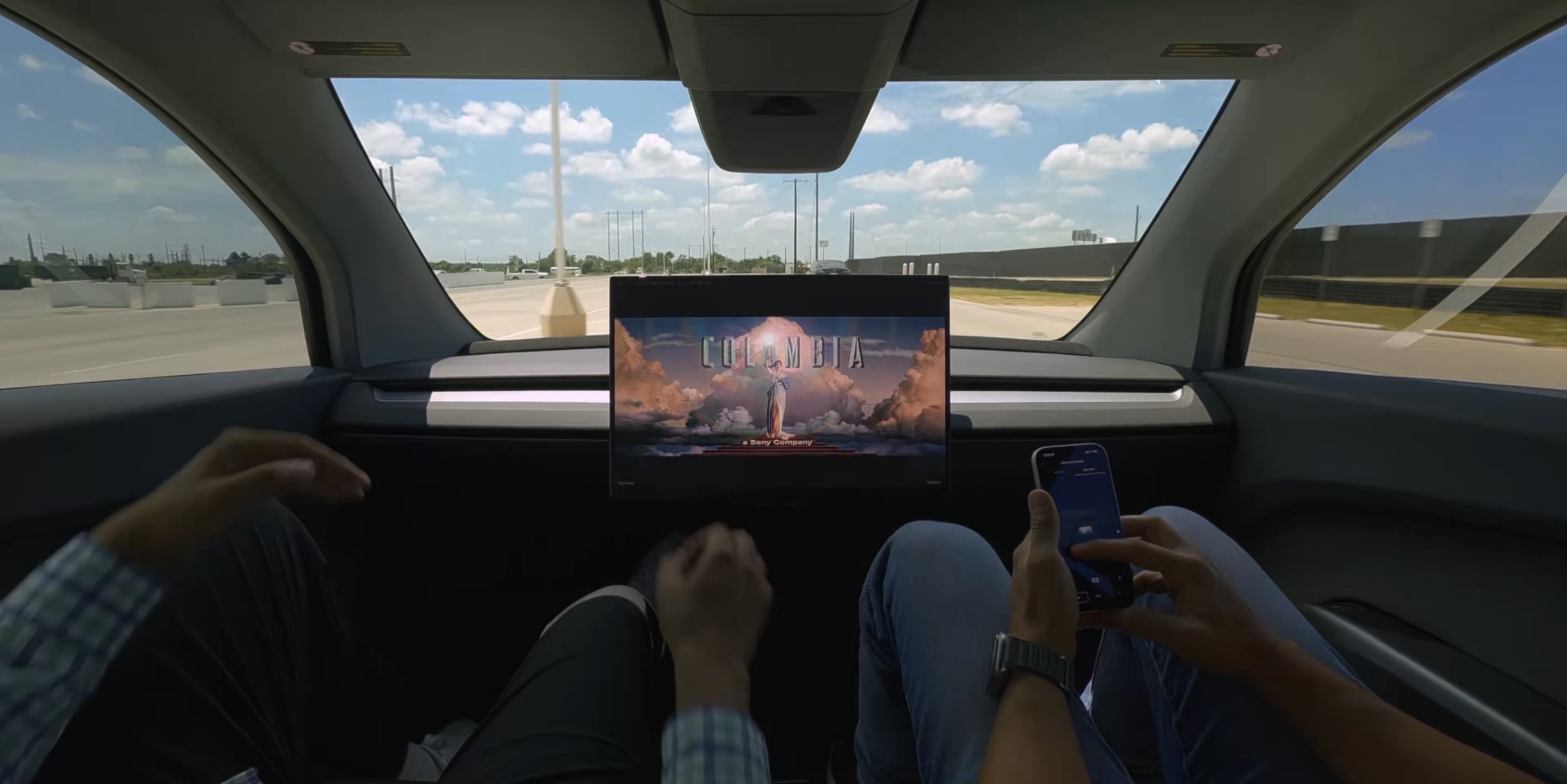
Tesla is planning a driverless version of the Model Y with room for six or seven people, Elon Musk said this week, giving families and groups an alternative to the two-seat Cybercab. Speaking remotely from China at the New York Times DealBook Summit on Wednesday, Musk said the vehicle would have no steering wheel or pedals. He did not give a launch date, price or production location.
The idea came up when Andrew Ross Sorkin asked whether Tesla would eventually stop selling conventional cars as it shifts Cybertruck capacity toward the Cybercab. Musk defended the two-seat design, saying average occupancy is about 1.2 people per car and that a two-seater covers roughly 90 percent of passenger miles. Bigger groups, he said, would be served by the larger autonomous Model Y.
Sorkin also mentioned he had ordered a Model Y L for his family and was still waiting on it. Musk called the six-seat, long-wheelbase SUV Tesla’s most popular car and suggested all Model Y production might need to move to the longer version. “It’s what most people seem to want,” Musk said, though he did not announce any change to Tesla’s production lines.
A driverless Model Y would add a third vehicle to Tesla’s autonomous lineup. Model Y Robotaxis already run 24 hours a day in eight cities, and Cybercab rides expanded to Dallas on Thursday after launching in Austin in September, as Teslarati reported. Tesla also began inviting select customers to buy a Cybercab for personal use last week at $29,990, with deliveries targeted for December.
Musk also addressed whether a Tesla and SpaceX merger should pay out under his compensation plan. Under the change in control terms of his 2025 CEO award, a deal could accelerate vesting, Electrek has noted. Musk said it should not. “I don’t think I should be compensated with any kind of award just for doing a merger. That would be unreasonable and not right,” he said. “You should keep your deals and stay true to your word.”
On the merger itself, Musk said the companies would “probably” be better together because of growing overlap in AI, chips and robotics, but stressed the decision rests with independent committees and shareholders, and that a Tesla vote “may or may not succeed.” Tesla holds its annual shareholder meeting on December 3, with merger talks reportedly progressing toward a possible announcement as soon as December.

Google wants more of SpaceX, reveals Elon Musk

Tesla aims to bolster Optimus with newest company acquisition


